Digital Game-based Learning…
Is becoming a new model for learning
TYPES OF DIGITAL GAME-BASED LEARNING
 Edutainment
Currently gaining popularity in schools
Combines learning and entertainment
 Training Simulators
The player learns real-world skills through use of a game
Used by many businesses to train employees
 Serious Games
Games that are developed to teach but do not provide any kind of entertainment
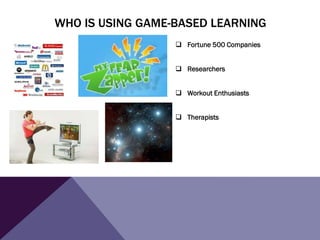
WHO IS USING GAME-BASED LEARNING
 Fortune 500 Companies
 Researchers
 Workout Enthusiasts
 Therapists
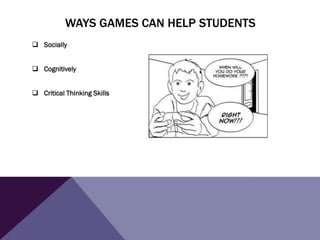
WAYS GAMES CAN HELP STUDENTS
 Socially
 Cognitively
 Critical Thinking Skills
CHALLENGE
 The learner is challenged when there are clear goals and expectations for the
game that apply to the player
 Feedback on performance is important
 Game should make player feel successful
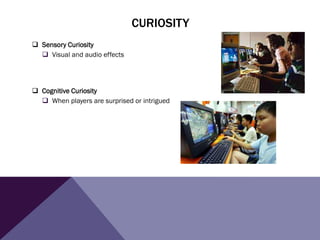
CURIOSITY
 Sensory Curiosity
 Visual and audio effects
 Cognitive Curiosity
 When players are surprised or intrigued
WHY USE IT
 Struggling readers use games to help with fluency and comprehension
 New readers use games for word and letter recognition
 The drill and practice games are used for math fact recall
 Games start users off in an appropriate level so they can build their knowledge
 Correct level also gives students a sense of success
WHAT WE STILL NEED TO KNOW
Thanks to my PLN, I have complied a list of questions that still need to be answered
about digital game-based learning
 What aspects of gaming or play are inconvenient with institutional spaces and
expectations?
 How to identify effective gamification?
 What are the benefits of learning through an avatar?
 How to effectively implement game-based learning into classrooms?
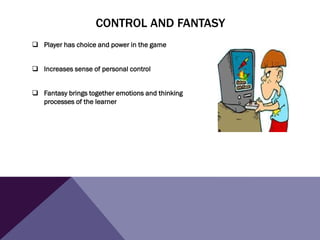
CONTROL AND FANTASY
 Player has choice and power in the game
 Increases sense of personal control
 Fantasy brings together emotions and thinking
processes of the learner

Game-based Learning

  • 1.
    Digital Game-based Learning… Isbecoming a new model for learning
  • 2.
    TYPES OF DIGITALGAME-BASED LEARNING  Edutainment Currently gaining popularity in schools Combines learning and entertainment  Training Simulators The player learns real-world skills through use of a game Used by many businesses to train employees  Serious Games Games that are developed to teach but do not provide any kind of entertainment
  • 3.
    WHO IS USINGGAME-BASED LEARNING  Fortune 500 Companies  Researchers  Workout Enthusiasts  Therapists
  • 4.
    WAYS GAMES CANHELP STUDENTS  Socially  Cognitively  Critical Thinking Skills
  • 5.
    CHALLENGE  The learneris challenged when there are clear goals and expectations for the game that apply to the player  Feedback on performance is important  Game should make player feel successful
  • 6.
    CURIOSITY  Sensory Curiosity Visual and audio effects  Cognitive Curiosity  When players are surprised or intrigued
  • 7.
    WHY USE IT Struggling readers use games to help with fluency and comprehension  New readers use games for word and letter recognition  The drill and practice games are used for math fact recall  Games start users off in an appropriate level so they can build their knowledge  Correct level also gives students a sense of success
  • 8.
    WHAT WE STILLNEED TO KNOW Thanks to my PLN, I have complied a list of questions that still need to be answered about digital game-based learning  What aspects of gaming or play are inconvenient with institutional spaces and expectations?  How to identify effective gamification?  What are the benefits of learning through an avatar?  How to effectively implement game-based learning into classrooms?
  • 9.
    CONTROL AND FANTASY Player has choice and power in the game  Increases sense of personal control  Fantasy brings together emotions and thinking processes of the learner