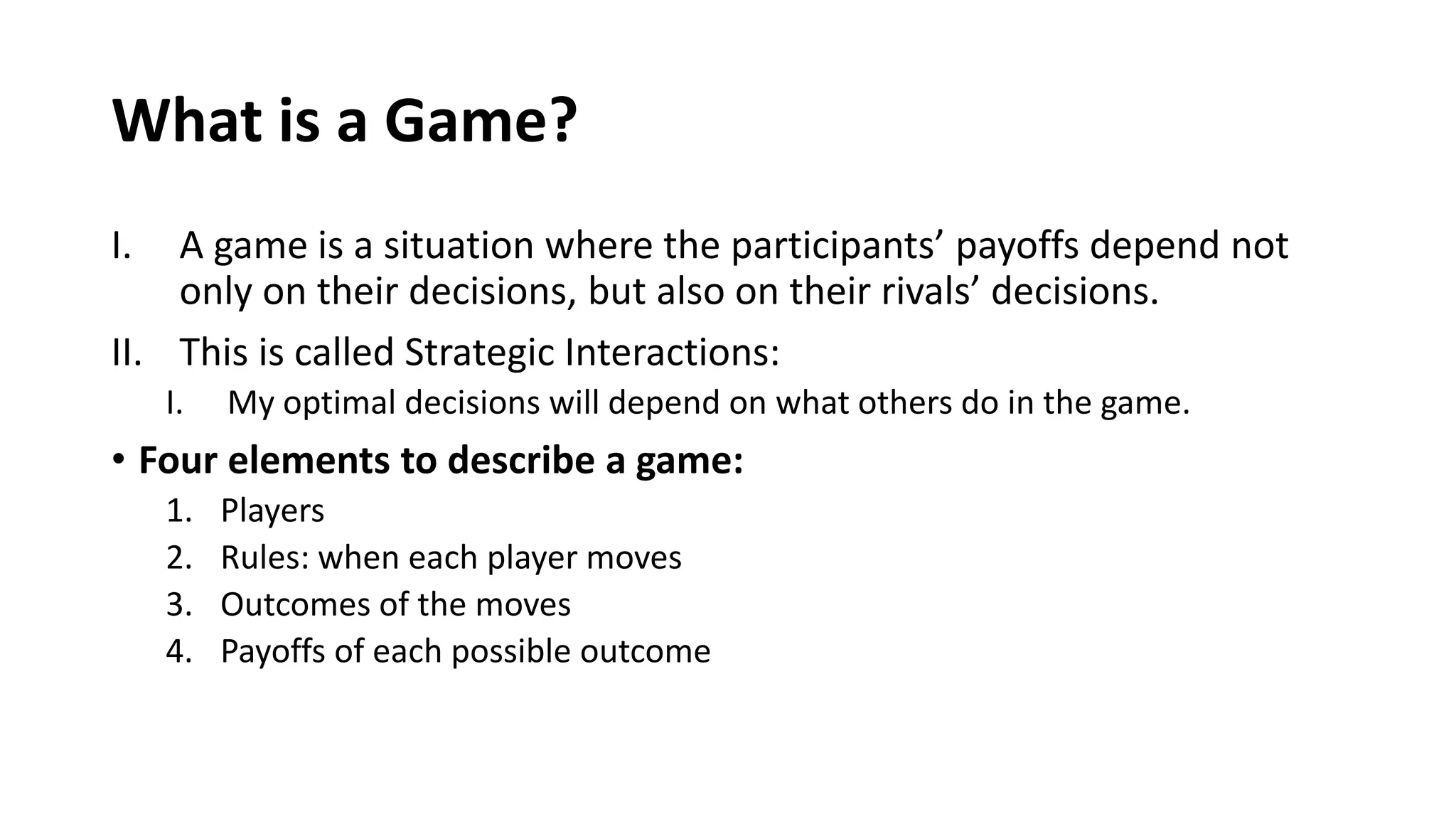
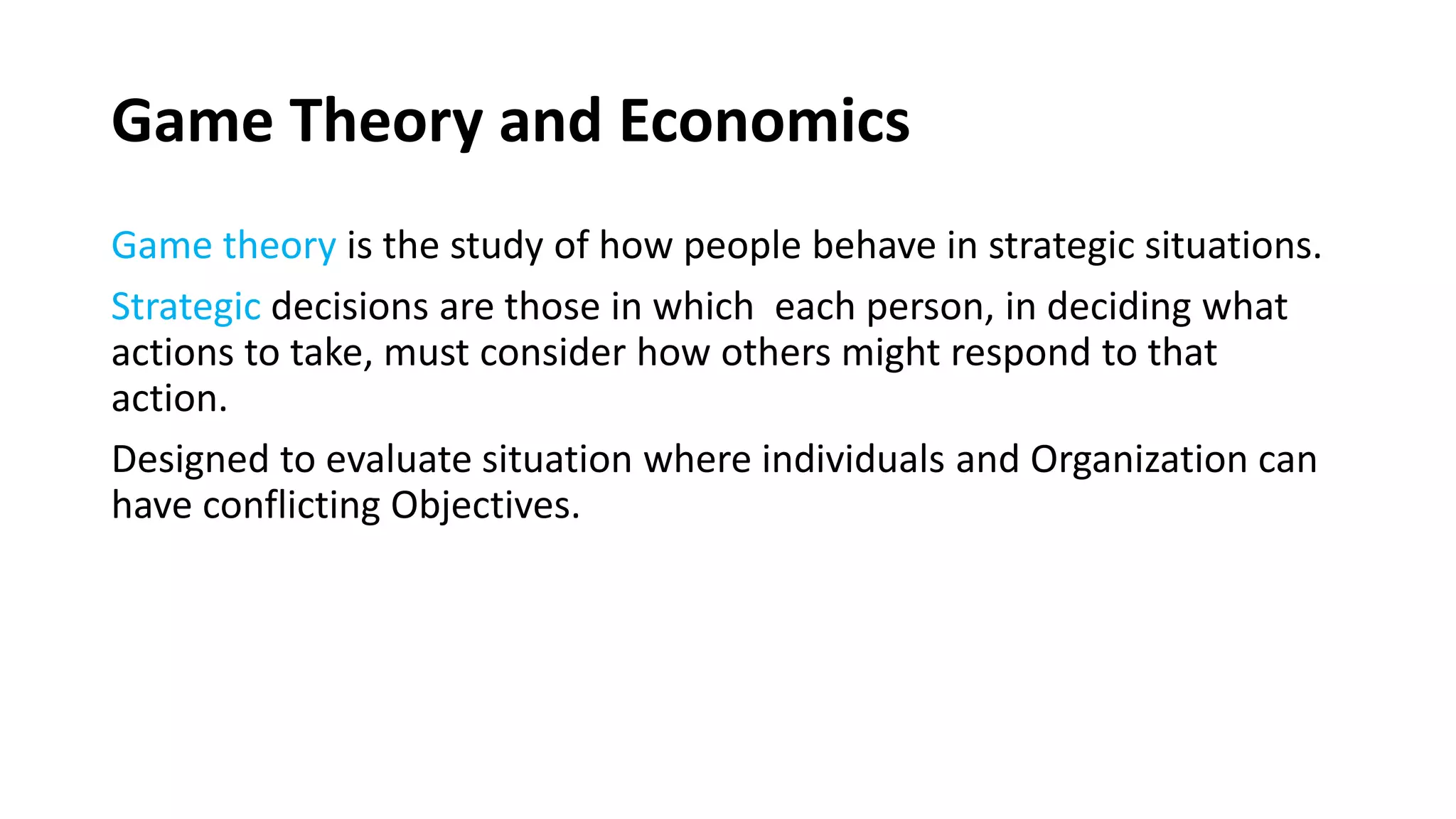
This document provides an overview of game theory. It defines a game as a strategic situation where players' payoffs depend on both their own decisions and the decisions of others. It outlines the key elements of games including players, rules, outcomes, and payoffs. It discusses different types of games such as non-cooperative, cooperative, repeated, and sequential games. It explains how game theory is used in economics to model strategic decisions where individuals' objectives may conflict. It provides examples of how firms must consider competitors' actions and uses a bounty vs kit kat example to illustrate how firms' profits depend not just on their own actions but others'. It introduces concepts from game theory including the prisoner's dilemma, Nash equilibrium, retaliation