with Clay Ewing and Lien Tran
 We     teach at the University of Miami

 Our    MFA in Interactive Media starts this
  Fall

 Clay
  • @claytical / c.ewing@miami.edu / claytical.com

 Lien
   • @lient / l.tran@miami.edu / lienbtran.com
 Designing non-digital games is a great way
 to learn about systems

 The ideas we’re going to talk about apply
 to interactive media and user experience

 Designing   digital games isn’t much
 different, there is just a lot more pieces to
 worry about
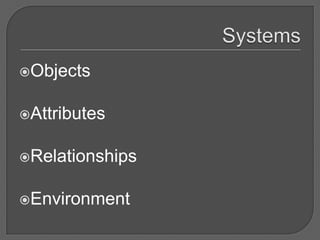
Objects


Attributes


Relationships


Environment
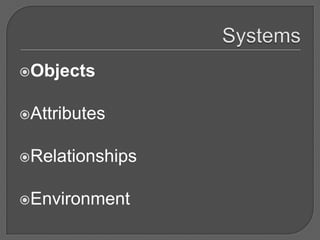
Objects


Attributes


Relationships


Environment
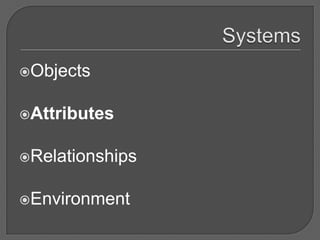
Objects


Attributes


Relationships


Environment
Objects


Attributes


Relationships


Environment
Objects


Attributes


Relationships


Environment
 What’s   up with golf?
 We   abide by artificial rules

 Subject    ourselves to constraints

 Suspend     our disbelief

 Usually,   because it’s fun
 Let’s
    play a game, it’s called “HIGHEST
 NUMBER”
 Choices   are ambiguous

 Immediate   rewards vs. delayed
 gratification

 Actions   have consequences
 Mechanics
  • What you do in the game:
    shooting, building, running, jumping, bidding, etc.

 Dynamics
  • Sets of mechanics that build the core gameplay:
    territorial
    acquisition, survival, collection, trading, etc.

 Agency
  • The ability for a player to make a choice
 Intrinsic   Reward
  • Intangible. A sense of achievement. For the love
    of the game.

 Extrinsic   Reward
  • Tangible. If you play my game I’ll give you candy
 Positive   Feedback
  • Hooray! Have some more points!


 Negative   Feedback
  • Die! Give me back those points!
 Split   into groups

 Draw    a card, this is your theme.

 Make a game with at least two objects
 from the table that fits into your given
 theme.
 Imagineyou are a detective trying to figure
 out what works and what doesn’t

 Have  questions to ask before you even
 start the test to ask afterwards

 Sometimes it can be super specific, but it
 doesn’t have to be
 People   learn by playing, not reading the
 rules

 Let
    them make mistakes, but take notes
 when they do

 Youwant to see how they solve the
 problem
 Think   outloud
  • “I’m not sure if…”
  • “I don’t understand…”
  • “I’m confused because…”
  • “I like… because …”
 Group 1 plays Group 2’s game
 Group 2 plays Group 3’s game
 Group 3 plays Group 4’s game
 Group 4 plays Group 5’s game
 Group 5 plays Group 1’s game
 Itcan hurt, but it will lead to a better final
  product

 Of   course, be constructive, not nasty
 Hold   up one of the objects you used
I   always wanted one of those, hand it over!

Game Design dorkShop at LAB Miami

  • 1.
    with Clay Ewingand Lien Tran
  • 2.
     We teach at the University of Miami  Our MFA in Interactive Media starts this Fall  Clay • @claytical / c.ewing@miami.edu / claytical.com  Lien • @lient / l.tran@miami.edu / lienbtran.com
  • 4.
     Designing non-digitalgames is a great way to learn about systems  The ideas we’re going to talk about apply to interactive media and user experience  Designing digital games isn’t much different, there is just a lot more pieces to worry about
  • 5.
  • 6.
  • 7.
  • 8.
  • 9.
  • 11.
     What’s up with golf?
  • 12.
     We abide by artificial rules  Subject ourselves to constraints  Suspend our disbelief  Usually, because it’s fun
  • 13.
     Let’s play a game, it’s called “HIGHEST NUMBER”
  • 14.
     Choices are ambiguous  Immediate rewards vs. delayed gratification  Actions have consequences
  • 15.
     Mechanics • What you do in the game: shooting, building, running, jumping, bidding, etc.  Dynamics • Sets of mechanics that build the core gameplay: territorial acquisition, survival, collection, trading, etc.  Agency • The ability for a player to make a choice
  • 16.
     Intrinsic Reward • Intangible. A sense of achievement. For the love of the game.  Extrinsic Reward • Tangible. If you play my game I’ll give you candy
  • 17.
     Positive Feedback • Hooray! Have some more points!  Negative Feedback • Die! Give me back those points!
  • 18.
     Split into groups  Draw a card, this is your theme.  Make a game with at least two objects from the table that fits into your given theme.
  • 20.
     Imagineyou area detective trying to figure out what works and what doesn’t  Have questions to ask before you even start the test to ask afterwards  Sometimes it can be super specific, but it doesn’t have to be
  • 21.
     People learn by playing, not reading the rules  Let them make mistakes, but take notes when they do  Youwant to see how they solve the problem
  • 22.
     Think outloud • “I’m not sure if…” • “I don’t understand…” • “I’m confused because…” • “I like… because …”
  • 23.
     Group 1plays Group 2’s game  Group 2 plays Group 3’s game  Group 3 plays Group 4’s game  Group 4 plays Group 5’s game  Group 5 plays Group 1’s game
  • 24.
     Itcan hurt,but it will lead to a better final product  Of course, be constructive, not nasty
  • 25.
     Hold up one of the objects you used
  • 26.
    I always wanted one of those, hand it over!