Normal And Abnormal Gait :Physiology And Management
Dr.MADHUSUDAN
SR-1 NEUROLOGY
SSH IMS,BHU
Moderator-
PROF.DEEPIKA JOSHI
DEPARTMENT OF NEUROLOGY
INSTITUTE OF MEDICAL SCIENCES
BANARAS HINDU UNIVERSITY
References
 Dejong
 Jankovic
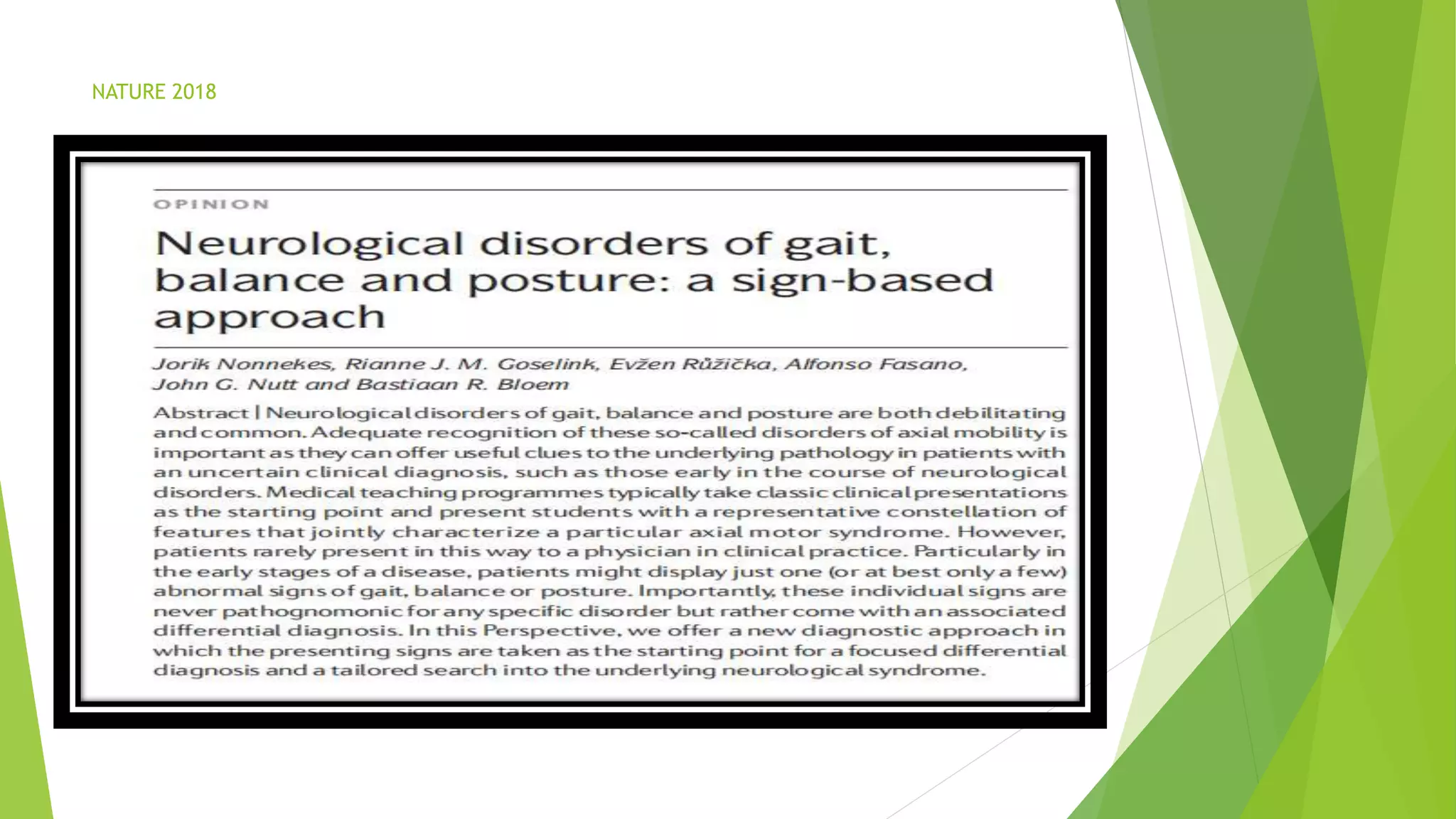
 Neurological disorders of gait, balance and posture: a sign-based approach
(NATURE REVIEWS | NEUROLOGY)
 Neurological gait disorders in elderly people: clinical approach and
classification (Lancet Neurol)
 Gait Disorders ( Fasano, MD, PhD; Bastiaan R. Bloem, MD, PhD)
 Gait disorders in adults and the elderly A clinical guide (Walter Pirker · Regina
Katzenschlager)
 Higher-Level Gait Disorders: An Open Frontier John G. Nutt, MD*
Contents
 Definition
 Requirements Of Normal Gait
 Physiology Of Gait
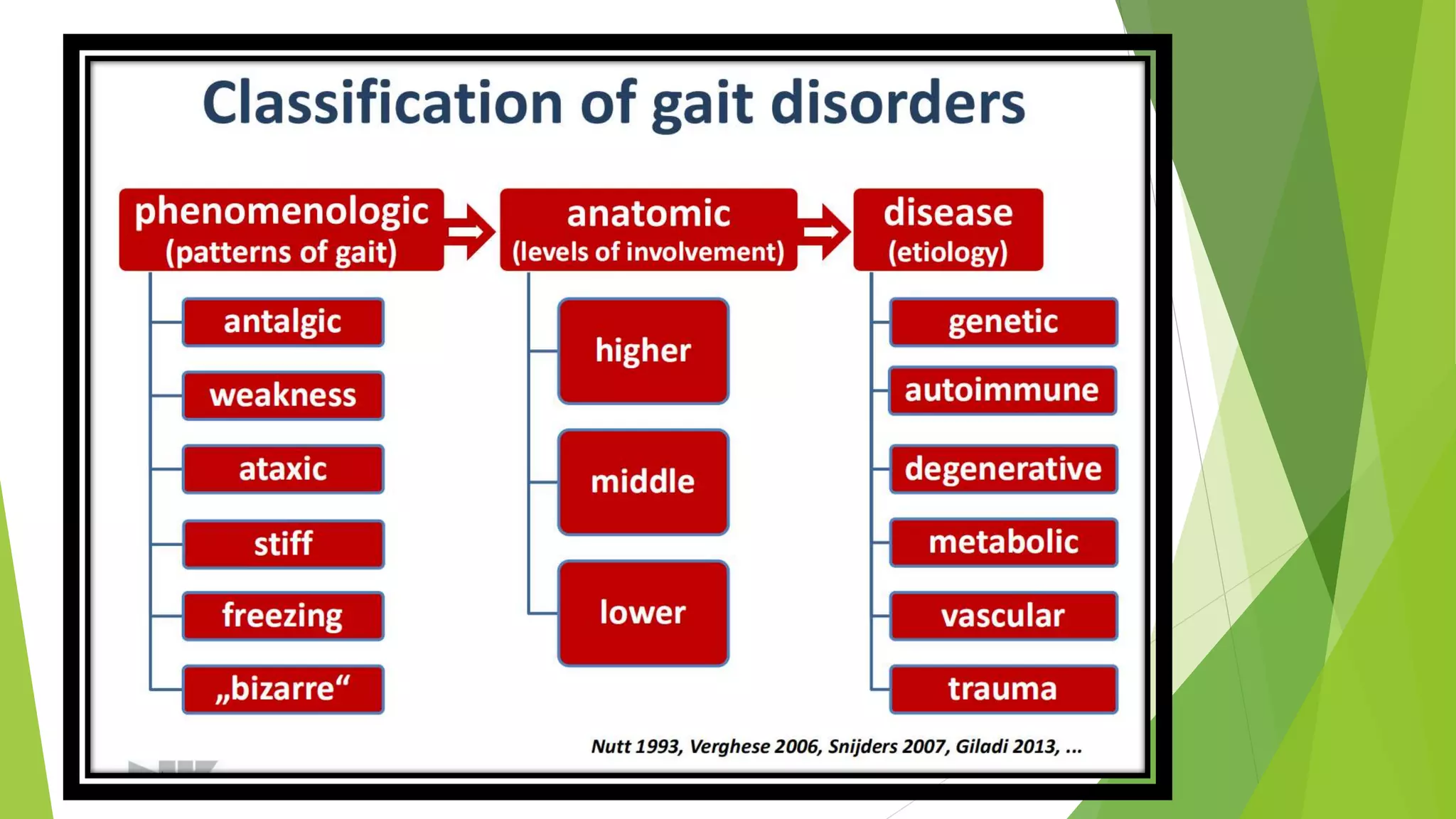
 Classification Of Gait Disorders
 Clinical Assessment Of
Gait Disorders
 Rules In Gait Disorders
 Treatment Of Gait Disorders
Definition
 Station is the way a patient stands and gait the way she walks
 Stance is the posture of standing
 Balance is the ability to maintain stance without falling or excessive lurching
(Benvenuti, 2001)
Introduction
 The prevalence of gait and balance disorders markedly increases with age, from
around 10 % between the ages of 60 and 69 years to more than 60 % in those over
80 years
 Greatly affect the quality of life and restrict the personal independence of those
affected
 Balance and gait problems may be precursors of falls, which are the most
common cause of severe injuries in the elderly
. Ebersbach G, Sojer M, Muller J, Heijmenberg M, Poewe W. Sociocultural differences in gait. Mov Disord. 2000;15(6):1145–7
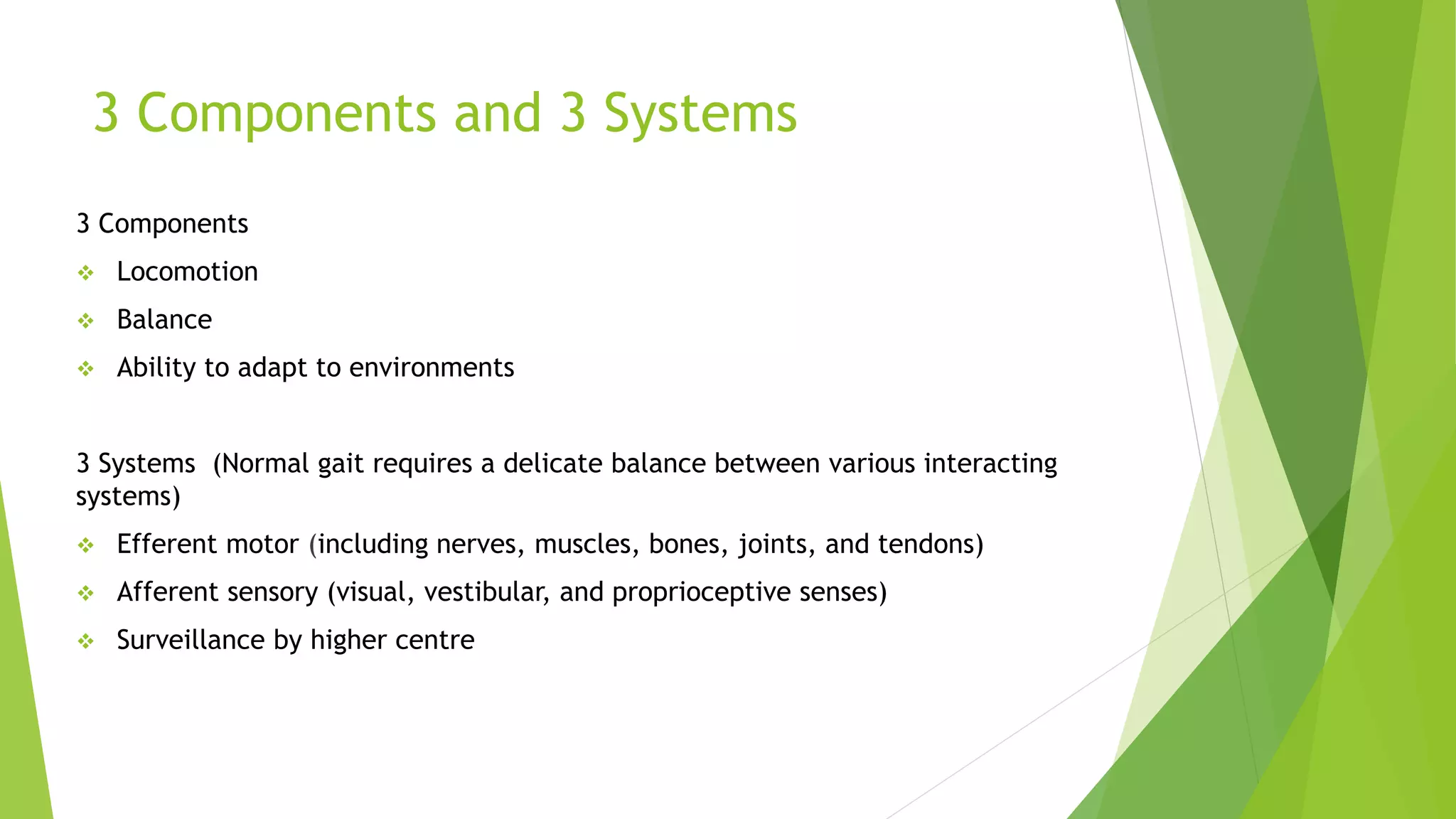
3 Components and 3 Systems
3 Components
 Locomotion
 Balance
 Ability to adapt to environments
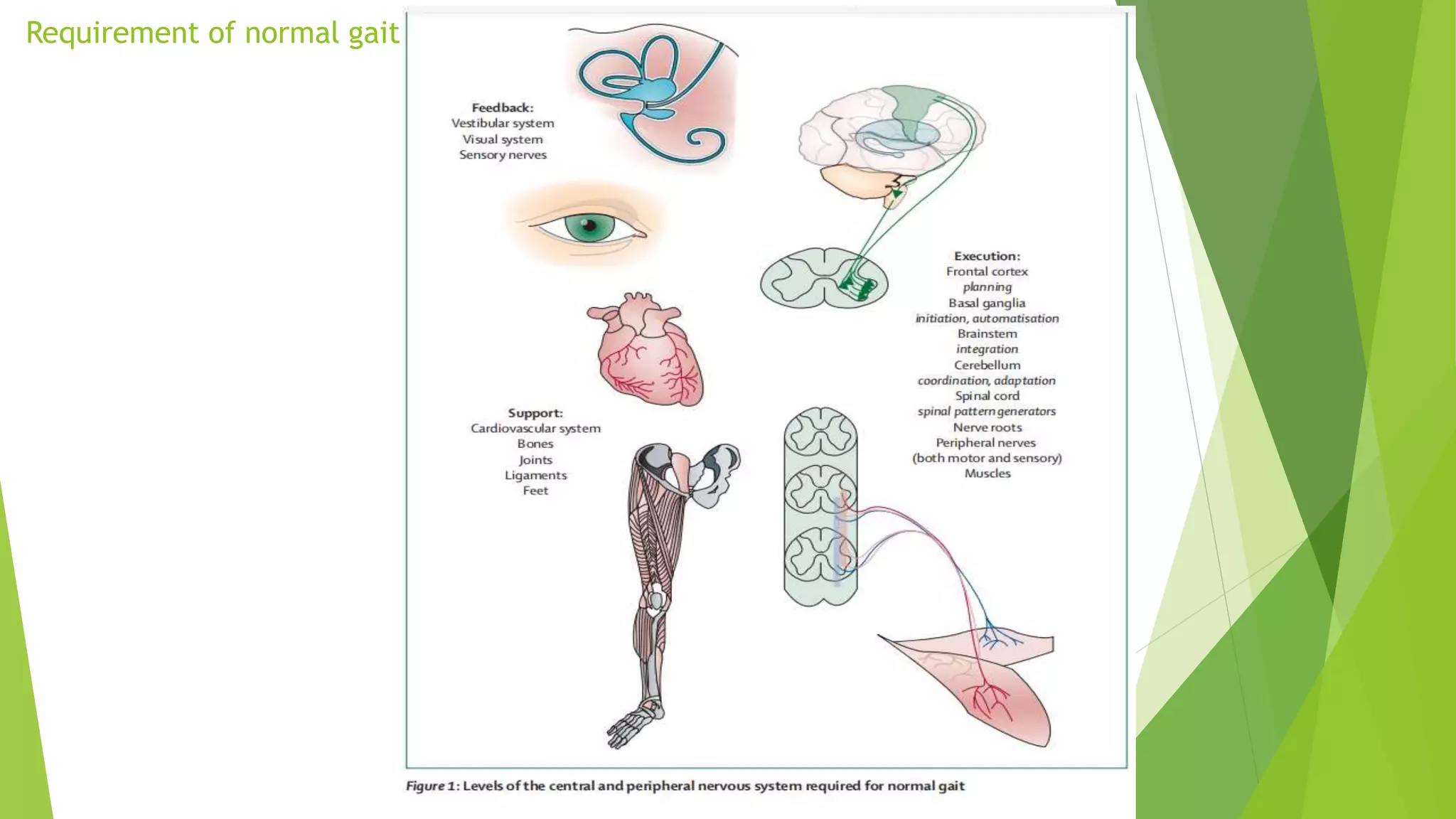
3 Systems (Normal gait requires a delicate balance between various interacting
systems)
 Efferent motor (including nerves, muscles, bones, joints, and tendons)
 Afferent sensory (visual, vestibular, and proprioceptive senses)
 Surveillance by higher centre
Requirement of normal gait
Frequency of etiologies of neurologically referred
undiagnosed gait disorders
 Sensory deficits 18.3%
 Myelopathy 16.7%
 Multiple infarcts 15.0%
 Unknown 14.2%
 Parkinsonism 11.7%
 Cerebellar degeneration 6.7%
 Hydrocephalus 6.7%
 Psychogenic 3.3%
 Other 7.5%
In: Masdeu J, Sudarsky L, Wolfson L, eds. Gait Disorders of Aging: Falls and Therapeutic Strategies. Philadelphia: Lippincott-Raven; 1997, pp. 147–
158,
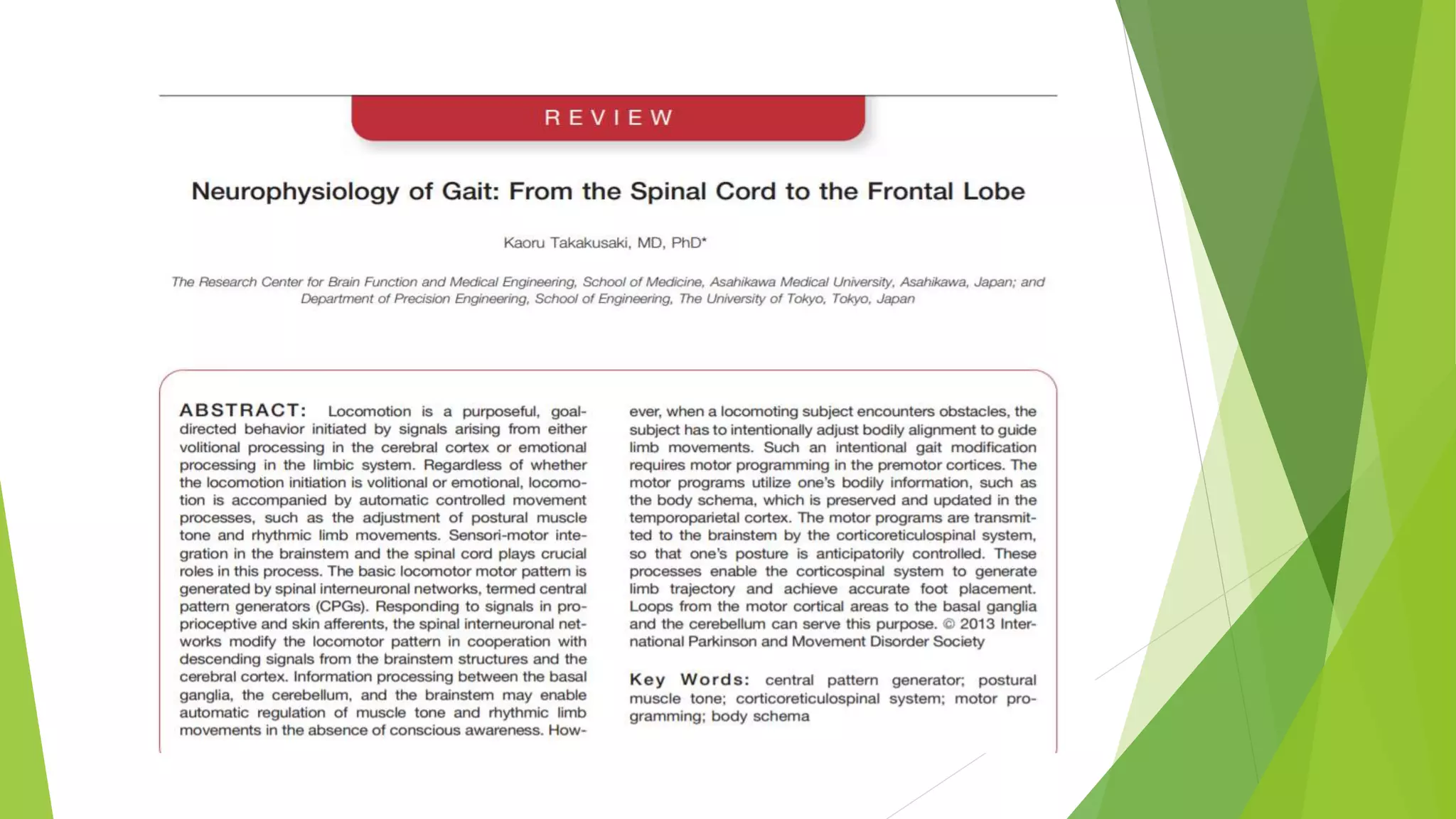
Neurophysiology of Gait
Cognitive information
processing
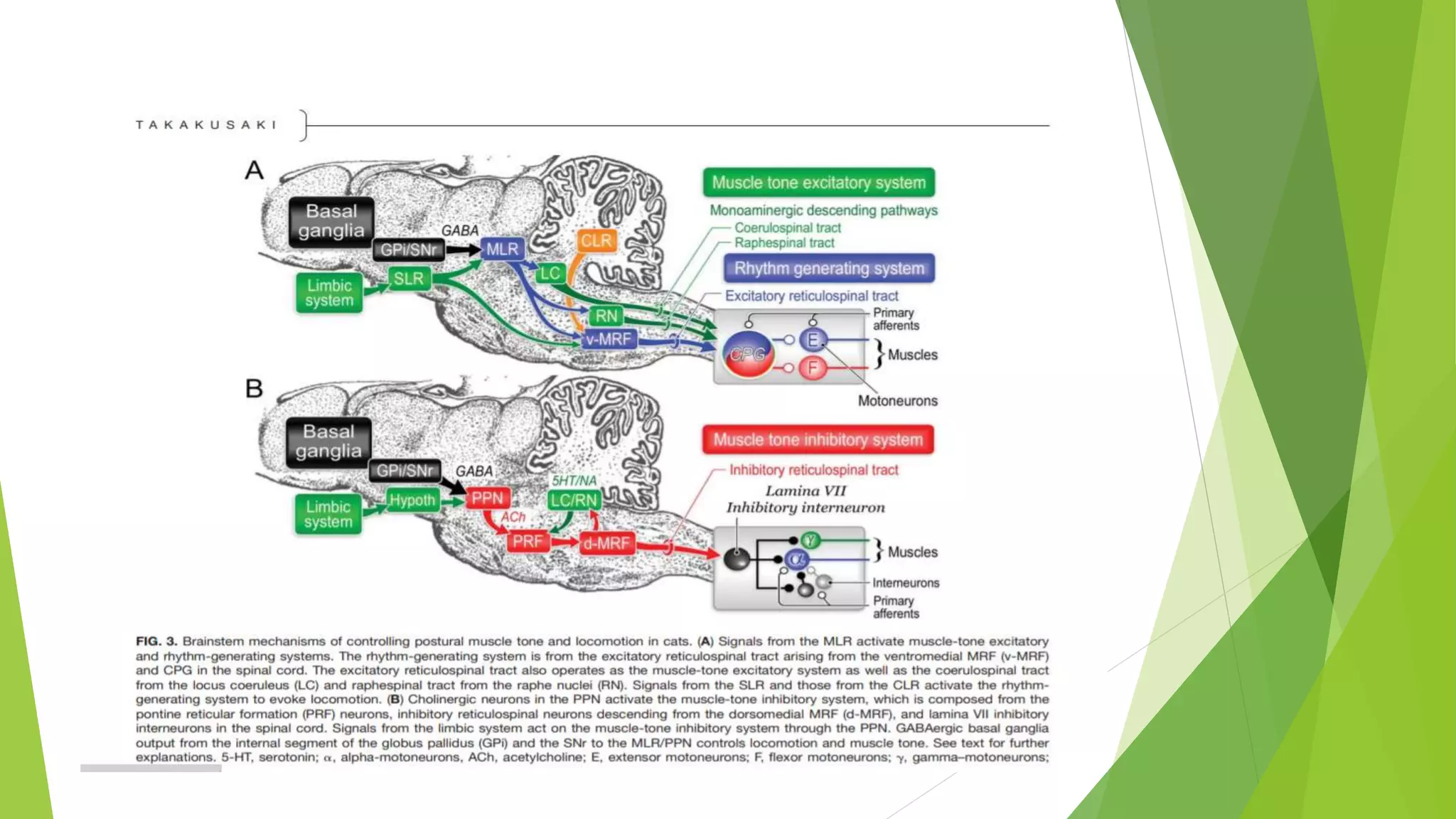
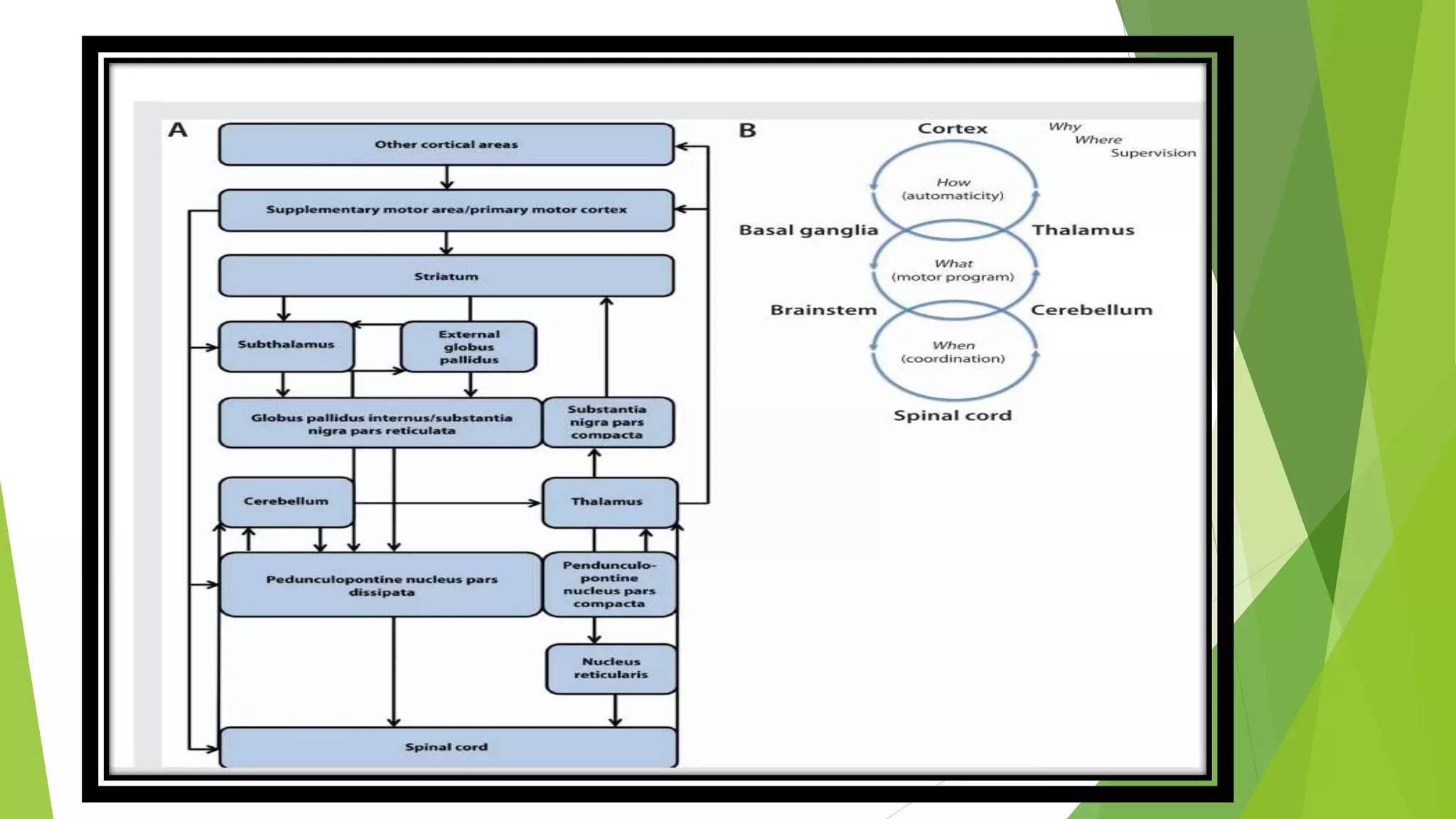
 The movements are generated by a locomotor generator in the spinal cord,
but they are under control by supraspinal mechanisms
 The spinal cord generator can produce only simple, primitive stepping
(Burke, 2001)
 Supraspinal mechanisms are required for a person to go in desired directions,
with desired velocities and to deal well with perturbations
 The pattern generators control the activity in lower motor neurons that
execute the mechanics of walking
 Higher centers in the subthalamus and midbrain, particularly the
pedunculopontine nucleus, modulate the activity in the spinal cord pattern
generators through the reticulospinal tracts
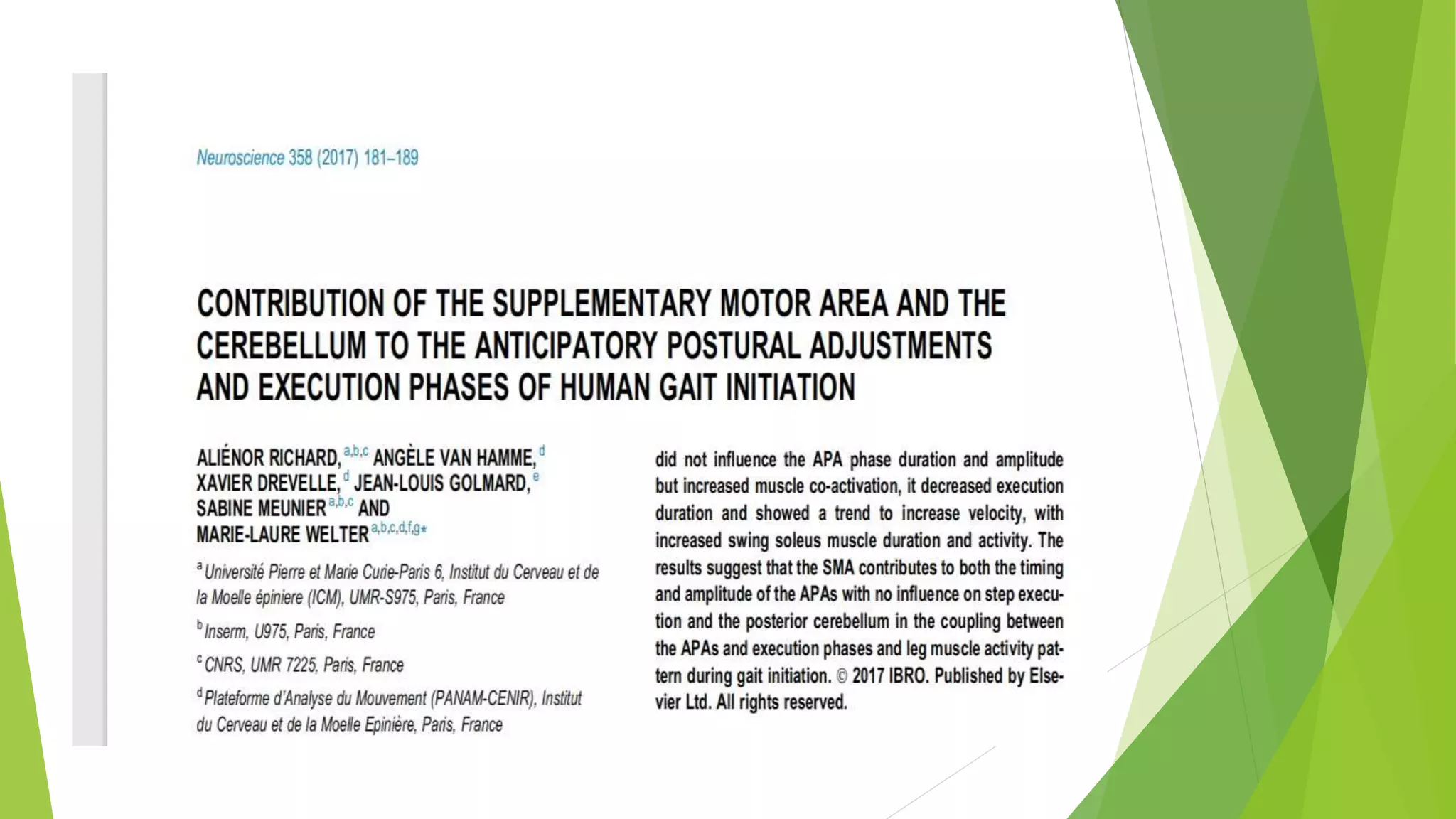
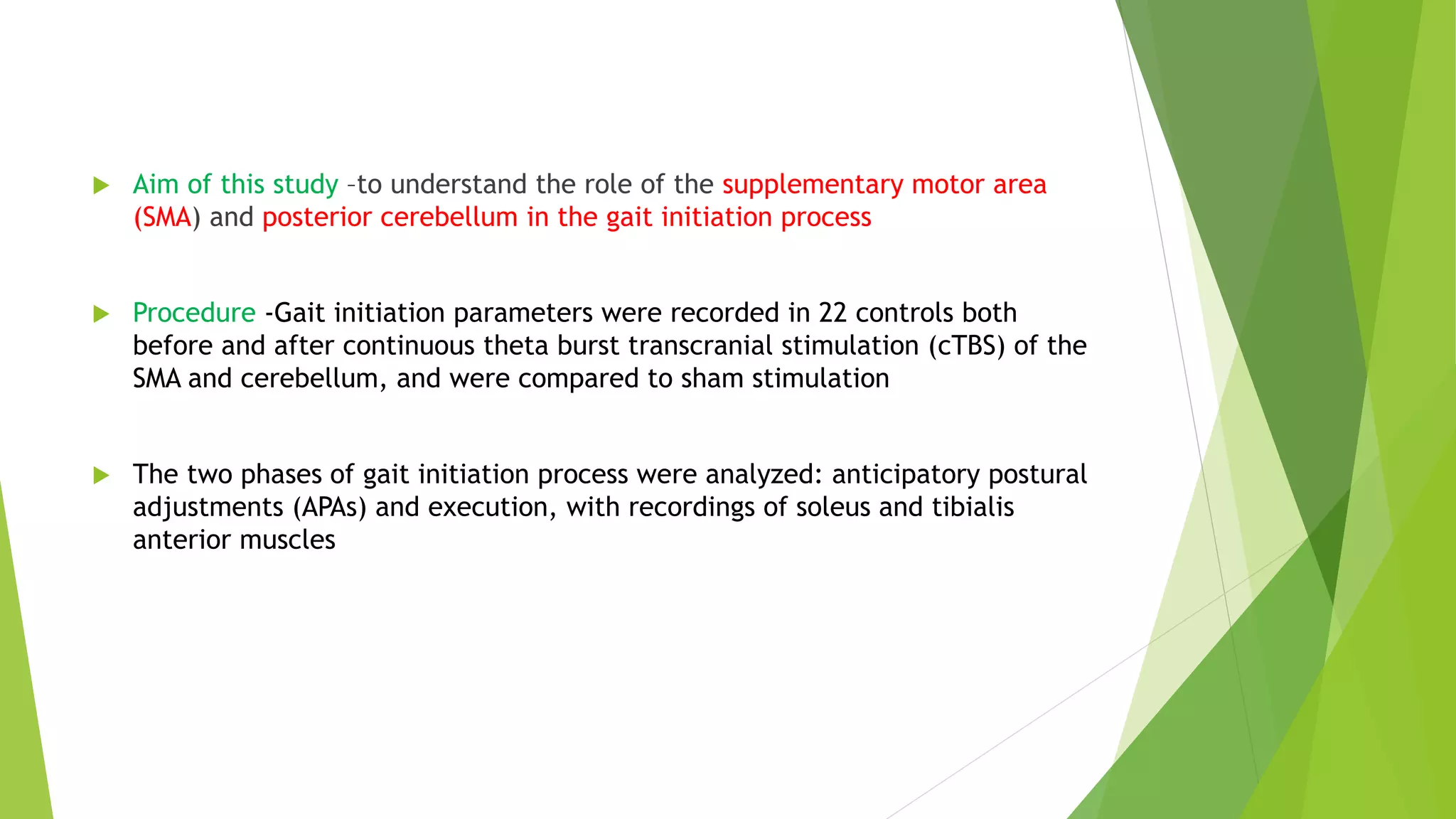
 Aim of this study –to understand the role of the supplementary motor area
(SMA) and posterior cerebellum in the gait initiation process
 Procedure -Gait initiation parameters were recorded in 22 controls both
before and after continuous theta burst transcranial stimulation (cTBS) of the
SMA and cerebellum, and were compared to sham stimulation
 The two phases of gait initiation process were analyzed: anticipatory postural
adjustments (APAs) and execution, with recordings of soleus and tibialis
anterior muscles
 Functional inhibition of the SMA led to a shortened APA phase duration with
advanced and increased muscle activity; during execution, it also advanced
muscle co-activation and decreased the duration of stance soleus activity
 Cerebellar functional inhibition did not influence the APA phase duration and
amplitude but increased muscle co-activation, it decreased execution
duration and showed a trend to increase velocity, with increased swing soleus
muscle duration and activity
Conclusion
 The results support distinct roles for the SMA and the lateral posterior
cerebellum in human gait initiation, with the SMA coding for the timing, and
probably amplitude, of the preparatory phase of the gait initiation, and the
posterior cerebellum contributing to the inter- and intra-limb muscle
coordination, and probably coupling between the APAs and the execution
phases
Gait Cycle
 The gait cycle refers to the events that transpire between the time that one
heel strikes the ground and the time the same heel strikes the ground again
The functional task during the stance phase is to bear weight; the functional task during
swing phase is to advance the limb
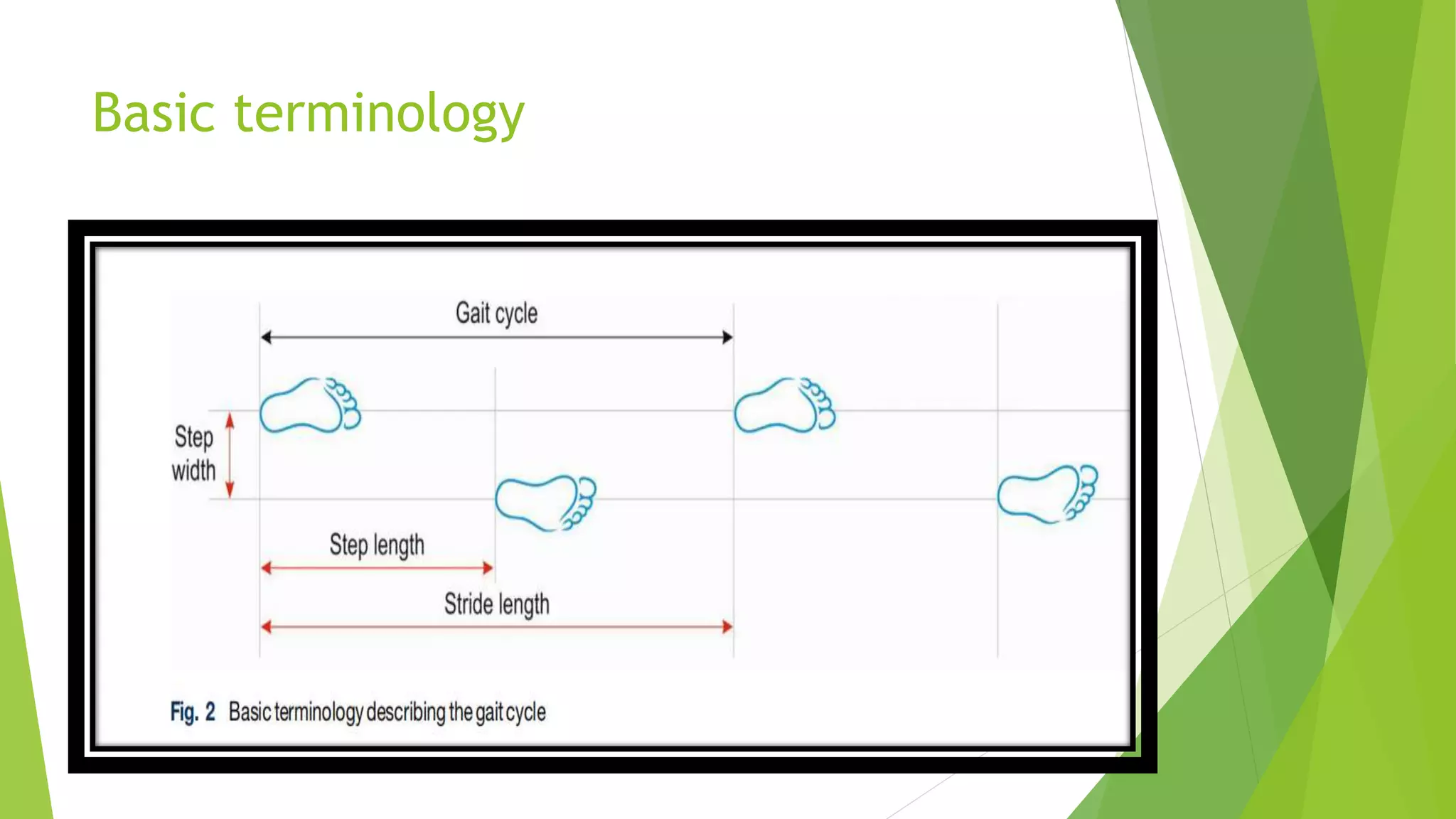
Basic terminology
 Step width-The distance between the two feet at the perpendicular axis to
the walking direction for a given step
 Step height -The maximum distance between the forefoot and ground during
the swing time
 Step length: The distance advanced by one foot compared to the position of
the other
 Stride length: The sum of two consecutive step lengths or the distance
advanced by one foot compared to its prior position
Basic terminology
Basic terminology
 Stance time: The time that the foot is on the floor, measured as the time
between heel strike and toe or heel off, whichever is last
 Swing time: The time that the foot is in the air, measured as the time
between toe off and heel strike
 Cadence: The number of steps per minute
 Step time: The time from heel strike of one foot to the subsequent heel
strike of the contralateral foot.
Normal adult walking
 Walks at a velocity of about 80 m/min,taking about 113 steps per
minute,Stride length of 1.41 m
 About 60% of the gait cycle is spent in stance, 40% in swing, and 10% in
double limb support
Body’s center of mass
 This located just anterior to the S2 vertebral body
 An efficient gait minimizes the displacement of the center of mass by rotating
and tilting the pelvis and flexing and extending the various joints involved.
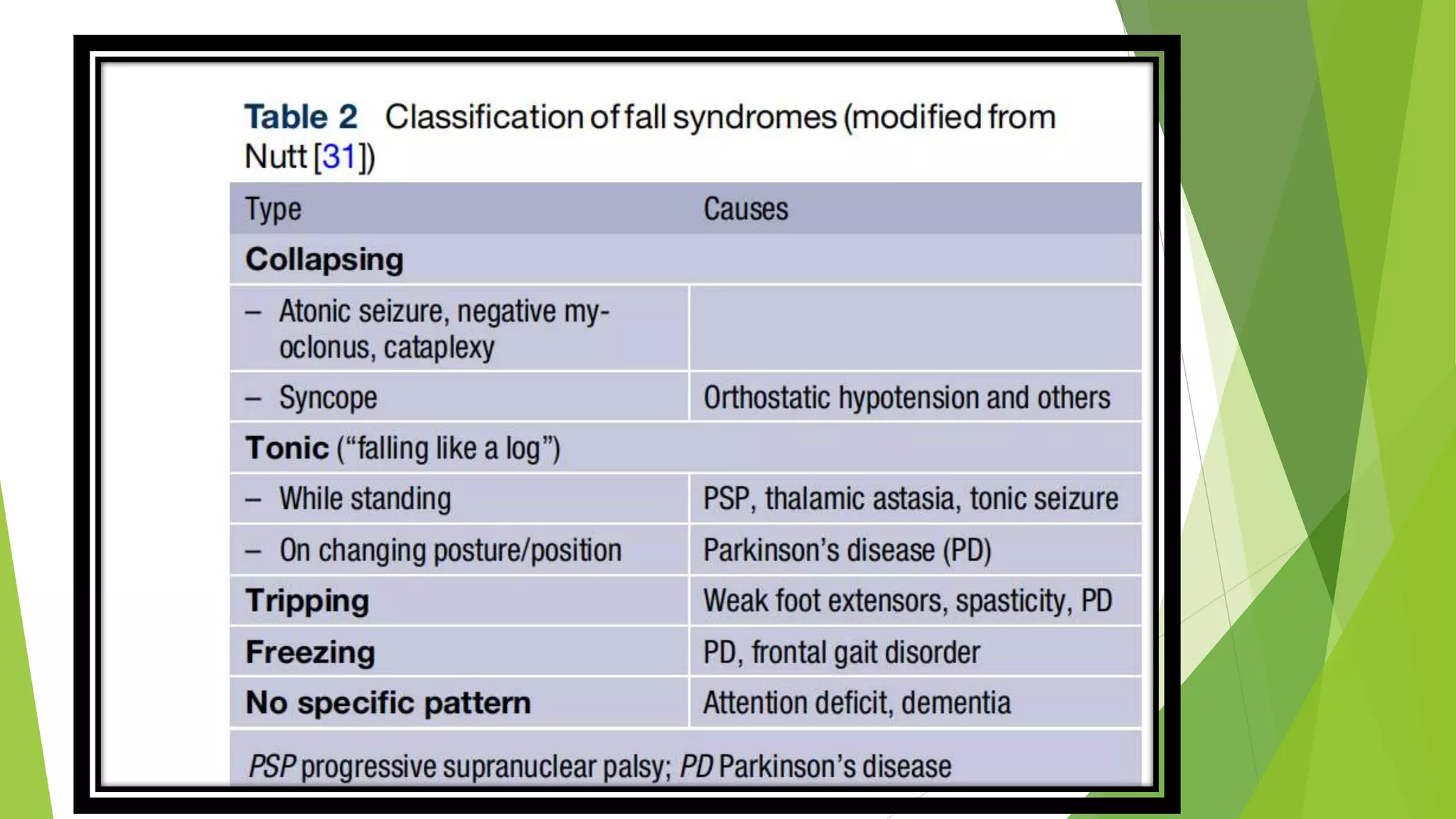
Classification Of Gait Disorders
J.G. Nutt, MD; C.D. Marsden, DSc; and P.D. Thompson, MD
Clinical Assessment of
Gait Disorders
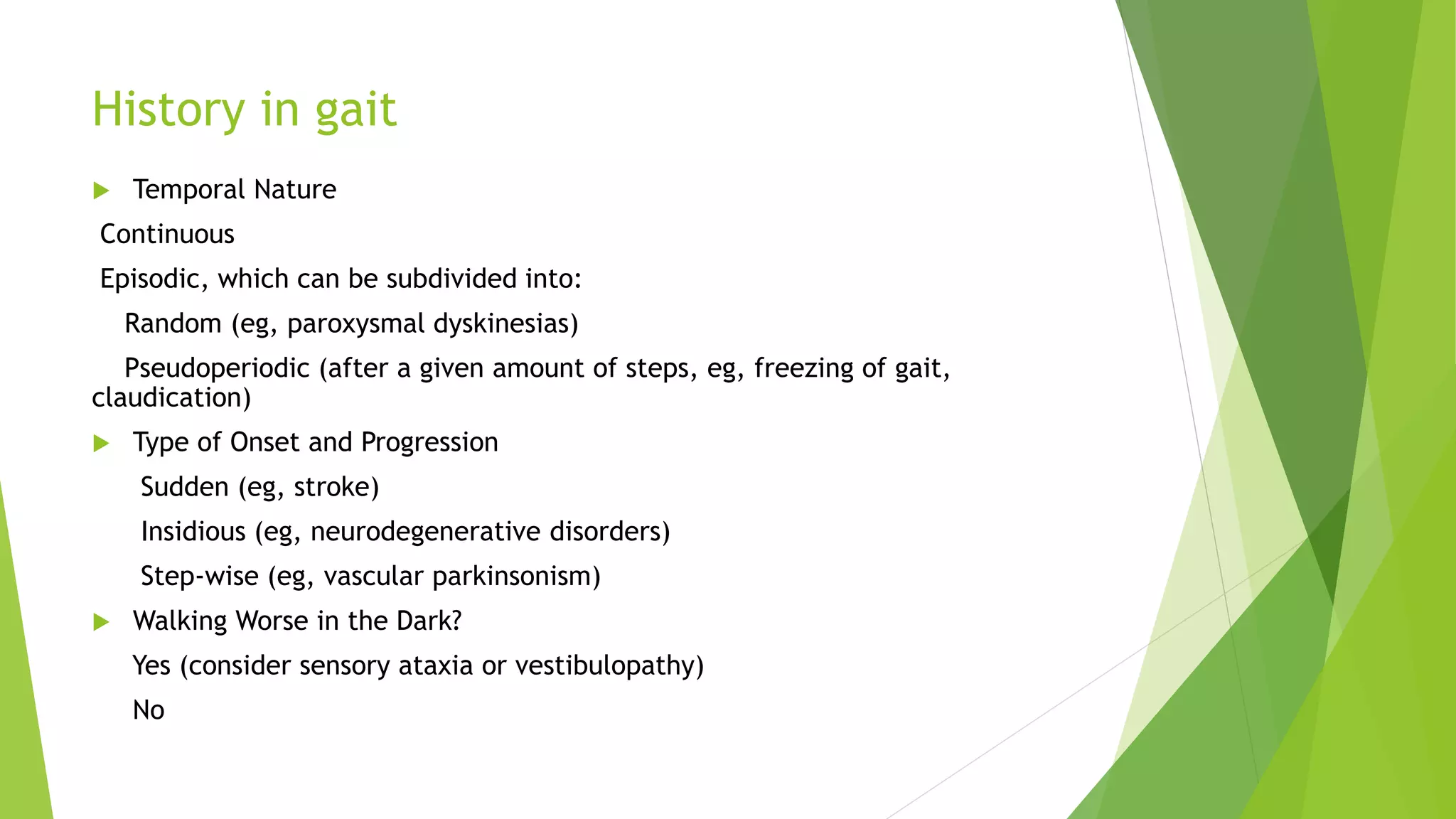
History in gait
 Temporal Nature
Continuous
Episodic, which can be subdivided into:
Random (eg, paroxysmal dyskinesias)
Pseudoperiodic (after a given amount of steps, eg, freezing of gait,
claudication)
 Type of Onset and Progression
Sudden (eg, stroke)
Insidious (eg, neurodegenerative disorders)
Step-wise (eg, vascular parkinsonism)
 Walking Worse in the Dark?
Yes (consider sensory ataxia or vestibulopathy)
No
History in gait
 Use of Walking Aids?
Yes (consider latency to using aids: months versus years)
No (if not, why not? Embarrassment or inability? Consider higher-level gait
disorder)
 Medical History
Prior/current diseases
Psychoactive medications
Intoxication (alcohol)
 Protective Factors
Exercise/fitness level
Amount of daily walking
Adaptation of behavior/activities
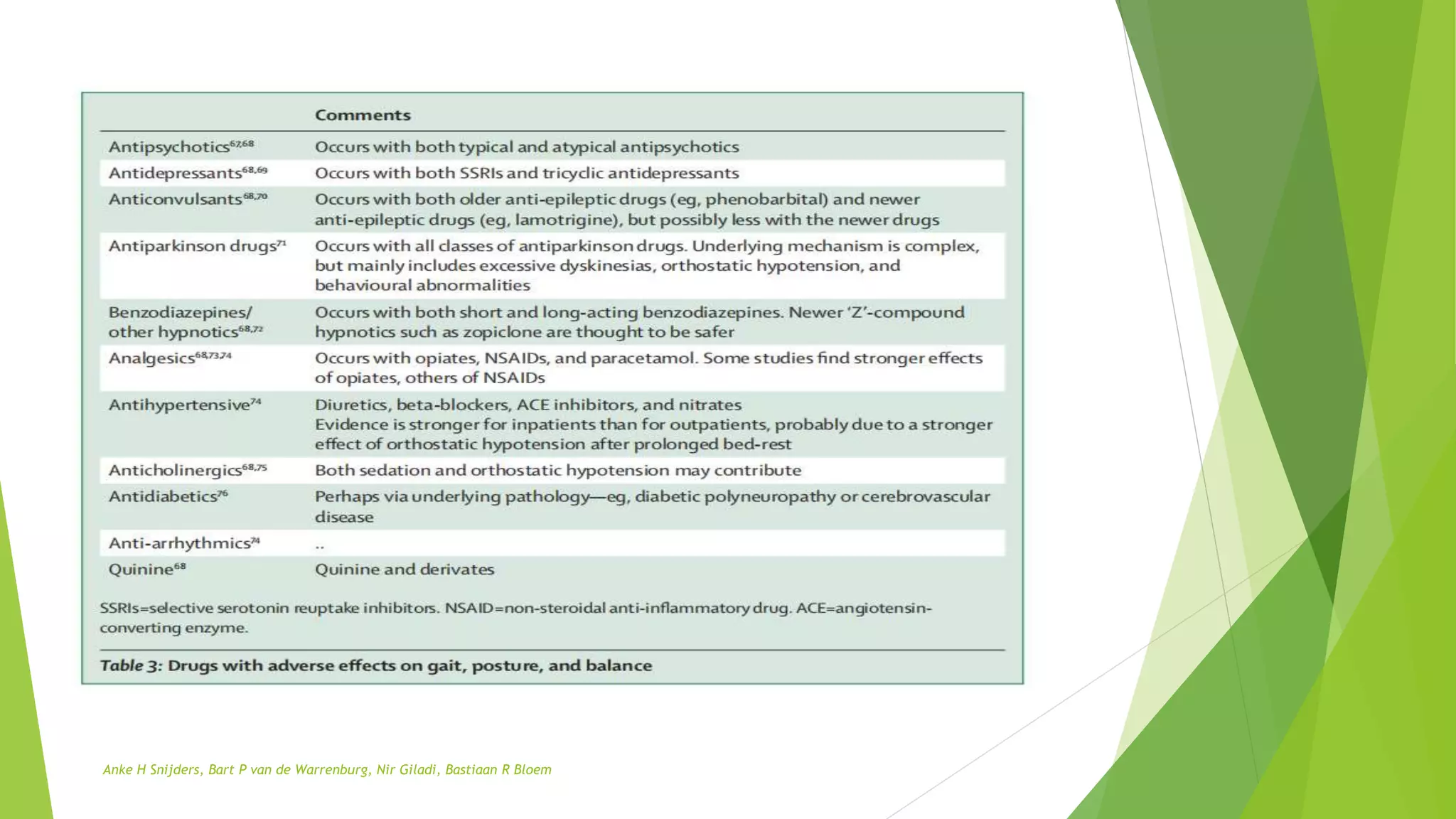
Anke H Snijders, Bart P van de Warrenburg, Nir Giladi, Bastiaan R Bloem
Fall History
 Frequency of prior falls and near-falls
Single (in absence of extrinsic cause, search for risk factors)
Recurrent
 Specific fall pattern?
 Apparent cause of the fall(s):
None (spontaneous, consider intrinsic causes)
Extrinsic (environmental, eg, slippery floor)
Fall History
 Intrinsic (patient-related)
Symptoms preceding the fall:
Loss of consciousness (consider syncope, epilepsy, or psychiatric conditions)
‘‘Funny turns’’ (vertigo, presyncope)
Palpitations, chest pain, breathlessness
Sudden weakness of the legs (drop-attack, cataplexy)
Behavior:
Performing several activities simultaneously
Hazardous behavior
Inappropriate footwear
 Symptoms after the fall:
Confusion (consider epilepsy)
Inability to stand up
Physical injury
Fear of falling
Signs based examination
NATURE 2018
Signs based examination
 Sitting
 Rising from chair
 Quite standing
 walking
Sitting
 Leaning sideways
 Drifting backwards
 Forwards dropping of the head
 Backwards dropping of the head
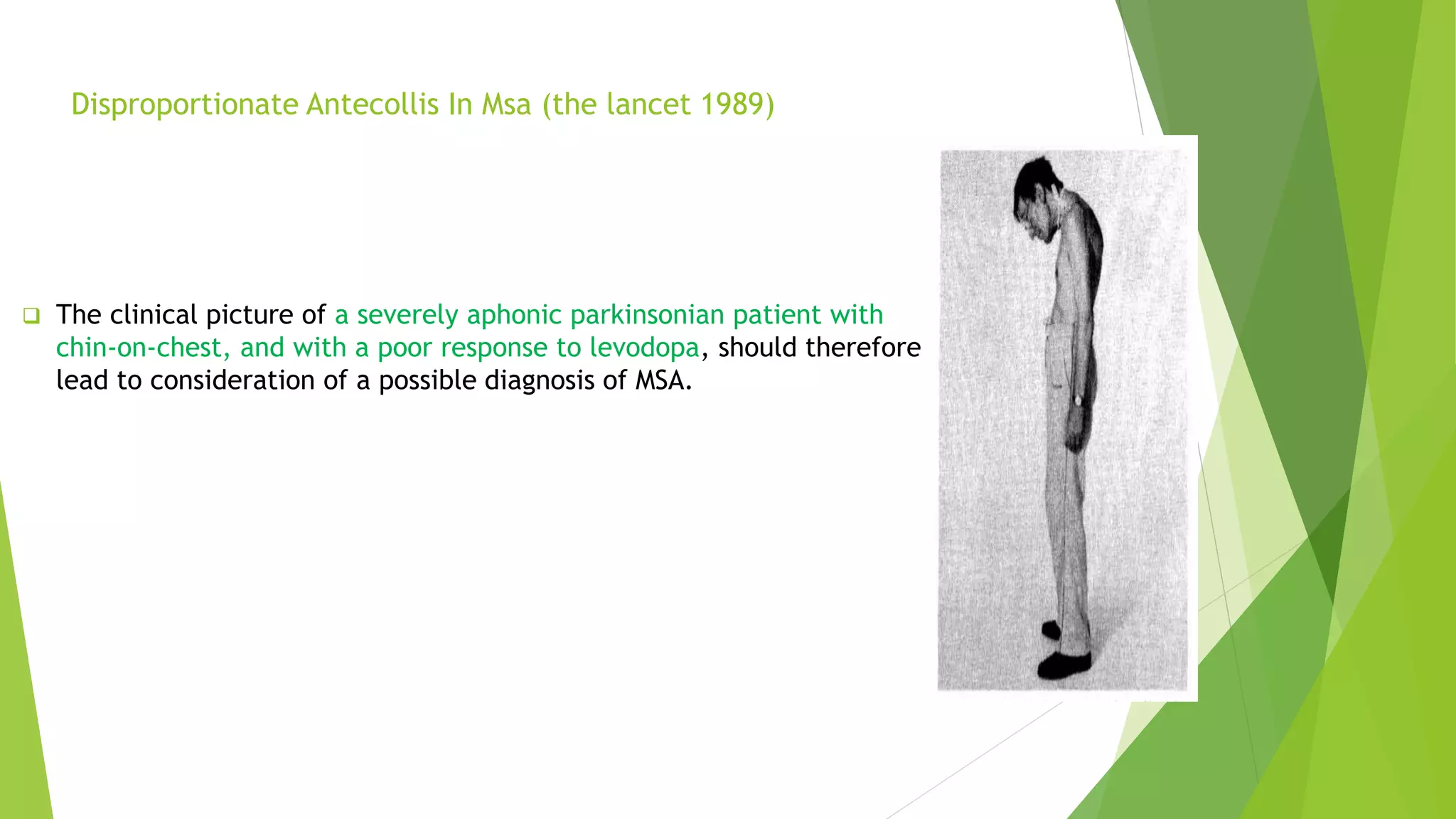
Disproportionate Antecollis In Msa (the lancet 1989)
 The clinical picture of a severely aphonic parkinsonian patient with
chin-on-chest, and with a poor response to levodopa, should therefore
lead to consideration of a possible diagnosis of MSA.
2.Rising from chair
 Inappropriate motor
strategies
 Slow ,requiring multiple
attempts, or needing to push
off with arms
 Reckless rising
 Shaking of leg upon standing
 Leg wide apart while arising
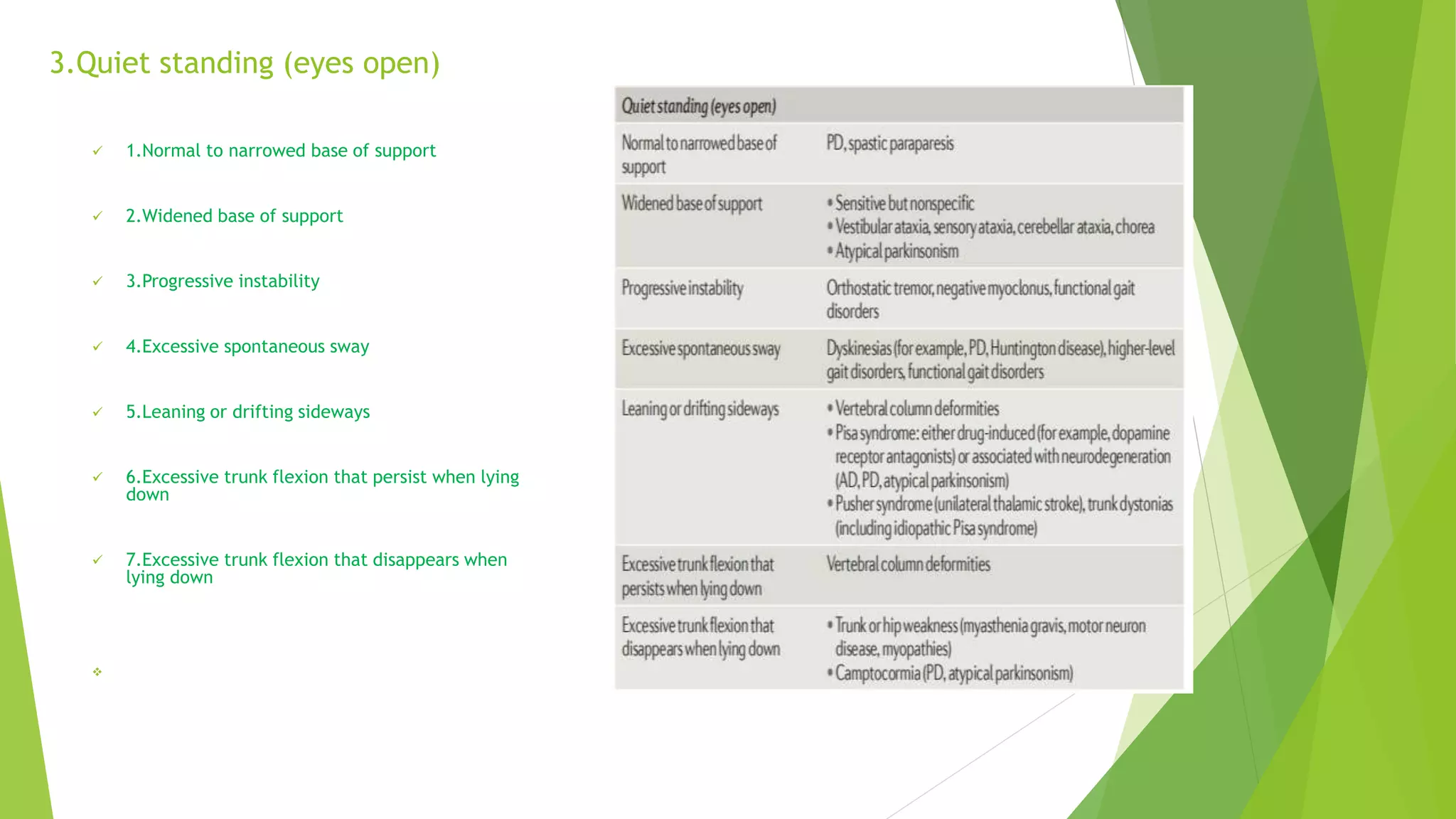
3.Quiet standing (eyes open)
 1.Normal to narrowed base of support
 2.Widened base of support
 3.Progressive instability
 4.Excessive spontaneous sway
 5.Leaning or drifting sideways
 6.Excessive trunk flexion that persist when lying
down
 7.Excessive trunk flexion that disappears when
lying down

Step length, height and cadence
 Reduced step height –PD ;foot drop
 Small step –Pain(orthopaedic disorders),PD, atypical parkinsonism, NPH
 Irregular step size-Cerebellar ataxia, vestibular ataxia, chorea, higher level
of gait disorders
 Reduced stance phase on affected side(limping) –pain (trauma ,arthritis
,functional gait disorders )
Gait speed
 Slow (Nonspecific) –PD, higher–level gait disorders, functional, pain
 Fast, safe- Vestibular syndrome, orthostatic tremor
 Fast ,unsafe- AD, frontal disinhibition
UMN GAIT
 Circumduction Gait
 Scissoring Gait
 Cerebral Diplegic Gait
 Cervical Myelopathic Gait
Hemiparetic gait
 Caused by a unilateral lesion interrupting the corticospinal pathways
 The patient stands with a hemiparetic posture, arm flexed, adducted, and
internally rotated, and leg extended
 With each step, the pelvis tilts upward on the involved side to aid in lifting
the foot off the floor (hip hike)and during swing phase, the entire extremity
sweeps around in a semicircle from the hip (circumduction)
 Loss of normal arm swing and slight circumduction of the leg -mild
hemiparesis
Hemiparetic gait
Spastic gait / Scissoring gait
 Bilateral hemiparetic gait affecting the legs
 There is characteristic tightness of the hip adductors
 Walks on an abnormally narrow base, with a stiff shuffling gait, dragging both legs
and scraping the toe
 The shuffling, scraping sound— together with worn areas at the toes of the
shoes—are characteristic
 Patients to walk on tiptoe
 Congenital spastic diplegia (Little’s disease, cerebral palsy), chronic myelopathies
Scissoring gait
The Spastic-Ataxic Gait
 Involvement of both the corticospinal and the proprioceptive pathways
 The ataxic component may be either cerebellar or sensory
 In vitamin B12 deficiency, it is predominantly sensory; in MS, both
components may be present
Cerebellar Ataxia
 The only sign of mild ataxia may be the inability to walk tandem
 A clumsy, staggering, unsteady, irregular, lurching, titubating, and wide-based
gait, and the patient may sway to either side, back, or forward
 Leg movements are erratic, and step length varies unpredictably
 Walking a few steps backward and forward with eyes closed may bring out
“compass deviation” or a “star-shaped gait”
 Either unilateral cerebellar or vestibular disease may cause turning toward
the side of the lesion on the Unterberger-Fukuda stepping test
LMN GAIT
 High Steppage Gait
 Waddling Gait
 Dragging Gait
 Quadriceps Gait
Waddling Gait
 Myopathic gaits occur when there is weakness of the hip girdle muscles
 If the hip flexors are weak-pronounced lordosis
 The hip abductor muscles are vital in stabilizing the pelvis, while walking
 Trendelenburg’s sign is an abnormal drop of the pelvis on the side of the swing leg
because of hip abductor weakness
 When the weakness is bilateral, there is an exaggerated pelvic swing that results
in a waddling gait.
WADDLING GAIT
Gaits Associated with Focal Weakness
 With paralysis of the gastrocnemius and soleus muscles, the patient is unable
to stand on the toes
 In weakness of the quadriceps muscle (e.g., femoral neuropathy), there is
weakness of knee extension, and the patient can only accept weight on the
affected extremity by bracing the knee
 Lumbosacral radiculopathy may cause either foot drop or a unilateral
Trendelenburg’s gait, or both
High Steppage Gait
 The patient takes a high step, throws out her foot, and slams it down
on the floor in order to increase the proprioceptive feedback
 The heel may land before the toe, creating an audible “double tap.”
 Unilateral steppage gait - peroneal nerve palsy and L5 radiculopathy
 Bilateral steppage gait -ALS, CMT and other severe peripheral
neuropathies, certain forms of muscular dystrophy
Cock walk gait
 High stepping gait
 Strutting on toes
 Flexed elbows and erect spine
 Seen in manganese toxicity (welders),methcathinone poisioning ,PANK
associated neurodegenration ,SCA3
Cock walk gait
Dromedary gait
 Rolling ,high Stepping gait with protrusion of buttocks due to excessive
lordosis
 Seen in patients with generalised dystonia especially DYT1 primary dystonia
Hobby Horse Gait
 Toe walking ,stiff legs and skipping gait
 Seen in DYT4 due to TUBB4a mutation
 Begins as whispering dysphonia and dystonia generalises
Hobby Horse Gait
Choreic Gait
 Dancing gait
 Represents the superimposition of chorea on the locomotor movements
 Stepping is also uncoordinated and appears dysmetric like an ataxic gait
Choreic Gait
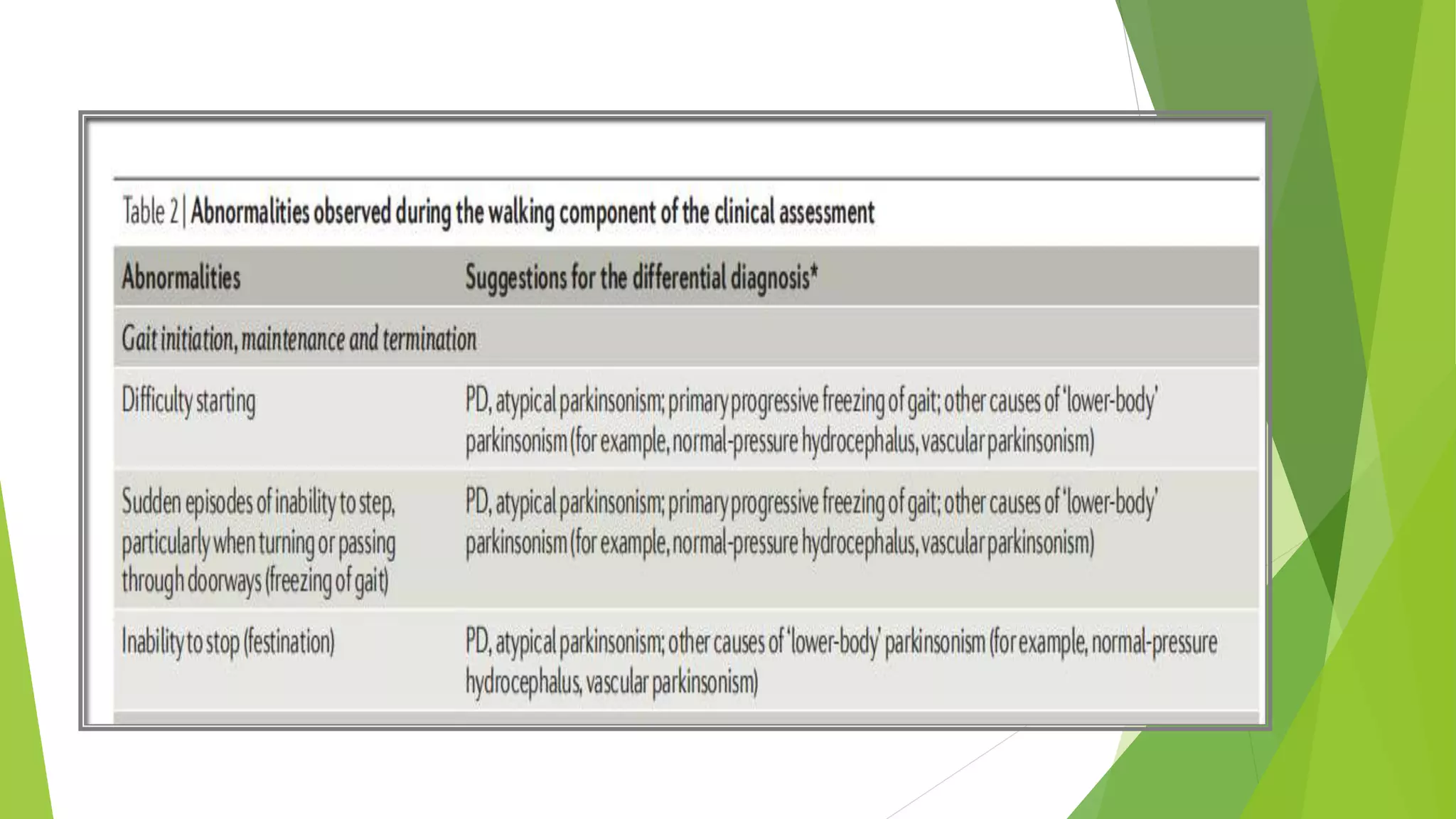
Freezing
 Motor blocks
 Characterized by lack of movement with the feet looking like they are glued
to the floor (Snijders et al., 2008)
 Patients often look like they are trying to move, but they cannot
 Can occur when trying to initiate gait, in which circumstance it has also been
called “start hesitation”
Pathophysiology Of Freezing
 Defective bilateral coordination of stepping (Plotnik et al., 2008)
 There is an association of freezing with loss of frontal lobe executive function
(Amboni et al., 2008)
 Sequence effect where sequential movements become progressively smaller
(Iansek et al., 2006; Chee et al., 2009)
 In addition to the absence of movement, another form of Freezing is
characterized by rapid, side-to-side shifting of weight, but no lifting of the
feet and no forward progression (“slipping clutch syndrome”)
 IPD,PSP, Vascular parkinsonism and normal pressure hydrocephalus
 It seems less common in MSA and drug-induced parkinsonism (Giladi, 2001).
Additional test
Helps to differentiate
 Turning of head during gait –Worsening of gait seen in vestibular ataxia
 Walking backwards compared to walking forwards –Discrepant features seen in
Dystonia and functional gait disorders (inconsistency )
 Tandem walking –impaired in atypical PD
 Better running than regular walking—Dystonia ,PD, functional gait disorders
Detection of symptoms –
 Rapid 360 turn on the spot-Evoked FOG in PD and atypical parkinsonism
 Walking rapidly with short steps -Evoked FOG in PD and atypical parkinsonism
 Pull test or push and release test –patients with postural instability responds
with more than two steps
The Romberg Sign
 When proprioception is disturbed, the patient may be able to stand with eyes
open but sways or falls with eyes closed (Romberg sign)
 Turning the head side to side eliminates vestibular clues and increases the
reliance on proprioception (Ropper’s refined Romberg test)
 Some histrionic patients will sway with eyes closed in the absence of any
organic neurologic impairment (false Romberg sign). The swaying is usually
from the hips and may be exaggerated. If the patient takes a step, the eyes
may remain closed, which never happens with a bona fide Romberg
 The toes of the patient with histrionic sway are often extended; the patient
with organic imbalance flexes the toes strongly and tries to grip the floor.
Standardized Rating Scales
Generic
 Tinetti Mobility Index -Includes an evaluation of gait features and balance
under challenging conditions ,Poor performance is associated with an
increased risk of falls
 Gait and Balance Scale
 Berg Balance Scale
Disease-specific
 Eg, Freezing of Gait Questionnaire
The Parkinsonian Gait
 Rigidity, bradykinesia, and loss of associated movements
 The patient is stooped, with head and neck forward and knees flexed; the
upper extremities are flexed at the shoulders, elbows, and wrists, but the
fingers are usually extended
 The gait is slow, stiff, and shuffling; the patient walks with small, mincing
steps
 Other features include involuntary acceleration (festination), decreased arm
swing, en bloc turning, start hesitation, and freezing when encountering
obstacles such as doorways
PD
The highest-level disorders
 Malfunction of the cerebral hemispheres
 Include disorders arising from psychiatric origin, including cautious gait and
psychogenic gait
 These disorders are not completely distinct from each other; patients may
have characteristics of more than one or may progress from one to another
(Jankovic et al., 2001; Nutt, 2001; Thompson, 2001).
Highest-level disorders
 Cautious gait
 Subcortical disequilibrium
 Isolated gait ignition failure
 Frontal gait disorder
 Psychogenic gait disorder (PGD)
Proposed
terminology
Previous terms Lesions
Cautious Elderly and senile gait Musculoskeletal ,PNS,CNS
Subcortical
disequilibrium
Tottering
Astasia-abasia
Thalamic astasia
Midbrain
Basal ganglia
Thalamus
Frontal
disequilibrium
Gait apraxia
Frontal ataxia
Astasia-abasia
Frontal lobe and
white matter
connections
Isolated gait
ignition failure
Gait apraxia
Magnetic gait
Slipping clutch gait
Lower half
parkinsonism
Arteriosclerotic
parkinsonism
Trepidant abasia
(Petren’s gait)
Frontal lobe,
white matter
connections and
basal ganglia
Frontal gait
disorder
March A petits pas
Magnetic gait apraxia
Arteriosclerotic
parkinsonism
Parkinsonian ataxia
Lower half
Lower body
parkinsonism
Parkinsonism
Frontal lobe and
white matter
lesions
J.G. Nutt, MD; C.D. Marsden, DSc; and P.D.
Thompson, MD
Subcortical Disequilibrium
 Severe impairment of balance (Masdeu, 2001)
 Dysfunction at midbrain,basal ganglia,thalamic level
 Often a feature of parkinsonism plus disorder
 Also know as thalmic astasia
frontal disequilibrium, isolated gait ignition failure, and frontal gait disorder, are
frequently difficult to separate from each other
Frontal Disequilibrium/Frontal Apraxic Gait /Bruns Ataxia
 B/L frontal lobe disorders
 Difficulty in stepping
 Due to damage to front-pontocerebellar tract
 The concept of apraxia comes from the observation that leg movements unrelated to
walking seem reasonably good
 Frontal lobe signs +
Isolated Gait Ignition Failure
 Difficulty in initiating and sustaining locomotion
 The patient has freezing ,while initiating steps
 The term Primary Progressive Freezing Gait has also been used (Factor et al.,
2002)
 Walk normally once they get started
Frontal gait disorder
 Short, shuffling steps, poor balance, initiation failure, and hesitations on
turns
 Differentiating features are a more upright stance, lack of tremor, frontal
lobe signs, and apparent involvement of only the lower part of the body
(Thompson, 2001)
 This last feature gives rise to the term “lower half parkinsonism” or “lower
body parkinsonism.”
Etiologies -
 Subcortical arteriosclerotic encephalopathy (Binswanger disease)
 Multi-infarct state
 Anterior cerebral artery stroke
 Normal pressure hydrocephalus
 Pick disease
 Alzheimer disease, frontotemporal dementia
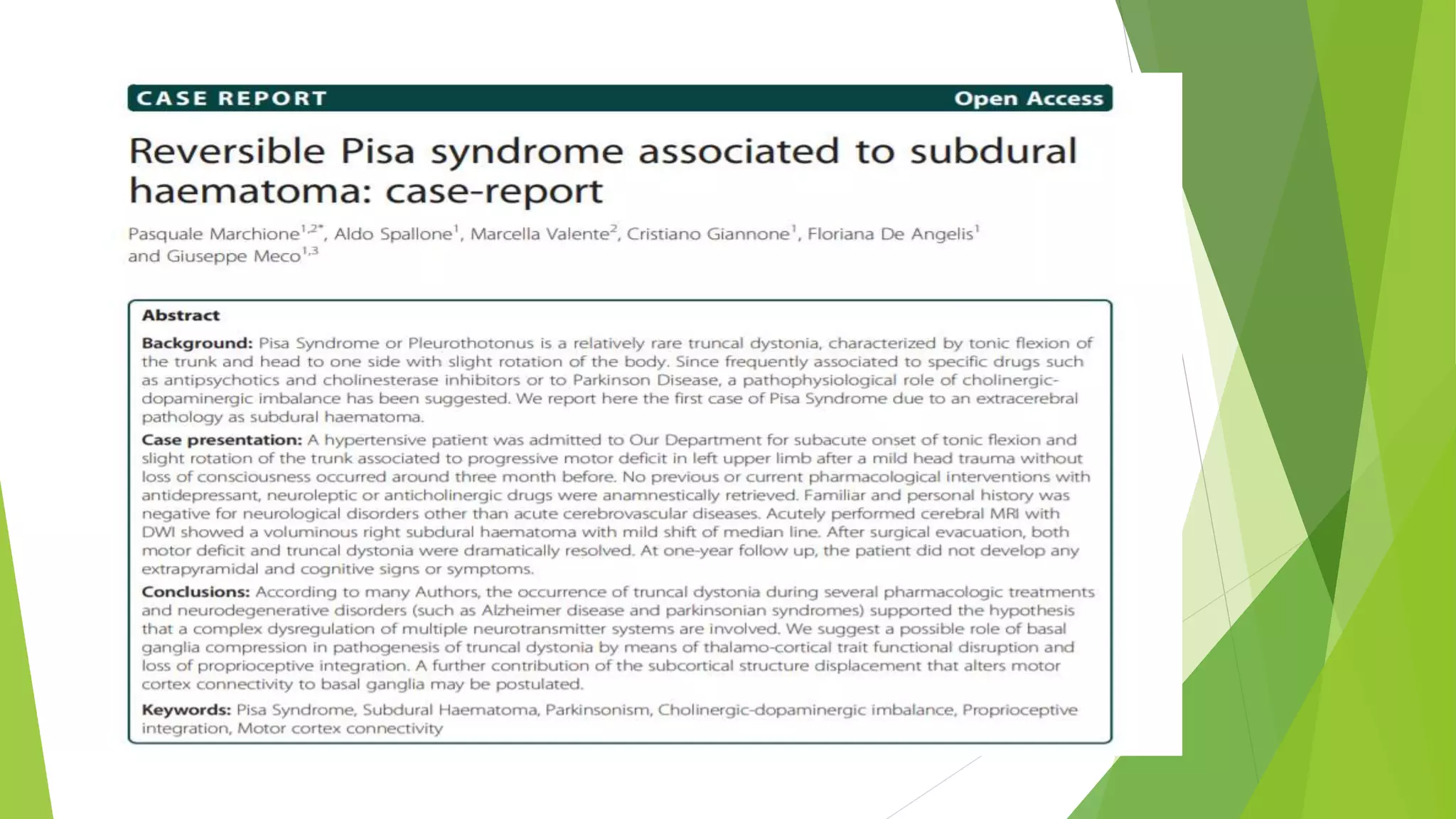
 Subdural hematoma, brain tumors, multiple sclerosis,
 Progressive supranuclear palsy (PSP), and corticobasal degeneration
(Thompson, 2001).
NPH Gait
 Short stride length
 Reduced foot clearance
 Freezing
 Gait apraxia
Cautious gait/ “space phobia”
 Walking on ice
 There is a wide base with slow, short steps; turns are en bloc. Arms are tense
 With support there is marked improvement
Psychogenic gait
 Astasia–abasia or Acrobatic gait
 Unusual patterns of stance and gait
 often dramatic, with lurching
 falls are rare
 Sudden knee buckling without falling is a common pattern
 A suffering or strained facial expression, with moaning and hyperventilation
(Lempert et al., 1991)
Marché à petit pas
 Walking with very short, often shuffling, steps
 This is most typical of a multi-infarct state, but can be seen with
parkinsonism
HLGD
 Anterior (frontal) and Posterior (Parietotemporo-occipital), a division that
may have pathophysiological implications
 Frontal or anterior HLGD is the most common form of HLGD
 This pattern of HLGD is characterized by freezing of gait (FOG), small steps,
and disequilibrium
 Frontal HLGD, arose from dysfunction in the cortical basal ganglia loop
 This frontal or anterior HLGD category encompasses gait disorders associated
with the various parkinsonian syndromes, multi-infarct and subcortical small-
vessel disease, normal-pressure hydrocephalus, and a multitude of other
frontal lobe pathologies
 Instead of the 5 categories originally proposed,2 clinical subcategories of
anterior HLGD have been suggested, a predominantly disequilibrium subtype
and a predominantly locomotor subtype
 Predominantly locomotor problems are manifest as start and turn hesitation
and FOG. If no etiology is apparent, this gait pattern is sometimes termed
primary progressive FOG
 Predominant disequilibrium as can occur in patients with progressive
supranuclear palsy or frontal lesions
Posterior HLGD
 Are characterized by abnormalities in which the sense of postural vertical
may be disturbed or other distortions of environment and body maps are
present
 This syndrome has been associated with parietal and thalamic strokes.
Therapeutic considerations
 Etiologic considerations
 Symptomatic treatments
 Physical therapy can help with strengthening exercises or practice with
elemental coordination
 Walking aids from canes to walkers
Medical
 Anti spasticity drugs -Baclofen, dantrolene, and tizanidine
 focal spasticity-BoNT
 Anticholinergics, baclofen, and BoNT can be used to treat dystonia
 Antiepileptics and clonazepam for the treatment of paroxysmal dyskinesias
and myoclonus
Medical
 Dopaminergic drugs-hypokinetic gait including freezing
 Levodopa resistant FOG –Methylphenidate through noradrenergic mechanism
 Improvement in PPFOG-Duloxetin(SNRI),high dose selegiline
 Donepezil can be used in levodopa resistant FOG
 The extended-release formulation of 4-AP (dalfampridine) dosed at 10 mg
twice daily – improves walking in people with multiple sclerosis
Treatment of falls
 PD-Levodopa
 Vestibular disease-Vestibular sedatives
 Episodic ataxia-Acetazolamide
 Fall associated with executive dysfunction-Methylphenidate, donepezil
Surgical
 DBS OF GPi is good alternative
 VP Shunt for NPH patients
 Dorsal rhizotomy for spasticity
 Subthalamic nucleus stimulation improves off periods of freezing
 THANK YOU

Gait -Normal and Abnormal gait :Physiology and Management

  • 1.
    Normal And AbnormalGait :Physiology And Management Dr.MADHUSUDAN SR-1 NEUROLOGY SSH IMS,BHU Moderator- PROF.DEEPIKA JOSHI DEPARTMENT OF NEUROLOGY INSTITUTE OF MEDICAL SCIENCES BANARAS HINDU UNIVERSITY
  • 2.
    References  Dejong  Jankovic Neurological disorders of gait, balance and posture: a sign-based approach (NATURE REVIEWS | NEUROLOGY)  Neurological gait disorders in elderly people: clinical approach and classification (Lancet Neurol)  Gait Disorders ( Fasano, MD, PhD; Bastiaan R. Bloem, MD, PhD)  Gait disorders in adults and the elderly A clinical guide (Walter Pirker · Regina Katzenschlager)  Higher-Level Gait Disorders: An Open Frontier John G. Nutt, MD*
  • 3.
    Contents  Definition  RequirementsOf Normal Gait  Physiology Of Gait  Classification Of Gait Disorders  Clinical Assessment Of Gait Disorders  Rules In Gait Disorders  Treatment Of Gait Disorders
  • 4.
    Definition  Station isthe way a patient stands and gait the way she walks  Stance is the posture of standing  Balance is the ability to maintain stance without falling or excessive lurching (Benvenuti, 2001)
  • 5.
    Introduction  The prevalenceof gait and balance disorders markedly increases with age, from around 10 % between the ages of 60 and 69 years to more than 60 % in those over 80 years  Greatly affect the quality of life and restrict the personal independence of those affected  Balance and gait problems may be precursors of falls, which are the most common cause of severe injuries in the elderly . Ebersbach G, Sojer M, Muller J, Heijmenberg M, Poewe W. Sociocultural differences in gait. Mov Disord. 2000;15(6):1145–7
  • 6.
    3 Components and3 Systems 3 Components  Locomotion  Balance  Ability to adapt to environments 3 Systems (Normal gait requires a delicate balance between various interacting systems)  Efferent motor (including nerves, muscles, bones, joints, and tendons)  Afferent sensory (visual, vestibular, and proprioceptive senses)  Surveillance by higher centre
  • 7.
  • 8.
    Frequency of etiologiesof neurologically referred undiagnosed gait disorders  Sensory deficits 18.3%  Myelopathy 16.7%  Multiple infarcts 15.0%  Unknown 14.2%  Parkinsonism 11.7%  Cerebellar degeneration 6.7%  Hydrocephalus 6.7%  Psychogenic 3.3%  Other 7.5% In: Masdeu J, Sudarsky L, Wolfson L, eds. Gait Disorders of Aging: Falls and Therapeutic Strategies. Philadelphia: Lippincott-Raven; 1997, pp. 147– 158,
  • 9.
  • 11.
  • 15.
     The movementsare generated by a locomotor generator in the spinal cord, but they are under control by supraspinal mechanisms  The spinal cord generator can produce only simple, primitive stepping (Burke, 2001)  Supraspinal mechanisms are required for a person to go in desired directions, with desired velocities and to deal well with perturbations
  • 16.
     The patterngenerators control the activity in lower motor neurons that execute the mechanics of walking  Higher centers in the subthalamus and midbrain, particularly the pedunculopontine nucleus, modulate the activity in the spinal cord pattern generators through the reticulospinal tracts
  • 18.
     Aim ofthis study –to understand the role of the supplementary motor area (SMA) and posterior cerebellum in the gait initiation process  Procedure -Gait initiation parameters were recorded in 22 controls both before and after continuous theta burst transcranial stimulation (cTBS) of the SMA and cerebellum, and were compared to sham stimulation  The two phases of gait initiation process were analyzed: anticipatory postural adjustments (APAs) and execution, with recordings of soleus and tibialis anterior muscles
  • 19.
     Functional inhibitionof the SMA led to a shortened APA phase duration with advanced and increased muscle activity; during execution, it also advanced muscle co-activation and decreased the duration of stance soleus activity  Cerebellar functional inhibition did not influence the APA phase duration and amplitude but increased muscle co-activation, it decreased execution duration and showed a trend to increase velocity, with increased swing soleus muscle duration and activity
  • 20.
    Conclusion  The resultssupport distinct roles for the SMA and the lateral posterior cerebellum in human gait initiation, with the SMA coding for the timing, and probably amplitude, of the preparatory phase of the gait initiation, and the posterior cerebellum contributing to the inter- and intra-limb muscle coordination, and probably coupling between the APAs and the execution phases
  • 21.
    Gait Cycle  Thegait cycle refers to the events that transpire between the time that one heel strikes the ground and the time the same heel strikes the ground again
  • 22.
    The functional taskduring the stance phase is to bear weight; the functional task during swing phase is to advance the limb
  • 23.
    Basic terminology  Stepwidth-The distance between the two feet at the perpendicular axis to the walking direction for a given step  Step height -The maximum distance between the forefoot and ground during the swing time  Step length: The distance advanced by one foot compared to the position of the other  Stride length: The sum of two consecutive step lengths or the distance advanced by one foot compared to its prior position
  • 24.
  • 25.
    Basic terminology  Stancetime: The time that the foot is on the floor, measured as the time between heel strike and toe or heel off, whichever is last  Swing time: The time that the foot is in the air, measured as the time between toe off and heel strike  Cadence: The number of steps per minute  Step time: The time from heel strike of one foot to the subsequent heel strike of the contralateral foot.
  • 26.
    Normal adult walking Walks at a velocity of about 80 m/min,taking about 113 steps per minute,Stride length of 1.41 m  About 60% of the gait cycle is spent in stance, 40% in swing, and 10% in double limb support
  • 27.
    Body’s center ofmass  This located just anterior to the S2 vertebral body  An efficient gait minimizes the displacement of the center of mass by rotating and tilting the pelvis and flexing and extending the various joints involved.
  • 28.
  • 30.
    J.G. Nutt, MD;C.D. Marsden, DSc; and P.D. Thompson, MD
  • 31.
  • 32.
    History in gait Temporal Nature Continuous Episodic, which can be subdivided into: Random (eg, paroxysmal dyskinesias) Pseudoperiodic (after a given amount of steps, eg, freezing of gait, claudication)  Type of Onset and Progression Sudden (eg, stroke) Insidious (eg, neurodegenerative disorders) Step-wise (eg, vascular parkinsonism)  Walking Worse in the Dark? Yes (consider sensory ataxia or vestibulopathy) No
  • 33.
    History in gait Use of Walking Aids? Yes (consider latency to using aids: months versus years) No (if not, why not? Embarrassment or inability? Consider higher-level gait disorder)  Medical History Prior/current diseases Psychoactive medications Intoxication (alcohol)  Protective Factors Exercise/fitness level Amount of daily walking Adaptation of behavior/activities
  • 34.
    Anke H Snijders,Bart P van de Warrenburg, Nir Giladi, Bastiaan R Bloem
  • 35.
    Fall History  Frequencyof prior falls and near-falls Single (in absence of extrinsic cause, search for risk factors) Recurrent  Specific fall pattern?  Apparent cause of the fall(s): None (spontaneous, consider intrinsic causes) Extrinsic (environmental, eg, slippery floor)
  • 36.
    Fall History  Intrinsic(patient-related) Symptoms preceding the fall: Loss of consciousness (consider syncope, epilepsy, or psychiatric conditions) ‘‘Funny turns’’ (vertigo, presyncope) Palpitations, chest pain, breathlessness Sudden weakness of the legs (drop-attack, cataplexy) Behavior: Performing several activities simultaneously Hazardous behavior Inappropriate footwear
  • 37.
     Symptoms afterthe fall: Confusion (consider epilepsy) Inability to stand up Physical injury Fear of falling
  • 39.
  • 40.
  • 41.
    Signs based examination Sitting  Rising from chair  Quite standing  walking
  • 42.
    Sitting  Leaning sideways Drifting backwards  Forwards dropping of the head  Backwards dropping of the head
  • 44.
    Disproportionate Antecollis InMsa (the lancet 1989)  The clinical picture of a severely aphonic parkinsonian patient with chin-on-chest, and with a poor response to levodopa, should therefore lead to consideration of a possible diagnosis of MSA.
  • 45.
    2.Rising from chair Inappropriate motor strategies  Slow ,requiring multiple attempts, or needing to push off with arms  Reckless rising  Shaking of leg upon standing  Leg wide apart while arising
  • 46.
    3.Quiet standing (eyesopen)  1.Normal to narrowed base of support  2.Widened base of support  3.Progressive instability  4.Excessive spontaneous sway  5.Leaning or drifting sideways  6.Excessive trunk flexion that persist when lying down  7.Excessive trunk flexion that disappears when lying down 
  • 49.
    Step length, heightand cadence  Reduced step height –PD ;foot drop  Small step –Pain(orthopaedic disorders),PD, atypical parkinsonism, NPH  Irregular step size-Cerebellar ataxia, vestibular ataxia, chorea, higher level of gait disorders  Reduced stance phase on affected side(limping) –pain (trauma ,arthritis ,functional gait disorders )
  • 51.
    Gait speed  Slow(Nonspecific) –PD, higher–level gait disorders, functional, pain  Fast, safe- Vestibular syndrome, orthostatic tremor  Fast ,unsafe- AD, frontal disinhibition
  • 53.
    UMN GAIT  CircumductionGait  Scissoring Gait  Cerebral Diplegic Gait  Cervical Myelopathic Gait
  • 54.
    Hemiparetic gait  Causedby a unilateral lesion interrupting the corticospinal pathways  The patient stands with a hemiparetic posture, arm flexed, adducted, and internally rotated, and leg extended  With each step, the pelvis tilts upward on the involved side to aid in lifting the foot off the floor (hip hike)and during swing phase, the entire extremity sweeps around in a semicircle from the hip (circumduction)  Loss of normal arm swing and slight circumduction of the leg -mild hemiparesis
  • 55.
  • 56.
    Spastic gait /Scissoring gait  Bilateral hemiparetic gait affecting the legs  There is characteristic tightness of the hip adductors  Walks on an abnormally narrow base, with a stiff shuffling gait, dragging both legs and scraping the toe  The shuffling, scraping sound— together with worn areas at the toes of the shoes—are characteristic  Patients to walk on tiptoe  Congenital spastic diplegia (Little’s disease, cerebral palsy), chronic myelopathies
  • 57.
  • 58.
    The Spastic-Ataxic Gait Involvement of both the corticospinal and the proprioceptive pathways  The ataxic component may be either cerebellar or sensory  In vitamin B12 deficiency, it is predominantly sensory; in MS, both components may be present
  • 59.
    Cerebellar Ataxia  Theonly sign of mild ataxia may be the inability to walk tandem  A clumsy, staggering, unsteady, irregular, lurching, titubating, and wide-based gait, and the patient may sway to either side, back, or forward  Leg movements are erratic, and step length varies unpredictably  Walking a few steps backward and forward with eyes closed may bring out “compass deviation” or a “star-shaped gait”  Either unilateral cerebellar or vestibular disease may cause turning toward the side of the lesion on the Unterberger-Fukuda stepping test
  • 60.
    LMN GAIT  HighSteppage Gait  Waddling Gait  Dragging Gait  Quadriceps Gait
  • 61.
    Waddling Gait  Myopathicgaits occur when there is weakness of the hip girdle muscles  If the hip flexors are weak-pronounced lordosis  The hip abductor muscles are vital in stabilizing the pelvis, while walking  Trendelenburg’s sign is an abnormal drop of the pelvis on the side of the swing leg because of hip abductor weakness  When the weakness is bilateral, there is an exaggerated pelvic swing that results in a waddling gait.
  • 62.
  • 63.
    Gaits Associated withFocal Weakness  With paralysis of the gastrocnemius and soleus muscles, the patient is unable to stand on the toes  In weakness of the quadriceps muscle (e.g., femoral neuropathy), there is weakness of knee extension, and the patient can only accept weight on the affected extremity by bracing the knee  Lumbosacral radiculopathy may cause either foot drop or a unilateral Trendelenburg’s gait, or both
  • 64.
    High Steppage Gait The patient takes a high step, throws out her foot, and slams it down on the floor in order to increase the proprioceptive feedback  The heel may land before the toe, creating an audible “double tap.”  Unilateral steppage gait - peroneal nerve palsy and L5 radiculopathy  Bilateral steppage gait -ALS, CMT and other severe peripheral neuropathies, certain forms of muscular dystrophy
  • 65.
    Cock walk gait High stepping gait  Strutting on toes  Flexed elbows and erect spine  Seen in manganese toxicity (welders),methcathinone poisioning ,PANK associated neurodegenration ,SCA3
  • 66.
  • 67.
    Dromedary gait  Rolling,high Stepping gait with protrusion of buttocks due to excessive lordosis  Seen in patients with generalised dystonia especially DYT1 primary dystonia
  • 68.
    Hobby Horse Gait Toe walking ,stiff legs and skipping gait  Seen in DYT4 due to TUBB4a mutation  Begins as whispering dysphonia and dystonia generalises
  • 69.
  • 70.
    Choreic Gait  Dancinggait  Represents the superimposition of chorea on the locomotor movements  Stepping is also uncoordinated and appears dysmetric like an ataxic gait
  • 71.
  • 72.
    Freezing  Motor blocks Characterized by lack of movement with the feet looking like they are glued to the floor (Snijders et al., 2008)  Patients often look like they are trying to move, but they cannot  Can occur when trying to initiate gait, in which circumstance it has also been called “start hesitation”
  • 73.
    Pathophysiology Of Freezing Defective bilateral coordination of stepping (Plotnik et al., 2008)  There is an association of freezing with loss of frontal lobe executive function (Amboni et al., 2008)  Sequence effect where sequential movements become progressively smaller (Iansek et al., 2006; Chee et al., 2009)
  • 74.
     In additionto the absence of movement, another form of Freezing is characterized by rapid, side-to-side shifting of weight, but no lifting of the feet and no forward progression (“slipping clutch syndrome”)  IPD,PSP, Vascular parkinsonism and normal pressure hydrocephalus  It seems less common in MSA and drug-induced parkinsonism (Giladi, 2001).
  • 75.
    Additional test Helps todifferentiate  Turning of head during gait –Worsening of gait seen in vestibular ataxia  Walking backwards compared to walking forwards –Discrepant features seen in Dystonia and functional gait disorders (inconsistency )  Tandem walking –impaired in atypical PD  Better running than regular walking—Dystonia ,PD, functional gait disorders
  • 76.
    Detection of symptoms–  Rapid 360 turn on the spot-Evoked FOG in PD and atypical parkinsonism  Walking rapidly with short steps -Evoked FOG in PD and atypical parkinsonism  Pull test or push and release test –patients with postural instability responds with more than two steps
  • 78.
    The Romberg Sign When proprioception is disturbed, the patient may be able to stand with eyes open but sways or falls with eyes closed (Romberg sign)  Turning the head side to side eliminates vestibular clues and increases the reliance on proprioception (Ropper’s refined Romberg test)  Some histrionic patients will sway with eyes closed in the absence of any organic neurologic impairment (false Romberg sign). The swaying is usually from the hips and may be exaggerated. If the patient takes a step, the eyes may remain closed, which never happens with a bona fide Romberg  The toes of the patient with histrionic sway are often extended; the patient with organic imbalance flexes the toes strongly and tries to grip the floor.
  • 79.
    Standardized Rating Scales Generic Tinetti Mobility Index -Includes an evaluation of gait features and balance under challenging conditions ,Poor performance is associated with an increased risk of falls  Gait and Balance Scale  Berg Balance Scale Disease-specific  Eg, Freezing of Gait Questionnaire
  • 80.
    The Parkinsonian Gait Rigidity, bradykinesia, and loss of associated movements  The patient is stooped, with head and neck forward and knees flexed; the upper extremities are flexed at the shoulders, elbows, and wrists, but the fingers are usually extended  The gait is slow, stiff, and shuffling; the patient walks with small, mincing steps  Other features include involuntary acceleration (festination), decreased arm swing, en bloc turning, start hesitation, and freezing when encountering obstacles such as doorways
  • 81.
  • 84.
    The highest-level disorders Malfunction of the cerebral hemispheres  Include disorders arising from psychiatric origin, including cautious gait and psychogenic gait  These disorders are not completely distinct from each other; patients may have characteristics of more than one or may progress from one to another (Jankovic et al., 2001; Nutt, 2001; Thompson, 2001).
  • 85.
    Highest-level disorders  Cautiousgait  Subcortical disequilibrium  Isolated gait ignition failure  Frontal gait disorder  Psychogenic gait disorder (PGD)
  • 86.
    Proposed terminology Previous terms Lesions CautiousElderly and senile gait Musculoskeletal ,PNS,CNS Subcortical disequilibrium Tottering Astasia-abasia Thalamic astasia Midbrain Basal ganglia Thalamus Frontal disequilibrium Gait apraxia Frontal ataxia Astasia-abasia Frontal lobe and white matter connections Isolated gait ignition failure Gait apraxia Magnetic gait Slipping clutch gait Lower half parkinsonism Arteriosclerotic parkinsonism Trepidant abasia (Petren’s gait) Frontal lobe, white matter connections and basal ganglia Frontal gait disorder March A petits pas Magnetic gait apraxia Arteriosclerotic parkinsonism Parkinsonian ataxia Lower half Lower body parkinsonism Parkinsonism Frontal lobe and white matter lesions J.G. Nutt, MD; C.D. Marsden, DSc; and P.D. Thompson, MD
  • 87.
    Subcortical Disequilibrium  Severeimpairment of balance (Masdeu, 2001)  Dysfunction at midbrain,basal ganglia,thalamic level  Often a feature of parkinsonism plus disorder  Also know as thalmic astasia
  • 88.
    frontal disequilibrium, isolatedgait ignition failure, and frontal gait disorder, are frequently difficult to separate from each other
  • 89.
    Frontal Disequilibrium/Frontal ApraxicGait /Bruns Ataxia  B/L frontal lobe disorders  Difficulty in stepping  Due to damage to front-pontocerebellar tract  The concept of apraxia comes from the observation that leg movements unrelated to walking seem reasonably good  Frontal lobe signs +
  • 90.
    Isolated Gait IgnitionFailure  Difficulty in initiating and sustaining locomotion  The patient has freezing ,while initiating steps  The term Primary Progressive Freezing Gait has also been used (Factor et al., 2002)  Walk normally once they get started
  • 91.
    Frontal gait disorder Short, shuffling steps, poor balance, initiation failure, and hesitations on turns  Differentiating features are a more upright stance, lack of tremor, frontal lobe signs, and apparent involvement of only the lower part of the body (Thompson, 2001)  This last feature gives rise to the term “lower half parkinsonism” or “lower body parkinsonism.”
  • 92.
    Etiologies -  Subcorticalarteriosclerotic encephalopathy (Binswanger disease)  Multi-infarct state  Anterior cerebral artery stroke  Normal pressure hydrocephalus  Pick disease  Alzheimer disease, frontotemporal dementia  Subdural hematoma, brain tumors, multiple sclerosis,  Progressive supranuclear palsy (PSP), and corticobasal degeneration (Thompson, 2001).
  • 93.
    NPH Gait  Shortstride length  Reduced foot clearance  Freezing  Gait apraxia
  • 94.
    Cautious gait/ “spacephobia”  Walking on ice  There is a wide base with slow, short steps; turns are en bloc. Arms are tense  With support there is marked improvement
  • 95.
    Psychogenic gait  Astasia–abasiaor Acrobatic gait  Unusual patterns of stance and gait  often dramatic, with lurching  falls are rare  Sudden knee buckling without falling is a common pattern  A suffering or strained facial expression, with moaning and hyperventilation (Lempert et al., 1991)
  • 96.
    Marché à petitpas  Walking with very short, often shuffling, steps  This is most typical of a multi-infarct state, but can be seen with parkinsonism
  • 98.
    HLGD  Anterior (frontal)and Posterior (Parietotemporo-occipital), a division that may have pathophysiological implications  Frontal or anterior HLGD is the most common form of HLGD  This pattern of HLGD is characterized by freezing of gait (FOG), small steps, and disequilibrium  Frontal HLGD, arose from dysfunction in the cortical basal ganglia loop
  • 99.
     This frontalor anterior HLGD category encompasses gait disorders associated with the various parkinsonian syndromes, multi-infarct and subcortical small- vessel disease, normal-pressure hydrocephalus, and a multitude of other frontal lobe pathologies  Instead of the 5 categories originally proposed,2 clinical subcategories of anterior HLGD have been suggested, a predominantly disequilibrium subtype and a predominantly locomotor subtype
  • 100.
     Predominantly locomotorproblems are manifest as start and turn hesitation and FOG. If no etiology is apparent, this gait pattern is sometimes termed primary progressive FOG  Predominant disequilibrium as can occur in patients with progressive supranuclear palsy or frontal lesions
  • 101.
    Posterior HLGD  Arecharacterized by abnormalities in which the sense of postural vertical may be disturbed or other distortions of environment and body maps are present  This syndrome has been associated with parietal and thalamic strokes.
  • 103.
    Therapeutic considerations  Etiologicconsiderations  Symptomatic treatments  Physical therapy can help with strengthening exercises or practice with elemental coordination  Walking aids from canes to walkers
  • 104.
    Medical  Anti spasticitydrugs -Baclofen, dantrolene, and tizanidine  focal spasticity-BoNT  Anticholinergics, baclofen, and BoNT can be used to treat dystonia  Antiepileptics and clonazepam for the treatment of paroxysmal dyskinesias and myoclonus
  • 105.
    Medical  Dopaminergic drugs-hypokineticgait including freezing  Levodopa resistant FOG –Methylphenidate through noradrenergic mechanism  Improvement in PPFOG-Duloxetin(SNRI),high dose selegiline  Donepezil can be used in levodopa resistant FOG  The extended-release formulation of 4-AP (dalfampridine) dosed at 10 mg twice daily – improves walking in people with multiple sclerosis
  • 106.
    Treatment of falls PD-Levodopa  Vestibular disease-Vestibular sedatives  Episodic ataxia-Acetazolamide  Fall associated with executive dysfunction-Methylphenidate, donepezil
  • 107.
    Surgical  DBS OFGPi is good alternative  VP Shunt for NPH patients  Dorsal rhizotomy for spasticity  Subthalamic nucleus stimulation improves off periods of freezing
  • 108.