
Enrollment Nos. 43-49 (IT)
Glance view 
 Definition 
 Introduction 
 Example 
 Documentry Vs Feature Flim 
 Benefits
Defination 
 A Documentary film is 
a nonfictional motion picture intended 
to document some aspect of reality, 
primarily for the purposes of instruction 
or maintaining a historical record. Such 
films were originally shot on film stock— 
the only medium available—but now 
includes video and digital productions 
that can be either direct-to-video, made 
into a TV show or released for screening 
in cinemas.
Defination(conti.) 
 "Documentary" has been described as a 
"filmmaking practice, a cinematic 
tradition, and mode of audience 
reception" that is continually evolving 
and is without clear boundaries.
Introduction 
 In popular myth, the 
word documentary was coined by 
Scottish documentarian John 
Grierson in his review of Robert 
Flaherty's film Moana (1926), published 
in the New York Sun on 8 February 
1926, written by "The Moviegoer" (a pen 
name for Grierson).
Introduction 
 Grierson's principles of documentary 
were that cinema's potential for 
observing life could be exploited in a 
new art form; that the "original" actor 
and "original" scene are better guides 
than their fiction counterparts to 
interpreting the modern world; and that 
materials "thus taken from the raw" can 
be more real than the acted article.
Introduction 
 In this regard, Grierson's definition of 
documentary as "creative treatment of 
actuality" has gained some acceptance, 
with this position at variance with Soviet 
film-maker Dziga Vertov's provocation to 
present "life as it is" (that is, life filmed 
surreptitiously) and "life caught 
unawares"
Example 
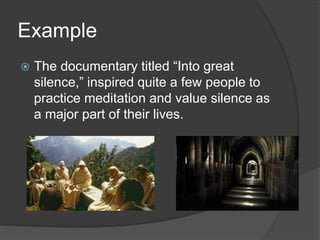
 The documentary titled “Into great 
silence,” inspired quite a few people to 
practice meditation and value silence as 
a major part of their lives.
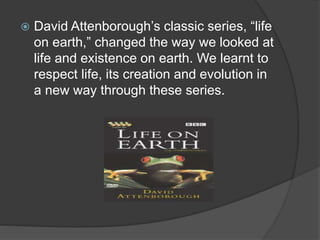
 David Attenborough’s classic series, “life 
on earth,” changed the way we looked at 
life and existence on earth. We learnt to 
respect life, its creation and evolution in 
a new way through these series.
Documentary Vs Feature 
Film 
1. Escape vs. Reality 
 In general, the main reason feature films 
get made is to entertain the audience; to 
give people an ‘escape’. 
 Documentaries are meant to inform; to 
confront people with ‘reality’.
Documentary Vs Feature 
Film 
2. Fact or Fiction (Feature) 
 Feature films are mostly fiction, 
sometimes total fantasy. Some may be 
based on real events or people, but the 
director and screenwriter will be adding 
drama and impact with their ”˜creative 
license’.
Documentary Vs Feature 
Film 
2. Fact or Fiction (Documentry) 
 Documentaries are non-fiction films. 
Directors and writers help structure the 
film, rather than creating characters or 
taking liberties with the facts of the 
story.
Documentary Vs Feature 
Film 
3. Format (Feature) 
 Feature films take care in introducing 
complex characters and spinning an 
intricate storyline over a running time up 
to three hours. There’s an ebb and flow 
to the action, with carefully timed and 
structured mini-climaxes and dramatic 
highlights.
Documentary Vs Feature 
Film 
3. Format (Documentry) 
 In documentaries, often the action leads 
the way. People don’t have scripted 
words to say or scenes to enact; 
handheld cameras might be the only 
way to follow the story. Even the director 
doesn’t always know what happens 
next.
How Documentary Films 
Benefit the World 
 Documentaries are very powerful means 
of conveying social messages to the 
world. 
 Documentaries are also means by which 
young people can share and learn about 
cultural experiences with others. 
 Watching documentaries about other 
cultures and nations can generate 
interest in various subjects like 
languages and culture of a nation.
How Documentary Films 
Benefit the World(conti.) 
 Documentaries also encourage critical 
thinking about the world, and seeing 
facts, can eliminate many myths and 
superstitions about issues. 
 Documentaries can educate and inspire 
people into taking certain steps which 
would not have been possible otherwise. 
 Many people get a new direction in life 
when they are positively influenced by 
these films.
G7-pre

G7-pre

  • 1.
  • 2.
    Glance view Definition  Introduction  Example  Documentry Vs Feature Flim  Benefits
  • 3.
    Defination  ADocumentary film is a nonfictional motion picture intended to document some aspect of reality, primarily for the purposes of instruction or maintaining a historical record. Such films were originally shot on film stock— the only medium available—but now includes video and digital productions that can be either direct-to-video, made into a TV show or released for screening in cinemas.
  • 4.
    Defination(conti.)  "Documentary"has been described as a "filmmaking practice, a cinematic tradition, and mode of audience reception" that is continually evolving and is without clear boundaries.
  • 5.
    Introduction  Inpopular myth, the word documentary was coined by Scottish documentarian John Grierson in his review of Robert Flaherty's film Moana (1926), published in the New York Sun on 8 February 1926, written by "The Moviegoer" (a pen name for Grierson).
  • 6.
    Introduction  Grierson'sprinciples of documentary were that cinema's potential for observing life could be exploited in a new art form; that the "original" actor and "original" scene are better guides than their fiction counterparts to interpreting the modern world; and that materials "thus taken from the raw" can be more real than the acted article.
  • 7.
    Introduction  Inthis regard, Grierson's definition of documentary as "creative treatment of actuality" has gained some acceptance, with this position at variance with Soviet film-maker Dziga Vertov's provocation to present "life as it is" (that is, life filmed surreptitiously) and "life caught unawares"
  • 8.
    Example  Thedocumentary titled “Into great silence,” inspired quite a few people to practice meditation and value silence as a major part of their lives.
  • 9.
     David Attenborough’sclassic series, “life on earth,” changed the way we looked at life and existence on earth. We learnt to respect life, its creation and evolution in a new way through these series.
  • 10.
    Documentary Vs Feature Film 1. Escape vs. Reality  In general, the main reason feature films get made is to entertain the audience; to give people an ‘escape’.  Documentaries are meant to inform; to confront people with ‘reality’.
  • 11.
    Documentary Vs Feature Film 2. Fact or Fiction (Feature)  Feature films are mostly fiction, sometimes total fantasy. Some may be based on real events or people, but the director and screenwriter will be adding drama and impact with their ”˜creative license’.
  • 12.
    Documentary Vs Feature Film 2. Fact or Fiction (Documentry)  Documentaries are non-fiction films. Directors and writers help structure the film, rather than creating characters or taking liberties with the facts of the story.
  • 13.
    Documentary Vs Feature Film 3. Format (Feature)  Feature films take care in introducing complex characters and spinning an intricate storyline over a running time up to three hours. There’s an ebb and flow to the action, with carefully timed and structured mini-climaxes and dramatic highlights.
  • 14.
    Documentary Vs Feature Film 3. Format (Documentry)  In documentaries, often the action leads the way. People don’t have scripted words to say or scenes to enact; handheld cameras might be the only way to follow the story. Even the director doesn’t always know what happens next.
  • 15.
    How Documentary Films Benefit the World  Documentaries are very powerful means of conveying social messages to the world.  Documentaries are also means by which young people can share and learn about cultural experiences with others.  Watching documentaries about other cultures and nations can generate interest in various subjects like languages and culture of a nation.
  • 16.
    How Documentary Films Benefit the World(conti.)  Documentaries also encourage critical thinking about the world, and seeing facts, can eliminate many myths and superstitions about issues.  Documentaries can educate and inspire people into taking certain steps which would not have been possible otherwise.  Many people get a new direction in life when they are positively influenced by these films.