Future Tenses

Spotlight 10th form
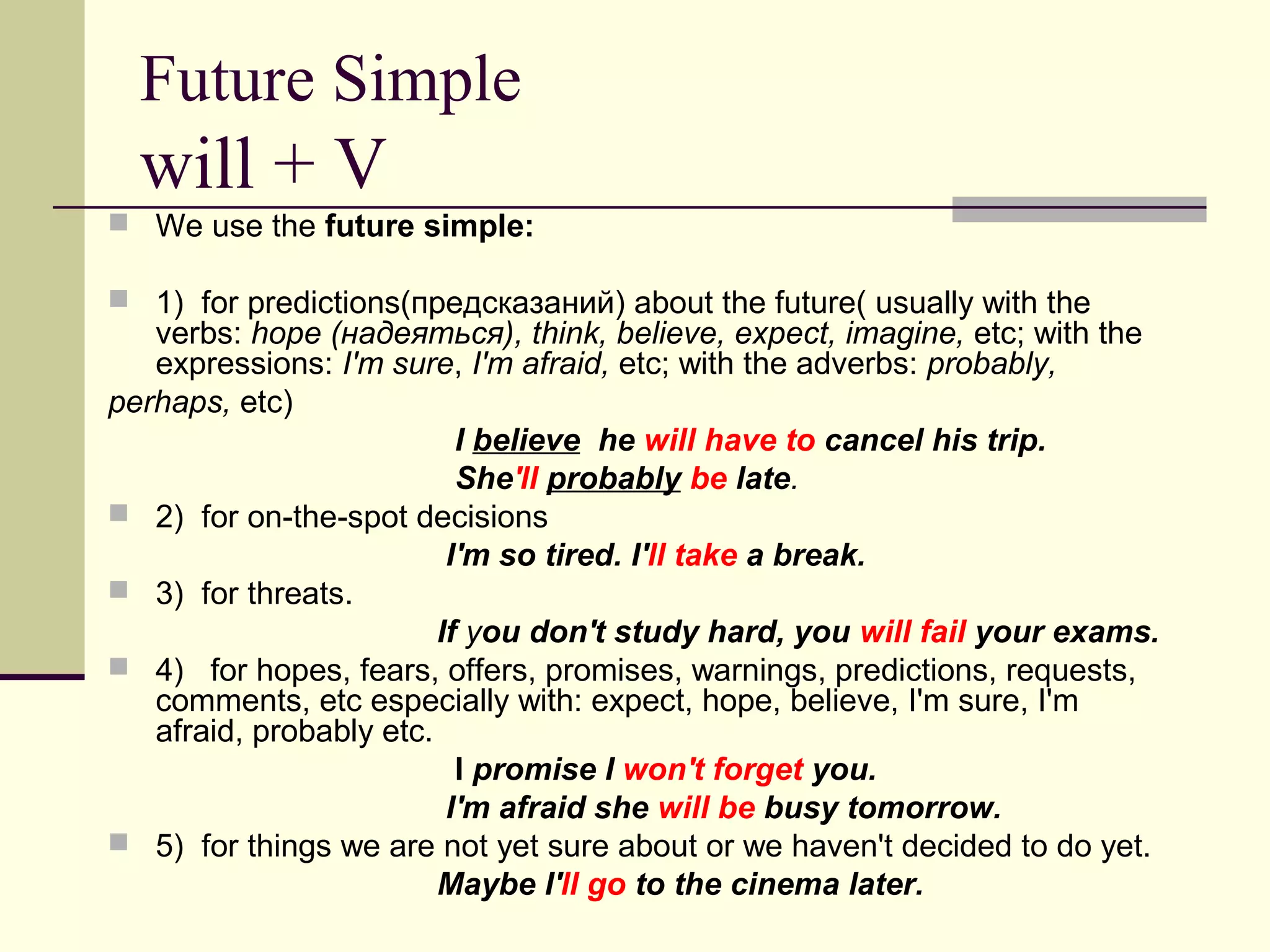
Future Simple

will + V
 We use the future simple:
 1) for predictions(предсказаний) about the future( usually with the

verbs: hope (надеяться), think, believe, expect, imagine, etc; with the
expressions: I'm sure, I'm afraid, etc; with the adverbs: probably,
perhaps, etc)
I believe he will have to cancel his trip.
She'll probably be late.
 2) for on-the-spot decisions
I'm so tired. I'll take a break.
 3) for threats.
If you don't study hard, you will fail your exams.
 4) for hopes, fears, offers, promises, warnings, predictions, requests,
comments, etc especially with: expect, hope, believe, I'm sure, I'm
afraid, probably etc.
I promise I won't forget you.
I'm afraid she will be busy tomorrow.
 5) for things we are not yet sure about or we haven't decided to do yet.
Maybe I'll go to the cinema later.
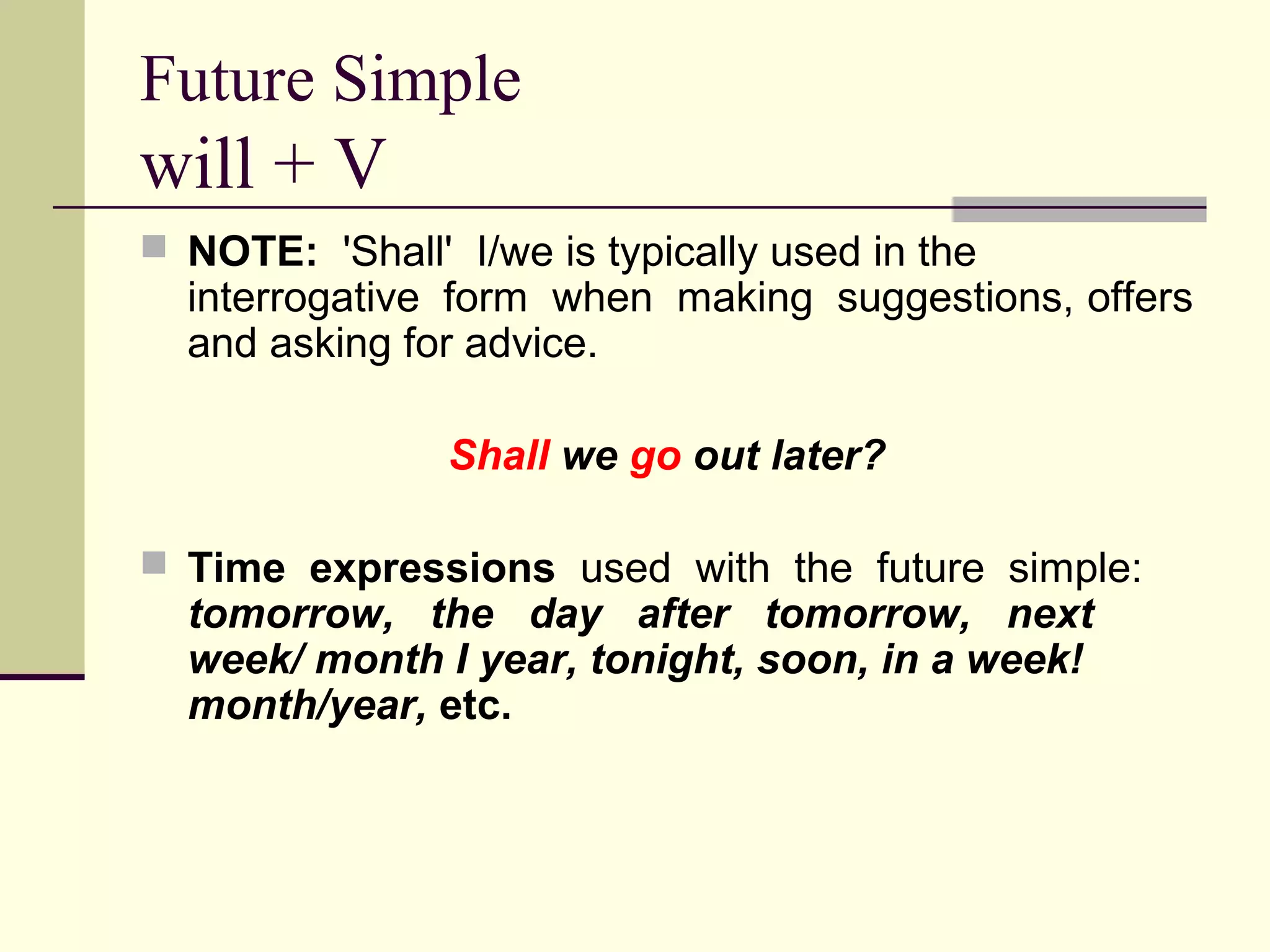
Future Simple

will + V
 NOTE: 'Shall' I/we is typically used in the

interrogative form when making suggestions, offers
and asking for advice.
Shall we go out later?

 Time expressions used with the future simple:

tomorrow, the day after tomorrow, next
week/ month I year, tonight, soon, in a week!
month/year, etc.
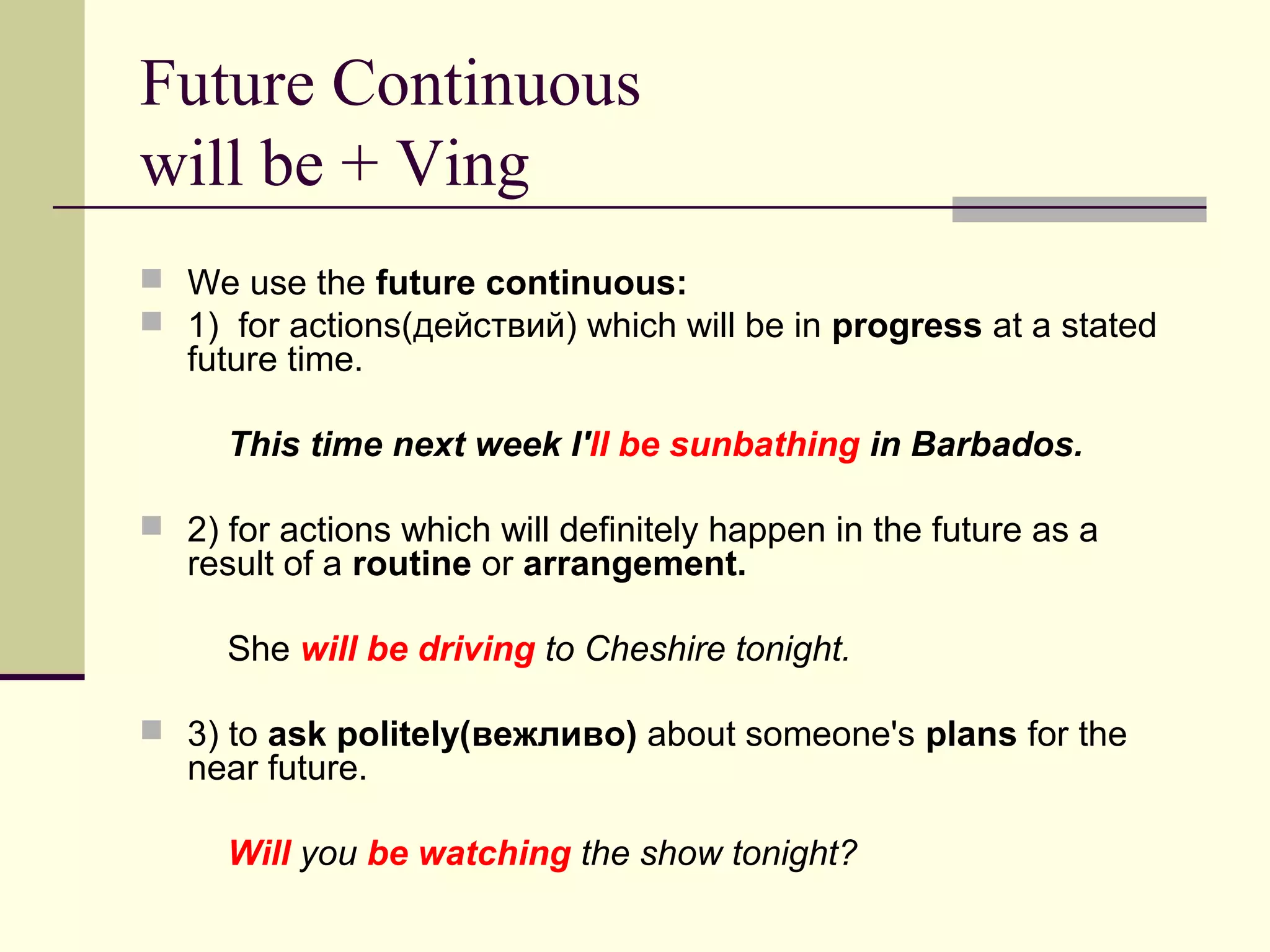
Future Continuous
will be + Ving
 We use the future continuous:
 1) for actions(действий) which will be in progress at a stated

future time.

This time next week I'll be sunbathing in Barbados.
 2) for actions which will definitely happen in the future as a

result of a routine or arrangement.

She will be driving to Cheshire tonight.
 3) to ask politely(вежливо) about someone's plans for the

near future.

Will you be watching the show tonight?
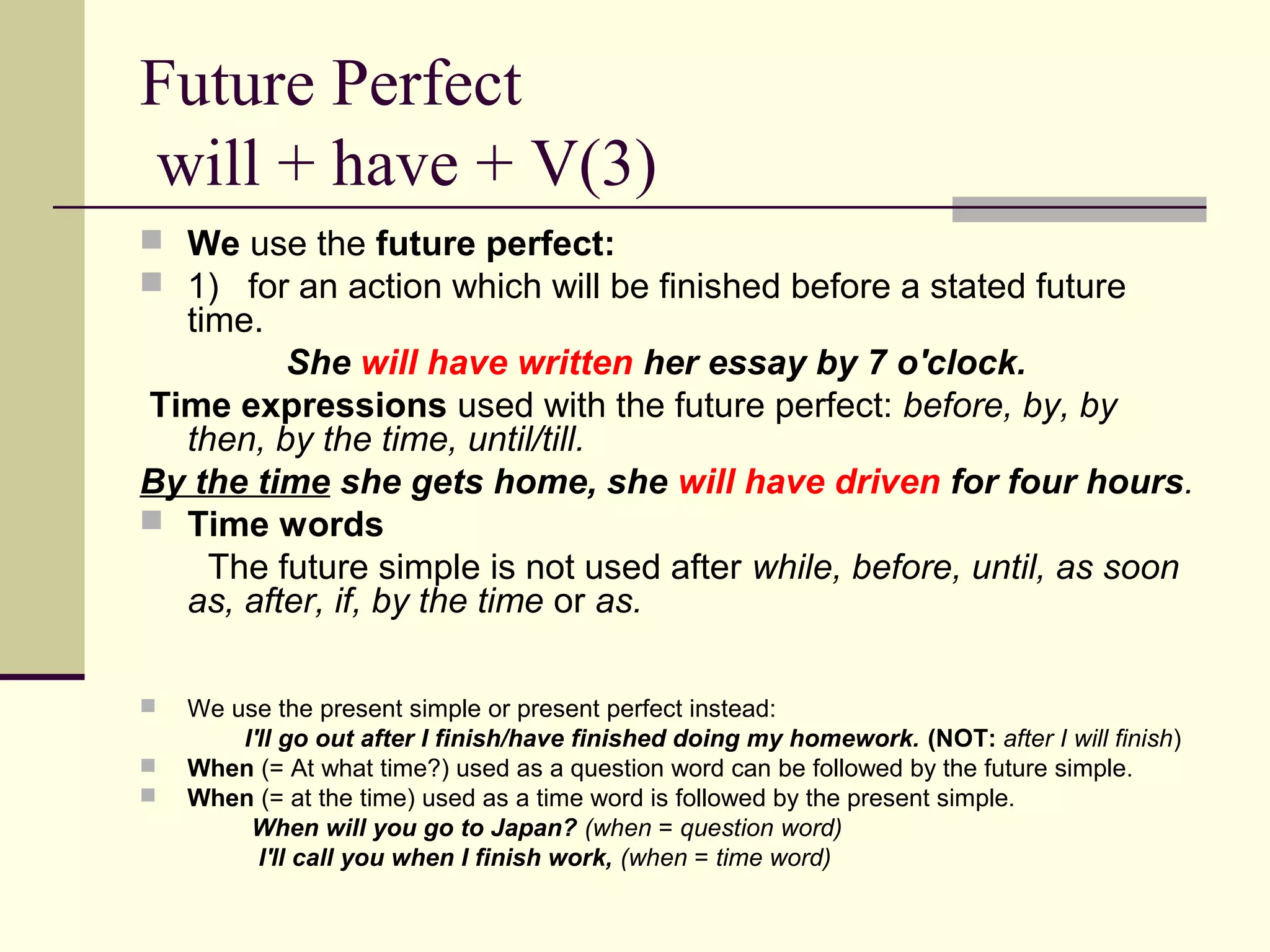
Future Perfect
will + have + V(3)
 We use the future perfect:
 1) for an action which will be finished before a stated future

time.

She will have written her essay by 7 o'clock.
Time expressions used with the future perfect: before, by, by
then, by the time, until/till.
By the time she gets home, she will have driven for four hours.
 Time words
The future simple is not used after while, before, until, as soon
as, after, if, by the time or as.




We use the present simple or present perfect instead:
I'll go out after I finish/have finished doing my homework. (NOT: after I will finish)
When (= At what time?) used as a question word can be followed by the future simple.
When (= at the time) used as a time word is followed by the present simple.
When will you go to Japan? (when = question word)
I'll call you when I finish work, (when = time word)
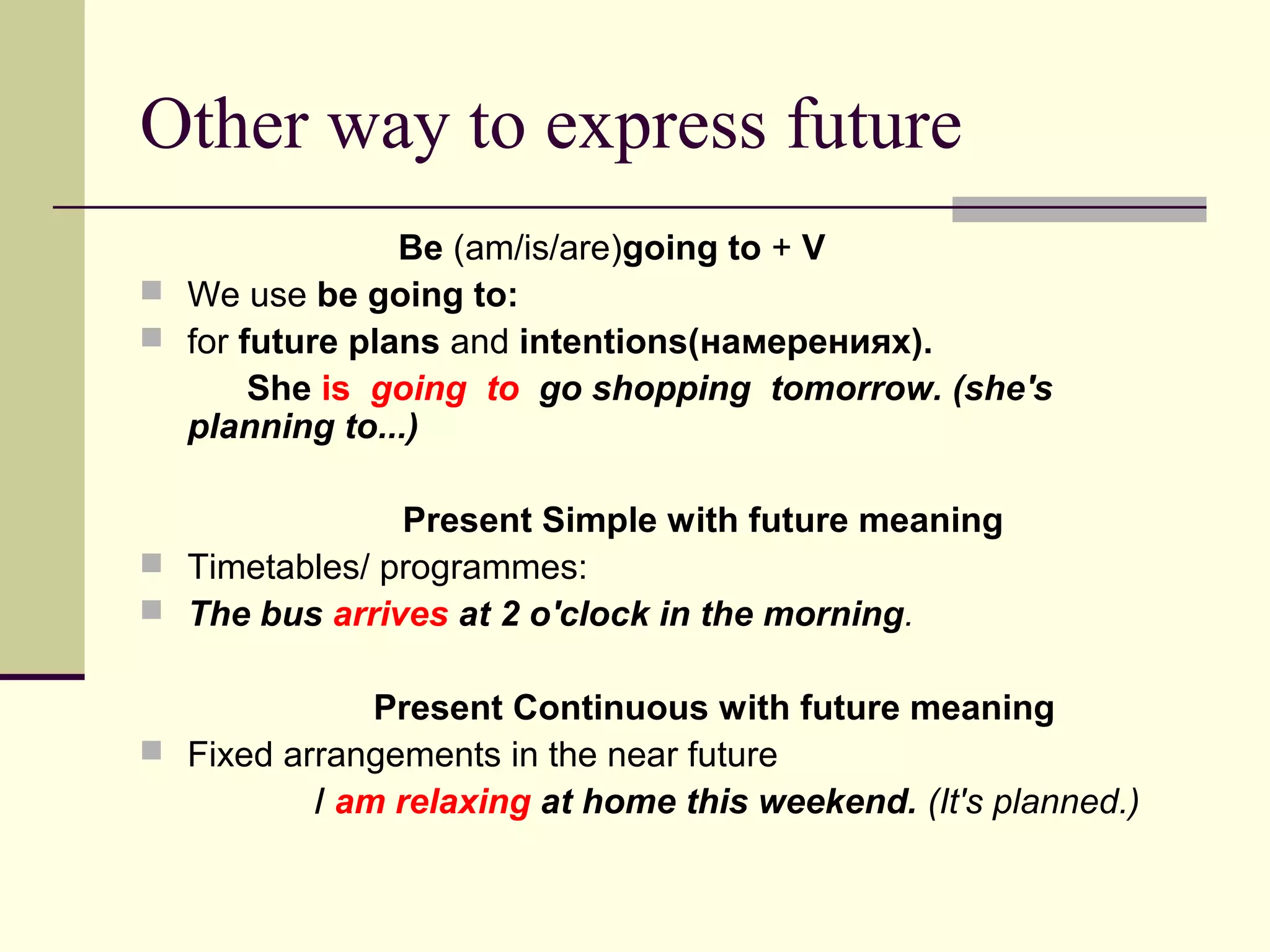
Other way to express future
Be (am/is/are)going to + V
 We use be going to:
 for future plans and intentions(намерениях).
She is going to go shopping tomorrow. (she's
planning to...)
Present Simple with future meaning
 Timetables/ programmes:
 The bus arrives at 2 o'clock in the morning.
Present Continuous with future meaning
 Fixed arrangements in the near future
/ am relaxing at home this weekend. (It's planned.)
Other way to express future
Be (am/is/are)going to + V
 We use be going to:
 for future plans and intentions(намерениях).
She is going to go shopping tomorrow. (she's
planning to...)
Present Simple with future meaning
 Timetables/ programmes:
 The bus arrives at 2 o'clock in the morning.
Present Continuous with future meaning
 Fixed arrangements in the near future
/ am relaxing at home this weekend. (It's planned.)

Future tenses 10 form

  • 1.
  • 2.
    Future Simple will +V  We use the future simple:  1) for predictions(предсказаний) about the future( usually with the verbs: hope (надеяться), think, believe, expect, imagine, etc; with the expressions: I'm sure, I'm afraid, etc; with the adverbs: probably, perhaps, etc) I believe he will have to cancel his trip. She'll probably be late.  2) for on-the-spot decisions I'm so tired. I'll take a break.  3) for threats. If you don't study hard, you will fail your exams.  4) for hopes, fears, offers, promises, warnings, predictions, requests, comments, etc especially with: expect, hope, believe, I'm sure, I'm afraid, probably etc. I promise I won't forget you. I'm afraid she will be busy tomorrow.  5) for things we are not yet sure about or we haven't decided to do yet. Maybe I'll go to the cinema later.
  • 3.
    Future Simple will +V  NOTE: 'Shall' I/we is typically used in the interrogative form when making suggestions, offers and asking for advice. Shall we go out later?  Time expressions used with the future simple: tomorrow, the day after tomorrow, next week/ month I year, tonight, soon, in a week! month/year, etc.
  • 4.
    Future Continuous will be+ Ving  We use the future continuous:  1) for actions(действий) which will be in progress at a stated future time. This time next week I'll be sunbathing in Barbados.  2) for actions which will definitely happen in the future as a result of a routine or arrangement. She will be driving to Cheshire tonight.  3) to ask politely(вежливо) about someone's plans for the near future. Will you be watching the show tonight?
  • 5.
    Future Perfect will +have + V(3)  We use the future perfect:  1) for an action which will be finished before a stated future time. She will have written her essay by 7 o'clock. Time expressions used with the future perfect: before, by, by then, by the time, until/till. By the time she gets home, she will have driven for four hours.  Time words The future simple is not used after while, before, until, as soon as, after, if, by the time or as.    We use the present simple or present perfect instead: I'll go out after I finish/have finished doing my homework. (NOT: after I will finish) When (= At what time?) used as a question word can be followed by the future simple. When (= at the time) used as a time word is followed by the present simple. When will you go to Japan? (when = question word) I'll call you when I finish work, (when = time word)
  • 6.
    Other way toexpress future Be (am/is/are)going to + V  We use be going to:  for future plans and intentions(намерениях). She is going to go shopping tomorrow. (she's planning to...) Present Simple with future meaning  Timetables/ programmes:  The bus arrives at 2 o'clock in the morning. Present Continuous with future meaning  Fixed arrangements in the near future / am relaxing at home this weekend. (It's planned.)
  • 7.
    Other way toexpress future Be (am/is/are)going to + V  We use be going to:  for future plans and intentions(намерениях). She is going to go shopping tomorrow. (she's planning to...) Present Simple with future meaning  Timetables/ programmes:  The bus arrives at 2 o'clock in the morning. Present Continuous with future meaning  Fixed arrangements in the near future / am relaxing at home this weekend. (It's planned.)