Downloaded 112 times

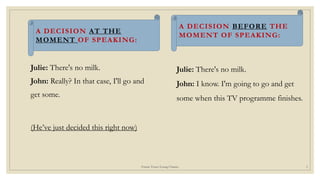
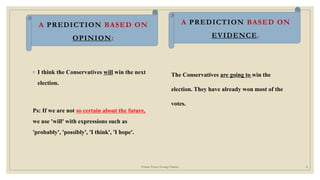




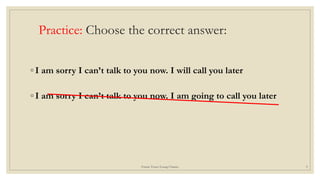


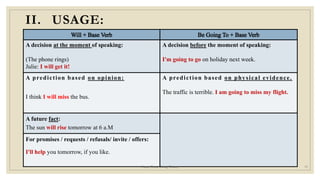


This document discusses the differences between using "will" and "be going to" to express future tense in English. It provides examples of when each is used: - "Will" is used for decisions made at the moment of speaking, predictions based on opinion, promises/offers, and scheduled future events. - "Be going to" is used for decisions made before speaking, predictions based on evidence, and plans/arrangements that have already been made. It also covers usage of future continuous tense for arrangements and future facts/predictions that are already determined. The document provides practice examples to choose between "will" and "be going to."


