A Report on Solar Power Plant Visit
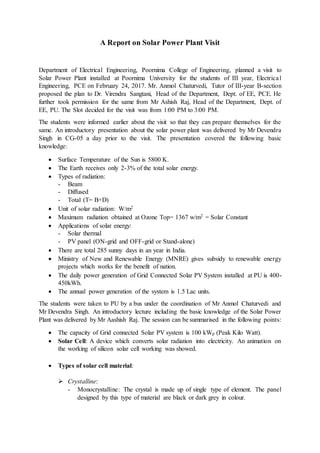
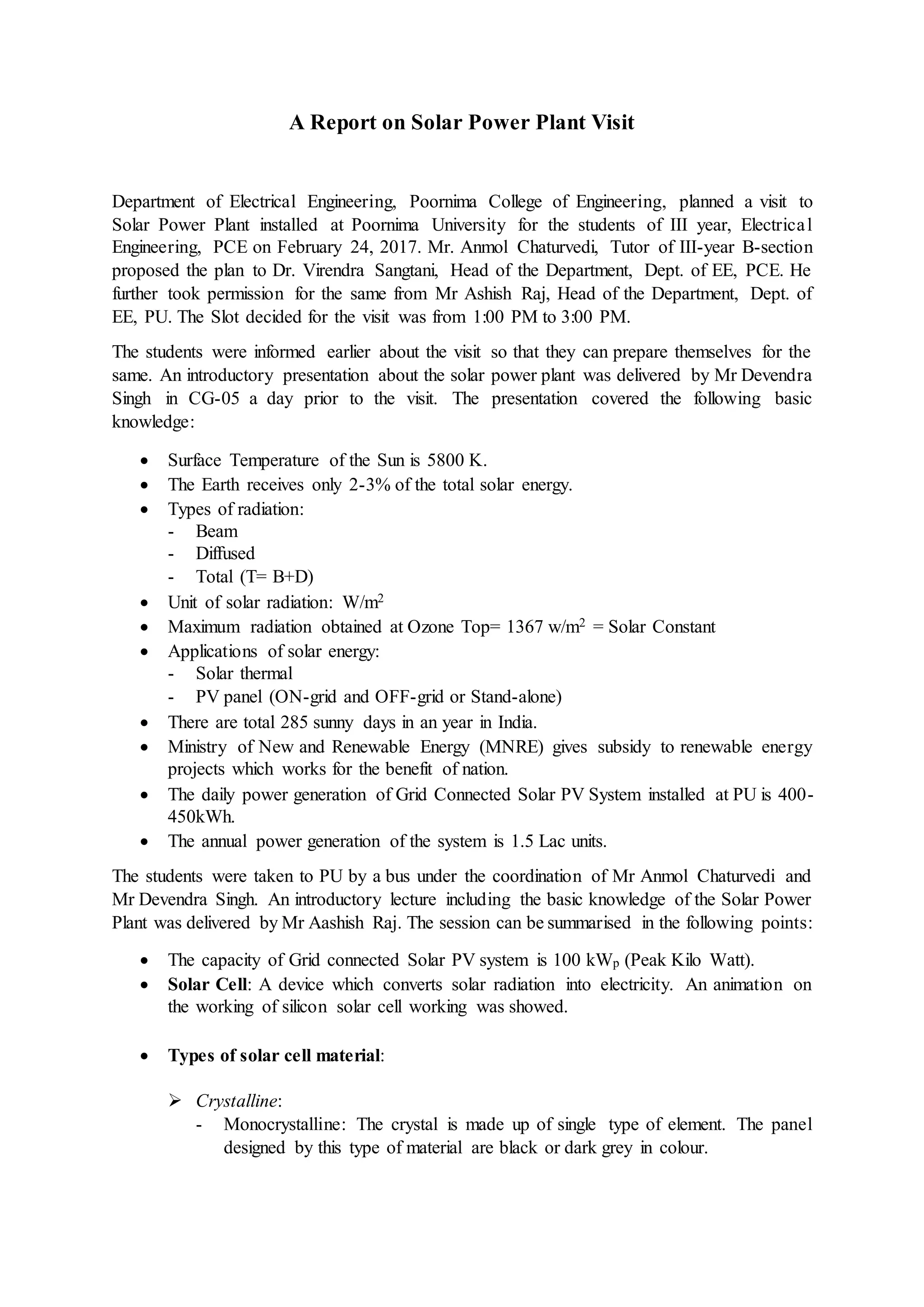
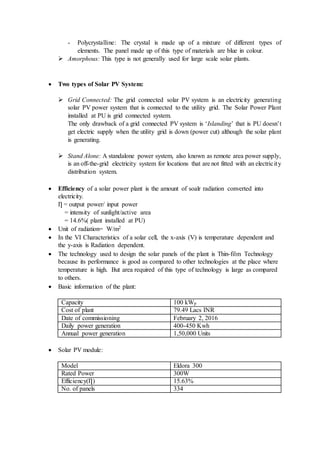
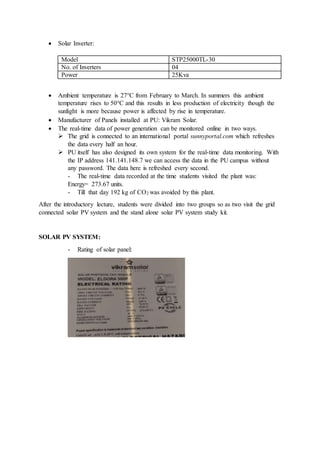
Department of Electrical Engineering, Poornima College of Engineering, planned a visit to
Solar Power Plant installed at Poornima University for the students of III year, Electrical
Engineering, PCE on February 24, 2017. Mr. Anmol Chaturvedi, Tutor of III-year B-section
proposed the plan to Dr. Virendra Sangtani, Head of the Department, Dept. of EE, PCE. He
further took permission for the same from Mr Ashish Raj, Head of the Department, Dept. of
EE, PU. The Slot decided for the visit was from 1:00 PM to 3:00 PM.
The students were informed earlier about the visit so that they can prepare themselves for the
same. An introductory presentation about the solar power plant was delivered by Mr Devendra
Singh in CG-05 a day prior to the visit. The presentation covered the following basic
knowledge:
 Surface Temperature of the Sun is 5800 K.
 The Earth receives only 2-3% of the total solar energy.
 Types of radiation:
- Beam
- Diffused
- Total (T= B+D)
 Unit of solar radiation: W/m2
 Maximum radiation obtained at Ozone Top= 1367 w/m2 = Solar Constant
 Applications of solar energy:
- Solar thermal
- PV panel (ON-grid and OFF-grid or Stand-alone)
 There are total 285 sunny days in an year in India.
 Ministry of New and Renewable Energy (MNRE) gives subsidy to renewable energy
projects which works for the benefit of nation.
 The daily power generation of Grid Connected Solar PV System installed at PU is 400-
450kWh.
 The annual power generation of the system is 1.5 Lac units.
The students were taken to PU by a bus under the coordination of Mr Anmol Chaturvedi and
Mr Devendra Singh. An introductory lecture including the basic knowledge of the Solar Power
Plant was delivered by Mr Aashish Raj. The session can be summarised in the following points:
 The capacity of Grid connected Solar PV system is 100 kWp (Peak Kilo Watt).
 Solar Cell: A device which converts solar radiation into electricity. An animation on
the working of silicon solar cell working was showed.
 Types of solar cell material:
 Crystalline:
- Monocrystalline: The crystal is made up of single type of element. The panel
designed by this type of material are black or dark grey in colour.
- Polycrystalline: The crystal is made up of a mixture of different types of
elements. The panel made up of this type of materials are blue in colour.
 Amorphous: This type is not generally used for large scale solar plants.
 Two types of Solar PV System:
 Grid Connected: The grid connected solar PV system is an electricity generating
solar PV power system that is connected to the utility grid. The Solar Power Plant
installed at PU is grid connected system.
The only drawback of a grid connected PV system is ‘Islanding’ that is PU doesn’t
get electric supply when the utility grid is down (power cut) although the solar plant
is generating.
 Stand Alone: A standalone power system, also known as remote area power supply,
is an off-the-grid electricity system for locations that are not fitted with an electricity
distribution system.
 Efficiency of a solar power plant is the amount of soalr radiation converted into
electricity.
Ƞ = output power/ input power
= intensity of sunlight/active area
= 14.6%( plant installed at PU)
 Unit of radiation= W/m2
 In the VI Characteristics of a solar cell, the x-axis (V) is temperature dependent and
the y-axis is Radiation dependent.
 The technology used to design the solar panels of the plant is Thin-film Technology
because its performance is good as compared to other technologies at the place where
temperature is high. But area required of this type of technology is large as compared
to others.
 Basic information of the plant:
Capacity 100 kWp
Cost of plant 79.49 Lacs INR
Date of commissioning February 2, 2016
Daily power generation 400-450 Kwh
Annual power generation 1,50,000 Units
 Solar PV module:
Model Eldora 300
Rated Power 300W
Efficiency(Ƞ) 15.63%
No. of panels 334
 Solar Inverter:
Model STP25000TL-30
No. of Inverters 04
Power 25Kva
 Ambient temperature is 27°C from February to March. In summers this ambient
temperature rises to 50°C and this results in less production of electricity though the
sunlight is more because power is affected by rise in temperature.
 Manufacturer of Panels installed at PU: Vikram Solar.
 The real-time data of power generation can be monitored online in two ways.
 The grid is connected to an international portal sunnyportal.com which refreshes
the data every half an hour.
 PU itself has also designed its own system for the real-time data monitoring. With
the IP address 141.141.148.7 we can access the data in the PU campus without
any password. The data here is refreshed every second.
- The real-time data recorded at the time students visited the plant was:
Energy= 273.67 units.
- Till that day 192 kg of CO2 was avoided by this plant.
After the introductory lecture, students were divided into two groups so as two visit the grid
connected solar PV system and the stand alone solar PV system study kit.
SOLAR PV SYSTEM:
- Rating of solar panel:
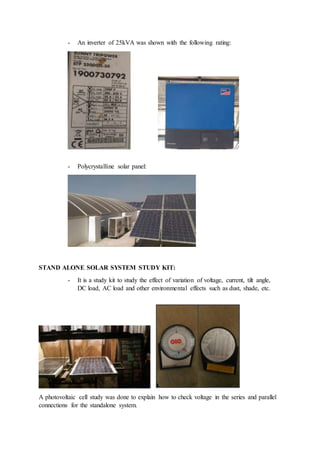
- An inverter of 25kVA was shown with the following rating:
- Polycrystalline solar panel:
STAND ALONE SOLAR SYSTEM STUDY KIT:
- It is a study kit to study the effect of variation of voltage, current, tilt angle,
DC load, AC load and other environmental effects such as dust, shade, etc.
A photovoltaic cell study was done to explain how to check voltage in the series and parallel
connections for the standalone system.

A report on solar power plant visit

  • 1.
    A Report onSolar Power Plant Visit Department of Electrical Engineering, Poornima College of Engineering, planned a visit to Solar Power Plant installed at Poornima University for the students of III year, Electrical Engineering, PCE on February 24, 2017. Mr. Anmol Chaturvedi, Tutor of III-year B-section proposed the plan to Dr. Virendra Sangtani, Head of the Department, Dept. of EE, PCE. He further took permission for the same from Mr Ashish Raj, Head of the Department, Dept. of EE, PU. The Slot decided for the visit was from 1:00 PM to 3:00 PM. The students were informed earlier about the visit so that they can prepare themselves for the same. An introductory presentation about the solar power plant was delivered by Mr Devendra Singh in CG-05 a day prior to the visit. The presentation covered the following basic knowledge:  Surface Temperature of the Sun is 5800 K.  The Earth receives only 2-3% of the total solar energy.  Types of radiation: - Beam - Diffused - Total (T= B+D)  Unit of solar radiation: W/m2  Maximum radiation obtained at Ozone Top= 1367 w/m2 = Solar Constant  Applications of solar energy: - Solar thermal - PV panel (ON-grid and OFF-grid or Stand-alone)  There are total 285 sunny days in an year in India.  Ministry of New and Renewable Energy (MNRE) gives subsidy to renewable energy projects which works for the benefit of nation.  The daily power generation of Grid Connected Solar PV System installed at PU is 400- 450kWh.  The annual power generation of the system is 1.5 Lac units. The students were taken to PU by a bus under the coordination of Mr Anmol Chaturvedi and Mr Devendra Singh. An introductory lecture including the basic knowledge of the Solar Power Plant was delivered by Mr Aashish Raj. The session can be summarised in the following points:  The capacity of Grid connected Solar PV system is 100 kWp (Peak Kilo Watt).  Solar Cell: A device which converts solar radiation into electricity. An animation on the working of silicon solar cell working was showed.  Types of solar cell material:  Crystalline: - Monocrystalline: The crystal is made up of single type of element. The panel designed by this type of material are black or dark grey in colour.
  • 2.
    - Polycrystalline: Thecrystal is made up of a mixture of different types of elements. The panel made up of this type of materials are blue in colour.  Amorphous: This type is not generally used for large scale solar plants.  Two types of Solar PV System:  Grid Connected: The grid connected solar PV system is an electricity generating solar PV power system that is connected to the utility grid. The Solar Power Plant installed at PU is grid connected system. The only drawback of a grid connected PV system is ‘Islanding’ that is PU doesn’t get electric supply when the utility grid is down (power cut) although the solar plant is generating.  Stand Alone: A standalone power system, also known as remote area power supply, is an off-the-grid electricity system for locations that are not fitted with an electricity distribution system.  Efficiency of a solar power plant is the amount of soalr radiation converted into electricity. Ƞ = output power/ input power = intensity of sunlight/active area = 14.6%( plant installed at PU)  Unit of radiation= W/m2  In the VI Characteristics of a solar cell, the x-axis (V) is temperature dependent and the y-axis is Radiation dependent.  The technology used to design the solar panels of the plant is Thin-film Technology because its performance is good as compared to other technologies at the place where temperature is high. But area required of this type of technology is large as compared to others.  Basic information of the plant: Capacity 100 kWp Cost of plant 79.49 Lacs INR Date of commissioning February 2, 2016 Daily power generation 400-450 Kwh Annual power generation 1,50,000 Units  Solar PV module: Model Eldora 300 Rated Power 300W Efficiency(Ƞ) 15.63% No. of panels 334
  • 3.
     Solar Inverter: ModelSTP25000TL-30 No. of Inverters 04 Power 25Kva  Ambient temperature is 27°C from February to March. In summers this ambient temperature rises to 50°C and this results in less production of electricity though the sunlight is more because power is affected by rise in temperature.  Manufacturer of Panels installed at PU: Vikram Solar.  The real-time data of power generation can be monitored online in two ways.  The grid is connected to an international portal sunnyportal.com which refreshes the data every half an hour.  PU itself has also designed its own system for the real-time data monitoring. With the IP address 141.141.148.7 we can access the data in the PU campus without any password. The data here is refreshed every second. - The real-time data recorded at the time students visited the plant was: Energy= 273.67 units. - Till that day 192 kg of CO2 was avoided by this plant. After the introductory lecture, students were divided into two groups so as two visit the grid connected solar PV system and the stand alone solar PV system study kit. SOLAR PV SYSTEM: - Rating of solar panel:
  • 4.
    - An inverterof 25kVA was shown with the following rating: - Polycrystalline solar panel: STAND ALONE SOLAR SYSTEM STUDY KIT: - It is a study kit to study the effect of variation of voltage, current, tilt angle, DC load, AC load and other environmental effects such as dust, shade, etc. A photovoltaic cell study was done to explain how to check voltage in the series and parallel connections for the standalone system.