4th Annual SMi
Future Armoured Vehicles
Weapon Systems
London - 6 June 2019
Extended Realities
A Training & Simulation
Perspective on VR, AR &
Related Technologies in
Armoured Warfare
Andy Fawkes
Human Factors
and Training
Always Last?
Presentation
Overview
• Training Requirements
• A Little About Training and
Simulation Technology
• Extended Realities?
• A VR Land Training Pilot
• Thinking about Recruits
• Joining the Army
Training Requirements
Getting the Requirement Right
Driver Training
• “Simulators at the Driving and Maintenance
School at the Royal Armoured Corps Training
School, Bovington were introduced to reduce
demand on parent equipment (principally tanks
and armoured fighting vehicles) and to save on
running costs. The simulator was introduced
without the benefit of a clear definition of training
requirements, and subsequent research has
shown that more than four hours training on the
simulator at a time leads to diminishing training
benefit.”
Gunnery Training
• “A Gunnery Training System Simulator was
introduced to teach firing drills for tanks. The
simulator has several disadvantages, including a
very high workload for the instructor in setting up
and monitoring scenarios; relative unreliability;
poor representation of targets and inaccuracy in
aiming compared to the parent equipments.”
Value for Money? - US GAO Aug 2016 Report
• Seven (US Army) virtual training devices are used on
average for 21% of their total availability
• Four of the low-use systems cost more than $70 million to
procure and $15 million to operate in FY2015
• Gaps in Governance:
– Front-end analysis
– Effectiveness analysis
– Linkage with training strategies
Utilisation
Engagement Skills Trainer II (EST II) 38%
Call for Fire Trainer II 37.8%
Games for Training VBS 30.8%
Dismounted Soldier Training System (DSTS) 15.4%
Stryker Mobile Gun System Advanced Gunnery Training System (MGS AGTS) 8.6%
Intelligence and EW Tactical Proficiency Trainer (IEWTPT) 8.4%
Common Driver Trainer (CDT) Mine Resistant Ambush Protected (MRAP) vehicle device 1.3%
The UK Army Context (2017)
• The nature of war remains constant: it is
visceral, violent, characterised by friction
that makes the simplest things difficult, and
its outcomes are more often determined by
the effects on people’s minds than by
physical effects, and it is always about
politics
• The battlefield is increasingly decentralised
with a premium placed on the talent of junior
leaders within land forces, and their ability
to understand the strategic context
• The manoeuvrist approach is our fighting
doctrine, focused on the enemy – but the
pervasiveness of information demands that
manoeuvre has to take account of a broader
audience than simply the ‘enemy’
• This requires Integrated Action
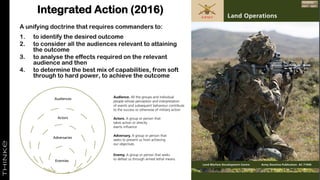
Integrated Action (2016)
A unifying doctrine that requires commanders to:
1. to identify the desired outcome
2. to consider all the audiences relevant to attaining
the outcome
3. to analyse the effects required on the relevant
audience and then
4. to determine the best mix of capabilities, from soft
through to hard power, to achieve the outcome
Collective Training Transformation
Programme (CTTP)
• From now to 2025, CTTP seeks collective training
that is more challenging and conducted in more
dynamic and complex environments (physical,
virtual and cognitive) to ensure its formations and
units are ready for a future operating environment
that has increasing emphasis on urban operations
and information manoeuvre
• Collective Training will become surrogate warfare;
driving adaptation, generating combat ethos,
empowering commanders, and delivering tactical
innovation
• It will be measurable, enabled by simulation and
technology, and form part of an assured and
responsive lessons loop and wider Warfare
Development process
• The British Army will train in regions of the world
that cement our Joint and International
partnerships, reassure our friends and deter
potential adversaries
Collective Training Transformation
Programme (CTTP)
• The CTTP is developing a Future
Collective Training System (FCTS)
which includes the aim by 2023 to
deploy high fidelity simulation
across all Army locations
increasing its access to Regular
and Reserve units
• Pilot studies have been initiated to
inform the development of the
FCTS, including an investigation
of Virtual Reality (VR) technology
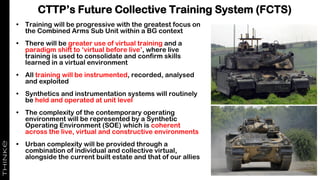
CTTP’s Future Collective Training System (FCTS)
• Training will be progressive with the greatest focus on
the Combined Arms Sub Unit within a BG context
• There will be greater use of virtual training and a
paradigm shift to ‘virtual before live’, where live
training is used to consolidate and confirm skills
learned in a virtual environment
• All training will be instrumented, recorded, analysed
and exploited
• Synthetics and instrumentation systems will routinely
be held and operated at unit level
• The complexity of the contemporary operating
environment will be represented by a Synthetic
Operating Environment (SOE) which is coherent
across the live, virtual and constructive environments
• Urban complexity will be provided through a
combination of individual and collective virtual,
alongside the current built estate and that of our allies
US Army Synthetic Training Environment (STE)
• IOC of 2023 and FOC 2029
• Building a single synthetic environment that can
handle virtual/gaming and constructive
• Incorporate the US Army’s one-world terrain project
which maps the entire globe, both geographically and
socio-politically
• Deliver training to the point of need
• Create artificial intelligence to reduce the need for
human role players in exercises and offer intelligent
enemy forces
• Utilize big data for analytics and visualization
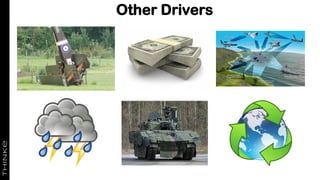
Other Drivers
Current Training Systems
A Little About
Training and Simulation Technology
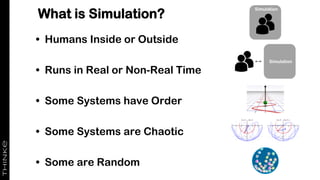
• Humans Inside or Outside
• Runs in Real or Non-Real Time
• Some Systems have Order
• Some Systems are Chaotic
• Some are Random
What is Simulation?
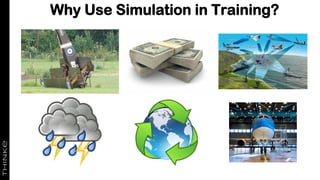
Why Use Simulation in Training?
Current Training Systems
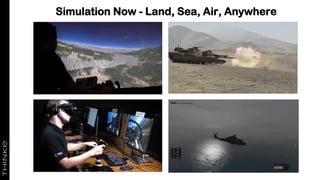
Simulation Now - Land, Sea, Air, Anywhere
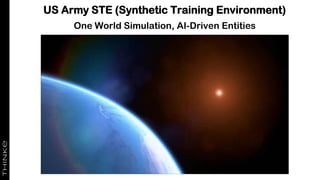
US Army STE (Synthetic Training Environment)
One World Simulation, AI-Driven Entities
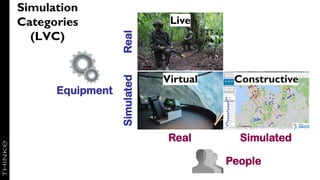
SimulatedReal
Live
Virtual Constructive
Simulated
People
Equipment
SimulatedReal
Simulation
Categories
(LVC)
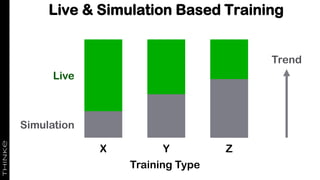
Live & Simulation Based Training
Training Type
X Y Z
Trend
Simulation
Live
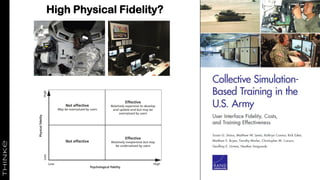
High Physical Fidelity?
Collective
Simulation-
Based Training
in the U.S.
Army 2019
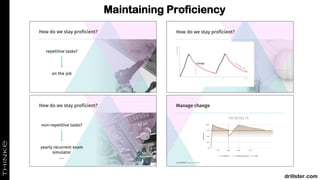
Maintaining Proficiency
drillster.com
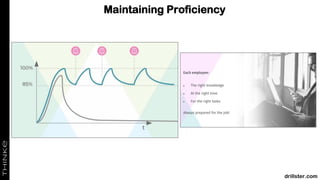
Maintaining Proficiency
drillster.com
SISO/US Army – ENGTAM Group
(Exploration of Next Generation Technology Applications to Modeling and Simulation)
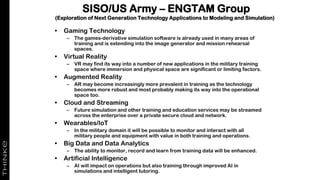
• Gaming Technology
– The games-derivative simulation software is already used in many areas of
training and is extending into the image generator and mission rehearsal
spaces.
• Virtual Reality
– VR may find its way into a number of new applications in the military training
space where immersion and physical space are significant or limiting factors.
• Augmented Reality
– AR may become increasingly more prevalent in training as the technology
becomes more robust and most probably making its way into the operational
space too.
• Cloud and Streaming
– Future simulation and other training and education services may be streamed
across the enterprise over a private secure cloud and network.
• Wearables/IoT
– In the military domain it will be possible to monitor and interact with all
military people and equipment with value in both training and operations.
• Big Data and Data Analytics
– The ability to monitor, record and learn from training data will be enhanced.
• Artificial Intelligence
– AI will impact on operations but also training through improved AI in
simulations and intelligent tutoring.
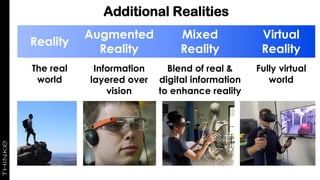
Additional Realities
The real
world
Reality
Augmented
Reality
Mixed
Reality
Virtual
Reality
Information
layered over
vision
Blend of real &
digital information
to enhance reality
Fully virtual
world
Extended Realities?
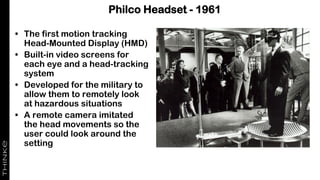
Philco Headset - 1961
• The first motion tracking
Head-Mounted Display (HMD)
• Built-in video screens for
each eye and a head-tracking
system
• Developed for the military to
allow them to remotely look
at hazardous situations
• A remote camera imitated
the head movements so the
user could look around the
setting
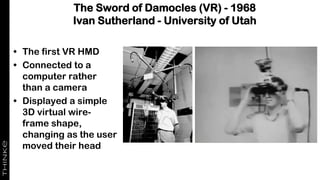
The Sword of Damocles (VR) - 1968
Ivan Sutherland - University of Utah
• The first VR HMD
• Connected to a
computer rather
than a camera
• Displayed a simple
3D virtual wire-
frame shape,
changing as the user
moved their head
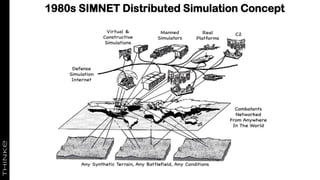
1980s SIMNET Distributed Simulation Concept
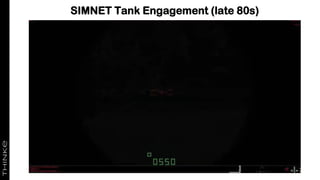
SIMNET Tank Engagement (late 80s)
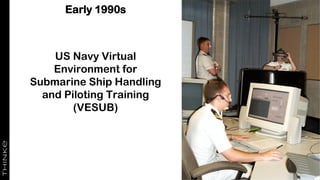
Early 1990s
US Navy Virtual
Environment for
Submarine Ship Handling
and Piloting Training
(VESUB)
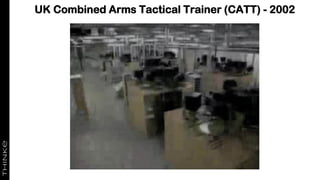
UK Combined Arms Tactical Trainer (CATT) - 2002
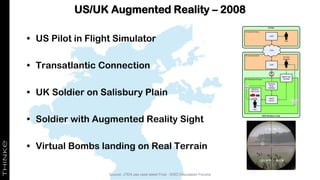
US/UK Augmented Reality – 2008
• US Pilot in Flight Simulator
• Transatlantic Connection
• UK Soldier on Salisbury Plain
• Soldier with Augmented Reality Sight
• Virtual Bombs landing on Real Terrain
MOD Westdown Camp
US Site
US Secret Enclave
UK Secret Enclave
JTEN
JSAF
JSAF
UK Restricted Enclave
AWES User
Terminal
AWES
Server
Salisbury
Plain (Live)
‘Synthetic
Wrap’
Gateway
FAC
AR
Data
Voice
Comms
‘Air Gap’
Operator
Pilot
Source: JTEN use case latest Final - SISO Discussion Forums
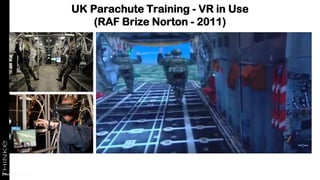
UK Parachute Training - VR in Use
(RAF Brize Norton - 2011)
Pennant/Forces TV
Oculus Rift DK1
2014
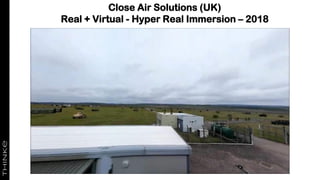
Close Air Solutions (UK)
Real + Virtual - Hyper Real Immersion – 2018
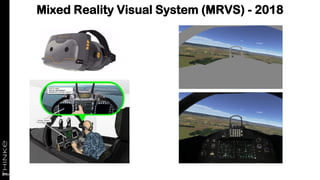
Mixed Reality Visual System (MRVS) - 2018
38BISim
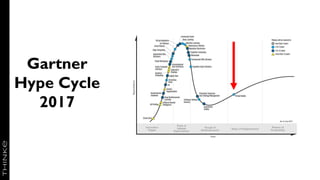
Gartner
Hype Cycle
2017
39
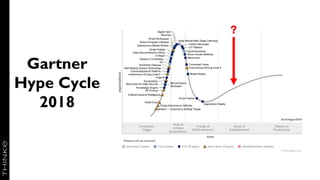
Gartner
Hype Cycle
2018
40
?
A VR Land Collective Training Pilot
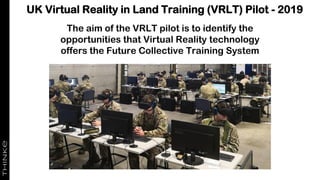
UK Virtual Reality in Land Training (VRLT) Pilot - 2019
The aim of the VRLT pilot is to identify the
opportunities that Virtual Reality technology
offers the Future Collective Training System
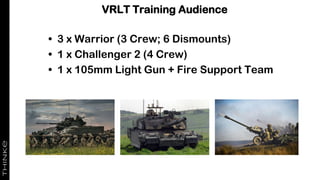
VRLT Training Audience
• 3 x Warrior (3 Crew; 6 Dismounts)
• 1 x Challenger 2 (4 Crew)
• 1 x 105mm Light Gun + Fire Support Team
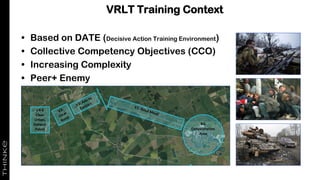
VRLT Training Context
• Based on DATE (Decisive Action Training Environment)
• Collective Competency Objectives (CCO)
• Increasing Complexity
• Peer+ Enemy
VRLT Contractor Team
VRLT – The Video
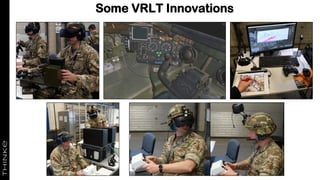
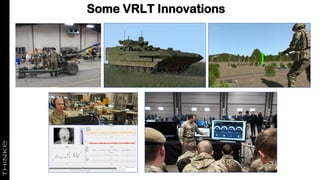
Some VRLT Innovations
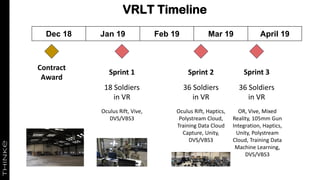
VRLT Timeline
Dec 18 Jan 19 Feb 19 Mar 19 April 19
Contract
Award
Sprint 1 Sprint 2 Sprint 3
18 Soldiers
in VR
36 Soldiers
in VR
36 Soldiers
in VR
Oculus Rift, Vive,
DVS/VBS3
Oculus Rift, Haptics,
Polystream Cloud,
Training Data Cloud
Capture, Unity,
DVS/VBS3
OR, Vive, Mixed
Reality, 105mm Gun
Integration, Haptics,
Unity, Polystream
Cloud, Training Data
Machine Learning,
DVS/VBS3
VRLT Pilot Insights
• Deployability
• to point of need and low physical footprint with COTS Software & Hardware
• Flexibility
• to inject complexity and switch between configurations and scenarios and support
individual and collective training
• Scale and Time
• with ~40 users and ~100 deemed readily achievable for around 1 hour
• Combined arms teamworking
• with dismounts alongside vehicles and other combined arms capabilities
• Communication and coordination skills
• under pressure created through an immersive environment
• Decision making and judgements
• in a high-intensity ‘safe to fail’ immersive 3D environment
• Integration
• of federated simulations and training measurement and evaluation techniques
• Wider utility
• through pre-briefing, rehearsal of concepts, briefing the plan, in-action review and
after-action review
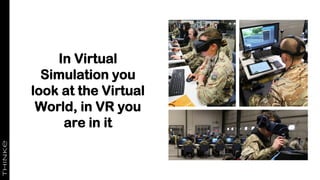
In Virtual
Simulation you
look at the Virtual
World, in VR you
are in it
Thinking about Recruits
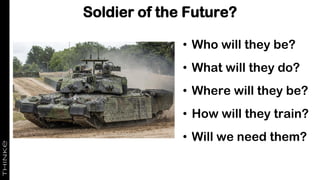
Soldier of the Future?
• Who will they be?
• What will they do?
• Where will they be?
• How will they train?
• Will we need them?
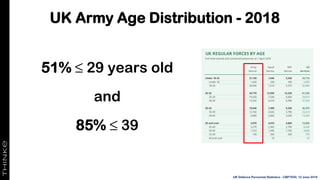
UK Army Age Distribution - 2018
51% ≤ 29 years old
and
85% ≤ 39
UK Defence Personnel Statistics - CBP7930, 12 June 2018
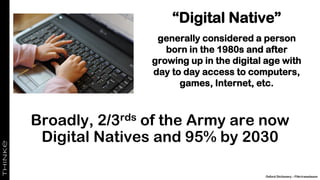
“Digital Native”
generally considered a person
born in the 1980s and after
growing up in the digital age with
day to day access to computers,
games, Internet, etc.
Broadly, 2/3rds of the Army are now
Digital Natives and 95% by 2030
Oxford Dictionary – Flikr/cwasteson
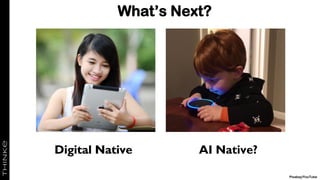
What’s Next?
Digital Native
Pixabay/YouTube
Digital Native AI Native?
UK Children aged 12 to
15 spend 12.2 hours a
week gaming in 2017
and 11 to 64 year-olds
8.9 hours
UKIE
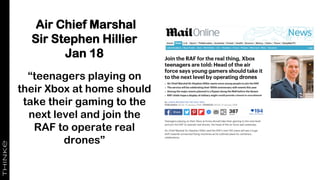
“teenagers playing on
their Xbox at home should
take their gaming to the
next level and join the
RAF to operate real
drones”
Air Chief Marshal
Sir Stephen Hillier
Jan 18
Speak to the Young
And Finally..
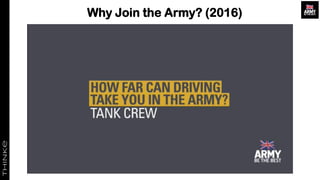
Why Join the Army? (2016)
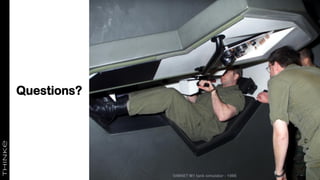
Questions?
SIMNET M1 tank simulator - 1986

Future Armoured Vehicles Weapon Systems - Extended Realities

  • 1.
    4th Annual SMi FutureArmoured Vehicles Weapon Systems London - 6 June 2019 Extended Realities A Training & Simulation Perspective on VR, AR & Related Technologies in Armoured Warfare Andy Fawkes
  • 2.
  • 3.
    Presentation Overview • Training Requirements •A Little About Training and Simulation Technology • Extended Realities? • A VR Land Training Pilot • Thinking about Recruits • Joining the Army
  • 4.
  • 5.
    Getting the RequirementRight Driver Training • “Simulators at the Driving and Maintenance School at the Royal Armoured Corps Training School, Bovington were introduced to reduce demand on parent equipment (principally tanks and armoured fighting vehicles) and to save on running costs. The simulator was introduced without the benefit of a clear definition of training requirements, and subsequent research has shown that more than four hours training on the simulator at a time leads to diminishing training benefit.” Gunnery Training • “A Gunnery Training System Simulator was introduced to teach firing drills for tanks. The simulator has several disadvantages, including a very high workload for the instructor in setting up and monitoring scenarios; relative unreliability; poor representation of targets and inaccuracy in aiming compared to the parent equipments.”
  • 6.
    Value for Money?- US GAO Aug 2016 Report • Seven (US Army) virtual training devices are used on average for 21% of their total availability • Four of the low-use systems cost more than $70 million to procure and $15 million to operate in FY2015 • Gaps in Governance: – Front-end analysis – Effectiveness analysis – Linkage with training strategies Utilisation Engagement Skills Trainer II (EST II) 38% Call for Fire Trainer II 37.8% Games for Training VBS 30.8% Dismounted Soldier Training System (DSTS) 15.4% Stryker Mobile Gun System Advanced Gunnery Training System (MGS AGTS) 8.6% Intelligence and EW Tactical Proficiency Trainer (IEWTPT) 8.4% Common Driver Trainer (CDT) Mine Resistant Ambush Protected (MRAP) vehicle device 1.3%
  • 7.
    The UK ArmyContext (2017) • The nature of war remains constant: it is visceral, violent, characterised by friction that makes the simplest things difficult, and its outcomes are more often determined by the effects on people’s minds than by physical effects, and it is always about politics • The battlefield is increasingly decentralised with a premium placed on the talent of junior leaders within land forces, and their ability to understand the strategic context • The manoeuvrist approach is our fighting doctrine, focused on the enemy – but the pervasiveness of information demands that manoeuvre has to take account of a broader audience than simply the ‘enemy’ • This requires Integrated Action
  • 8.
    Integrated Action (2016) Aunifying doctrine that requires commanders to: 1. to identify the desired outcome 2. to consider all the audiences relevant to attaining the outcome 3. to analyse the effects required on the relevant audience and then 4. to determine the best mix of capabilities, from soft through to hard power, to achieve the outcome
  • 9.
    Collective Training Transformation Programme(CTTP) • From now to 2025, CTTP seeks collective training that is more challenging and conducted in more dynamic and complex environments (physical, virtual and cognitive) to ensure its formations and units are ready for a future operating environment that has increasing emphasis on urban operations and information manoeuvre • Collective Training will become surrogate warfare; driving adaptation, generating combat ethos, empowering commanders, and delivering tactical innovation • It will be measurable, enabled by simulation and technology, and form part of an assured and responsive lessons loop and wider Warfare Development process • The British Army will train in regions of the world that cement our Joint and International partnerships, reassure our friends and deter potential adversaries
  • 10.
    Collective Training Transformation Programme(CTTP) • The CTTP is developing a Future Collective Training System (FCTS) which includes the aim by 2023 to deploy high fidelity simulation across all Army locations increasing its access to Regular and Reserve units • Pilot studies have been initiated to inform the development of the FCTS, including an investigation of Virtual Reality (VR) technology
  • 11.
    CTTP’s Future CollectiveTraining System (FCTS) • Training will be progressive with the greatest focus on the Combined Arms Sub Unit within a BG context • There will be greater use of virtual training and a paradigm shift to ‘virtual before live’, where live training is used to consolidate and confirm skills learned in a virtual environment • All training will be instrumented, recorded, analysed and exploited • Synthetics and instrumentation systems will routinely be held and operated at unit level • The complexity of the contemporary operating environment will be represented by a Synthetic Operating Environment (SOE) which is coherent across the live, virtual and constructive environments • Urban complexity will be provided through a combination of individual and collective virtual, alongside the current built estate and that of our allies
  • 12.
    US Army SyntheticTraining Environment (STE) • IOC of 2023 and FOC 2029 • Building a single synthetic environment that can handle virtual/gaming and constructive • Incorporate the US Army’s one-world terrain project which maps the entire globe, both geographically and socio-politically • Deliver training to the point of need • Create artificial intelligence to reduce the need for human role players in exercises and offer intelligent enemy forces • Utilize big data for analytics and visualization
  • 13.
  • 14.
    A Little About Trainingand Simulation Technology
  • 15.
    • Humans Insideor Outside • Runs in Real or Non-Real Time • Some Systems have Order • Some Systems are Chaotic • Some are Random What is Simulation?
  • 16.
    Why Use Simulationin Training? Current Training Systems
  • 17.
    Simulation Now -Land, Sea, Air, Anywhere
  • 18.
    US Army STE(Synthetic Training Environment) One World Simulation, AI-Driven Entities
  • 19.
  • 20.
    Live & SimulationBased Training Training Type X Y Z Trend Simulation Live
  • 21.
  • 22.
  • 23.
  • 24.
    SISO/US Army –ENGTAM Group (Exploration of Next Generation Technology Applications to Modeling and Simulation) • Gaming Technology – The games-derivative simulation software is already used in many areas of training and is extending into the image generator and mission rehearsal spaces. • Virtual Reality – VR may find its way into a number of new applications in the military training space where immersion and physical space are significant or limiting factors. • Augmented Reality – AR may become increasingly more prevalent in training as the technology becomes more robust and most probably making its way into the operational space too. • Cloud and Streaming – Future simulation and other training and education services may be streamed across the enterprise over a private secure cloud and network. • Wearables/IoT – In the military domain it will be possible to monitor and interact with all military people and equipment with value in both training and operations. • Big Data and Data Analytics – The ability to monitor, record and learn from training data will be enhanced. • Artificial Intelligence – AI will impact on operations but also training through improved AI in simulations and intelligent tutoring.
  • 25.
    Additional Realities The real world Reality Augmented Reality Mixed Reality Virtual Reality Information layeredover vision Blend of real & digital information to enhance reality Fully virtual world
  • 26.
  • 27.
    Philco Headset -1961 • The first motion tracking Head-Mounted Display (HMD) • Built-in video screens for each eye and a head-tracking system • Developed for the military to allow them to remotely look at hazardous situations • A remote camera imitated the head movements so the user could look around the setting
  • 28.
    The Sword ofDamocles (VR) - 1968 Ivan Sutherland - University of Utah • The first VR HMD • Connected to a computer rather than a camera • Displayed a simple 3D virtual wire- frame shape, changing as the user moved their head
  • 29.
    1980s SIMNET DistributedSimulation Concept
  • 30.
  • 31.
    Early 1990s US NavyVirtual Environment for Submarine Ship Handling and Piloting Training (VESUB)
  • 32.
    UK Combined ArmsTactical Trainer (CATT) - 2002
  • 33.
    US/UK Augmented Reality– 2008 • US Pilot in Flight Simulator • Transatlantic Connection • UK Soldier on Salisbury Plain • Soldier with Augmented Reality Sight • Virtual Bombs landing on Real Terrain MOD Westdown Camp US Site US Secret Enclave UK Secret Enclave JTEN JSAF JSAF UK Restricted Enclave AWES User Terminal AWES Server Salisbury Plain (Live) ‘Synthetic Wrap’ Gateway FAC AR Data Voice Comms ‘Air Gap’ Operator Pilot Source: JTEN use case latest Final - SISO Discussion Forums
  • 34.
    UK Parachute Training- VR in Use (RAF Brize Norton - 2011) Pennant/Forces TV
  • 35.
  • 36.
    Close Air Solutions(UK) Real + Virtual - Hyper Real Immersion – 2018
  • 37.
    Mixed Reality VisualSystem (MRVS) - 2018 38BISim
  • 38.
  • 39.
  • 40.
    A VR LandCollective Training Pilot
  • 41.
    UK Virtual Realityin Land Training (VRLT) Pilot - 2019 The aim of the VRLT pilot is to identify the opportunities that Virtual Reality technology offers the Future Collective Training System
  • 42.
    VRLT Training Audience •3 x Warrior (3 Crew; 6 Dismounts) • 1 x Challenger 2 (4 Crew) • 1 x 105mm Light Gun + Fire Support Team
  • 43.
    VRLT Training Context •Based on DATE (Decisive Action Training Environment) • Collective Competency Objectives (CCO) • Increasing Complexity • Peer+ Enemy
  • 44.
  • 45.
  • 46.
  • 47.
  • 48.
    VRLT Timeline Dec 18Jan 19 Feb 19 Mar 19 April 19 Contract Award Sprint 1 Sprint 2 Sprint 3 18 Soldiers in VR 36 Soldiers in VR 36 Soldiers in VR Oculus Rift, Vive, DVS/VBS3 Oculus Rift, Haptics, Polystream Cloud, Training Data Cloud Capture, Unity, DVS/VBS3 OR, Vive, Mixed Reality, 105mm Gun Integration, Haptics, Unity, Polystream Cloud, Training Data Machine Learning, DVS/VBS3
  • 49.
    VRLT Pilot Insights •Deployability • to point of need and low physical footprint with COTS Software & Hardware • Flexibility • to inject complexity and switch between configurations and scenarios and support individual and collective training • Scale and Time • with ~40 users and ~100 deemed readily achievable for around 1 hour • Combined arms teamworking • with dismounts alongside vehicles and other combined arms capabilities • Communication and coordination skills • under pressure created through an immersive environment • Decision making and judgements • in a high-intensity ‘safe to fail’ immersive 3D environment • Integration • of federated simulations and training measurement and evaluation techniques • Wider utility • through pre-briefing, rehearsal of concepts, briefing the plan, in-action review and after-action review
  • 50.
    In Virtual Simulation you lookat the Virtual World, in VR you are in it
  • 51.
  • 52.
    Soldier of theFuture? • Who will they be? • What will they do? • Where will they be? • How will they train? • Will we need them?
  • 53.
    UK Army AgeDistribution - 2018 51% ≤ 29 years old and 85% ≤ 39 UK Defence Personnel Statistics - CBP7930, 12 June 2018
  • 54.
    “Digital Native” generally considereda person born in the 1980s and after growing up in the digital age with day to day access to computers, games, Internet, etc. Broadly, 2/3rds of the Army are now Digital Natives and 95% by 2030 Oxford Dictionary – Flikr/cwasteson
  • 55.
  • 56.
    UK Children aged12 to 15 spend 12.2 hours a week gaming in 2017 and 11 to 64 year-olds 8.9 hours UKIE
  • 57.
    “teenagers playing on theirXbox at home should take their gaming to the next level and join the RAF to operate real drones” Air Chief Marshal Sir Stephen Hillier Jan 18
  • 58.
  • 59.
  • 60.
    Why Join theArmy? (2016)
  • 61.
    Questions? SIMNET M1 tanksimulator - 1986