BISim
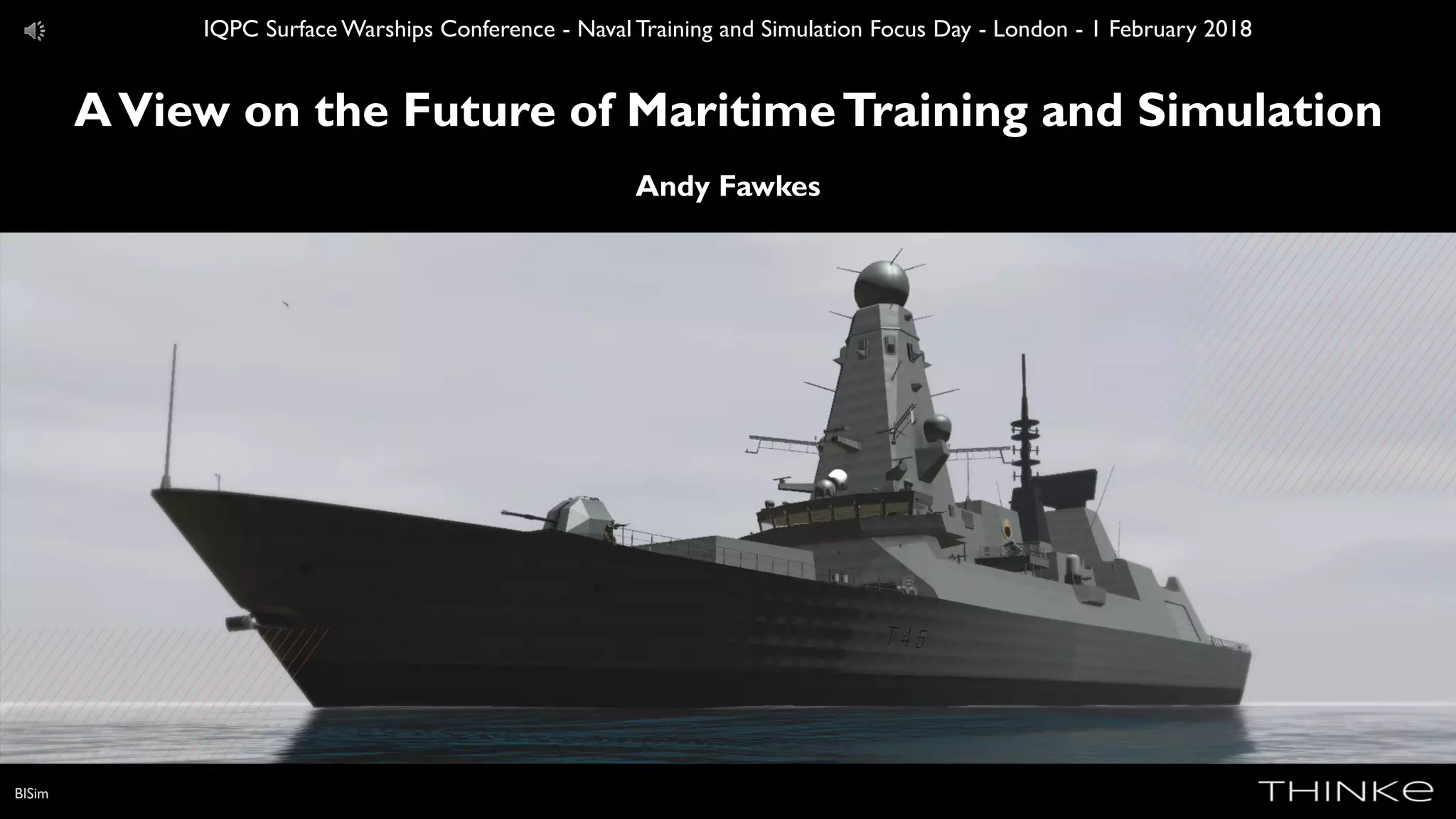
AView on the Future of MaritimeTraining and Simulation
Andy Fawkes
IQPC Surface Warships Conference - Naval Training and Simulation Focus Day - London - 1 February 2018
Presentation Overview
• The Future Operational Context
• The Future Sailor
• Simulation and Training System Developments
• Technology Trends of Interest
The Future Operational Context
The Current Global Security Context
• The world in a process of rapid & fundamental change
• Long-term shifts in the balance of global economic & military power
• Emergence of powerful non-state actors
• Predictable and unpredictable threats
• Rapid civil technology developments & escalating cyber threat
• Increasingly congested and complex world
UK Government Foreign Policy, Defence and Development Paper 2017
UK MoD “Modernising Defence Programme” 2018
As we identified in 2015, this requires the Joint Force we
are building to be versatile and agile.
It will need to be capable of operating in all five domains
(land, sea, air, space and cyber).
It will need to be international by design, routinely
exercising and operating with allies and partners.
It will need to be credible and capable of operating
against state and non-state threats, normally not alone
but with allies, such as NATO, and our partners, but
always having the ability to act on our own if and when
that is required.
And it must be able to contribute to our national
security at home, working with the police, and other
national security organisations.
The Secretary of State for Defence (Gavin Williamson) – 25 Jan 2018
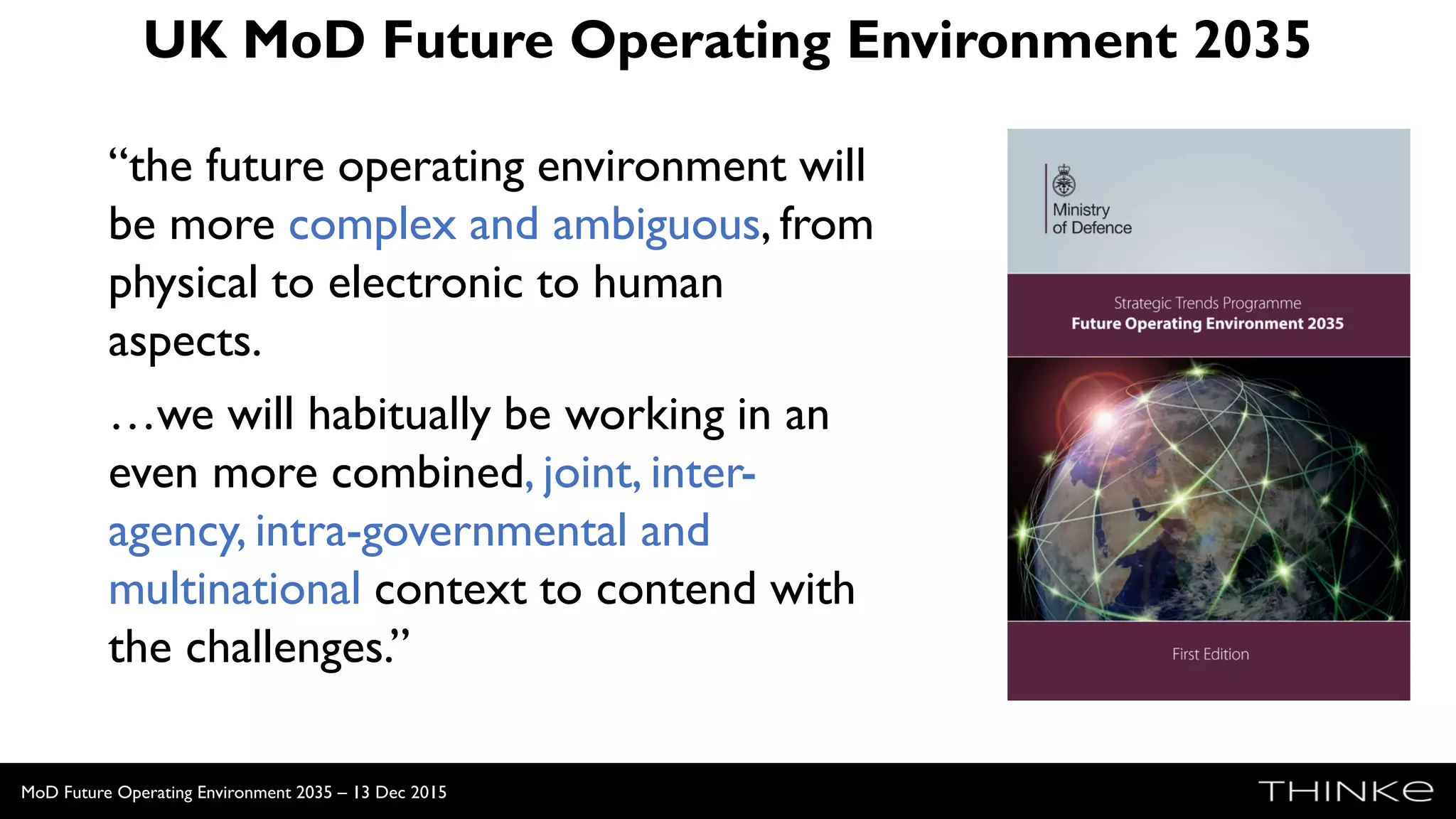
UK MoD Future Operating Environment 2035
“the future operating environment will
be more complex and ambiguous, from
physical to electronic to human
aspects.
…we will habitually be working in an
even more combined, joint, inter-
agency, intra-governmental and
multinational context to contend with
the challenges.”
MoD Future Operating Environment 2035 – 13 Dec 2015
US Air Force Air Superiority
2030 Flight Plan (May 2016)
• Threat capabilities are likely to advance along two
major vectors
• A levelling of capabilities
• Advanced fighter aircraft, sensors, and weapons are becoming
more accessible to more countries which spreads these threats
across a wide range of locations and scenarios
• Increased threat capabilities
• Increased quantity and sophistication of cyberspace threats and
air threats including hypersonic weapons, low-observable cruise
missiles, and sophisticated conventional ballistic missile systems.
US Air Force Air Superiority 2030 Flight Plan (2016)
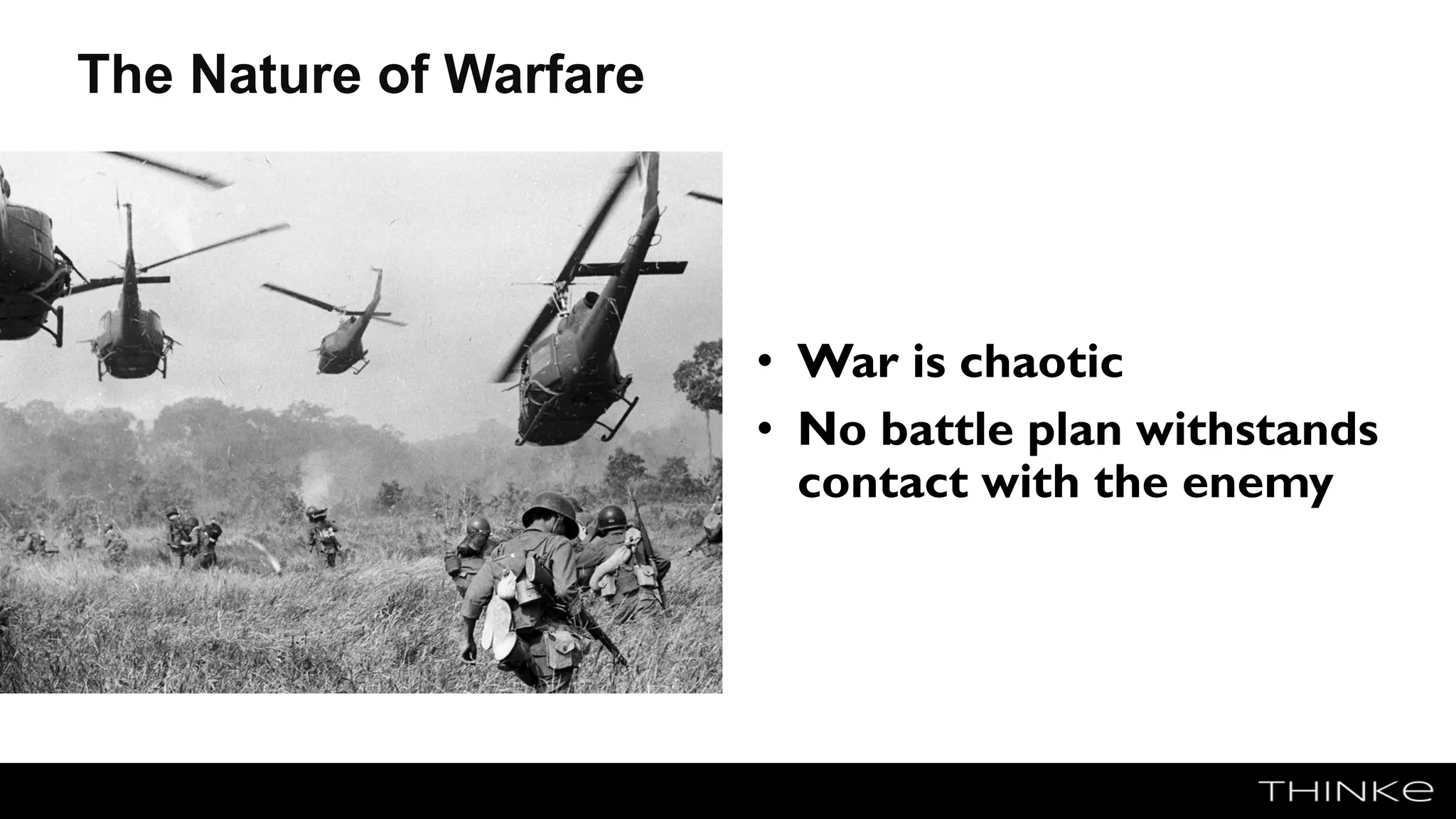
The Nature of Warfare
• War is chaotic
• No battle plan withstands
contact with the enemy
* Need to be Skilled
* Need to WorkTogether
* Need to be Adaptable
UK Royal NavyTraining
• “are we ready to fight tonight?”
• “are we prepared to fight tomorrow?”
The Future Sailor
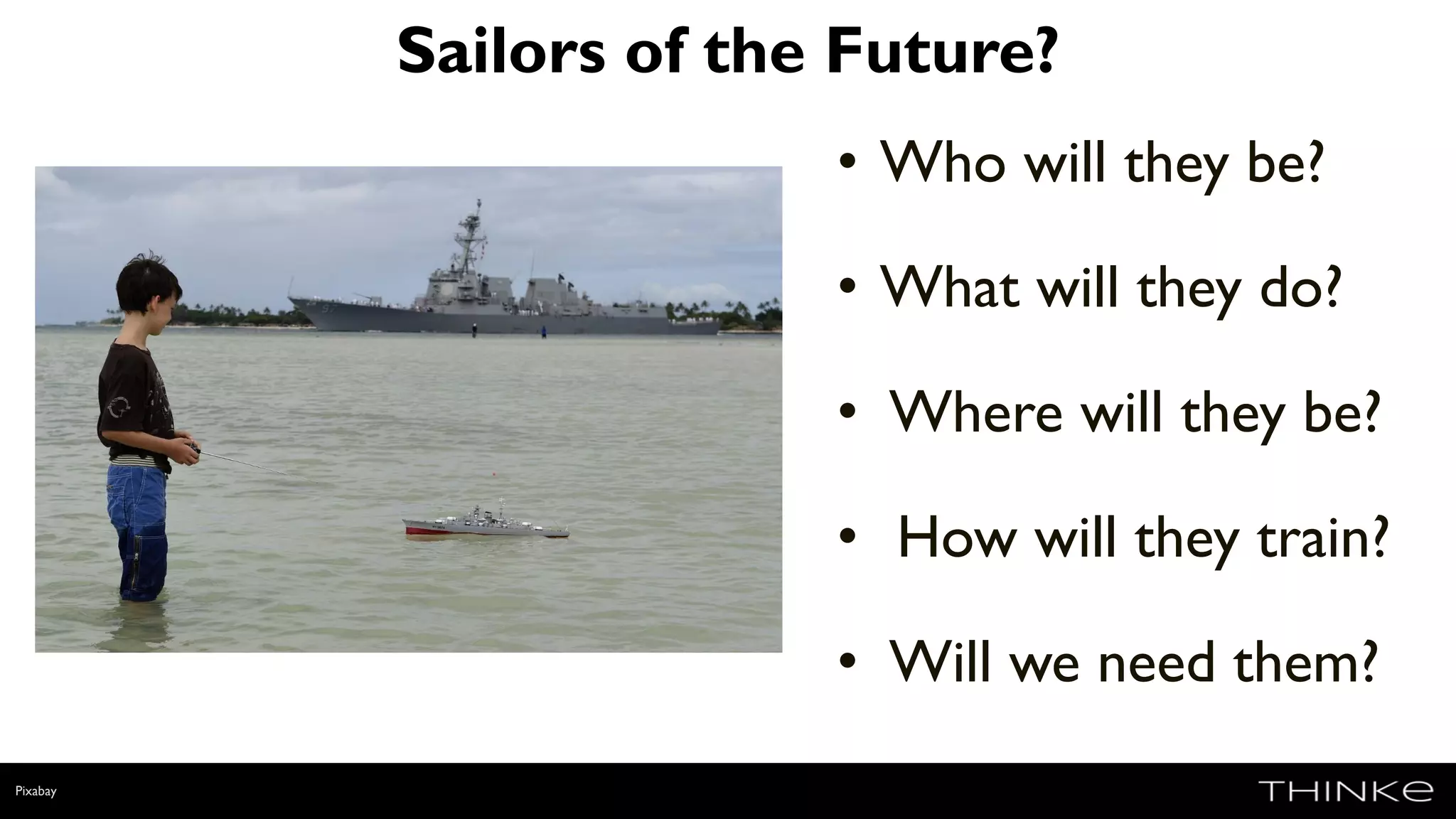
Sailors of the Future?
• Who will they be?
• What will they do?
• Where will they be?
• How will they train?
• Will we need them?
Pixabay
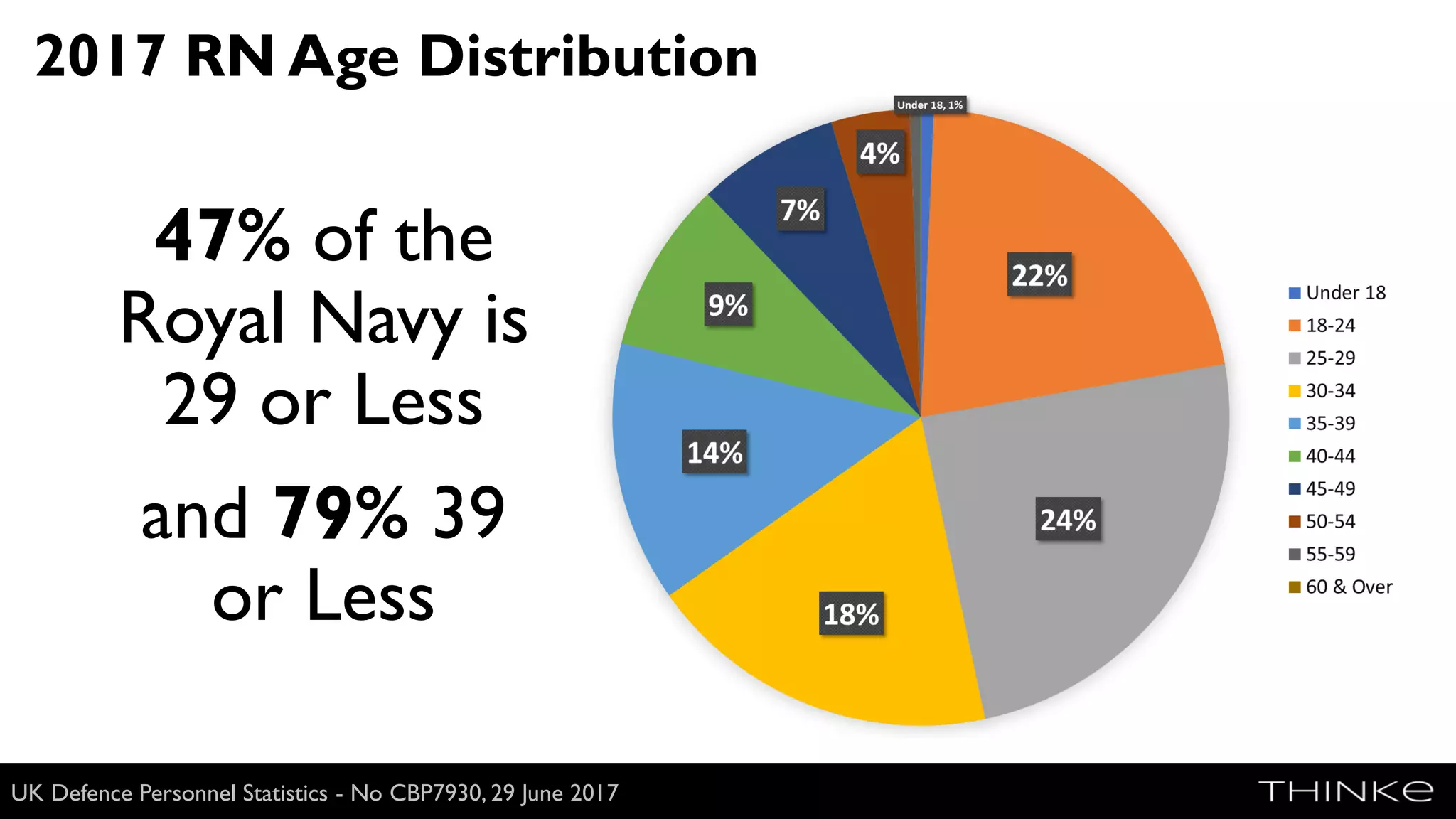
2017 RN Age Distribution
Wikimedia
47% of the
Royal Navy is
29 or Less
and 79% 39
or Less
UK Defence Personnel Statistics - No CBP7930, 29 June 2017
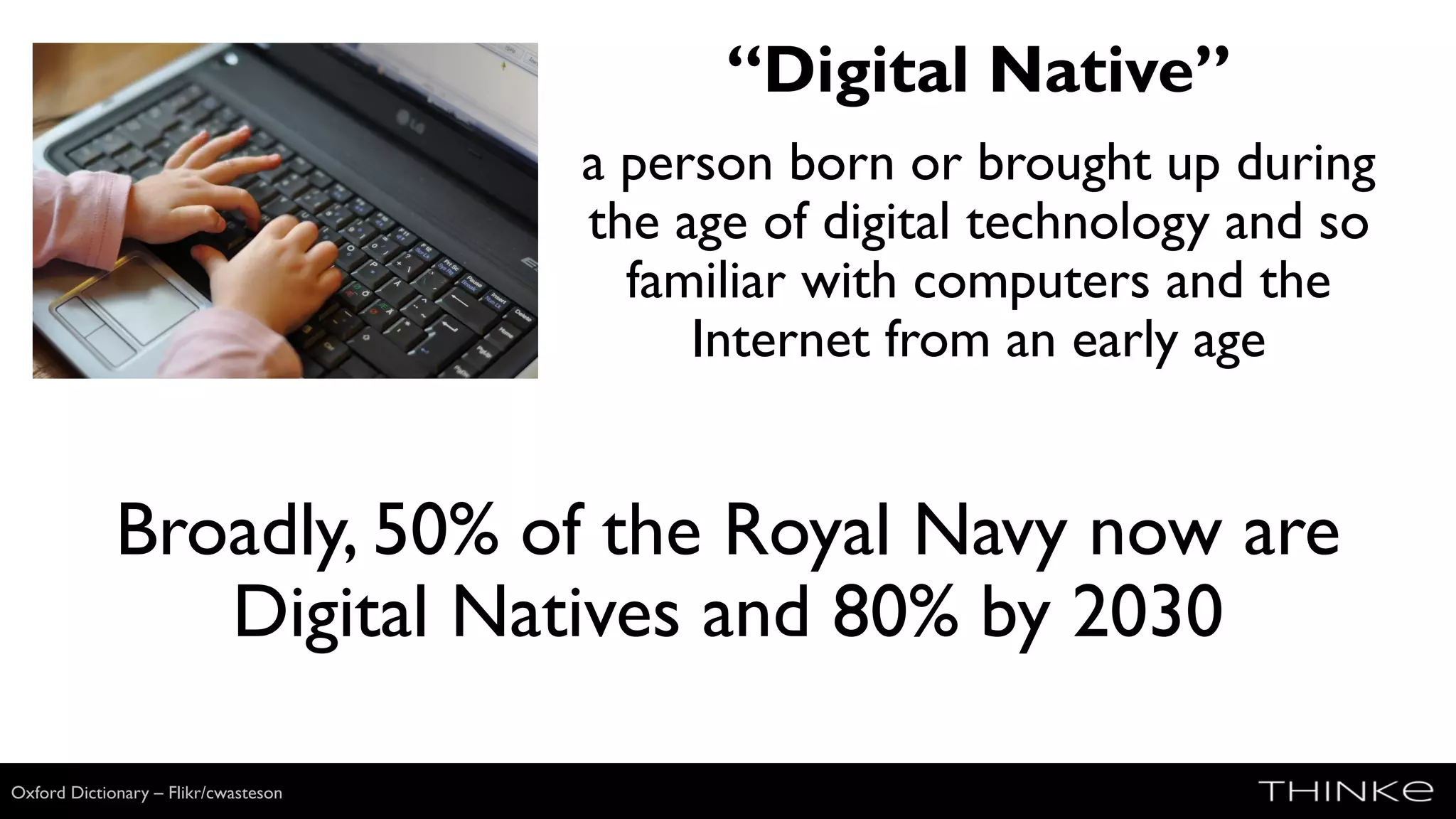
“Digital Native”
a person born or brought up during
the age of digital technology and so
familiar with computers and the
Internet from an early age
Wikimedia
Broadly, 50% of the Royal Navy now are
Digital Natives and 80% by 2030
Oxford Dictionary – Flikr/cwasteson
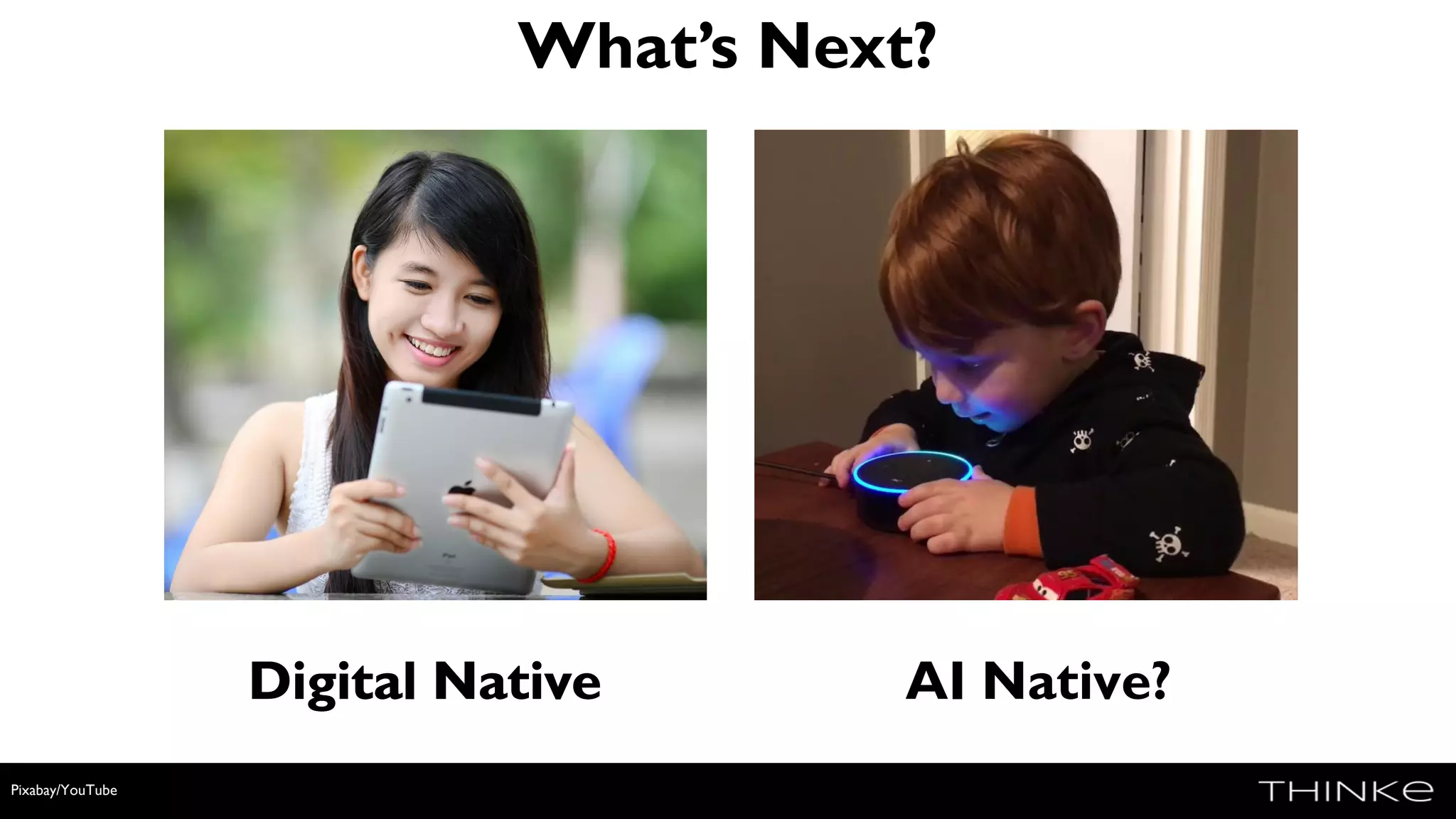
What’s Next?
Digital Native
Pixabay/YouTube
Digital Native AI Native?
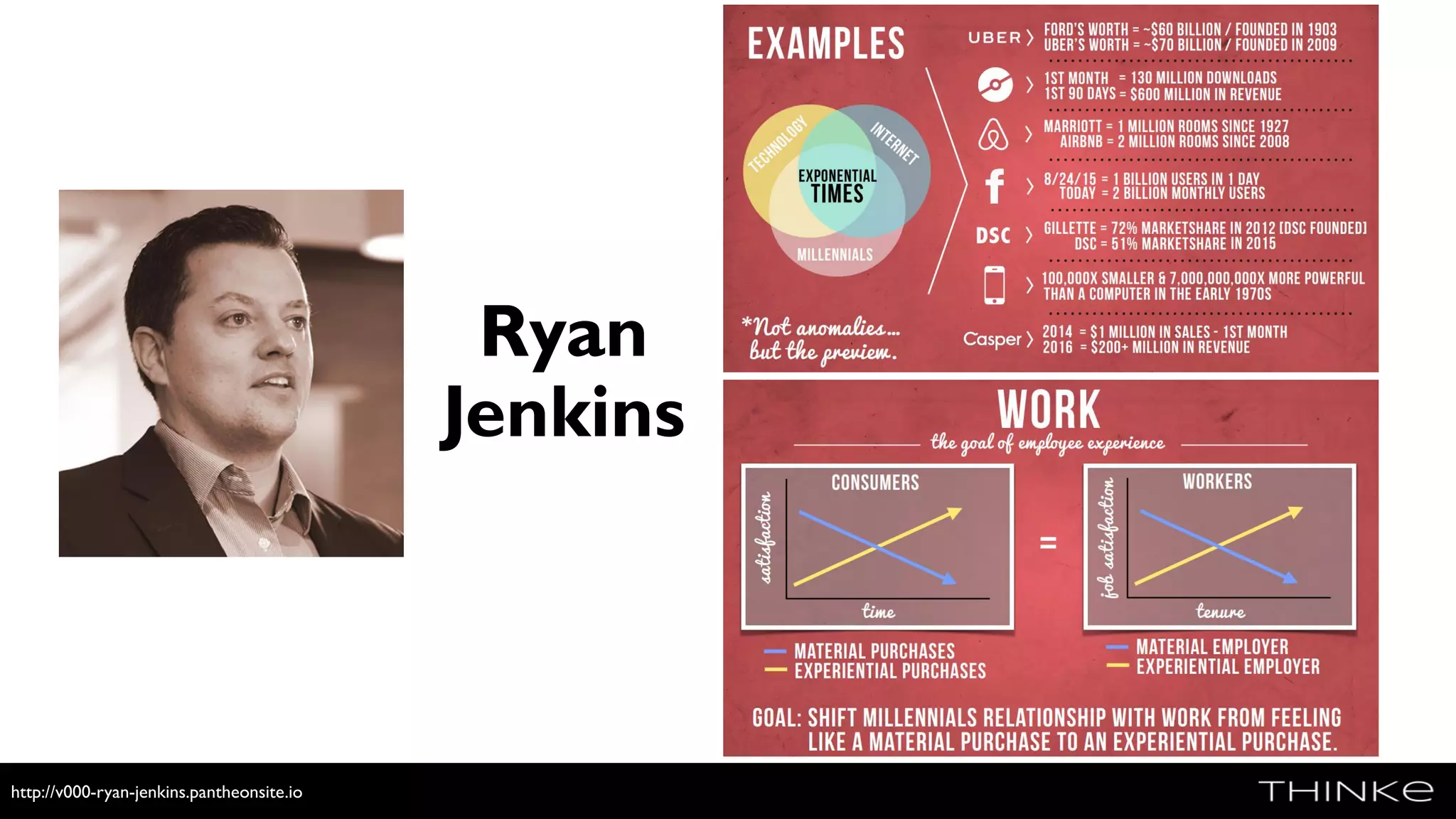
Changing
Demographics
Ryan
Jenkins
http://v000-ryan-jenkins.pantheonsite.io
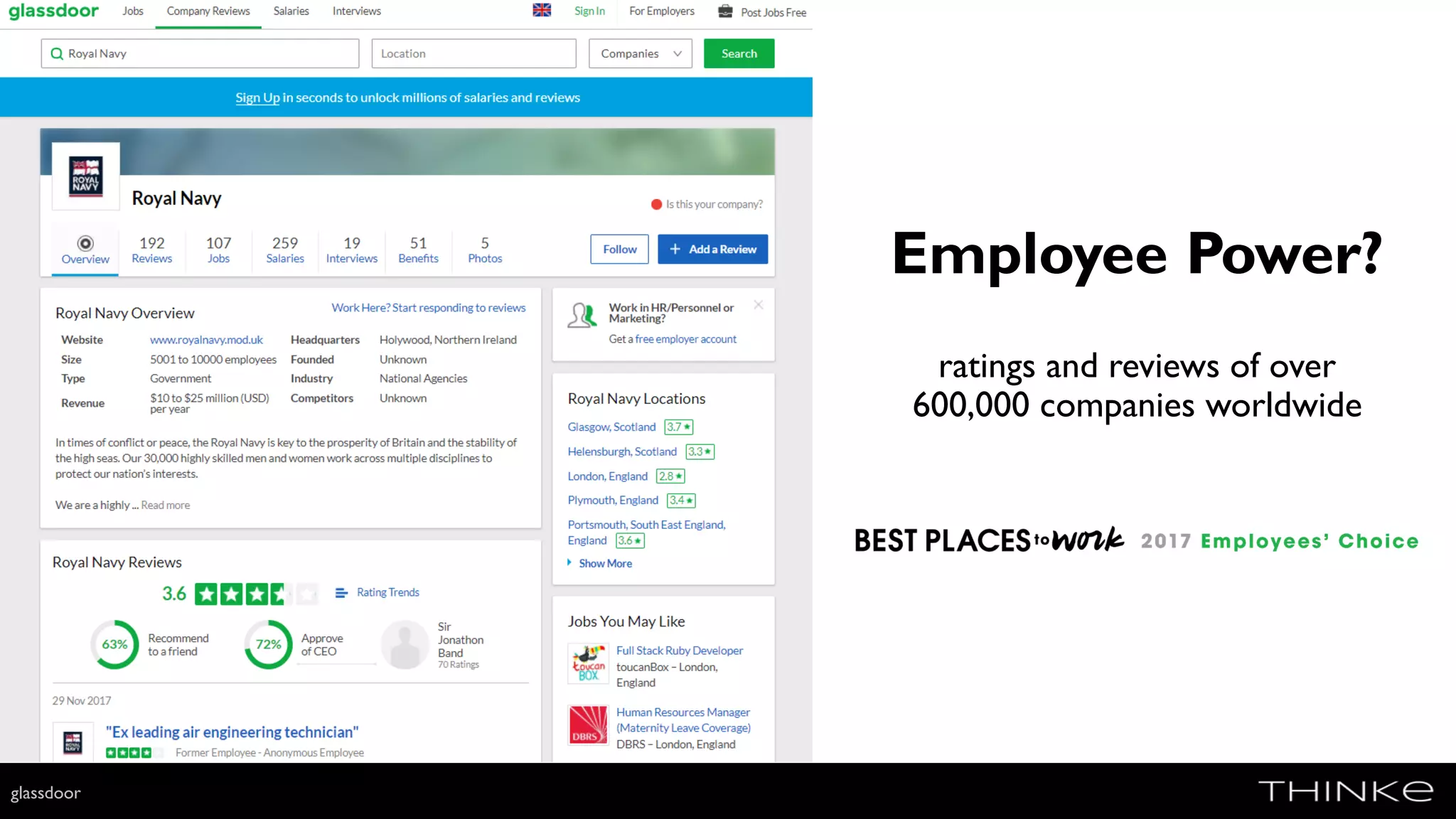
Employee Power?
ratings and reviews of over
600,000 companies worldwide
glassdoor
* It’s a Digital Age
* Recruits with New Educational
Experiences
* Draw on the Experiences of all
Age Groups
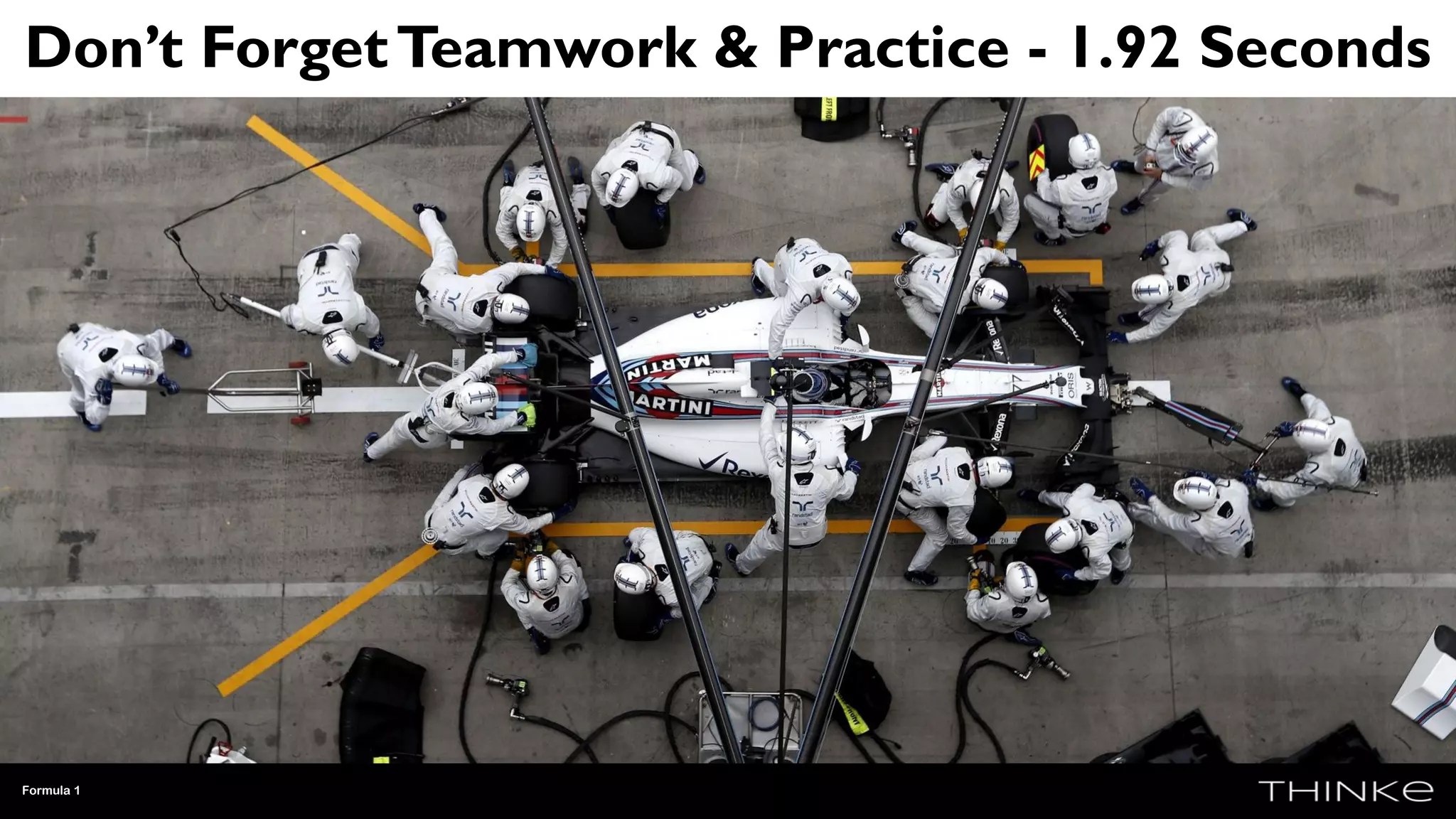
Don’t ForgetTeamwork & Practice - 1.92 Seconds
Wikimedia
Formula 1
Simulation andTraining System
Developments
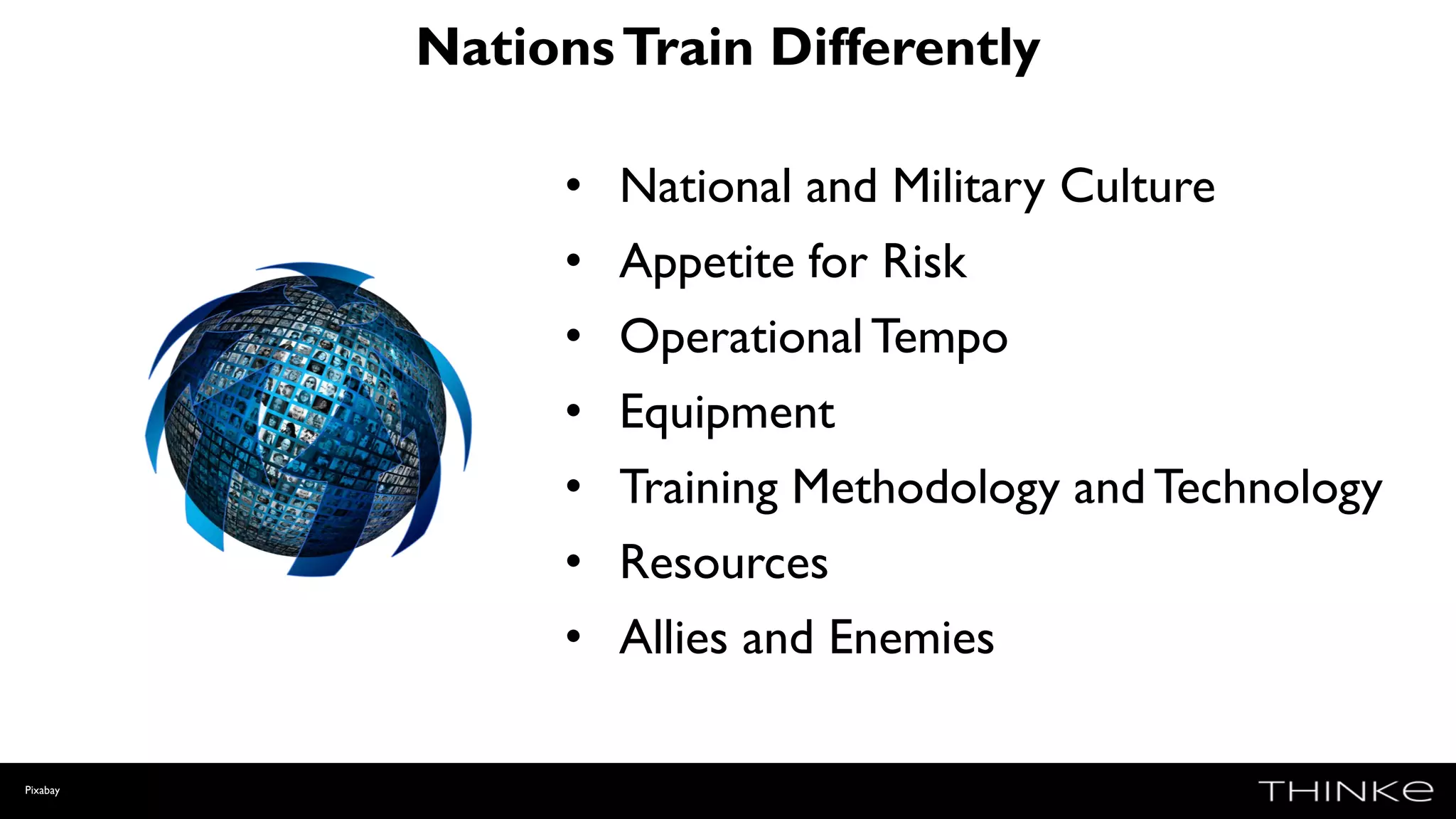
NationsTrain Differently
Pixabay
• National and Military Culture
• Appetite for Risk
• OperationalTempo
• Equipment
• Training Methodology and Technology
• Resources
• Allies and Enemies
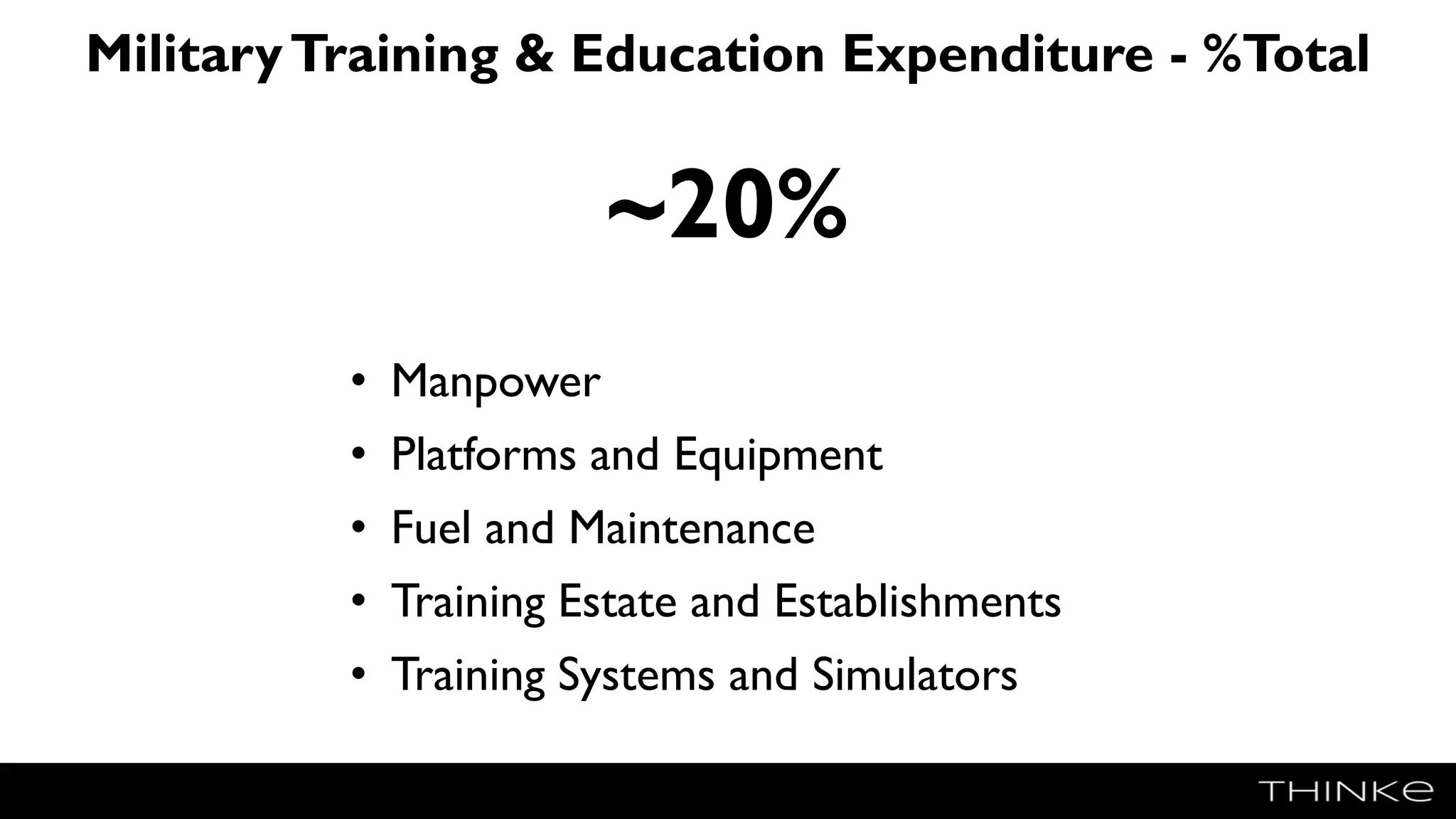
MilitaryTraining & Education Expenditure - %Total
~20%
• Manpower
• Platforms and Equipment
• Fuel and Maintenance
• Training Estate and Establishments
• Training Systems and Simulators
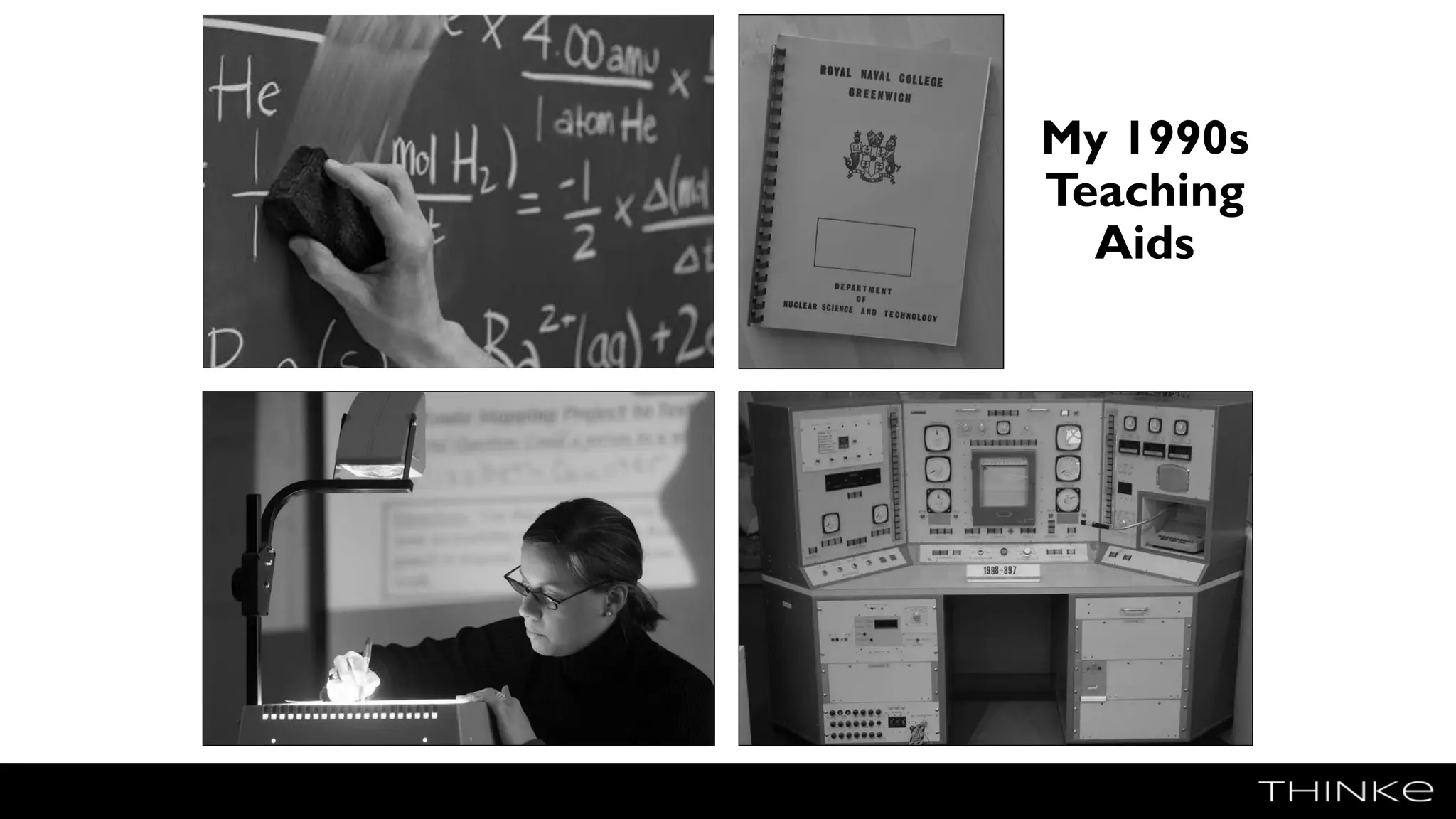
My 1990s
Teaching
Aids
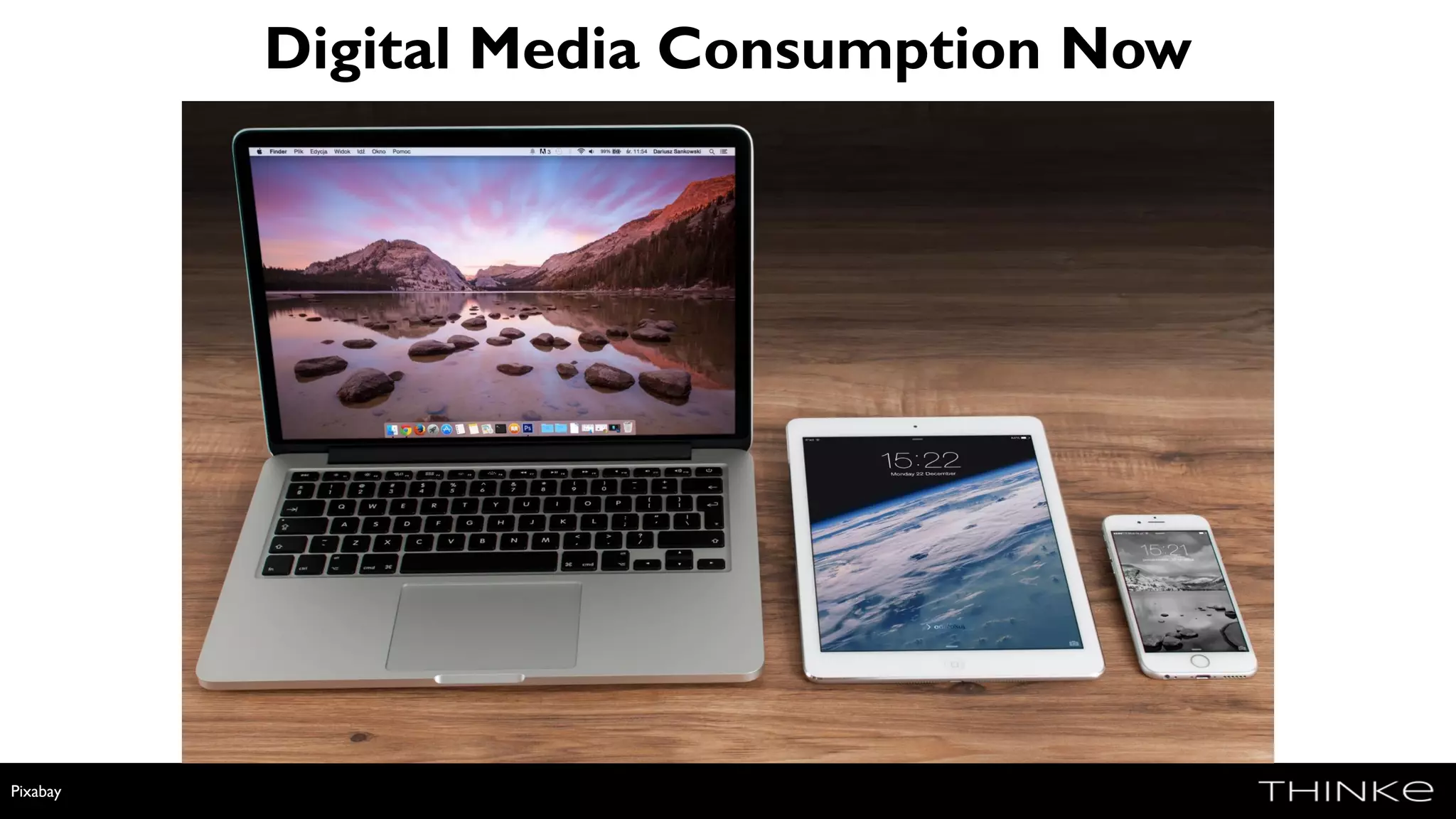
Digital Media Consumption Now
Pixabay
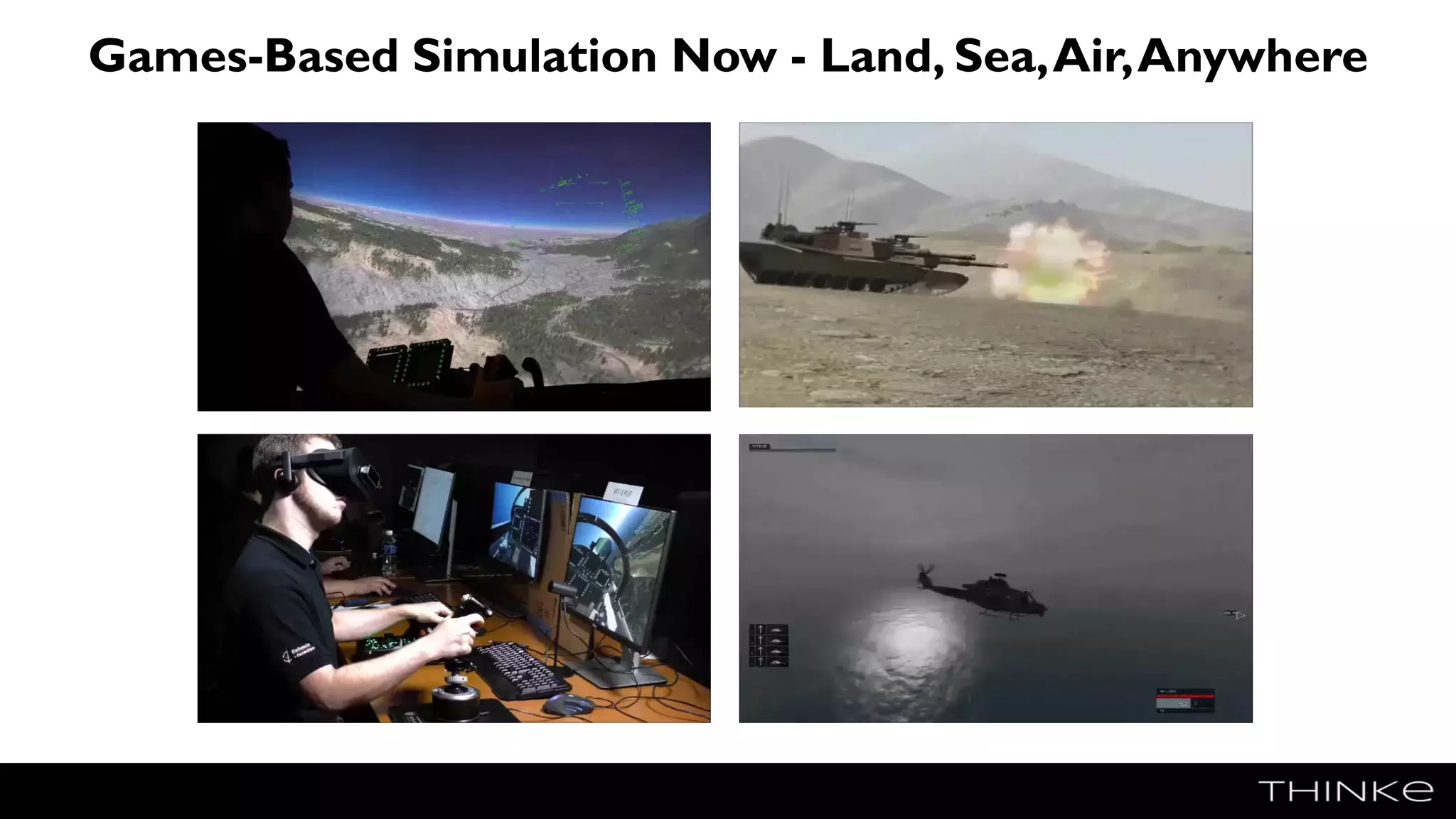
Games-Based Simulation Now - Land, Sea,Air,Anywhere
• BISim VBS3/VBS Blue
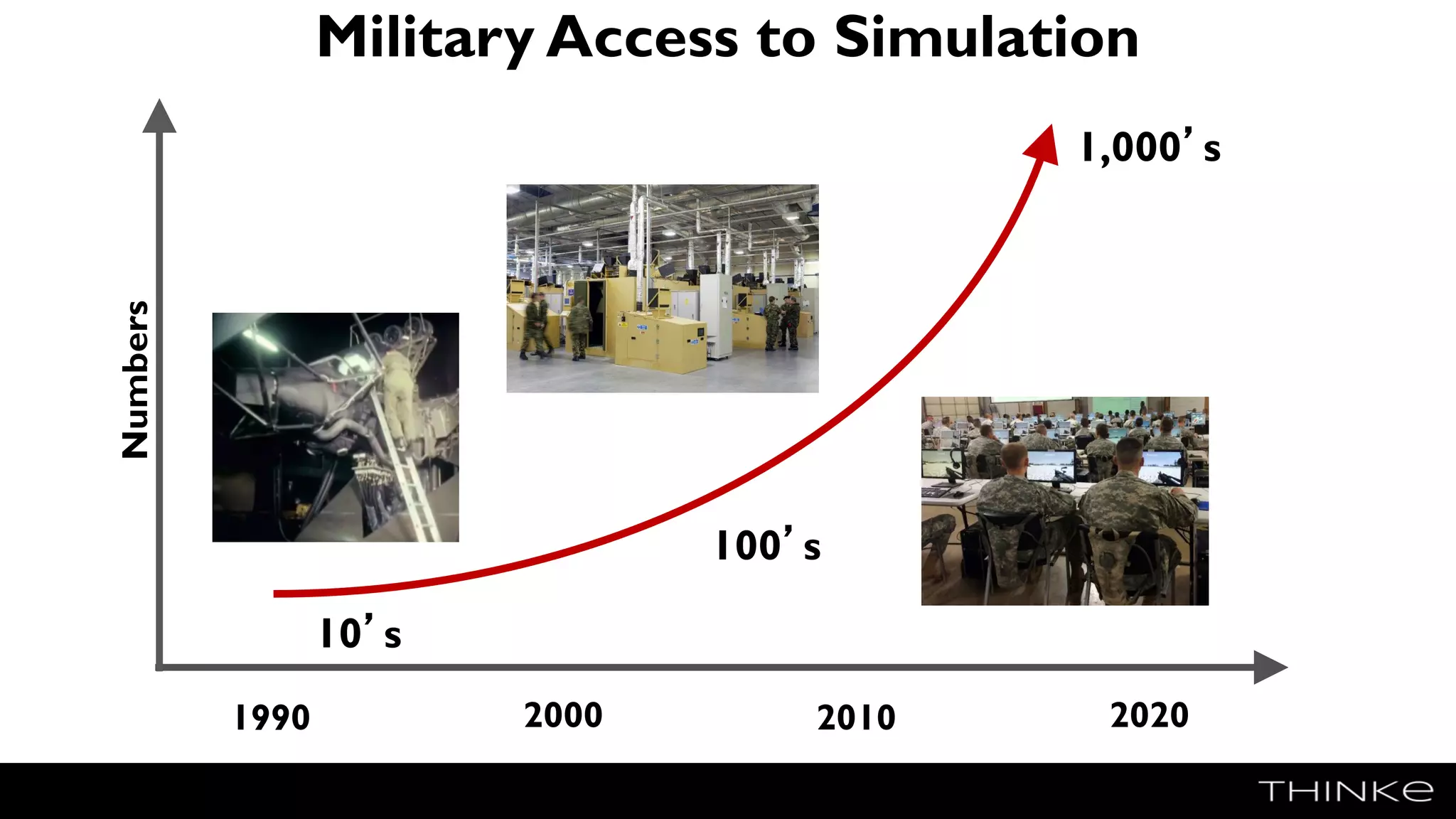
Military Access to Simulation
1990 2000
Numbers
10’s
100’s
1,000’s
2010 2020
Latest SimulationTechnology
BISim
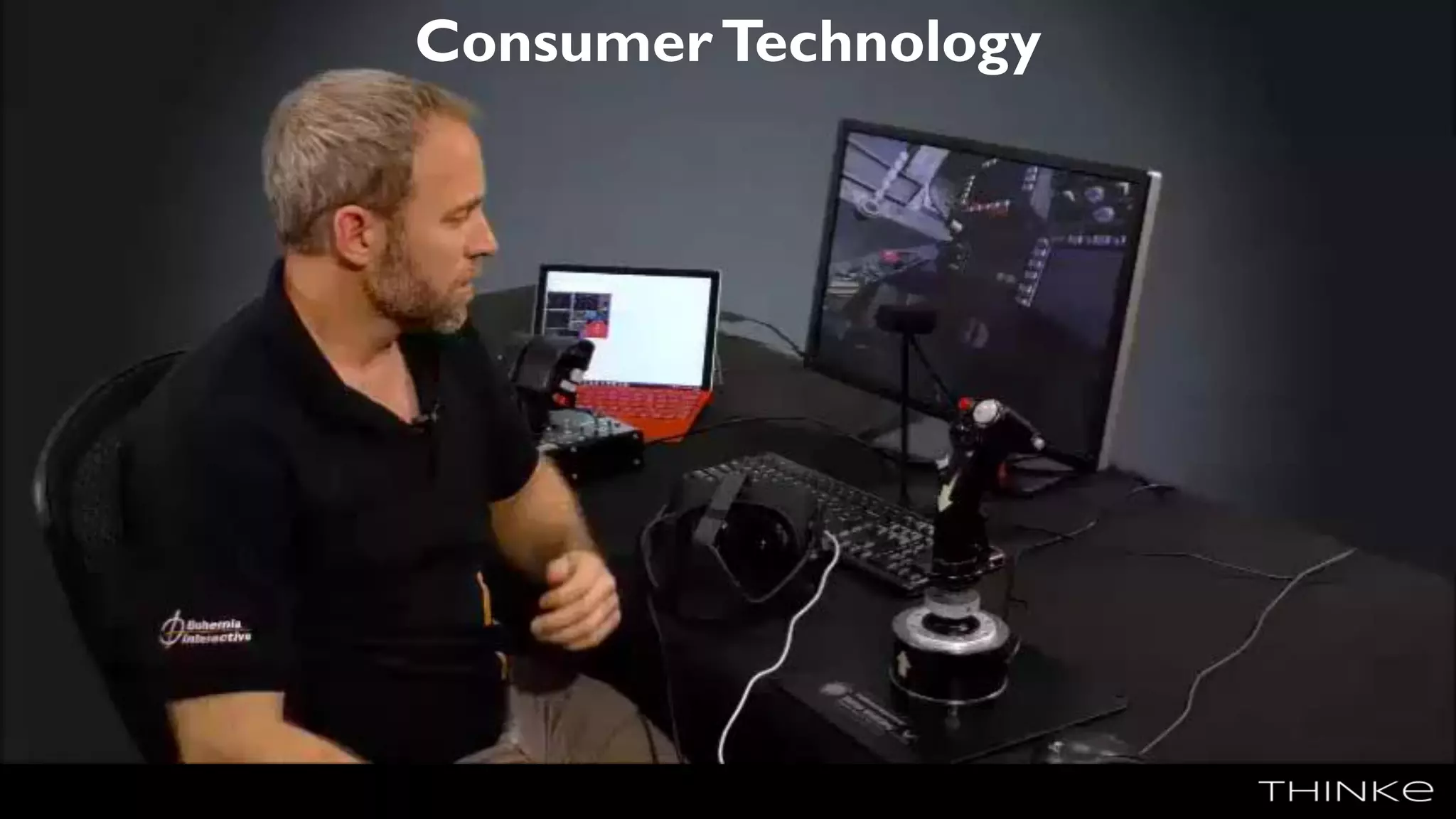
ConsumerTechnology
Bohemia Interactive Simulations
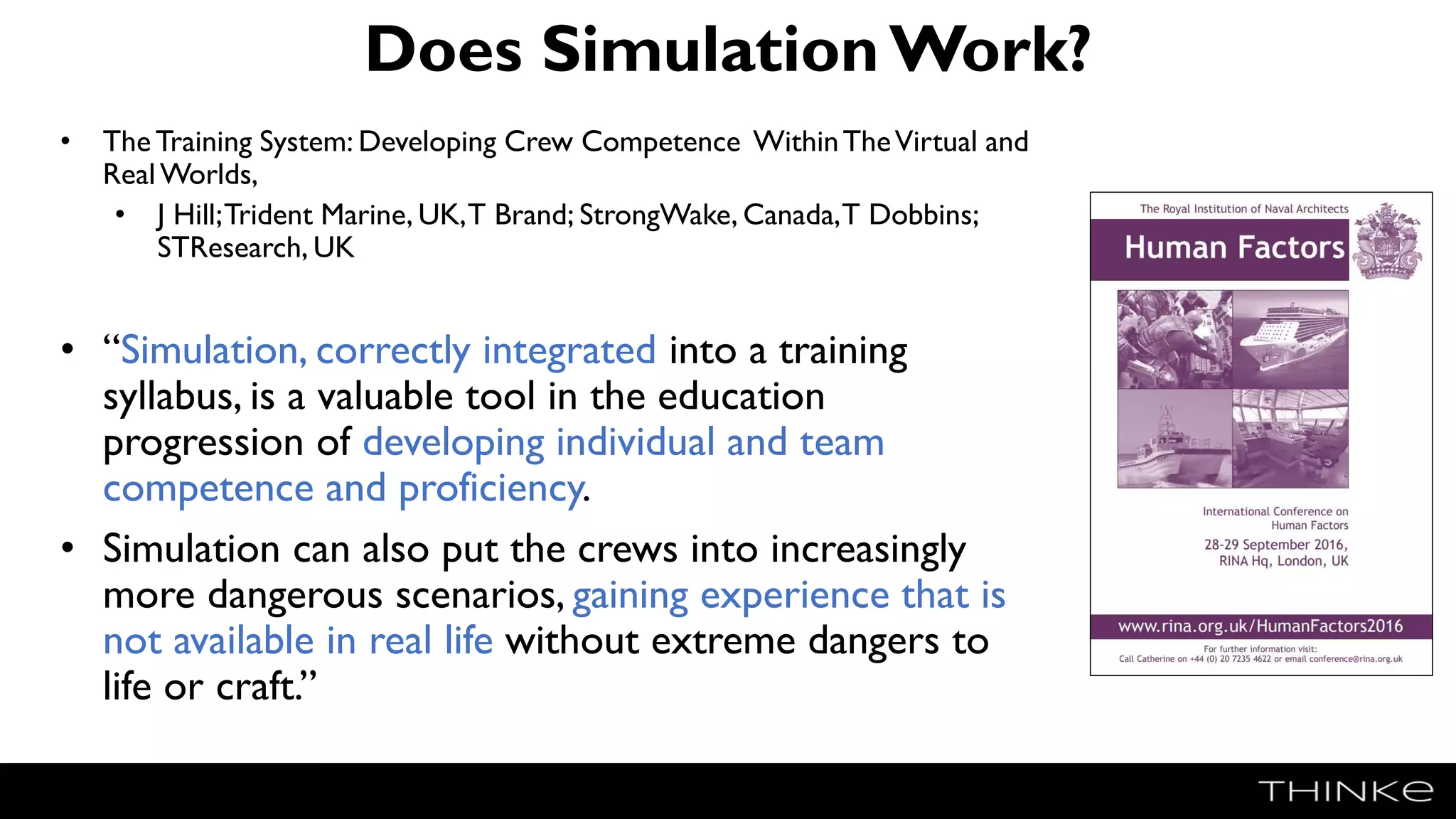
Does SimulationWork?
• The Training System: Developing Crew Competence WithinTheVirtual and
RealWorlds,
• J Hill;Trident Marine, UK,T Brand; StrongWake, Canada,T Dobbins;
STResearch, UK
• “Simulation, correctly integrated into a training
syllabus, is a valuable tool in the education
progression of developing individual and team
competence and proficiency.
• Simulation can also put the crews into increasingly
more dangerous scenarios, gaining experience that is
not available in real life without extreme dangers to
life or craft.”
Copyright © 2018 Bohemia Interactive Simulations k.s. & 20KTS+ Ltd All other trademarks or copyrights are the property of their respective owners. All Rights Reserved.
Background
DOES SIMULATION WORK ?
Ref: Hill, Brand & Dobbins (2016) Conf. Proceedings; RINA Human Factors.
NON-SIMULATION
BENCHMARK
SIMULATION
ENHANCEMENT
Copyright © 2018 Bohemia Interactive Simulations k.s. & 20KTS+ Ltd All other trademarks or copyrights are the property of their respective owners. All Rights Reserved.
Background
DOES SIMULATION WORK ?
Ref: Hill, Brand & Dobbins (2016) Conf. Proceedings; RINA Human Factors.
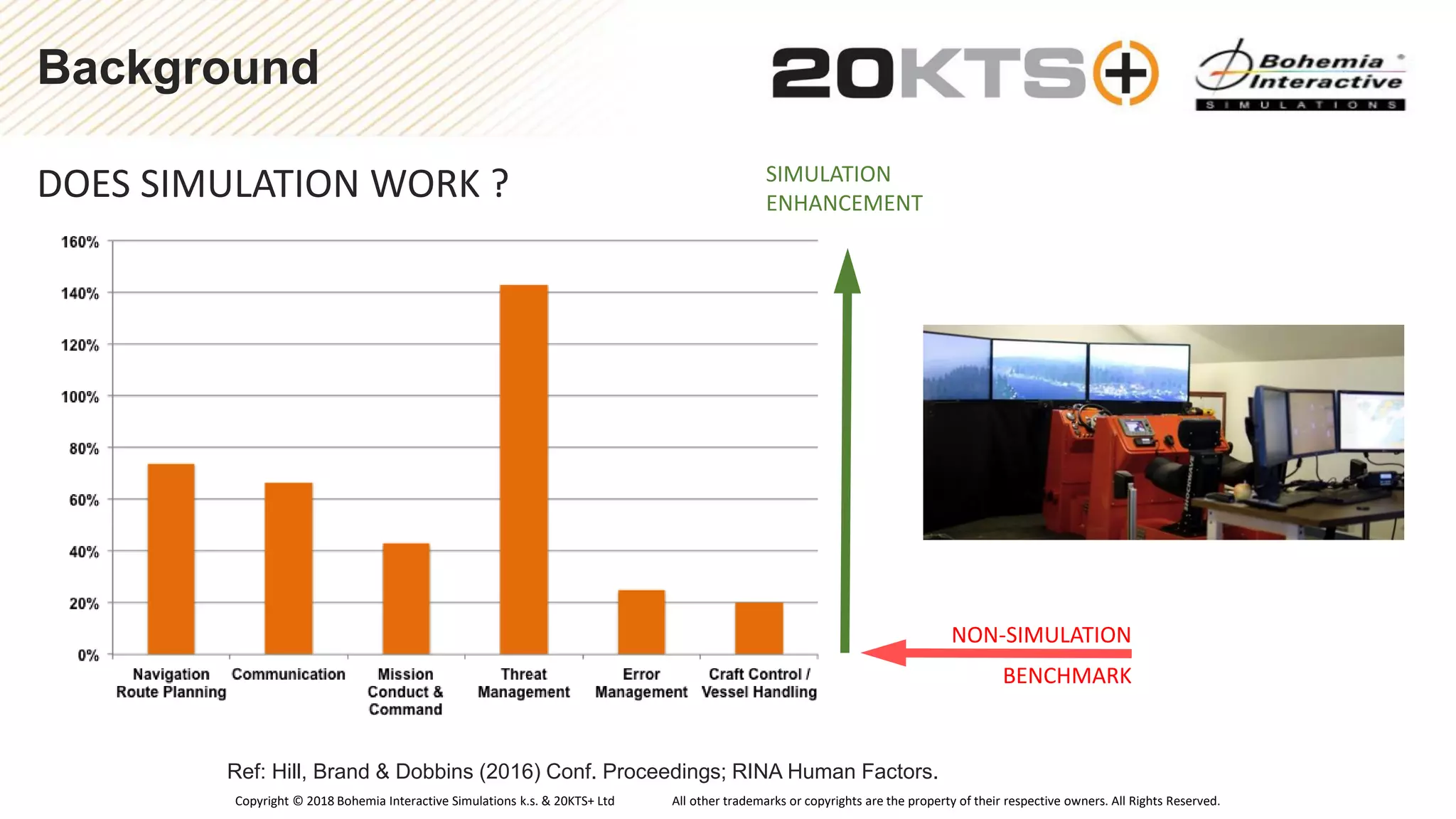
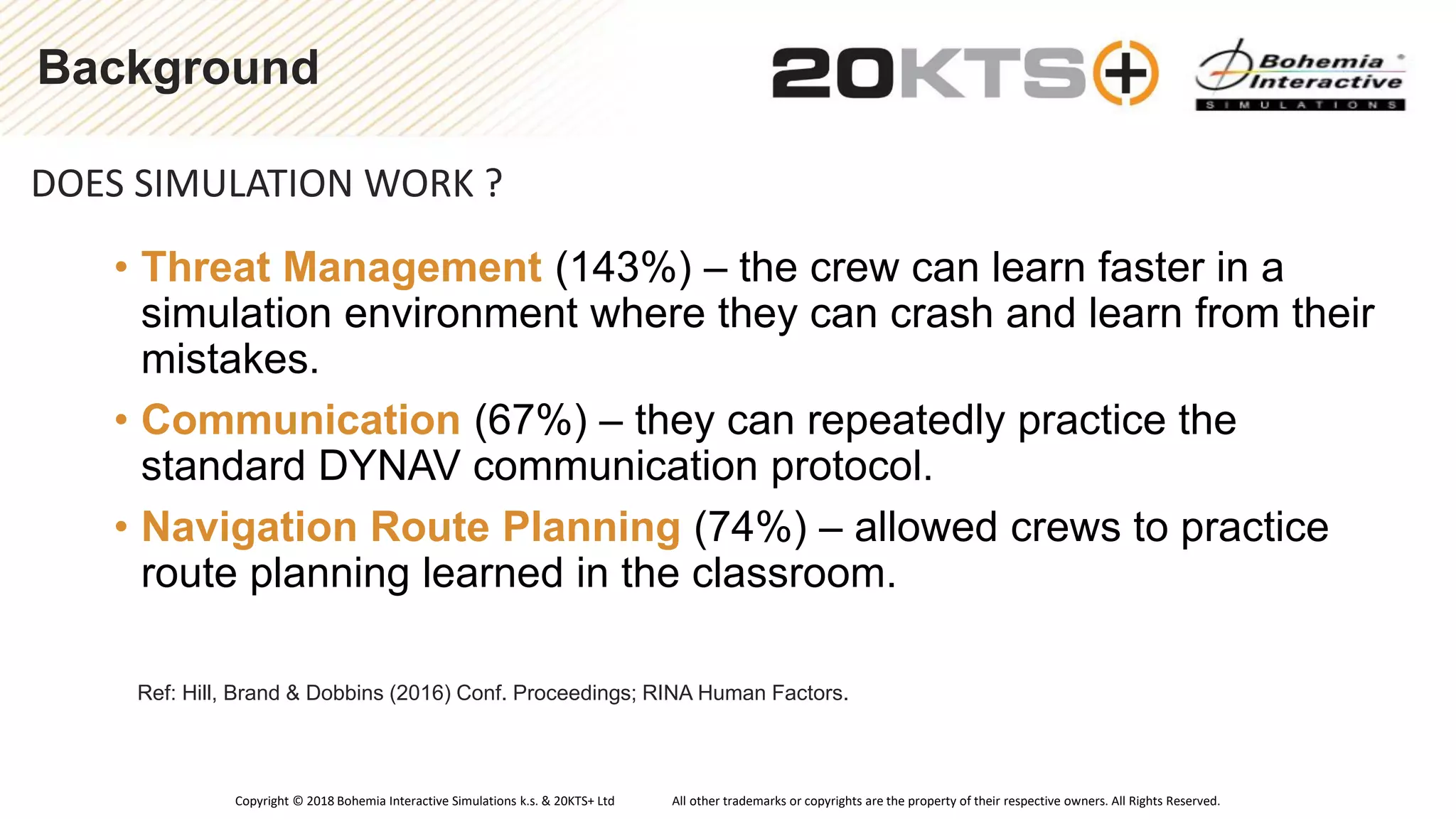
• Threat Management (143%) – the crew can learn faster in a
simulation environment where they can crash and learn from their
mistakes.
• Communication (67%) – they can repeatedly practice the
standard DYNAV communication protocol.
• Navigation Route Planning (74%) – allowed crews to practice
route planning learned in the classroom.
Copyright © 2018 Bohemia Interactive Simulations k.s. & 20KTS+ Ltd All other trademarks or copyrights are the property of their respective owners. All Rights Reserved.
Background
DOES SIMULATION WORK ?
Ref: Hill, Brand & Dobbins (2016) Conf. Proceedings; RINA Human Factors.
• Mission Command & Control (43%) – they can practice
working together.
• Error Management (25%) – they can see the results of their
and system errors and have a better understanding of how to
manage them.
• Craft Control / Handling (20%) – this is principally a practical
task so no enhancement was expected.
Copyright © 2018 Bohemia Interactive Simulations k.s. & 20KTS+ Ltd All other trademarks or copyrights are the property of their respective owners. All Rights Reserved.
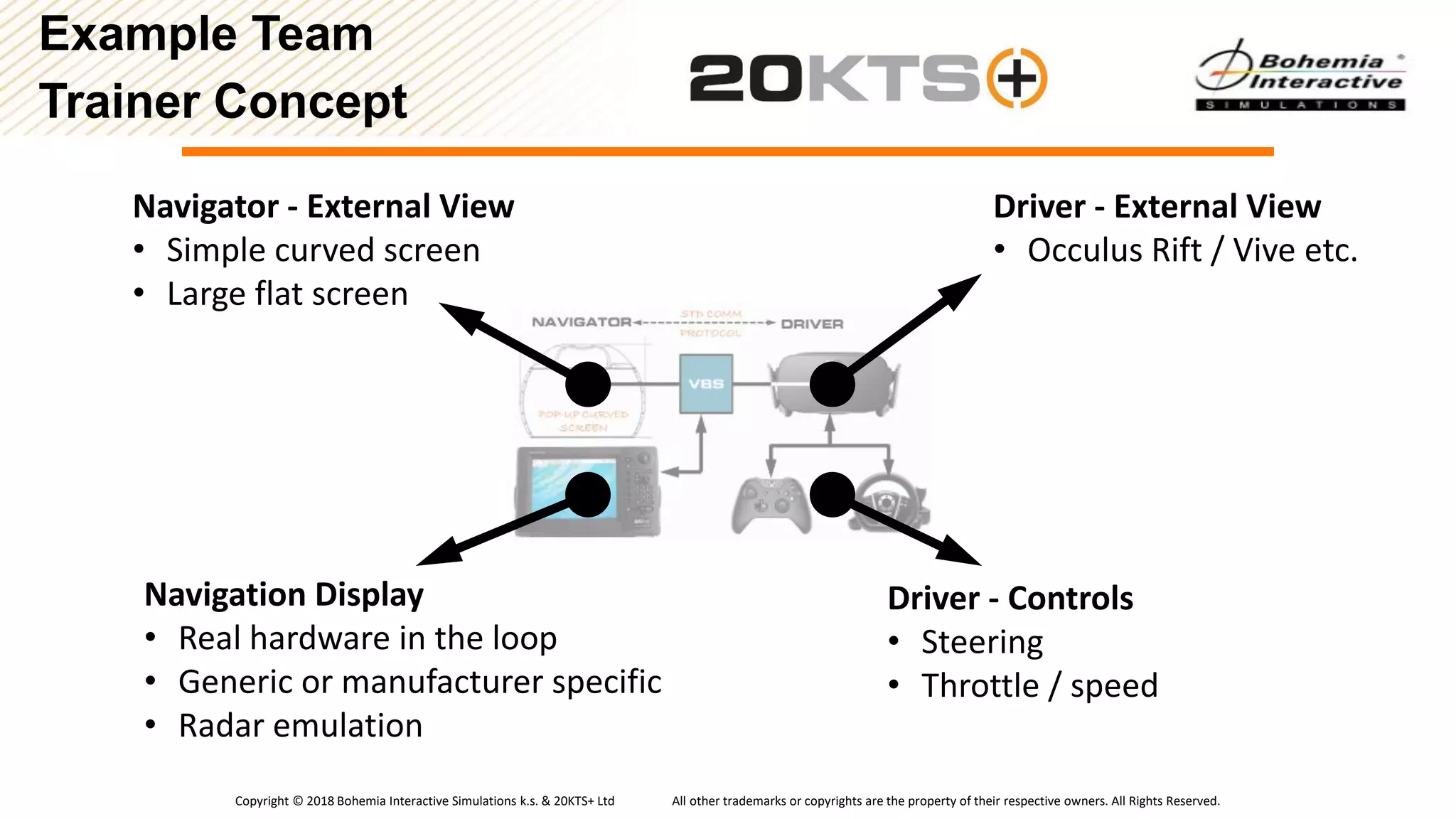
Example Team
Trainer Concept
2016
DRIVERNAVIGATOR
OR
‘POP-UP’ CURVED
SCREEN
VBS
STANDARDISED DYNAV
PROTOCOL
NAV.
SYSTEM
Copyright © 2018 Bohemia Interactive Simulations k.s. & 20KTS+ Ltd All other trademarks or copyrights are the property of their respective owners. All Rights Reserved.
2016 35
Navigation Display
• Real hardware in the loop
• Generic or manufacturer specific
• Radar emulation
Navigator - External View
• Simple curved screen
• Large flat screen
Driver - External View
• Occulus Rift / Vive etc.
Driver - Controls
• Steering
• Throttle / speed
Example Team
Trainer Concept
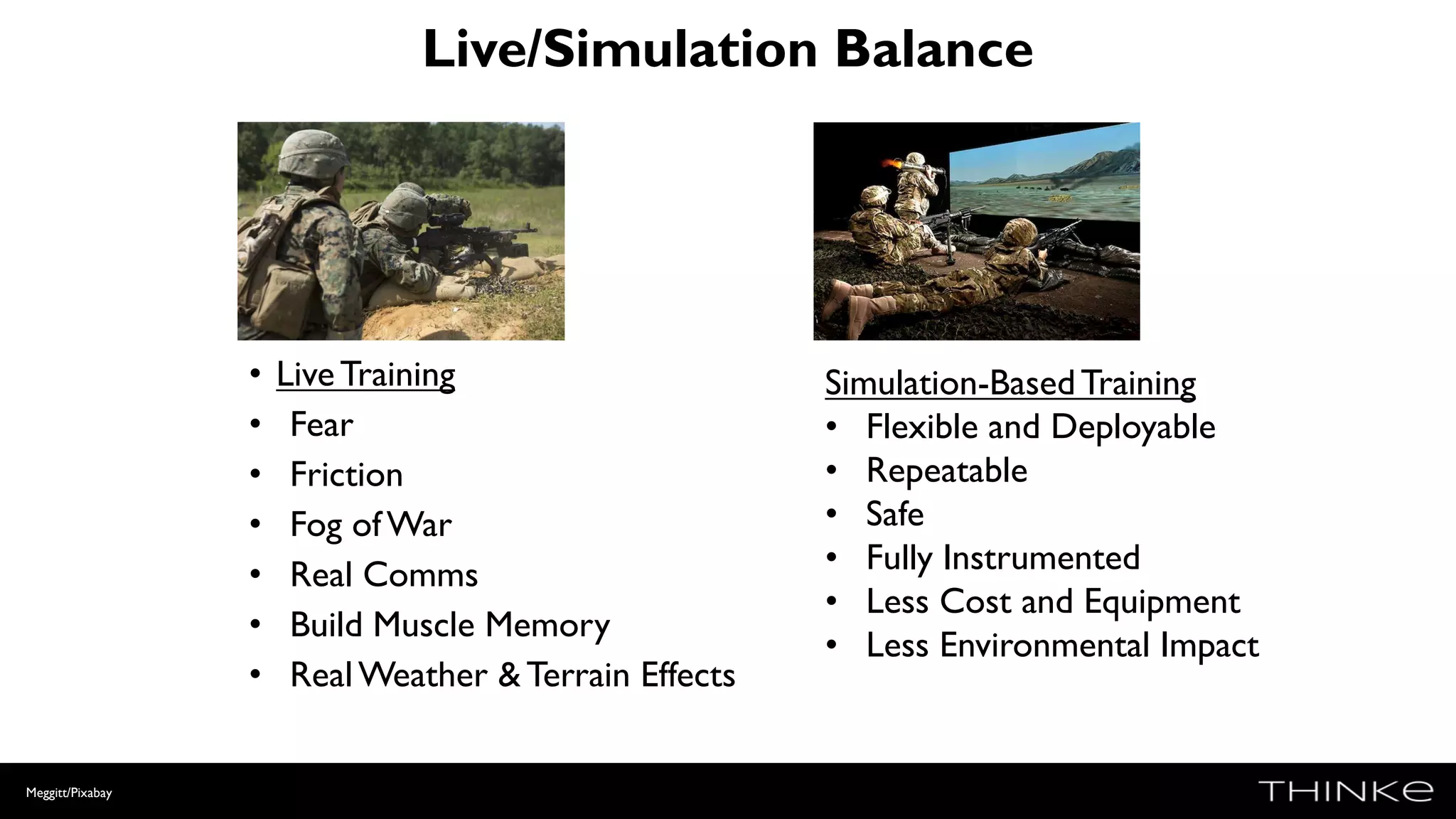
Live/Simulation Balance
• LiveTraining
• Fear
• Friction
• Fog ofWar
• Real Comms
• Build Muscle Memory
• Real Weather & Terrain Effects
Simulation-BasedTraining
• Flexible and Deployable
• Repeatable
• Safe
• Fully Instrumented
• Less Cost and Equipment
• Less Environmental Impact
Meggitt/Pixabay
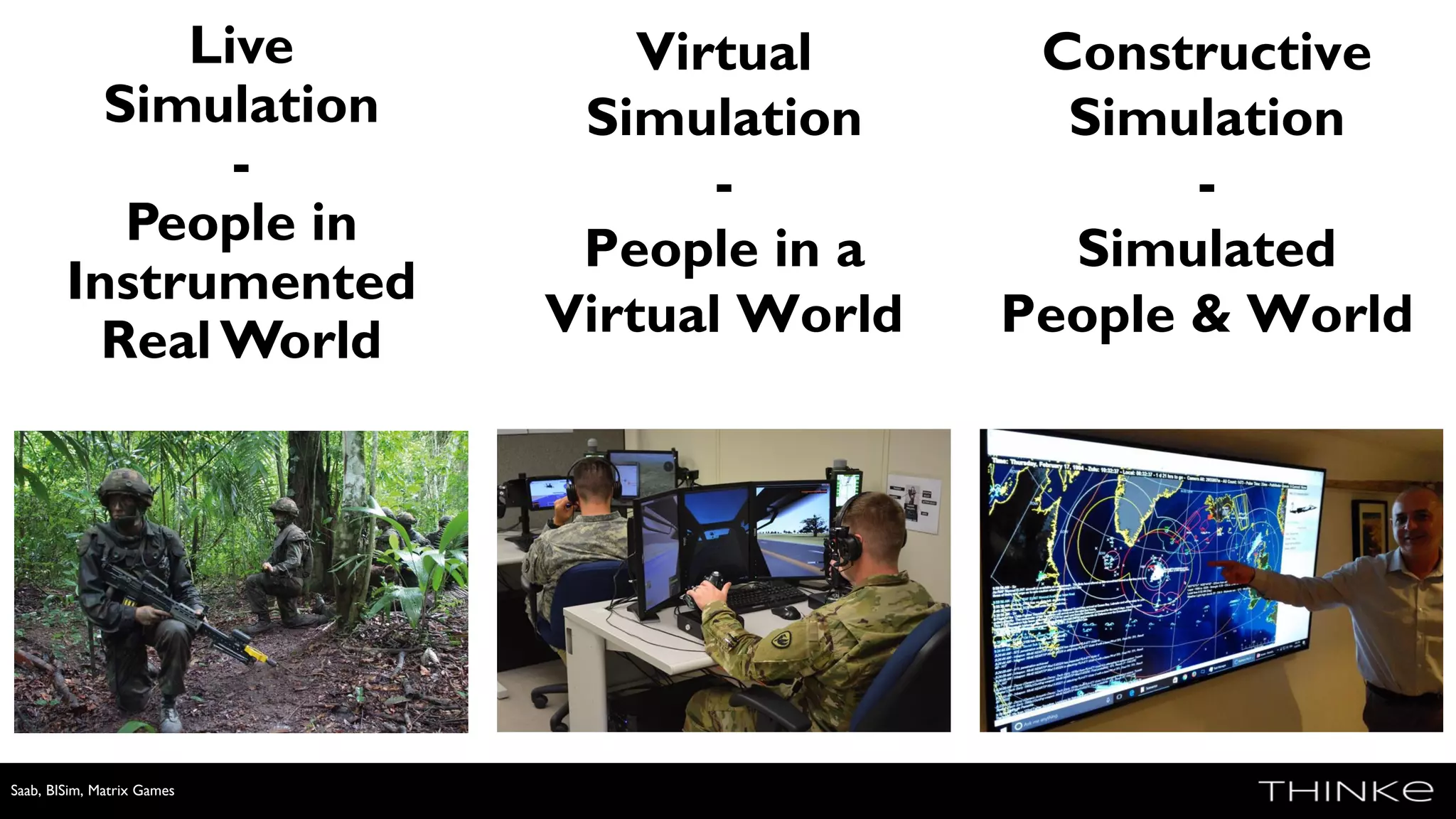
Live
Simulation
-
People in
Instrumented
Real World
Saab, BISim, Matrix Games
Virtual
Simulation
-
People in a
Virtual World
Constructive
Simulation
-
Simulated
People & World
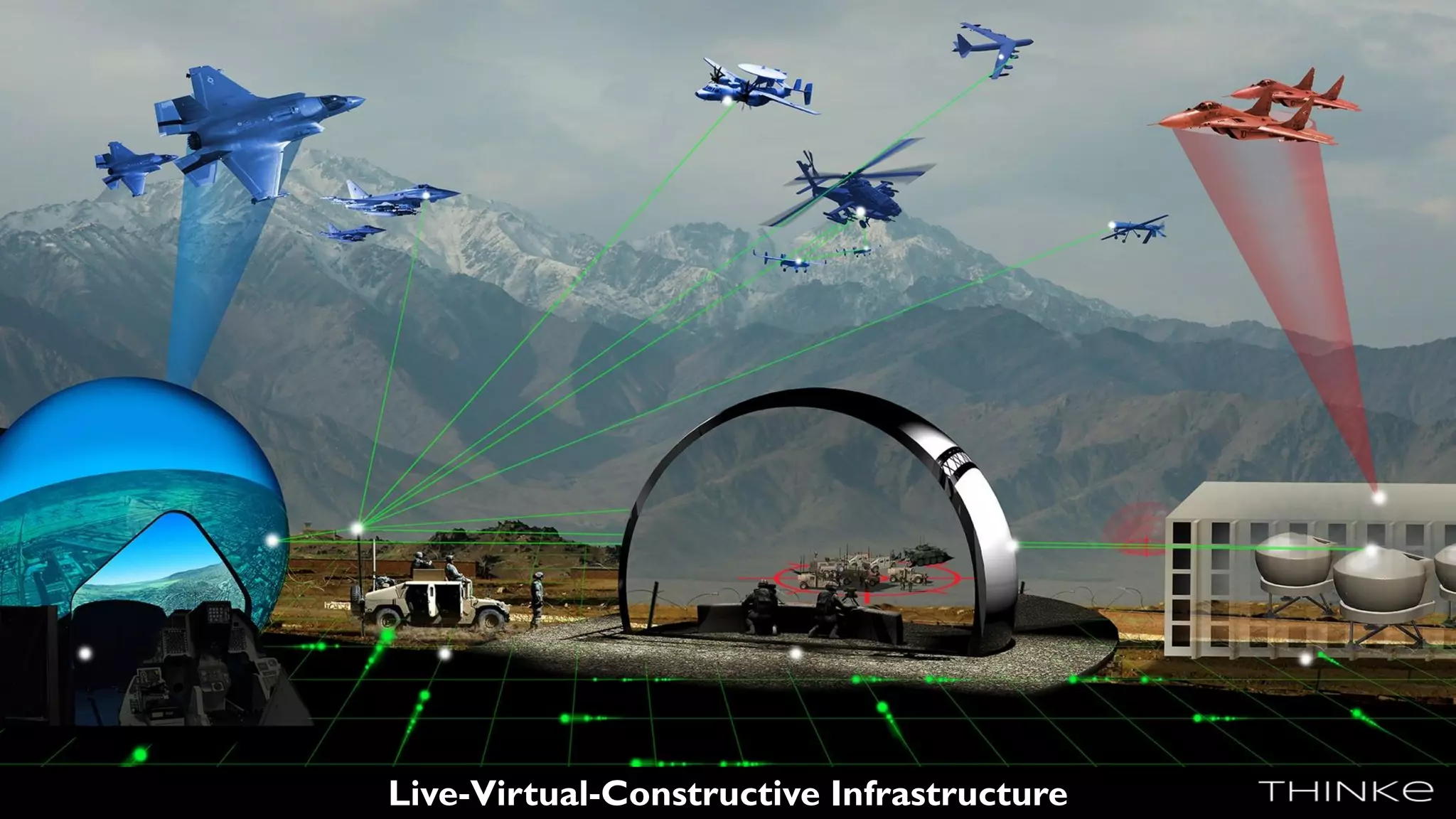
• LVC
Live-Virtual-Constructive Infrastructure
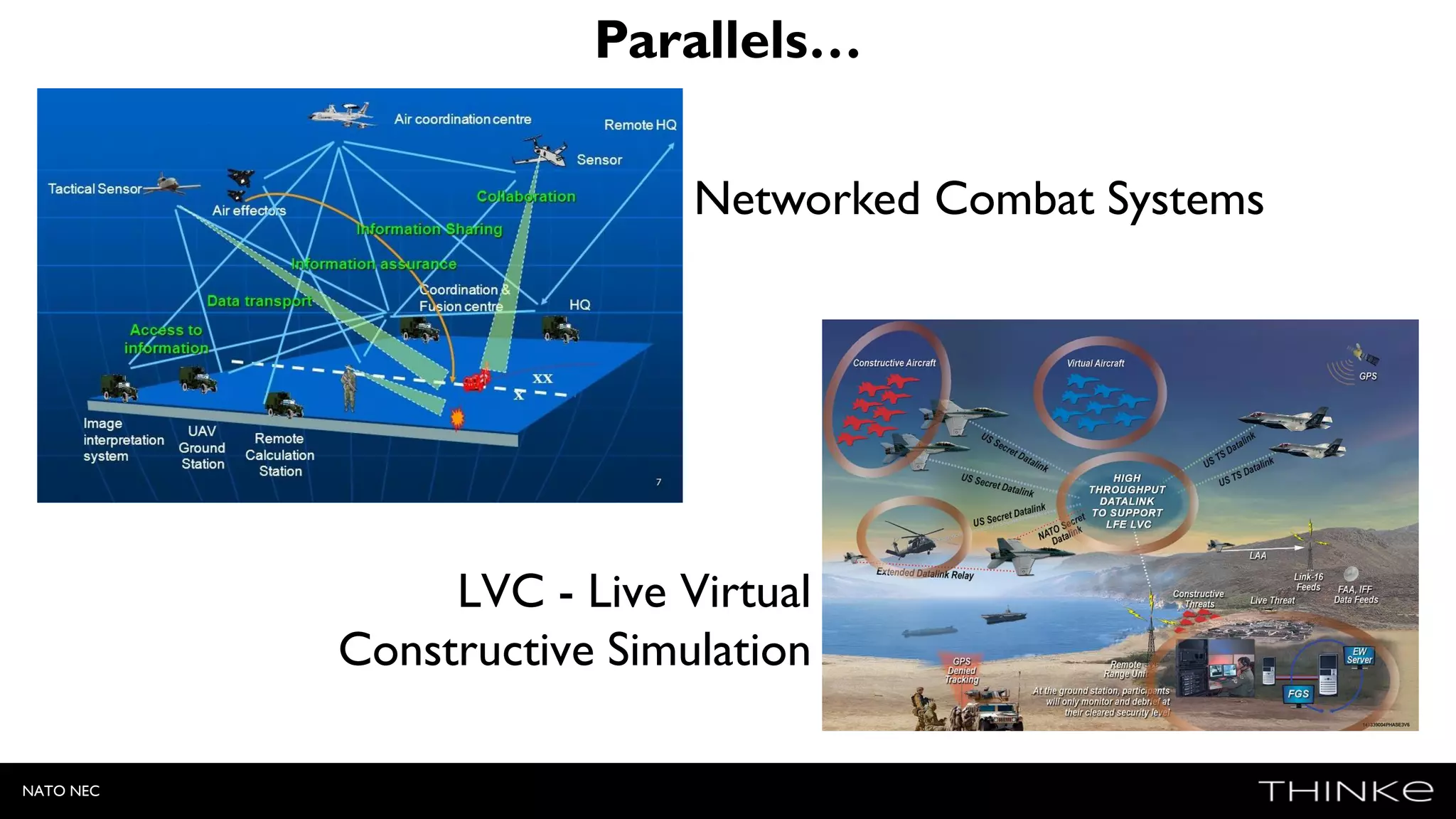
Parallels…
Networked Combat Systems
LVC - Live Virtual
Constructive Simulation
NATO NEC
UK
Thursday
War
Weekly war-fighting and
damage control
exercises
Routine LVC?
https://www.youtube.com/watch?v=iNaRsFYSPP8
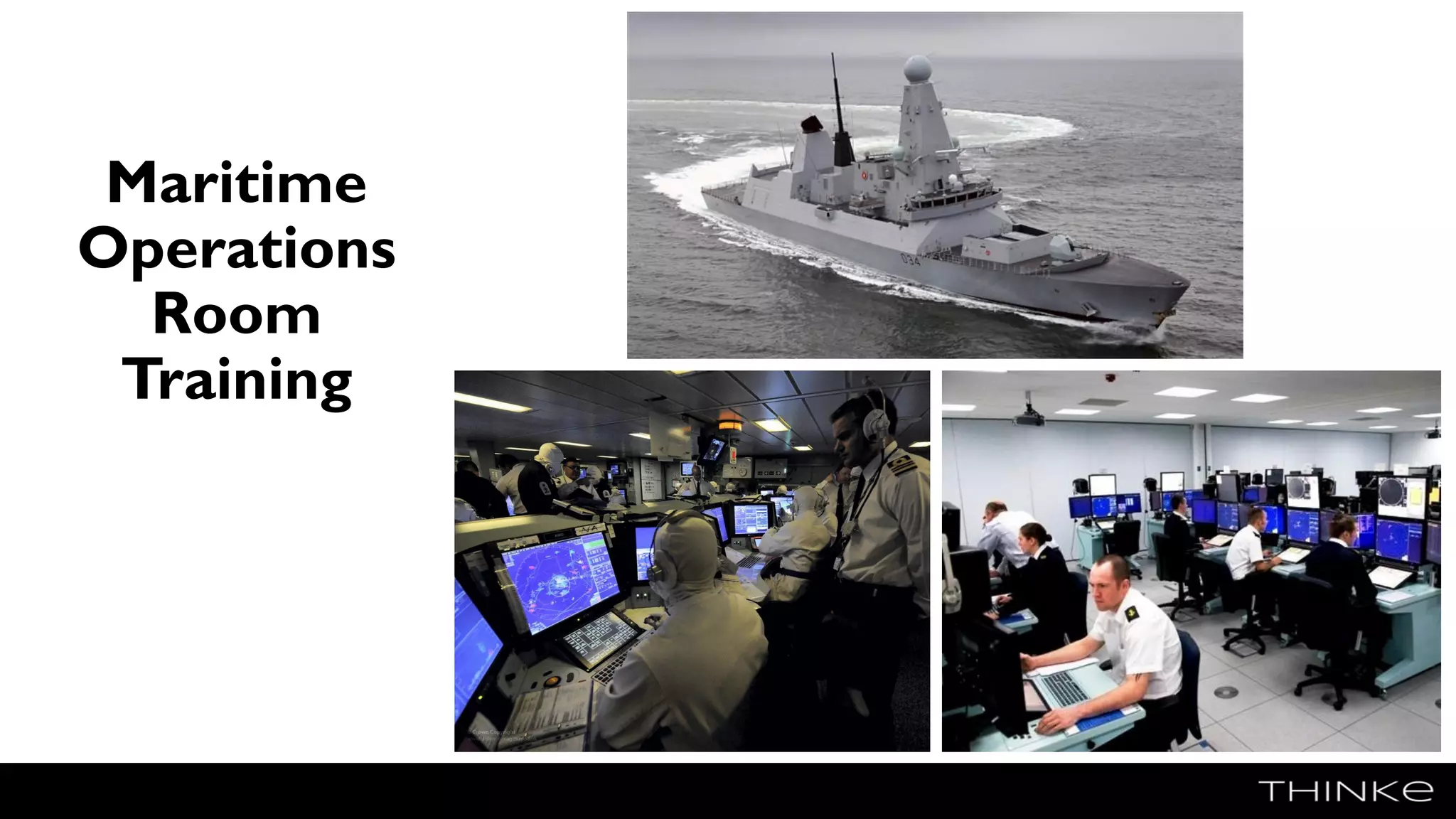
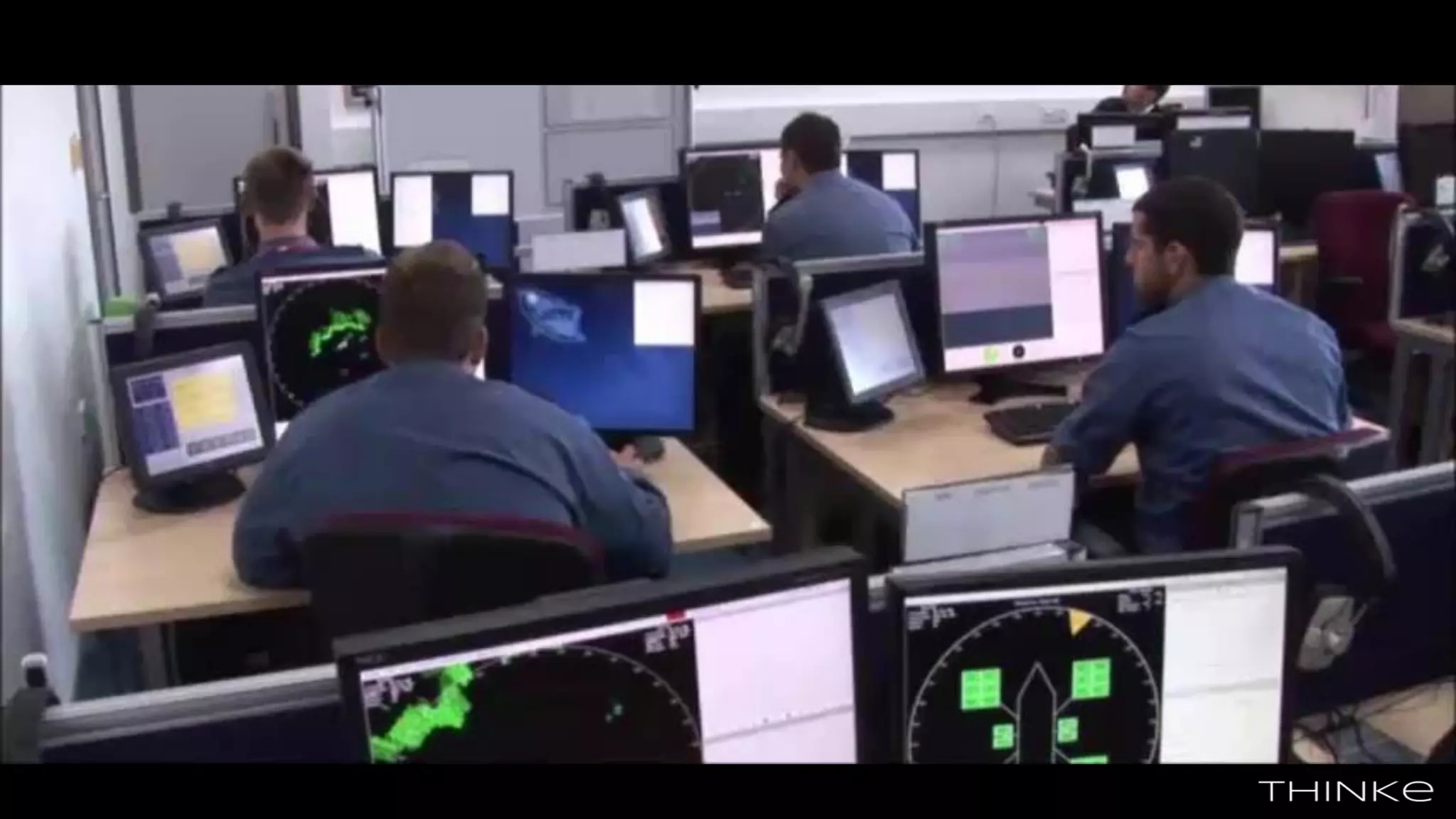
Maritime
Operations
Room
Training
BAE Systems/MoD
Maritime CompositeTraining System
BAE Systems
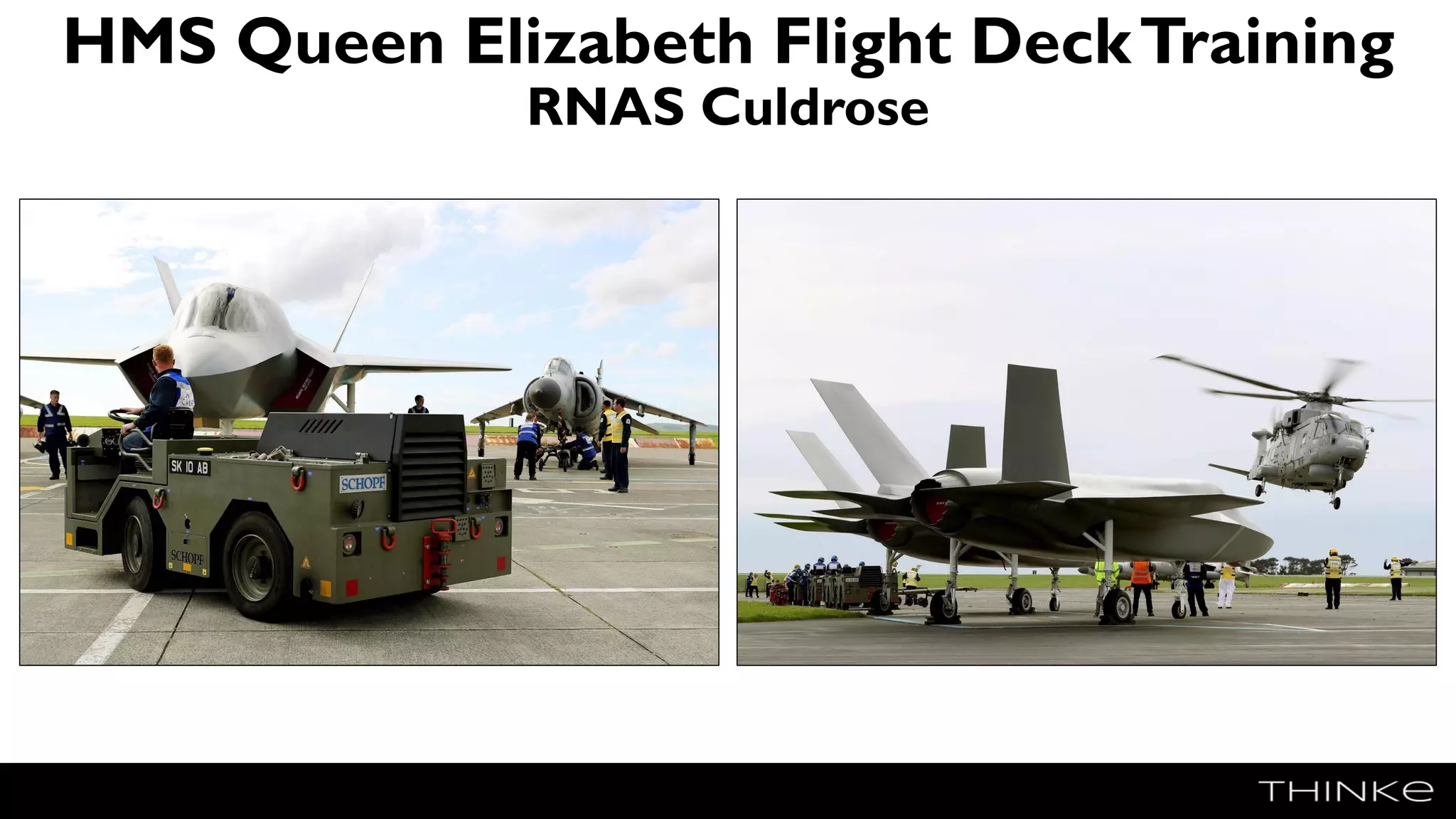
HMS Queen Elizabeth Flight DeckTraining
RNAS Culdrose
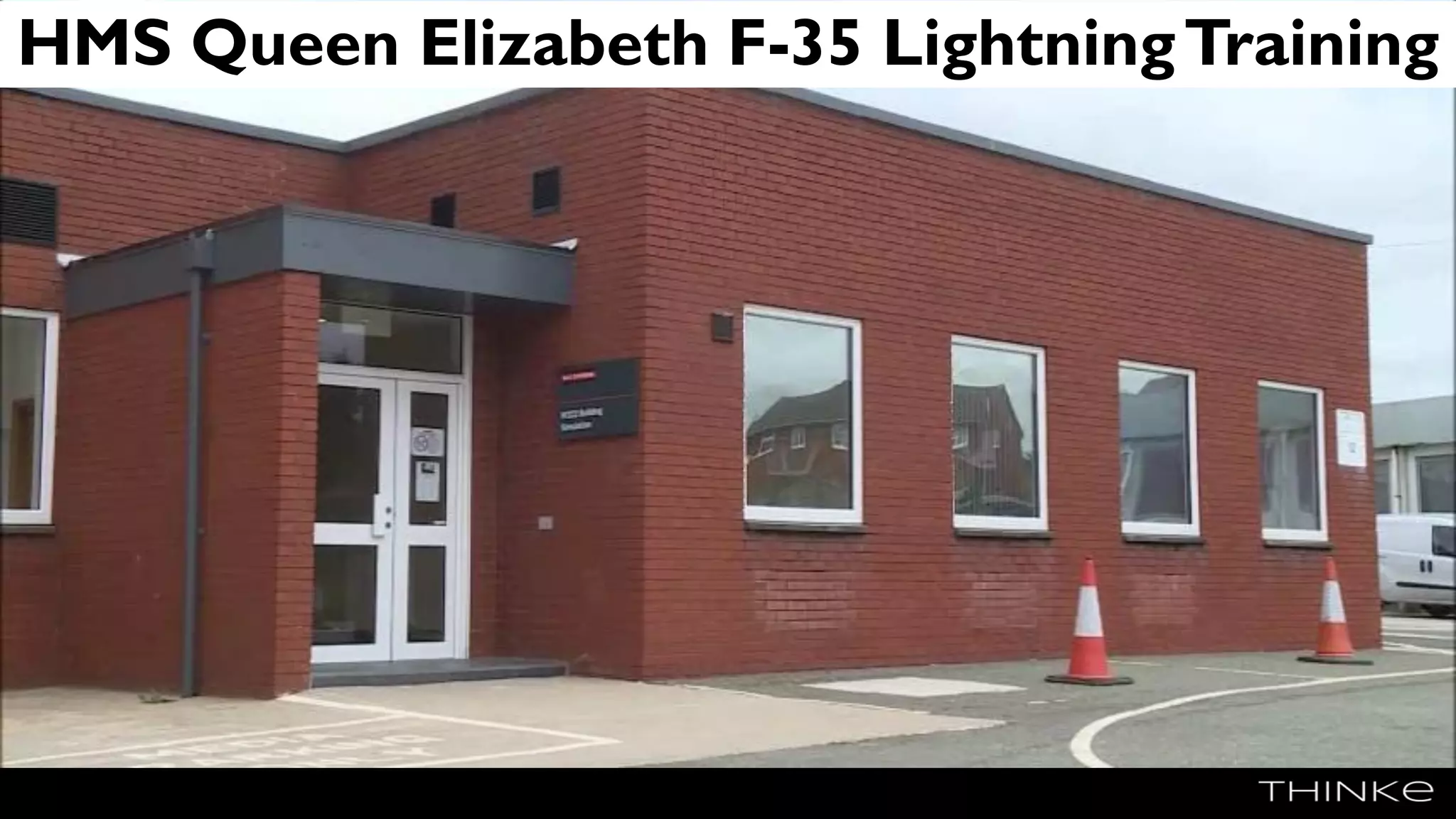
HMS Queen Elizabeth F-35 LightningTraining
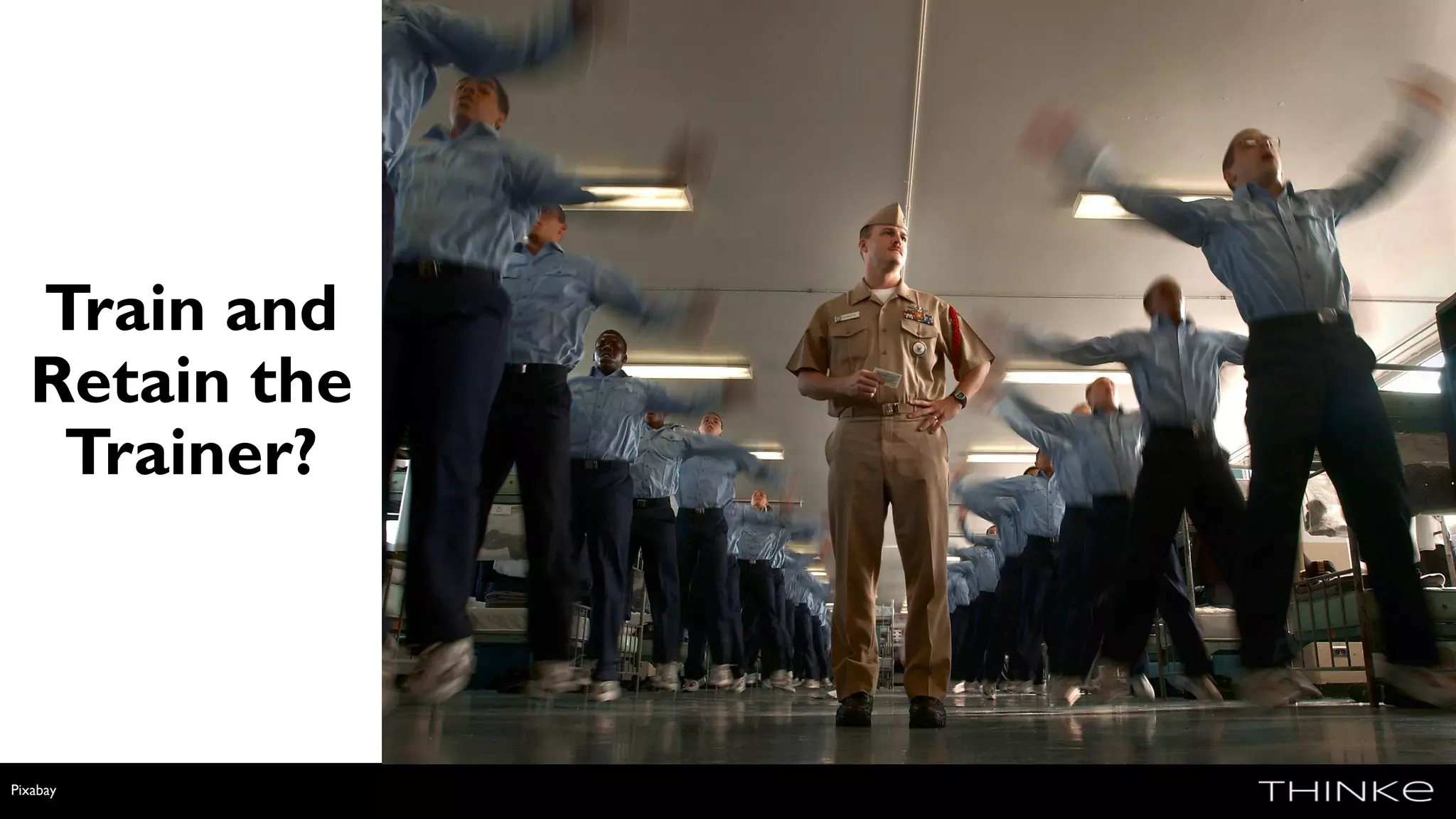
Train and
Retain the
Trainer?
Pixabay
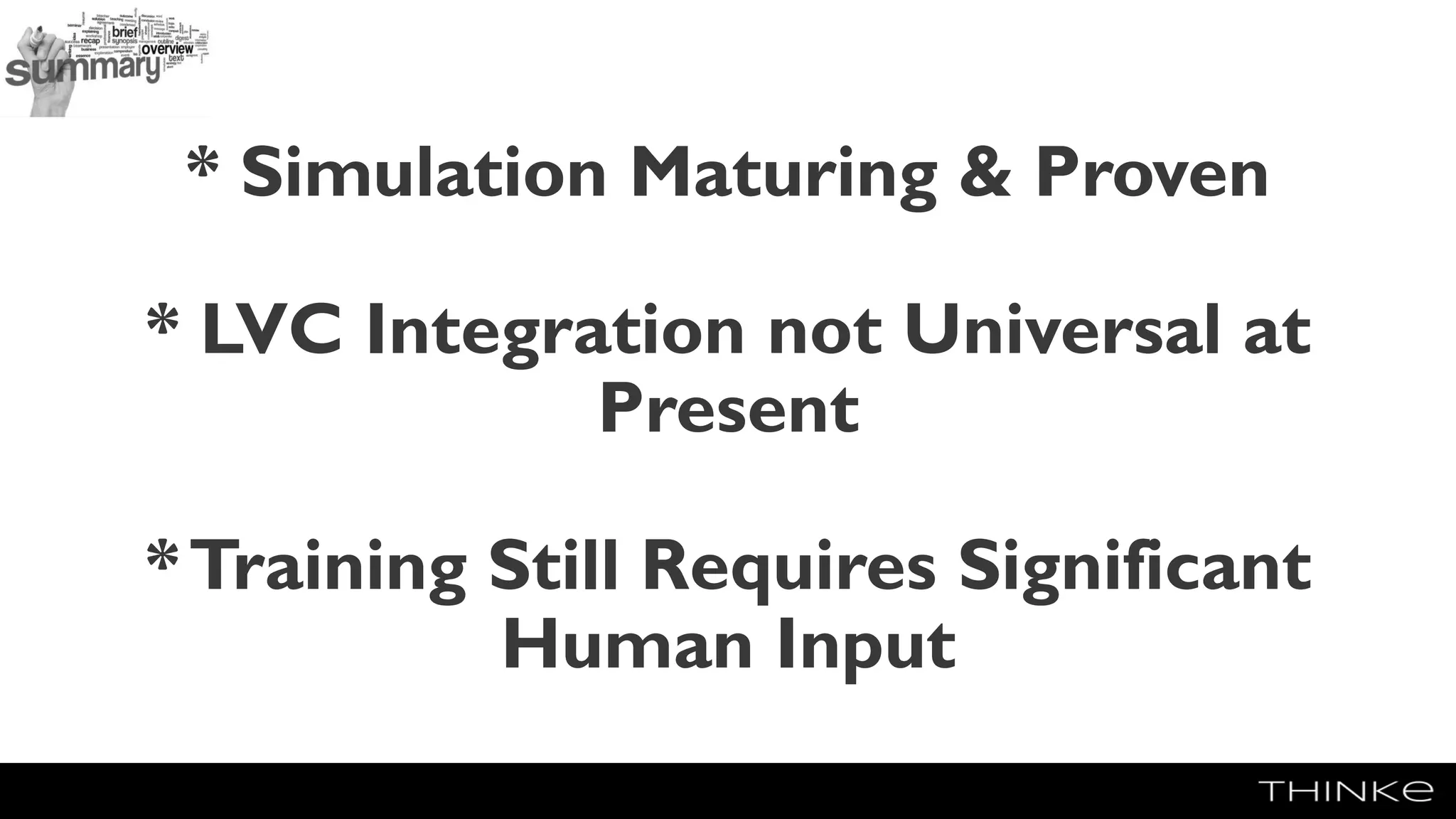
* Simulation Maturing & Proven
* LVC Integration not Universal at
Present
*Training Still Requires Significant
Human Input
TechnologyTrends of Interest
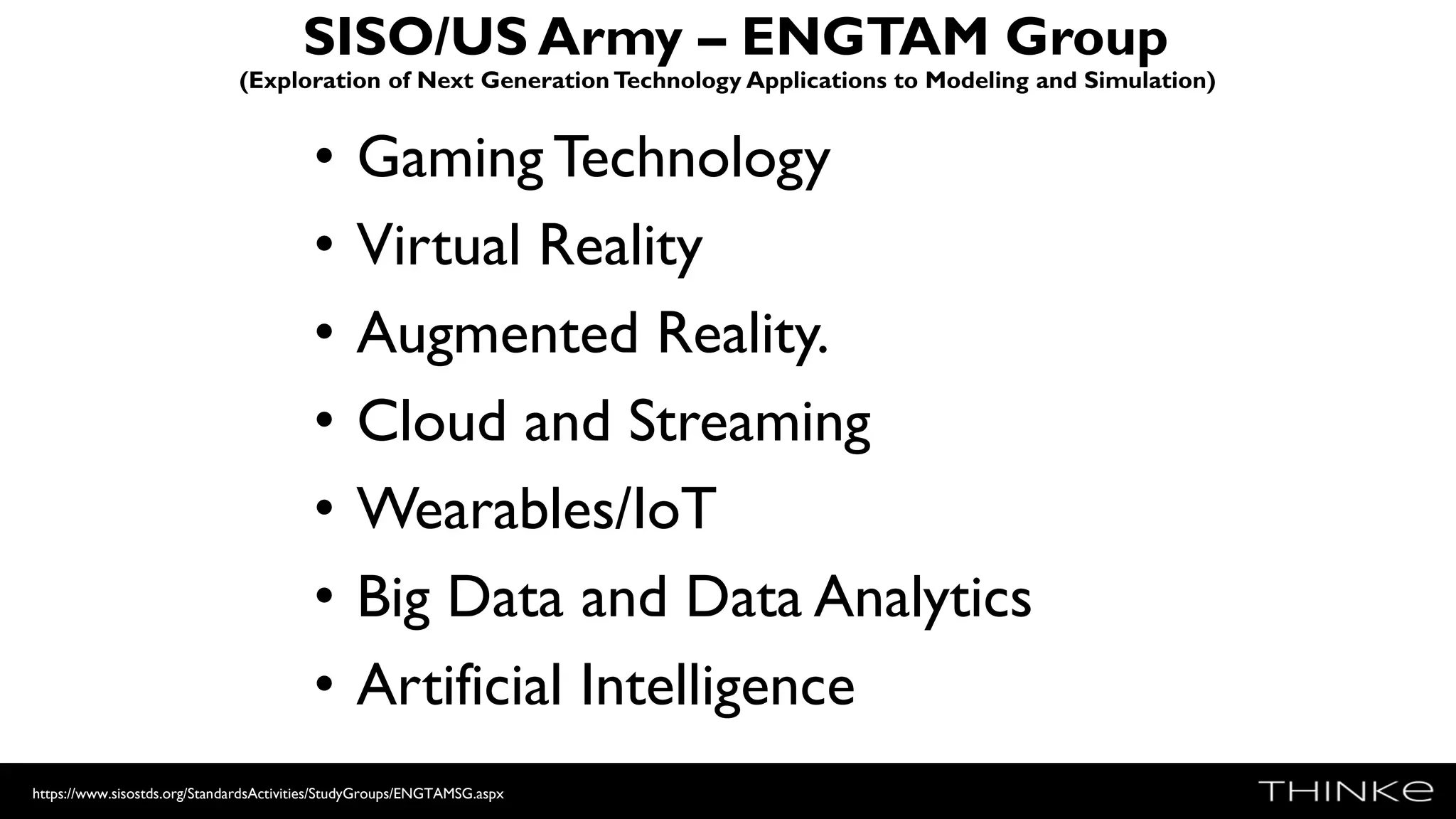
SISO/US Army – ENGTAM Group
(Exploration of Next Generation Technology Applications to Modeling and Simulation)
• Gaming Technology
• Virtual Reality
• Augmented Reality.
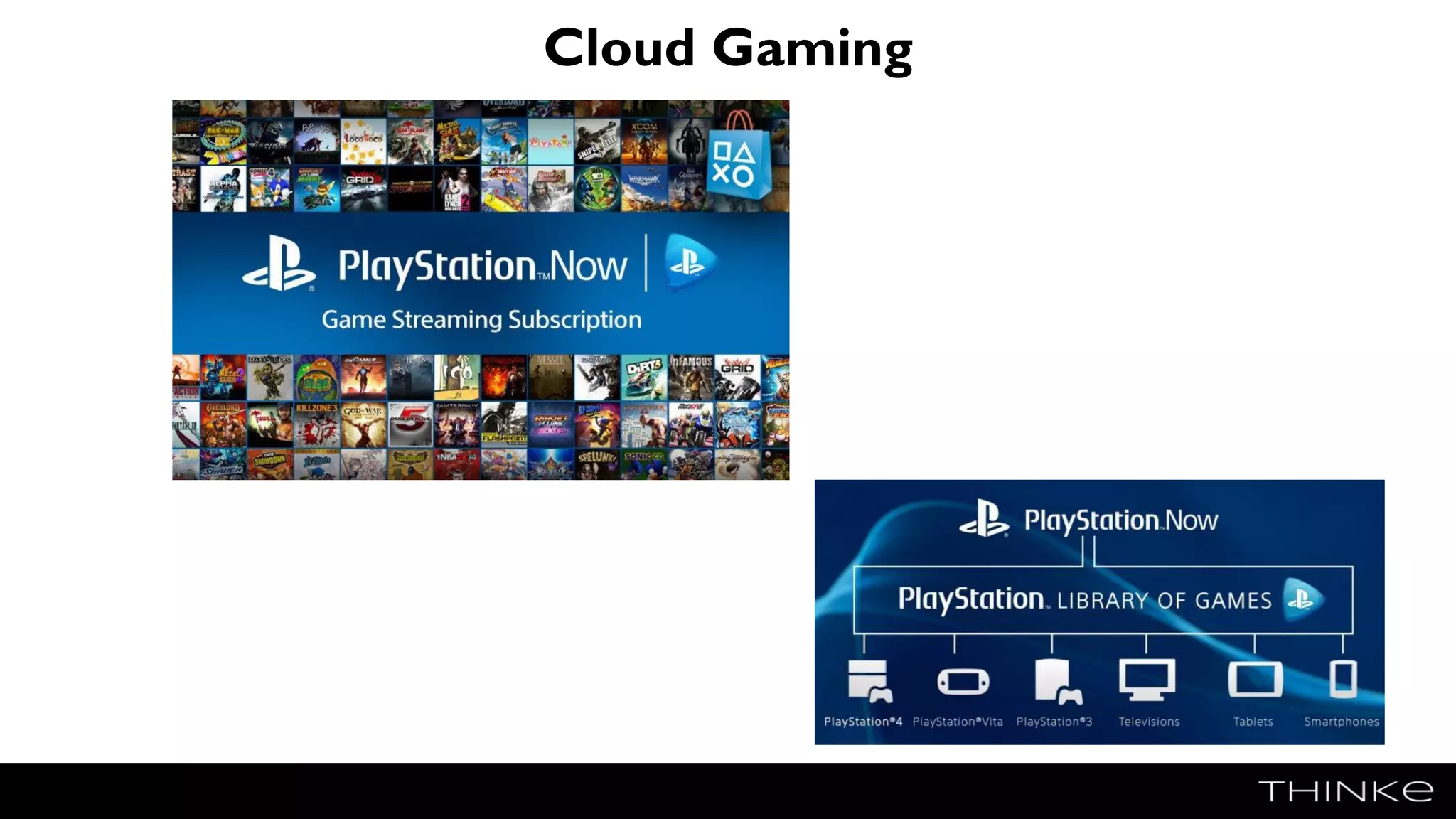
• Cloud and Streaming
• Wearables/IoT
• Big Data and Data Analytics
• Artificial Intelligence
https://www.sisostds.org/StandardsActivities/StudyGroups/ENGTAMSG.aspx
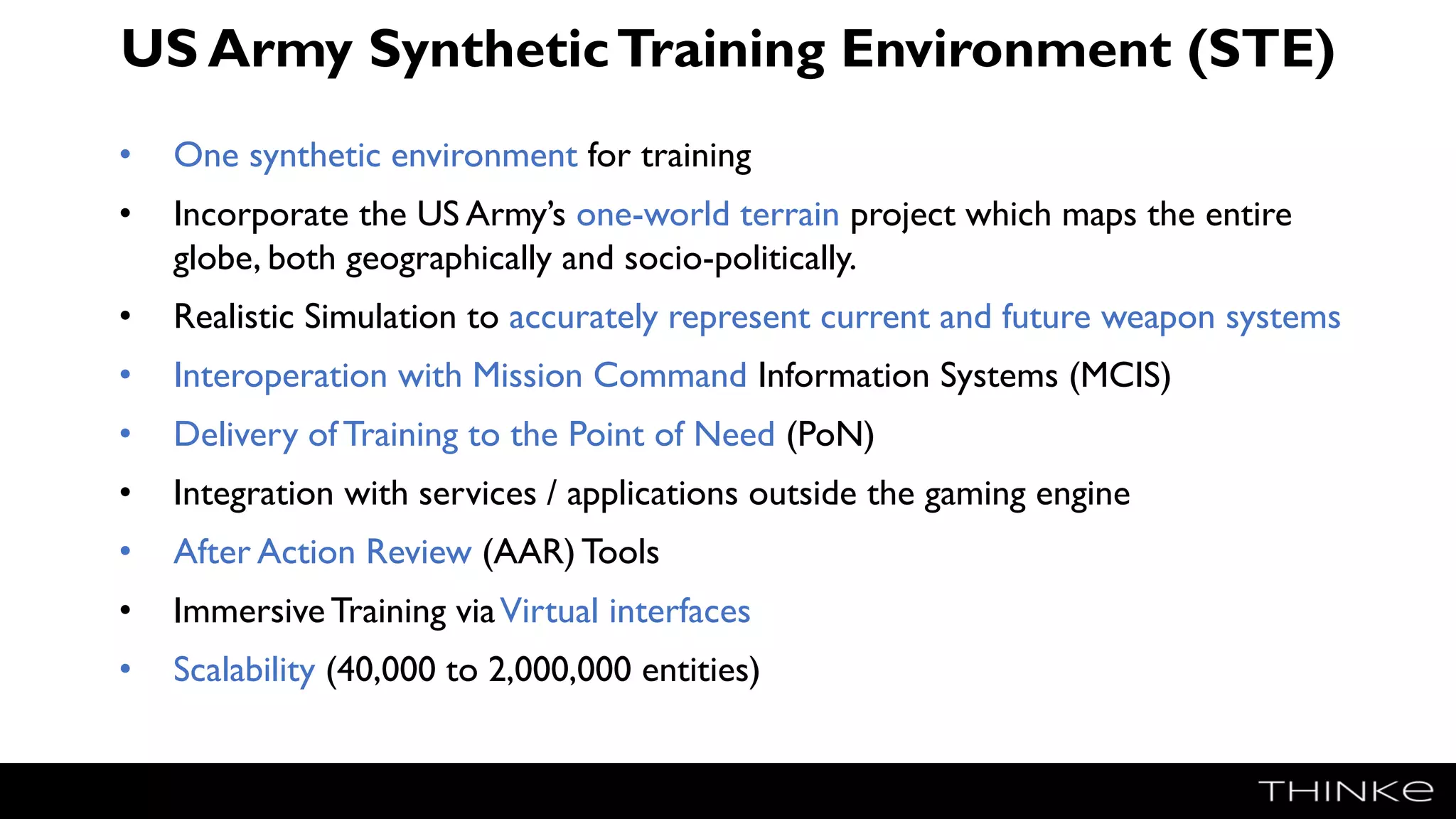
US Army SyntheticTraining Environment (STE)
• One synthetic environment for training
• Incorporate the US Army’s one-world terrain project which maps the entire
globe, both geographically and socio-politically.
• Realistic Simulation to accurately represent current and future weapon systems
• Interoperation with Mission Command Information Systems (MCIS)
• Delivery of Training to the Point of Need (PoN)
• Integration with services / applications outside the gaming engine
• After Action Review (AAR) Tools
• Immersive Training viaVirtual interfaces
• Scalability (40,000 to 2,000,000 entities)
TechnologyTrends of Interest
• Measurement & Evaluation
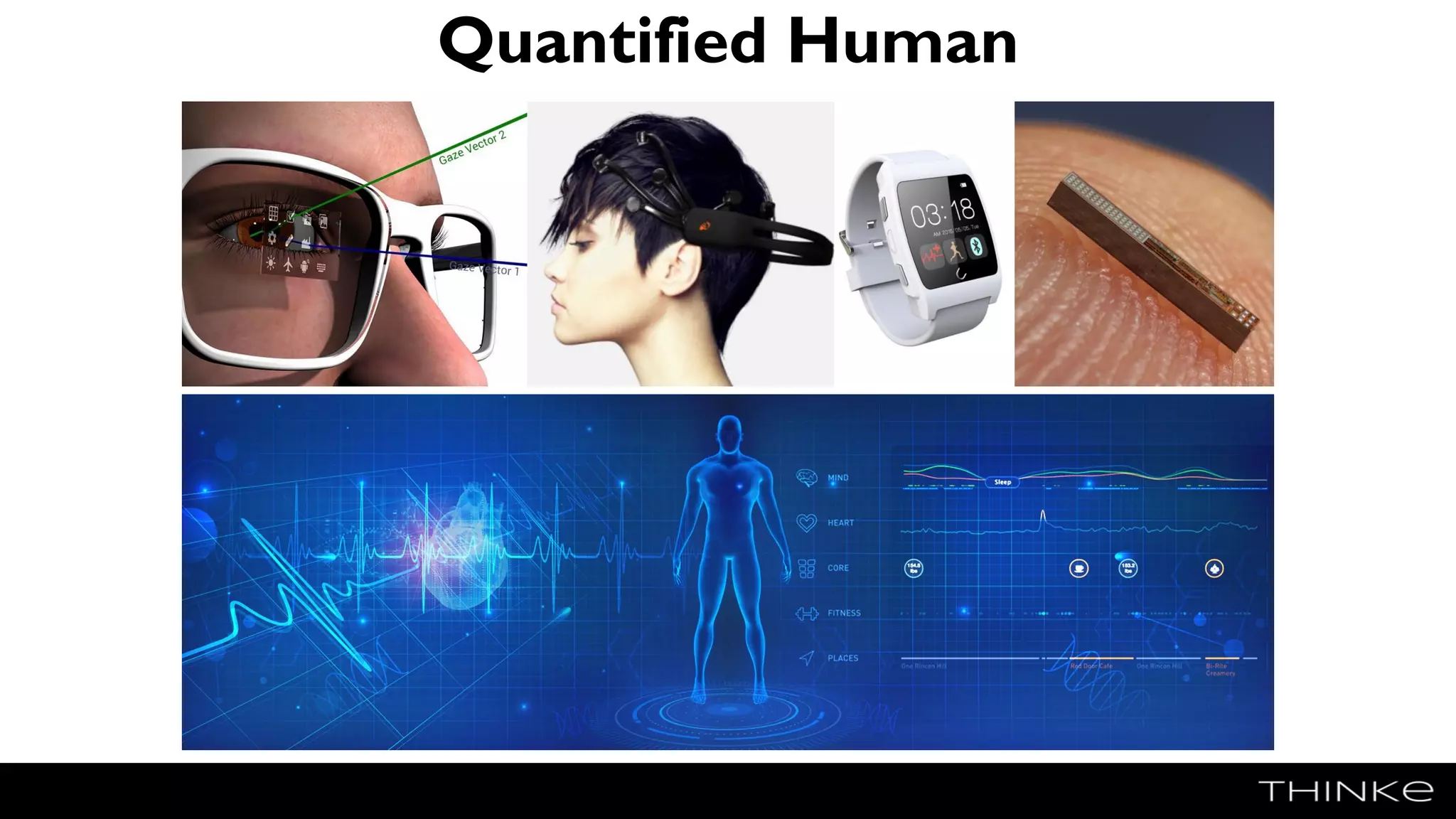
• Quantified Human
• Big Data and Analytics
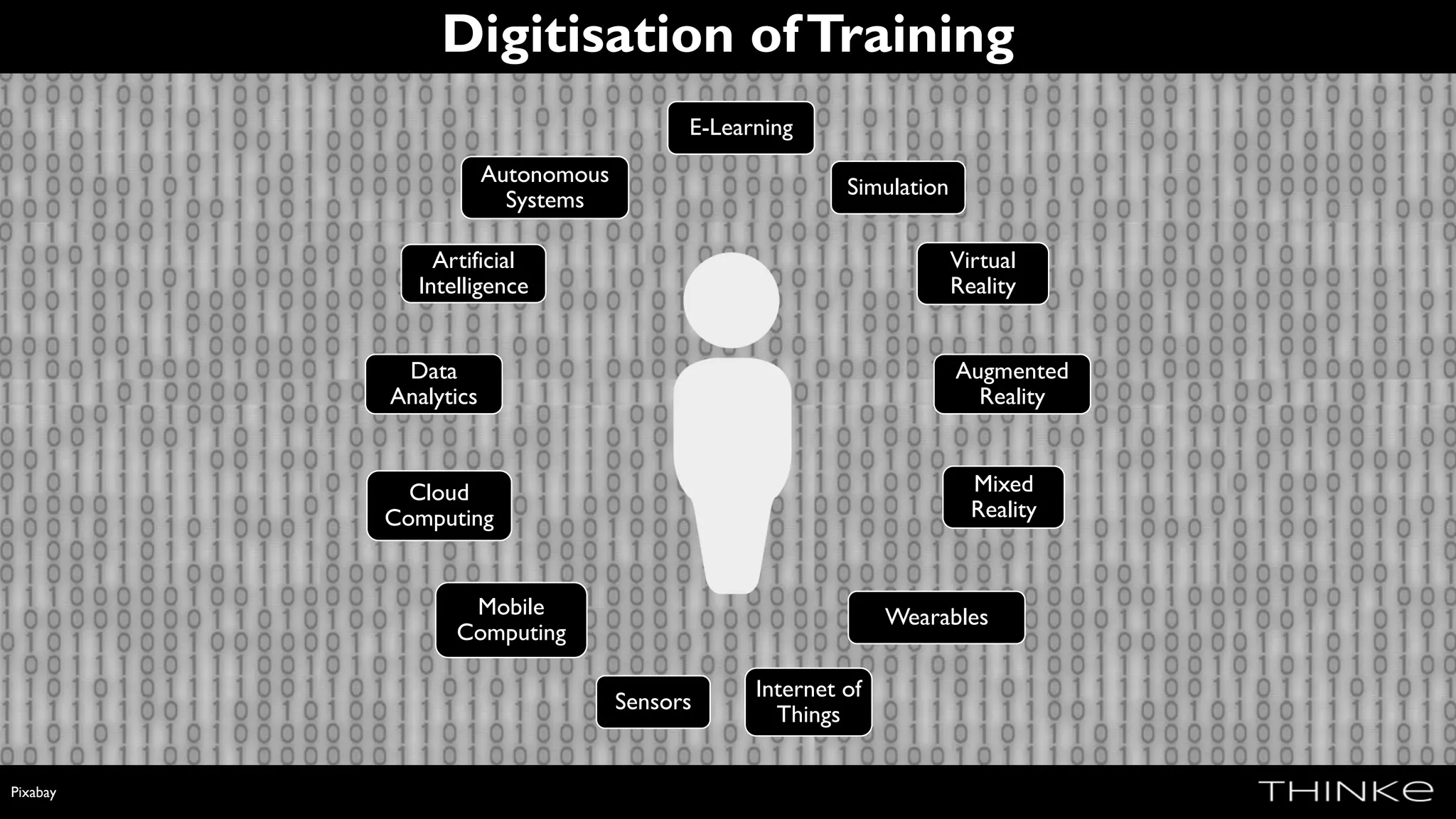
• Digitisation of Training
• Training at the Point of Need
• Artificial Intelligence
TechnologyTrends...
Measurement & Evaluation
Quantified Human
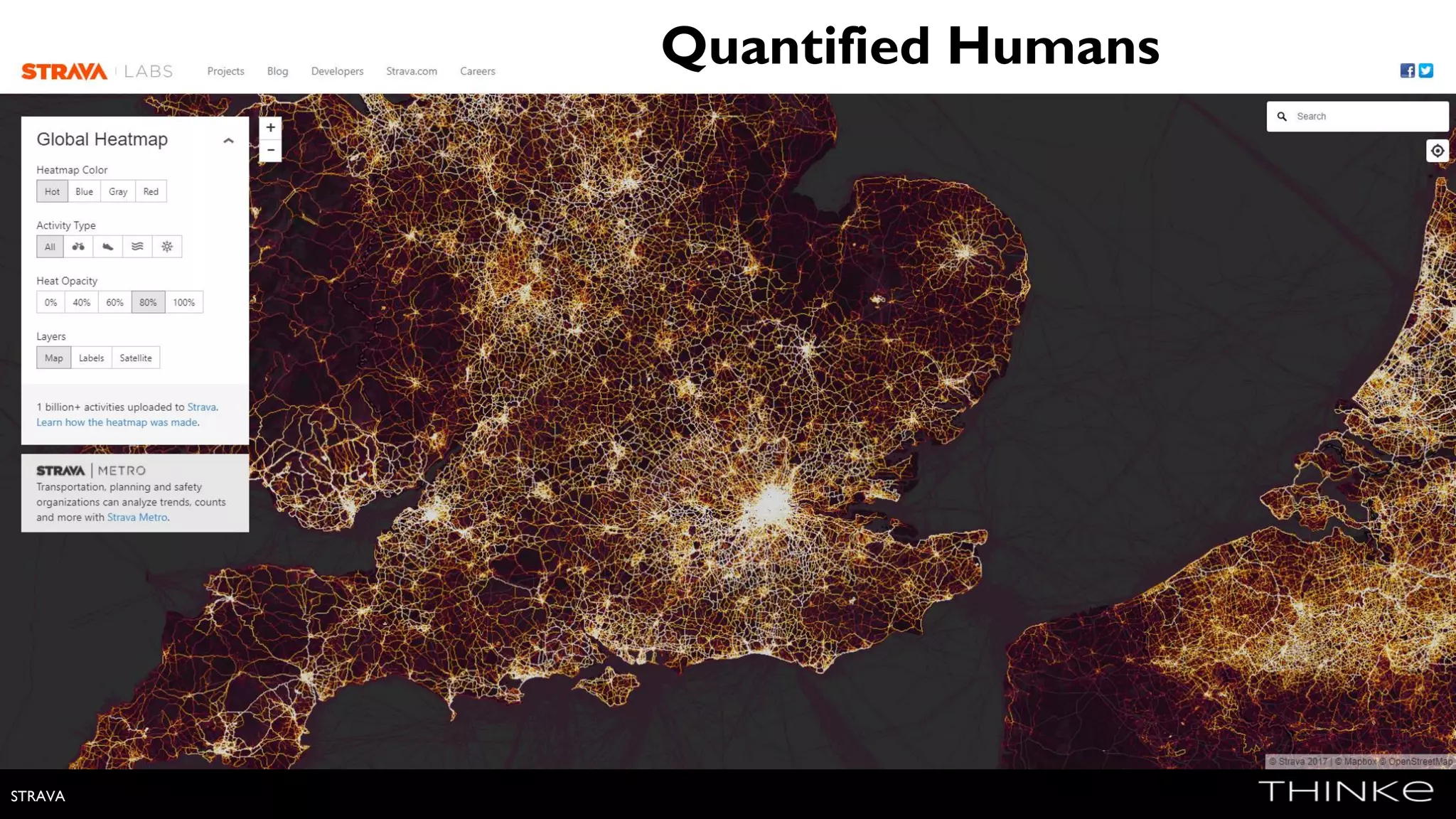
Quantified Humans
STRAVA
Digitisation ofTraining
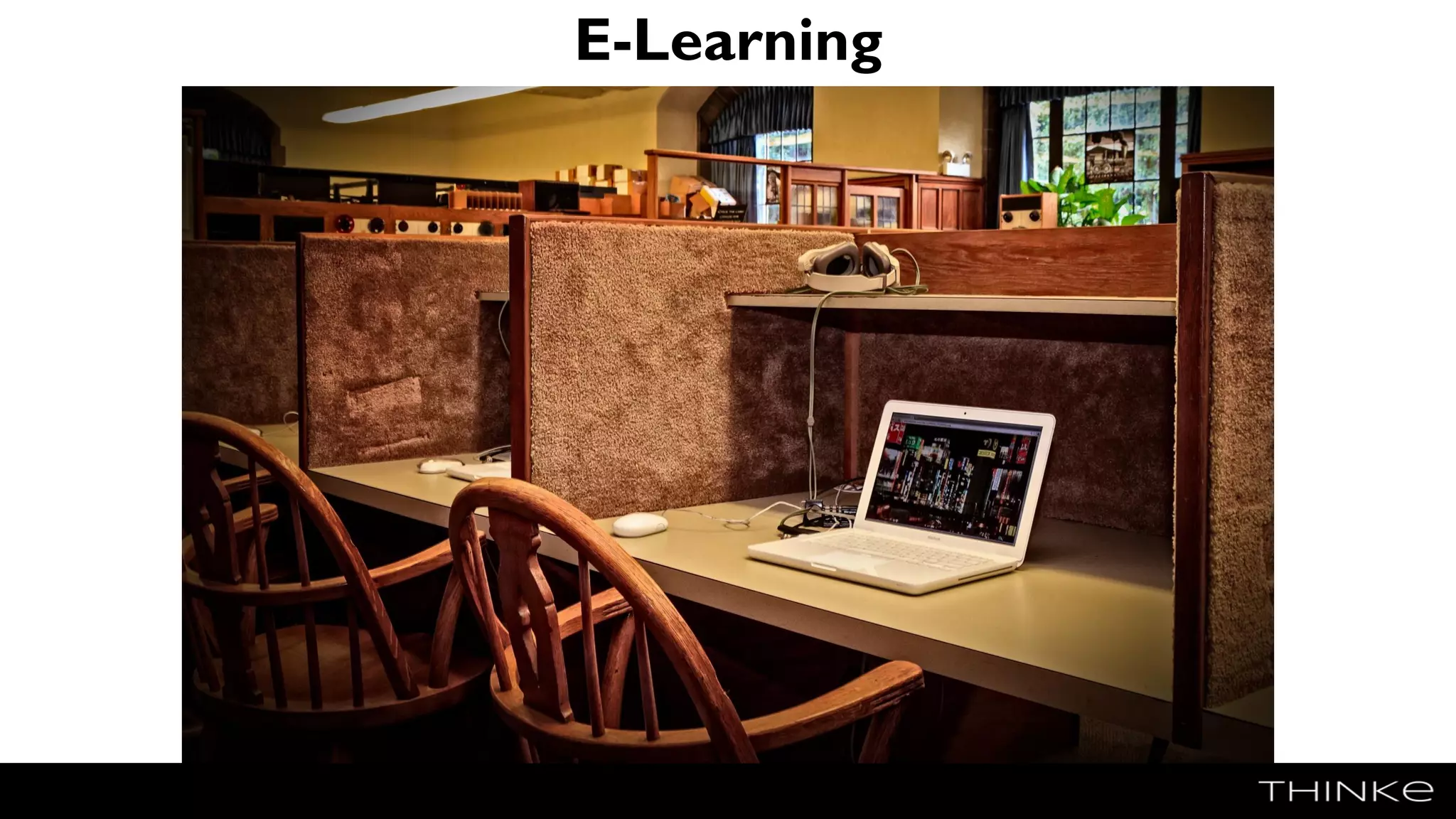
E-Learning
Simulation
Virtual
Reality
Augmented
Reality
Mixed
Reality
Wearables
Internet of
Things
Sensors
Mobile
Computing
Cloud
Computing
Data
Analytics
Artificial
Intelligence
Autonomous
Systems
Pixabay
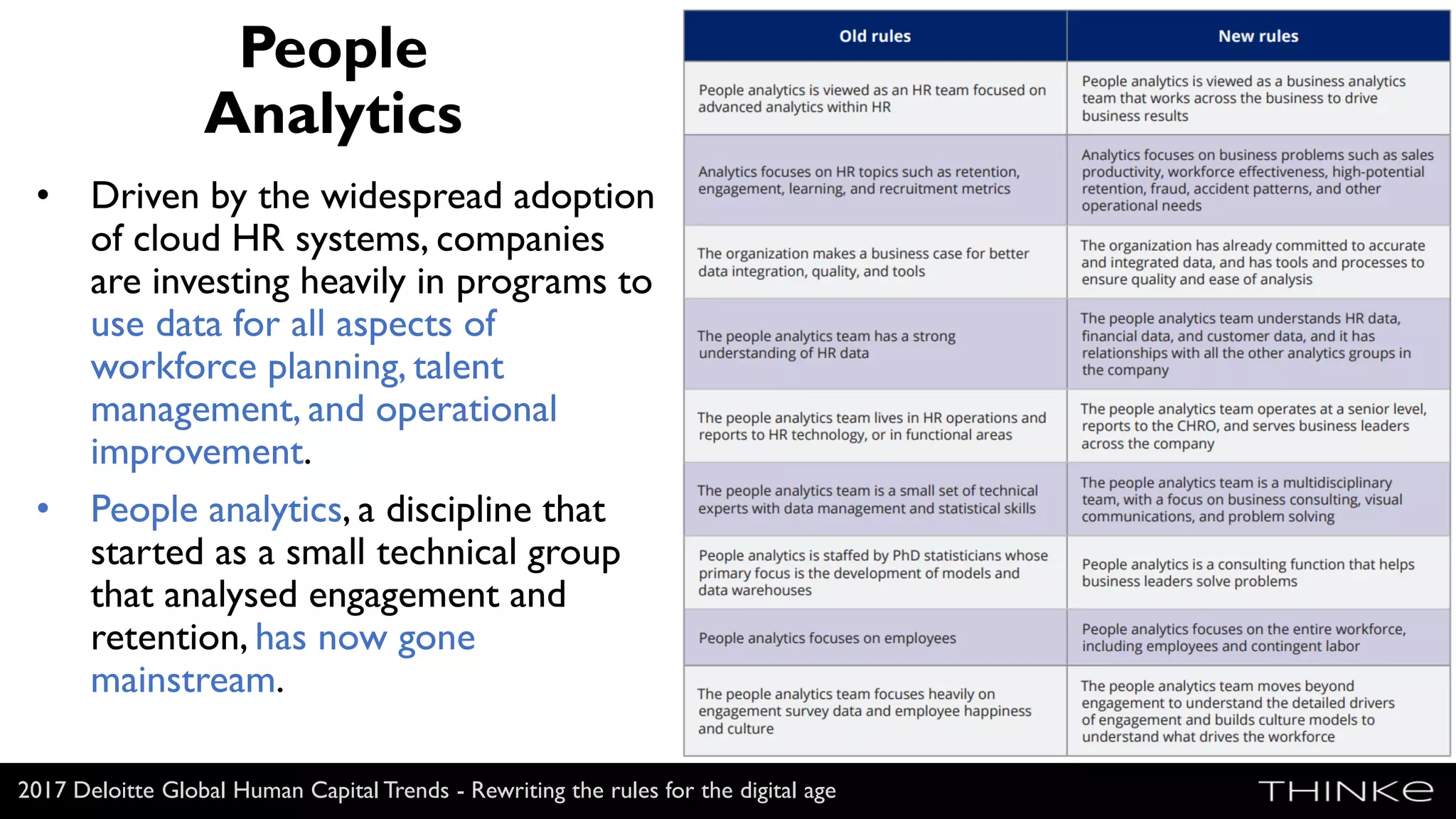
People
Analytics
2017 Deloitte Global Human Capital Trends - Rewriting the rules for the digital age
• Driven by the widespread adoption
of cloud HR systems, companies
are investing heavily in programs to
use data for all aspects of
workforce planning, talent
management, and operational
improvement.
• People analytics, a discipline that
started as a small technical group
that analysed engagement and
retention, has now gone
mainstream.
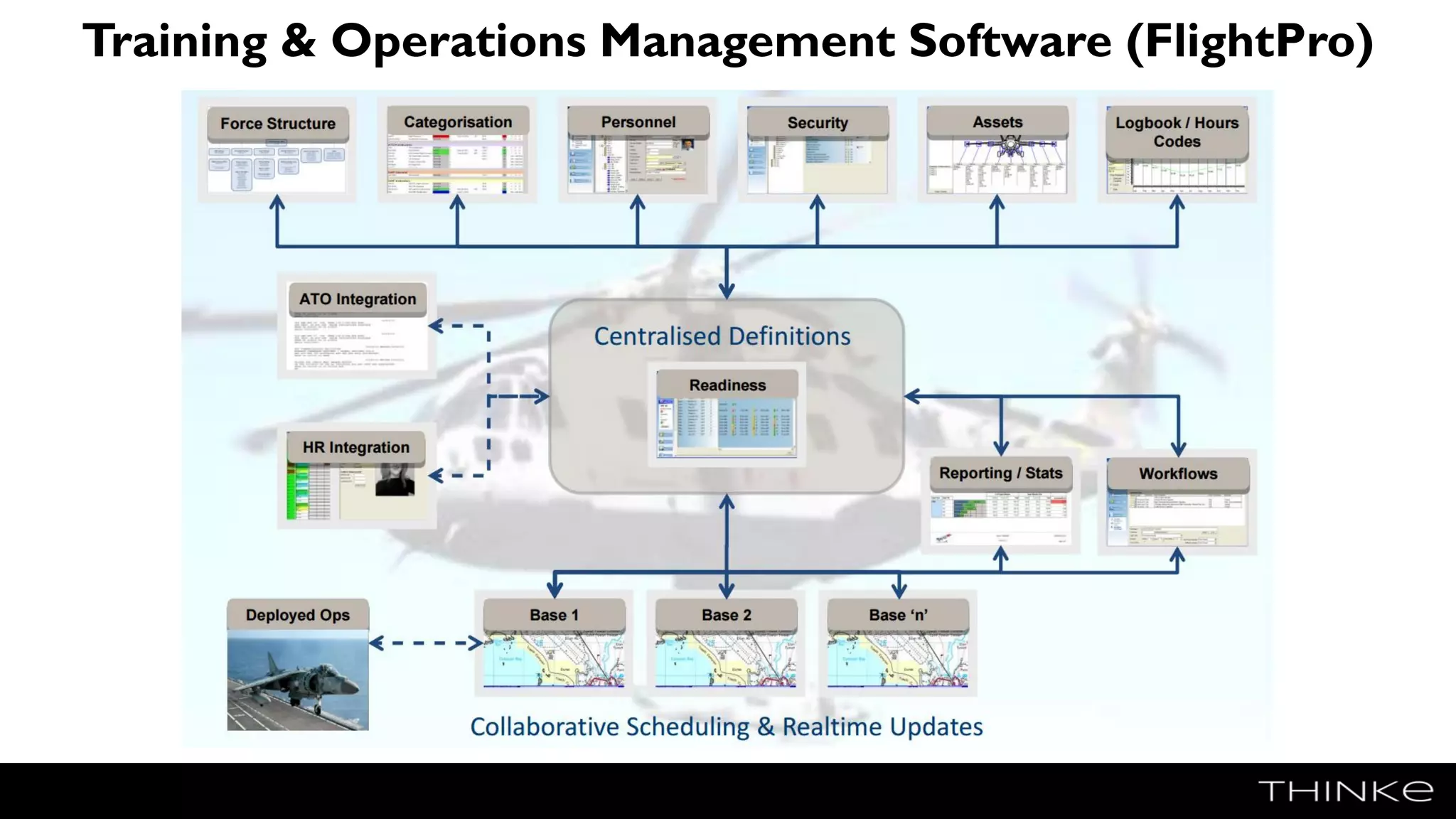
Training & Operations Management Software (FlightPro)
Ocean Software FlightPro®
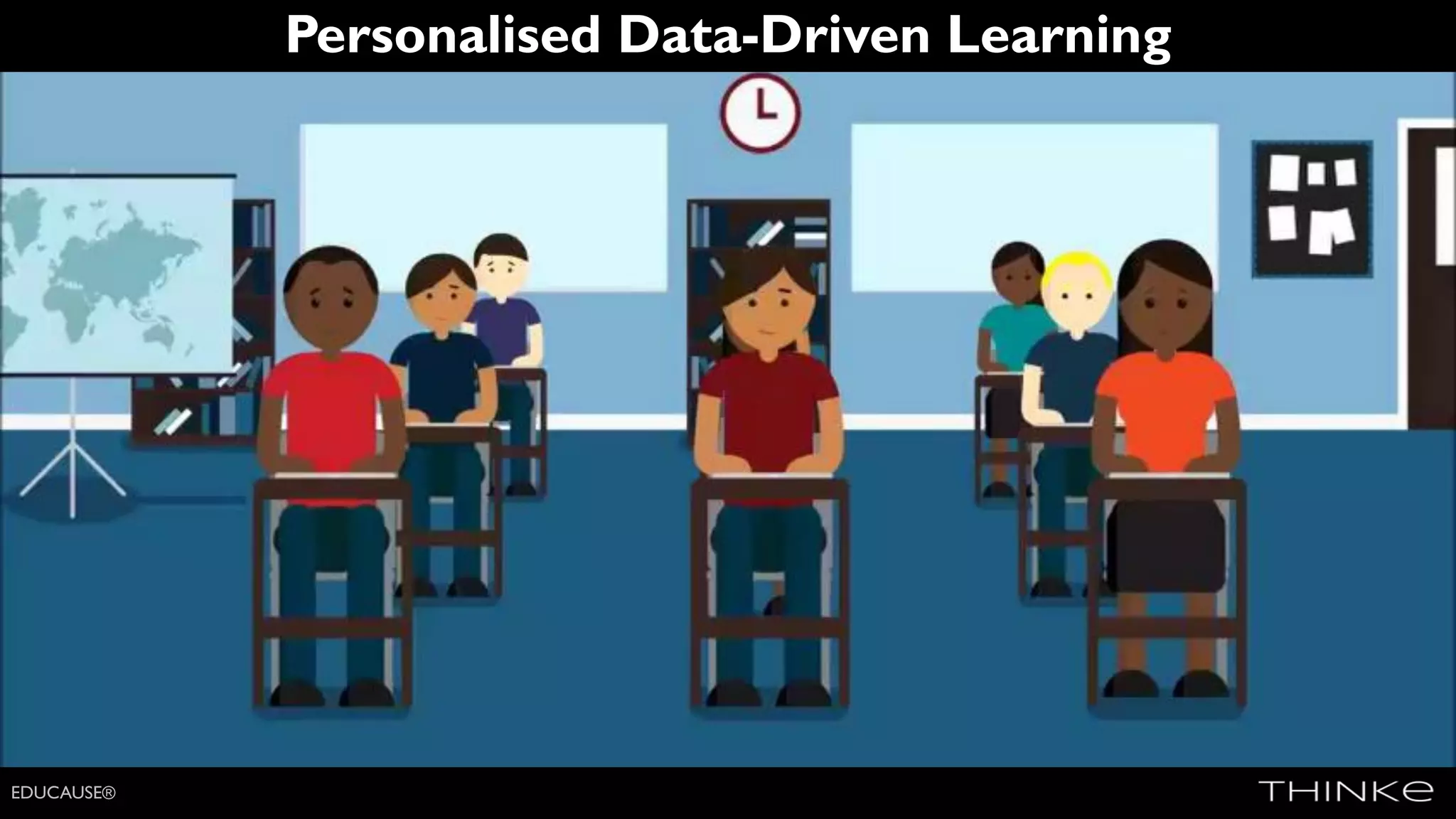
Personalised Data-Driven Learning
EDUCAUSE®
TechnologyTrends...
Training at the Point of Need
E-Learning
Pixabay
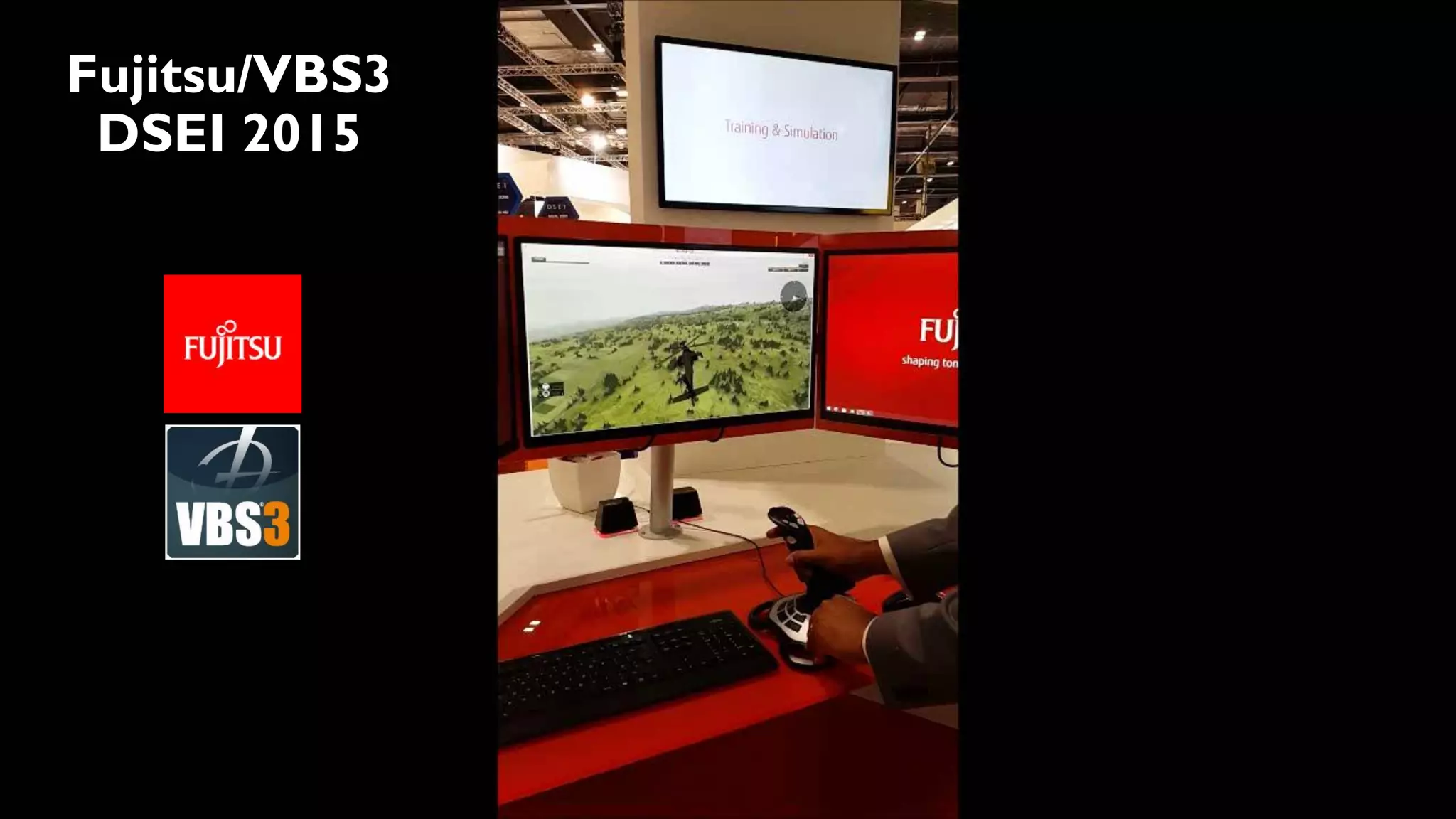
Cloud Gaming
Fujitsu/VBS3
DSEI 2015
Zero Client
Shared 20MB + WiFi
55 miles
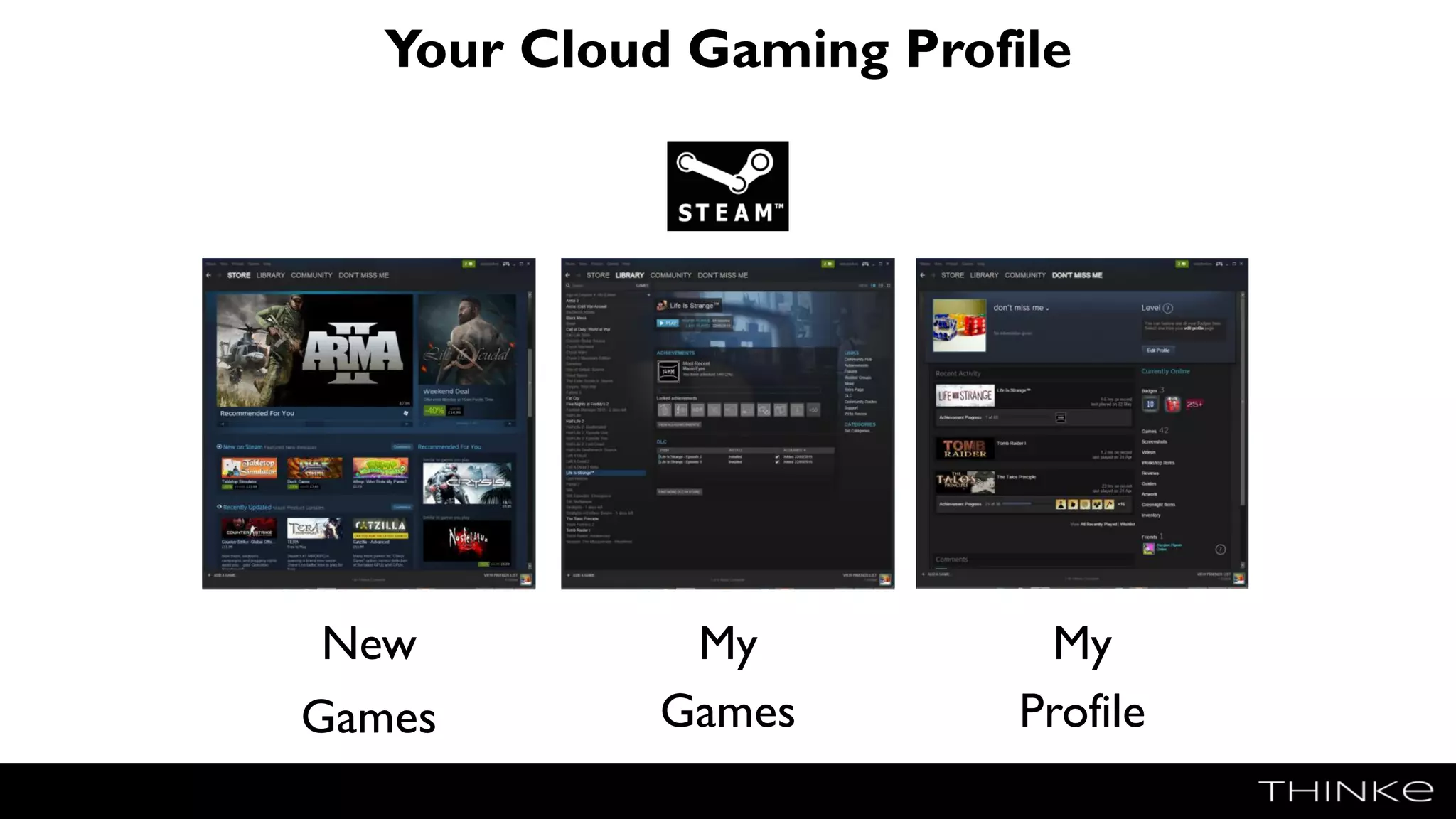
Your Cloud Gaming Profile
New
Games
My
Games
My
Profile
TechnologyTrends...
Artificial Intelligence
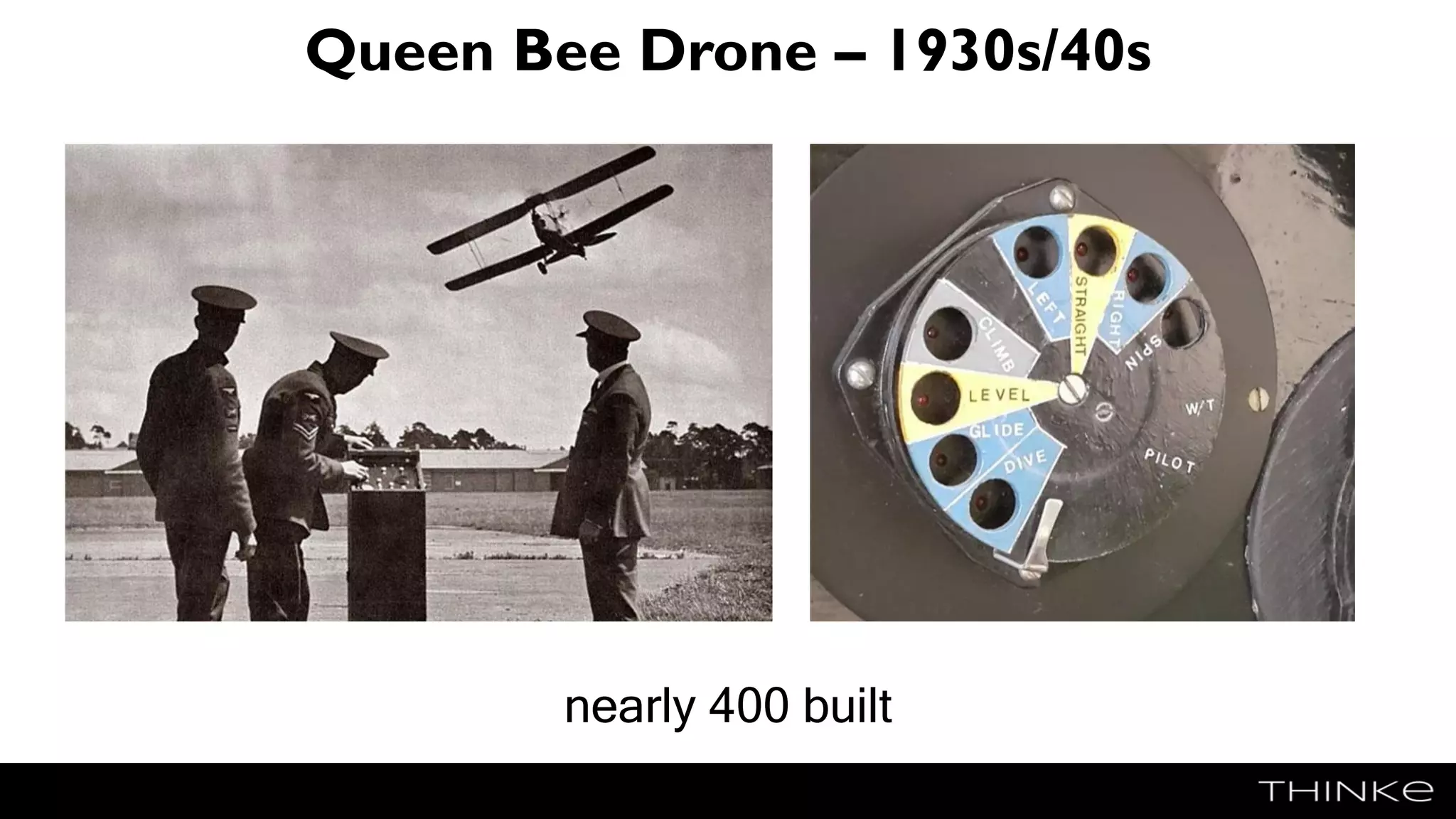
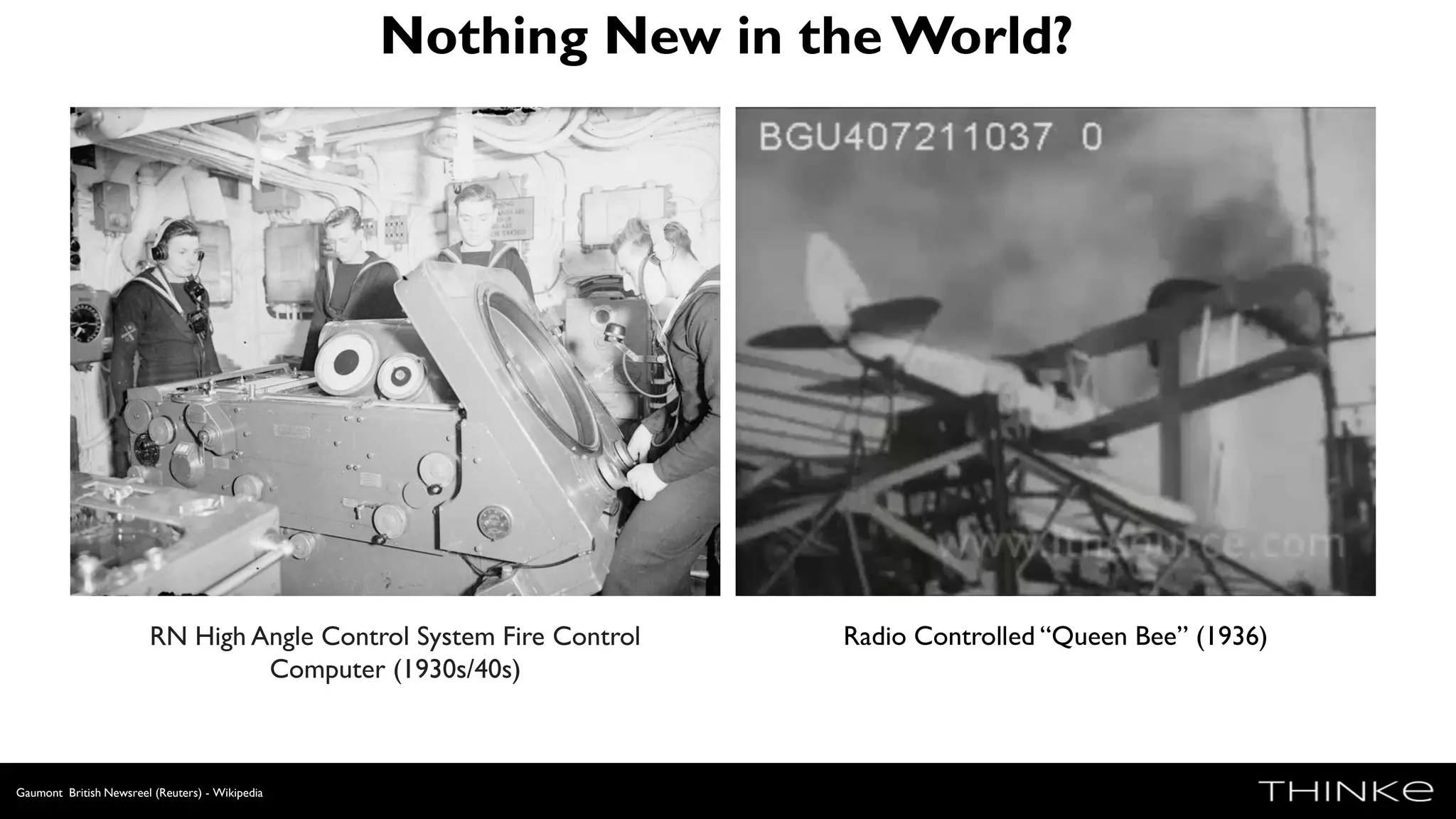
Queen Bee Drone – 1930s/40s
nearly 400 built
Nothing New in the World?
Gaumont British Newsreel (Reuters) - Wikipedia
RN High Angle Control System Fire Control
Computer (1930s/40s)
Radio Controlled “Queen Bee” (1936)
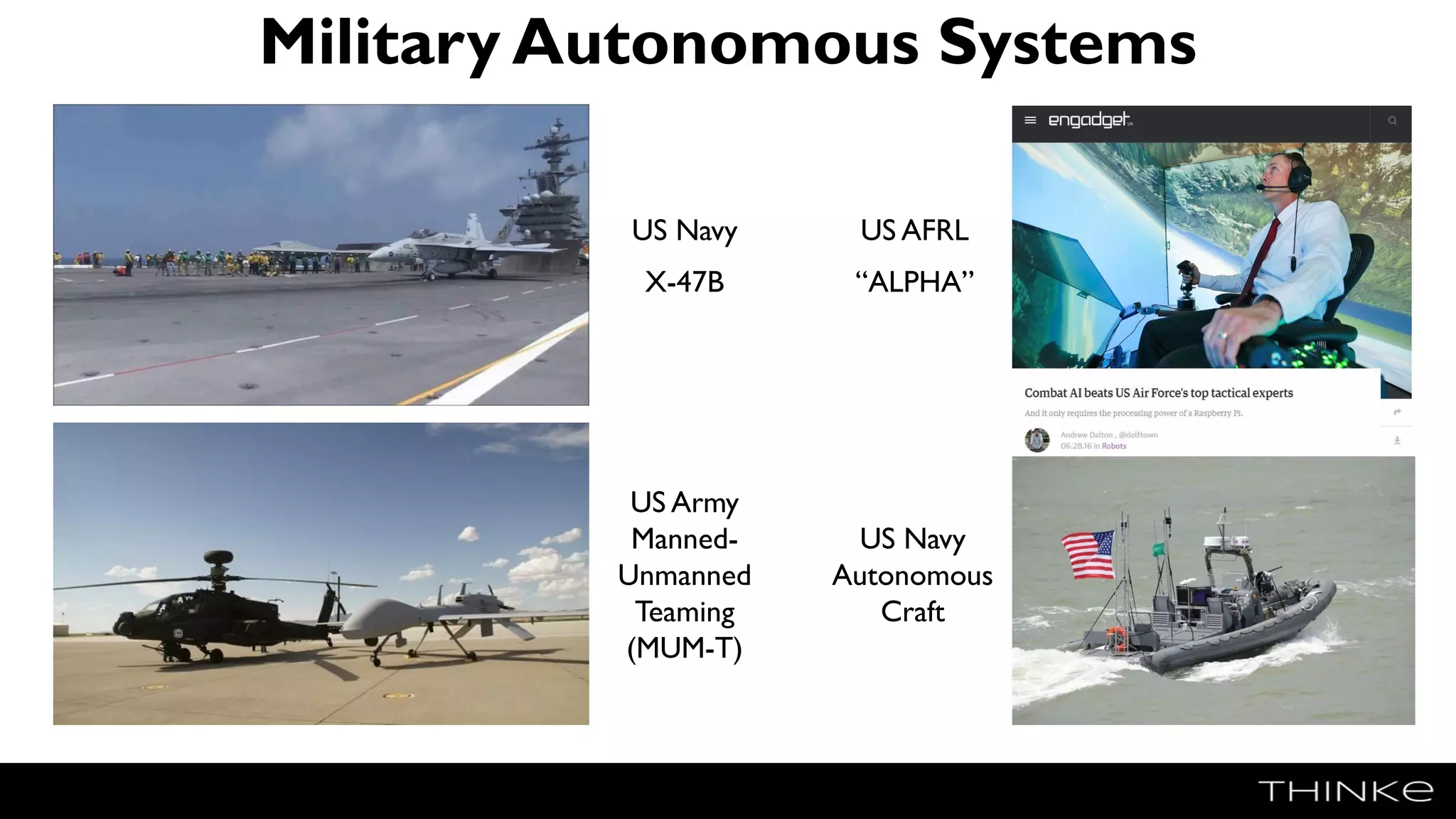
Military Autonomous Systems
US Army
Manned-
Unmanned
Teaming
(MUM-T)
US Navy
Autonomous
Craft
US Navy
X-47B
US AFRL
“ALPHA”
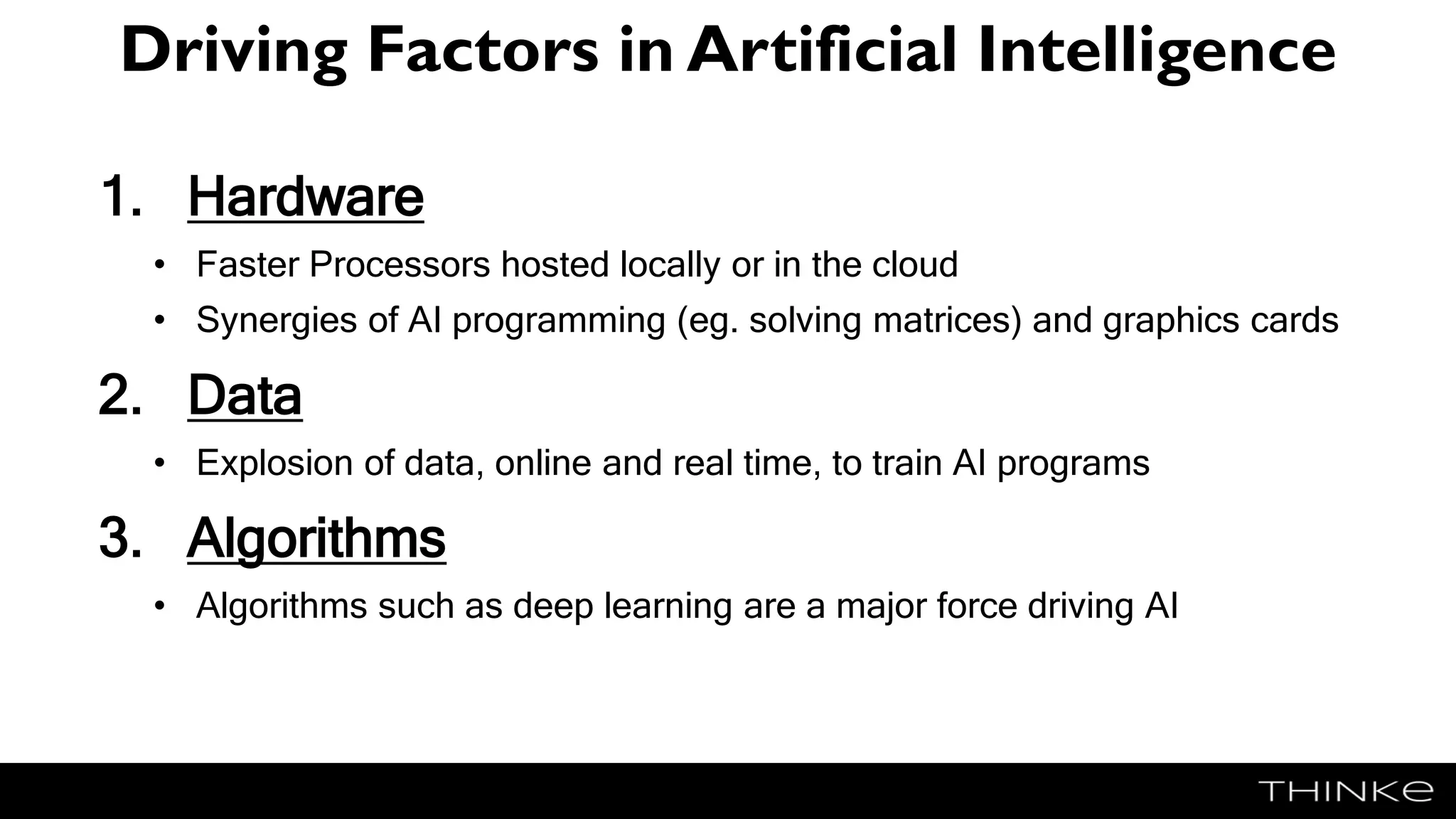
Driving Factors in Artificial Intelligence
1. Hardware
• Faster Processors hosted locally or in the cloud
• Synergies of AI programming (eg. solving matrices) and graphics cards
2. Data
• Explosion of data, online and real time, to train AI programs
3. Algorithms
• Algorithms such as deep learning are a major force driving AI
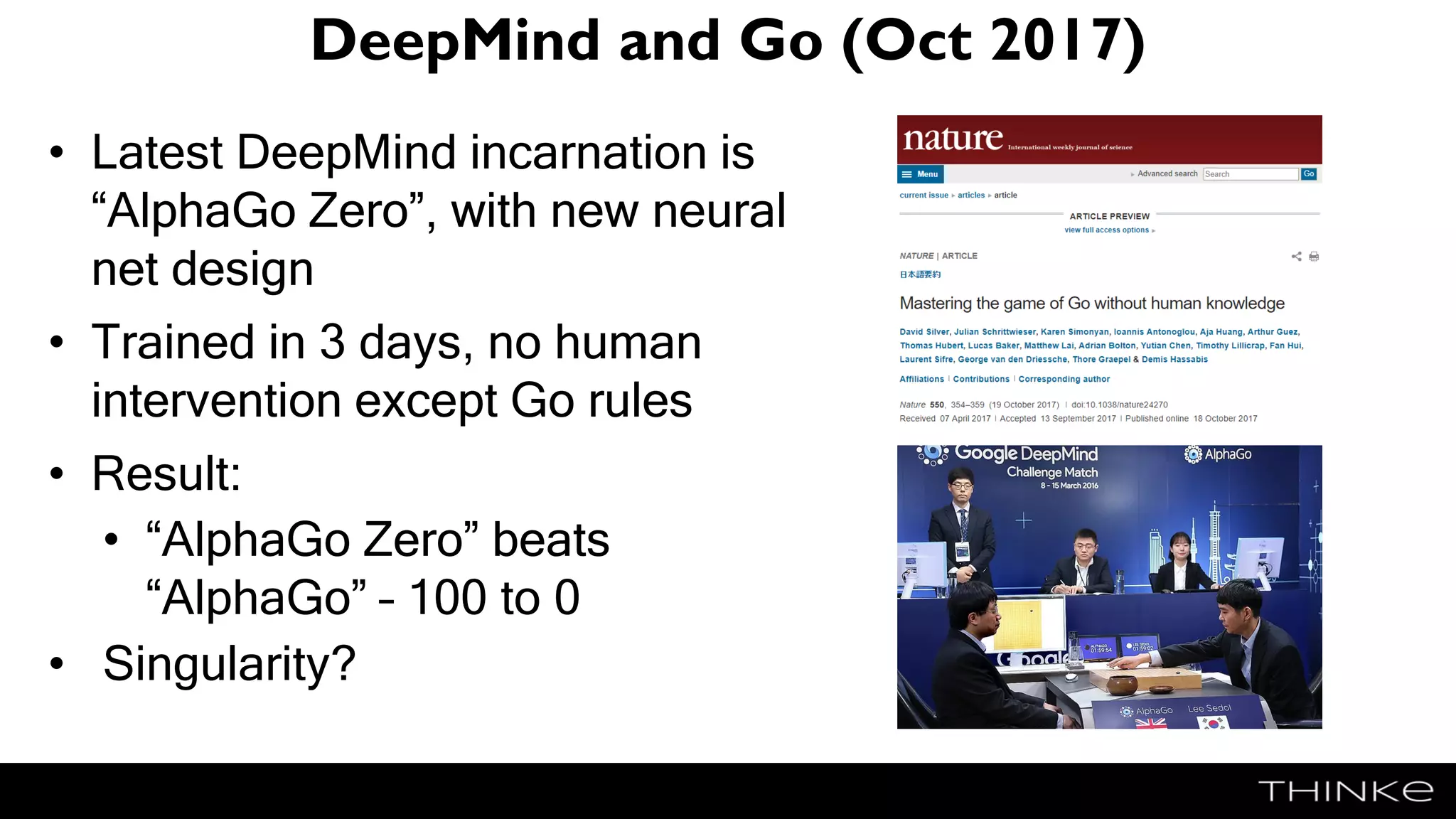
DeepMind and Go (Oct 2017)
• Latest DeepMind incarnation is
“AlphaGo Zero”, with new neural
net design
• Trained in 3 days, no human
intervention except Go rules
• Result:
• “AlphaGo Zero” beats
“AlphaGo” – 100 to 0
• Singularity?
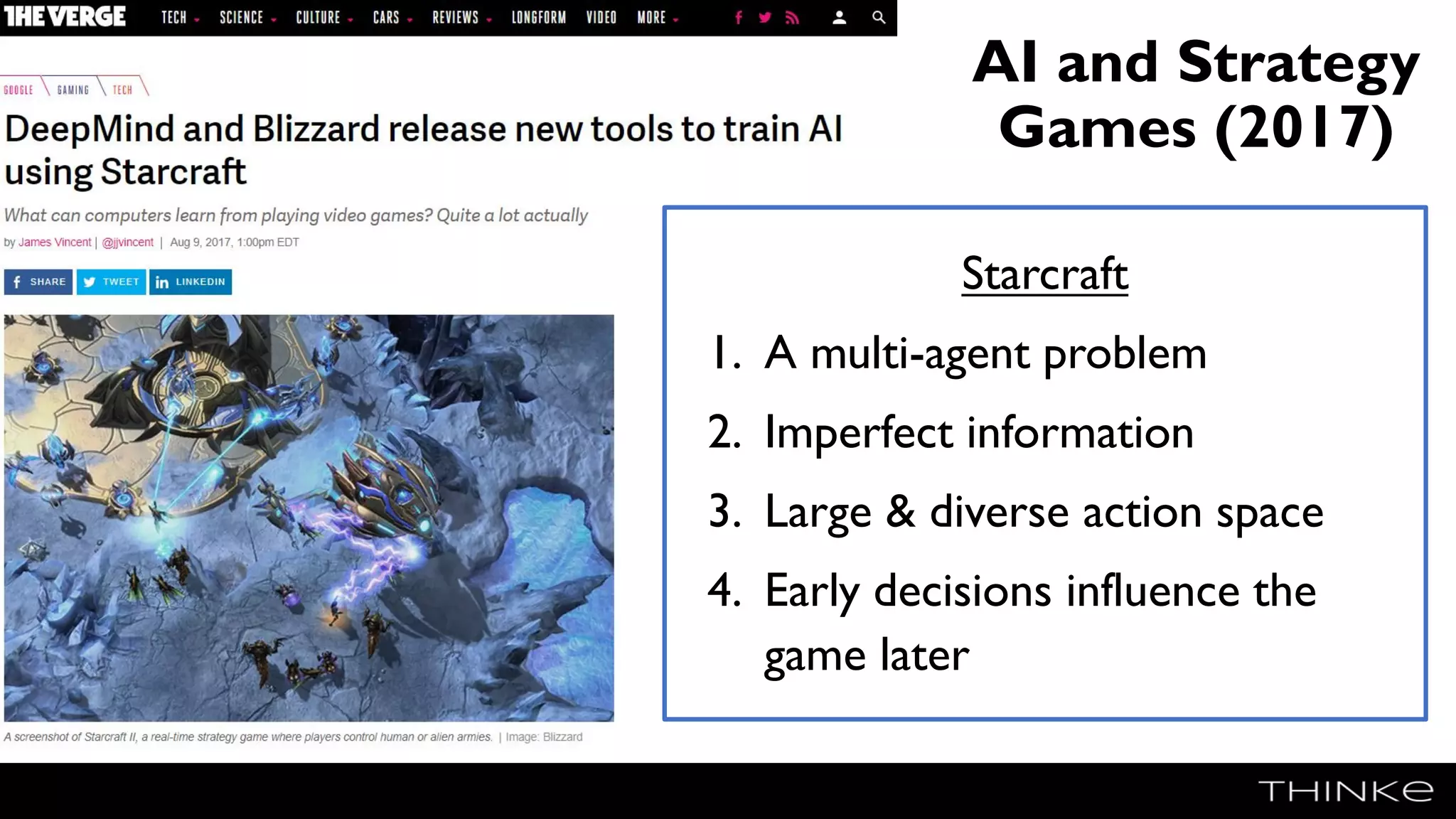
AI and Strategy
Games (2017)
Starcraft
1. A multi-agent problem
2. Imperfect information
3. Large & diverse action space
4. Early decisions influence the
game later
Artificial IntelligenceTechnology Challenges
• Large volumes of data are required, especially for modern
neural net AI approaches
• Favours the large Tech companies?
• AI programs typically can only do one task
• "there is no neural network in the world, and no method right now that can
be trained to identify objects and images, play Space Invaders, and listen
to music“ (DeepMind)
• AI programs can be difficult to understand and verify after
programming
• DARPA’s Explainable Artificial Intelligence (XAI)
• Cyber Security?
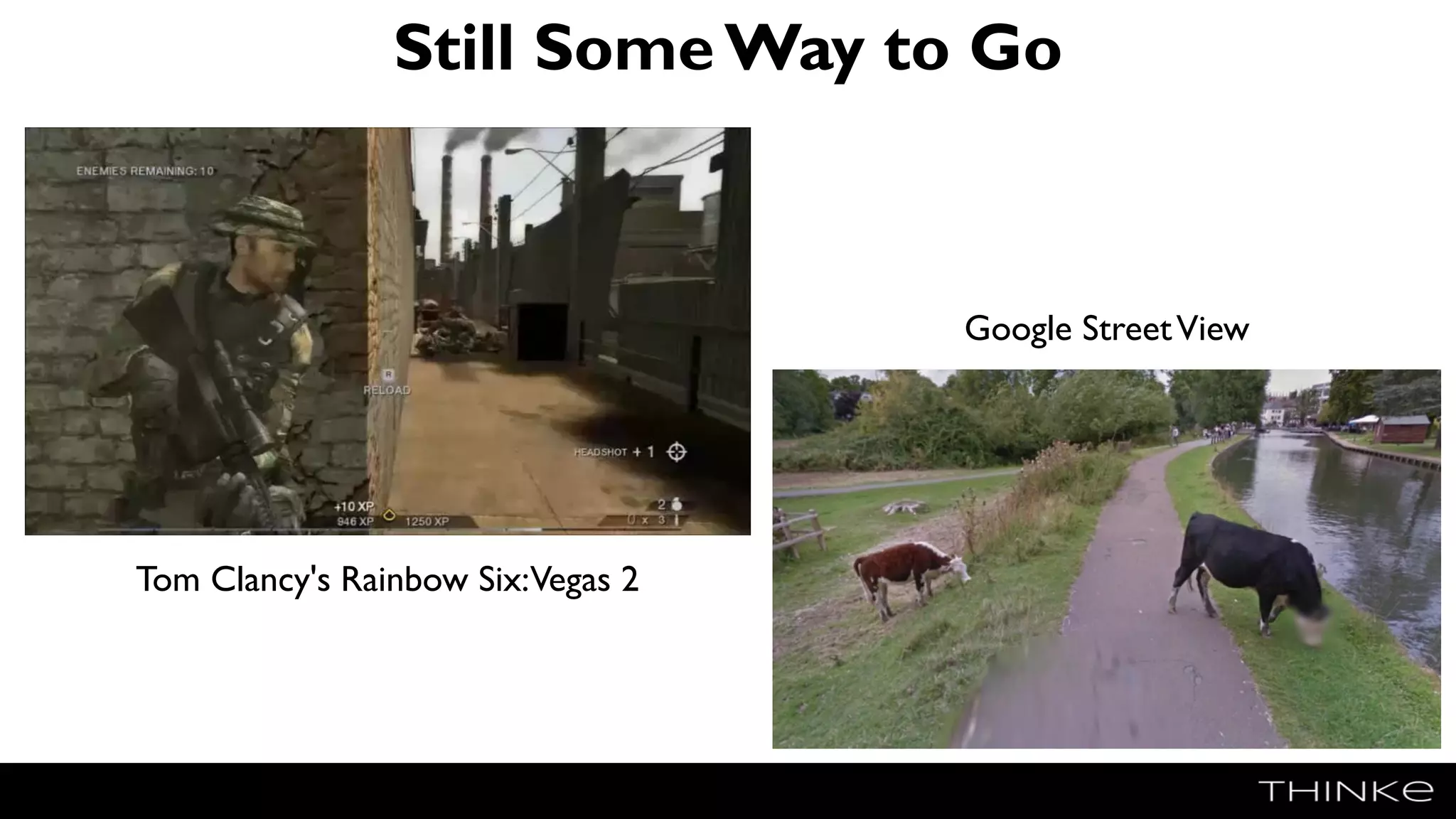
Still SomeWay to Go
Tom Clancy's Rainbow Six:Vegas 2
Google StreetView
Paul M Fitts (ed) (1951)
Human Engineering for an Effective Air Navigation andTraffic Control System
• We suggest that great caution be exercised in assuming that men can successfully
monitor complex automatic machines and take over if the machines break down.
• Engineers should seriously consider systems in which machines would monitor men
and prevent them from making dangerous mistakes.
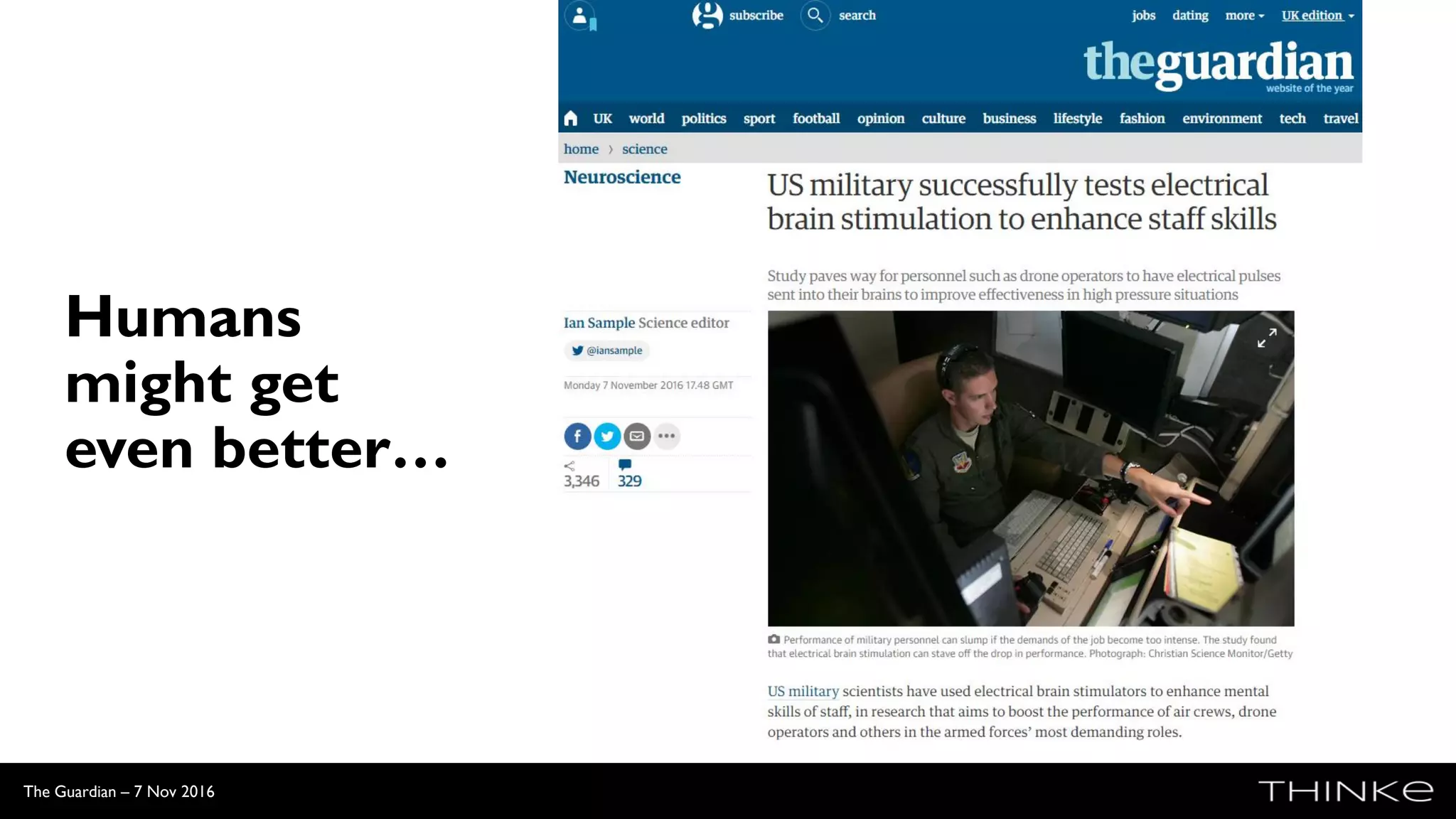
Humans
might get
even better…
The Guardian – 7 Nov 2016
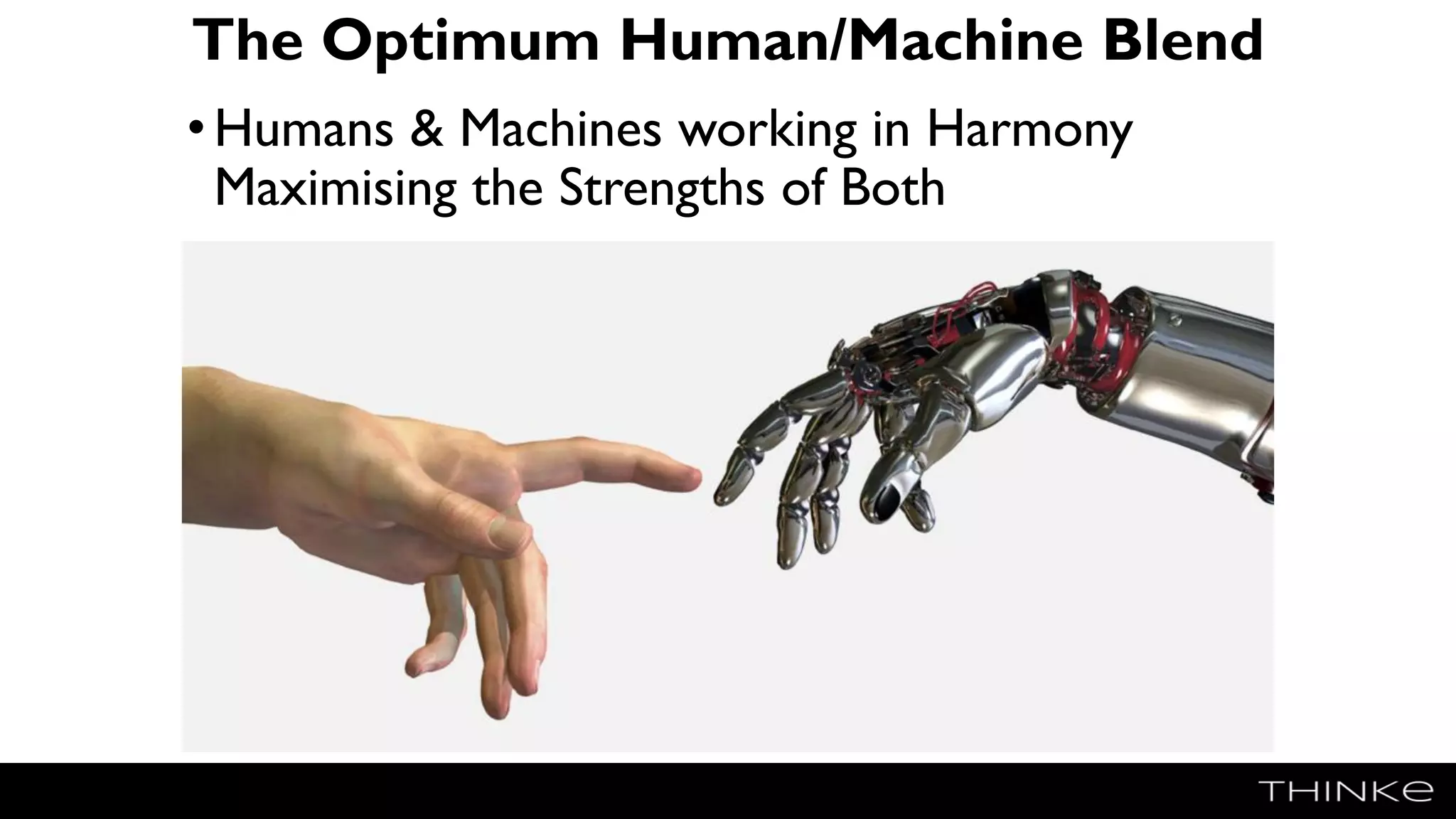
The Optimum Human/Machine Blend
•Humans & Machines working in Harmony
Maximising the Strengths of Both
* Measurement & Evaluation of
Training Should Get Better
* Where and WhenTraining is
Delivered Can be More Flexible
* WorkTowards the Optimum
Human/Machine Blend
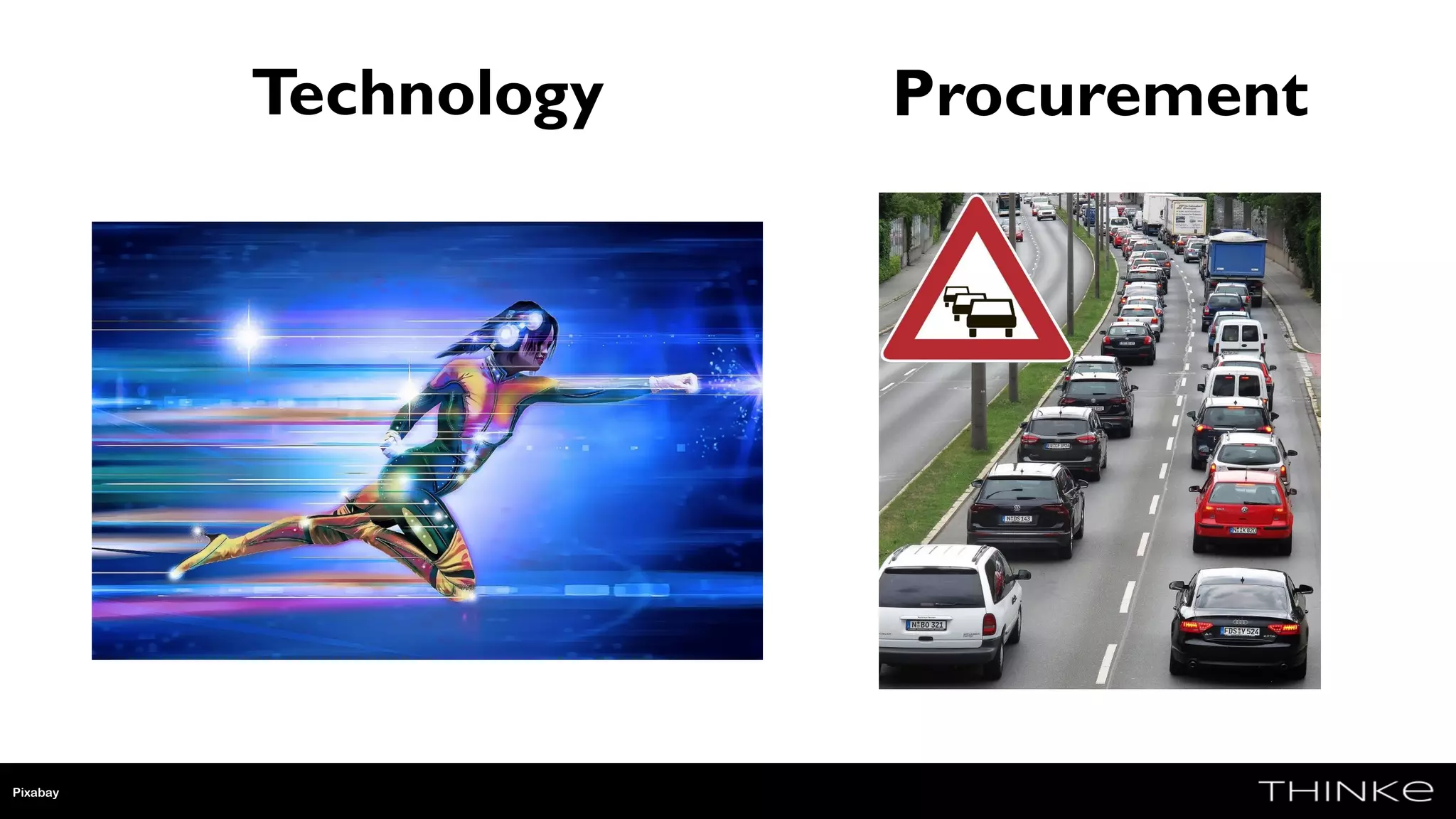
Human Factors
andTraining
Always Last?
Pixabay
Technology
Wikimedia
Procurement
Pixabay
Questions?

A View on the Future of Maritime Training and Simulation

  • 1.
    BISim AView on theFuture of MaritimeTraining and Simulation Andy Fawkes IQPC Surface Warships Conference - Naval Training and Simulation Focus Day - London - 1 February 2018
  • 2.
    Presentation Overview • TheFuture Operational Context • The Future Sailor • Simulation and Training System Developments • Technology Trends of Interest
  • 3.
  • 4.
    The Current GlobalSecurity Context • The world in a process of rapid & fundamental change • Long-term shifts in the balance of global economic & military power • Emergence of powerful non-state actors • Predictable and unpredictable threats • Rapid civil technology developments & escalating cyber threat • Increasingly congested and complex world UK Government Foreign Policy, Defence and Development Paper 2017
  • 5.
    UK MoD “ModernisingDefence Programme” 2018 As we identified in 2015, this requires the Joint Force we are building to be versatile and agile. It will need to be capable of operating in all five domains (land, sea, air, space and cyber). It will need to be international by design, routinely exercising and operating with allies and partners. It will need to be credible and capable of operating against state and non-state threats, normally not alone but with allies, such as NATO, and our partners, but always having the ability to act on our own if and when that is required. And it must be able to contribute to our national security at home, working with the police, and other national security organisations. The Secretary of State for Defence (Gavin Williamson) – 25 Jan 2018
  • 6.
    UK MoD FutureOperating Environment 2035 “the future operating environment will be more complex and ambiguous, from physical to electronic to human aspects. …we will habitually be working in an even more combined, joint, inter- agency, intra-governmental and multinational context to contend with the challenges.” MoD Future Operating Environment 2035 – 13 Dec 2015
  • 7.
    US Air ForceAir Superiority 2030 Flight Plan (May 2016) • Threat capabilities are likely to advance along two major vectors • A levelling of capabilities • Advanced fighter aircraft, sensors, and weapons are becoming more accessible to more countries which spreads these threats across a wide range of locations and scenarios • Increased threat capabilities • Increased quantity and sophistication of cyberspace threats and air threats including hypersonic weapons, low-observable cruise missiles, and sophisticated conventional ballistic missile systems. US Air Force Air Superiority 2030 Flight Plan (2016)
  • 8.
    The Nature ofWarfare • War is chaotic • No battle plan withstands contact with the enemy
  • 9.
    * Need tobe Skilled * Need to WorkTogether * Need to be Adaptable
  • 10.
    UK Royal NavyTraining •“are we ready to fight tonight?” • “are we prepared to fight tomorrow?”
  • 11.
  • 12.
    Sailors of theFuture? • Who will they be? • What will they do? • Where will they be? • How will they train? • Will we need them? Pixabay
  • 13.
    2017 RN AgeDistribution Wikimedia 47% of the Royal Navy is 29 or Less and 79% 39 or Less UK Defence Personnel Statistics - No CBP7930, 29 June 2017
  • 14.
    “Digital Native” a personborn or brought up during the age of digital technology and so familiar with computers and the Internet from an early age Wikimedia Broadly, 50% of the Royal Navy now are Digital Natives and 80% by 2030 Oxford Dictionary – Flikr/cwasteson
  • 15.
  • 16.
  • 17.
  • 18.
    Employee Power? ratings andreviews of over 600,000 companies worldwide glassdoor
  • 19.
    * It’s aDigital Age * Recruits with New Educational Experiences * Draw on the Experiences of all Age Groups
  • 20.
    Don’t ForgetTeamwork &Practice - 1.92 Seconds Wikimedia Formula 1
  • 21.
  • 22.
    NationsTrain Differently Pixabay • Nationaland Military Culture • Appetite for Risk • OperationalTempo • Equipment • Training Methodology and Technology • Resources • Allies and Enemies
  • 23.
    MilitaryTraining & EducationExpenditure - %Total ~20% • Manpower • Platforms and Equipment • Fuel and Maintenance • Training Estate and Establishments • Training Systems and Simulators
  • 24.
  • 25.
  • 26.
    Games-Based Simulation Now- Land, Sea,Air,Anywhere • BISim VBS3/VBS Blue
  • 27.
    Military Access toSimulation 1990 2000 Numbers 10’s 100’s 1,000’s 2010 2020
  • 28.
  • 29.
  • 30.
    Does SimulationWork? • TheTraining System: Developing Crew Competence WithinTheVirtual and RealWorlds, • J Hill;Trident Marine, UK,T Brand; StrongWake, Canada,T Dobbins; STResearch, UK • “Simulation, correctly integrated into a training syllabus, is a valuable tool in the education progression of developing individual and team competence and proficiency. • Simulation can also put the crews into increasingly more dangerous scenarios, gaining experience that is not available in real life without extreme dangers to life or craft.”
  • 31.
    Copyright © 2018Bohemia Interactive Simulations k.s. & 20KTS+ Ltd All other trademarks or copyrights are the property of their respective owners. All Rights Reserved. Background DOES SIMULATION WORK ? Ref: Hill, Brand & Dobbins (2016) Conf. Proceedings; RINA Human Factors. NON-SIMULATION BENCHMARK SIMULATION ENHANCEMENT
  • 32.
    Copyright © 2018Bohemia Interactive Simulations k.s. & 20KTS+ Ltd All other trademarks or copyrights are the property of their respective owners. All Rights Reserved. Background DOES SIMULATION WORK ? Ref: Hill, Brand & Dobbins (2016) Conf. Proceedings; RINA Human Factors. • Threat Management (143%) – the crew can learn faster in a simulation environment where they can crash and learn from their mistakes. • Communication (67%) – they can repeatedly practice the standard DYNAV communication protocol. • Navigation Route Planning (74%) – allowed crews to practice route planning learned in the classroom.
  • 33.
    Copyright © 2018Bohemia Interactive Simulations k.s. & 20KTS+ Ltd All other trademarks or copyrights are the property of their respective owners. All Rights Reserved. Background DOES SIMULATION WORK ? Ref: Hill, Brand & Dobbins (2016) Conf. Proceedings; RINA Human Factors. • Mission Command & Control (43%) – they can practice working together. • Error Management (25%) – they can see the results of their and system errors and have a better understanding of how to manage them. • Craft Control / Handling (20%) – this is principally a practical task so no enhancement was expected.
  • 34.
    Copyright © 2018Bohemia Interactive Simulations k.s. & 20KTS+ Ltd All other trademarks or copyrights are the property of their respective owners. All Rights Reserved. Example Team Trainer Concept 2016 DRIVERNAVIGATOR OR ‘POP-UP’ CURVED SCREEN VBS STANDARDISED DYNAV PROTOCOL NAV. SYSTEM
  • 35.
    Copyright © 2018Bohemia Interactive Simulations k.s. & 20KTS+ Ltd All other trademarks or copyrights are the property of their respective owners. All Rights Reserved. 2016 35 Navigation Display • Real hardware in the loop • Generic or manufacturer specific • Radar emulation Navigator - External View • Simple curved screen • Large flat screen Driver - External View • Occulus Rift / Vive etc. Driver - Controls • Steering • Throttle / speed Example Team Trainer Concept
  • 36.
    Live/Simulation Balance • LiveTraining •Fear • Friction • Fog ofWar • Real Comms • Build Muscle Memory • Real Weather & Terrain Effects Simulation-BasedTraining • Flexible and Deployable • Repeatable • Safe • Fully Instrumented • Less Cost and Equipment • Less Environmental Impact Meggitt/Pixabay
  • 37.
    Live Simulation - People in Instrumented Real World Saab,BISim, Matrix Games Virtual Simulation - People in a Virtual World Constructive Simulation - Simulated People & World
  • 38.
  • 39.
    Parallels… Networked Combat Systems LVC- Live Virtual Constructive Simulation NATO NEC
  • 40.
    UK Thursday War Weekly war-fighting and damagecontrol exercises Routine LVC? https://www.youtube.com/watch?v=iNaRsFYSPP8
  • 41.
  • 42.
  • 43.
    HMS Queen ElizabethFlight DeckTraining RNAS Culdrose
  • 44.
    HMS Queen ElizabethF-35 LightningTraining
  • 45.
  • 46.
    * Simulation Maturing& Proven * LVC Integration not Universal at Present *Training Still Requires Significant Human Input
  • 47.
  • 48.
    SISO/US Army –ENGTAM Group (Exploration of Next Generation Technology Applications to Modeling and Simulation) • Gaming Technology • Virtual Reality • Augmented Reality. • Cloud and Streaming • Wearables/IoT • Big Data and Data Analytics • Artificial Intelligence https://www.sisostds.org/StandardsActivities/StudyGroups/ENGTAMSG.aspx
  • 49.
    US Army SyntheticTrainingEnvironment (STE) • One synthetic environment for training • Incorporate the US Army’s one-world terrain project which maps the entire globe, both geographically and socio-politically. • Realistic Simulation to accurately represent current and future weapon systems • Interoperation with Mission Command Information Systems (MCIS) • Delivery of Training to the Point of Need (PoN) • Integration with services / applications outside the gaming engine • After Action Review (AAR) Tools • Immersive Training viaVirtual interfaces • Scalability (40,000 to 2,000,000 entities)
  • 50.
    TechnologyTrends of Interest •Measurement & Evaluation • Quantified Human • Big Data and Analytics • Digitisation of Training • Training at the Point of Need • Artificial Intelligence
  • 51.
  • 52.
  • 53.
  • 54.
  • 55.
    People Analytics 2017 Deloitte GlobalHuman Capital Trends - Rewriting the rules for the digital age • Driven by the widespread adoption of cloud HR systems, companies are investing heavily in programs to use data for all aspects of workforce planning, talent management, and operational improvement. • People analytics, a discipline that started as a small technical group that analysed engagement and retention, has now gone mainstream.
  • 56.
    Training & OperationsManagement Software (FlightPro) Ocean Software FlightPro®
  • 57.
  • 58.
  • 59.
  • 60.
  • 61.
  • 62.
    Your Cloud GamingProfile New Games My Games My Profile
  • 63.
  • 64.
    Queen Bee Drone– 1930s/40s nearly 400 built
  • 65.
    Nothing New inthe World? Gaumont British Newsreel (Reuters) - Wikipedia RN High Angle Control System Fire Control Computer (1930s/40s) Radio Controlled “Queen Bee” (1936)
  • 66.
    Military Autonomous Systems USArmy Manned- Unmanned Teaming (MUM-T) US Navy Autonomous Craft US Navy X-47B US AFRL “ALPHA”
  • 67.
    Driving Factors inArtificial Intelligence 1. Hardware • Faster Processors hosted locally or in the cloud • Synergies of AI programming (eg. solving matrices) and graphics cards 2. Data • Explosion of data, online and real time, to train AI programs 3. Algorithms • Algorithms such as deep learning are a major force driving AI
  • 68.
    DeepMind and Go(Oct 2017) • Latest DeepMind incarnation is “AlphaGo Zero”, with new neural net design • Trained in 3 days, no human intervention except Go rules • Result: • “AlphaGo Zero” beats “AlphaGo” – 100 to 0 • Singularity?
  • 69.
    AI and Strategy Games(2017) Starcraft 1. A multi-agent problem 2. Imperfect information 3. Large & diverse action space 4. Early decisions influence the game later
  • 70.
    Artificial IntelligenceTechnology Challenges •Large volumes of data are required, especially for modern neural net AI approaches • Favours the large Tech companies? • AI programs typically can only do one task • "there is no neural network in the world, and no method right now that can be trained to identify objects and images, play Space Invaders, and listen to music“ (DeepMind) • AI programs can be difficult to understand and verify after programming • DARPA’s Explainable Artificial Intelligence (XAI) • Cyber Security?
  • 71.
    Still SomeWay toGo Tom Clancy's Rainbow Six:Vegas 2 Google StreetView
  • 72.
    Paul M Fitts(ed) (1951) Human Engineering for an Effective Air Navigation andTraffic Control System • We suggest that great caution be exercised in assuming that men can successfully monitor complex automatic machines and take over if the machines break down. • Engineers should seriously consider systems in which machines would monitor men and prevent them from making dangerous mistakes.
  • 73.
    Humans might get even better… TheGuardian – 7 Nov 2016
  • 74.
    The Optimum Human/MachineBlend •Humans & Machines working in Harmony Maximising the Strengths of Both
  • 75.
    * Measurement &Evaluation of Training Should Get Better * Where and WhenTraining is Delivered Can be More Flexible * WorkTowards the Optimum Human/Machine Blend
  • 76.
  • 77.
  • 78.