Fusion Center ITS
Security and Privacy
Operations
Enhancing cybersecurity and upholding data privacy in incident response
and security operations.
by Muhammad Atif Imtiaz
Overview Incident Response
Security Goals
Preserve confidentiality, integrity and
availability of enterprise data
Incident Benefits
Improve efficiency, reduce impact, and
provide legal evidence
University Policies
Defined policies mandate incident reporting
and response
General Procedures
Standardized steps to identify, mitigate and
review incidents
Incident Response
• Phishing - Accounts Compromised: Employees fall victim to phishing scams, leading to
compromised user accounts and access to sensitive university data.
• Compromised File: Malicious files are unknowingly downloaded, introducing malware or
ransomware into the university's systems.
• Ransomware: Critical university data is encrypted by ransomware, preventing access and
disrupting operations until a ransom is paid or the incident is resolved.
• Stolen Property: University-owned laptops, mobile devices, or other equipment containing
sensitive information are lost or stolen, posing a data breach risk.
• Final Comments: Effective incident response requires a well-coordinated team, clear policies,
and robust procedures to mitigate the impact and ensure the university's security and operations
are restored.
What is an Incident
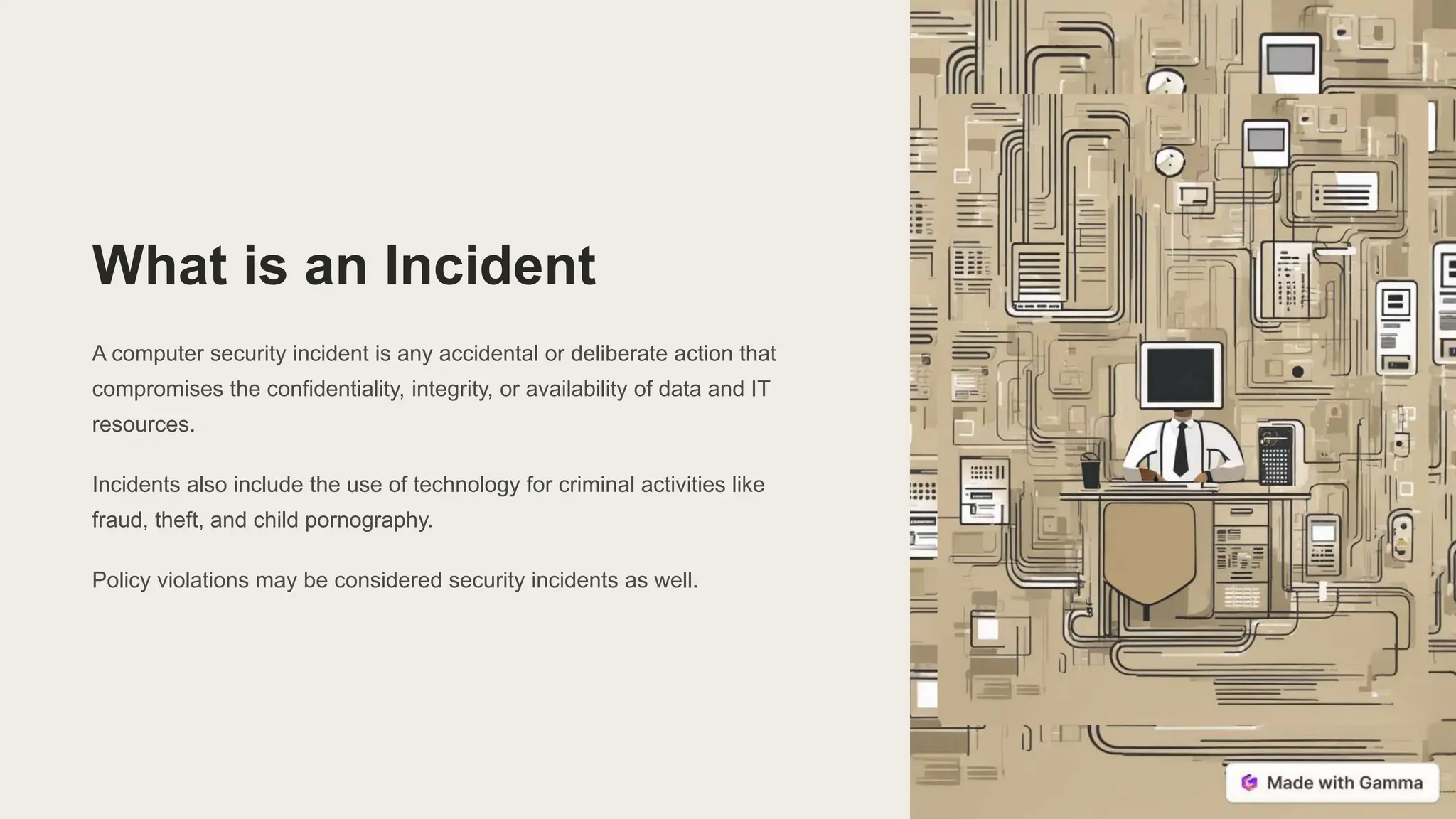
A computer security incident is any accidental or deliberate action that
compromises the confidentiality, integrity, or availability of data and IT
resources.
Incidents also include the use of technology for criminal activities like
fraud, theft, and child pornography.
Policy violations may be considered security incidents as well.
Incident Response Goals
1 Preserve confidentiality,
integrity, and availability
Safeguard enterprise information assets
2 Minimize impact on the university
Rapidly contain and resolve incidents
3 Provide data for management
decisions
Equip leaders to choose appropriate actions
4 Establish a repeatable process
Ensure a structured, logical response
approach
Incident Response Goals (con't)
Increase the efficiency and effectiveness of incident response to minimize impact.
Reduce the financial and human resource burden on the university.
Provide legal evidence in case of liability issues.
University Policies
Incident Reporting
University policies require IT
administrators to report and
respond to security incidents.
Key Policies
1. 4-OP-H-5 Information
Technology Security
2. 4-OP-D-2-G Payment Cards
3. 4-OP-H-12 Information
Privacy
Incident Response
The policies outline the
university's requirements for
incident response and
management.
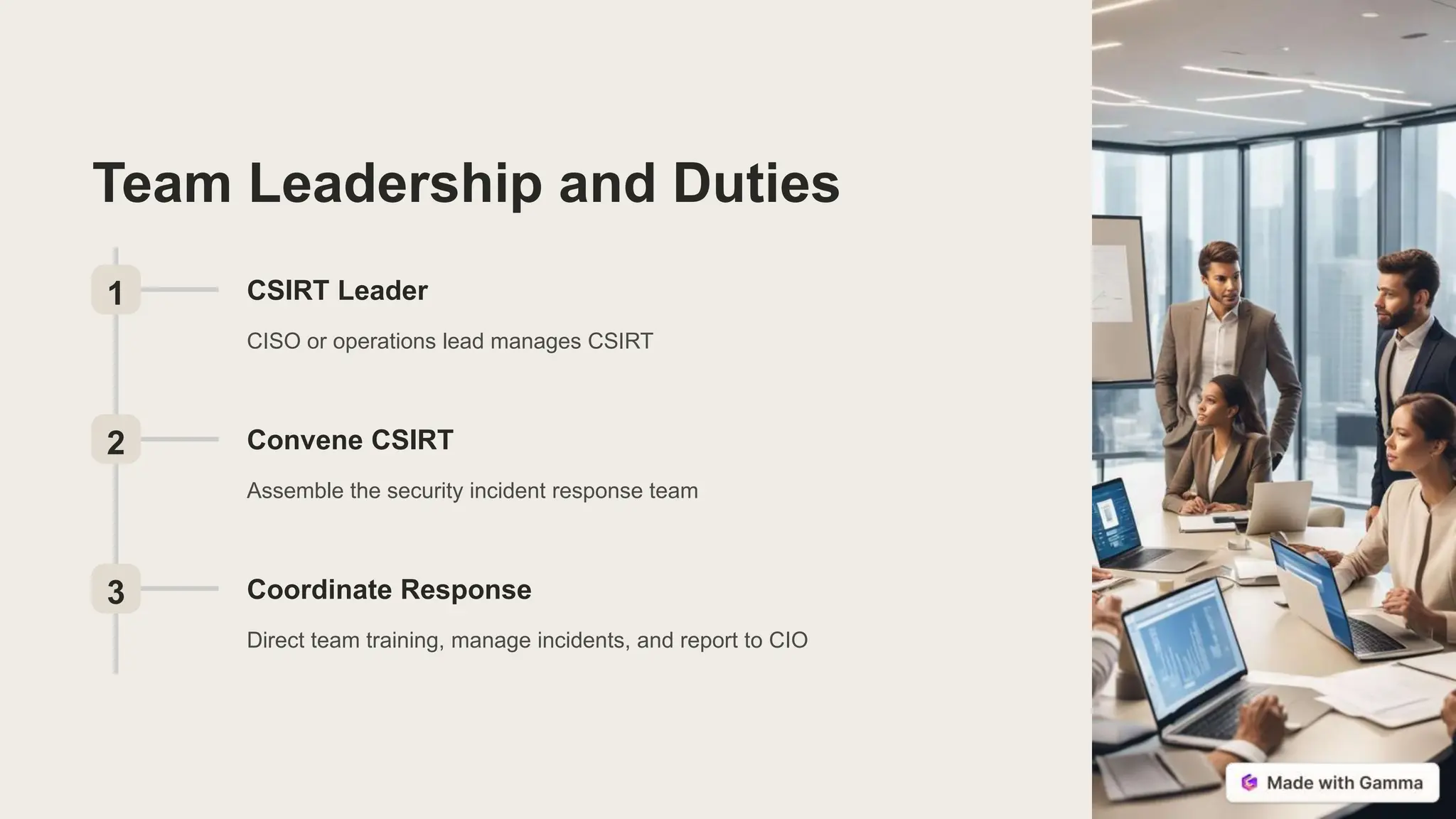
Team Leadership and Duties
1 CSIRT Leader
CISO or operations lead manages CSIRT
2 Convene CSIRT
Assemble the security incident response team
3 Coordinate Response
Direct team training, manage incidents, and report to CIO
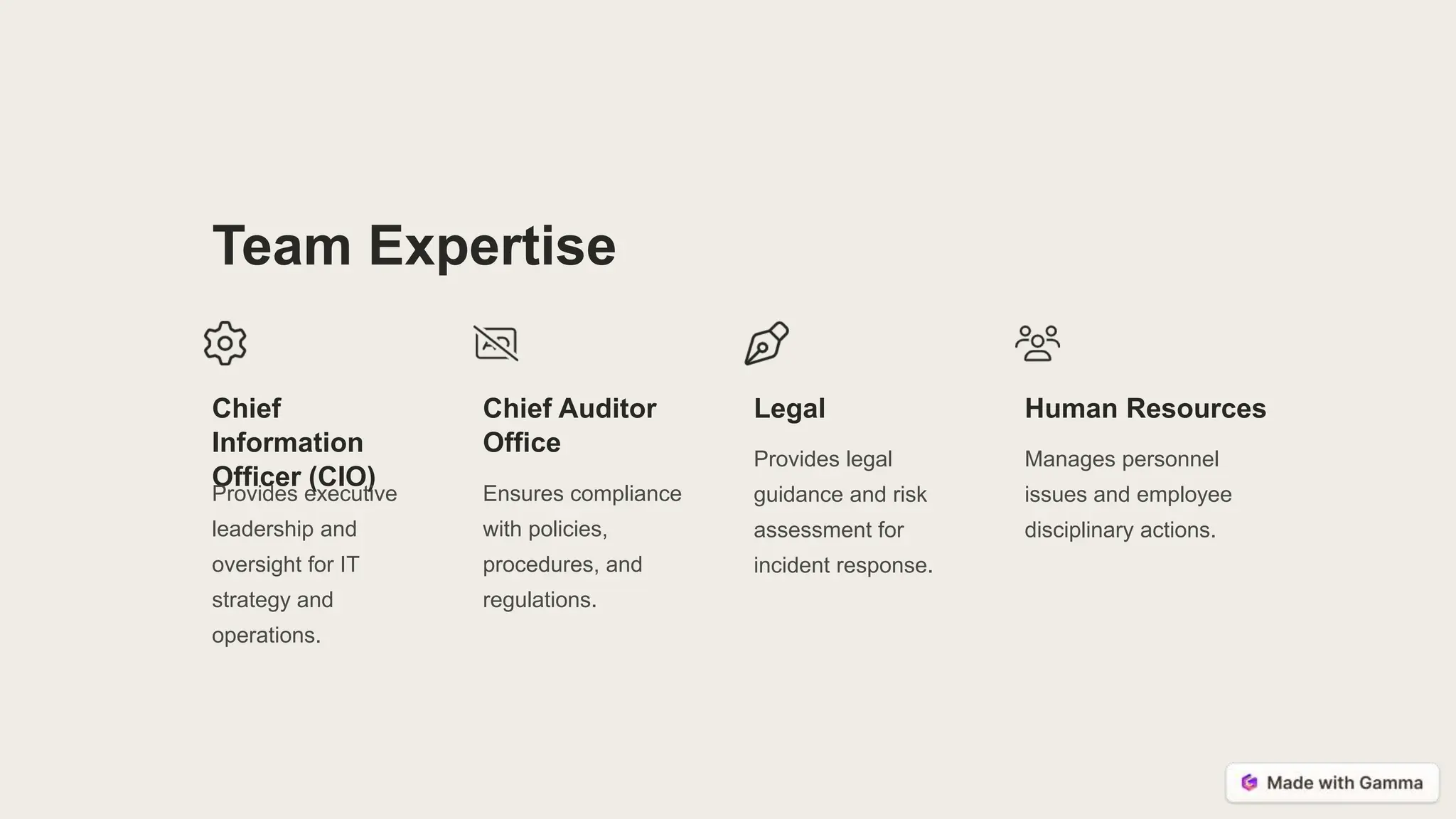
Team Expertise
Chief
Information
Officer (CIO)
Provides executive
leadership and
oversight for IT
strategy and
operations.
Chief Auditor
Office
Ensures compliance
with policies,
procedures, and
regulations.
Legal
Provides legal
guidance and risk
assessment for
incident response.
Human Resources
Manages personnel
issues and employee
disciplinary actions.
# **Role of the CSIRT**
1
1
5
5
10
10
—
Key Responsibilities
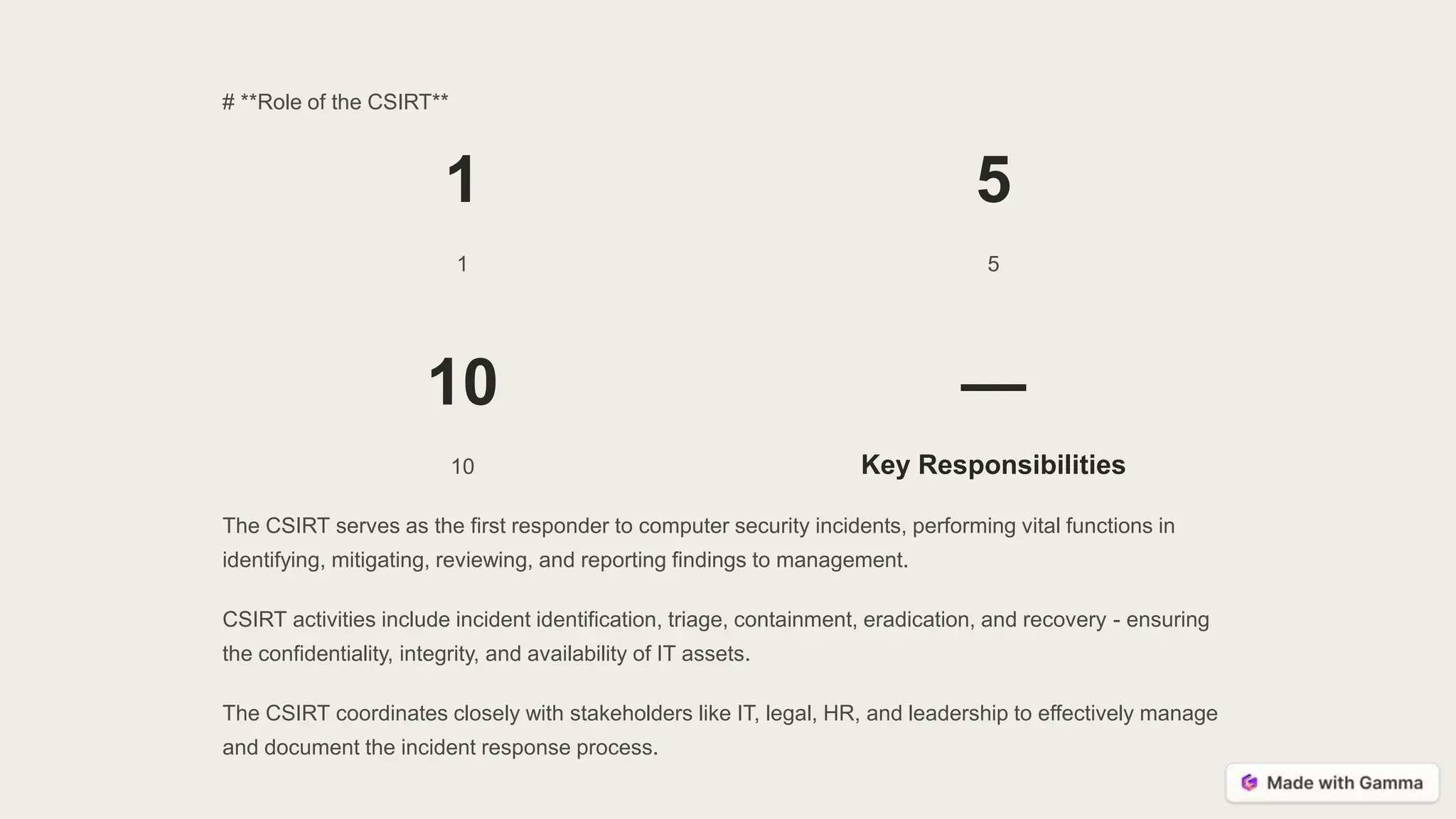
The CSIRT serves as the first responder to computer security incidents, performing vital functions in
identifying, mitigating, reviewing, and reporting findings to management.
CSIRT activities include incident identification, triage, containment, eradication, and recovery - ensuring
the confidentiality, integrity, and availability of IT assets.
The CSIRT coordinates closely with stakeholders like IT, legal, HR, and leadership to effectively manage
and document the incident response process.

Fusion-Center-ITS-Security-and-Privacy-Operations (1).pptx

  • 1.
    Fusion Center ITS Securityand Privacy Operations Enhancing cybersecurity and upholding data privacy in incident response and security operations. by Muhammad Atif Imtiaz
  • 2.
    Overview Incident Response SecurityGoals Preserve confidentiality, integrity and availability of enterprise data Incident Benefits Improve efficiency, reduce impact, and provide legal evidence University Policies Defined policies mandate incident reporting and response General Procedures Standardized steps to identify, mitigate and review incidents
  • 3.
    Incident Response • Phishing- Accounts Compromised: Employees fall victim to phishing scams, leading to compromised user accounts and access to sensitive university data. • Compromised File: Malicious files are unknowingly downloaded, introducing malware or ransomware into the university's systems. • Ransomware: Critical university data is encrypted by ransomware, preventing access and disrupting operations until a ransom is paid or the incident is resolved. • Stolen Property: University-owned laptops, mobile devices, or other equipment containing sensitive information are lost or stolen, posing a data breach risk. • Final Comments: Effective incident response requires a well-coordinated team, clear policies, and robust procedures to mitigate the impact and ensure the university's security and operations are restored.
  • 4.
    What is anIncident A computer security incident is any accidental or deliberate action that compromises the confidentiality, integrity, or availability of data and IT resources. Incidents also include the use of technology for criminal activities like fraud, theft, and child pornography. Policy violations may be considered security incidents as well.
  • 5.
    Incident Response Goals 1Preserve confidentiality, integrity, and availability Safeguard enterprise information assets 2 Minimize impact on the university Rapidly contain and resolve incidents 3 Provide data for management decisions Equip leaders to choose appropriate actions 4 Establish a repeatable process Ensure a structured, logical response approach
  • 6.
    Incident Response Goals(con't) Increase the efficiency and effectiveness of incident response to minimize impact. Reduce the financial and human resource burden on the university. Provide legal evidence in case of liability issues.
  • 7.
    University Policies Incident Reporting Universitypolicies require IT administrators to report and respond to security incidents. Key Policies 1. 4-OP-H-5 Information Technology Security 2. 4-OP-D-2-G Payment Cards 3. 4-OP-H-12 Information Privacy Incident Response The policies outline the university's requirements for incident response and management.
  • 8.
    Team Leadership andDuties 1 CSIRT Leader CISO or operations lead manages CSIRT 2 Convene CSIRT Assemble the security incident response team 3 Coordinate Response Direct team training, manage incidents, and report to CIO
  • 9.
    Team Expertise Chief Information Officer (CIO) Providesexecutive leadership and oversight for IT strategy and operations. Chief Auditor Office Ensures compliance with policies, procedures, and regulations. Legal Provides legal guidance and risk assessment for incident response. Human Resources Manages personnel issues and employee disciplinary actions.
  • 10.
    # **Role ofthe CSIRT** 1 1 5 5 10 10 — Key Responsibilities The CSIRT serves as the first responder to computer security incidents, performing vital functions in identifying, mitigating, reviewing, and reporting findings to management. CSIRT activities include incident identification, triage, containment, eradication, and recovery - ensuring the confidentiality, integrity, and availability of IT assets. The CSIRT coordinates closely with stakeholders like IT, legal, HR, and leadership to effectively manage and document the incident response process.