Mycology
Duaa hajali haj
Classification & General
Properties of Fungi
Definitions
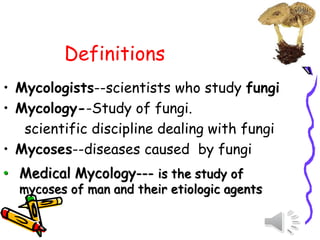
• Mycologists--scientists who study fungi
• Mycology--Study of fungi.
scientific discipline dealing with fungi
• Mycoses--diseases caused by fungi
• Medical Mycology--- is the study of
mycoses of man and their etiologic agents
Introduction
• Mykes (Greek word) : Mushroom
• Fungi are eukaryotic protista; differ
from bacteria and other prokaryotes.
4
History
• The ability of fungi to invade plant and animal
tissue was observed in early 19 th century but
the first documented animal infection by any
fungus was made by Bassi, who in 1835 studied
the muscardine disease of silkworm and proved
the that the infection was caused by a fungus
Beauveria bassiana.
• In 1910 Raymond Sabouraud published his book
Les Teignes, which was a comprehensive study of
dermatophytic fungi. He is also regarded as
father of medical mycology.
Hapitate of fungi:
• Fungi inhabit almost every niche in the
environment and humans are exposed to
these organisms in various fields of life.
Beneficial Effects of Fungi:
1. Decomposition - nutrient and carbon recycling.
2. Biosynthetic factories. The fermentation
property is used for the industrial production of
alcohols, fats, citric, oxalic and gluconic acids.
3. Important sources of antibiotics, such as
Penicillin.
4. Model organisms for biochemical and genetic
studies. Eg: Neurospora crassa
5. Saccharomyces cerviciae is extensively used in
recombinant DNA technology, which includes the
Hepatitis B Vaccine.
6. Some fungi are edible (mushrooms).
7. Yeasts provide nutritional supplements such as
vitamins and cofactors.
8. Penicillium is used to flavour Roquefort and
Camembert cheeses.
9. Ergot produced by Claviceps purpurea contains
medically important alkaloids that help in inducing
uterine contractions, controlling bleeding and
treating migraine.
Harmful Effects of Fungi:
1. Destruction of food, wood , paper, and cloth.
2. Animal and human diseases, including allergies.
3. Toxins produced by poisonous mushrooms and
within food (Mycotoxicosis).
4. Plant diseases.
5. Spoilage of agriculture produce such as
vegetables and cereals in the godown.
6. Damage the products such as magnetic tapes and
disks, glass lenses, marble statues, bones and wax.
General properties of fungi:
1. They are eukaryotic; cells contain membrane bound cell
organelles including nuclei, mitochondria, golgi apparatus,
endoplasmic reticulum, lysosomes etc. They also exhibit
mitosis.
2. Have ergosterols in their membranes and possesses 80S
ribosomes.
3. Have a rigid cell wall and are therefore non-motile, a
feature that separates them from animals. All fungi possess
cell wall made of chitin.
4. Are chemoheterotrophs (require organic compounds for
both carbon and energy sources) and fungi lack chlorophyll
and are therefore not autotrophic.
5. Fungi are osmiotrophic; they obtain their nutrients by
absorption.
6. They obtain nutrients as saprophytes
(live off of decaying matter) or as
parasites (live off of living matter).
7. All fungi require water and oxygen and
there are no obligate anaerobes.
8. Typically reproduce asexually and/or
sexually by producing spores.
9. They grow either reproductively by
budding or non-reproductively by hyphal
tip elongation.
10. Food storage is generally in the form of
lipids and glycogen.
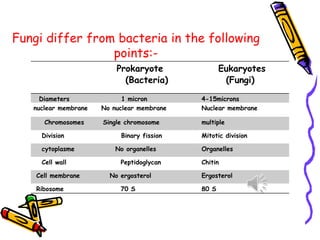
Fungi differ from bacteria in the following
points:-
Prokaryote
(Bacteria)
Eukaryotes
(Fungi)
Diameters 1 micron 4-15microns
nuclear membrane No nuclear membrane Nuclear membrane
Chromosomes Single chromosome multiple
Division Binary fission Mitotic division
cytoplasme No organelles Organelles
Cell wall Peptidoglycan Chitin
Cell membrane No ergosterol Ergosterol
Ribosome 70 S 80 S
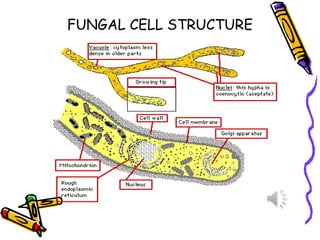
FUNGAL CELL STRUCTURE
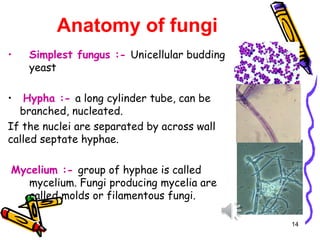
Anatomy of fungi
• Simplest fungus :- Unicellular budding
yeast
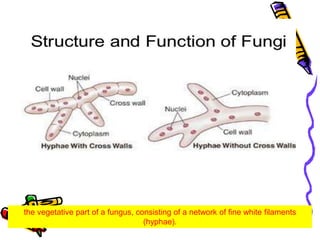
• Hypha :- a long cylinder tube, can be
branched, nucleated.
If the nuclei are separated by across wall
called septate hyphae.
Mycelium :- group of hyphae is called
mycelium. Fungi producing mycelia are
called molds or filamentous fungi.
14
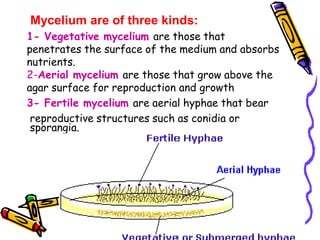
Mycelium are of three kinds:
1- Vegetative mycelium are those that
penetrates the surface of the medium and absorbs
nutrients.
2-Aerial mycelium are those that grow above the
agar surface for reproduction and growth
3- Fertile mycelium are aerial hyphae that bear
reproductive structures such as conidia or
sporangia.
the vegetative part of a fungus, consisting of a network of fine white filaments
(hyphae).
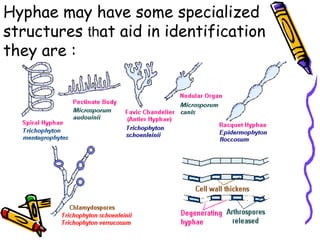
Hyphae may have some specialized
structures that aid in identification
they are :
Mycology
▪ How do we identify molds in the lab?
▪ Based on type of hyphae (septate versus non-
septate)
▪ Based on color of mycelium
▪ Based on reproductive structures
▪ Molds may form either sexual or asexual spores
▪ Sexual spores
▪ Asexual spores,
Morphological
Systematic
Clinical
Morphological
Classification
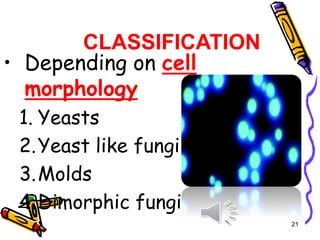
CLASSIFICATION
• Depending on cell
morphology
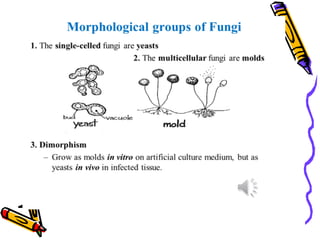
1. Yeasts
2.Yeast like fungi
3.Molds
4.Dimorphic fungi
21
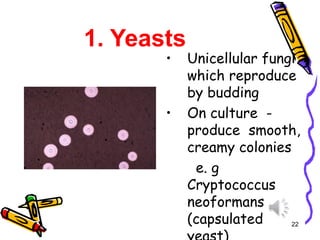
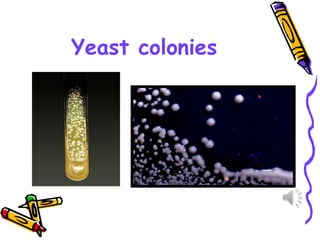
1. Yeasts
• Unicellular fungi
which reproduce
by budding
• On culture -
produce smooth,
creamy colonies
e. g
Cryptococcus
neoformans
(capsulated 22
Yeast colonies
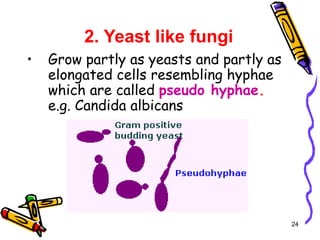
2. Yeast like fungi
• Grow partly as yeasts and partly as
elongated cells resembling hyphae
which are called pseudo hyphae.
e.g. Candida albicans
24
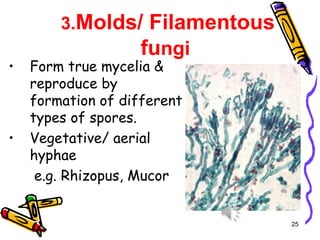
3.Molds/ Filamentous
fungi
• Form true mycelia &
reproduce by
formation of different
types of spores.
• Vegetative/ aerial
hyphae
e.g. Rhizopus, Mucor
25
4. Dimorphic fungi
• Occur in 2 forms
Molds (Filaments) – 25C (soil)
Yeasts – 37C (in host tissue)
Most fungi causing systemic infections
are dimorphic:
– Histoplasma capsulatum
– Blastomyces dermatidis
– Paracoccidioides brasiliensis
– Coccidioides immitis
– Penicillium marneffei
– Sporothrix schenkii
26
Systematic
Classification
Systematic classification
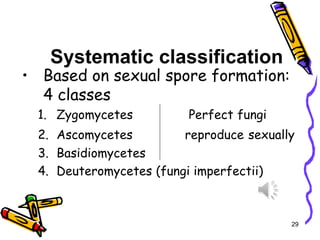
• Based on sexual spore formation:
4 classes
1. Zygomycetes Perfect fungi
2. Ascomycetes reproduce sexually
3. Basidiomycetes
4. Deuteromycetes (fungi imperfectii)
29
Sexual spores
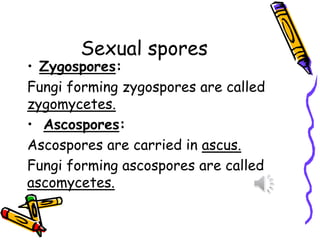
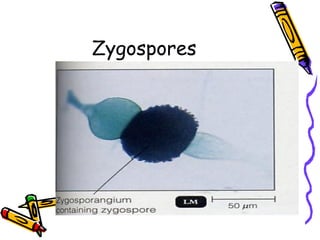
• Zygospores:
Fungi forming zygospores are called
zygomycetes.
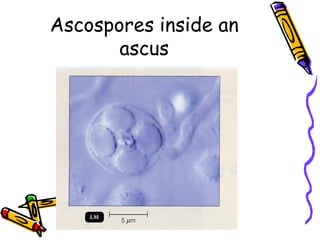
• Ascospores:
Ascospores are carried in ascus.
Fungi forming ascospores are called
ascomycetes.
Zygospores
Ascospores inside an
ascus
Sexual spores
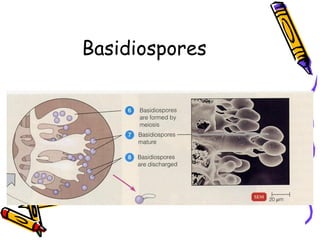
• Basidiospores:
Basidiospores are carried on basidium.
Fungi forming basidiospores are called
basidiomycetes.
• Deuteromycetes are fungi whose
sexual spores are unknown. But,
they produce asexual spores.
FUNGI IMPERFECTI
(DEUTEROMYCETES)
• Most fungi causing human infections belong to this
group.
Basidiospores
Asexual spores
• Blastospores:
Produced by budding of the yeast cells.
• Conidia:
Produced by molds.
May be microconidia or macroconidia.
Mycology
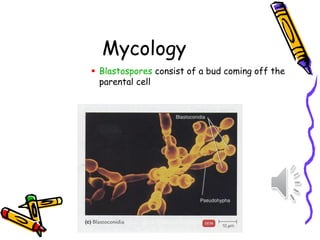
▪ Blastospores consist of a bud coming off the
parental cell
Mycology
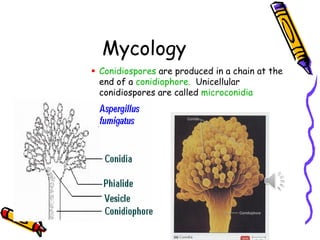
▪ Conidiospores are produced in a chain at the
end of a conidiophore. Unicellular
conidiospores are called microconidia
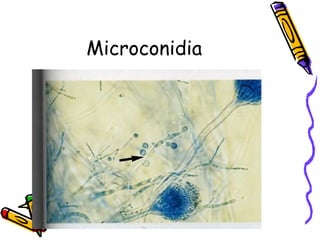
Microconidia
Mycology
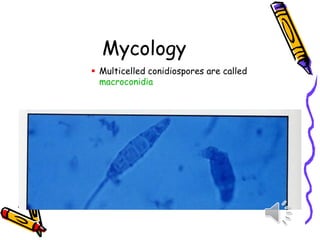
▪ Multicelled conidiospores are called
macroconidia
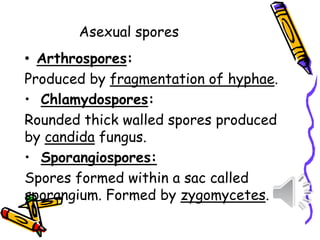
• Arthrospores:
Produced by fragmentation of hyphae.
• Chlamydospores:
Rounded thick walled spores produced
by candida fungus.
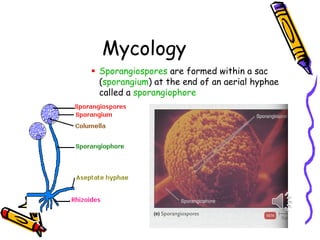
• Sporangiospores:
Spores formed within a sac called
sporangium. Formed by zygomycetes.
Asexual spores
Arthrospores
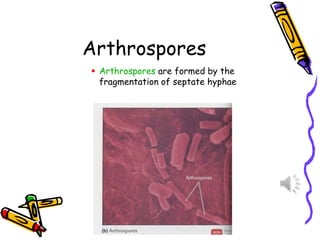
▪ Arthrospores are formed by the
fragmentation of septate hyphae
Mycology
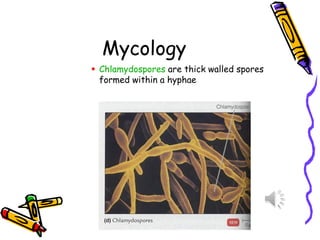
▪ Chlamydospores are thick walled spores
formed within a hyphae
Mycology
▪ Sporangiospores are formed within a sac
(sporangium) at the end of an aerial hyphae
called a sporangiophore
Importance of Spores:
A. Biological
1) Allows for dissemination
2) Allows for reproduction
3) Allows the fungus to move to new food source.
4) Allows fungus to survive periods of adversity.
5) Means of introducing new genetic combinations into
a population
B. Practical
1) Rapid identification (also helps with classification)
2) Source of inocula for human infection
3) Source of inocula for contamination
Reproductive Fungi
1.Sexual reproduction
produced by the fusion of two nuclei that then
generally undergo meiosis.
1.plasmogamy (cytoplasmic fusion of two
cells)
2.karyogamy (fusion of two nuclei)
3.genetic structure and meiosis
e.g. Zygospores, Ascospores and
Basidiospores.
Reproductive Fungi
2. Asexual reproduction
(somatic or vegetative reproduction )
occurs by many of mechanisms:
1.Budding
2.Fission
3.Fragmentation of hyphae
4.Asexual spores
Clinical
Classification
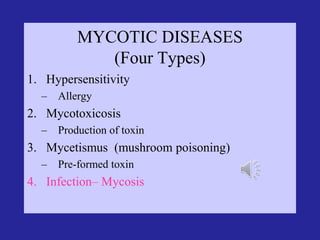
MYCOTIC DISEASES
(Four Types)
1. Hypersensitivity
– Allergy
2. Mycotoxicosis
– Production of toxin
3. Mycetismus (mushroom poisoning)
– Pre-formed toxin
4. Infection– Mycosis
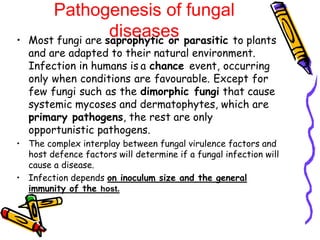
Pathogenesis of fungal
diseases
• Most fungi are saprophytic or parasitic to plants
and are adapted to their natural environment.
Infection in humans is a chance event, occurring
only when conditions are favourable. Except for
few fungi such as the dimorphic fungi that cause
systemic mycoses and dermatophytes, which are
primary pathogens, the rest are only
opportunistic pathogens.
• The complex interplay between fungal virulence factors and
host defence factors will determine if a fungal infection will
cause a disease.
• Infection depends on inoculum size and the general
immunity of the host.
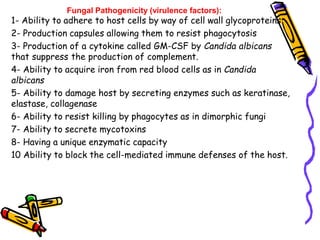
Fungal Pathogenicity (virulence factors):
1- Ability to adhere to host cells by way of cell wall glycoproteins
2- Production capsules allowing them to resist phagocytosis
3- Production of a cytokine called GM-CSF by Candida albicans
that suppress the production of complement.
4- Ability to acquire iron from red blood cells as in Candida
albicans
5- Ability to damage host by secreting enzymes such as keratinase,
elastase, collagenase
6- Ability to resist killing by phagocytes as in dimorphic fungi
7- Ability to secrete mycotoxins
8- Having a unique enzymatic capacity
10 Ability to block the cell-mediated immune defenses of the host.
Host defense factors:
• Physical barriers, such as skin and mucus membranes
• The fatty acid content of the skin
• The pH of the skin, mucosal surfaces and body
fluids
• Epithelial cell turnover
• Normal flora
• Chemical barriers, such as secretions, serum factors
• Most fungi are mesophilic and cannot grow at 37oC.
• Natural Effector Cells (polymorphonuclear
leucocytes) and the Professional Phagocytes
(monocytes and macrophages)
Factors predisposing to fungal infections:
• Prolonged antibiotic therapy
• Underlying disease (HIV infection, cancer, diabetes,
etc.)
• Age
• Surgical procedures
• Immunosuppressive drugs
• Irradiation therapy
• Indwelling catheters
• Obesity
• Drug addiction
• Transplants
• Occupation
Immunity to fungal infections:
• Mechanism of immunity to fungal infections can
be innate or acquired.
Antifungal drugs
• Mechanism of action of antifungal drugs
• 1- Drugs act on cell membrane:
• e.g. Polyenes and Azoles
• 2-Drugs act on Nucleic acid synthesis
• e.g. 5-flucytosin and griseofulvin
• 3- Drugs act on cell wall
• e.g. Caspofungin
Lab Diagnoses of Mycoses
1- Clinical presentation
–History - Physical Exam
–Mould or Yeast? -Septate hyphae?
2- Culture of organism (days to weeks)
–SDA , SDA with antibiotics ,
BHIA
3 Serology-Antibody or Antigen tests
4 Molecular Biology-PCR
LABORATORY DIAGNOSIS (main points)
❑ Specimens:
• Skin scrapings, nail clippings, hairs
• Scrapings from mucous membrane
• Scrapings, crusts, aspirated pus, tissue biopsy.
• Blood, CSF etc in systemic mycoses.
❑ Microscopy:
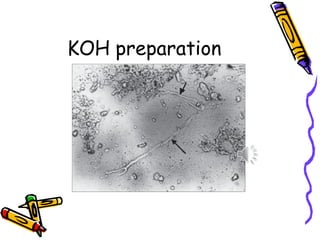
• KOH mount – KOH dissolves keratin and cellular
material but does not affect fungi. Specimen is
placed on a slide, a drop of 10-20% KOH is added and
covered with a coverslip, left for 20 min in incubator
at 37°C to digest keratin. Then examined
microscopically.
KOH preparation
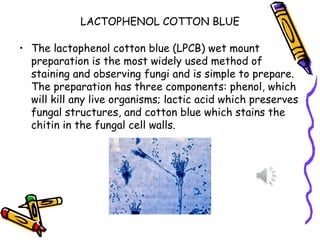
LACTOPHENOL COTTON BLUE
• The lactophenol cotton blue (LPCB) wet mount
preparation is the most widely used method of
staining and observing fungi and is simple to prepare.
The preparation has three components: phenol, which
will kill any live organisms; lactic acid which preserves
fungal structures, and cotton blue which stains the
chitin in the fungal cell walls.
• Stains: gram stain, , periodic acid schiff stain
(PAS), methenamine sliver stain, giemsa stain etc.
• Direct immunofluorescence test
• Histology
• Antigen detection tests eg cryptococcal antigen in
CSF.
❑ Culture:
• Sabouraud’s dextrose agar is commonly used for
fungal culture.
• pH =5.6 does not allow bacterial growth.
• Drugs like chloramphenicol, cyclohexamide and other
antibiotics are added to prevent bacterial or
saprophytic fungal infection.
• Cultures are incubated at two temperatures:
• One tube at 25°C (room temperature)
• One tube at 37°C (incubator).
• This helps reveal fungal dimorphism.
• Cultures are incubated for at least 2-
3 weeks and in some cases upto 6
weeks.
• Cultures are examined
macroscopically for colony
morphology, and microscopically for
fungal morphology.
• Czapek-Dox agar
• Cornmeal agar
THANK YOU

lec 1 mycology introduction, propratis, classification

  • 1.
    Mycology Duaa hajali haj Classification& General Properties of Fungi
  • 3.
    Definitions • Mycologists--scientists whostudy fungi • Mycology--Study of fungi. scientific discipline dealing with fungi • Mycoses--diseases caused by fungi • Medical Mycology--- is the study of mycoses of man and their etiologic agents
  • 4.
    Introduction • Mykes (Greekword) : Mushroom • Fungi are eukaryotic protista; differ from bacteria and other prokaryotes. 4
  • 5.
    History • The abilityof fungi to invade plant and animal tissue was observed in early 19 th century but the first documented animal infection by any fungus was made by Bassi, who in 1835 studied the muscardine disease of silkworm and proved the that the infection was caused by a fungus Beauveria bassiana. • In 1910 Raymond Sabouraud published his book Les Teignes, which was a comprehensive study of dermatophytic fungi. He is also regarded as father of medical mycology.
  • 6.
    Hapitate of fungi: •Fungi inhabit almost every niche in the environment and humans are exposed to these organisms in various fields of life.
  • 7.
    Beneficial Effects ofFungi: 1. Decomposition - nutrient and carbon recycling. 2. Biosynthetic factories. The fermentation property is used for the industrial production of alcohols, fats, citric, oxalic and gluconic acids. 3. Important sources of antibiotics, such as Penicillin. 4. Model organisms for biochemical and genetic studies. Eg: Neurospora crassa 5. Saccharomyces cerviciae is extensively used in recombinant DNA technology, which includes the Hepatitis B Vaccine.
  • 8.
    6. Some fungiare edible (mushrooms). 7. Yeasts provide nutritional supplements such as vitamins and cofactors. 8. Penicillium is used to flavour Roquefort and Camembert cheeses. 9. Ergot produced by Claviceps purpurea contains medically important alkaloids that help in inducing uterine contractions, controlling bleeding and treating migraine.
  • 9.
    Harmful Effects ofFungi: 1. Destruction of food, wood , paper, and cloth. 2. Animal and human diseases, including allergies. 3. Toxins produced by poisonous mushrooms and within food (Mycotoxicosis). 4. Plant diseases. 5. Spoilage of agriculture produce such as vegetables and cereals in the godown. 6. Damage the products such as magnetic tapes and disks, glass lenses, marble statues, bones and wax.
  • 10.
    General properties offungi: 1. They are eukaryotic; cells contain membrane bound cell organelles including nuclei, mitochondria, golgi apparatus, endoplasmic reticulum, lysosomes etc. They also exhibit mitosis. 2. Have ergosterols in their membranes and possesses 80S ribosomes. 3. Have a rigid cell wall and are therefore non-motile, a feature that separates them from animals. All fungi possess cell wall made of chitin. 4. Are chemoheterotrophs (require organic compounds for both carbon and energy sources) and fungi lack chlorophyll and are therefore not autotrophic. 5. Fungi are osmiotrophic; they obtain their nutrients by absorption.
  • 11.
    6. They obtainnutrients as saprophytes (live off of decaying matter) or as parasites (live off of living matter). 7. All fungi require water and oxygen and there are no obligate anaerobes. 8. Typically reproduce asexually and/or sexually by producing spores. 9. They grow either reproductively by budding or non-reproductively by hyphal tip elongation. 10. Food storage is generally in the form of lipids and glycogen.
  • 12.
    Fungi differ frombacteria in the following points:- Prokaryote (Bacteria) Eukaryotes (Fungi) Diameters 1 micron 4-15microns nuclear membrane No nuclear membrane Nuclear membrane Chromosomes Single chromosome multiple Division Binary fission Mitotic division cytoplasme No organelles Organelles Cell wall Peptidoglycan Chitin Cell membrane No ergosterol Ergosterol Ribosome 70 S 80 S
  • 13.
  • 14.
    Anatomy of fungi •Simplest fungus :- Unicellular budding yeast • Hypha :- a long cylinder tube, can be branched, nucleated. If the nuclei are separated by across wall called septate hyphae. Mycelium :- group of hyphae is called mycelium. Fungi producing mycelia are called molds or filamentous fungi. 14
  • 15.
    Mycelium are ofthree kinds: 1- Vegetative mycelium are those that penetrates the surface of the medium and absorbs nutrients. 2-Aerial mycelium are those that grow above the agar surface for reproduction and growth 3- Fertile mycelium are aerial hyphae that bear reproductive structures such as conidia or sporangia.
  • 16.
    the vegetative partof a fungus, consisting of a network of fine white filaments (hyphae).
  • 17.
    Hyphae may havesome specialized structures that aid in identification they are :
  • 18.
    Mycology ▪ How dowe identify molds in the lab? ▪ Based on type of hyphae (septate versus non- septate) ▪ Based on color of mycelium ▪ Based on reproductive structures ▪ Molds may form either sexual or asexual spores ▪ Sexual spores ▪ Asexual spores,
  • 19.
  • 20.
  • 21.
    CLASSIFICATION • Depending oncell morphology 1. Yeasts 2.Yeast like fungi 3.Molds 4.Dimorphic fungi 21
  • 22.
    1. Yeasts • Unicellularfungi which reproduce by budding • On culture - produce smooth, creamy colonies e. g Cryptococcus neoformans (capsulated 22
  • 23.
  • 24.
    2. Yeast likefungi • Grow partly as yeasts and partly as elongated cells resembling hyphae which are called pseudo hyphae. e.g. Candida albicans 24
  • 25.
    3.Molds/ Filamentous fungi • Formtrue mycelia & reproduce by formation of different types of spores. • Vegetative/ aerial hyphae e.g. Rhizopus, Mucor 25
  • 26.
    4. Dimorphic fungi •Occur in 2 forms Molds (Filaments) – 25C (soil) Yeasts – 37C (in host tissue) Most fungi causing systemic infections are dimorphic: – Histoplasma capsulatum – Blastomyces dermatidis – Paracoccidioides brasiliensis – Coccidioides immitis – Penicillium marneffei – Sporothrix schenkii 26
  • 28.
  • 29.
    Systematic classification • Basedon sexual spore formation: 4 classes 1. Zygomycetes Perfect fungi 2. Ascomycetes reproduce sexually 3. Basidiomycetes 4. Deuteromycetes (fungi imperfectii) 29
  • 30.
    Sexual spores • Zygospores: Fungiforming zygospores are called zygomycetes. • Ascospores: Ascospores are carried in ascus. Fungi forming ascospores are called ascomycetes.
  • 31.
  • 32.
  • 33.
    Sexual spores • Basidiospores: Basidiosporesare carried on basidium. Fungi forming basidiospores are called basidiomycetes. • Deuteromycetes are fungi whose sexual spores are unknown. But, they produce asexual spores.
  • 34.
    FUNGI IMPERFECTI (DEUTEROMYCETES) • Mostfungi causing human infections belong to this group.
  • 35.
  • 36.
    Asexual spores • Blastospores: Producedby budding of the yeast cells. • Conidia: Produced by molds. May be microconidia or macroconidia.
  • 37.
    Mycology ▪ Blastospores consistof a bud coming off the parental cell
  • 38.
    Mycology ▪ Conidiospores areproduced in a chain at the end of a conidiophore. Unicellular conidiospores are called microconidia
  • 39.
  • 40.
  • 41.
    • Arthrospores: Produced byfragmentation of hyphae. • Chlamydospores: Rounded thick walled spores produced by candida fungus. • Sporangiospores: Spores formed within a sac called sporangium. Formed by zygomycetes. Asexual spores
  • 42.
    Arthrospores ▪ Arthrospores areformed by the fragmentation of septate hyphae
  • 43.
    Mycology ▪ Chlamydospores arethick walled spores formed within a hyphae
  • 44.
    Mycology ▪ Sporangiospores areformed within a sac (sporangium) at the end of an aerial hyphae called a sporangiophore
  • 45.
    Importance of Spores: A.Biological 1) Allows for dissemination 2) Allows for reproduction 3) Allows the fungus to move to new food source. 4) Allows fungus to survive periods of adversity. 5) Means of introducing new genetic combinations into a population B. Practical 1) Rapid identification (also helps with classification) 2) Source of inocula for human infection 3) Source of inocula for contamination
  • 46.
    Reproductive Fungi 1.Sexual reproduction producedby the fusion of two nuclei that then generally undergo meiosis. 1.plasmogamy (cytoplasmic fusion of two cells) 2.karyogamy (fusion of two nuclei) 3.genetic structure and meiosis e.g. Zygospores, Ascospores and Basidiospores.
  • 47.
    Reproductive Fungi 2. Asexualreproduction (somatic or vegetative reproduction ) occurs by many of mechanisms: 1.Budding 2.Fission 3.Fragmentation of hyphae 4.Asexual spores
  • 48.
  • 49.
    MYCOTIC DISEASES (Four Types) 1.Hypersensitivity – Allergy 2. Mycotoxicosis – Production of toxin 3. Mycetismus (mushroom poisoning) – Pre-formed toxin 4. Infection– Mycosis
  • 50.
    Pathogenesis of fungal diseases •Most fungi are saprophytic or parasitic to plants and are adapted to their natural environment. Infection in humans is a chance event, occurring only when conditions are favourable. Except for few fungi such as the dimorphic fungi that cause systemic mycoses and dermatophytes, which are primary pathogens, the rest are only opportunistic pathogens. • The complex interplay between fungal virulence factors and host defence factors will determine if a fungal infection will cause a disease. • Infection depends on inoculum size and the general immunity of the host.
  • 51.
    Fungal Pathogenicity (virulencefactors): 1- Ability to adhere to host cells by way of cell wall glycoproteins 2- Production capsules allowing them to resist phagocytosis 3- Production of a cytokine called GM-CSF by Candida albicans that suppress the production of complement. 4- Ability to acquire iron from red blood cells as in Candida albicans 5- Ability to damage host by secreting enzymes such as keratinase, elastase, collagenase 6- Ability to resist killing by phagocytes as in dimorphic fungi 7- Ability to secrete mycotoxins 8- Having a unique enzymatic capacity 10 Ability to block the cell-mediated immune defenses of the host.
  • 52.
    Host defense factors: •Physical barriers, such as skin and mucus membranes • The fatty acid content of the skin • The pH of the skin, mucosal surfaces and body fluids • Epithelial cell turnover • Normal flora • Chemical barriers, such as secretions, serum factors • Most fungi are mesophilic and cannot grow at 37oC. • Natural Effector Cells (polymorphonuclear leucocytes) and the Professional Phagocytes (monocytes and macrophages)
  • 53.
    Factors predisposing tofungal infections: • Prolonged antibiotic therapy • Underlying disease (HIV infection, cancer, diabetes, etc.) • Age • Surgical procedures • Immunosuppressive drugs • Irradiation therapy • Indwelling catheters • Obesity • Drug addiction • Transplants • Occupation
  • 54.
    Immunity to fungalinfections: • Mechanism of immunity to fungal infections can be innate or acquired.
  • 55.
    Antifungal drugs • Mechanismof action of antifungal drugs • 1- Drugs act on cell membrane: • e.g. Polyenes and Azoles • 2-Drugs act on Nucleic acid synthesis • e.g. 5-flucytosin and griseofulvin • 3- Drugs act on cell wall • e.g. Caspofungin
  • 56.
    Lab Diagnoses ofMycoses 1- Clinical presentation –History - Physical Exam –Mould or Yeast? -Septate hyphae? 2- Culture of organism (days to weeks) –SDA , SDA with antibiotics , BHIA 3 Serology-Antibody or Antigen tests 4 Molecular Biology-PCR
  • 57.
    LABORATORY DIAGNOSIS (mainpoints) ❑ Specimens: • Skin scrapings, nail clippings, hairs • Scrapings from mucous membrane • Scrapings, crusts, aspirated pus, tissue biopsy. • Blood, CSF etc in systemic mycoses. ❑ Microscopy: • KOH mount – KOH dissolves keratin and cellular material but does not affect fungi. Specimen is placed on a slide, a drop of 10-20% KOH is added and covered with a coverslip, left for 20 min in incubator at 37°C to digest keratin. Then examined microscopically.
  • 58.
  • 59.
    LACTOPHENOL COTTON BLUE •The lactophenol cotton blue (LPCB) wet mount preparation is the most widely used method of staining and observing fungi and is simple to prepare. The preparation has three components: phenol, which will kill any live organisms; lactic acid which preserves fungal structures, and cotton blue which stains the chitin in the fungal cell walls.
  • 60.
    • Stains: gramstain, , periodic acid schiff stain (PAS), methenamine sliver stain, giemsa stain etc. • Direct immunofluorescence test • Histology • Antigen detection tests eg cryptococcal antigen in CSF.
  • 61.
    ❑ Culture: • Sabouraud’sdextrose agar is commonly used for fungal culture. • pH =5.6 does not allow bacterial growth. • Drugs like chloramphenicol, cyclohexamide and other antibiotics are added to prevent bacterial or saprophytic fungal infection. • Cultures are incubated at two temperatures: • One tube at 25°C (room temperature) • One tube at 37°C (incubator). • This helps reveal fungal dimorphism.
  • 62.
    • Cultures areincubated for at least 2- 3 weeks and in some cases upto 6 weeks. • Cultures are examined macroscopically for colony morphology, and microscopically for fungal morphology. • Czapek-Dox agar • Cornmeal agar

  • 63.