Download to read offline

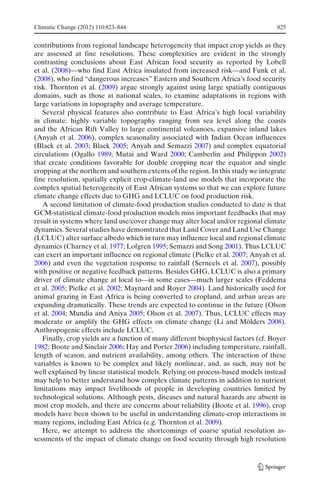
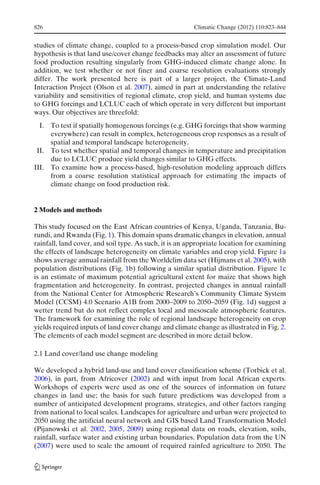
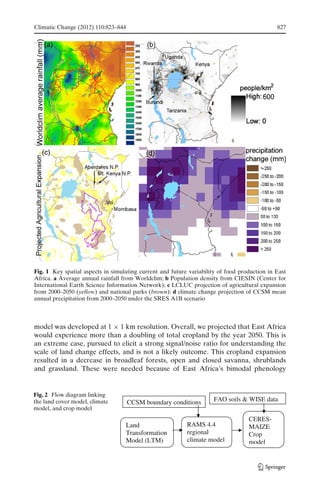
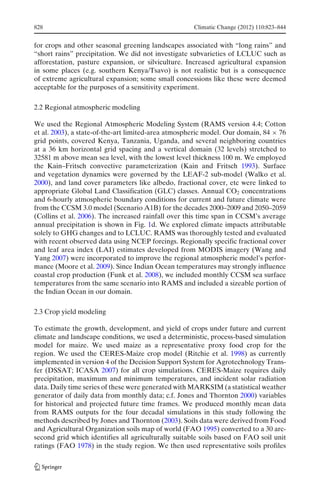
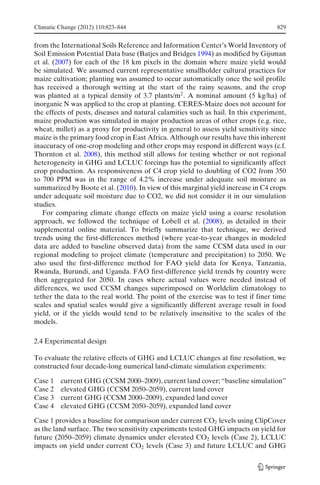
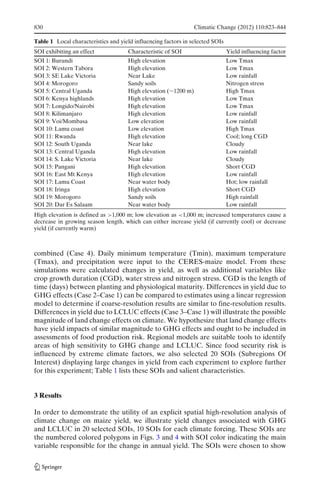
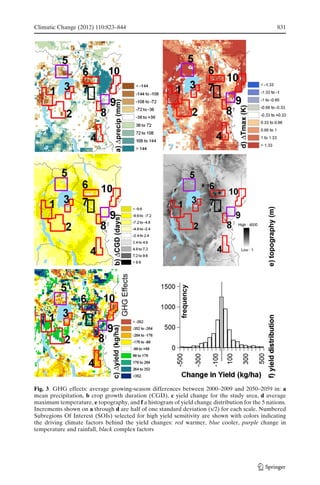
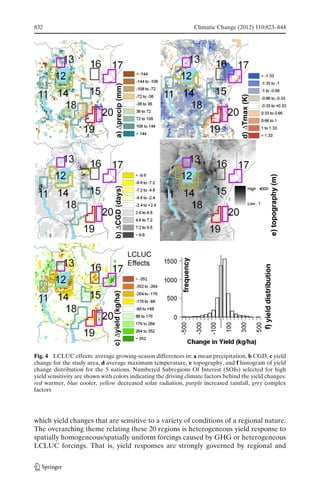


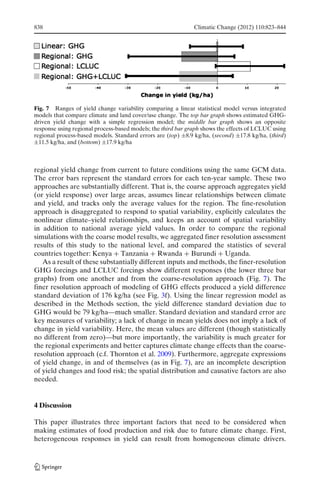

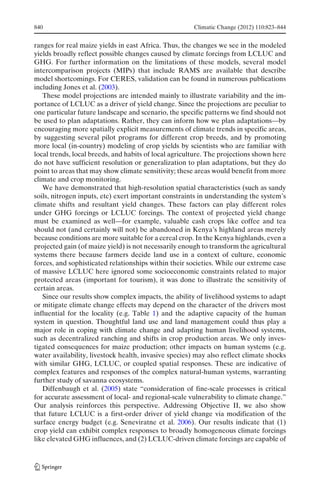
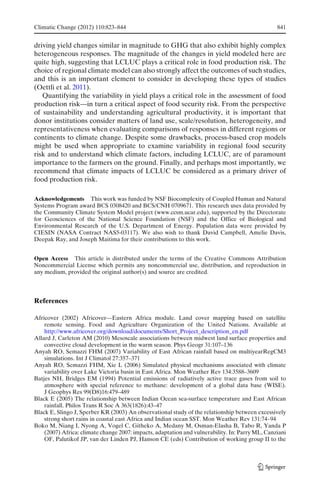


This study examines how future climate change and land use change may impact food security in East Africa through 2050. It uses regional climate and crop models at a high resolution to capture local variability. The models project that greenhouse gas emissions will make the region warmer and wetter on average, but yield impacts will be heterogeneous across landscapes due to factors like topography. Land use change from converting forests and grasslands to additional cropland is also projected to significantly impact yields. The results suggest a wide range of projected crop yields across East Africa, reflecting uncertainty in how climate and land use may affect food production risks at local scales. Considering spatial variability is important for assessing food security and adaptation strategies in the region.


![11.[21 29]the implications of climate change on food security and rural livel...](https://cdn.slidesharecdn.com/ss_thumbnails/11-21-29theimplicationsofclimatechangeonfoodsecurityandrurallivelihoods-120512235612-phpapp01-thumbnail.jpg?width=640&height=640&fit=bounds)


![5G Explained! A High Level Overview [Introduction]](https://cdn.slidesharecdn.com/ss_thumbnails/5gexplainedahighleveloverview-260119165306-cc137a3e-thumbnail.jpg?width=640&height=640&fit=bounds)


