Looking for the next
               GapMinder.com

Brussels, 2nd February 2009

David Osimo - Tech4i2 ltd.
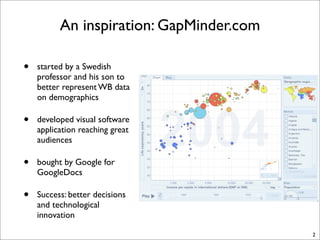
An inspiration: GapMinder.com

•   started by a Swedish
    professor and his son to
    better represent WB data
    on demographics

•   developed visual software
    application reaching great
    audiences

•   bought by Google for
    GoogleDocs

•   Success: better decisions
    and technological
    innovation

                                          2
General trends

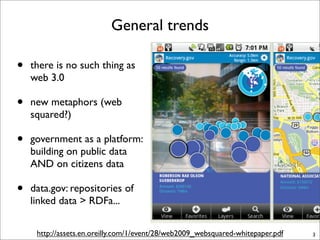
•   there is no such thing as
    web 3.0

•   new metaphors (web
    squared?)

•   government as a platform:
    building on public data
    AND on citizens data

•   data.gov: repositories of
    linked data > RDFa...

     http://assets.en.oreilly.com/1/event/28/web2009_websquared-whitepaper.pdf   3
Anybody, not everybody
•   reaching out to and augmenting the knowledge of
    citizens and civil servants (tools)
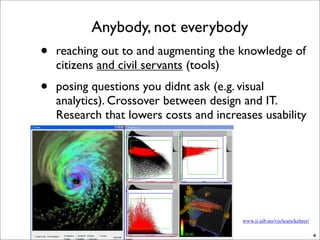
•   posing questions you didnt ask (e.g. visual
    analytics). Crossover between design and IT.
    Research that lowers costs and increases usability


                                         www.ii.uib.no/vis/team/kehrer/

                                                                          4
International
collaboration
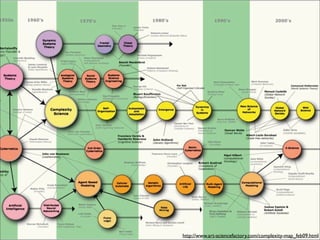
http://www.art-sciencefactory.com/complexity-map_feb09.html
                                                         6
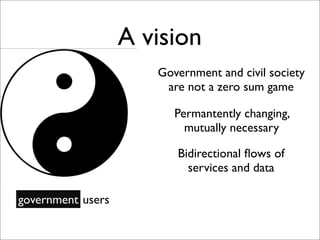
A vision
                      Government and civil society
                       are not a zero sum game

                         Permantently changing,
                           mutually necessary

                         Bidirectional flows of
                           services and data

government users
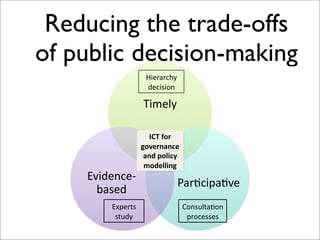
Reducing the trade-offs
of public decision-making
                    5"$*)*,6&'
                    0$,"4"71'

                   !"#$%&'

                      !"#$%&'$
                   (&)*'+,+-*$
                    ,+.$/&01-2$
                    3&.*001+($
    /."0$1,$2
                             ()*+,"-)+.$'
      3)4$0'
        /8-$*94'                  ;714:%9)+71'
         49:0&'                    -*7,$44$4'
"The	
  new	
  availability	
  of	
  huge	
  amounts	
  of	
  data,	
  
along	
  with	
  the	
  statistical	
  tools	
  to	
  crunch	
  these	
  
numbers,	
  offers	
  a	
  whole	
  new	
  way	
  of	
  understanding	
  
the	
  world.	
  Correlation	
  supersedes	
  causation,	
  
and	
  science	
  can	
  advance	
  even	
  without	
  coherent	
  
models,	
  uni:ied	
  theories,	
  or	
  really	
  any	
  mechanistic	
  
explanation	
  at	
  all".

                                            Chris	
  Anderson	
  (2007)
Stakeholders


•   Government: the smart users ICT govmod (e.g.
    NVAC group, data.gov people)

•   Research: e.g. Beth Novek at White House, Harvard
    Kennedy School of government, dowire.org

•   Companies: e.g. Cognitive Edge in Singapore

•   Civil society: e.g. MySociety.org in UK and
    SunlightFoundation in US

•   Existing networks: W3C eGov group, govloop, public
    blogosphere, #gov20, #eups20

                                                         10
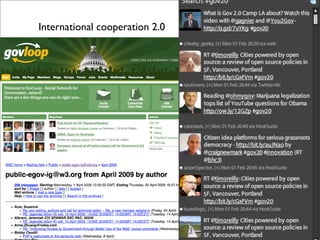
International cooperation 2.0


                                11
In summary


•   reach out beyond eGov scientific community
•   involve the gov users (e.g. Illuminating the
    path) and the civil society
•   combine structured and unstructured
    collaboration, theory and practice-based,
    incremental and disruptive innovation


                                                   12
Thanks


david.osimo@tech4i2.com
14

Fp7consultation

  • 1.
    Looking for thenext GapMinder.com Brussels, 2nd February 2009 David Osimo - Tech4i2 ltd.
  • 2.
    An inspiration: GapMinder.com • started by a Swedish professor and his son to better represent WB data on demographics • developed visual software application reaching great audiences • bought by Google for GoogleDocs • Success: better decisions and technological innovation 2
  • 3.
    General trends • there is no such thing as web 3.0 • new metaphors (web squared?) • government as a platform: building on public data AND on citizens data • data.gov: repositories of linked data > RDFa... http://assets.en.oreilly.com/1/event/28/web2009_websquared-whitepaper.pdf 3
  • 4.
    Anybody, not everybody • reaching out to and augmenting the knowledge of citizens and civil servants (tools) • posing questions you didnt ask (e.g. visual analytics). Crossover between design and IT. Research that lowers costs and increases usability www.ii.uib.no/vis/team/kehrer/ 4
  • 5.
  • 6.
  • 7.
    A vision Government and civil society are not a zero sum game Permantently changing, mutually necessary Bidirectional flows of services and data government users
  • 8.
    Reducing the trade-offs ofpublic decision-making 5"$*)*,6&' 0$,"4"71' !"#$%&' !"#$%&'$ (&)*'+,+-*$ ,+.$/&01-2$ 3&.*001+($ /."0$1,$2 ()*+,"-)+.$' 3)4$0' /8-$*94' ;714:%9)+71' 49:0&' -*7,$44$4'
  • 9.
    "The  new  availability  of  huge  amounts  of  data,   along  with  the  statistical  tools  to  crunch  these   numbers,  offers  a  whole  new  way  of  understanding   the  world.  Correlation  supersedes  causation,   and  science  can  advance  even  without  coherent   models,  uni:ied  theories,  or  really  any  mechanistic   explanation  at  all". Chris  Anderson  (2007)
  • 10.
    Stakeholders • Government: the smart users ICT govmod (e.g. NVAC group, data.gov people) • Research: e.g. Beth Novek at White House, Harvard Kennedy School of government, dowire.org • Companies: e.g. Cognitive Edge in Singapore • Civil society: e.g. MySociety.org in UK and SunlightFoundation in US • Existing networks: W3C eGov group, govloop, public blogosphere, #gov20, #eups20 10
  • 11.
  • 12.
    In summary • reach out beyond eGov scientific community • involve the gov users (e.g. Illuminating the path) and the civil society • combine structured and unstructured collaboration, theory and practice-based, incremental and disruptive innovation 12
  • 13.
  • 14.