
TECHNICAL PRESENTATION
ON WORKING PRINCIPLE OF
Four- Wheel Steering System
Presented By :-
SURESH BAROLIYA
19-46-09/11
1
CONTENTS
2
•INTRODUCTION
•STEERING SYSTEM
•WORKING PRINCIPLE OF 4 WHEEL
STEERING SYSTEM
•VEHICLE DYNAMICS AND STEERING
•ADVANTAGES
•DISADVANTAGES
•CONCLUSIONS
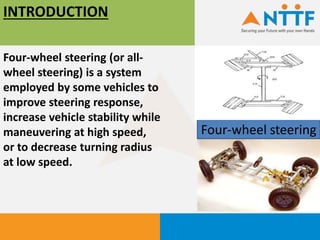
INTRODUCTION
Four-wheel steering (or all-
wheel steering) is a system
employed by some vehicles to
improve steering response,
increase vehicle stability while
maneuvering at high speed,
or to decrease turning radius
at low speed.
Four-wheel steering
STEERING SYSTEM
4
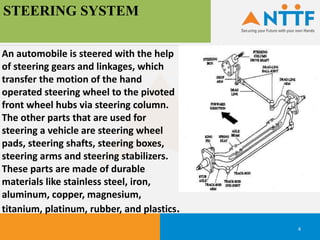
An automobile is steered with the help
of steering gears and linkages, which
transfer the motion of the hand
operated steering wheel to the pivoted
front wheel hubs via steering column.
The other parts that are used for
steering a vehicle are steering wheel
pads, steering shafts, steering boxes,
steering arms and steering stabilizers.
These parts are made of durable
materials like stainless steel, iron,
aluminum, copper, magnesium,
titanium, platinum, rubber, and plastics.
TYPES OF STEERING
SYSYEM
5
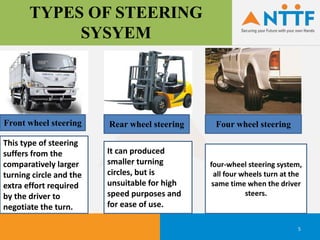
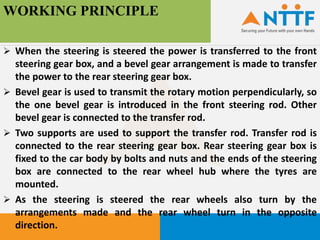
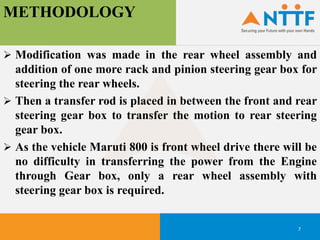
Front wheel steering Rear wheel steering Four wheel steering
four-wheel steering system,
all four wheels turn at the
same time when the driver
steers.
It can produced
smaller turning
circles, but is
unsuitable for high
speed purposes and
for ease of use.
This type of steering
suffers from the
comparatively larger
turning circle and the
extra effort required
by the driver to
negotiate the turn.
WORKING PRINCIPLE
 When the steering is steered the power is transferred to the front
steering gear box, and a bevel gear arrangement is made to transfer
the power to the rear steering gear box.
 Bevel gear is used to transmit the rotary motion perpendicularly, so
the one bevel gear is introduced in the front steering rod. Other
bevel gear is connected to the transfer rod.
 Two supports are used to support the transfer rod. Transfer rod is
connected to the rear steering gear box. Rear steering gear box is
fixed to the car body by bolts and nuts and the ends of the steering
box are connected to the rear wheel hub where the tyres are
mounted.
 As the steering is steered the rear wheels also turn by the
arrangements made and the rear wheel turn in the opposite
direction.
METHODOLOGY
7
 Modification was made in the rear wheel assembly and
addition of one more rack and pinion steering gear box for
steering the rear wheels.
 Then a transfer rod is placed in between the front and rear
steering gear box to transfer the motion to rear steering
gear box.
 As the vehicle Maruti 800 is front wheel drive there will be
no difficulty in transferring the power from the Engine
through Gear box, only a rear wheel assembly with
steering gear box is required.
REQUREMENTS OF STEERING
SYSTEM
8
 It should multiply the turning effort applied on the
steering wheel by the driver.
 It should be to a certain degree irreversible so that the
shocks of the road surface encountered by the wheels
are not transmitted to the driver’s hand.
 The mechanism should have self –rightening effect so
that when the driver release the steering wheel after
negotiating the turn , the wheel should try to achieve
straight ahead position .
FUNCTIONS OF THE
STEERING SYSTEM
9
 To control the angular motion the wheels and thus the direction of
motion of the vehicle.
 To provide directional stability of the vehicle while going straight
ahead.
 To facilitate straight ahead condition of the vehicle after
completing a turn.
 The road irregularities must be damped to the maximum possible
extent. This should co-exist with the road feel for the driver so
that he can feel the road condition without experiencing the
effects of moving over it.
 To minimize tyre wear and increase the life of the tyres.
STEERING PRINCIPLES AND
COMPONENTS
10
ACKERMAN STEERING MECHANISM
 With perfect Ackermann, at any angle of steering,
the centre point of all of the circles traced by all wheels
will lie at a common point. But this may be difficult to
arrange in practice with simple linkages.
 Hence, modern cars do not use pure Ackermann
steering, partly because it ignores important dynamic
and compliant effects, but the principle is sound for low
speed manoeuvres.
11
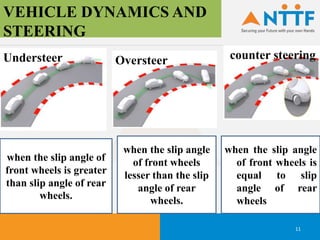
Understeer Oversteer counter steering
when the slip angle of
front wheels is greater
than slip angle of rear
wheels.
when the slip angle
of front wheels
lesser than the slip
angle of rear
wheels.
when the slip angle
of front wheels is
equal to slip
angle of rear
wheels
VEHICLE DYNAMICS AND
STEERING
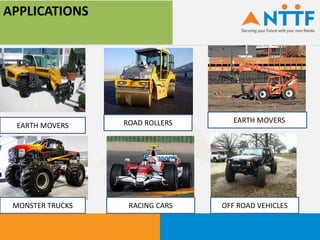
APPLICATIONS
EARTH MOVERS
EEARTH MOVERSROAD ROLLERS
MONSTER TRUCKS RACING CARS OFF ROAD VEHICLES
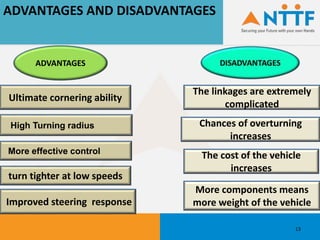
ADVANTAGES AND DISADVANTAGES
ADVANTAGES
Ultimate cornering ability
High Turning radius
More effective control
turn tighter at low speeds
Improved steering response
13
The linkages are extremely
complicated
Chances of overturning
increases
The cost of the vehicle
increases
More components means
more weight of the vehicle
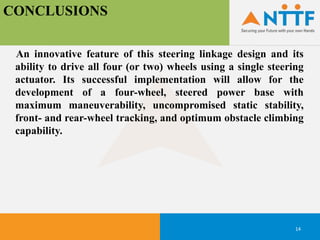
CONCLUSIONS
14
An innovative feature of this steering linkage design and its
ability to drive all four (or two) wheels using a single steering
actuator. Its successful implementation will allow for the
development of a four-wheel, steered power base with
maximum maneuverability, uncompromised static stability,
front- and rear-wheel tracking, and optimum obstacle climbing
capability.
FOUR WHEEL STEERING SYSTEM

FOUR WHEEL STEERING SYSTEM

  • 1.
    TECHNICAL PRESENTATION ON WORKINGPRINCIPLE OF Four- Wheel Steering System Presented By :- SURESH BAROLIYA 19-46-09/11 1
  • 2.
    CONTENTS 2 •INTRODUCTION •STEERING SYSTEM •WORKING PRINCIPLEOF 4 WHEEL STEERING SYSTEM •VEHICLE DYNAMICS AND STEERING •ADVANTAGES •DISADVANTAGES •CONCLUSIONS
  • 3.
    INTRODUCTION Four-wheel steering (orall- wheel steering) is a system employed by some vehicles to improve steering response, increase vehicle stability while maneuvering at high speed, or to decrease turning radius at low speed. Four-wheel steering
  • 4.
    STEERING SYSTEM 4 An automobileis steered with the help of steering gears and linkages, which transfer the motion of the hand operated steering wheel to the pivoted front wheel hubs via steering column. The other parts that are used for steering a vehicle are steering wheel pads, steering shafts, steering boxes, steering arms and steering stabilizers. These parts are made of durable materials like stainless steel, iron, aluminum, copper, magnesium, titanium, platinum, rubber, and plastics.
  • 5.
    TYPES OF STEERING SYSYEM 5 Frontwheel steering Rear wheel steering Four wheel steering four-wheel steering system, all four wheels turn at the same time when the driver steers. It can produced smaller turning circles, but is unsuitable for high speed purposes and for ease of use. This type of steering suffers from the comparatively larger turning circle and the extra effort required by the driver to negotiate the turn.
  • 6.
    WORKING PRINCIPLE  Whenthe steering is steered the power is transferred to the front steering gear box, and a bevel gear arrangement is made to transfer the power to the rear steering gear box.  Bevel gear is used to transmit the rotary motion perpendicularly, so the one bevel gear is introduced in the front steering rod. Other bevel gear is connected to the transfer rod.  Two supports are used to support the transfer rod. Transfer rod is connected to the rear steering gear box. Rear steering gear box is fixed to the car body by bolts and nuts and the ends of the steering box are connected to the rear wheel hub where the tyres are mounted.  As the steering is steered the rear wheels also turn by the arrangements made and the rear wheel turn in the opposite direction.
  • 7.
    METHODOLOGY 7  Modification wasmade in the rear wheel assembly and addition of one more rack and pinion steering gear box for steering the rear wheels.  Then a transfer rod is placed in between the front and rear steering gear box to transfer the motion to rear steering gear box.  As the vehicle Maruti 800 is front wheel drive there will be no difficulty in transferring the power from the Engine through Gear box, only a rear wheel assembly with steering gear box is required.
  • 8.
    REQUREMENTS OF STEERING SYSTEM 8 It should multiply the turning effort applied on the steering wheel by the driver.  It should be to a certain degree irreversible so that the shocks of the road surface encountered by the wheels are not transmitted to the driver’s hand.  The mechanism should have self –rightening effect so that when the driver release the steering wheel after negotiating the turn , the wheel should try to achieve straight ahead position .
  • 9.
    FUNCTIONS OF THE STEERINGSYSTEM 9  To control the angular motion the wheels and thus the direction of motion of the vehicle.  To provide directional stability of the vehicle while going straight ahead.  To facilitate straight ahead condition of the vehicle after completing a turn.  The road irregularities must be damped to the maximum possible extent. This should co-exist with the road feel for the driver so that he can feel the road condition without experiencing the effects of moving over it.  To minimize tyre wear and increase the life of the tyres.
  • 10.
    STEERING PRINCIPLES AND COMPONENTS 10 ACKERMANSTEERING MECHANISM  With perfect Ackermann, at any angle of steering, the centre point of all of the circles traced by all wheels will lie at a common point. But this may be difficult to arrange in practice with simple linkages.  Hence, modern cars do not use pure Ackermann steering, partly because it ignores important dynamic and compliant effects, but the principle is sound for low speed manoeuvres.
  • 11.
    11 Understeer Oversteer countersteering when the slip angle of front wheels is greater than slip angle of rear wheels. when the slip angle of front wheels lesser than the slip angle of rear wheels. when the slip angle of front wheels is equal to slip angle of rear wheels VEHICLE DYNAMICS AND STEERING
  • 12.
    APPLICATIONS EARTH MOVERS EEARTH MOVERSROADROLLERS MONSTER TRUCKS RACING CARS OFF ROAD VEHICLES
  • 13.
    ADVANTAGES AND DISADVANTAGES ADVANTAGES Ultimatecornering ability High Turning radius More effective control turn tighter at low speeds Improved steering response 13 The linkages are extremely complicated Chances of overturning increases The cost of the vehicle increases More components means more weight of the vehicle
  • 14.
    CONCLUSIONS 14 An innovative featureof this steering linkage design and its ability to drive all four (or two) wheels using a single steering actuator. Its successful implementation will allow for the development of a four-wheel, steered power base with maximum maneuverability, uncompromised static stability, front- and rear-wheel tracking, and optimum obstacle climbing capability.