Introduction for Prose and Drama
INTRODUCTION
“The form, structure and language reveals what the author
intentions are by how he or she tries to make the reader
think and feel.”
 When analysing and responding to a text, look at how a
writer uses form, structure and language and think about
the effect they have on the reader.
FORM
is the name of the text type that the writer uses.
For example, scripts, sonnets, novels etc.
The form of a text is important because it indicates the
writer's intentions,
characters or
key themes.
Form cont.
 Does the author write in the different first-person
perspectives?
 What does it allow the reader to do?
When discussing form, think about what the authors
wanted to achieve when writing in this form.
If you notice anything unusual about it, it should be pointed
out an your answer, as this will show you're really thinking
about literary analysis.
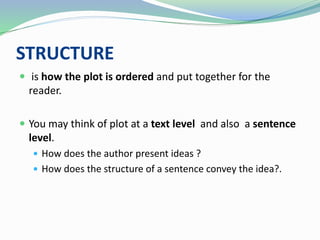
STRUCTURE
 is how the plot is ordered and put together for the
reader.
 You may think of plot at a text level and also a sentence
level.
 How does the author present ideas ?
 How does the structure of a sentence convey the idea?.
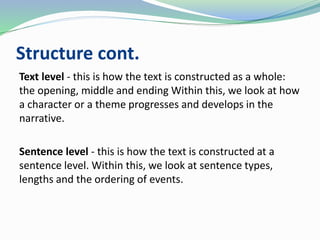
Structure cont.
Text level - this is how the text is constructed as a whole:
the opening, middle and ending Within this, we look at how
a character or a theme progresses and develops in the
narrative.
Sentence level - this is how the text is constructed at a
sentence level. Within this, we look at sentence types,
lengths and the ordering of events.
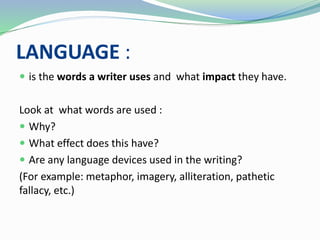
LANGUAGE :
 is the words a writer uses and what impact they have.
Look at what words are used :
 Why?
 What effect does this have?
 Are any language devices used in the writing?
(For example: metaphor, imagery, alliteration, pathetic
fallacy, etc.)
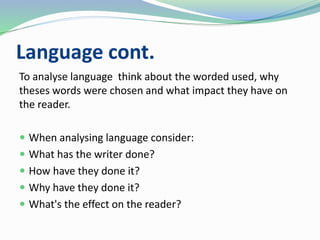
Language cont.
To analyse language think about the worded used, why
theses words were chosen and what impact they have on
the reader.
 When analysing language consider:
 What has the writer done?
 How have they done it?
 Why have they done it?
 What's the effect on the reader?

Form,structure and language

  • 1.
  • 2.
    INTRODUCTION “The form, structureand language reveals what the author intentions are by how he or she tries to make the reader think and feel.”  When analysing and responding to a text, look at how a writer uses form, structure and language and think about the effect they have on the reader.
  • 3.
    FORM is the nameof the text type that the writer uses. For example, scripts, sonnets, novels etc. The form of a text is important because it indicates the writer's intentions, characters or key themes.
  • 4.
    Form cont.  Doesthe author write in the different first-person perspectives?  What does it allow the reader to do? When discussing form, think about what the authors wanted to achieve when writing in this form. If you notice anything unusual about it, it should be pointed out an your answer, as this will show you're really thinking about literary analysis.
  • 5.
    STRUCTURE  is howthe plot is ordered and put together for the reader.  You may think of plot at a text level and also a sentence level.  How does the author present ideas ?  How does the structure of a sentence convey the idea?.
  • 6.
    Structure cont. Text level- this is how the text is constructed as a whole: the opening, middle and ending Within this, we look at how a character or a theme progresses and develops in the narrative. Sentence level - this is how the text is constructed at a sentence level. Within this, we look at sentence types, lengths and the ordering of events.
  • 7.
    LANGUAGE :  isthe words a writer uses and what impact they have. Look at what words are used :  Why?  What effect does this have?  Are any language devices used in the writing? (For example: metaphor, imagery, alliteration, pathetic fallacy, etc.)
  • 8.
    Language cont. To analyselanguage think about the worded used, why theses words were chosen and what impact they have on the reader.  When analysing language consider:  What has the writer done?  How have they done it?  Why have they done it?  What's the effect on the reader?