Forms of Technical
Communication
What is Communication?
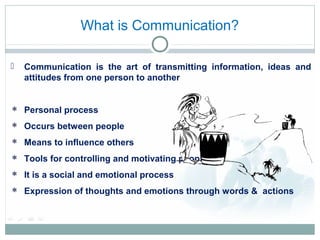
 Communication is the art of transmitting information, ideas and
attitudes from one person to another
 Personal process
 Occurs between people
 Means to influence others
 Tools for controlling and motivating people.
 It is a social and emotional process.
 Expression of thoughts and emotions through words & actions
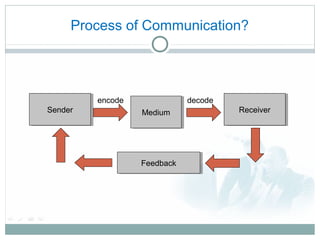
Process of Communication?
SenderSender MediumMedium
FeedbackFeedback
ReceiverReceiver
encode decode
What is Technical Communication?
 The process of defining, creating and delivering information for the
safe, efficient and effective use of products
 Broad field and includes any form of communication
 conveys scientific, engineering, or other technical information
 Factual Communication, usually about products and services
 Specific Audience
Characteristics of Technical Communication?
 The Five C’s of Technical Communication:
 Clear: easily understood by intended Audience
 Correct: follows grammatical and technical conventions
 Concise: clear without excess verbiage.
 Consistent: builds trust
 Comprehensive: contains all necessary information
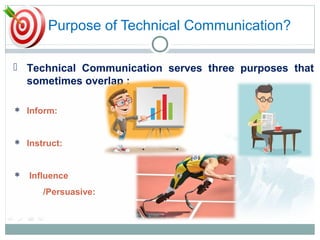
Purpose of Technical Communication?
 Technical Communication serves three purposes that
sometimes overlap :
 Inform:
 Instruct:
 Influence
/Persuasive:
General Vs Technical Communication
General:
Contains a general
message
Informal in style and
approach
No set pattern
Mostly oral
Not always for a
specific audience
No use of technical
terms or graphics
Technical:
Contains a technical
message
Mostly formal in style
and approach
Follows a set pattern
Both oral and written
Always for a specific
audience
Frequently involves
jargons, graphics etc.
Forms of
Technical Communication
Written Forms:
Technical Reports
Forms, Memos, and E-
mail
Business Letters
The Job Search:
Resumes and Letters
Manuals
Faxes
Oral Forms:
Presentations
Video Conferences
Audio Conferences
Interviews(Employmen
t/Press)
Instructions
Seminars
Telephone Talks
Technical Reports
 Factual writing, based on evidence, containing organized
information on a particular topic
 Used for the study of existing procedures and practices
 Used for launching new projects
 Assessing the progress of the on-going projects
Objectives of Technical Reports
 To record an experiment
 To record technical specifications
 To document current status
 To record and clarify complex information for future reference
 To document schedules, timetables, and milestones
 To present information to a large number of people
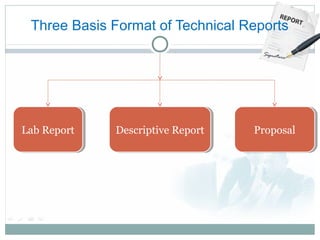
Three Basis Format of Technical Reports
Descriptive ReportDescriptive ReportLab ReportLab Report ProposalProposal
Significance of Technical Reports
 Provide information in a scientific way
 Help in planning new ventures
 Persuade and motivate the readers
 Help in keeping records which provide necessary feedback
Forms, Memos and E-mail
 Forms: Forms are preprinted formats for recording
specific pieces of information
 Memos: Memos are brief, open-ended communications
addressed to a specific person about a stated subject
 E-mail: E-mail provides and electronic medium for both
types of communication – memos and forms
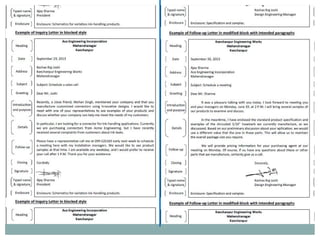
Business Letters
 Written by an authorized person of an organization
 Will be sent to other firms and organization, customers, suppliers,
companies, government offices etc
Objectives of Business Letters
 To create and establish new business relationships and to sustain
existing business relationships are the ultimate purposes
 To inform
 To congratulate
 To order
 To request
 To sell a product, service
 To apply for a job
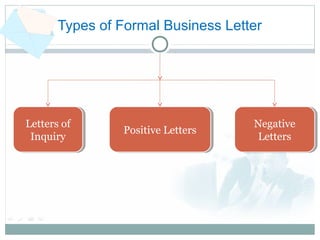
Types of Formal Business Letter
Positive LettersPositive Letters
Letters of
Inquiry
Letters of
Inquiry
Negative
Letters
Negative
Letters
Significance of Business Letter
 Helps in reaching a large and geographically diverse audience
 Economic (as compared as phone call)
 Serves as a permanent records
 Assists in sustaining business relationship
The Job Search: Resumes and Letters
 Resumes: technical specification that describes you,
your education, related skill, experience
 Job Application: is likes a sales letter as it written to
sell one’s services
 Avoid saying anything that cannot be supported by
documents
 Exaggerations should be avoided
 Process of presenting a topic to an audience
Presentations
Forms of technical_communication

Forms of technical_communication

  • 1.
  • 2.
    What is Communication? Communication is the art of transmitting information, ideas and attitudes from one person to another  Personal process  Occurs between people  Means to influence others  Tools for controlling and motivating people.  It is a social and emotional process.  Expression of thoughts and emotions through words & actions
  • 3.
    Process of Communication? SenderSenderMediumMedium FeedbackFeedback ReceiverReceiver encode decode
  • 4.
    What is TechnicalCommunication?  The process of defining, creating and delivering information for the safe, efficient and effective use of products  Broad field and includes any form of communication  conveys scientific, engineering, or other technical information  Factual Communication, usually about products and services  Specific Audience
  • 5.
    Characteristics of TechnicalCommunication?  The Five C’s of Technical Communication:  Clear: easily understood by intended Audience  Correct: follows grammatical and technical conventions  Concise: clear without excess verbiage.  Consistent: builds trust  Comprehensive: contains all necessary information
  • 6.
    Purpose of TechnicalCommunication?  Technical Communication serves three purposes that sometimes overlap :  Inform:  Instruct:  Influence /Persuasive:
  • 7.
    General Vs TechnicalCommunication General: Contains a general message Informal in style and approach No set pattern Mostly oral Not always for a specific audience No use of technical terms or graphics Technical: Contains a technical message Mostly formal in style and approach Follows a set pattern Both oral and written Always for a specific audience Frequently involves jargons, graphics etc.
  • 8.
    Forms of Technical Communication WrittenForms: Technical Reports Forms, Memos, and E- mail Business Letters The Job Search: Resumes and Letters Manuals Faxes Oral Forms: Presentations Video Conferences Audio Conferences Interviews(Employmen t/Press) Instructions Seminars Telephone Talks
  • 9.
    Technical Reports  Factualwriting, based on evidence, containing organized information on a particular topic  Used for the study of existing procedures and practices  Used for launching new projects  Assessing the progress of the on-going projects
  • 10.
    Objectives of TechnicalReports  To record an experiment  To record technical specifications  To document current status  To record and clarify complex information for future reference  To document schedules, timetables, and milestones  To present information to a large number of people
  • 11.
    Three Basis Formatof Technical Reports Descriptive ReportDescriptive ReportLab ReportLab Report ProposalProposal
  • 12.
    Significance of TechnicalReports  Provide information in a scientific way  Help in planning new ventures  Persuade and motivate the readers  Help in keeping records which provide necessary feedback
  • 13.
    Forms, Memos andE-mail  Forms: Forms are preprinted formats for recording specific pieces of information  Memos: Memos are brief, open-ended communications addressed to a specific person about a stated subject  E-mail: E-mail provides and electronic medium for both types of communication – memos and forms
  • 14.
    Business Letters  Writtenby an authorized person of an organization  Will be sent to other firms and organization, customers, suppliers, companies, government offices etc
  • 15.
    Objectives of BusinessLetters  To create and establish new business relationships and to sustain existing business relationships are the ultimate purposes  To inform  To congratulate  To order  To request  To sell a product, service  To apply for a job
  • 16.
    Types of FormalBusiness Letter Positive LettersPositive Letters Letters of Inquiry Letters of Inquiry Negative Letters Negative Letters
  • 18.
    Significance of BusinessLetter  Helps in reaching a large and geographically diverse audience  Economic (as compared as phone call)  Serves as a permanent records  Assists in sustaining business relationship
  • 19.
    The Job Search:Resumes and Letters  Resumes: technical specification that describes you, your education, related skill, experience  Job Application: is likes a sales letter as it written to sell one’s services  Avoid saying anything that cannot be supported by documents  Exaggerations should be avoided
  • 20.
     Process ofpresenting a topic to an audience Presentations