11
WATER QUALITY
Pennsylvania Forest Stewards
When we think of tending our
forests for future generations,
or when we hear the word “forest,”
we get a mental image of trees.
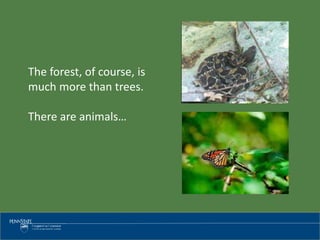
The forest, of course, is
much more than trees.
There are animals…
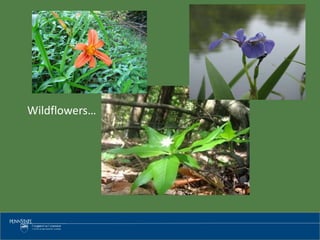
Wildflowers…
Picture Courtesy of Timothy Latz
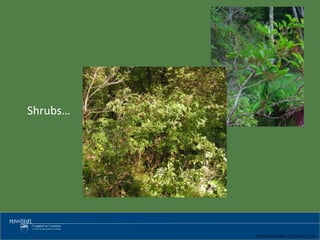
Shrubs…
And other life forms,
such as fungi and mosses.
Picture Courtesy of Timothy Latz
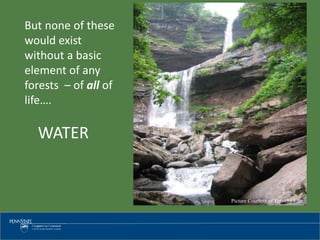
But none of these
would exist
without a basic
element of any
forests – of all of
life….
WATER
• Forested Waters
• Forests’ Influence
• Timber Harvesting
• Additional Protection
What we’ll cover:
99
FORESTED WATERS
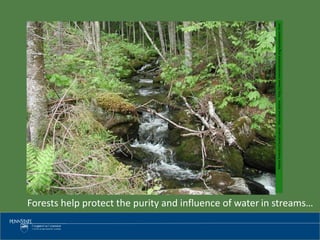
MaineForestryConservation-ManometMainehttp://www.manometmaine.org/headstream.html
Forests help protect the purity and influence of water in streams…
Picture Courtesy of Timothy Latz
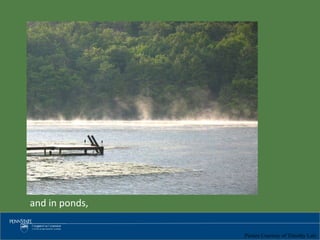
and in ponds,
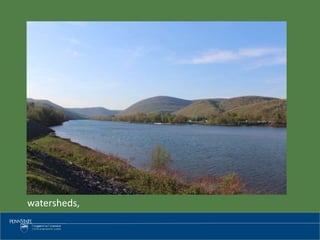
watersheds,
Picture Courtesy of Timothy Latz
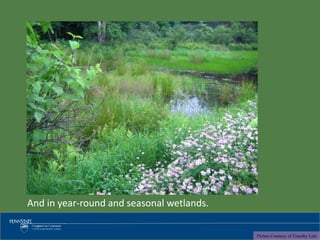
And in year-round and seasonal wetlands.
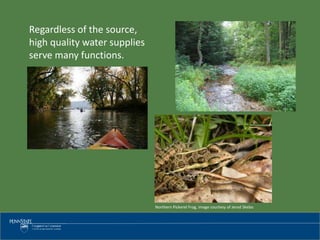
Regardless of the source,
high quality water supplies
serve many functions.
Northern Pickerel Frog, image courtesy of Jerod Skebo
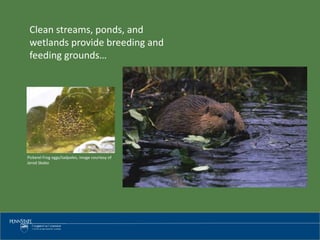
Clean streams, ponds, and
wetlands provide breeding and
feeding grounds…
Pickerel Frog eggs/tadpoles, image courtesy of
Jerod Skebo
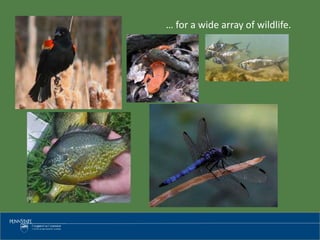
… for a wide array of wildlife.
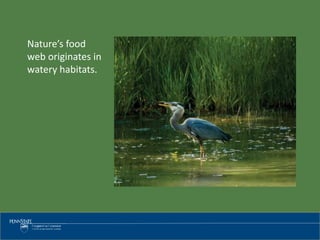
Nature’s food
web originates in
watery habitats.
And we humans need
clean water to survive.
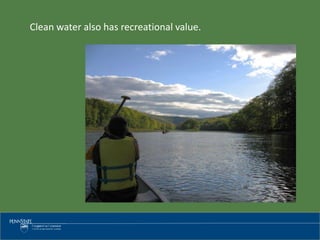
Clean water also has recreational value.
2020
THE INFLUENCE OF OUR FORESTS
The forest protects our water sources, both in
terms of quantity and quality.
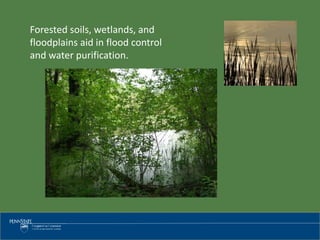
Forested soils, wetlands, and
floodplains aid in flood control
and water purification.
Picture Courtesy of Timothy Latz
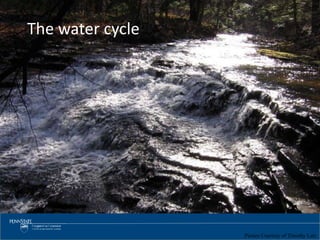
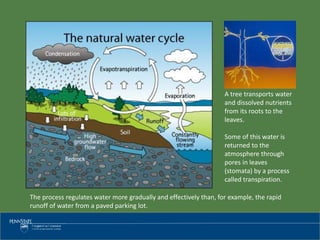
The water cycle
What
happens to
the water,
when it rains
or snows in
the forest?
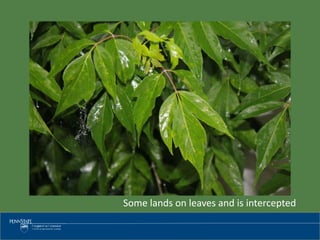
Some lands on leaves and is intercepted
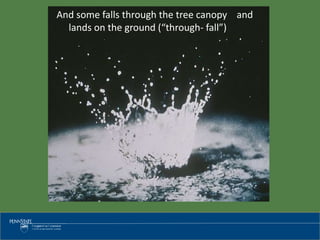
And some falls through the tree canopy and
lands on the ground (“through- fall”)
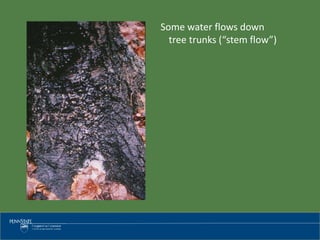
Some water flows down
tree trunks (“stem flow”)
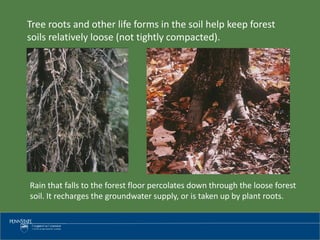
Tree roots and other life forms in the soil help keep forest
soils relatively loose (not tightly compacted).
Rain that falls to the forest floor percolates down through the loose forest
soil. It recharges the groundwater supply, or is taken up by plant roots.
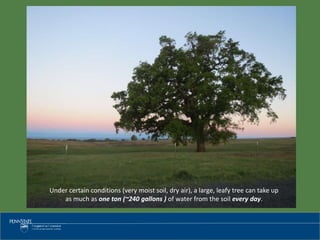
Under certain conditions (very moist soil, dry air), a large, leafy tree can take up
as much as one ton (~240 gallons ) of water from the soil every day.
A tree transports water
and dissolved nutrients
from its roots to the
leaves.
Some of this water is
returned to the
atmosphere through
pores in leaves
(stomata) by a process
called transpiration.
The process regulates water more gradually and effectively than, for example, the rapid
runoff of water from a paved parking lot.
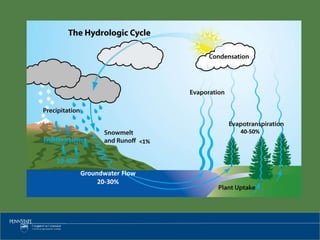
10-40%
Groundwater Flow
20-30%
<1%
40-50%
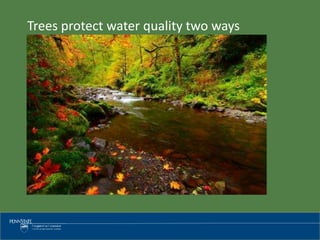
Trees protect water quality two ways
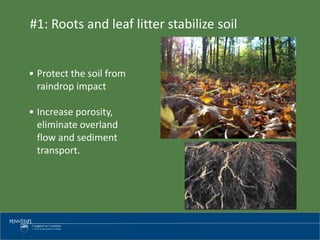
• Protect the soil from
raindrop impact
• Increase porosity,
eliminate overland
flow and sediment
transport.
#1: Roots and leaf litter stabilize soil
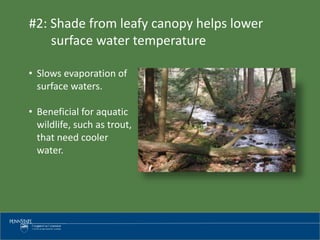
• Slows evaporation of
surface waters.
• Beneficial for aquatic
wildlife, such as trout,
that need cooler
water.
#2: Shade from leafy canopy helps lower
surface water temperature
3535
TIMBER HARVESTING
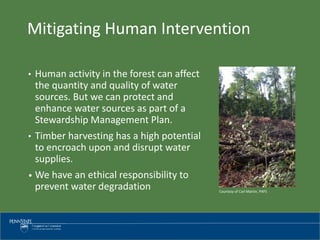
Mitigating Human Intervention
• Human activity in the forest can affect
the quantity and quality of water
sources. But we can protect and
enhance water sources as part of a
Stewardship Management Plan.
• Timber harvesting has a high potential
to encroach upon and disrupt water
supplies.
• We have an ethical responsibility to
prevent water degradation Courtesy of Carl Martin, PAFS
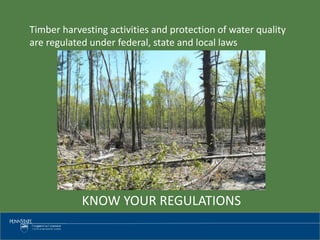
KNOW YOUR REGULATIONS
Timber harvesting activities and protection of water quality
are regulated under federal, state and local laws
For Regulation Information…
To find out about the timber harvesting and
water quality regulations that apply to your land,
contact:
• Your County’s Service Forester (from the
Pennsylvania Department of Conservation and
Natural Resources [DCNR], Bureau of Forestry
• Your County’s Conservation District
• The Department of Environmental Protection
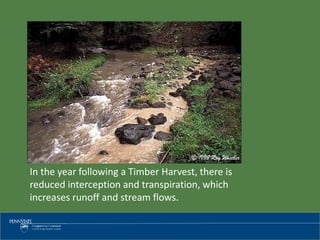
In the year following a Timber Harvest, there is
reduced interception and transpiration, which
increases runoff and stream flows.
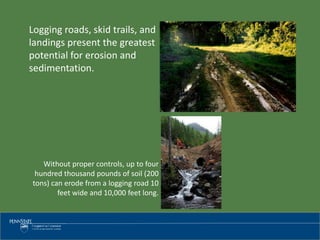
Logging roads, skid trails, and
landings present the greatest
potential for erosion and
sedimentation.
Without proper controls, up to four
hundred thousand pounds of soil (200
tons) can erode from a logging road 10
feet wide and 10,000 feet long.
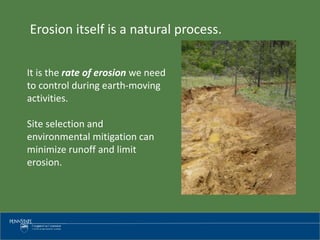
Erosion itself is a natural process.
It is the rate of erosion we need
to control during earth-moving
activities.
Site selection and
environmental mitigation can
minimize runoff and limit
erosion.
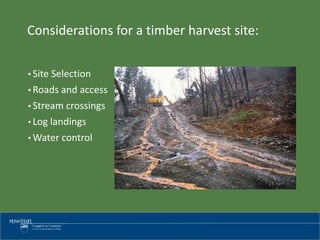
Considerations for a timber harvest site:
• Site Selection
• Roads and access
• Stream crossings
• Log landings
• Water control
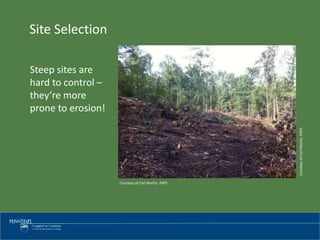
Steep sites are
hard to control –
they’re more
prone to erosion!
Site Selection
CourtesyofCarlMartin,PAFS
Courtesy of Carl Martin, PAFS
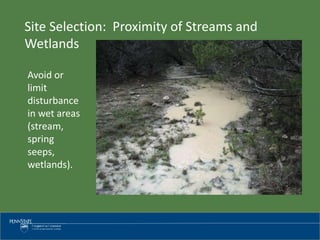
Avoid or
limit
disturbance
in wet areas
(stream,
spring
seeps,
wetlands).
Site Selection: Proximity of Streams and
Wetlands
Roads
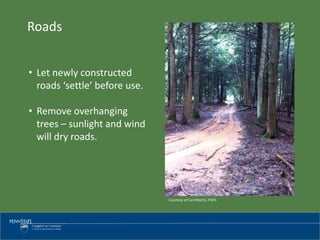
• Let newly constructed
roads ‘settle’ before use.
• Remove overhanging
trees – sunlight and wind
will dry roads.
Courtesy of Carl Martin, PAFS
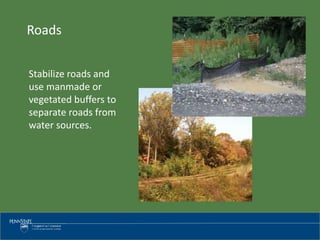
Stabilize roads and
use manmade or
vegetated buffers to
separate roads from
water sources.
Roads
Picture Courtesy of Elk Hunting: Practical Elk Hunting Tips for the Realistic Hunter
http://www.elk-hunting-tips.net/ATVs.html
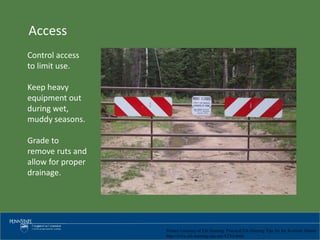
Access
Control access
to limit use.
Keep heavy
equipment out
during wet,
muddy seasons.
Grade to
remove ruts and
allow for proper
drainage.
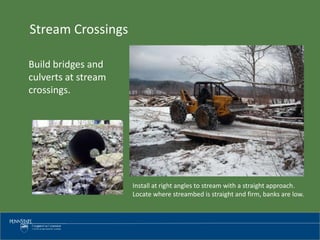
Build bridges and
culverts at stream
crossings.
Stream Crossings
Install at right angles to stream with a straight approach.
Locate where streambed is straight and firm, banks are low.
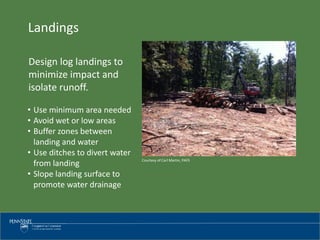
Design log landings to
minimize impact and
isolate runoff.
Landings
Courtesy of Carl Martin, PAFS
• Use minimum area needed
• Avoid wet or low areas
• Buffer zones between
landing and water
• Use ditches to divert water
from landing
• Slope landing surface to
promote water drainage
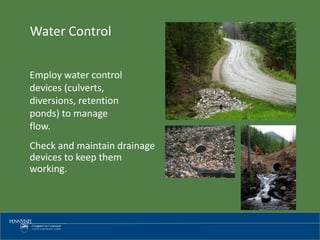
Employ water control
devices (culverts,
diversions, retention
ponds) to manage
flow.
Check and maintain drainage
devices to keep them
working.
Water Control
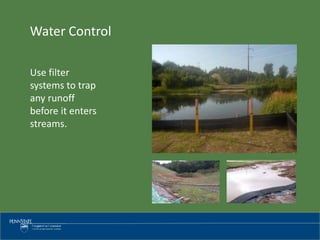
Use filter
systems to trap
any runoff
before it enters
streams.
Water Control
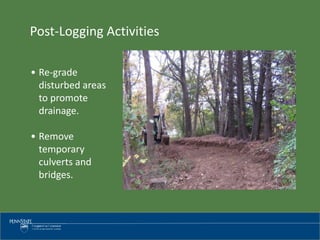
Post-Logging Activities
• Re-grade
disturbed areas
to promote
drainage.
• Remove
temporary
culverts and
bridges.
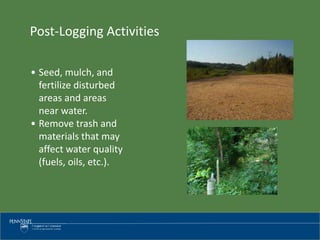
Post-Logging Activities
• Seed, mulch, and
fertilize disturbed
areas and areas
near water.
• Remove trash and
materials that may
affect water quality
(fuels, oils, etc.).
5454
ADDITIONAL PROTECTION
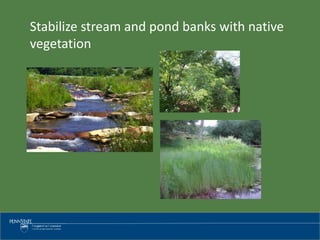
Stabilize stream and pond banks with native
vegetation
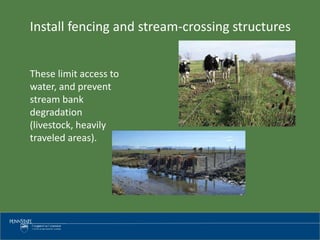
Install fencing and stream-crossing structures
These limit access to
water, and prevent
stream bank
degradation
(livestock, heavily
traveled areas).
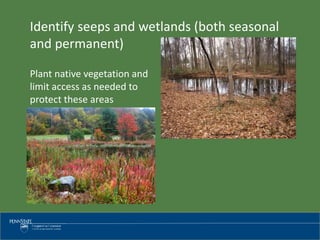
Identify seeps and wetlands (both seasonal
and permanent)
Plant native vegetation and
limit access as needed to
protect these areas
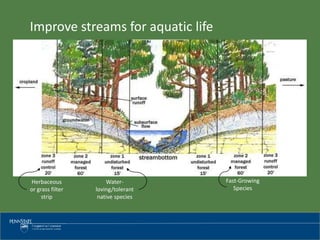
Herbaceous
or grass filter
strip
Water-
loving/tolerant
native species
Fast-Growing
Species
Improve streams for aquatic life
Courtesy of Jim Clark in McKean County
Cooperative Extension
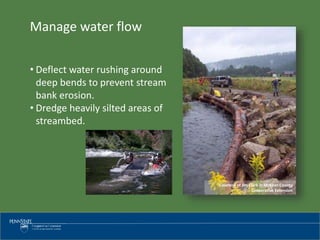
Manage water flow
• Deflect water rushing around
deep bends to prevent stream
bank erosion.
• Dredge heavily silted areas of
streambed.
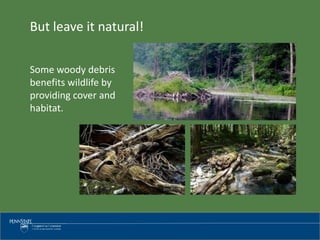
But leave it natural!
Some woody debris
benefits wildlife by
providing cover and
habitat.
Professional and Technical
Assistance Available
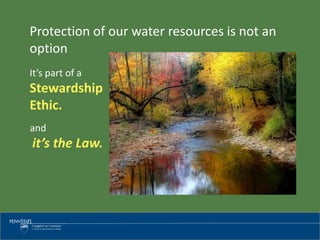
Protection of our water resources is not an
option
It’s part of a
Stewardship
Ethic.
and
it’s the Law.
QUESTIONS?

Forests and Water Quality

  • 1.
  • 2.
    When we thinkof tending our forests for future generations, or when we hear the word “forest,” we get a mental image of trees.
  • 3.
    The forest, ofcourse, is much more than trees. There are animals…
  • 4.
  • 5.
    Picture Courtesy ofTimothy Latz Shrubs…
  • 6.
    And other lifeforms, such as fungi and mosses.
  • 7.
    Picture Courtesy ofTimothy Latz But none of these would exist without a basic element of any forests – of all of life…. WATER
  • 8.
    • Forested Waters •Forests’ Influence • Timber Harvesting • Additional Protection What we’ll cover:
  • 9.
  • 10.
  • 11.
    Picture Courtesy ofTimothy Latz and in ponds,
  • 12.
  • 13.
    Picture Courtesy ofTimothy Latz And in year-round and seasonal wetlands.
  • 14.
    Regardless of thesource, high quality water supplies serve many functions. Northern Pickerel Frog, image courtesy of Jerod Skebo
  • 15.
    Clean streams, ponds,and wetlands provide breeding and feeding grounds… Pickerel Frog eggs/tadpoles, image courtesy of Jerod Skebo
  • 16.
    … for awide array of wildlife.
  • 17.
    Nature’s food web originatesin watery habitats.
  • 18.
    And we humansneed clean water to survive.
  • 19.
    Clean water alsohas recreational value.
  • 20.
    2020 THE INFLUENCE OFOUR FORESTS The forest protects our water sources, both in terms of quantity and quality.
  • 21.
    Forested soils, wetlands,and floodplains aid in flood control and water purification.
  • 22.
    Picture Courtesy ofTimothy Latz The water cycle
  • 23.
    What happens to the water, whenit rains or snows in the forest?
  • 24.
    Some lands onleaves and is intercepted
  • 25.
    And some fallsthrough the tree canopy and lands on the ground (“through- fall”)
  • 26.
    Some water flowsdown tree trunks (“stem flow”)
  • 27.
    Tree roots andother life forms in the soil help keep forest soils relatively loose (not tightly compacted). Rain that falls to the forest floor percolates down through the loose forest soil. It recharges the groundwater supply, or is taken up by plant roots.
  • 28.
    Under certain conditions(very moist soil, dry air), a large, leafy tree can take up as much as one ton (~240 gallons ) of water from the soil every day.
  • 29.
    A tree transportswater and dissolved nutrients from its roots to the leaves. Some of this water is returned to the atmosphere through pores in leaves (stomata) by a process called transpiration. The process regulates water more gradually and effectively than, for example, the rapid runoff of water from a paved parking lot.
  • 30.
  • 32.
    Trees protect waterquality two ways
  • 33.
    • Protect thesoil from raindrop impact • Increase porosity, eliminate overland flow and sediment transport. #1: Roots and leaf litter stabilize soil
  • 34.
    • Slows evaporationof surface waters. • Beneficial for aquatic wildlife, such as trout, that need cooler water. #2: Shade from leafy canopy helps lower surface water temperature
  • 35.
  • 36.
    Mitigating Human Intervention •Human activity in the forest can affect the quantity and quality of water sources. But we can protect and enhance water sources as part of a Stewardship Management Plan. • Timber harvesting has a high potential to encroach upon and disrupt water supplies. • We have an ethical responsibility to prevent water degradation Courtesy of Carl Martin, PAFS
  • 37.
    KNOW YOUR REGULATIONS Timberharvesting activities and protection of water quality are regulated under federal, state and local laws
  • 38.
    For Regulation Information… Tofind out about the timber harvesting and water quality regulations that apply to your land, contact: • Your County’s Service Forester (from the Pennsylvania Department of Conservation and Natural Resources [DCNR], Bureau of Forestry • Your County’s Conservation District • The Department of Environmental Protection
  • 39.
    In the yearfollowing a Timber Harvest, there is reduced interception and transpiration, which increases runoff and stream flows.
  • 40.
    Logging roads, skidtrails, and landings present the greatest potential for erosion and sedimentation. Without proper controls, up to four hundred thousand pounds of soil (200 tons) can erode from a logging road 10 feet wide and 10,000 feet long.
  • 41.
    Erosion itself isa natural process. It is the rate of erosion we need to control during earth-moving activities. Site selection and environmental mitigation can minimize runoff and limit erosion.
  • 42.
    Considerations for atimber harvest site: • Site Selection • Roads and access • Stream crossings • Log landings • Water control
  • 43.
    Steep sites are hardto control – they’re more prone to erosion! Site Selection CourtesyofCarlMartin,PAFS Courtesy of Carl Martin, PAFS
  • 44.
    Avoid or limit disturbance in wetareas (stream, spring seeps, wetlands). Site Selection: Proximity of Streams and Wetlands
  • 45.
    Roads • Let newlyconstructed roads ‘settle’ before use. • Remove overhanging trees – sunlight and wind will dry roads. Courtesy of Carl Martin, PAFS
  • 46.
    Stabilize roads and usemanmade or vegetated buffers to separate roads from water sources. Roads
  • 47.
    Picture Courtesy ofElk Hunting: Practical Elk Hunting Tips for the Realistic Hunter http://www.elk-hunting-tips.net/ATVs.html Access Control access to limit use. Keep heavy equipment out during wet, muddy seasons. Grade to remove ruts and allow for proper drainage.
  • 48.
    Build bridges and culvertsat stream crossings. Stream Crossings Install at right angles to stream with a straight approach. Locate where streambed is straight and firm, banks are low.
  • 49.
    Design log landingsto minimize impact and isolate runoff. Landings Courtesy of Carl Martin, PAFS • Use minimum area needed • Avoid wet or low areas • Buffer zones between landing and water • Use ditches to divert water from landing • Slope landing surface to promote water drainage
  • 50.
    Employ water control devices(culverts, diversions, retention ponds) to manage flow. Check and maintain drainage devices to keep them working. Water Control
  • 51.
    Use filter systems totrap any runoff before it enters streams. Water Control
  • 52.
    Post-Logging Activities • Re-grade disturbedareas to promote drainage. • Remove temporary culverts and bridges.
  • 53.
    Post-Logging Activities • Seed,mulch, and fertilize disturbed areas and areas near water. • Remove trash and materials that may affect water quality (fuels, oils, etc.).
  • 54.
  • 55.
    Stabilize stream andpond banks with native vegetation
  • 56.
    Install fencing andstream-crossing structures These limit access to water, and prevent stream bank degradation (livestock, heavily traveled areas).
  • 57.
    Identify seeps andwetlands (both seasonal and permanent) Plant native vegetation and limit access as needed to protect these areas
  • 58.
    Herbaceous or grass filter strip Water- loving/tolerant nativespecies Fast-Growing Species Improve streams for aquatic life
  • 59.
    Courtesy of JimClark in McKean County Cooperative Extension Manage water flow • Deflect water rushing around deep bends to prevent stream bank erosion. • Dredge heavily silted areas of streambed.
  • 60.
    But leave itnatural! Some woody debris benefits wildlife by providing cover and habitat.
  • 61.
  • 62.
    Protection of ourwater resources is not an option It’s part of a Stewardship Ethic. and it’s the Law.
  • 63.