FOREIGN EXCHANGE MARKET
GHANASHYAM JENA
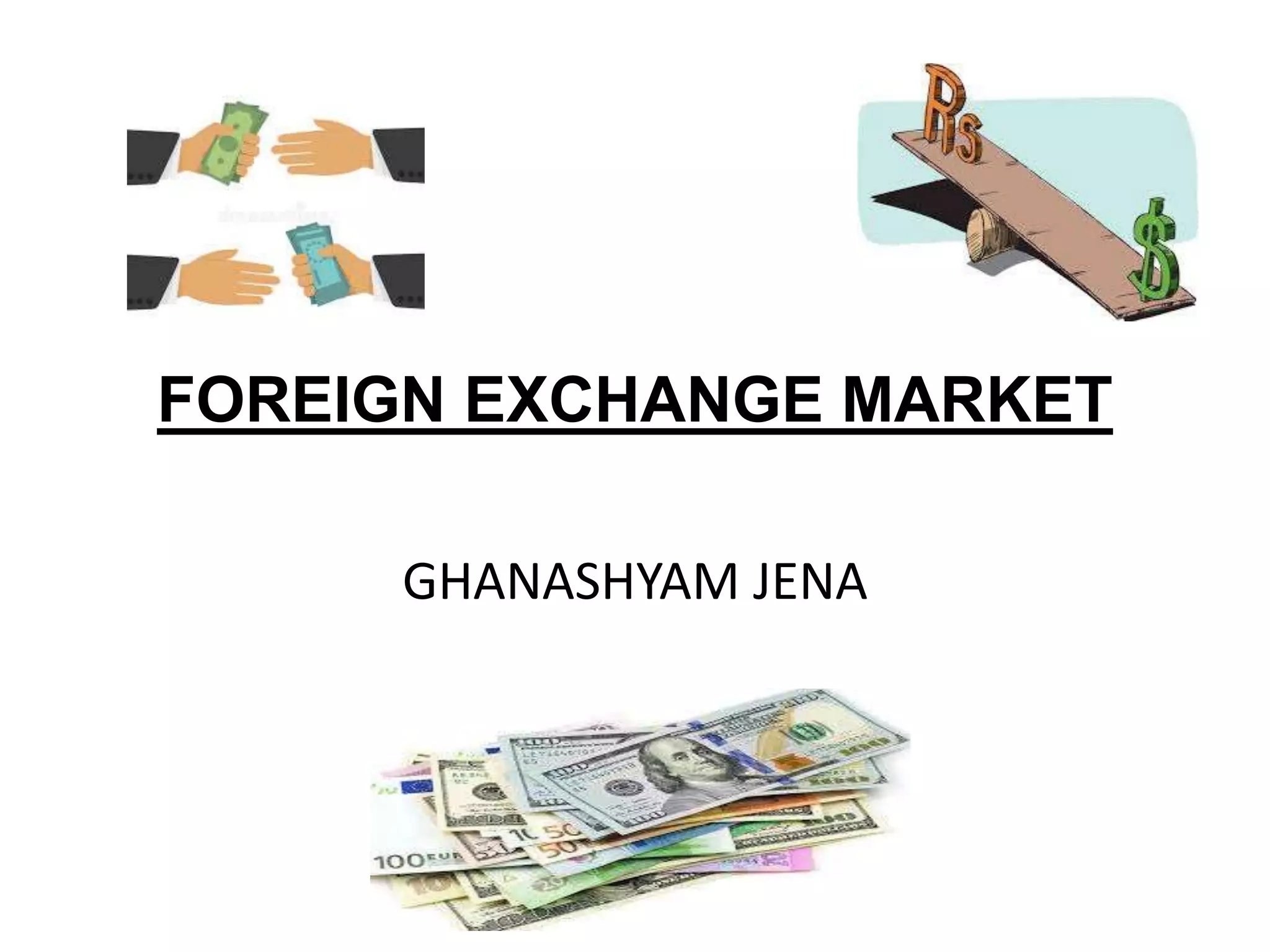
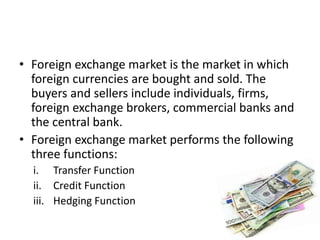
• Foreign exchange market is the market in which
foreign currencies are bought and sold. The
buyers and sellers include individuals, firms,
foreign exchange brokers, commercial banks and
the central bank.
• Foreign exchange market performs the following
three functions:
i. Transfer Function
ii. Credit Function
iii. Hedging Function
Functions of Foreign Exchange Market:
• 1. Transfer Function: It transfers purchasing power
between the countries involved in the transaction. This
function is performed through credit instruments like
bills of foreign exchange, bank drafts and telephonic
transfers.
• 2. Credit Function: It provides credit for foreign trade.
Bills of exchange, with maturity period of three
months, are generally used for international payments.
Credit is required for this period in order to enable the
importer to take possession of goods, sell them and
obtain money to pay off the bill.
• 3. Hedging Function: When exporters and
importers enter into an agreement to sell and
buy goods on some future date at the current
prices and exchange rate, it is called hedging.
The purpose of hedging is to avoid losses that
might be caused due to exchange rate
variations in the future.
Foreign Exchange Market India
• The Indian foreign exchange market consists of the
buyers, sellers, market intermediaries and the
monetary authority of India. The main center of
foreign exchange transactions in India is Mumbai, the
commercial capital of the country. There are several
other centers for foreign exchange transactions in
the country including Kolkata, New Delhi, Chennai,
Bangalore, Pondicherry and Cochin.
• The foreign exchange market India is regulated by the reserve
bank of India through the Exchange Control Department. At
the same time, Foreign Exchange Dealers Association
(voluntary association) also provides some help in regulating
the market. The Authorized Dealers (Authorized by the RBI)
and the accredited brokers are eligible to participate in the
foreign Exchange market in India. When the foreign exchange
trade is going on between Authorized Dealers and RBI or
between the Authorized Dealers and the Overseas banks, the
brokers have no role to play.
• Apart from the Authorized Dealers and brokers, there are
some others who are provided with the restricted rights to
accept the foreign currency or travelers cheque. Among
these, there are the authorized money changers, travel
agents, certain hotels and government shops. The IDBI and
Exim bank are also permitted conditionally to hold foreign
currency. The whole foreign exchange market in India is
regulated by the Foreign Exchange Management Act, 1999 or
FEMA. Before this act was introduced, the market was
regulated by the FERA or Foreign Exchange Regulation Act
,1947.
• After independence, FERA was introduced as a temporary
measure to regulate the inflow of the foreign capital. But with
the economic and industrial development, the need for
conservation of foreign currency was felt and on the
recommendation of the Public Accounts Committee, the
Indian government passed the Foreign Exchange Regulation
Act,1973 and gradually, this act became famous as FEMA.
Foreign exchange market

Foreign exchange market

  • 1.
  • 2.
    • Foreign exchangemarket is the market in which foreign currencies are bought and sold. The buyers and sellers include individuals, firms, foreign exchange brokers, commercial banks and the central bank. • Foreign exchange market performs the following three functions: i. Transfer Function ii. Credit Function iii. Hedging Function
  • 3.
    Functions of ForeignExchange Market: • 1. Transfer Function: It transfers purchasing power between the countries involved in the transaction. This function is performed through credit instruments like bills of foreign exchange, bank drafts and telephonic transfers. • 2. Credit Function: It provides credit for foreign trade. Bills of exchange, with maturity period of three months, are generally used for international payments. Credit is required for this period in order to enable the importer to take possession of goods, sell them and obtain money to pay off the bill.
  • 4.
    • 3. HedgingFunction: When exporters and importers enter into an agreement to sell and buy goods on some future date at the current prices and exchange rate, it is called hedging. The purpose of hedging is to avoid losses that might be caused due to exchange rate variations in the future.
  • 5.
    Foreign Exchange MarketIndia • The Indian foreign exchange market consists of the buyers, sellers, market intermediaries and the monetary authority of India. The main center of foreign exchange transactions in India is Mumbai, the commercial capital of the country. There are several other centers for foreign exchange transactions in the country including Kolkata, New Delhi, Chennai, Bangalore, Pondicherry and Cochin.
  • 6.
    • The foreignexchange market India is regulated by the reserve bank of India through the Exchange Control Department. At the same time, Foreign Exchange Dealers Association (voluntary association) also provides some help in regulating the market. The Authorized Dealers (Authorized by the RBI) and the accredited brokers are eligible to participate in the foreign Exchange market in India. When the foreign exchange trade is going on between Authorized Dealers and RBI or between the Authorized Dealers and the Overseas banks, the brokers have no role to play.
  • 7.
    • Apart fromthe Authorized Dealers and brokers, there are some others who are provided with the restricted rights to accept the foreign currency or travelers cheque. Among these, there are the authorized money changers, travel agents, certain hotels and government shops. The IDBI and Exim bank are also permitted conditionally to hold foreign currency. The whole foreign exchange market in India is regulated by the Foreign Exchange Management Act, 1999 or FEMA. Before this act was introduced, the market was regulated by the FERA or Foreign Exchange Regulation Act ,1947.
  • 8.
    • After independence,FERA was introduced as a temporary measure to regulate the inflow of the foreign capital. But with the economic and industrial development, the need for conservation of foreign currency was felt and on the recommendation of the Public Accounts Committee, the Indian government passed the Foreign Exchange Regulation Act,1973 and gradually, this act became famous as FEMA.