1 
Multinational Financial 
Management 
Alan Shapiro 
7th Edition 
J.Wiley & Sons 
Power Points by 
Joseph F. Greco, Ph.D. 
California State University, Fullerton
2 
CHAPTER 13 
THE EUROMARKETS
3 
CHAPTER OVERVIEW: 
I. THE EUROCURRENCY MARKETS 
II. EUROBONDS 
III.NOTE ISSUANCE FACILITIES AND 
EURONOTES 
IV. EUOR COMMERCIAL PAPER 
V. THE ASIA CURRENCY MARKETS
I. THE EUROCURRENCY 
MARKETS 
THE EUROMARKETS 
-the most important international 
financial markets today. 
4 
A. The Eurocurrency Market 
1. Composed of eurobanks who 
accept/maintain deposits of 
foreign currency 
2. Dominant currency: US$
THE EUROCURRENCY MARKETS 
B.Growth of Eurodollar Market 
caused by restrictive US government 
policies, especially 
1. Reserve requirements on deposits 
2. Special charges and taxes 
3. Required concessionary loan rates 
4. Interest rate ceilings 
5. Rules which restrict bank 
competition. 
5
THE EUROCURRENCY MARKETS 
C. Eurodollar Creation involves 
1. A chain of deposits 
2. Changing control/usage of 
6 
deposit
THE EUROCURRENCY MARKETS 
3.Eurocurrency loans 
a. Use London Interbank Offer 
Rate: LIBOR as basic rate 
b. Six month rollovers 
c. Risk indicator: size of 
margin between cost and 
rate charged. 
7
THE EUROCURRENCY MARKETS 
4. Multicurrency Clauses 
a. Clause gives borrower option to 
switch currency of loan at 
rollover. 
b. Reduces exchange rate risk 
8
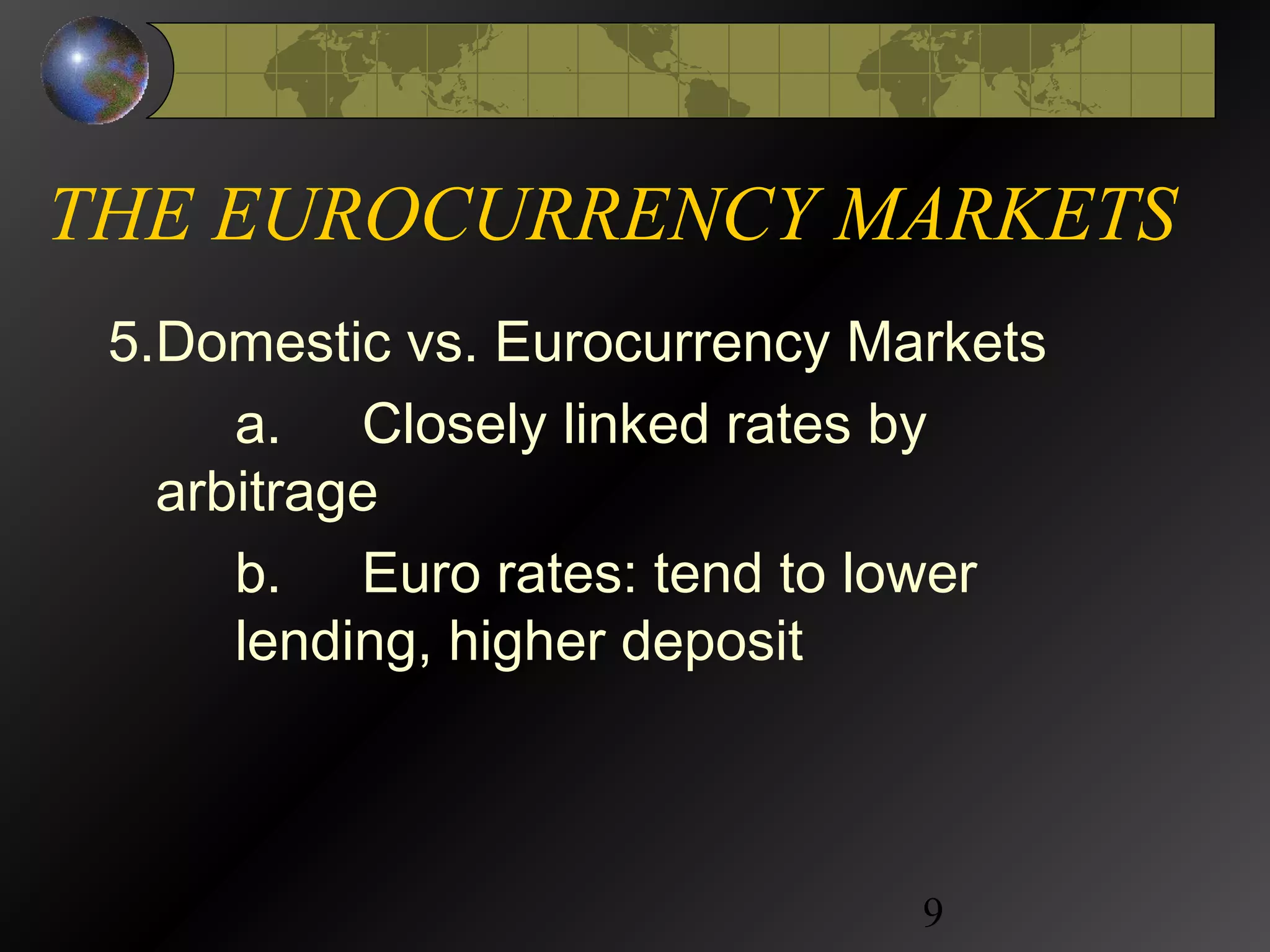
THE EUROCURRENCY MARKETS 
5.Domestic vs. Eurocurrency Markets 
a. Closely linked rates by 
arbitrage 
b. Euro rates: tend to lower 
lending, higher deposit 
9
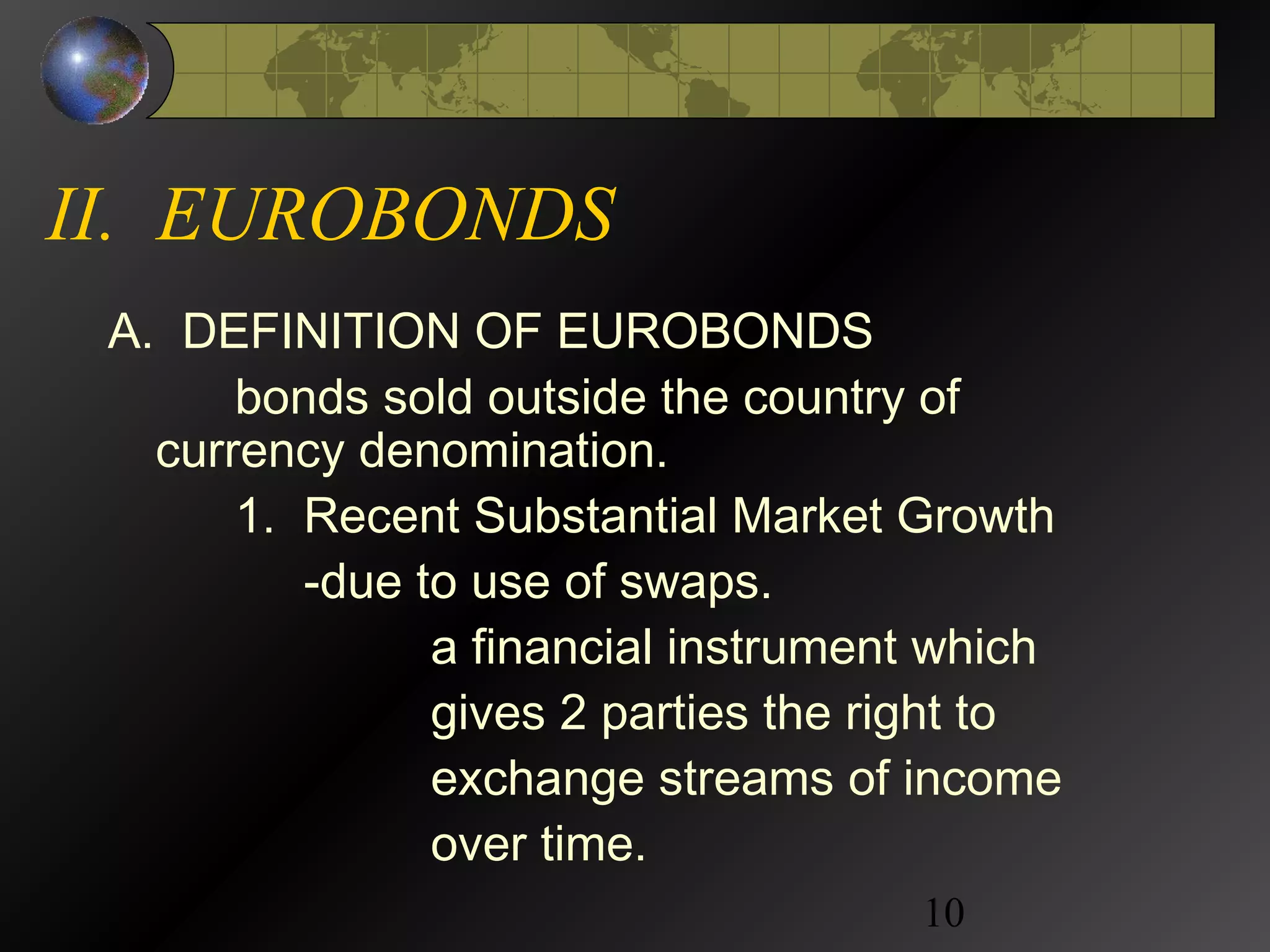
10 
II. EUROBONDS 
A. DEFINITION OF EUROBONDS 
bonds sold outside the country of 
currency denomination. 
1. Recent Substantial Market Growth 
-due to use of swaps. 
a financial instrument which 
gives 2 parties the right to 
exchange streams of income 
over time.
11 
EUROBONDS 
2. Links to Domestic Bond Markets 
arbitrage has eliminated interest 
rate differential. 
3. Placement 
underwritten by syndicates of 
banks
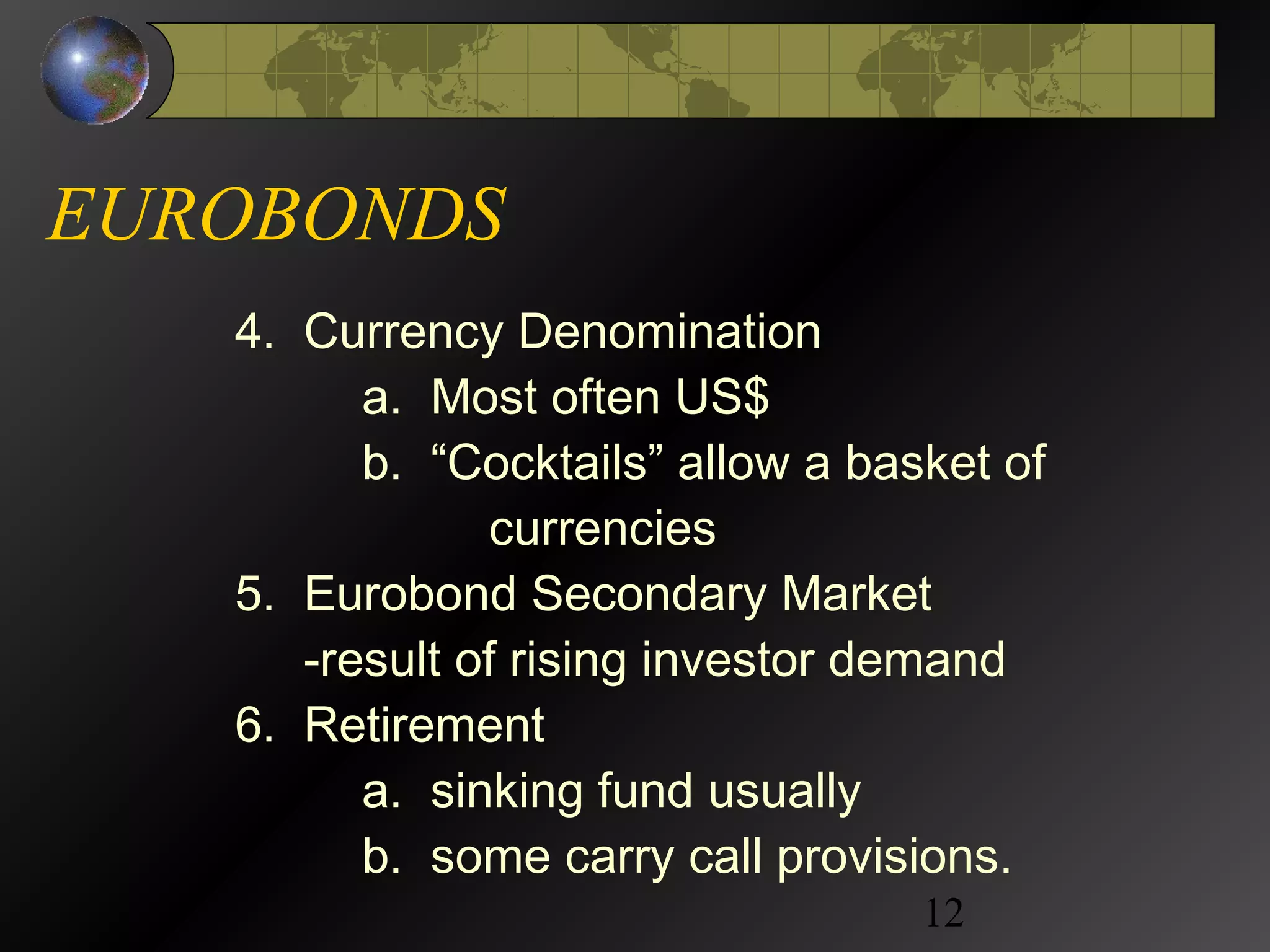
12 
EUROBONDS 
4. Currency Denomination 
a. Most often US$ 
b. “Cocktails” allow a basket of 
currencies 
5. Eurobond Secondary Market 
-result of rising investor demand 
6. Retirement 
a. sinking fund usually 
b. some carry call provisions.
13 
EUROBONDS 
7. Ratings 
a. According to relative risk 
b. Rating Agencies 
Moody’s, Standard & Poor 
8. Rationale For Market Existence 
a. Eurobonds avoid government 
regulation 
b. May fade as market 
deregulate
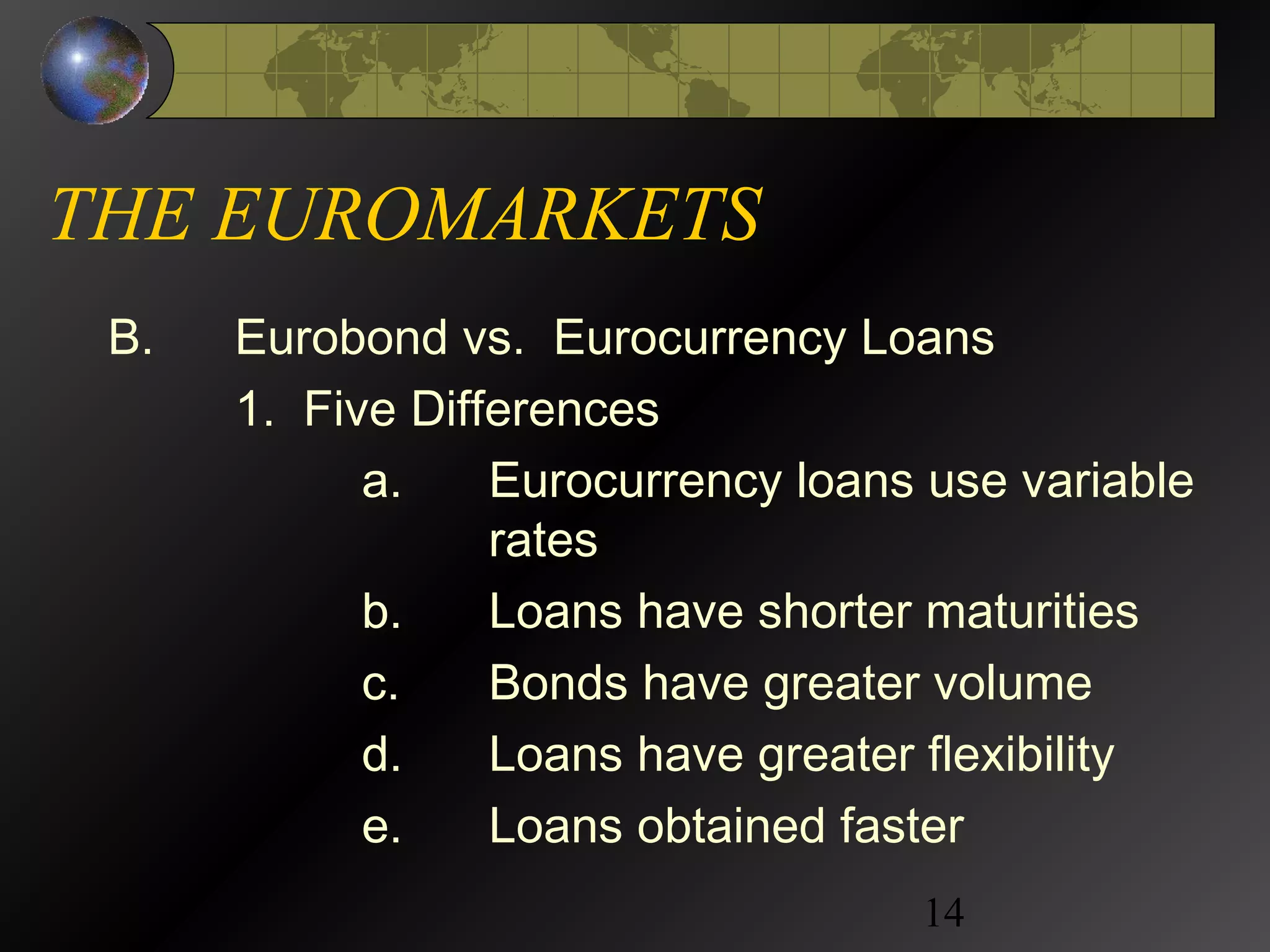
THE EUROMARKETS 
B. Eurobond vs. Eurocurrency Loans 
14 
1. Five Differences 
a. Eurocurrency loans use variable 
rates 
b. Loans have shorter maturities 
c. Bonds have greater volume 
d. Loans have greater flexibility 
e. Loans obtained faster
III. NOTE ISSUANCE FACILITIES 
AND EURONOTES 
A. Note Issuance Facility (NIF) 
1. Low-cost substitute for loan 
2. Allows borrowers to issue own 
15 
notes 
3. Placed/distributed by banks
NOTE ISSUANCE FACILITIES AND 
EURONOTES 
B. NIFs vs. Eurobonds 
16 
1. Differences: 
a. Notes draw down credit as needed 
b. Notes let owners determine timing 
c. Notes must be held to maturity
IV. EURO-COMMERCIAL PAPER 
17 
I. SHORT-TERM FINANCING 
A. Euronotes and Euro-Commercial 
Paper 
1. Euronotes 
unsecured short-term debt 
securities denominated in US$ 
and issued by corporations 
and governments. 
2. Euro-commercial paper(CP) 
euronotes not bank 
underwritten
EURO-COMMERCIAL PAPER 
18 
B. U.S. vs. Euro-CPs 
1. Average maturity longer (2x) 
for Euro-CPs 
2. Secondary market for Euro; 
not U.S. CPs. 
3. Smaller fraction of Euro use 
credit rating services to rate.

Euro currency markets

  • 1.
    1 Multinational Financial Management Alan Shapiro 7th Edition J.Wiley & Sons Power Points by Joseph F. Greco, Ph.D. California State University, Fullerton
  • 2.
    2 CHAPTER 13 THE EUROMARKETS
  • 3.
    3 CHAPTER OVERVIEW: I. THE EUROCURRENCY MARKETS II. EUROBONDS III.NOTE ISSUANCE FACILITIES AND EURONOTES IV. EUOR COMMERCIAL PAPER V. THE ASIA CURRENCY MARKETS
  • 4.
    I. THE EUROCURRENCY MARKETS THE EUROMARKETS -the most important international financial markets today. 4 A. The Eurocurrency Market 1. Composed of eurobanks who accept/maintain deposits of foreign currency 2. Dominant currency: US$
  • 5.
    THE EUROCURRENCY MARKETS B.Growth of Eurodollar Market caused by restrictive US government policies, especially 1. Reserve requirements on deposits 2. Special charges and taxes 3. Required concessionary loan rates 4. Interest rate ceilings 5. Rules which restrict bank competition. 5
  • 6.
    THE EUROCURRENCY MARKETS C. Eurodollar Creation involves 1. A chain of deposits 2. Changing control/usage of 6 deposit
  • 7.
    THE EUROCURRENCY MARKETS 3.Eurocurrency loans a. Use London Interbank Offer Rate: LIBOR as basic rate b. Six month rollovers c. Risk indicator: size of margin between cost and rate charged. 7
  • 8.
    THE EUROCURRENCY MARKETS 4. Multicurrency Clauses a. Clause gives borrower option to switch currency of loan at rollover. b. Reduces exchange rate risk 8
  • 9.
    THE EUROCURRENCY MARKETS 5.Domestic vs. Eurocurrency Markets a. Closely linked rates by arbitrage b. Euro rates: tend to lower lending, higher deposit 9
  • 10.
    10 II. EUROBONDS A. DEFINITION OF EUROBONDS bonds sold outside the country of currency denomination. 1. Recent Substantial Market Growth -due to use of swaps. a financial instrument which gives 2 parties the right to exchange streams of income over time.
  • 11.
    11 EUROBONDS 2.Links to Domestic Bond Markets arbitrage has eliminated interest rate differential. 3. Placement underwritten by syndicates of banks
  • 12.
    12 EUROBONDS 4.Currency Denomination a. Most often US$ b. “Cocktails” allow a basket of currencies 5. Eurobond Secondary Market -result of rising investor demand 6. Retirement a. sinking fund usually b. some carry call provisions.
  • 13.
    13 EUROBONDS 7.Ratings a. According to relative risk b. Rating Agencies Moody’s, Standard & Poor 8. Rationale For Market Existence a. Eurobonds avoid government regulation b. May fade as market deregulate
  • 14.
    THE EUROMARKETS B.Eurobond vs. Eurocurrency Loans 14 1. Five Differences a. Eurocurrency loans use variable rates b. Loans have shorter maturities c. Bonds have greater volume d. Loans have greater flexibility e. Loans obtained faster
  • 15.
    III. NOTE ISSUANCEFACILITIES AND EURONOTES A. Note Issuance Facility (NIF) 1. Low-cost substitute for loan 2. Allows borrowers to issue own 15 notes 3. Placed/distributed by banks
  • 16.
    NOTE ISSUANCE FACILITIESAND EURONOTES B. NIFs vs. Eurobonds 16 1. Differences: a. Notes draw down credit as needed b. Notes let owners determine timing c. Notes must be held to maturity
  • 17.
    IV. EURO-COMMERCIAL PAPER 17 I. SHORT-TERM FINANCING A. Euronotes and Euro-Commercial Paper 1. Euronotes unsecured short-term debt securities denominated in US$ and issued by corporations and governments. 2. Euro-commercial paper(CP) euronotes not bank underwritten
  • 18.
    EURO-COMMERCIAL PAPER 18 B. U.S. vs. Euro-CPs 1. Average maturity longer (2x) for Euro-CPs 2. Secondary market for Euro; not U.S. CPs. 3. Smaller fraction of Euro use credit rating services to rate.