FOOT DROP
BY PHILANS C. ANKRAH
Once upon a time…
72 YEAR OLD, UNCLE WILLIE WOKE UP THIS MORNING WITH WEAKNESS IN HIS LEFT
LEG. HE NOTED DIFFICULTY IN LIFTING UP HIS LEFT FOOT FROM THE FLOOR. THE
PATIENT HAS RECENTLY BOUGHT A COMPUTER AND HAS BEEN BROWSING THE WEB,
SITTING WITH HIS LEGS CROSSED FOR PROLONGED PERIODS. WHAT COULD
THE PROBLEM BE…?
OBJECTIVES
By the end of this presentation students should be able to:
 Define foot drop
 Identify some causes and risk factors of foot drop
 Identify ways foot drop is tested for and diagnosed
 State the roles played by physiotherapists and occupational therapists in the management
of foot drop
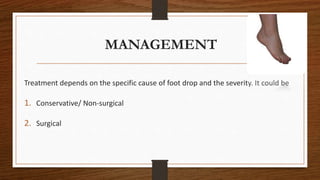
What is foot drop?
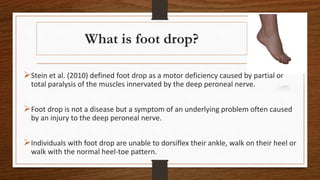
Stein et al. (2010) defined foot drop as a motor deficiency caused by partial or
total paralysis of the muscles innervated by the deep peroneal nerve.
Foot drop is not a disease but a symptom of an underlying problem often caused
by an injury to the deep peroneal nerve.
Individuals with foot drop are unable to dorsiflex their ankle, walk on their heel or
walk with the normal heel-toe pattern.
BRIEF ANATOMY
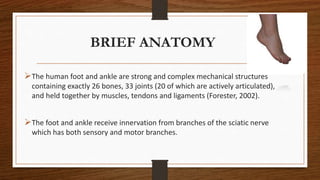
The human foot and ankle are strong and complex mechanical structures
containing exactly 26 bones, 33 joints (20 of which are actively articulated),
and held together by muscles, tendons and ligaments (Forester, 2002).
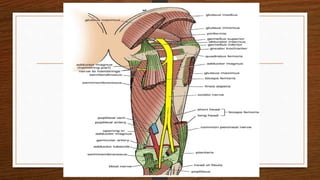
The foot and ankle receive innervation from branches of the sciatic nerve
which has both sensory and motor branches.
BRIEF ANATOMY
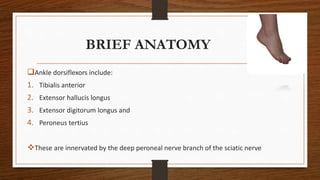
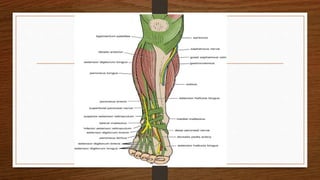
Ankle dorsiflexors include:
1. Tibialis anterior
2. Extensor hallucis longus
3. Extensor digitorum longus and
4. Peroneus tertius
These are innervated by the deep peroneal nerve branch of the sciatic nerve
FEATURES
1. Foot drop is not a disease.
2. Foot drop can either be temporal or
permanent.
3. It can happen unilaterally or bilaterally.
4. Patient is unable to dorsiflex, invert nor evert
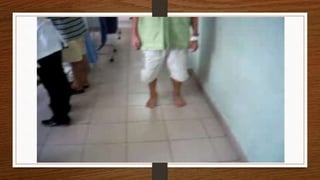
5. Steppage gait
6. Foot drop can affect anyone, including
children
Causes
1. Muscle damage
2. Nerve damage
3. Skeletal or anatomical abnormalities
affecting the foot
4. Diabetes
5. Brain and spinal cord disorders
6. Overgrowth of bone in the spinal
canal Or Tumor/cyst pressing on the
nerve in the knee or spine.
7. Misplaced intramuscular gluteal
injections and repeated injections
leading to fibrosis can injure the
sciatic nerve
Risk factors
1. Crossing your legs
2. Prolonged kneeling
3. Wearing a leg cast.
4. Wrongly placed injections
5. Pre-existing conditions
TESTS AND DIAGNOSES
(physical exam)
• STORY CONTINUES…
After being examined by a Physiotherapist, it was observed that Uncle Willie had
difficulty walking on his heels. The physiotherapist observed that Uncle Willie was
unable to dorsiflex when asked to, he also observed numbness on his shin and on
the top of his foot and toes.
• What do we learn from these observations?
TEST AND DIAGNOSES
(other tests)
• Foot drop can also be tested for using the Nerve test. Electromyography(EMG) and nerve
conduction studies measure electrical activity n the muscles and nerves
• X-rays
• Ultrasound
• Computerized tomography (CT scan)
• Magnetic resonance imaging (MRI)
MANAGEMENT
Treatment depends on the specific cause of foot drop and the severity. It could be
1. Conservative/ Non-surgical
2. Surgical
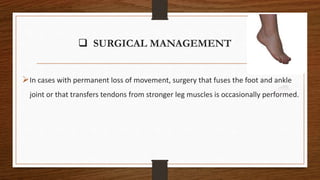
 SURGICAL MANAGEMENT
In cases with permanent loss of movement, surgery that fuses the foot and ankle
joint or that transfers tendons from stronger leg muscles is occasionally performed.
 CONSERVATIVE MANAGEMENT
PHYSIOTHERAPY MANAGEMENT
OCCUPATIONAL THERAPY
 PHYSIOTHERAPY
1. Electrotherapy: Peroneal nerve stimulation using trabert, Transcutaenous
Electrical Nerve Stimulation (TENS), interferential therapy, etc
2. Strengthening exercises for ankle dorsiflexors
3. Range of motion and stretching exercises for ankle joint(s) to prevent the
development of stiffness in the heel.
 OCCUPATIONAL THERAPY
1. Prescribe an appropriate ankle-foot orthoses or device to help reduce the
deformity.
2. Give expert advice on safe/ disability-friendly environment a patient
should take note of
3. Work hand-in-hand with the physiotherapist to help rehabilitate the foot-
drop patient
REFERENCES
• Forester ND, Parry D, Kessel D, et al. (2002). Ischaemic sciatic neuropathy: an
important complication of embolization of a type II endoleak. European Journal of
Vascular and Endovascular Surgery; 17(6): 507-16
• Stein RB, Everaert DG, Thompson AK, Chong SL, Whittaker M, Robertson J, et al.
(2010). Long-term therapeutic and orthotic effects of a foot drop stimulator on
walking performance in progressive and nonprogressive neurological disorders.
Neurorehabilitation and Neural Repair; 24(2), 152-167.
• Tak SR, Dar GN, Halwai MA, et al. (2008). Post-injection nerve injuries in Kashmir:
a menace overlooked. Journal of Research in Medical Sciences; 13:244–247

Foot drop philans cosmos ankrah

  • 1.
  • 3.
    Once upon atime… 72 YEAR OLD, UNCLE WILLIE WOKE UP THIS MORNING WITH WEAKNESS IN HIS LEFT LEG. HE NOTED DIFFICULTY IN LIFTING UP HIS LEFT FOOT FROM THE FLOOR. THE PATIENT HAS RECENTLY BOUGHT A COMPUTER AND HAS BEEN BROWSING THE WEB, SITTING WITH HIS LEGS CROSSED FOR PROLONGED PERIODS. WHAT COULD THE PROBLEM BE…?
  • 4.
    OBJECTIVES By the endof this presentation students should be able to:  Define foot drop  Identify some causes and risk factors of foot drop  Identify ways foot drop is tested for and diagnosed  State the roles played by physiotherapists and occupational therapists in the management of foot drop
  • 5.
    What is footdrop? Stein et al. (2010) defined foot drop as a motor deficiency caused by partial or total paralysis of the muscles innervated by the deep peroneal nerve. Foot drop is not a disease but a symptom of an underlying problem often caused by an injury to the deep peroneal nerve. Individuals with foot drop are unable to dorsiflex their ankle, walk on their heel or walk with the normal heel-toe pattern.
  • 6.
    BRIEF ANATOMY The humanfoot and ankle are strong and complex mechanical structures containing exactly 26 bones, 33 joints (20 of which are actively articulated), and held together by muscles, tendons and ligaments (Forester, 2002). The foot and ankle receive innervation from branches of the sciatic nerve which has both sensory and motor branches.
  • 7.
    BRIEF ANATOMY Ankle dorsiflexorsinclude: 1. Tibialis anterior 2. Extensor hallucis longus 3. Extensor digitorum longus and 4. Peroneus tertius These are innervated by the deep peroneal nerve branch of the sciatic nerve
  • 10.
    FEATURES 1. Foot dropis not a disease. 2. Foot drop can either be temporal or permanent. 3. It can happen unilaterally or bilaterally. 4. Patient is unable to dorsiflex, invert nor evert 5. Steppage gait 6. Foot drop can affect anyone, including children
  • 12.
    Causes 1. Muscle damage 2.Nerve damage 3. Skeletal or anatomical abnormalities affecting the foot 4. Diabetes 5. Brain and spinal cord disorders 6. Overgrowth of bone in the spinal canal Or Tumor/cyst pressing on the nerve in the knee or spine. 7. Misplaced intramuscular gluteal injections and repeated injections leading to fibrosis can injure the sciatic nerve
  • 13.
    Risk factors 1. Crossingyour legs 2. Prolonged kneeling 3. Wearing a leg cast. 4. Wrongly placed injections 5. Pre-existing conditions
  • 14.
    TESTS AND DIAGNOSES (physicalexam) • STORY CONTINUES… After being examined by a Physiotherapist, it was observed that Uncle Willie had difficulty walking on his heels. The physiotherapist observed that Uncle Willie was unable to dorsiflex when asked to, he also observed numbness on his shin and on the top of his foot and toes. • What do we learn from these observations?
  • 15.
    TEST AND DIAGNOSES (othertests) • Foot drop can also be tested for using the Nerve test. Electromyography(EMG) and nerve conduction studies measure electrical activity n the muscles and nerves • X-rays • Ultrasound • Computerized tomography (CT scan) • Magnetic resonance imaging (MRI)
  • 16.
    MANAGEMENT Treatment depends onthe specific cause of foot drop and the severity. It could be 1. Conservative/ Non-surgical 2. Surgical
  • 17.
     SURGICAL MANAGEMENT Incases with permanent loss of movement, surgery that fuses the foot and ankle joint or that transfers tendons from stronger leg muscles is occasionally performed.
  • 18.
     CONSERVATIVE MANAGEMENT PHYSIOTHERAPYMANAGEMENT OCCUPATIONAL THERAPY
  • 19.
     PHYSIOTHERAPY 1. Electrotherapy:Peroneal nerve stimulation using trabert, Transcutaenous Electrical Nerve Stimulation (TENS), interferential therapy, etc 2. Strengthening exercises for ankle dorsiflexors 3. Range of motion and stretching exercises for ankle joint(s) to prevent the development of stiffness in the heel.
  • 20.
     OCCUPATIONAL THERAPY 1.Prescribe an appropriate ankle-foot orthoses or device to help reduce the deformity. 2. Give expert advice on safe/ disability-friendly environment a patient should take note of 3. Work hand-in-hand with the physiotherapist to help rehabilitate the foot- drop patient
  • 22.
    REFERENCES • Forester ND,Parry D, Kessel D, et al. (2002). Ischaemic sciatic neuropathy: an important complication of embolization of a type II endoleak. European Journal of Vascular and Endovascular Surgery; 17(6): 507-16 • Stein RB, Everaert DG, Thompson AK, Chong SL, Whittaker M, Robertson J, et al. (2010). Long-term therapeutic and orthotic effects of a foot drop stimulator on walking performance in progressive and nonprogressive neurological disorders. Neurorehabilitation and Neural Repair; 24(2), 152-167. • Tak SR, Dar GN, Halwai MA, et al. (2008). Post-injection nerve injuries in Kashmir: a menace overlooked. Journal of Research in Medical Sciences; 13:244–247

Editor's Notes

  • #11 Foot drop isnt a disease but usually a symptom of a greater problem or foot drop is a sign of an underlying neurological, muscular or anatomical problem. Can be temporal or permanent depending on the extent of muscle weakness or paralysis. Foot drop can be unilateral (affecting one foot) or bilateral (affecting both feet). the inability or difficulty in moving the ankle and toes upward (dorsiflexion). Gait( manner of walking).. Steppage Gait is a gait in foot drop in which the advancing leg is lifted high in order that the toes may clear the ground.
  • #13 Temporary foot drop can occur through something as simple as sitting with your legs crossed for an extended period of time, as that can damage the nerves in the ankle.
  • #14 People who habitually cross their legs can compress the peroneal nerve on their uppermost leg. Occupations that involve prolonged squatting or kneeling, such as picking strawberries or laying floor tiles, can result in foot drop Plaster casts that enclose the ankle and end just below the knee can exert pressure on the peroneal nerve Injection palsy resulting from affectation of the sciatic nerve esp’lly in gluteal injections which are not carefully done Conditions like cva, sclerosis, diabetes, spinal cord problems, disc herniation, etc
  • #15 Nerve involvement Specifically sciatic nerve In fact, the deep peroneal nerve branch of the sciatic nerve NB: Shin = tibia region
  • #21 1. The most common treatment is to support the foot with light-weight leg braces and shoe inserts, called ankle-foot orthotics.
  • #22 She has bilateral foot drop