Downloaded 25 times

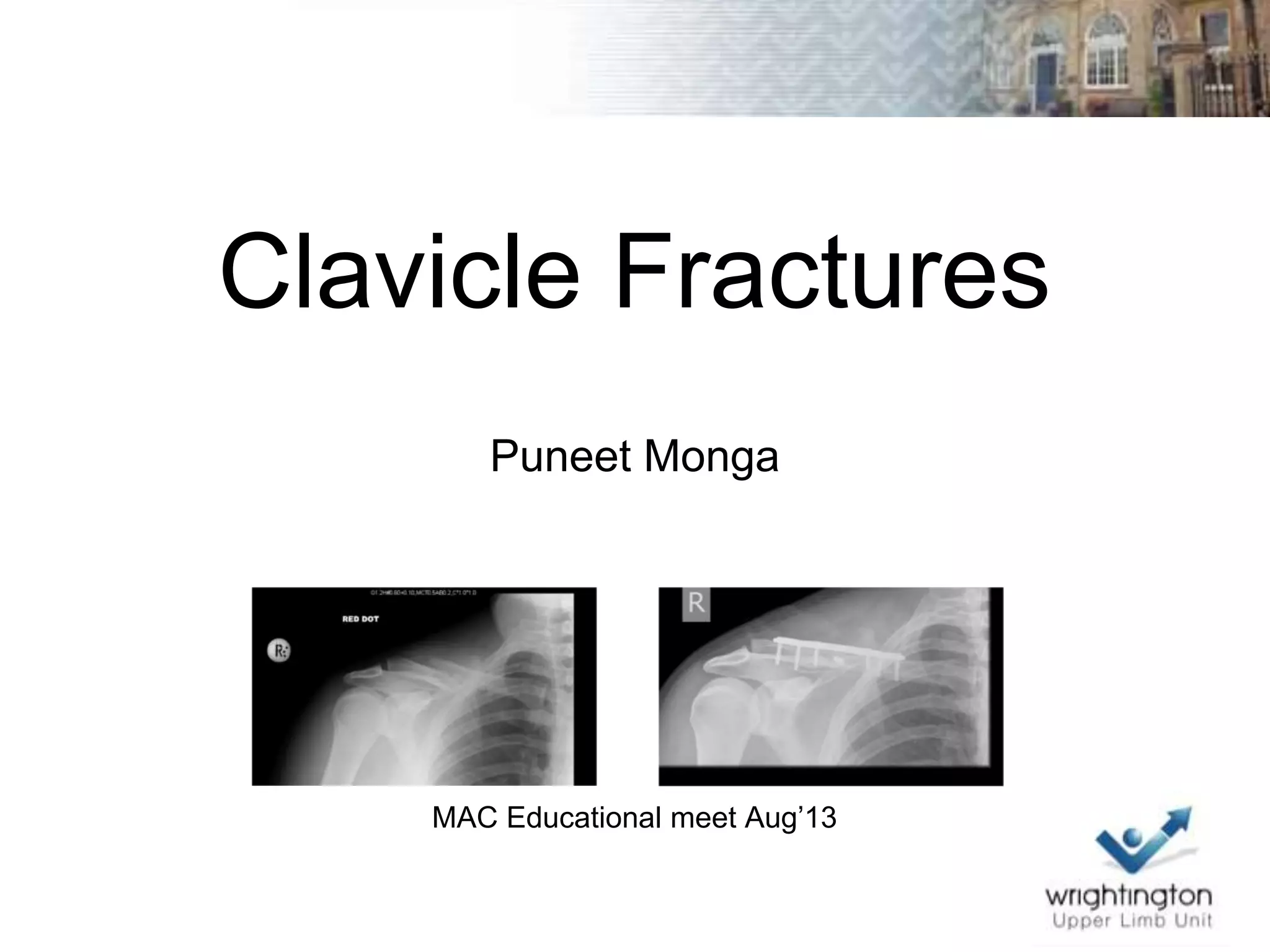
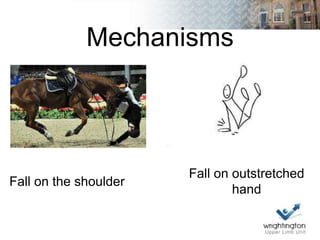
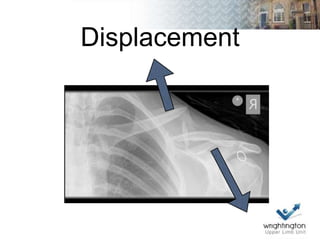


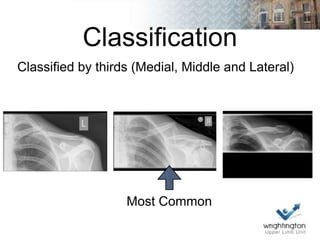


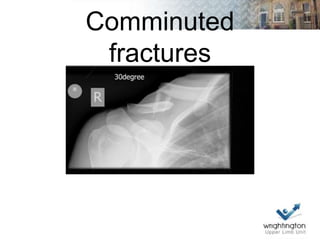
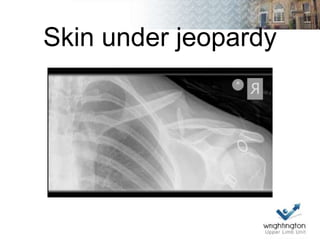
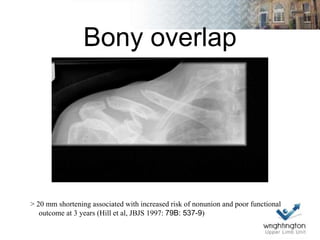
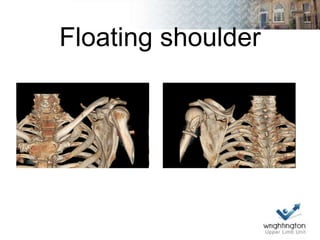
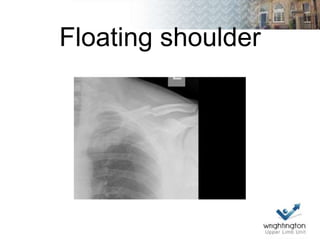
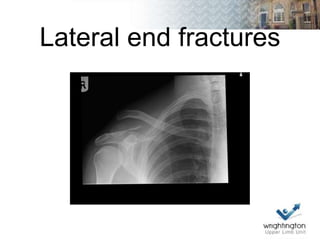
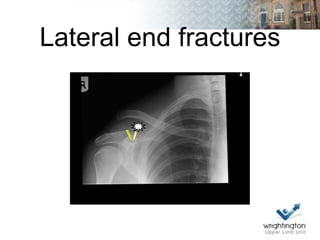

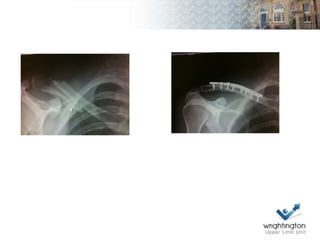
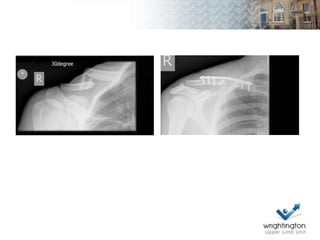
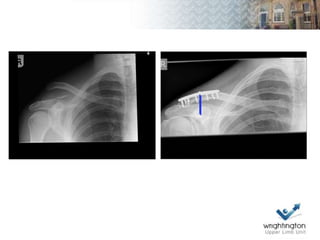
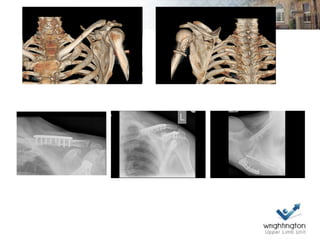


Clavicle fractures are commonly caused by falls on the shoulder or outstretched hand. They are classified based on location (medial, middle, lateral). Most are managed non-operatively with a sling or figure-of-eight bandage. Early surgery is indicated for fractures in young patients from high-energy trauma, comminuted fractures, fractures with skin jeopardy, or >20mm of shortening. Floating shoulder injuries and open or lateral fractures also typically require surgery. Surgical management involves open reduction and internal fixation followed by a short period of protected motion and early return to sports. Studies show reliable healing and functional outcomes when surgery is performed for appropriately indicated fractures.


