The Water Cycle
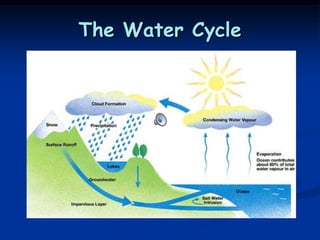
The Water Cycle
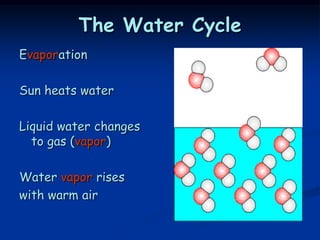
Evaporation

Sun heats water

Liquid water changes
  to gas (vapor)

Water vapor rises
with warm air
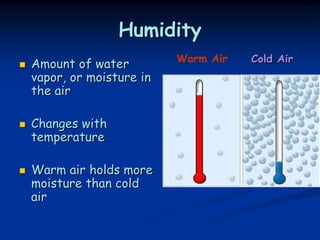
Humidity
                            Warm Air   Cold Air
   Amount of water
    vapor, or moisture in
    the air

   Changes with
    temperature

   Warm air holds more
    moisture than cold
    air
Measuring Humidity


   Hygrometer is used to
    measure the amount
    of water vapor in the
    air.
The Water Cycle
               Condensation

             Water vapor cools

             Tiny water droplets
              or ice crystals form

                 Get bigger and
                     heavier
The Water Cycle
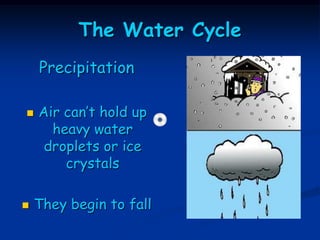
    Precipitation

   Air can’t hold up
      heavy water
     droplets or ice
        crystals

   They begin to fall
The Water Cycle


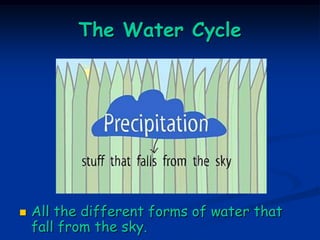
   All the different forms of water that
    fall from the sky.
Precipitation
The air temperature determines the form of
                precipitation.
Types of Precipitation
Rain
      Liquid
      Air temperature above 32 degrees Fahrenheit
Snow
      Solid
      Air temperature below 32 degrees Fahrenheit
Hail
      Solid
      Formed in clouds
      Winds carry frozen drops higher
      Layers of ice are added
      Repeats
Sleet
      Mixture
      Air temperature just above freezing
Measuring Precipitation
Rain gauge

   Open container that
    collects precipitation

   Scale on side of
    container shows how
    much has fallen
The Water Cycle
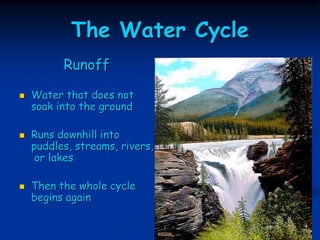
          Runoff

   Water that does not
    soak into the ground

   Runs downhill into
    puddles, streams, rivers,
     or lakes

   Then the whole cycle
    begins again
Review of the Water Cycle

Watercycle

  • 1.
  • 2.
    The Water Cycle Evaporation Sunheats water Liquid water changes to gas (vapor) Water vapor rises with warm air
  • 3.
    Humidity Warm Air Cold Air  Amount of water vapor, or moisture in the air  Changes with temperature  Warm air holds more moisture than cold air
  • 4.
    Measuring Humidity  Hygrometer is used to measure the amount of water vapor in the air.
  • 5.
    The Water Cycle Condensation  Water vapor cools  Tiny water droplets or ice crystals form  Get bigger and heavier
  • 6.
    The Water Cycle Precipitation  Air can’t hold up heavy water droplets or ice crystals  They begin to fall
  • 7.
    The Water Cycle  All the different forms of water that fall from the sky.
  • 8.
    Precipitation The air temperaturedetermines the form of precipitation.
  • 9.
    Types of Precipitation Rain  Liquid  Air temperature above 32 degrees Fahrenheit Snow  Solid  Air temperature below 32 degrees Fahrenheit Hail  Solid  Formed in clouds  Winds carry frozen drops higher  Layers of ice are added  Repeats Sleet  Mixture  Air temperature just above freezing
  • 10.
    Measuring Precipitation Rain gauge  Open container that collects precipitation  Scale on side of container shows how much has fallen
  • 11.
    The Water Cycle Runoff  Water that does not soak into the ground  Runs downhill into puddles, streams, rivers, or lakes  Then the whole cycle begins again
  • 12.
    Review of theWater Cycle