I. The European Union: Past and
Present
II. The rights of asylum seekers
under European and Dutch law
Food for Thought
Radboud University Nijmegen
29 February 2016
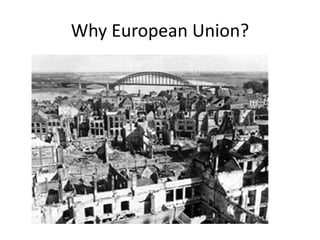
Why European Union?
Why a European Union?
• After 1945: avoid extreme nationalism and
war in Europe; improve living conditions
• 1951 European Coal and Steel Community
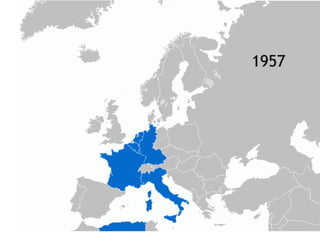
• 1957 European Economic Community (EEC)
• 1986 Single Market
• 1992 European Union
• 1995 Schengen
• 2002 euro
From workers to citizens and
from economics to politics
• 1957: Four freedoms = free movement of
goods, capital, services and workers
• 1986: Single Market = area without
internal borders
• 1992: EU and Union citizenship
• 2009: EU Charter Fundamental Rights
Beneficial effects
• Peace between Member States (talking,
cheating and litigating rather than fighting)
• Assisted change to democracy in Southern and
Eastern Europe: Greece, Spain, Portugal, CEEC
• Rising living standards and welfare
• Increased mobility for individuals (new
experiences, profit and human rights)
• No extreme nationalism (yet?)
European Union a magnet
• From 6 (1957) to 28 (2013) Member States
• EU more competences: from economics to
asylum, education, health, energy, police, etc.
• EU rules effect outside EU in neighbouring
countries, candidate Member States, EU rules
as informal model, foreign firms have to
comply with EU rules (Microsoft, Google)
• More Member States => more internal
diversity
EU today
• 28 Member States
• 500 million inhabitants of which
93% live in their own Member State
3% nationals of other Member States
4% from countries outside EU
• 24 official languages
• 25% of the world’s Gross Domestic Product
Main EU institutions
• Council of Ministers (one minister of each
Member State)
• European Parliament (directly elected)
• European Commission: proposes new laws
and supervises implementation by Member
States
• EU Court of Justice: interprets EU law, decides
conflicts between Member States and EU
System EU
• EU laws (regulation or directives) made in
Brussels on EU level by Council and Parliament
• Transposition of EU laws in national law and
application of EU law in practices is task of
Member States authorities
• Control on correct application primarly by
national courts
• Relatively small budget and bureacracy of EU
Dilemma’s
• Uniform EU rules have different meanings and
effects and are applied differently in Member
States (internal diversity EU)
• Not all Member States participate in all areas
(Schengen; euro; immigration; police) (diversity)
• UK may leave EU after referendum (“Brexit”)
• Many problems can only be solved at EU level but
Member States refuse to transfer power to EU
• National politicians blame “Brussels” but have
agreed to rules before => makes EU unpopular
Do you have Questions?
II. The rights of asylum seekers
under European and Dutch law
European law
• European Convention on Human Rights 1950
in force for all 47 Member States including
Netherlands and Turkey
• EU Treaty and directives and regulations of EU
valid for 28 Members States
• European law prevails over Netherlands law
European Convention Human Rights
Asylum seekers are human beings having all rights
guaranteed by ECHR to ‘everyone’, such as:
•Freedom of religion (visit mosque or church)
•Freedom of speach, including reading books
•Freedom of association and demonstration
•Freedom to move within the country
•Right to education (compulsory for children)
•Right to petition public authorities (Ombudsman)
EU Reception Conditions Directive
• Directive 2013/33 sets minimum conditions
for the reception of asylum seekers
• Guarantees housing, food, clothing and a daily
expenses allowance, and essential health care
• Information about rights and ID card
• Access to education for minors in 3 months
• Access to employment after 9 months
• Special care for vulnerable persons
Rights asylum seekers do not have
• Does not have the right to work (after six
months only with work permit)
• But may perform voluntary (unpaid) work
• No right to social security or assistance
• No right to family reunification yet
• No right to travel to other EU States
Residence permit for asylum
With asylum status much more rights (and
obligations):
•Right to family reunification
•Right to work without work permit
•Equal treatment in social security/assistance
•Equal treatment education, incl. scolarships
•Obligation to pass language & integration test
in three years
Difficult to enforce rights in practice
Law in the books  law in practice
Difference caused by:
•Lack of knowledge about rule and remedies
•No money (contribution sportsclub; right to
travel but who pays ticket?)
•Fear for possible repercussions because fully
dependent on government (COA and IND)
•Procedures may take long time
Critical reports on Heumensoord
• Reports by National Ombudsman and Institute
for Human Rights (February 2016)
Three main points of criticism:
(1)COA no effective system of dealing with
complaints
(2) Insuffient protection against discrimination
(EU directive: protection vulnerable persons)
Critical reports on Heumensoord II
(3)“Total absence of privacy, no pocket money,
uncertaincy duration asylum procedure and
when request for family reunification result in
health problems, such as stress, sleeping
problems and depression”
Visible effects of reports?
Heumensoord and non-legal norms
• Non-legal norms, ethical and moral norms also
relevant:
• Honesty (promises IND not kept)
• Respect (treatment by COA)
• Human dignity (in EU Charter)
• Duration of procedures and reception conditions
also part of government policy (1) ‘Netherlands
should not more attractive than neighboring
states’ and (2) ‘asylum seeker should not yet
integrate in Dutch society’
conclusions
• Asylum seekers have many rights, but not easy to
realize in practice
• Dutch government was not prepared for large
number of asylum seekers => improvisation
• Government policy ambivalent: decent treatment
asylum seekers, but not better than neighbouring
countries and no integration
• Divided opinions in Dutch population, also due to
absence of clear political line in Netherlands/EU
• Recent policy tendency: no more Heumensoord,
but small scale reception centres

Food for thought_29 feb 2016

  • 1.
    I. The EuropeanUnion: Past and Present II. The rights of asylum seekers under European and Dutch law Food for Thought Radboud University Nijmegen 29 February 2016
  • 2.
  • 3.
    Why a EuropeanUnion? • After 1945: avoid extreme nationalism and war in Europe; improve living conditions • 1951 European Coal and Steel Community • 1957 European Economic Community (EEC) • 1986 Single Market • 1992 European Union • 1995 Schengen • 2002 euro
  • 4.
    From workers tocitizens and from economics to politics • 1957: Four freedoms = free movement of goods, capital, services and workers • 1986: Single Market = area without internal borders • 1992: EU and Union citizenship • 2009: EU Charter Fundamental Rights
  • 5.
    Beneficial effects • Peacebetween Member States (talking, cheating and litigating rather than fighting) • Assisted change to democracy in Southern and Eastern Europe: Greece, Spain, Portugal, CEEC • Rising living standards and welfare • Increased mobility for individuals (new experiences, profit and human rights) • No extreme nationalism (yet?)
  • 7.
    European Union amagnet • From 6 (1957) to 28 (2013) Member States • EU more competences: from economics to asylum, education, health, energy, police, etc. • EU rules effect outside EU in neighbouring countries, candidate Member States, EU rules as informal model, foreign firms have to comply with EU rules (Microsoft, Google) • More Member States => more internal diversity
  • 8.
    EU today • 28Member States • 500 million inhabitants of which 93% live in their own Member State 3% nationals of other Member States 4% from countries outside EU • 24 official languages • 25% of the world’s Gross Domestic Product
  • 9.
    Main EU institutions •Council of Ministers (one minister of each Member State) • European Parliament (directly elected) • European Commission: proposes new laws and supervises implementation by Member States • EU Court of Justice: interprets EU law, decides conflicts between Member States and EU
  • 10.
    System EU • EUlaws (regulation or directives) made in Brussels on EU level by Council and Parliament • Transposition of EU laws in national law and application of EU law in practices is task of Member States authorities • Control on correct application primarly by national courts • Relatively small budget and bureacracy of EU
  • 11.
    Dilemma’s • Uniform EUrules have different meanings and effects and are applied differently in Member States (internal diversity EU) • Not all Member States participate in all areas (Schengen; euro; immigration; police) (diversity) • UK may leave EU after referendum (“Brexit”) • Many problems can only be solved at EU level but Member States refuse to transfer power to EU • National politicians blame “Brussels” but have agreed to rules before => makes EU unpopular
  • 12.
    Do you haveQuestions?
  • 13.
    II. The rightsof asylum seekers under European and Dutch law
  • 14.
    European law • EuropeanConvention on Human Rights 1950 in force for all 47 Member States including Netherlands and Turkey • EU Treaty and directives and regulations of EU valid for 28 Members States • European law prevails over Netherlands law
  • 15.
    European Convention HumanRights Asylum seekers are human beings having all rights guaranteed by ECHR to ‘everyone’, such as: •Freedom of religion (visit mosque or church) •Freedom of speach, including reading books •Freedom of association and demonstration •Freedom to move within the country •Right to education (compulsory for children) •Right to petition public authorities (Ombudsman)
  • 16.
    EU Reception ConditionsDirective • Directive 2013/33 sets minimum conditions for the reception of asylum seekers • Guarantees housing, food, clothing and a daily expenses allowance, and essential health care • Information about rights and ID card • Access to education for minors in 3 months • Access to employment after 9 months • Special care for vulnerable persons
  • 17.
    Rights asylum seekersdo not have • Does not have the right to work (after six months only with work permit) • But may perform voluntary (unpaid) work • No right to social security or assistance • No right to family reunification yet • No right to travel to other EU States
  • 18.
    Residence permit forasylum With asylum status much more rights (and obligations): •Right to family reunification •Right to work without work permit •Equal treatment in social security/assistance •Equal treatment education, incl. scolarships •Obligation to pass language & integration test in three years
  • 19.
    Difficult to enforcerights in practice Law in the books  law in practice Difference caused by: •Lack of knowledge about rule and remedies •No money (contribution sportsclub; right to travel but who pays ticket?) •Fear for possible repercussions because fully dependent on government (COA and IND) •Procedures may take long time
  • 20.
    Critical reports onHeumensoord • Reports by National Ombudsman and Institute for Human Rights (February 2016) Three main points of criticism: (1)COA no effective system of dealing with complaints (2) Insuffient protection against discrimination (EU directive: protection vulnerable persons)
  • 21.
    Critical reports onHeumensoord II (3)“Total absence of privacy, no pocket money, uncertaincy duration asylum procedure and when request for family reunification result in health problems, such as stress, sleeping problems and depression” Visible effects of reports?
  • 22.
    Heumensoord and non-legalnorms • Non-legal norms, ethical and moral norms also relevant: • Honesty (promises IND not kept) • Respect (treatment by COA) • Human dignity (in EU Charter) • Duration of procedures and reception conditions also part of government policy (1) ‘Netherlands should not more attractive than neighboring states’ and (2) ‘asylum seeker should not yet integrate in Dutch society’
  • 23.
    conclusions • Asylum seekershave many rights, but not easy to realize in practice • Dutch government was not prepared for large number of asylum seekers => improvisation • Government policy ambivalent: decent treatment asylum seekers, but not better than neighbouring countries and no integration • Divided opinions in Dutch population, also due to absence of clear political line in Netherlands/EU • Recent policy tendency: no more Heumensoord, but small scale reception centres