FLUORIDE
What is Fluoride?
 Fluoride is the ionic form of the element fluorine.
 Fluoride is a mineral found throughout the earth's crust
and widely distributed in nature.
 Found in soils rich in fluorspar, cryolite, and other
minerals.
• Bones – Teeth
• Reduces caries
 Strengthens
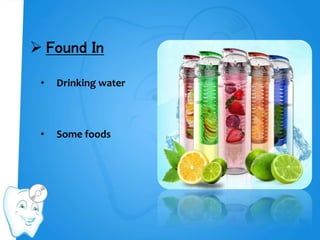
 Found In
• Drinking water
• Some foods
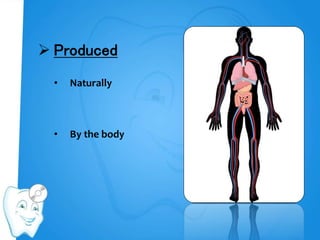
 Produced
• Naturally
• By the body
Three common forms of
fluoride
 Sodium fluoride (NaF) - crystalline form that may be added
manually or with mechanical feeders
 Sodium silicofluoride (Na-SiF) - also commercially available in
various grades for dry feeding.
 Fluosilic acid (H.SiF) - corrosive liquid acid, must be handled
with care.
What Does Fluoride Do?
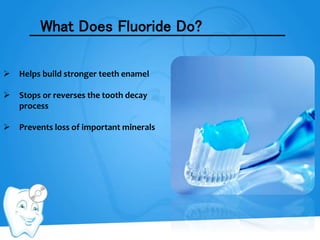
 Helps build stronger teeth enamel
 Stops or reverses the tooth decay
process
 Prevents loss of important minerals
Fluoride Modalities
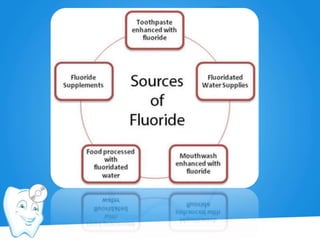
 Systemic Use
• Water fluoridation
• Salt
• Milk
• Mineral water
• Fluoride supplements
 Topical Use
• Tooth paste
• Mouth wash
• Fluoride gels Varnishes
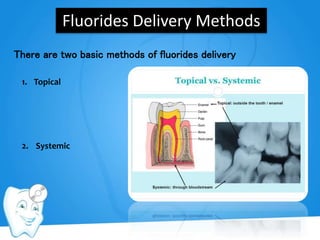
Fluorides Delivery Methods
1. Topical
2. Systemic
There are two basic methods of fluorides delivery
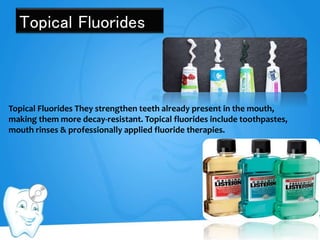
Topical Fluorides
Topical Fluorides They strengthen teeth already present in the mouth,
making them more decay-resistant. Topical fluorides include toothpastes,
mouth rinses & professionally applied fluoride therapies.
Topical Fluorides
Definition
• The term "topically applied fluorides" is used to describe those
delivery systems which provide fluoride for a local chemical
reaction to the exposed surfaces of erupted dentition.
INDICATIONS:
• Caries active individuals
• Children shortly after periods of tooth eruption, especially
• those who aren't caries free Those who take medication that reduce
salivary flow or radiation therapy
• Post periodontal surgery when roots are exposed
Types Of Topical fluorides
Two Types Of Topical Fluoride Used In Preventive Dentistry
1. Self applied products
2. Professionally applied products
Self Applied
Self applied products
 One method of self-applied topical fluoride that is responsible for a
significant drop in the level of cavities since 1960 is use of a fluoride-
containing toothpaste.
 Other sources of self-applied fluoride are mouth rinses designed to be
rinsed & spit out. For patients who have unusual susceptibility to dental
caries due to dry mouth, medical conditions, or other factors) dentists
may recommend a prescription fluoride gel or paste to be used in
addition to regular toothpaste
Professionally Applied
Professionally applied topical fluorides
 It was introduced by Bibby in 1942.
 Involve the use of high fluoride concentration products ranging from
5000-19,000ppm, which is equivalent to 5-19 mgF/ml.
 Self applied products: Include fluoride dentifrices, mouth rinses & gels
Are low fluoride concentration products ranging from200-1000ppm or
0.2-1 mgF/ml.
 Professionally Applied In the form of a gel or foam, applied by a dentist
or dental hygienist. More concentrated due to which not needed
frequently
Systemic fluorides
 Systemic fluorides provides a low concentration of fluoride to the teeth
over long period of time.
 It circulates through blood stream and is incorporated into developing
teeth.
 After teeth erupt, fluoride contact the teeth directly through salivary
secretions.
Benefits & Limitations
 Reduction of dental caries:50-70%
 75% reduction in first permanent molar loss
 There is drastic reduction in progression and development of dental
caries and in fluoridated areas.
 There is reduction in number of surfaces attacked by dental caries.
Benefits
Limitations
 Water fluoridation can be implemented only in area which have center
pipe water supply system.
 It interferes with personal choice.
 People may think of overprotection.
 Initial cost for installing fluoridation plant is more
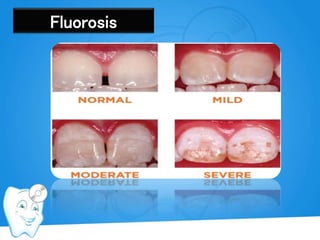
Clinical Features of Dental Fluorosis
 Lusterless, opaque white patches in the enamel which may become
mottled, striated or pitted.
 Mottled areas may become stained yellow or brown
 Hypo plastic areas may also be present to such an extend in severe
cases that normal tooth form is lost.
Fluorosis
Treatment
 Bleaching
 Composite restorations
 Veneers
 Full crowns
Treatment options for fluorosis varies with severity. It may
be :-
Thank you

Fluoride In Dentistry

  • 2.
  • 3.
    What is Fluoride? Fluoride is the ionic form of the element fluorine.  Fluoride is a mineral found throughout the earth's crust and widely distributed in nature.  Found in soils rich in fluorspar, cryolite, and other minerals.
  • 4.
    • Bones –Teeth • Reduces caries  Strengthens
  • 5.
     Found In •Drinking water • Some foods
  • 6.
  • 7.
    Three common formsof fluoride  Sodium fluoride (NaF) - crystalline form that may be added manually or with mechanical feeders  Sodium silicofluoride (Na-SiF) - also commercially available in various grades for dry feeding.  Fluosilic acid (H.SiF) - corrosive liquid acid, must be handled with care.
  • 8.
    What Does FluorideDo?  Helps build stronger teeth enamel  Stops or reverses the tooth decay process  Prevents loss of important minerals
  • 10.
    Fluoride Modalities  SystemicUse • Water fluoridation • Salt • Milk • Mineral water • Fluoride supplements  Topical Use • Tooth paste • Mouth wash • Fluoride gels Varnishes
  • 11.
    Fluorides Delivery Methods 1.Topical 2. Systemic There are two basic methods of fluorides delivery
  • 12.
    Topical Fluorides Topical FluoridesThey strengthen teeth already present in the mouth, making them more decay-resistant. Topical fluorides include toothpastes, mouth rinses & professionally applied fluoride therapies.
  • 13.
    Topical Fluorides Definition • Theterm "topically applied fluorides" is used to describe those delivery systems which provide fluoride for a local chemical reaction to the exposed surfaces of erupted dentition. INDICATIONS: • Caries active individuals • Children shortly after periods of tooth eruption, especially • those who aren't caries free Those who take medication that reduce salivary flow or radiation therapy • Post periodontal surgery when roots are exposed
  • 14.
    Types Of Topicalfluorides Two Types Of Topical Fluoride Used In Preventive Dentistry 1. Self applied products 2. Professionally applied products
  • 15.
    Self Applied Self appliedproducts  One method of self-applied topical fluoride that is responsible for a significant drop in the level of cavities since 1960 is use of a fluoride- containing toothpaste.  Other sources of self-applied fluoride are mouth rinses designed to be rinsed & spit out. For patients who have unusual susceptibility to dental caries due to dry mouth, medical conditions, or other factors) dentists may recommend a prescription fluoride gel or paste to be used in addition to regular toothpaste
  • 16.
    Professionally Applied Professionally appliedtopical fluorides  It was introduced by Bibby in 1942.  Involve the use of high fluoride concentration products ranging from 5000-19,000ppm, which is equivalent to 5-19 mgF/ml.  Self applied products: Include fluoride dentifrices, mouth rinses & gels Are low fluoride concentration products ranging from200-1000ppm or 0.2-1 mgF/ml.  Professionally Applied In the form of a gel or foam, applied by a dentist or dental hygienist. More concentrated due to which not needed frequently
  • 17.
    Systemic fluorides  Systemicfluorides provides a low concentration of fluoride to the teeth over long period of time.  It circulates through blood stream and is incorporated into developing teeth.  After teeth erupt, fluoride contact the teeth directly through salivary secretions.
  • 18.
    Benefits & Limitations Reduction of dental caries:50-70%  75% reduction in first permanent molar loss  There is drastic reduction in progression and development of dental caries and in fluoridated areas.  There is reduction in number of surfaces attacked by dental caries. Benefits Limitations  Water fluoridation can be implemented only in area which have center pipe water supply system.  It interferes with personal choice.  People may think of overprotection.  Initial cost for installing fluoridation plant is more
  • 19.
    Clinical Features ofDental Fluorosis  Lusterless, opaque white patches in the enamel which may become mottled, striated or pitted.  Mottled areas may become stained yellow or brown  Hypo plastic areas may also be present to such an extend in severe cases that normal tooth form is lost.
  • 20.
  • 21.
    Treatment  Bleaching  Compositerestorations  Veneers  Full crowns Treatment options for fluorosis varies with severity. It may be :-
  • 22.