Topic:
Flow in Pipes
Presented By-
Md. Shahadot Hossain
Roll: 150802
Session: 2015-2016
Dept. of Petroleum and Mining
Engineering
Types of Fluid Flow
Generally three different types of fluid flow are-
1.Laminar flow
2.Turbulent flow
3.Transitional flow
Laminar Flow
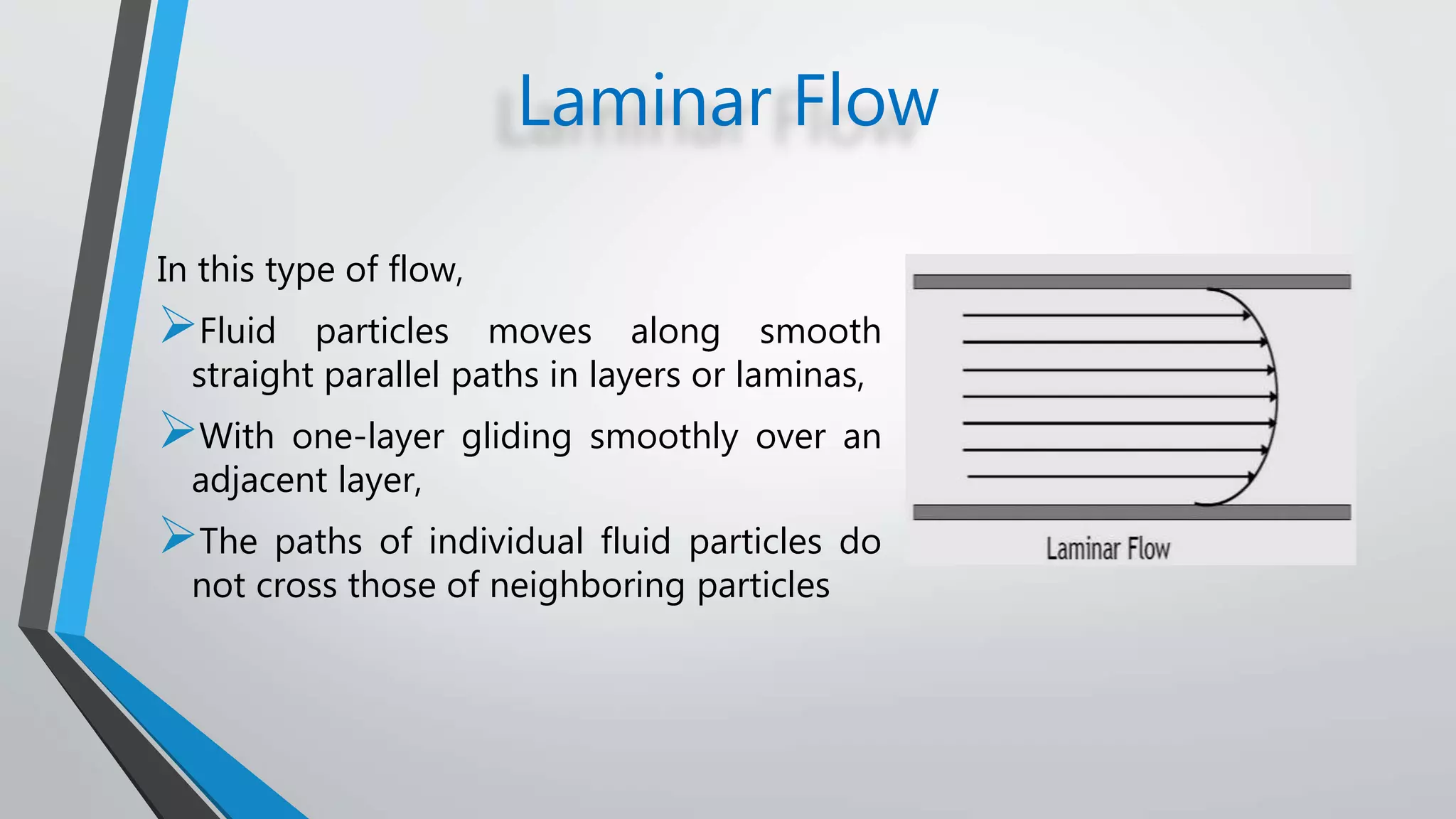
In this type of flow,
Fluid particles moves along smooth
straight parallel paths in layers or laminas,
With one-layer gliding smoothly over an
adjacent layer,
The paths of individual fluid particles do
not cross those of neighboring particles
Turbulent flow
In turbulent flow,
there is an irregular random movement
of fluid in transverse direction to the
main flow.
the speed of the fluid at a point is
continuously undergoing changes in
both magnitude and direction.
Transitional flow
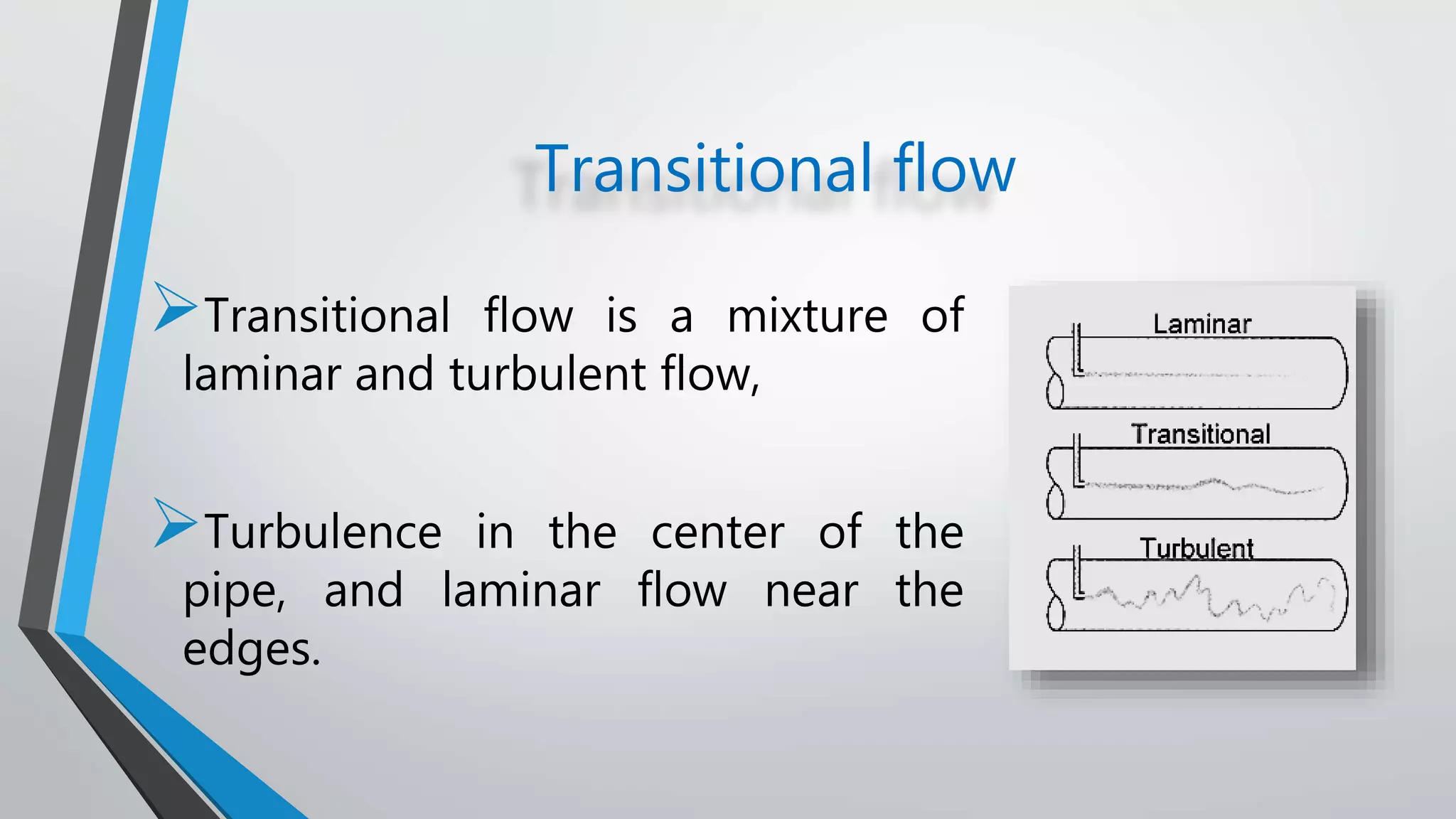
Transitional flow is a mixture of
laminar and turbulent flow,
Turbulence in the center of the
pipe, and laminar flow near the
edges.
Reynolds Number (Re)
The Reynolds number (re) is an important dimensionless
quantity in fluid mechanics
Used to help predict flow patterns in different fluid flow
situations.
Turbulent or laminar flow is determined by the
dimensionless Reynolds number.
Reynolds Number (Re)
Types of flow depend on the Reynold number ,
Re < 2300 – flow is laminar
Re > 4000 – flow is turbulent
2300 < Re < 4000 – flow changes from laminar to turbulent.
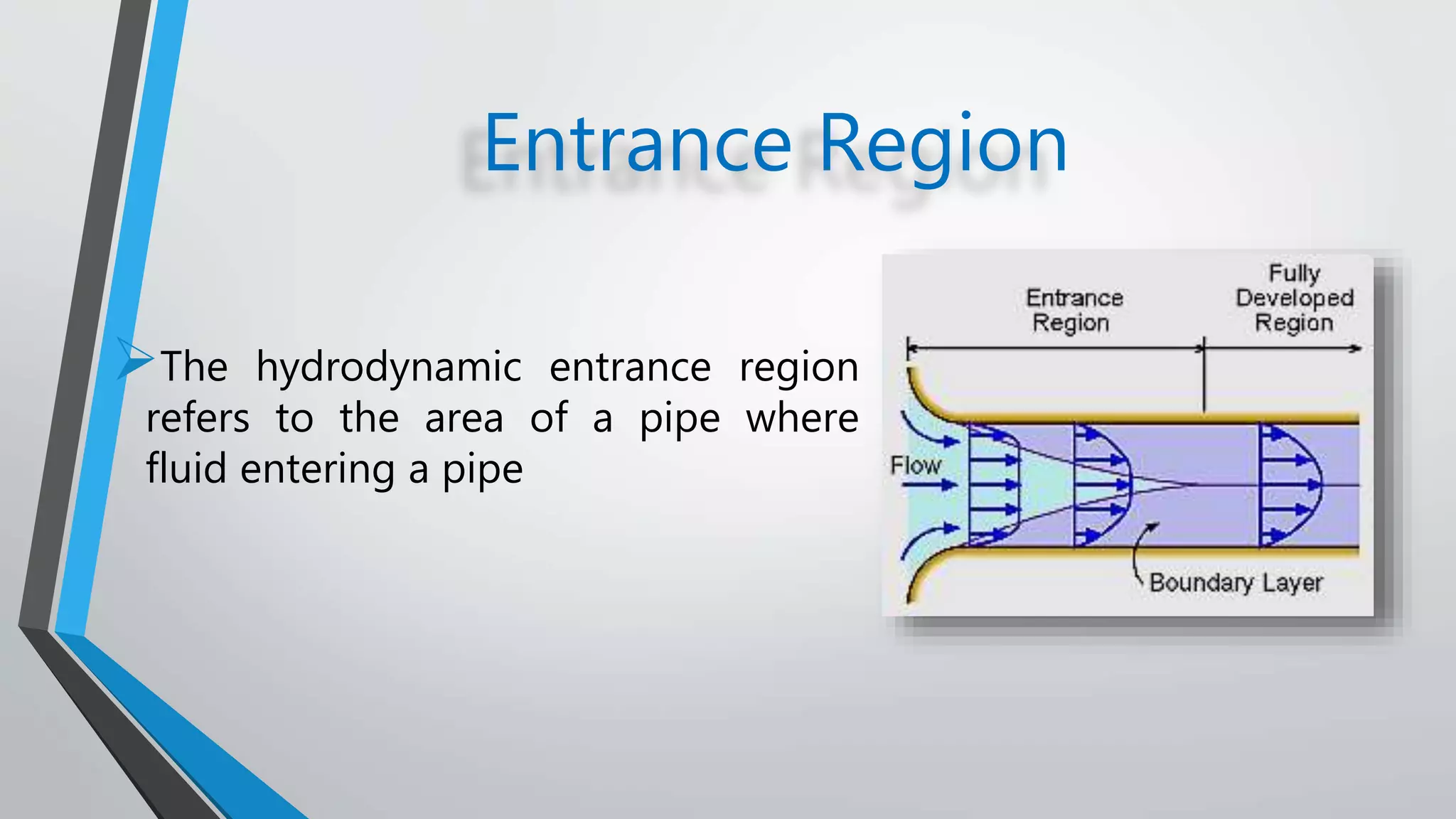
Entrance Region
The hydrodynamic entrance region
refers to the area of a pipe where
fluid entering a pipe
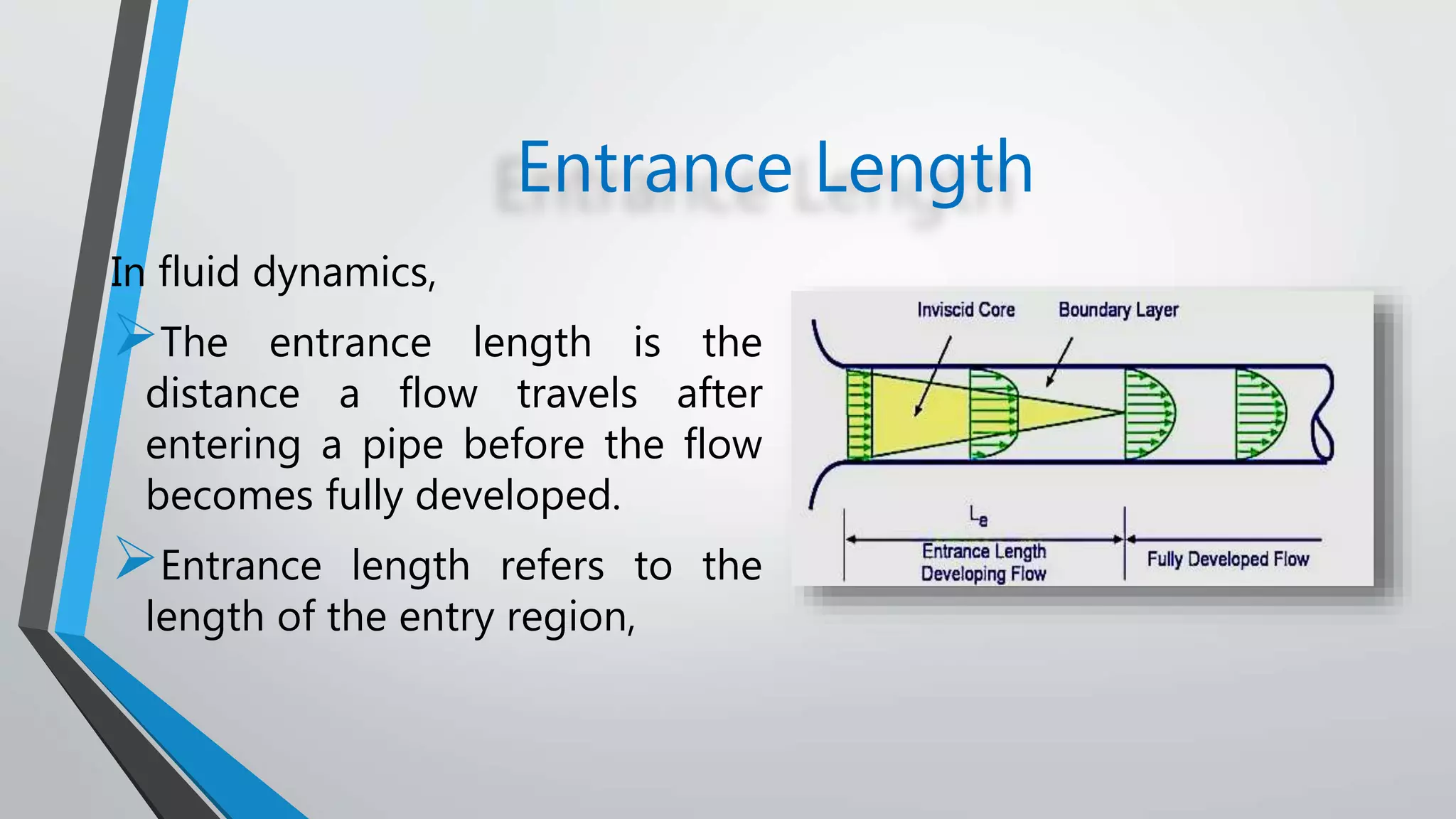
Entrance Length
In fluid dynamics,
The entrance length is the
distance a flow travels after
entering a pipe before the flow
becomes fully developed.
Entrance length refers to the
length of the entry region,
Thanks to All

Flow in pipes

  • 2.
    Topic: Flow in Pipes PresentedBy- Md. Shahadot Hossain Roll: 150802 Session: 2015-2016 Dept. of Petroleum and Mining Engineering
  • 3.
    Types of FluidFlow Generally three different types of fluid flow are- 1.Laminar flow 2.Turbulent flow 3.Transitional flow
  • 4.
    Laminar Flow In thistype of flow, Fluid particles moves along smooth straight parallel paths in layers or laminas, With one-layer gliding smoothly over an adjacent layer, The paths of individual fluid particles do not cross those of neighboring particles
  • 5.
    Turbulent flow In turbulentflow, there is an irregular random movement of fluid in transverse direction to the main flow. the speed of the fluid at a point is continuously undergoing changes in both magnitude and direction.
  • 6.
    Transitional flow Transitional flowis a mixture of laminar and turbulent flow, Turbulence in the center of the pipe, and laminar flow near the edges.
  • 7.
    Reynolds Number (Re) TheReynolds number (re) is an important dimensionless quantity in fluid mechanics Used to help predict flow patterns in different fluid flow situations. Turbulent or laminar flow is determined by the dimensionless Reynolds number.
  • 8.
    Reynolds Number (Re) Typesof flow depend on the Reynold number , Re < 2300 – flow is laminar Re > 4000 – flow is turbulent 2300 < Re < 4000 – flow changes from laminar to turbulent.
  • 9.
    Entrance Region The hydrodynamicentrance region refers to the area of a pipe where fluid entering a pipe
  • 10.
    Entrance Length In fluiddynamics, The entrance length is the distance a flow travels after entering a pipe before the flow becomes fully developed. Entrance length refers to the length of the entry region,
  • 11.