3.Flipping the Syllabus
   Most courses are implicitly built upon a system of minimizing point losses,
    thereby placing an emphasis on what students do NOT know. Envision a
system that instead puts the focus on demonstrated mastery of what students
DO know. Professor John Boyer and his technical assistant Katie Pritchard will
share their positive point accrual system that has evolved into a very successful
  pedagogical approach adopted in various sized classrooms. It is a particularly
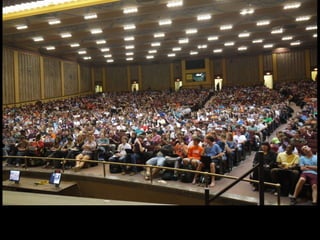
 effective approach for very large classrooms (1000+) where individual student
needs and scheduling can make a one-size-fits-all syllabus very impractical. They
  will share a broad range of ideas for student demonstrations of mastery and
 work with participants to explore how this approach can be adapted to their
                  particular domain and course characteristics.
Flipping the Syllabus


John Boyer (joboyer@vt.edu)      Katie Pritchard (kpritcha@vt.edu)
         Dept. of Geography             Dept. of Geography
  Virginia Tech, United States      Virginia Tech, United States
Flipping the Syllabus


John Boyer (joboyer@vt.edu)      Katie Pritchard (kpritcha@vt.edu)
         Dept. of Geography             Dept. of Geography
  Virginia Tech, United States      Virginia Tech, United States
Job description:
Job description:
-Core curriculum course
Job description:
-Core curriculum course

-Introductory subject of your choice
Job description:
-Core curriculum course

-Introductory subject of your choice

-Freshman-oriented but open to all academic levels
Job description:
-Core curriculum course

-Introductory subject of your choice

-Freshman-oriented but open to all academic levels

-Enrollment will also contain students with a diversity of
academic majors, motivations, and backgrounds
Job description:
-Core curriculum course

-Introductory subject of your choice

-Freshman-oriented but open to all academic levels

-Enrollment will also contain students with a diversity of
academic majors, motivations, and backgrounds

-You will be provided with some Teaching Assistant and
Technical Assistant support
Job description:
-Core curriculum course

-Introductory subject of your choice

-Freshman-oriented but open to all academic levels

-Enrollment will also contain students with a diversity of
academic majors, motivations, and backgrounds

-You will be provided with some Teaching Assistant and
Technical Assistant support
...oh, and just one more detail...
ISSUES???
About our course
Title: World Regions (Geography 1014)
Students: 2750
(of diverse origins, academic levels, and knowledge levels)
Live Lecture: Monday 7pm-9:45pm
Optional class movies show Tuesday or Wednesday at 7pm
2 large screens set up - one with lecture and other with
rotating regional slides
Our Ultra-Large Class Basic Philosophy
-The instinct is to over-structure, have well-
defined guidelines, and rigid due dates
Our Ultra-Large Class Basic Philosophy
-The instinct is to over-structure, have well-
defined guidelines, and rigid due dates
-We have adopted the opposite approach:
Our Ultra-Large Class Basic Philosophy
-The instinct is to over-structure, have well-
defined guidelines, and rigid due dates
-We have adopted the opposite approach:
   -Maximum flexibility in assignments
Our Ultra-Large Class Basic Philosophy
-The instinct is to over-structure, have well-
defined guidelines, and rigid due dates
-We have adopted the opposite approach:
   -Maximum flexibility in assignments
   -Maximum flexibility in communications
Our Ultra-Large Class Basic Philosophy
-The instinct is to over-structure, have well-
defined guidelines, and rigid due dates
-We have adopted the opposite approach:
   -Maximum flexibility in assignments
   -Maximum flexibility in communications
   -Increased interactions among all players
Our Ultra-Large Class Basic Philosophy
-The instinct is to over-structure, have well-
defined guidelines, and rigid due dates
-We have adopted the opposite approach:
   -Maximum flexibility in assignments
   -Maximum flexibility in communications
   -Increased interactions among all players

In essence....
Our Ultra-Large Class Basic Philosophy
-The instinct is to over-structure, have well-
defined guidelines, and rigid due dates
-We have adopted the opposite approach:
   -Maximum flexibility in assignments
   -Maximum flexibility in communications
   -Increased interactions among all players

In essence....
    To evolve from a rigid, top-down, and highly
    structured format to a more decentralized, user-
    defined, and personalized experience for the learners.
Thus...
Thus...
+Is learner-centered to allow students to engage and
learn in ways best suited for them
Thus...
+Is learner-centered to allow students to engage and
learn in ways best suited for them
     +Students are treated as individuals, take “ownership,”
     and create class synergy beyond walls of classroom
Thus...
+Is learner-centered to allow students to engage and
learn in ways best suited for them
     +Students are treated as individuals, take “ownership,”
     and create class synergy beyond walls of classroom
 +Incorporates social networking technologies to build
 community, engagement, and social presence in and
 out of the classroom.
Thus...
+Is learner-centered to allow students to engage and
learn in ways best suited for them
     +Students are treated as individuals, take “ownership,”
     and create class synergy beyond walls of classroom
 +Incorporates social networking technologies to build
 community, engagement, and social presence in and
 out of the classroom.
         *Creates a positive feedback loop to empower
         students when it comes to assessment
Thus...
+Is learner-centered to allow students to engage and
learn in ways best suited for them
     +Students are treated as individuals, take “ownership,”
     and create class synergy beyond walls of classroom
 +Incorporates social networking technologies to build
 community, engagement, and social presence in and
 out of the classroom.
         *Creates a positive feedback loop to empower
         students when it comes to assessment
                          How?
Thus...
+Is learner-centered to allow students to engage and
learn in ways best suited for them
     +Students are treated as individuals, take “ownership,”
     and create class synergy beyond walls of classroom
 +Incorporates social networking technologies to build
 community, engagement, and social presence in and
 out of the classroom.
         *Creates a positive feedback loop to empower
         students when it comes to assessment
                          How?
                  Flipping the Syllabus
  ....a reference to shifting the paradigm of coursework from the instructor to
                    the student, in both options and ownership.
First, “Flipping the Classroom” concept

   A reversed teaching model that
     delivers instruction at home
through interactive, teacher-created
 videos and moves “homework” to
   the classroom. Moving lectures
   outside of the classroom allows
  teachers to spend more 1:1 time
with each student. Students have the
 opportunity to ask questions and
  work through problems with the
 guidance of their teachers and the
 support of their peers - creating a
collaborative learning environment.
www.plaidavenger.com
Lectures also available on iTunes
Now, Flipping the Syllabus
  Development of multiple avenues of opportunity for
     students to demonstrate their knowledge and
 performance, while accumulating points. At the end of
the semester, the students’ points are tallied, based upon
the works completed, and a final grade is assigned based
   upon a predetermined, criterion-referenced scale.
Now, Flipping the Syllabus
  Development of multiple avenues of opportunity for
     students to demonstrate their knowledge and
 performance, while accumulating points. At the end of
the semester, the students’ points are tallied, based upon
the works completed, and a final grade is assigned based
   upon a predetermined, criterion-referenced scale.
1)Logistically more feasible for large groups, working
professional students, and on-line classes that inevitably will be
in multiple time zones
Now, Flipping the Syllabus
  Development of multiple avenues of opportunity for
     students to demonstrate their knowledge and
 performance, while accumulating points. At the end of
the semester, the students’ points are tallied, based upon
the works completed, and a final grade is assigned based
   upon a predetermined, criterion-referenced scale.
1)Logistically more feasible for large groups, working
professional students, and on-line classes that inevitably will be
in multiple time zones
2)Focus on point accumulation rather than point deduction;
positive versus negative reinforcement
Now, Flipping the Syllabus
  Development of multiple avenues of opportunity for
     students to demonstrate their knowledge and
 performance, while accumulating points. At the end of
the semester, the students’ points are tallied, based upon
the works completed, and a final grade is assigned based
   upon a predetermined, criterion-referenced scale.
1)Logistically more feasible for large groups, working
professional students, and on-line classes that inevitably will be
in multiple time zones
2)Focus on point accumulation rather than point deduction;
positive versus negative reinforcement
3)Encourages individual expression/creativity and empowers the
user with choice
Our Flipped Syllabus Example
Diversity of student assessment options
1)13 weekly quizzes x 30pts=400 (+10 for doing all 13)
2)Midterm Exam=125
3)Final Exam=125
4)World Leaders Exam 50x2 =100 (+10 for dressing up)
5)Films 10x15pts=150 (15pts each up to 150)
6)Non-class events paper=25/each
7)Atlas quizzes (11)=110
8)Twitter Assignment=200
9)Forum Commenting (14wks) =210
10)Geographic Film Review=25/each
11)Flash Quizzes=???
12)Random Attendance=???
13)Plaid Correspondents/Artists=???
                        Total: 1500+ ???

              1050 points = A, 950 points = B, etc.
The more conventional
    assessments:
    Midterm Exam
      Final Exam
  World Leader Exams
The more conventional
    assignments:
      International Film Viewings
   Geographic Film Review Write-up
        Outside Event Write-up
A word on our Film assignments.....
The more conventional
         assignments:
   International Film Viewings
Geographic Film Review Write-up
     Outside Event Write-up
The more flexible on-line assessments:
   Weekly Quizzes on readings
          Atlas Quizzes
   “Flash” Quizzes on Podcasts
The more flexible on-line assessments:
   Weekly Quizzes on readings
          Atlas Quizzes
   “Flash” Quizzes on Podcasts
The more flexible on-line assessments:
   Weekly Quizzes on readings
          Atlas Quizzes
   “Flash” Quizzes on Podcasts
The more flexible on-line assessments:
   Weekly Quizzes on readings
          Atlas Quizzes
   “Flash” Quizzes on Podcasts
The really experimental on-line
assignments incorporating social
    networking technologies:

                       Twitter
                Forum Commenting
         Delicious/Storify News Aggregation
            “Flash” Quizzes on Podcasts
A word on our Twitter assignment.....


http://twitter.com/
#!/list/plaidavenger/
   world-leaders
A word on our Forums assignment.....
A word on our newest assignment: Delicious
“Flash” Quiz Mania!

Blogs/Podcasts
“Flash” Quiz Mania!

Blogs/Podcasts
 -continued
  dialogue
“Flash” Quiz Mania!

Blogs/Podcasts
 -continued
  dialogue
   -expanded, tag-
    able, content
“Flash” Quiz Mania!

Blogs/Podcasts
 -continued
  dialogue
   -expanded, tag-
    able, content


    My “wild card”
  that I play to trick
  them into learning
         more!
PROS
 The benefits of using the flipped syllabus:
PROS
 The benefits of using the flipped syllabus:
-Positive reinforcement instead of negative
PROS
 The benefits of using the flipped syllabus:
-Positive reinforcement instead of negative
-Maximum of flexibility to facilitate different learning styles of the
students
PROS
 The benefits of using the flipped syllabus:
-Positive reinforcement instead of negative
-Maximum of flexibility to facilitate different learning styles of the
students
-Maximum of flexibility to allow for best assessment option for
the student
PROS
 The benefits of using the flipped syllabus:
-Positive reinforcement instead of negative
-Maximum of flexibility to facilitate different learning styles of the
students
-Maximum of flexibility to allow for best assessment option for
the student
-Maximum of flexibility to facilitate different schedules of the
students
PROS
 The benefits of using the flipped syllabus:
-Positive reinforcement instead of negative
-Maximum of flexibility to facilitate different learning styles of the
students
-Maximum of flexibility to allow for best assessment option for
the student
-Maximum of flexibility to facilitate different schedules of the
students
-Has a much more ‘real life’ component in terms of work place
ethics and self-motivation
PROS
 The benefits of using the flipped syllabus:
-Positive reinforcement instead of negative
-Maximum of flexibility to facilitate different learning styles of the
students
-Maximum of flexibility to allow for best assessment option for
the student
-Maximum of flexibility to facilitate different schedules of the
students
-Has a much more ‘real life’ component in terms of work place
ethics and self-motivation
-Students are held to a MUCH higher degree of
accountability...even more so than in their other ‘hard’ classes
PROS
 The benefits of using the flipped syllabus:
-Positive reinforcement instead of negative
-Maximum of flexibility to facilitate different learning styles of the
students
-Maximum of flexibility to allow for best assessment option for
the student
-Maximum of flexibility to facilitate different schedules of the
students
-Has a much more ‘real life’ component in terms of work place
ethics and self-motivation
-Students are held to a MUCH higher degree of
accountability...even more so than in their other ‘hard’ classes
-No excuses, no re-scheduling, no ‘extra credit’, no one to blame
CONS
           But it ain’t all pretty...
  ...the cons of using the flipped syllabus:
-Cultural lag: students have been trained to behave a
certain way, and change is sometimes difficult
-Many students will procrastinate, and this system does
not allow for that
-Constant reminders and reinforcing are not just
desirable, but almost required (which does become
time intensive, and can irritate good students)
ETC
  What we have learned, how we are
             adapting
-A ‘contract’ approach will be implemented at beginning of
semester
-A mandatory ‘quiz’ on the syllabus will be implemented at
the beginning of the semester
-Automated reminders about due dates, assignments, and
how many points they should have by certain dates
*Instructor/student interactivity is a vital component
-You have to ‘fine tune’ the point values to guide students to
build a strong and diverse portfolio
-It’s a lot of work, but student response has been
overwhelmingly positive
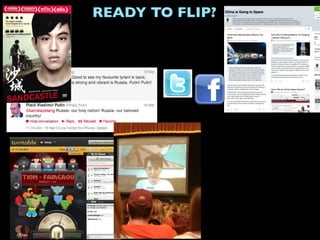
READY TO FLIP?
READY TO FLIP?
QUESTIONS?
READY TO FLIP?
QUESTIONS?

Flipping the syllabus

  • 1.
    3.Flipping the Syllabus Most courses are implicitly built upon a system of minimizing point losses, thereby placing an emphasis on what students do NOT know. Envision a system that instead puts the focus on demonstrated mastery of what students DO know. Professor John Boyer and his technical assistant Katie Pritchard will share their positive point accrual system that has evolved into a very successful pedagogical approach adopted in various sized classrooms. It is a particularly effective approach for very large classrooms (1000+) where individual student needs and scheduling can make a one-size-fits-all syllabus very impractical. They will share a broad range of ideas for student demonstrations of mastery and work with participants to explore how this approach can be adapted to their particular domain and course characteristics.
  • 2.
    Flipping the Syllabus JohnBoyer (joboyer@vt.edu) Katie Pritchard (kpritcha@vt.edu)       Dept. of Geography Dept. of Geography Virginia Tech, United States Virginia Tech, United States
  • 3.
    Flipping the Syllabus JohnBoyer (joboyer@vt.edu) Katie Pritchard (kpritcha@vt.edu)       Dept. of Geography Dept. of Geography Virginia Tech, United States Virginia Tech, United States
  • 4.
  • 5.
  • 6.
    Job description: -Core curriculumcourse -Introductory subject of your choice
  • 7.
    Job description: -Core curriculumcourse -Introductory subject of your choice -Freshman-oriented but open to all academic levels
  • 8.
    Job description: -Core curriculumcourse -Introductory subject of your choice -Freshman-oriented but open to all academic levels -Enrollment will also contain students with a diversity of academic majors, motivations, and backgrounds
  • 9.
    Job description: -Core curriculumcourse -Introductory subject of your choice -Freshman-oriented but open to all academic levels -Enrollment will also contain students with a diversity of academic majors, motivations, and backgrounds -You will be provided with some Teaching Assistant and Technical Assistant support
  • 10.
    Job description: -Core curriculumcourse -Introductory subject of your choice -Freshman-oriented but open to all academic levels -Enrollment will also contain students with a diversity of academic majors, motivations, and backgrounds -You will be provided with some Teaching Assistant and Technical Assistant support ...oh, and just one more detail...
  • 12.
  • 13.
    About our course Title:World Regions (Geography 1014) Students: 2750 (of diverse origins, academic levels, and knowledge levels) Live Lecture: Monday 7pm-9:45pm Optional class movies show Tuesday or Wednesday at 7pm 2 large screens set up - one with lecture and other with rotating regional slides
  • 15.
    Our Ultra-Large ClassBasic Philosophy
  • 16.
    Our Ultra-Large ClassBasic Philosophy -The instinct is to over-structure, have well- defined guidelines, and rigid due dates
  • 17.
    Our Ultra-Large ClassBasic Philosophy -The instinct is to over-structure, have well- defined guidelines, and rigid due dates -We have adopted the opposite approach:
  • 18.
    Our Ultra-Large ClassBasic Philosophy -The instinct is to over-structure, have well- defined guidelines, and rigid due dates -We have adopted the opposite approach: -Maximum flexibility in assignments
  • 19.
    Our Ultra-Large ClassBasic Philosophy -The instinct is to over-structure, have well- defined guidelines, and rigid due dates -We have adopted the opposite approach: -Maximum flexibility in assignments -Maximum flexibility in communications
  • 20.
    Our Ultra-Large ClassBasic Philosophy -The instinct is to over-structure, have well- defined guidelines, and rigid due dates -We have adopted the opposite approach: -Maximum flexibility in assignments -Maximum flexibility in communications -Increased interactions among all players
  • 21.
    Our Ultra-Large ClassBasic Philosophy -The instinct is to over-structure, have well- defined guidelines, and rigid due dates -We have adopted the opposite approach: -Maximum flexibility in assignments -Maximum flexibility in communications -Increased interactions among all players In essence....
  • 22.
    Our Ultra-Large ClassBasic Philosophy -The instinct is to over-structure, have well- defined guidelines, and rigid due dates -We have adopted the opposite approach: -Maximum flexibility in assignments -Maximum flexibility in communications -Increased interactions among all players In essence.... To evolve from a rigid, top-down, and highly structured format to a more decentralized, user- defined, and personalized experience for the learners.
  • 24.
  • 25.
    Thus... +Is learner-centered toallow students to engage and learn in ways best suited for them
  • 26.
    Thus... +Is learner-centered toallow students to engage and learn in ways best suited for them +Students are treated as individuals, take “ownership,” and create class synergy beyond walls of classroom
  • 27.
    Thus... +Is learner-centered toallow students to engage and learn in ways best suited for them +Students are treated as individuals, take “ownership,” and create class synergy beyond walls of classroom +Incorporates social networking technologies to build community, engagement, and social presence in and out of the classroom.
  • 28.
    Thus... +Is learner-centered toallow students to engage and learn in ways best suited for them +Students are treated as individuals, take “ownership,” and create class synergy beyond walls of classroom +Incorporates social networking technologies to build community, engagement, and social presence in and out of the classroom. *Creates a positive feedback loop to empower students when it comes to assessment
  • 29.
    Thus... +Is learner-centered toallow students to engage and learn in ways best suited for them +Students are treated as individuals, take “ownership,” and create class synergy beyond walls of classroom +Incorporates social networking technologies to build community, engagement, and social presence in and out of the classroom. *Creates a positive feedback loop to empower students when it comes to assessment How?
  • 30.
    Thus... +Is learner-centered toallow students to engage and learn in ways best suited for them +Students are treated as individuals, take “ownership,” and create class synergy beyond walls of classroom +Incorporates social networking technologies to build community, engagement, and social presence in and out of the classroom. *Creates a positive feedback loop to empower students when it comes to assessment How? Flipping the Syllabus ....a reference to shifting the paradigm of coursework from the instructor to the student, in both options and ownership.
  • 31.
    First, “Flipping theClassroom” concept A reversed teaching model that delivers instruction at home through interactive, teacher-created videos and moves “homework” to the classroom. Moving lectures outside of the classroom allows teachers to spend more 1:1 time with each student. Students have the opportunity to ask questions and work through problems with the guidance of their teachers and the support of their peers - creating a collaborative learning environment.
  • 32.
  • 33.
  • 36.
  • 37.
    Now, Flipping theSyllabus Development of multiple avenues of opportunity for students to demonstrate their knowledge and performance, while accumulating points. At the end of the semester, the students’ points are tallied, based upon the works completed, and a final grade is assigned based upon a predetermined, criterion-referenced scale.
  • 38.
    Now, Flipping theSyllabus Development of multiple avenues of opportunity for students to demonstrate their knowledge and performance, while accumulating points. At the end of the semester, the students’ points are tallied, based upon the works completed, and a final grade is assigned based upon a predetermined, criterion-referenced scale. 1)Logistically more feasible for large groups, working professional students, and on-line classes that inevitably will be in multiple time zones
  • 39.
    Now, Flipping theSyllabus Development of multiple avenues of opportunity for students to demonstrate their knowledge and performance, while accumulating points. At the end of the semester, the students’ points are tallied, based upon the works completed, and a final grade is assigned based upon a predetermined, criterion-referenced scale. 1)Logistically more feasible for large groups, working professional students, and on-line classes that inevitably will be in multiple time zones 2)Focus on point accumulation rather than point deduction; positive versus negative reinforcement
  • 40.
    Now, Flipping theSyllabus Development of multiple avenues of opportunity for students to demonstrate their knowledge and performance, while accumulating points. At the end of the semester, the students’ points are tallied, based upon the works completed, and a final grade is assigned based upon a predetermined, criterion-referenced scale. 1)Logistically more feasible for large groups, working professional students, and on-line classes that inevitably will be in multiple time zones 2)Focus on point accumulation rather than point deduction; positive versus negative reinforcement 3)Encourages individual expression/creativity and empowers the user with choice
  • 41.
  • 42.
    Diversity of studentassessment options 1)13 weekly quizzes x 30pts=400 (+10 for doing all 13) 2)Midterm Exam=125 3)Final Exam=125 4)World Leaders Exam 50x2 =100 (+10 for dressing up) 5)Films 10x15pts=150 (15pts each up to 150) 6)Non-class events paper=25/each 7)Atlas quizzes (11)=110 8)Twitter Assignment=200 9)Forum Commenting (14wks) =210 10)Geographic Film Review=25/each 11)Flash Quizzes=??? 12)Random Attendance=??? 13)Plaid Correspondents/Artists=??? Total: 1500+ ??? 1050 points = A, 950 points = B, etc.
  • 43.
    The more conventional assessments: Midterm Exam Final Exam World Leader Exams
  • 44.
    The more conventional assignments: International Film Viewings Geographic Film Review Write-up Outside Event Write-up
  • 45.
    A word onour Film assignments.....
  • 46.
    The more conventional assignments: International Film Viewings Geographic Film Review Write-up Outside Event Write-up
  • 47.
    The more flexibleon-line assessments: Weekly Quizzes on readings Atlas Quizzes “Flash” Quizzes on Podcasts
  • 48.
    The more flexibleon-line assessments: Weekly Quizzes on readings Atlas Quizzes “Flash” Quizzes on Podcasts
  • 49.
    The more flexibleon-line assessments: Weekly Quizzes on readings Atlas Quizzes “Flash” Quizzes on Podcasts
  • 50.
    The more flexibleon-line assessments: Weekly Quizzes on readings Atlas Quizzes “Flash” Quizzes on Podcasts
  • 51.
    The really experimentalon-line assignments incorporating social networking technologies: Twitter Forum Commenting Delicious/Storify News Aggregation “Flash” Quizzes on Podcasts
  • 52.
    A word onour Twitter assignment..... http://twitter.com/ #!/list/plaidavenger/ world-leaders
  • 54.
    A word onour Forums assignment.....
  • 55.
    A word onour Forums assignment.....
  • 56.
    A word onour newest assignment: Delicious
  • 57.
  • 58.
  • 59.
    “Flash” Quiz Mania! Blogs/Podcasts -continued dialogue -expanded, tag- able, content
  • 60.
    “Flash” Quiz Mania! Blogs/Podcasts -continued dialogue -expanded, tag- able, content My “wild card” that I play to trick them into learning more!
  • 61.
    PROS The benefitsof using the flipped syllabus:
  • 62.
    PROS The benefitsof using the flipped syllabus: -Positive reinforcement instead of negative
  • 63.
    PROS The benefitsof using the flipped syllabus: -Positive reinforcement instead of negative -Maximum of flexibility to facilitate different learning styles of the students
  • 64.
    PROS The benefitsof using the flipped syllabus: -Positive reinforcement instead of negative -Maximum of flexibility to facilitate different learning styles of the students -Maximum of flexibility to allow for best assessment option for the student
  • 65.
    PROS The benefitsof using the flipped syllabus: -Positive reinforcement instead of negative -Maximum of flexibility to facilitate different learning styles of the students -Maximum of flexibility to allow for best assessment option for the student -Maximum of flexibility to facilitate different schedules of the students
  • 66.
    PROS The benefitsof using the flipped syllabus: -Positive reinforcement instead of negative -Maximum of flexibility to facilitate different learning styles of the students -Maximum of flexibility to allow for best assessment option for the student -Maximum of flexibility to facilitate different schedules of the students -Has a much more ‘real life’ component in terms of work place ethics and self-motivation
  • 67.
    PROS The benefitsof using the flipped syllabus: -Positive reinforcement instead of negative -Maximum of flexibility to facilitate different learning styles of the students -Maximum of flexibility to allow for best assessment option for the student -Maximum of flexibility to facilitate different schedules of the students -Has a much more ‘real life’ component in terms of work place ethics and self-motivation -Students are held to a MUCH higher degree of accountability...even more so than in their other ‘hard’ classes
  • 68.
    PROS The benefitsof using the flipped syllabus: -Positive reinforcement instead of negative -Maximum of flexibility to facilitate different learning styles of the students -Maximum of flexibility to allow for best assessment option for the student -Maximum of flexibility to facilitate different schedules of the students -Has a much more ‘real life’ component in terms of work place ethics and self-motivation -Students are held to a MUCH higher degree of accountability...even more so than in their other ‘hard’ classes -No excuses, no re-scheduling, no ‘extra credit’, no one to blame
  • 69.
    CONS But it ain’t all pretty... ...the cons of using the flipped syllabus: -Cultural lag: students have been trained to behave a certain way, and change is sometimes difficult -Many students will procrastinate, and this system does not allow for that -Constant reminders and reinforcing are not just desirable, but almost required (which does become time intensive, and can irritate good students)
  • 70.
    ETC Whatwe have learned, how we are adapting -A ‘contract’ approach will be implemented at beginning of semester -A mandatory ‘quiz’ on the syllabus will be implemented at the beginning of the semester -Automated reminders about due dates, assignments, and how many points they should have by certain dates *Instructor/student interactivity is a vital component -You have to ‘fine tune’ the point values to guide students to build a strong and diverse portfolio -It’s a lot of work, but student response has been overwhelmingly positive
  • 71.
  • 72.
  • 73.