Department of Electronics and Communication Engineering
A Technical Seminar
on
“Flexible Electronics”
Presentation By
GINNAM MAHALAXMI
[1ST15EC134]
Dept. of ECE, SaIT.
Under the guidance of
Prof. S.SOWNDESWARI
Professor,
Dept. of ECE,
SaIT, Bengaluru - 560097
Technical Seminar Coordinators
Prof. YOGANADINI P
Prof. SUDHA J.
Dept. of ECE,
SaIT ,Bengaluru - 560097
CONTENT
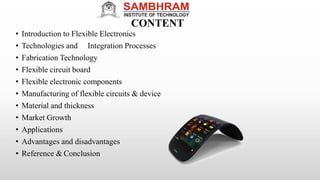
• Introduction to Flexible Electronics
• Technologies and Integration Processes
• Fabrication Technology
• Flexible circuit board
• Flexible electronic components
• Manufacturing of flexible circuits & device
• Material and thickness
• Market Growth
• Applications
• Advantages and disadvantages
• Reference & Conclusion
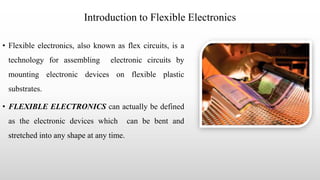
Introduction to Flexible Electronics
• Flexible electronics, also known as flex circuits, is a
technology for assembling electronic circuits by
mounting electronic devices on flexible plastic
substrates.
• FLEXIBLE ELECTRONICS can actually be defined
as the electronic devices which can be bent and
stretched into any shape at any time.
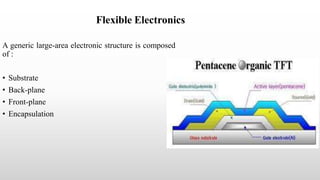
Flexible Electronics
A generic large-area electronic structure is composed
of :
• Substrate
• Back-plane
• Front-plane
• Encapsulation
Technologies and Integration Process
Any Manufacturable device has four essential characteristics:
• Superior and pre-specified performance, with reproducibility, uniformity, and
reliability
• High yield to acceptable tolerance
• Simulations exist for both reverse engineering during development and right-first-
time design
• Proven adequate in-service lifetime.
(Cont...)
Fabrication Technology for Flexible Electronics
• Fabrication on sheets by Batch Processing..
 On a rigid carrier, facing up and loose
 In a tensioning frame, facing up or down
 In a frame, facing down and loose
• Fabrication On Web by roll-to-roll Processing
• Additive Printing
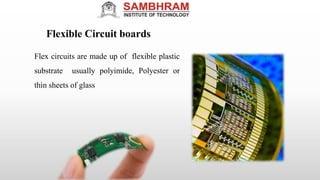
Flexible Circuit boards
Flex circuits are made up of flexible plastic
substrate usually polyimide, Polyester or
thin sheets of glass
Flexible electronic components
• Electronic components such as transistors are being made from silicon
nanomembrane usually called TFT’s(thinfilm transistors)
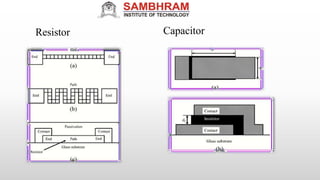
• Flexible resistors & capacitors structures are shown diagrammatically usually called
thin flim resistors and thin flim capacitors
Resistor Capacitor
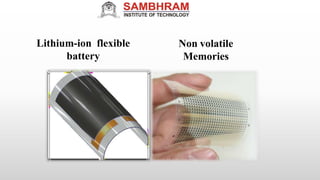
Lithium-ion flexible
battery
Non volatile
Memories
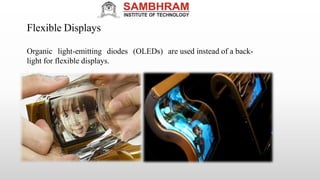
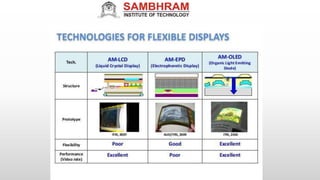
Flexible Displays
normally
Organic light-emitting diodes (OLEDs) are used instead of a back-
light for flexible displays.
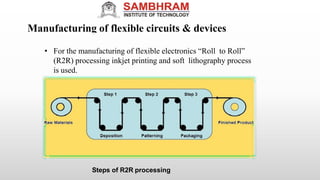
• For the manufacturing of flexible electronics “Roll to Roll”
(R2R) processing inkjet printing and soft lithography process
is used.
Steps of R2R processing
Manufacturing of flexible circuits & devices
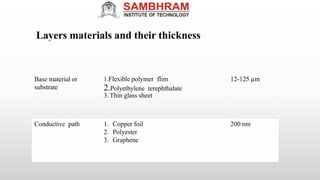
Layers materials and their thickness
Base material or
substrate
1.Flexible polymer flim
2.Polyethylene terephthalate
3. Thin glass sheet
12-125 µm
Conductive path 1. Copper foil
2. Polyester
3. Graphene
200 nm
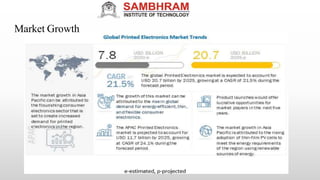
organic large-
area
estimated at
over
$200M, the global market is expected to increase to a
$800M market by 2020.
Market Growth
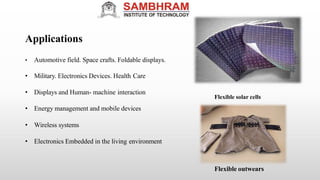
Applications
• Automotive field. Space crafts. Foldable displays.
• Military. Electronics Devices. Health Care
• Displays and Human- machine interaction
• Wireless systems
• Electronics Embedded in the living environment
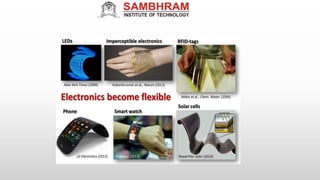
Flexible solar cells
Flexible outwears
• Energy management and mobile devices
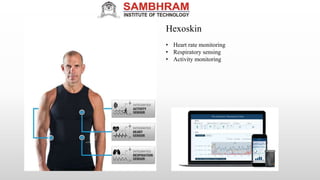
Hexoskin
• Heart rate monitoring
• Respiratory sensing
• Activity monitoring
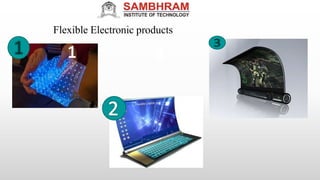
Flexible Electronic products
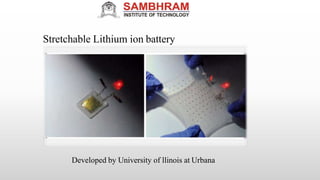
Stretchable Lithium ion battery
Developed by University of llinois at Urbana
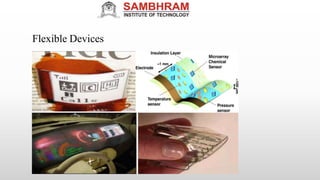
Flexible Devices
ADVANTAGES
• light weight
• Smaller dimensions required
• Space saving
• Foldable and bendable
• Increased circuitry density
• Wide Viewing Angle
DISADVANTAGES
• Initial investment may be
expensive
• Integration of components would be
challenge for engineers
• Precision machines required
• Lifetime
• Manufacturing
Conclusion
• Flexible electronics in future will play a part in
field of security, entertainment,biomedical
applications and has lead to innovative
applications
• The demand for flexible electronic products at
present may not be noticed but upto 2020 there
would be huge demand and preference will be
given to the flexible products in market
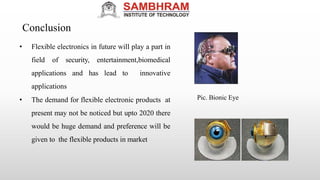
Pic. Bionic Eye
References
• [1] www.wikkipedia.org.in/flexibleelectronics
• [2] "Printed Circuit Techniques" by Cledo Brunetti and Roger W. Curtis
(National Bureau of Standards Circular 468 first issued 15 November
1947)
• [3] Gleskova, H., Wagner, S., Gasˇpar k, V. & Kova´cˇ, P. 150uC
Amorphous Silicon thin-Film Transistor technology for Polyimide
Substrates. J.Electrochem. Soc.148, G370-G374 (2001)
• [4] Cotema, coating machinery GmbH www.cotema.de
• [5]https://www.marketsandmarkets.com/Market-Reports/printed-
electronics-market-197.html
THANKYOU

Mahalaxmi technical seminar presentation - Copy.pptx

  • 1.
    Department of Electronicsand Communication Engineering A Technical Seminar on “Flexible Electronics” Presentation By GINNAM MAHALAXMI [1ST15EC134] Dept. of ECE, SaIT. Under the guidance of Prof. S.SOWNDESWARI Professor, Dept. of ECE, SaIT, Bengaluru - 560097 Technical Seminar Coordinators Prof. YOGANADINI P Prof. SUDHA J. Dept. of ECE, SaIT ,Bengaluru - 560097
  • 2.
    CONTENT • Introduction toFlexible Electronics • Technologies and Integration Processes • Fabrication Technology • Flexible circuit board • Flexible electronic components • Manufacturing of flexible circuits & device • Material and thickness • Market Growth • Applications • Advantages and disadvantages • Reference & Conclusion
  • 3.
    Introduction to FlexibleElectronics • Flexible electronics, also known as flex circuits, is a technology for assembling electronic circuits by mounting electronic devices on flexible plastic substrates. • FLEXIBLE ELECTRONICS can actually be defined as the electronic devices which can be bent and stretched into any shape at any time.
  • 4.
    Flexible Electronics A genericlarge-area electronic structure is composed of : • Substrate • Back-plane • Front-plane • Encapsulation
  • 5.
    Technologies and IntegrationProcess Any Manufacturable device has four essential characteristics: • Superior and pre-specified performance, with reproducibility, uniformity, and reliability • High yield to acceptable tolerance • Simulations exist for both reverse engineering during development and right-first- time design • Proven adequate in-service lifetime. (Cont...)
  • 6.
    Fabrication Technology forFlexible Electronics • Fabrication on sheets by Batch Processing..  On a rigid carrier, facing up and loose  In a tensioning frame, facing up or down  In a frame, facing down and loose • Fabrication On Web by roll-to-roll Processing • Additive Printing
  • 7.
    Flexible Circuit boards Flexcircuits are made up of flexible plastic substrate usually polyimide, Polyester or thin sheets of glass
  • 8.
    Flexible electronic components •Electronic components such as transistors are being made from silicon nanomembrane usually called TFT’s(thinfilm transistors) • Flexible resistors & capacitors structures are shown diagrammatically usually called thin flim resistors and thin flim capacitors
  • 9.
  • 10.
  • 11.
    Flexible Displays normally Organic light-emittingdiodes (OLEDs) are used instead of a back- light for flexible displays.
  • 13.
    • For themanufacturing of flexible electronics “Roll to Roll” (R2R) processing inkjet printing and soft lithography process is used. Steps of R2R processing Manufacturing of flexible circuits & devices
  • 14.
    Layers materials andtheir thickness Base material or substrate 1.Flexible polymer flim 2.Polyethylene terephthalate 3. Thin glass sheet 12-125 µm Conductive path 1. Copper foil 2. Polyester 3. Graphene 200 nm
  • 15.
    organic large- area estimated at over $200M,the global market is expected to increase to a $800M market by 2020. Market Growth
  • 16.
    Applications • Automotive field.Space crafts. Foldable displays. • Military. Electronics Devices. Health Care • Displays and Human- machine interaction • Wireless systems • Electronics Embedded in the living environment Flexible solar cells Flexible outwears • Energy management and mobile devices
  • 17.
    Hexoskin • Heart ratemonitoring • Respiratory sensing • Activity monitoring
  • 18.
  • 19.
    Stretchable Lithium ionbattery Developed by University of llinois at Urbana
  • 20.
  • 22.
    ADVANTAGES • light weight •Smaller dimensions required • Space saving • Foldable and bendable • Increased circuitry density • Wide Viewing Angle DISADVANTAGES • Initial investment may be expensive • Integration of components would be challenge for engineers • Precision machines required • Lifetime • Manufacturing
  • 23.
    Conclusion • Flexible electronicsin future will play a part in field of security, entertainment,biomedical applications and has lead to innovative applications • The demand for flexible electronic products at present may not be noticed but upto 2020 there would be huge demand and preference will be given to the flexible products in market Pic. Bionic Eye
  • 24.
    References • [1] www.wikkipedia.org.in/flexibleelectronics •[2] "Printed Circuit Techniques" by Cledo Brunetti and Roger W. Curtis (National Bureau of Standards Circular 468 first issued 15 November 1947) • [3] Gleskova, H., Wagner, S., Gasˇpar k, V. & Kova´cˇ, P. 150uC Amorphous Silicon thin-Film Transistor technology for Polyimide Substrates. J.Electrochem. Soc.148, G370-G374 (2001) • [4] Cotema, coating machinery GmbH www.cotema.de • [5]https://www.marketsandmarkets.com/Market-Reports/printed- electronics-market-197.html
  • 25.