



Co-Presenter
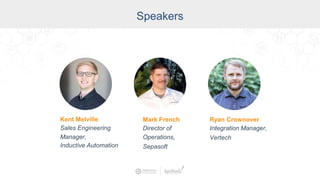
Speakers
Kent Melville
Sales Engineering
Manager,
Inductive Automation
Mark French
Director of
Operations,
Sepasoft
Ryan Crownover
Integration Manager,
Vertech
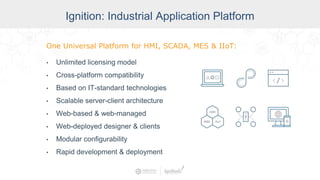
• Unlimited licensing model
• Cross-platform compatibility
• Based on IT-standard technologies
• Scalable server-client architecture
• Web-based & web-managed
• Web-deployed designer & clients
• Modular configurability
• Rapid development & deployment
Ignition: Industrial Application Platform
One Universal Platform for HMI, SCADA, MES & IIoT:
Agenda
• Introduction to Ignition
• Why DevOps?
• Story: The Problem and The Solution
• Live Demo
• Conclusion
• Audience Q&A
Legacy Approaches
● Waterfall
● Agile without Operations testing and feedback
● These approaches can provide good outcomes,
but typically at higher cost, reduced feature-
sets, and longer delivery times.
Why DevOps?
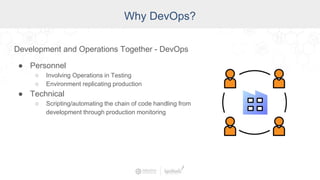
Development and Operations Together - DevOps
● Personnel
○ Involving Operations in Testing
○ Environment replicating production
● Technical
○ Scripting/automating the chain of code handling from
development through production monitoring
Why DevOps?
Currently a hot topic in software engineering
● Process approach driven by end-user needs
● Logical next step from agile development approach
● Results in a more stable software environment
while delivering features needed by end-users
Why DevOps?
The Ignition Platform can support and thrive within a DevOps framework.
● Flexibility of the Ignition platform, such as integrating
directly with Git, and the variety of host systems,
allows integration with DevOps tools and modeling
of production environments in a DevOps framework.
Why DevOps?
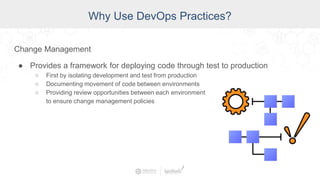
Change Management
● Provides a framework for deploying code through test to production
○ First by isolating development and test from production
○ Documenting movement of code between environments
○ Providing review opportunities between each environment
to ensure change management policies
Why Use DevOps Practices?
Rigorous Testing of Deployment Procedures
● Deployment is a common failure point
○ “It worked in test”
● A specific scenario can be tested repeatedly until
stakeholders have assurance production
deployment will be successful
● Ensure proper deployment procedures (such as
backups) are performed every time
Why Use DevOps Practices?
Ideal to work with a Certified Integration Partner
● Integrators have skill set with DevOps tools
● Leverage the experience from several projects
● Typically shorter-term projects
Why Use DevOps Practices?
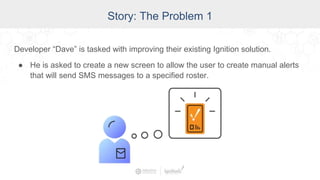
Developer “Dave” is tasked with improving their existing Ignition solution.
● He is asked to create a new screen to allow the user to create manual alerts
that will send SMS messages to a specified roster.
Story: The Problem 1
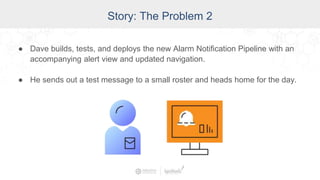
● Dave builds, tests, and deploys the new Alarm Notification Pipeline with an
accompanying alert view and updated navigation.
● He sends out a test message to a small roster and heads home for the day.
Story: The Problem 2
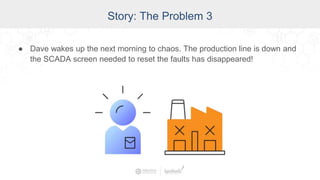
● Dave wakes up the next morning to chaos. The production line is down and
the SCADA screen needed to reset the faults has disappeared!
Story: The Problem 3
● Unfortunately, this story is very common in our industry and the solutions are
not always this simple. The bug could have easily caused any of the following
worse outcomes:
○ Producing non-conforming product that goes unnoticed for hours or even days.
○ Preventing critical sensor measurements from being recorded that are necessary for product
certification.
○ Sending erroneous data to the ERP that is still valid, causing wildly incorrect financials.
Story: The Problem 4
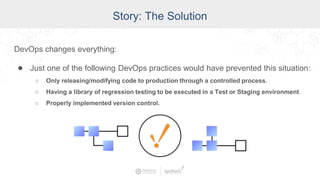
DevOps changes everything:
● Just one of the following DevOps practices would have prevented this situation:
○ Only releasing/modifying code to production through a controlled process.
○ Having a library of regression testing to be executed in a Test or Staging environment.
○ Properly implemented version control.
Story: The Solution
Demo
What did we just see?
● Multiple Environments
○ Dev - The only place you make changes (the only place you open the designer).
○ Test - A safe place to see how your changes affect the whole system.
○ Staging - A final validation as close to the production environment as possible.
○ Production - A system that is not touched outside of the controlled process.
● Source Control
○ Integrated version control allows for easy visibility of changes
● Deployment Processes
○ DevOps tools give you a standard way to migrate changes between environments.
○ Self-Documenting Pipelines provide simplified traceability.
○ Eliminates the manual steps prone to user error (project exports, gateway backups, etc.).
○ Minimizes downtime and operational risk.
Recap
Conclusion
In turn, this allows for:
● Flexible priorities
● Rapid turnaround times
● Coordination of multiple developers
● Minimum downtime risk
● Minimum operational risk
DevOps provides the structure for:
● Multiple Environments (Tiers)
● Source Control
● Isolated Development
● Deployment Processes
● Continuous Integration
● Delivery (CI/CD)
Ready for the Next Step?
Schedule a free design consultation with
Vertech:
http://www.calendly.com/vertech/devops
Join us for the 2021 Ignition Community Conference
on September 21 & 22!
● Keynote
● Developer Panel
● Discover Gallery
● Build-A-Thon
● Community Sessions
● Industry & Integrator Panels
● Interactive video chat platform
● Register for free at: icc.inductiveautomation.com
First Steps to DevOps

First Steps to DevOps

  • 2.
    Co-Presenter Speakers Kent Melville Sales Engineering Manager, InductiveAutomation Mark French Director of Operations, Sepasoft Ryan Crownover Integration Manager, Vertech
  • 3.
    • Unlimited licensingmodel • Cross-platform compatibility • Based on IT-standard technologies • Scalable server-client architecture • Web-based & web-managed • Web-deployed designer & clients • Modular configurability • Rapid development & deployment Ignition: Industrial Application Platform One Universal Platform for HMI, SCADA, MES & IIoT:
  • 4.
    Agenda • Introduction toIgnition • Why DevOps? • Story: The Problem and The Solution • Live Demo • Conclusion • Audience Q&A
  • 5.
    Legacy Approaches ● Waterfall ●Agile without Operations testing and feedback ● These approaches can provide good outcomes, but typically at higher cost, reduced feature- sets, and longer delivery times. Why DevOps?
  • 6.
    Development and OperationsTogether - DevOps ● Personnel ○ Involving Operations in Testing ○ Environment replicating production ● Technical ○ Scripting/automating the chain of code handling from development through production monitoring Why DevOps?
  • 7.
    Currently a hottopic in software engineering ● Process approach driven by end-user needs ● Logical next step from agile development approach ● Results in a more stable software environment while delivering features needed by end-users Why DevOps?
  • 8.
    The Ignition Platformcan support and thrive within a DevOps framework. ● Flexibility of the Ignition platform, such as integrating directly with Git, and the variety of host systems, allows integration with DevOps tools and modeling of production environments in a DevOps framework. Why DevOps?
  • 9.
    Change Management ● Providesa framework for deploying code through test to production ○ First by isolating development and test from production ○ Documenting movement of code between environments ○ Providing review opportunities between each environment to ensure change management policies Why Use DevOps Practices?
  • 10.
    Rigorous Testing ofDeployment Procedures ● Deployment is a common failure point ○ “It worked in test” ● A specific scenario can be tested repeatedly until stakeholders have assurance production deployment will be successful ● Ensure proper deployment procedures (such as backups) are performed every time Why Use DevOps Practices?
  • 11.
    Ideal to workwith a Certified Integration Partner ● Integrators have skill set with DevOps tools ● Leverage the experience from several projects ● Typically shorter-term projects Why Use DevOps Practices?
  • 12.
    Developer “Dave” istasked with improving their existing Ignition solution. ● He is asked to create a new screen to allow the user to create manual alerts that will send SMS messages to a specified roster. Story: The Problem 1
  • 13.
    ● Dave builds,tests, and deploys the new Alarm Notification Pipeline with an accompanying alert view and updated navigation. ● He sends out a test message to a small roster and heads home for the day. Story: The Problem 2
  • 14.
    ● Dave wakesup the next morning to chaos. The production line is down and the SCADA screen needed to reset the faults has disappeared! Story: The Problem 3
  • 15.
    ● Unfortunately, thisstory is very common in our industry and the solutions are not always this simple. The bug could have easily caused any of the following worse outcomes: ○ Producing non-conforming product that goes unnoticed for hours or even days. ○ Preventing critical sensor measurements from being recorded that are necessary for product certification. ○ Sending erroneous data to the ERP that is still valid, causing wildly incorrect financials. Story: The Problem 4
  • 16.
    DevOps changes everything: ●Just one of the following DevOps practices would have prevented this situation: ○ Only releasing/modifying code to production through a controlled process. ○ Having a library of regression testing to be executed in a Test or Staging environment. ○ Properly implemented version control. Story: The Solution
  • 17.
  • 18.
    What did wejust see? ● Multiple Environments ○ Dev - The only place you make changes (the only place you open the designer). ○ Test - A safe place to see how your changes affect the whole system. ○ Staging - A final validation as close to the production environment as possible. ○ Production - A system that is not touched outside of the controlled process. ● Source Control ○ Integrated version control allows for easy visibility of changes ● Deployment Processes ○ DevOps tools give you a standard way to migrate changes between environments. ○ Self-Documenting Pipelines provide simplified traceability. ○ Eliminates the manual steps prone to user error (project exports, gateway backups, etc.). ○ Minimizes downtime and operational risk. Recap
  • 19.
    Conclusion In turn, thisallows for: ● Flexible priorities ● Rapid turnaround times ● Coordination of multiple developers ● Minimum downtime risk ● Minimum operational risk DevOps provides the structure for: ● Multiple Environments (Tiers) ● Source Control ● Isolated Development ● Deployment Processes ● Continuous Integration ● Delivery (CI/CD)
  • 20.
    Ready for theNext Step? Schedule a free design consultation with Vertech: http://www.calendly.com/vertech/devops
  • 22.
    Join us forthe 2021 Ignition Community Conference on September 21 & 22! ● Keynote ● Developer Panel ● Discover Gallery ● Build-A-Thon ● Community Sessions ● Industry & Integrator Panels ● Interactive video chat platform ● Register for free at: icc.inductiveautomation.com