The Promise of DevOps 
Getting Software Done, Tested and Deployed Faster
Origin of DevOps 
 A Meeting of the Minds between 
 Agile Software Development 
 Enterprise Systems Management 
CONTINOVE Copyright © 2015
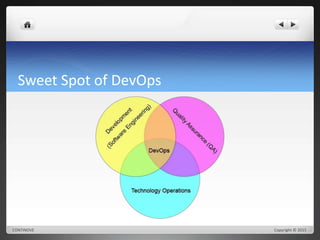
Sweet Spot of DevOps 
CONTINOVE Copyright © 2015
Pillars of DevOps 
 Communication 
 Collaboration 
 Integration 
CONTINOVE Copyright © 2015
Goals of DevOps 
 Increase deployment frequency 
 Faster time to market 
 Shorten lead time between fixes 
 Faster mean time to recovery 
CONTINOVE Copyright © 2015
Metrics of DevOps 
 Number and frequency of software releases 
 Volume of defects 
 Time/cost per release 
 MTTR (Mean Time to Repair, Resolve or Resolution) 
 Number and frequency of outages / performance issues 
 Revenue/profit impact of outages / performance issues 
 Number and cost of resources 
 (Beal, 2014) 
CONTINOVE Copyright © 2015
Typical Pain Points 
 Does communication affect collaboration? 
 Does QA have to wait for the provisioning of test environments? 
 Does committed code get bogged down in testing? 
 Do you have to revise committed code too often because it won’t run in the 
production environment? 
 Are your existing tools clumsy and not useful? 
CONTINOVE Copyright © 2015
Approach of DevOps 
 Program operational processes through automation 
 Maximize 
 Predictability 
 Efficiency 
 Security 
 Maintainability 
CONTINOVE Copyright © 2015
Target of DevOps 
 Provide faster development and deployment cycles 
 Feature development 
 Quality testing 
 Product delivery 
 Maintenance releases 
 Overall increase of reliability and security 
CONTINOVE Copyright © 2015
Results of DevOps 
 Continuous Deployment/Continuous Delivery 
 Transparency of End-to-End Process 
 Event-Driven Workflow 
 Automated Communication to Stakeholders 
 Flexible Management of Automation 
CONTINOVE Copyright © 2015
Tool Categories of DevOps 
 Configuration Management 
 Application Deployment 
 Monitoring 
 Version Control 
 Test and Build Systems 
CONTINOVE Copyright © 2015
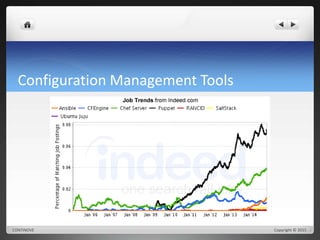
Configuration Management Tools 
 Ansible 
 CFEngine 
 Chef 
 Puppet* 
 RANCID 
 SaltStack 
 Ubuntu Juju 
CONTINOVE Copyright © 2015
Configuration Management Tools 
CONTINOVE Copyright © 2015
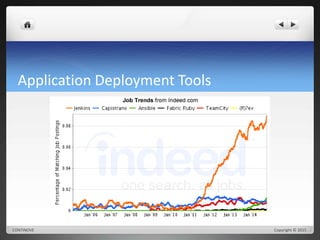
Application Deployment Tools 
 Capistrano 
 Ansible 
 Fabric 
 Jenkins 
 ( R )?ex 
 TeamCity 
CONTINOVE Copyright © 2015
Application Deployment Tools 
CONTINOVE Copyright © 2015
Monitoring Tools 
 Application performance monitoring 
 Server monitoring 
CONTINOVE Copyright © 2015
Version Control Tools 
 Git 
 Subversion 
 Perforce 
 CVS source 
 Mercurial 
 TFS 
CONTINOVE Copyright © 2015
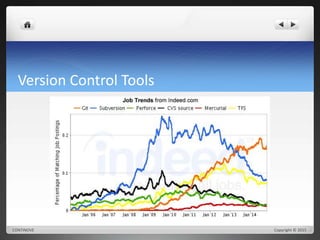
Version Control Tools 
CONTINOVE Copyright © 2015
Test and Build System Tools 
 Ant 
 Gradle 
 Jenkins 
 Maven 
 Travis 
 BuildHive 
CONTINOVE Copyright © 2015
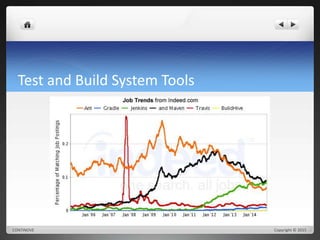
Test and Build System Tools 
CONTINOVE Copyright © 2015
Choices of DevOps Tools 
 Choose tools that are easily integrated rather than silos of information and 
process. 
 Focus on Automation from End-to-End, empowering QA and Product 
Owners to Publish to (and Revert from) Production environments upon test 
acceptance (failure). 
 Open Source tools are mature, and APIs are prevalent. 
CONTINOVE Copyright © 2015
Conclusion 
Leverage DevOps technologies in 2015 to achieve Automation from 
Development to Production. 
CONTINOVE Copyright © 2015
Resources 
Beal, H. (2014, March 18). Measuring Your DevOps Success. Retrieved 
December 12, 2014, from APPDYNAMICS: 
http://www.appdynamics.com/blog/devops/quantified-devops/ 
Wilinski, E. (2014, June 02). DevOps Best Practices: Finding the Right Tools. 
Retrieved December 13, 2014, from New Relic: 
http://blog.newrelic.com/2014/06/02/devops-tools/ 
Indeed.com 
http://en.wikipedia.org/wiki/DevOps 
CONTINOVE Copyright © 2015

The Promise of DevOps

  • 1.
    The Promise ofDevOps Getting Software Done, Tested and Deployed Faster
  • 2.
    Origin of DevOps  A Meeting of the Minds between  Agile Software Development  Enterprise Systems Management CONTINOVE Copyright © 2015
  • 3.
    Sweet Spot ofDevOps CONTINOVE Copyright © 2015
  • 4.
    Pillars of DevOps  Communication  Collaboration  Integration CONTINOVE Copyright © 2015
  • 5.
    Goals of DevOps  Increase deployment frequency  Faster time to market  Shorten lead time between fixes  Faster mean time to recovery CONTINOVE Copyright © 2015
  • 6.
    Metrics of DevOps  Number and frequency of software releases  Volume of defects  Time/cost per release  MTTR (Mean Time to Repair, Resolve or Resolution)  Number and frequency of outages / performance issues  Revenue/profit impact of outages / performance issues  Number and cost of resources  (Beal, 2014) CONTINOVE Copyright © 2015
  • 7.
    Typical Pain Points  Does communication affect collaboration?  Does QA have to wait for the provisioning of test environments?  Does committed code get bogged down in testing?  Do you have to revise committed code too often because it won’t run in the production environment?  Are your existing tools clumsy and not useful? CONTINOVE Copyright © 2015
  • 8.
    Approach of DevOps  Program operational processes through automation  Maximize  Predictability  Efficiency  Security  Maintainability CONTINOVE Copyright © 2015
  • 9.
    Target of DevOps  Provide faster development and deployment cycles  Feature development  Quality testing  Product delivery  Maintenance releases  Overall increase of reliability and security CONTINOVE Copyright © 2015
  • 10.
    Results of DevOps  Continuous Deployment/Continuous Delivery  Transparency of End-to-End Process  Event-Driven Workflow  Automated Communication to Stakeholders  Flexible Management of Automation CONTINOVE Copyright © 2015
  • 11.
    Tool Categories ofDevOps  Configuration Management  Application Deployment  Monitoring  Version Control  Test and Build Systems CONTINOVE Copyright © 2015
  • 12.
    Configuration Management Tools  Ansible  CFEngine  Chef  Puppet*  RANCID  SaltStack  Ubuntu Juju CONTINOVE Copyright © 2015
  • 13.
    Configuration Management Tools CONTINOVE Copyright © 2015
  • 14.
    Application Deployment Tools  Capistrano  Ansible  Fabric  Jenkins  ( R )?ex  TeamCity CONTINOVE Copyright © 2015
  • 15.
    Application Deployment Tools CONTINOVE Copyright © 2015
  • 16.
    Monitoring Tools Application performance monitoring  Server monitoring CONTINOVE Copyright © 2015
  • 17.
    Version Control Tools  Git  Subversion  Perforce  CVS source  Mercurial  TFS CONTINOVE Copyright © 2015
  • 18.
    Version Control Tools CONTINOVE Copyright © 2015
  • 19.
    Test and BuildSystem Tools  Ant  Gradle  Jenkins  Maven  Travis  BuildHive CONTINOVE Copyright © 2015
  • 20.
    Test and BuildSystem Tools CONTINOVE Copyright © 2015
  • 21.
    Choices of DevOpsTools  Choose tools that are easily integrated rather than silos of information and process.  Focus on Automation from End-to-End, empowering QA and Product Owners to Publish to (and Revert from) Production environments upon test acceptance (failure).  Open Source tools are mature, and APIs are prevalent. CONTINOVE Copyright © 2015
  • 22.
    Conclusion Leverage DevOpstechnologies in 2015 to achieve Automation from Development to Production. CONTINOVE Copyright © 2015
  • 23.
    Resources Beal, H.(2014, March 18). Measuring Your DevOps Success. Retrieved December 12, 2014, from APPDYNAMICS: http://www.appdynamics.com/blog/devops/quantified-devops/ Wilinski, E. (2014, June 02). DevOps Best Practices: Finding the Right Tools. Retrieved December 13, 2014, from New Relic: http://blog.newrelic.com/2014/06/02/devops-tools/ Indeed.com http://en.wikipedia.org/wiki/DevOps CONTINOVE Copyright © 2015