1 
FirewallS 
Presented to 
MR.AMANDEEP SINGH 
Presented by 
SURESH KUMAR 
AMRIT SINGH 
SANDEEP UPPAL 
SATINDER SINGH
2 
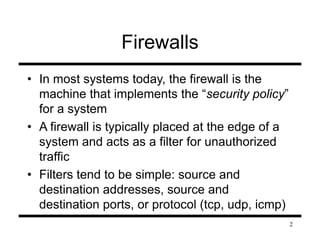
Firewalls 
• In most systems today, the firewall is the 
machine that implements the “security policy” 
for a system 
• A firewall is typically placed at the edge of a 
system and acts as a filter for unauthorized 
traffic 
• Filters tend to be simple: source and 
destination addresses, source and 
destination ports, or protocol (tcp, udp, icmp)
3 
Outline 
• Intro to Security and Firewalls 
• Problems with Current Firewalls 
• Distributed Firewall Concept 
• Distributed Firewall Implementation 
• Conclusions
4 
Intro to Security 
• Computer/Network Security - The 
prevention and detection of 
unauthorized actions by users of 
computer systems* 
• But what does “unauthorized” mean? 
• It depends on the system’s “security 
policy”
5 
Firewall Drawbacks 
• Certain protocols (FTP, Real-Audio) are 
difficult for firewalls to process 
• Assumes inside users are “trusted” 
• Multiple entry points make firewalls hard 
to manage
6 
Distributed Firewall Concept 
• Security policy is defined centrally 
• Enforcement of policy is done by 
network end point(s)
7 
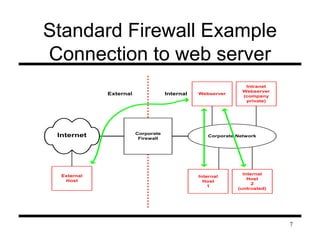
Standard Firewall Example 
Connection to web server 
Corporate Network 
Corporate 
Firewall 
Internet 
External Internal 
External 
Host 
Internal 
Host 
1 
Internal 
Host 
2 
(untrusted) 
Webserver 
Intranet 
Webserver 
(company 
private)
8 
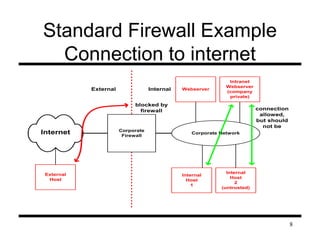
Standard Firewall Example 
Connection to internet 
Corporate Network 
Corporate 
Firewall 
Internet 
External Internal 
External 
Host 
Internal 
Host 
1 
Internal 
Host 
2 
(untrusted) 
Webserver 
Intranet 
Webserver 
(company 
private) 
blocked by 
firewall connection 
allowed, 
but should 
not be
9 
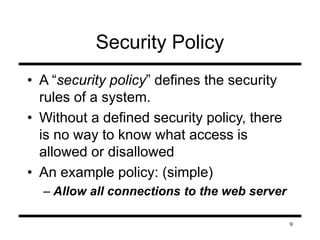
Security Policy 
• A “security policy” defines the security 
rules of a system. 
• Without a defined security policy, there 
is no way to know what access is 
allowed or disallowed 
• An example policy: (simple) 
– Allow all connections to the web server
10 
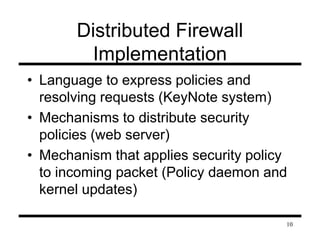
Distributed Firewall 
Implementation 
• Language to express policies and 
resolving requests (KeyNote system) 
• Mechanisms to distribute security 
policies (web server) 
• Mechanism that applies security policy 
to incoming packet (Policy daemon and 
kernel updates)
11 
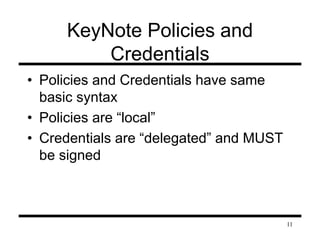
KeyNote Policies and 
Credentials 
• Policies and Credentials have same 
basic syntax 
• Policies are “local” 
• Credentials are “delegated” and MUST 
be signed
12 
Distributed Firewall 
Implementation 
• Not a complete solution, only a 
prototype 
• Done on Open BSD 
• Filters done in kernel space 
• Focused on TCP connections only 
–connect and accept calls 
–When a connect is issued, a “policy 
context” is created
13 
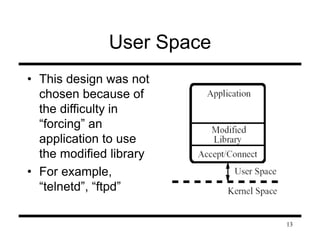
User Space 
• This design was not 
chosen because of 
the difficulty in 
“forcing” an 
application to use 
the modified library 
• For example, 
“telnetd”, “ftpd”
14 
Policy Context 
• No limit to the kind of data that can be associated 
with the context 
• For a connect, context will include ID of user that 
initiated the connection, the destination address and 
destination port. 
• For an accept, context will include similar data to 
connect, except that the source address and source 
port are also included
15 
Policy Device 
• Dev/policy – pseudo device driver 
• Communication path between the Policy 
Daemon and the “modified” kernel 
• Supports standard operations: open, 
close, read, write, 
• Independent of type of application
16 
Future Work 
• High quality administration tools NEED 
to exist for distributed firewalls to be 
accepted 
• Allow per-packet scanning as opposed 
to per-connection scanning 
• Policy updating and revocation 
• Credential discovery
17 
Thank YoU

Firewall

  • 1.
    1 FirewallS Presentedto MR.AMANDEEP SINGH Presented by SURESH KUMAR AMRIT SINGH SANDEEP UPPAL SATINDER SINGH
  • 2.
    2 Firewalls •In most systems today, the firewall is the machine that implements the “security policy” for a system • A firewall is typically placed at the edge of a system and acts as a filter for unauthorized traffic • Filters tend to be simple: source and destination addresses, source and destination ports, or protocol (tcp, udp, icmp)
  • 3.
    3 Outline •Intro to Security and Firewalls • Problems with Current Firewalls • Distributed Firewall Concept • Distributed Firewall Implementation • Conclusions
  • 4.
    4 Intro toSecurity • Computer/Network Security - The prevention and detection of unauthorized actions by users of computer systems* • But what does “unauthorized” mean? • It depends on the system’s “security policy”
  • 5.
    5 Firewall Drawbacks • Certain protocols (FTP, Real-Audio) are difficult for firewalls to process • Assumes inside users are “trusted” • Multiple entry points make firewalls hard to manage
  • 6.
    6 Distributed FirewallConcept • Security policy is defined centrally • Enforcement of policy is done by network end point(s)
  • 7.
    7 Standard FirewallExample Connection to web server Corporate Network Corporate Firewall Internet External Internal External Host Internal Host 1 Internal Host 2 (untrusted) Webserver Intranet Webserver (company private)
  • 8.
    8 Standard FirewallExample Connection to internet Corporate Network Corporate Firewall Internet External Internal External Host Internal Host 1 Internal Host 2 (untrusted) Webserver Intranet Webserver (company private) blocked by firewall connection allowed, but should not be
  • 9.
    9 Security Policy • A “security policy” defines the security rules of a system. • Without a defined security policy, there is no way to know what access is allowed or disallowed • An example policy: (simple) – Allow all connections to the web server
  • 10.
    10 Distributed Firewall Implementation • Language to express policies and resolving requests (KeyNote system) • Mechanisms to distribute security policies (web server) • Mechanism that applies security policy to incoming packet (Policy daemon and kernel updates)
  • 11.
    11 KeyNote Policiesand Credentials • Policies and Credentials have same basic syntax • Policies are “local” • Credentials are “delegated” and MUST be signed
  • 12.
    12 Distributed Firewall Implementation • Not a complete solution, only a prototype • Done on Open BSD • Filters done in kernel space • Focused on TCP connections only –connect and accept calls –When a connect is issued, a “policy context” is created
  • 13.
    13 User Space • This design was not chosen because of the difficulty in “forcing” an application to use the modified library • For example, “telnetd”, “ftpd”
  • 14.
    14 Policy Context • No limit to the kind of data that can be associated with the context • For a connect, context will include ID of user that initiated the connection, the destination address and destination port. • For an accept, context will include similar data to connect, except that the source address and source port are also included
  • 15.
    15 Policy Device • Dev/policy – pseudo device driver • Communication path between the Policy Daemon and the “modified” kernel • Supports standard operations: open, close, read, write, • Independent of type of application
  • 16.
    16 Future Work • High quality administration tools NEED to exist for distributed firewalls to be accepted • Allow per-packet scanning as opposed to per-connection scanning • Policy updating and revocation • Credential discovery
  • 17.