Finding Your Niche 
Creating Compelling 
Programming 
FAME 2014 Breakout Sessions 
Presenters: Meaghan Monaghan and Beverly Coe
Why is programming that is not 
necessarily library or literacy based 
your job? 
● build community 
● develop multimedia and collaborative 
literacy and appreciation 
● foster lifelong learners
How to find and adapt your niche 
to your level 
● You have to start somewhere, so start by 
looking inward. 
● Reflect on what you would like to spend 
more of your time on personally. 
● Look for the root.
How to get started 
● Make a To-Do List (see handout) 
● Tools for planning (see handout)
Book based Programming 
Things to consider 
● age group 
● content 
● your interests 
● “What’s hot”
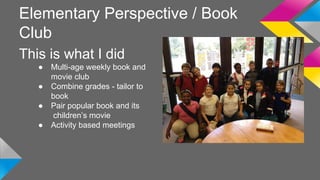
Elementary Perspective / Book 
Club 
This is what I did 
● Multi-age weekly book and 
movie club 
● Combine grades - tailor to 
book 
● Pair popular book and its 
children’s movie 
● Activity based meetings
How I did it/ What I learned 
● Choose a book you enjoy! 
● Base the meetings on an activity not wholly on a book discussion. 
● Encourage parent/grandparent involvement but set boundaries 
Lessons learned 
● Watch the movie before committing to the book 
● Don’t forget procedure, it is still important! 
● Have parent information
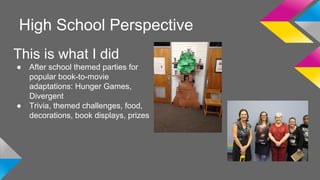
High School Perspective 
This is what I did 
● After school themed parties for 
popular book-to-movie 
adaptations: Hunger Games, 
Divergent 
● Trivia, themed challenges, food, 
decorations, book displays, prizes
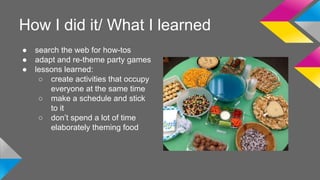
How I did it/ What I learned 
● search the web for how-tos 
● adapt and re-theme party games 
● lessons learned: 
○ create activities that occupy 
everyone at the same time 
○ make a schedule and stick 
to it 
○ don’t spend a lot of time 
elaborately theming food
Technology 
Things to consider 
● choose a well reviewed program 
● consider the background and technology 
available to your students 
● set a goal and scaffold 
● keep in mind district guidelines, firewalls, 
accessibility
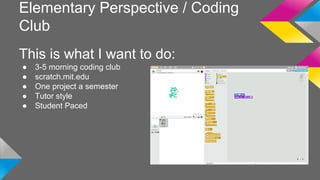
Elementary Perspective / Coding 
Club 
This is what I want to do: 
● 3-5 morning coding club 
● scratch.mit.edu 
● One project a semester 
● Tutor style 
● Student Paced
How I did it/ What I learned 
● Use the websites resources 
● Start flexible - add and subtract restrictions, support, 
pace as needed 
● Coordinate heavily with administration 
Lessons learned: 
● Stay in contact with parents/ keep 
communication log 
● Be aware of technology limitations 
● Explore thoroughly beforehand!
High School Perspective 
This is what I did 
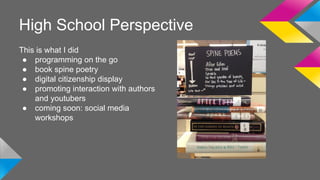
● programming on the go 
● book spine poetry 
● digital citizenship display 
● promoting interaction with authors 
and youtubers 
● coming soon: social media 
workshops
How I did it/ What I learned 
● Physical displays to promote digital 
interactions 
● We live in a participatory culture 
● Stay plugged in and you’ll be able to plug 
your students in
Special/ Student Interest 
Things to Consider 
● Don’t duplicate 
● Fill a hole - serve underserved 
populations 
● Listen to your students! Student interest 
groups should be student guided.
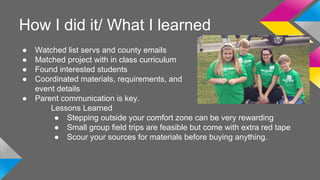
Elementary Perspective Solar Car Competition 
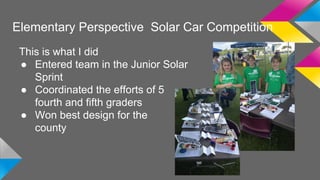
This is what I did 
● Entered team in the Junior Solar 
Sprint 
● Coordinated the efforts of 5 
fourth and fifth graders 
● Won best design for the 
county
How I did it/ What I learned 
● Watched list servs and county emails 
● Matched project with in class curriculum 
● Found interested students 
● Coordinated materials, requirements, and 
event details 
● Parent communication is key. 
Lessons Learned 
● Stepping outside your comfort zone can be very rewarding 
● Small group field trips are feasible but come with extra red tape 
● Scour your sources for materials before buying anything.
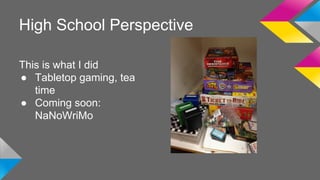
High School Perspective 
This is what I did 
● Tabletop gaming, tea 
time 
● Coming soon: 
NaNoWriMo
How I did it/ What I learned 
● born out of discussion with students 
● creating fellowship around shared interests 
● got the word out by flyers and word of mouth 
● keep it manageable - time/size constraints - vital for 
weekly programs where you’re most likely by yourself
Things to Keep in Mind 
● You are not an island! Team up with 
others. 
● Don’t be discouraged by failure. Be 
reflective. 
● Literacy isn’t your only scope. 
● Plan ahead!

Finding Your Niche: Creating Compelling Programming FAME 2014

  • 1.
    Finding Your Niche Creating Compelling Programming FAME 2014 Breakout Sessions Presenters: Meaghan Monaghan and Beverly Coe
  • 2.
    Why is programmingthat is not necessarily library or literacy based your job? ● build community ● develop multimedia and collaborative literacy and appreciation ● foster lifelong learners
  • 3.
    How to findand adapt your niche to your level ● You have to start somewhere, so start by looking inward. ● Reflect on what you would like to spend more of your time on personally. ● Look for the root.
  • 4.
    How to getstarted ● Make a To-Do List (see handout) ● Tools for planning (see handout)
  • 5.
    Book based Programming Things to consider ● age group ● content ● your interests ● “What’s hot”
  • 6.
    Elementary Perspective /Book Club This is what I did ● Multi-age weekly book and movie club ● Combine grades - tailor to book ● Pair popular book and its children’s movie ● Activity based meetings
  • 7.
    How I didit/ What I learned ● Choose a book you enjoy! ● Base the meetings on an activity not wholly on a book discussion. ● Encourage parent/grandparent involvement but set boundaries Lessons learned ● Watch the movie before committing to the book ● Don’t forget procedure, it is still important! ● Have parent information
  • 8.
    High School Perspective This is what I did ● After school themed parties for popular book-to-movie adaptations: Hunger Games, Divergent ● Trivia, themed challenges, food, decorations, book displays, prizes
  • 9.
    How I didit/ What I learned ● search the web for how-tos ● adapt and re-theme party games ● lessons learned: ○ create activities that occupy everyone at the same time ○ make a schedule and stick to it ○ don’t spend a lot of time elaborately theming food
  • 10.
    Technology Things toconsider ● choose a well reviewed program ● consider the background and technology available to your students ● set a goal and scaffold ● keep in mind district guidelines, firewalls, accessibility
  • 11.
    Elementary Perspective /Coding Club This is what I want to do: ● 3-5 morning coding club ● scratch.mit.edu ● One project a semester ● Tutor style ● Student Paced
  • 12.
    How I didit/ What I learned ● Use the websites resources ● Start flexible - add and subtract restrictions, support, pace as needed ● Coordinate heavily with administration Lessons learned: ● Stay in contact with parents/ keep communication log ● Be aware of technology limitations ● Explore thoroughly beforehand!
  • 13.
    High School Perspective This is what I did ● programming on the go ● book spine poetry ● digital citizenship display ● promoting interaction with authors and youtubers ● coming soon: social media workshops
  • 14.
    How I didit/ What I learned ● Physical displays to promote digital interactions ● We live in a participatory culture ● Stay plugged in and you’ll be able to plug your students in
  • 15.
    Special/ Student Interest Things to Consider ● Don’t duplicate ● Fill a hole - serve underserved populations ● Listen to your students! Student interest groups should be student guided.
  • 16.
    Elementary Perspective SolarCar Competition This is what I did ● Entered team in the Junior Solar Sprint ● Coordinated the efforts of 5 fourth and fifth graders ● Won best design for the county
  • 17.
    How I didit/ What I learned ● Watched list servs and county emails ● Matched project with in class curriculum ● Found interested students ● Coordinated materials, requirements, and event details ● Parent communication is key. Lessons Learned ● Stepping outside your comfort zone can be very rewarding ● Small group field trips are feasible but come with extra red tape ● Scour your sources for materials before buying anything.
  • 18.
    High School Perspective This is what I did ● Tabletop gaming, tea time ● Coming soon: NaNoWriMo
  • 19.
    How I didit/ What I learned ● born out of discussion with students ● creating fellowship around shared interests ● got the word out by flyers and word of mouth ● keep it manageable - time/size constraints - vital for weekly programs where you’re most likely by yourself
  • 20.
    Things to Keepin Mind ● You are not an island! Team up with others. ● Don’t be discouraged by failure. Be reflective. ● Literacy isn’t your only scope. ● Plan ahead!