Brittany Seifried
• When the puzzle
becomes hard, take
a break and come
about it at a
different angle.
• Sometimes students
will not
understand
material. Pack it up
for the day and
come back the next
• Every piece is a different shape, size and
colour.
• Just like students, each one is unique!
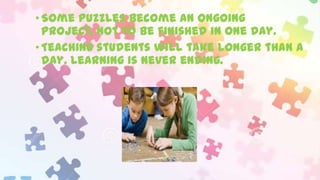
• Some puzzles become an ongoing
project, not to be finished in one day.
• Teaching students will take longer than a
day. Learning is never ending.
• Some pieces will
fit together and
some won’t. You
can’t force it.

• Just like students
and learning
styles. Some will
work, some wont.
Don’t force it!
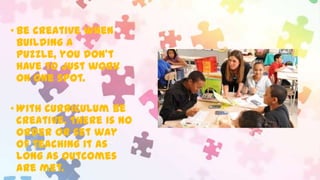
• Be creative when
building a
puzzle, you don’t
have to just work
on one spot.
• With curriculum be
creative. There is no
order or set way
of teaching it as
long as outcomes
are met.
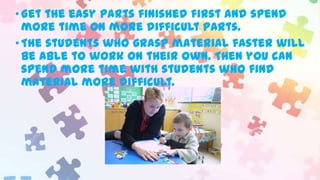
• Get the easy parts finished first and spend
more time on more difficult parts.
• The students who grasp material faster will
be able to work on their own. Then you can
spend more time with students who find
material more difficult.
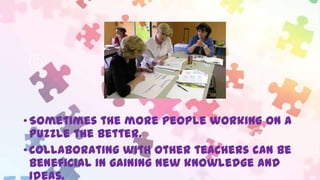
• Sometimes the more people working on a
puzzle the better.
• Collaborating with other teachers can be
beneficial in gaining new knowledge and
ideas.
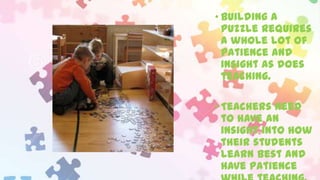
• Building a
puzzle requires
a whole lot of
patience and
insight as does
teaching.
• Teachers need
to have an
insight into how
their students
learn best and
have patience
• When building a puzzle the perimeter is
always first, like a framework.
• A good lesson plan is like the framework
to student’s success.
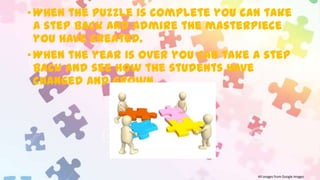
• When the puzzle is complete you can take
a step back and admire the masterpiece
you have created.
• When the year is over you can take a step
back and see how the students have
changed and grown.

All images from Google Images

Teaching Is Like Building A Puzzle

  • 1.
  • 2.
    • When thepuzzle becomes hard, take a break and come about it at a different angle. • Sometimes students will not understand material. Pack it up for the day and come back the next
  • 3.
    • Every pieceis a different shape, size and colour. • Just like students, each one is unique!
  • 4.
    • Some puzzlesbecome an ongoing project, not to be finished in one day. • Teaching students will take longer than a day. Learning is never ending.
  • 5.
    • Some pieceswill fit together and some won’t. You can’t force it. • Just like students and learning styles. Some will work, some wont. Don’t force it!
  • 6.
    • Be creativewhen building a puzzle, you don’t have to just work on one spot. • With curriculum be creative. There is no order or set way of teaching it as long as outcomes are met.
  • 7.
    • Get theeasy parts finished first and spend more time on more difficult parts. • The students who grasp material faster will be able to work on their own. Then you can spend more time with students who find material more difficult.
  • 8.
    • Sometimes themore people working on a puzzle the better. • Collaborating with other teachers can be beneficial in gaining new knowledge and ideas.
  • 9.
    • Building a puzzlerequires a whole lot of patience and insight as does teaching. • Teachers need to have an insight into how their students learn best and have patience
  • 10.
    • When buildinga puzzle the perimeter is always first, like a framework. • A good lesson plan is like the framework to student’s success.
  • 11.
    • When thepuzzle is complete you can take a step back and admire the masterpiece you have created. • When the year is over you can take a step back and see how the students have changed and grown. All images from Google Images