MEASUREMENT OF ANKLE
       SUPINATION TORQUE
Submitted By:                       Guide:
                ASHOK KUMAR GUPTA            CHAITANYA SRINIVAS
                   (07BMD012)     L.V.
                  MANISH KUMAR                ASSISTANT PROFESSOR
                   (07BMD025)                 BIO-MEDICAL DIVISION
                   ROOPAM DEY                  Room No: 107, CBMR.
                   (07BMD047)


Place Of Work: VELLORE INSTITUTE OF TECHNOLOGY, VELLORE.
INTRODUCTION                                          1


The objective of this project was to calculate the Ankle Supination
Torque by converting the pressure applied by the foot into electrical
signal.
Ankle supination points the muscle
weight of the body outside the foot
and hence high arch of supination
can cause Achilles tendonitis,
Peroneal tendonitis, Ankle sprains.
Though there are clear symptoms of
higher degree of ankle supination
but there is hardly any sign              Fig 1 – Supination Posture of a foot
for minor damage in an ankle leading to supination. Hence this
project aims to be very simple and sensitive, the results can be used
as a feedback system for training athletes.
PREPARATION                                      2


The overview of this project was taken from the work done by the
Chinese scientists Daniel Tik-Pui Fong et al[2].
The sensors used by us are Force Sensing Resistors (FSR),
manufactured by Interlink Electronics. The work done by Indian
scientist Dr. N.K. Rana of RGIT[1] helped us to work with the
sensors.
A thorough study of FSR[4]was done that helped us to narrow down
to a voltage-divider circuit using LM 324.
The manual of National Instruments on Lab VIEW Analysis
Concepts[8] gave us the basic idea of signal processing and analysis
in Lab VIEW.
Introduction to Data AcQuisition[9] is the tutorial of National
Instruments that gives the overview of the DAQ and its functions.
METHODOLOGY                                            3


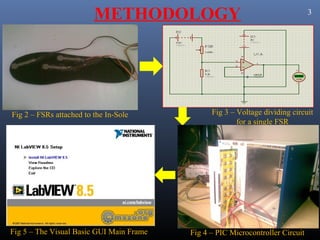
Fig 2 – FSRs attached to the In-Sole            Fig 3 – Voltage dividing circuit
                                                        for a single FSR


Fig 5 – The Visual Basic GUI Main Frame   Fig 4 – PIC Microcontroller Circuit
3-PS SYSTEM                                            4


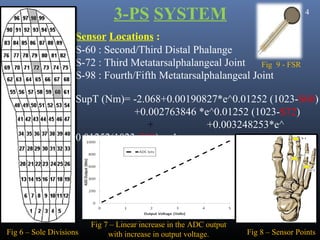
                     Sensor Locations :
                     S-60 : Second/Third Distal Phalange
                     S-72 : Third Metatarsalphalangeal Joint    Fig 9 - FSR
                     S-98 : Fourth/Fifth Metatarsalphalangeal Joint

                     SupT (Nm)= -2.068+0.00190827*e^0.01252 (1023-S60)
                                 +0.002763846 *e^0.01252 (1023-S72)
                                    +           +0.003248253*e^
                     0.01252(1023-S98)….1


                         Fig 7 – Linear increase in the ADC output
Fig 6 – Sole Divisions        with increase in output voltage.       Fig 8 – Sensor Points
FORCE SENSOR RESISTOR (FSR)                                                  5

 Sensor Characteristics :
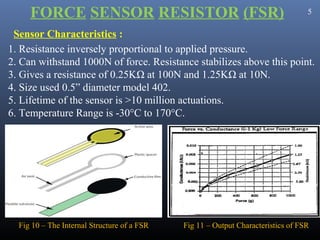
1. Resistance inversely proportional to applied pressure.
2. Can withstand 1000N of force. Resistance stabilizes above this point.
3. Gives a resistance of 0.25KΩ at 100N and 1.25KΩ at 10N.
4. Size used 0.5” diameter model 402.
5. Lifetime of the sensor is >10 million actuations.
6. Temperature Range is -30°C to 170°C.


  Fig 10 – The Internal Structure of a FSR   Fig 11 – Output Characteristics of FSR
VOLTAGE DIVIDER CIRCUIT                                                       6


                 a                                                  b
Fig 12 – (a)The theoretical design and (b) the practical output of Voltage Divider Circuit
                    Vout = Vin * [1 / (1 + Rfsr / Rm ) ]
To convert the pressure of the foot into voltage a voltage divider
circuit was implemented. The above given formula was used.
5V was used as the Vin.
7


                     a                                                 b
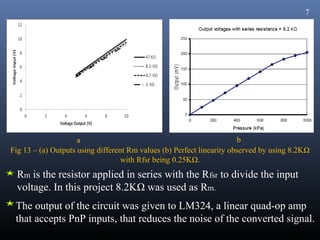
Fig 13 – (a) Outputs using different Rm values (b) Perfect linearity observed by using 8.2KΩ
                                   with Rfsr being 0.25KΩ.
  Rm is the resistor applied in series with the Rfsr to divide the input
  voltage. In this project 8.2KΩ was used as Rm.
 The output of the circuit was given to LM324, a linear quad-op amp
 that accepts PnP inputs, that reduces the noise of the converted signal.
8
PRACTICAL OUTPUT OF VOLTAGE DIVIDER
              CIRCUIT


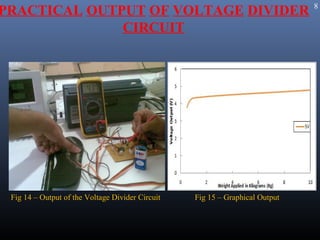
 Fig 14 – Output of the Voltage Divider Circuit   Fig 15 – Graphical Output
DATA ACQUISITION KIT                                               9


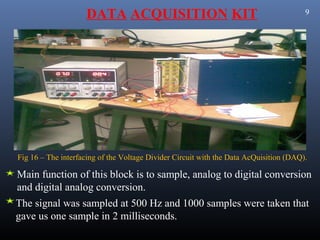
Fig 16 – The interfacing of the Voltage Divider Circuit with the Data AcQuisition (DAQ).

Main function of this block is to sample, analog to digital conversion
and digital analog conversion.
The signal was sampled at 500 Hz and 1000 samples were taken that
gave us one sample in 2 milliseconds.
WORK DONE IN Lab VIEW                                                    10


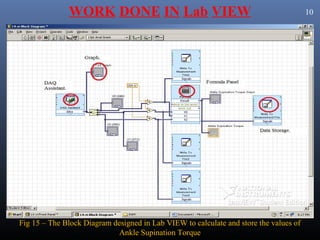
Fig 15 – The Block Diagram designed in Lab VIEW to calculate and store the values of
                            Ankle Supination Torque
11


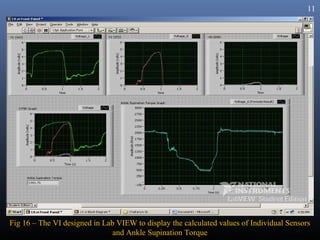
Fig 16 – The VI designed in Lab VIEW to display the calculated values of Individual Sensors
                               and Ankle Supination Torque
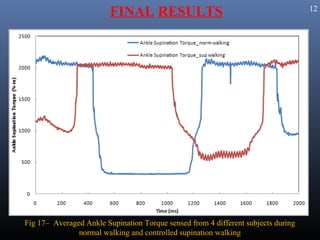
FINAL RESULTS                                             12


Fig 17– Averaged Ankle Supination Torque sensed from 4 different subjects during
               normal walking and controlled supination walking
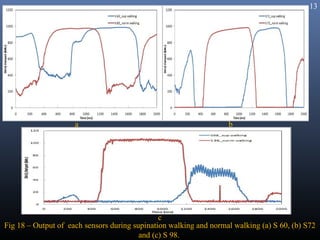
13


                     a                                             b


                                               c
Fig 18 – Output of each sensors during supination walking and normal walking (a) S 60, (b) S72
                                         and (c) S 98.
CONCLUSION                                     14


 This work was successful in calculating the ankle supination torque
 in real time, while the subject walks

An increase in the ankle supination torque was observed when the
subject walked in the controlled supinated way. The average specific
increase being 158.6585 N-m
These values can be further used to find out the exact threshold of
ankle supination torque that an ankle can withstand. This will help
in safe training of the athletes.

In future a wireless devices can be made to calculate the supination
torque which will be a boon to the sports world.
PROBLEMS FACED                                        15


Availability of FSR with desired dimensions in low cost
    Status- Solved (Purchased the sensors from Chennai)
To get the best sensitivity of the voltage divider circuit to get a linear
output.
   Status- Solved (Tried and tested the circuit with several resistors
   and incorporated 8.2K)
Implementation of hardware for calculating ankle supination torque
by serial communication using microcontroller
    Status- Partially solved in simulation.
REFERENCES                                                     16

[1] Application of Force Sensing Resistor (FSR) in Design of Pressure Scanning System for
Plantar Pressure Measurement
 By: Dr. N. K. Rana, Department of Instrumentation Engineering, Rajiv Gandhi Institute of
Technology
[2] A three-pressure-sensor (3PS) system for monitoring ankle supination torque during sport
motions
By: Daniel Tik-Pui Fong, Yue-Yan Chan, Youlian Hong, Patrick Shu-Hang Yung, Kwai-Yau
Fung, Kai-Ming Chan
[3] LM 324 Datasheet
By- Phillips Electronics
[4] FSR an Overview of the technology
By- Tech Storm Inc
[5] MAX 232 Datasheet
By- Texas Instruments
[6] PIC 16F873 Datasheet
By- Microchip
[7] 3-Terminal 1A Positive Voltage Regulator
By- FAIRCHILD SEMICONDUCTORS
[8] Lab VIEW Analysis and Concepts
By- National Instruments
[9] Introduction to Data Acquisition
By- National Instruments
THANK YOU

Measurement of Ankle Supination Torque

  • 1.
    MEASUREMENT OF ANKLE SUPINATION TORQUE Submitted By: Guide: ASHOK KUMAR GUPTA CHAITANYA SRINIVAS (07BMD012) L.V. MANISH KUMAR ASSISTANT PROFESSOR (07BMD025) BIO-MEDICAL DIVISION ROOPAM DEY Room No: 107, CBMR. (07BMD047) Place Of Work: VELLORE INSTITUTE OF TECHNOLOGY, VELLORE.
  • 2.
    INTRODUCTION 1 The objective of this project was to calculate the Ankle Supination Torque by converting the pressure applied by the foot into electrical signal. Ankle supination points the muscle weight of the body outside the foot and hence high arch of supination can cause Achilles tendonitis, Peroneal tendonitis, Ankle sprains. Though there are clear symptoms of higher degree of ankle supination but there is hardly any sign Fig 1 – Supination Posture of a foot for minor damage in an ankle leading to supination. Hence this project aims to be very simple and sensitive, the results can be used as a feedback system for training athletes.
  • 3.
    PREPARATION 2 The overview of this project was taken from the work done by the Chinese scientists Daniel Tik-Pui Fong et al[2]. The sensors used by us are Force Sensing Resistors (FSR), manufactured by Interlink Electronics. The work done by Indian scientist Dr. N.K. Rana of RGIT[1] helped us to work with the sensors. A thorough study of FSR[4]was done that helped us to narrow down to a voltage-divider circuit using LM 324. The manual of National Instruments on Lab VIEW Analysis Concepts[8] gave us the basic idea of signal processing and analysis in Lab VIEW. Introduction to Data AcQuisition[9] is the tutorial of National Instruments that gives the overview of the DAQ and its functions.
  • 4.
    METHODOLOGY 3 Fig 2 – FSRs attached to the In-Sole Fig 3 – Voltage dividing circuit for a single FSR Fig 5 – The Visual Basic GUI Main Frame Fig 4 – PIC Microcontroller Circuit
  • 5.
    3-PS SYSTEM 4 Sensor Locations : S-60 : Second/Third Distal Phalange S-72 : Third Metatarsalphalangeal Joint Fig 9 - FSR S-98 : Fourth/Fifth Metatarsalphalangeal Joint SupT (Nm)= -2.068+0.00190827*e^0.01252 (1023-S60) +0.002763846 *e^0.01252 (1023-S72) + +0.003248253*e^ 0.01252(1023-S98)….1 Fig 7 – Linear increase in the ADC output Fig 6 – Sole Divisions with increase in output voltage. Fig 8 – Sensor Points
  • 6.
    FORCE SENSOR RESISTOR(FSR) 5 Sensor Characteristics : 1. Resistance inversely proportional to applied pressure. 2. Can withstand 1000N of force. Resistance stabilizes above this point. 3. Gives a resistance of 0.25KΩ at 100N and 1.25KΩ at 10N. 4. Size used 0.5” diameter model 402. 5. Lifetime of the sensor is >10 million actuations. 6. Temperature Range is -30°C to 170°C. Fig 10 – The Internal Structure of a FSR Fig 11 – Output Characteristics of FSR
  • 7.
    VOLTAGE DIVIDER CIRCUIT 6 a b Fig 12 – (a)The theoretical design and (b) the practical output of Voltage Divider Circuit Vout = Vin * [1 / (1 + Rfsr / Rm ) ] To convert the pressure of the foot into voltage a voltage divider circuit was implemented. The above given formula was used. 5V was used as the Vin.
  • 8.
    7 a b Fig 13 – (a) Outputs using different Rm values (b) Perfect linearity observed by using 8.2KΩ with Rfsr being 0.25KΩ. Rm is the resistor applied in series with the Rfsr to divide the input voltage. In this project 8.2KΩ was used as Rm. The output of the circuit was given to LM324, a linear quad-op amp that accepts PnP inputs, that reduces the noise of the converted signal.
  • 9.
    8 PRACTICAL OUTPUT OFVOLTAGE DIVIDER CIRCUIT Fig 14 – Output of the Voltage Divider Circuit Fig 15 – Graphical Output
  • 10.
    DATA ACQUISITION KIT 9 Fig 16 – The interfacing of the Voltage Divider Circuit with the Data AcQuisition (DAQ). Main function of this block is to sample, analog to digital conversion and digital analog conversion. The signal was sampled at 500 Hz and 1000 samples were taken that gave us one sample in 2 milliseconds.
  • 11.
    WORK DONE INLab VIEW 10 Fig 15 – The Block Diagram designed in Lab VIEW to calculate and store the values of Ankle Supination Torque
  • 12.
    11 Fig 16 –The VI designed in Lab VIEW to display the calculated values of Individual Sensors and Ankle Supination Torque
  • 13.
    FINAL RESULTS 12 Fig 17– Averaged Ankle Supination Torque sensed from 4 different subjects during normal walking and controlled supination walking
  • 14.
    13 a b c Fig 18 – Output of each sensors during supination walking and normal walking (a) S 60, (b) S72 and (c) S 98.
  • 15.
    CONCLUSION 14 This work was successful in calculating the ankle supination torque in real time, while the subject walks An increase in the ankle supination torque was observed when the subject walked in the controlled supinated way. The average specific increase being 158.6585 N-m These values can be further used to find out the exact threshold of ankle supination torque that an ankle can withstand. This will help in safe training of the athletes. In future a wireless devices can be made to calculate the supination torque which will be a boon to the sports world.
  • 16.
    PROBLEMS FACED 15 Availability of FSR with desired dimensions in low cost Status- Solved (Purchased the sensors from Chennai) To get the best sensitivity of the voltage divider circuit to get a linear output. Status- Solved (Tried and tested the circuit with several resistors and incorporated 8.2K) Implementation of hardware for calculating ankle supination torque by serial communication using microcontroller Status- Partially solved in simulation.
  • 17.
    REFERENCES 16 [1] Application of Force Sensing Resistor (FSR) in Design of Pressure Scanning System for Plantar Pressure Measurement By: Dr. N. K. Rana, Department of Instrumentation Engineering, Rajiv Gandhi Institute of Technology [2] A three-pressure-sensor (3PS) system for monitoring ankle supination torque during sport motions By: Daniel Tik-Pui Fong, Yue-Yan Chan, Youlian Hong, Patrick Shu-Hang Yung, Kwai-Yau Fung, Kai-Ming Chan [3] LM 324 Datasheet By- Phillips Electronics [4] FSR an Overview of the technology By- Tech Storm Inc [5] MAX 232 Datasheet By- Texas Instruments [6] PIC 16F873 Datasheet By- Microchip [7] 3-Terminal 1A Positive Voltage Regulator By- FAIRCHILD SEMICONDUCTORS [8] Lab VIEW Analysis and Concepts By- National Instruments [9] Introduction to Data Acquisition By- National Instruments
  • 18.