Filariasis
Wuchereria Bancrofti
lymphatic filariasis
Pathogenesis
• It is cause blockage of lymph vessels and lymph nodes by the adult worms.
The blockage could be due to mechanical factors or allergic inflammatory
reaction to worm antigens and secretions. The worms inside lymph nodes
and vessels may cause granuloma formation, with subsequent scarring and
even calcification.
Clinical manifestations:
• 1-ADL (acute adenolymphangitis) is characterised by high fever,
lymphatic inflammation, and transient local edema.
• 2-Lymphorrhagia: Rupture of lymph varices leading to release of
lymph or chyle ( milky fluid from intestinal lymphnode ) and resulting in chyluria ,
chylous diarrhea, and chycothorax, depending on the involved site.
• 3-Hydrocoele: This is a very common manifestation of filariasis.
Accumulation of fluid occurs due to obstruction of lymph vessels of
the spermatic cord.
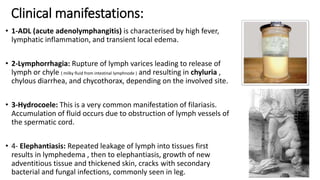
• 4- Elephantiasis: Repeated leakage of lymph into tissues first
results in lymphedema , then to elephantiasis, growth of new
adventitious tissue and thickened skin, cracks with secondary
bacterial and fungal infections, commonly seen in leg.
Laboratory Diagnosis
• A-Direct evidence: Demonstration of microfilariae by:
• 1-Smear: from peripheral blood film, chylous urine & lymph varix
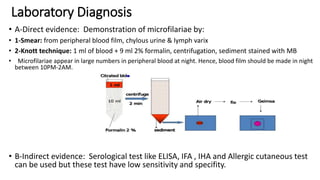
• 2-Knott technique: 1 ml of blood + 9 ml 2% formalin, centrifugation, sediment stained with MB
• Microfilariae appear in large numbers in peripheral blood at night. Hence, blood film should be made in night
between 10PM-2AM.
• B-Indirect evidence: Serological test like ELISA, IFA , IHA and Allergic cutaneous test
can be used but these test have low sensitivity and specifity.
Prevention and Control
• Insect repellants
• Use of mosquito nets
• Public education
Loa-Loa
eye worm
Pathogenicity and Clinical Features
• The pathogenesis of loiasis depends on the migratory habitof the adult worm
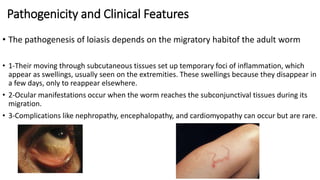
• 1-Their moving through subcutaneous tissues set up temporary foci of inflammation, which
appear as swellings, usually seen on the extremities. These swellings because they disappear in
a few days, only to reappear elsewhere.
• 2-Ocular manifestations occur when the worm reaches the subconjunctival tissues during its
migration.
• 3-Complications like nephropathy, encephalopathy, and cardiomyopathy can occur but are rare.
Laboratory Diagnosis
• Diagnosis rests on the appearance of fugitive swelling in persons
exposed to infection in endemic area.
• 1-Definitive diagnosis requires the detection of microfilaria in peripheral blood or
the isolation of the adult worm from the eye.
• 2-Microfilariae may be shown in peripheral blood collected during the day.
• 3-The adult worm can be demonstrated by removal from the skin or conjunctiva
or from a subcutaneous biopsy specimen from a site of swelling.
• 4-High eosinophil count is common.
prevent
• diethylcarbamazine treatment is suggested to reduce risk of infection.
• Avoiding areas where the vectors.
• using insect repellents.
• Permethrin treatment on clothes is an additional repellent.
• Use of mosquito nets
Onchocerca Volvulus
river blindness
Pathogenicity and Clinical Features
• Pathogenesis depends on the host’s allergic and inflammatory reactions to the
adult worm and microfilariae.
• 1-The infective larvae deposited in the skin by the bite of the vector develop at
the site to adult worms that form subcutaneous nodules or free in the tissues.
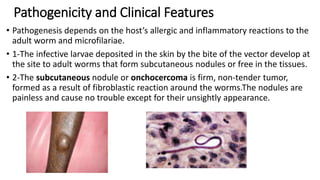
• 2-The subcutaneous nodule or onchocercoma is firm, non-tender tumor,
formed as a result of fibroblastic reaction around the worms.The nodules are
painless and cause no trouble except for their unsightly appearance.
• 3-Microfilariae cause lesions in the skin and eyes:
• A-The skin lesion is a dermatitis with pruritus, pigmentation, atrophy, and
fibrosis. In an immunologically hyperactive form what called as Sowdah,
darkens skin formed by clearing of microfi lariae from blood.
• B-Ocular manifestations range from photophobia to gradual blurring of vision,
progressing to total blindness.
Laboratory Diagnosis
• Microscopy
• The microfilariae may be demonstrated by examination of skin snip from the area of maximal
microfilarial density placed on a slide in water or saline.
• 1- Microfilariae may also be shown in aspirated material from subcutaneous nodules.
• 2- In patients with ocular manifestations, microfilariae may be found in conjunctival biopsies.
• 3-Adult worms can be detected in the biopsy material of the subcutaneous nodule.
• Serology
• 1- ElISA is more sensitive than skin snip tests. The test detects antibodies against specific
onchocercal antigen.
• 2- A rapid card test using antigen OV16 to detect IgG4 in serum has been evaluated.
• Molecular Diagnosis
• PCR from skin snips is done in specialized laboratories and is highly sensitive and specific.
prevent
• 1. Vector control – applications of environmentally-safe insecticides to the
black fly's breeding areas during the rainy season.
• 2. Mass treatment with Ivermectin.

Filaria part 2

  • 1.
  • 2.
  • 3.
    Pathogenesis • It iscause blockage of lymph vessels and lymph nodes by the adult worms. The blockage could be due to mechanical factors or allergic inflammatory reaction to worm antigens and secretions. The worms inside lymph nodes and vessels may cause granuloma formation, with subsequent scarring and even calcification.
  • 4.
    Clinical manifestations: • 1-ADL(acute adenolymphangitis) is characterised by high fever, lymphatic inflammation, and transient local edema. • 2-Lymphorrhagia: Rupture of lymph varices leading to release of lymph or chyle ( milky fluid from intestinal lymphnode ) and resulting in chyluria , chylous diarrhea, and chycothorax, depending on the involved site. • 3-Hydrocoele: This is a very common manifestation of filariasis. Accumulation of fluid occurs due to obstruction of lymph vessels of the spermatic cord. • 4- Elephantiasis: Repeated leakage of lymph into tissues first results in lymphedema , then to elephantiasis, growth of new adventitious tissue and thickened skin, cracks with secondary bacterial and fungal infections, commonly seen in leg.
  • 5.
    Laboratory Diagnosis • A-Directevidence: Demonstration of microfilariae by: • 1-Smear: from peripheral blood film, chylous urine & lymph varix • 2-Knott technique: 1 ml of blood + 9 ml 2% formalin, centrifugation, sediment stained with MB • Microfilariae appear in large numbers in peripheral blood at night. Hence, blood film should be made in night between 10PM-2AM. • B-Indirect evidence: Serological test like ELISA, IFA , IHA and Allergic cutaneous test can be used but these test have low sensitivity and specifity.
  • 6.
    Prevention and Control •Insect repellants • Use of mosquito nets • Public education
  • 7.
  • 8.
    Pathogenicity and ClinicalFeatures • The pathogenesis of loiasis depends on the migratory habitof the adult worm • 1-Their moving through subcutaneous tissues set up temporary foci of inflammation, which appear as swellings, usually seen on the extremities. These swellings because they disappear in a few days, only to reappear elsewhere. • 2-Ocular manifestations occur when the worm reaches the subconjunctival tissues during its migration. • 3-Complications like nephropathy, encephalopathy, and cardiomyopathy can occur but are rare.
  • 9.
    Laboratory Diagnosis • Diagnosisrests on the appearance of fugitive swelling in persons exposed to infection in endemic area. • 1-Definitive diagnosis requires the detection of microfilaria in peripheral blood or the isolation of the adult worm from the eye. • 2-Microfilariae may be shown in peripheral blood collected during the day. • 3-The adult worm can be demonstrated by removal from the skin or conjunctiva or from a subcutaneous biopsy specimen from a site of swelling. • 4-High eosinophil count is common.
  • 10.
    prevent • diethylcarbamazine treatmentis suggested to reduce risk of infection. • Avoiding areas where the vectors. • using insect repellents. • Permethrin treatment on clothes is an additional repellent. • Use of mosquito nets
  • 11.
  • 12.
    Pathogenicity and ClinicalFeatures • Pathogenesis depends on the host’s allergic and inflammatory reactions to the adult worm and microfilariae. • 1-The infective larvae deposited in the skin by the bite of the vector develop at the site to adult worms that form subcutaneous nodules or free in the tissues. • 2-The subcutaneous nodule or onchocercoma is firm, non-tender tumor, formed as a result of fibroblastic reaction around the worms.The nodules are painless and cause no trouble except for their unsightly appearance.
  • 13.
    • 3-Microfilariae causelesions in the skin and eyes: • A-The skin lesion is a dermatitis with pruritus, pigmentation, atrophy, and fibrosis. In an immunologically hyperactive form what called as Sowdah, darkens skin formed by clearing of microfi lariae from blood. • B-Ocular manifestations range from photophobia to gradual blurring of vision, progressing to total blindness.
  • 14.
    Laboratory Diagnosis • Microscopy •The microfilariae may be demonstrated by examination of skin snip from the area of maximal microfilarial density placed on a slide in water or saline. • 1- Microfilariae may also be shown in aspirated material from subcutaneous nodules. • 2- In patients with ocular manifestations, microfilariae may be found in conjunctival biopsies. • 3-Adult worms can be detected in the biopsy material of the subcutaneous nodule. • Serology • 1- ElISA is more sensitive than skin snip tests. The test detects antibodies against specific onchocercal antigen. • 2- A rapid card test using antigen OV16 to detect IgG4 in serum has been evaluated. • Molecular Diagnosis • PCR from skin snips is done in specialized laboratories and is highly sensitive and specific.
  • 15.
    prevent • 1. Vectorcontrol – applications of environmentally-safe insecticides to the black fly's breeding areas during the rainy season. • 2. Mass treatment with Ivermectin.