Figurative Language


      Mr. Wolf
       2012
Figurative Language

• Figurative language creates
  images for the reader or listener.
  The writer uses descriptions that
  are comparisons, repetitions,
  exaggerations, and imitations to
  make the writing more
  interesting and engaging.
Types of Figurative Language

• Simile- a figure of speech
  comparing two unlike
  things. If it often linked by
  the words “like” or “as”.
Types of Figurative Language

• Metaphor- States that one
  this is something else. It is
  a comparison that is
  usually linked by the word
  “is”.
Types of Figurative Language

• Hyperbole- Big
  exaggeration, usually with
  humour.
Types of Figurative Language
• Personification- Giving an object human-like
  qualities.
Types of Figurative Language
Alliteration- The repetition of the same initial
letter, sound, or group of sounds in a series of
words.
Types of Figurative Language

          The use of a word to
Onomatopoeia-
describe or imitate a natural
sound or the sound
made by an object or an
action.
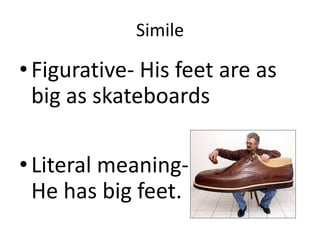
Simile

• Figurative- His feet are as
  big as skateboards

• Literal meaning-
  He has big feet.
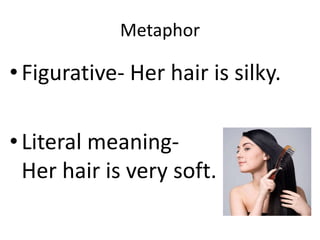
Metaphor

• Figurative- Her hair is silky.

• Literal meaning-
  Her hair is very soft.
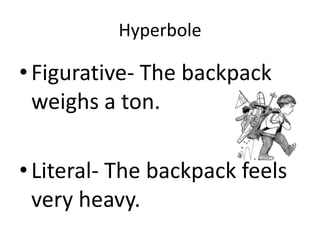
Hyperbole

• Figurative- The backpack
  weighs a ton.

• Literal- The backpack feels
  very heavy.
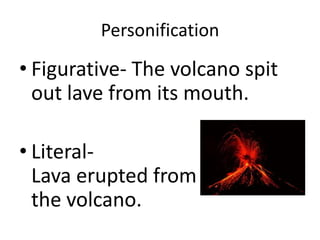
Personification

• Figurative- The volcano spit
  out lave from its mouth.

• Literal-
  Lava erupted from
  the volcano.
Alliteration

• She sells sea shells by the sea
  shore.

• Peter Piper
  picked a peck of
  pickled peppers.
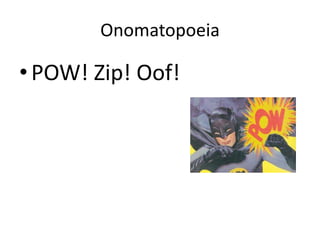
Onomatopoeia

• POW! Zip! Oof!
Summary
• Figurative language is a creative way to
  describe a person place, object, or event. This
  creates a more descriptive picture in the mind
  of the reader.
• Language examples include: simile, metaphor,
  hyperbole, and personification.
• The use of creative language makes writing
  more exciting, fun, and interesting.

Figurative language simile, metaphor, personification, hyperbole

  • 1.
    Figurative Language Mr. Wolf 2012
  • 2.
    Figurative Language • Figurativelanguage creates images for the reader or listener. The writer uses descriptions that are comparisons, repetitions, exaggerations, and imitations to make the writing more interesting and engaging.
  • 3.
    Types of FigurativeLanguage • Simile- a figure of speech comparing two unlike things. If it often linked by the words “like” or “as”.
  • 4.
    Types of FigurativeLanguage • Metaphor- States that one this is something else. It is a comparison that is usually linked by the word “is”.
  • 5.
    Types of FigurativeLanguage • Hyperbole- Big exaggeration, usually with humour.
  • 6.
    Types of FigurativeLanguage • Personification- Giving an object human-like qualities.
  • 7.
    Types of FigurativeLanguage Alliteration- The repetition of the same initial letter, sound, or group of sounds in a series of words.
  • 8.
    Types of FigurativeLanguage The use of a word to Onomatopoeia- describe or imitate a natural sound or the sound made by an object or an action.
  • 9.
    Simile • Figurative- Hisfeet are as big as skateboards • Literal meaning- He has big feet.
  • 10.
    Metaphor • Figurative- Herhair is silky. • Literal meaning- Her hair is very soft.
  • 11.
    Hyperbole • Figurative- Thebackpack weighs a ton. • Literal- The backpack feels very heavy.
  • 12.
    Personification • Figurative- Thevolcano spit out lave from its mouth. • Literal- Lava erupted from the volcano.
  • 13.
    Alliteration • She sellssea shells by the sea shore. • Peter Piper picked a peck of pickled peppers.
  • 14.
  • 15.
    Summary • Figurative languageis a creative way to describe a person place, object, or event. This creates a more descriptive picture in the mind of the reader. • Language examples include: simile, metaphor, hyperbole, and personification. • The use of creative language makes writing more exciting, fun, and interesting.