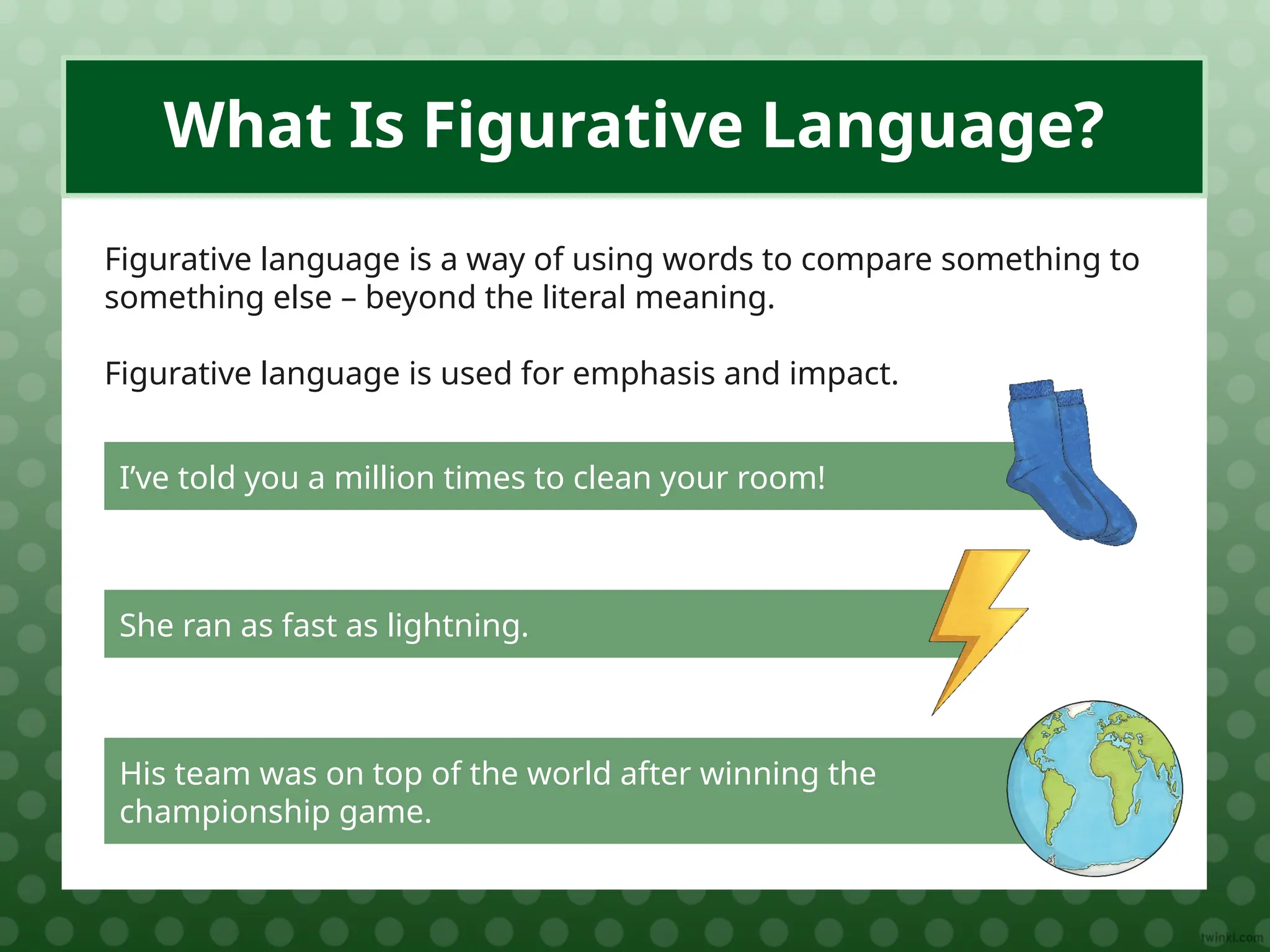
I’ve told you a million times to clean your room!
What Is Figurative Language?
Figurative language is a way of using words to compare something to
something else – beyond the literal meaning.
Figurative language is used for emphasis and impact.
She ran as fast as lightning.
His team was on top of the world after winning the
championship game.
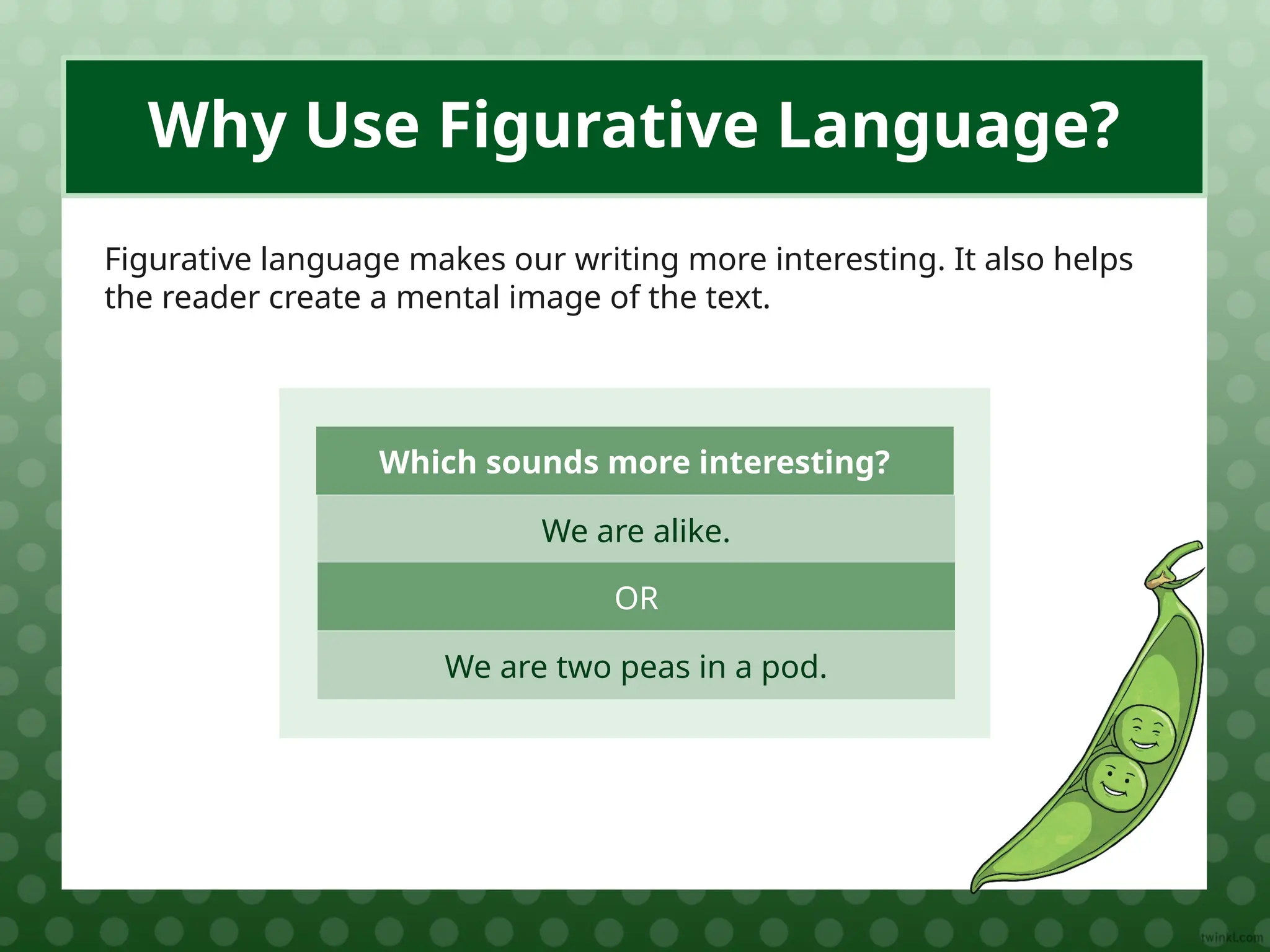
Which sounds more interesting?
Why Use Figurative Language?
Figurative language makes our writing more interesting. It also helps
the reader create a mental image of the text.
We are alike.
We are two peas in a pod.
OR
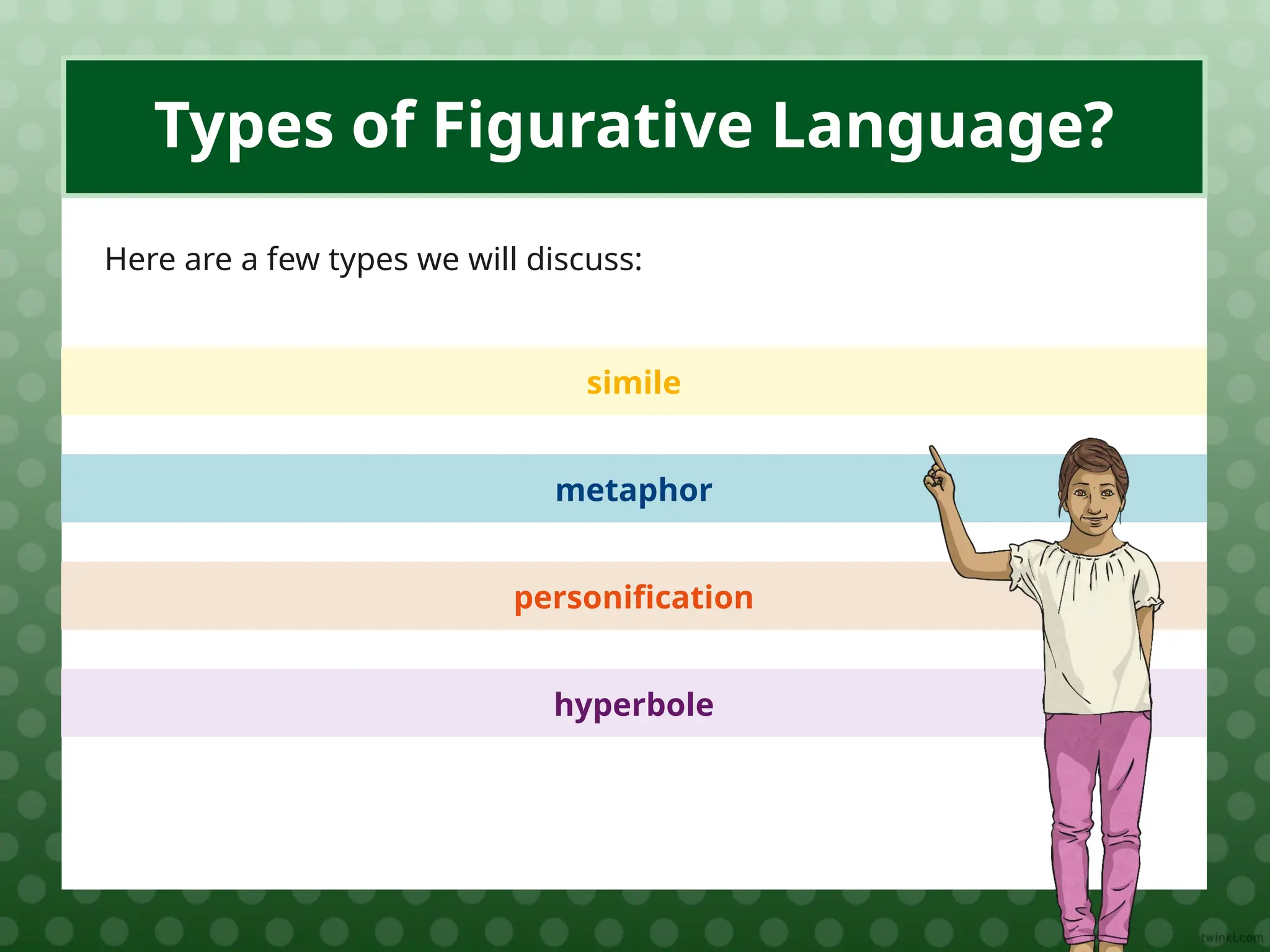
simile
Types of Figurative Language?
Here are a few types we will discuss:
metaphor
personification
hyperbole
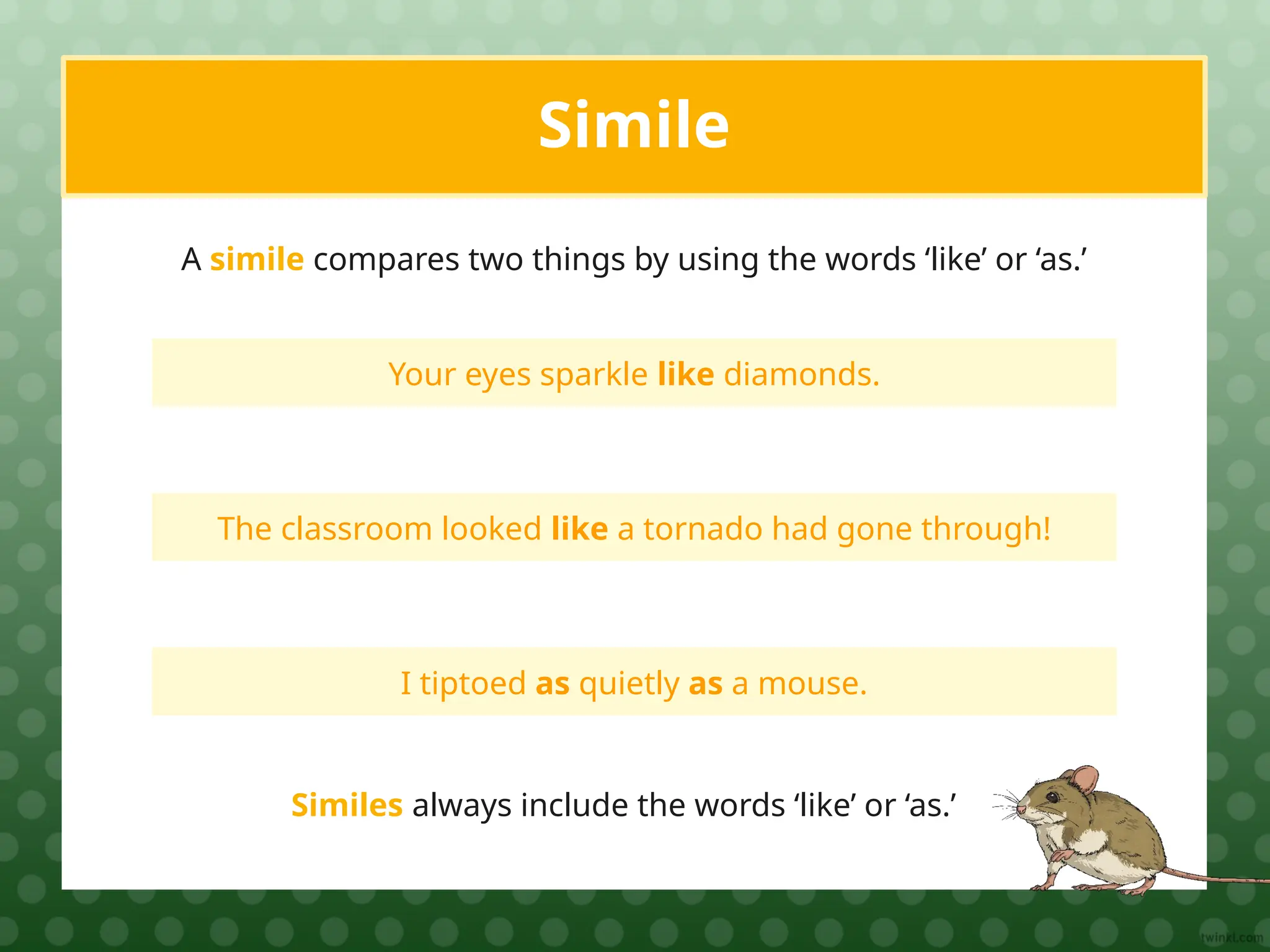
Your eyes sparkle like diamonds.
Simile
A simile compares two things by using the words ‘like’ or ‘as.’
The classroom looked like a tornado had gone through!
I tiptoed as quietly as a mouse.
Similes always include the words ‘like’ or ‘as.’
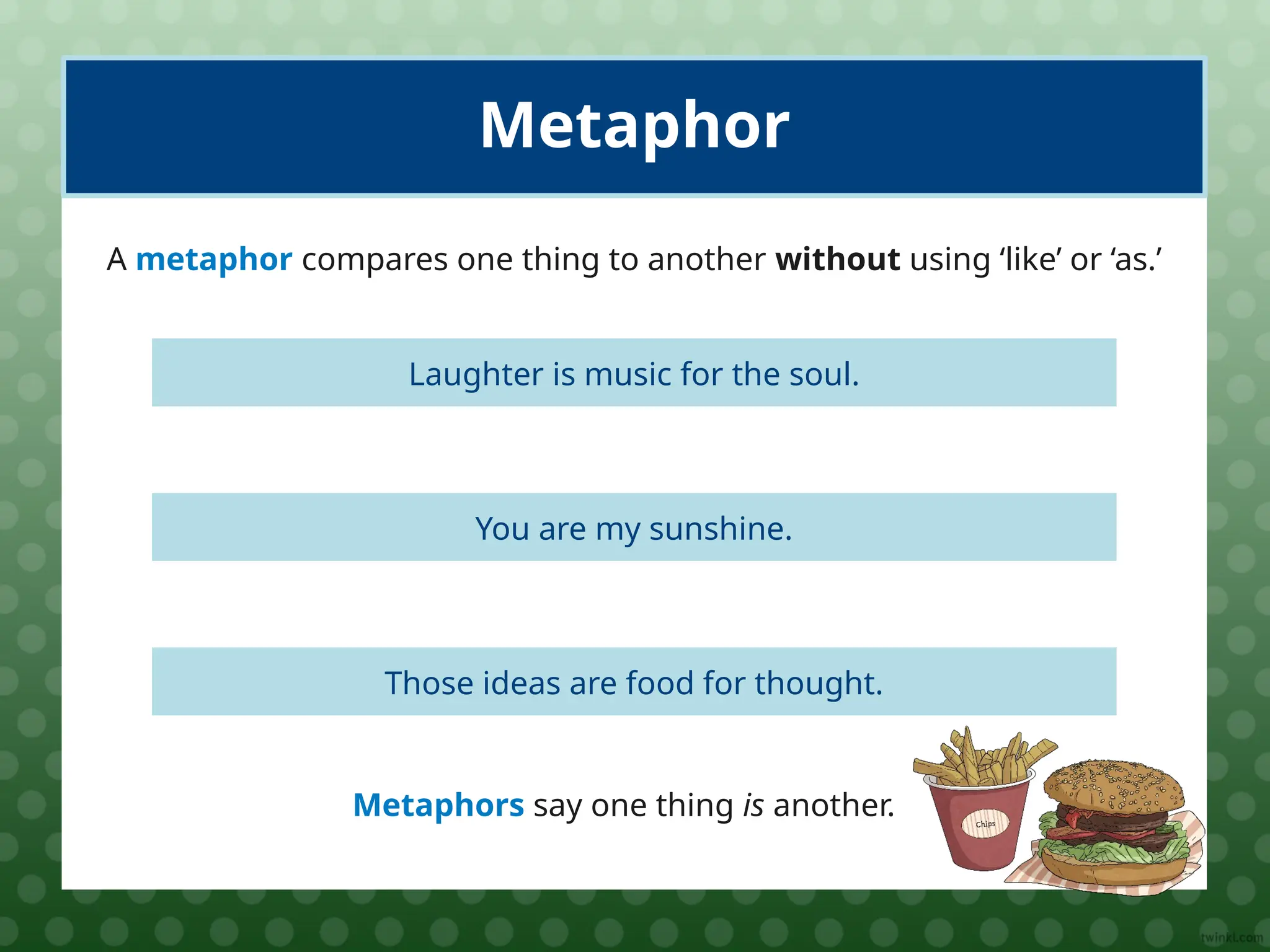
Laughter is music for the soul.
Metaphor
A metaphor compares one thing to another without using ‘like’ or ‘as.’
You are my sunshine.
Those ideas are food for thought.
Metaphors say one thing is another.
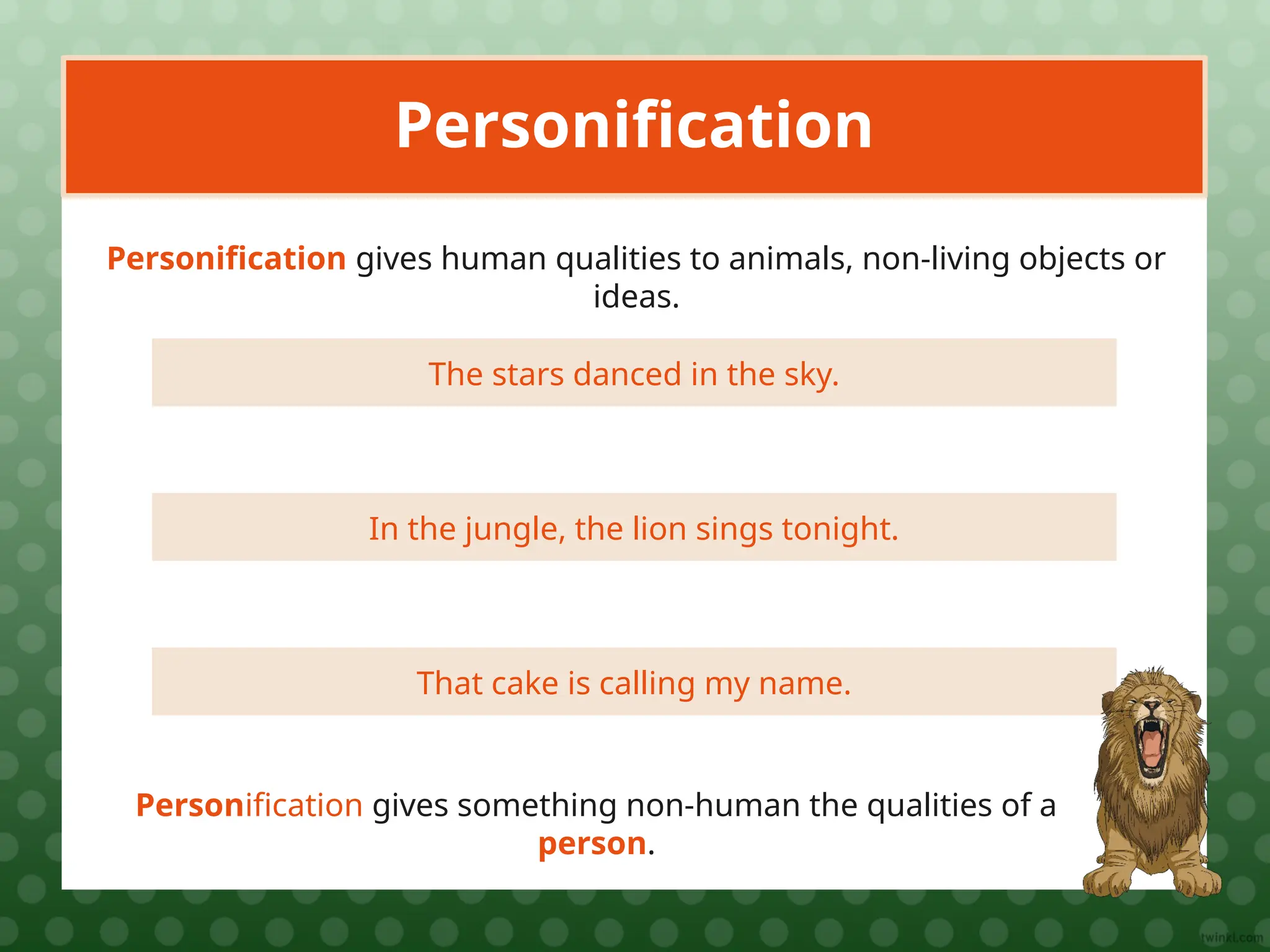
The stars danced in the sky.
Personification
Personification gives human qualities to animals, non-living objects or
ideas.
In the jungle, the lion sings tonight.
That cake is calling my name.
Personification gives something non-human the qualities of a
person.
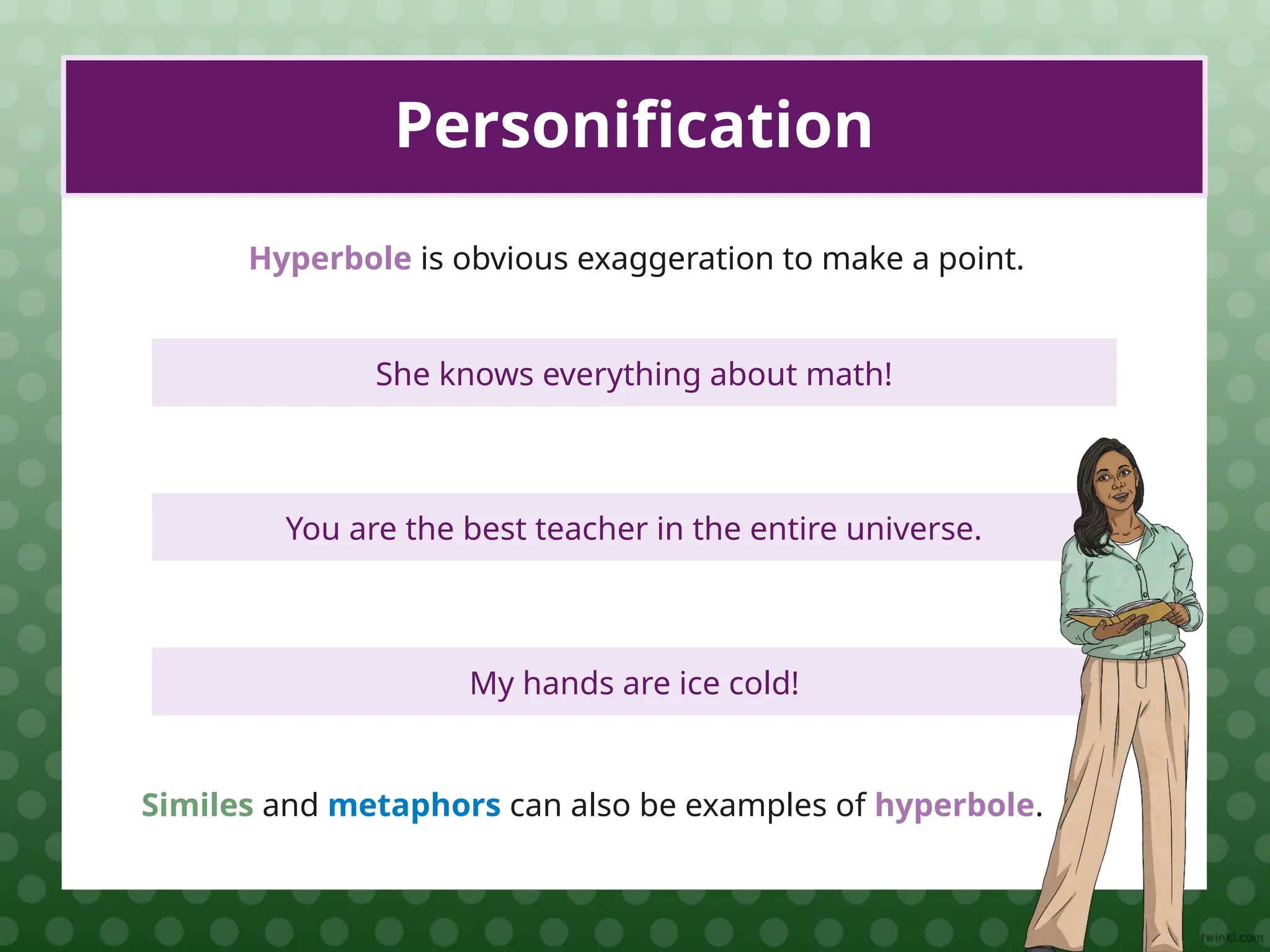
She knows everything about math!
Personification
Hyperbole is obvious exaggeration to make a point.
You are the best teacher in the entire universe.
My hands are ice cold!
Similes and metaphors can also be examples of hyperbole.
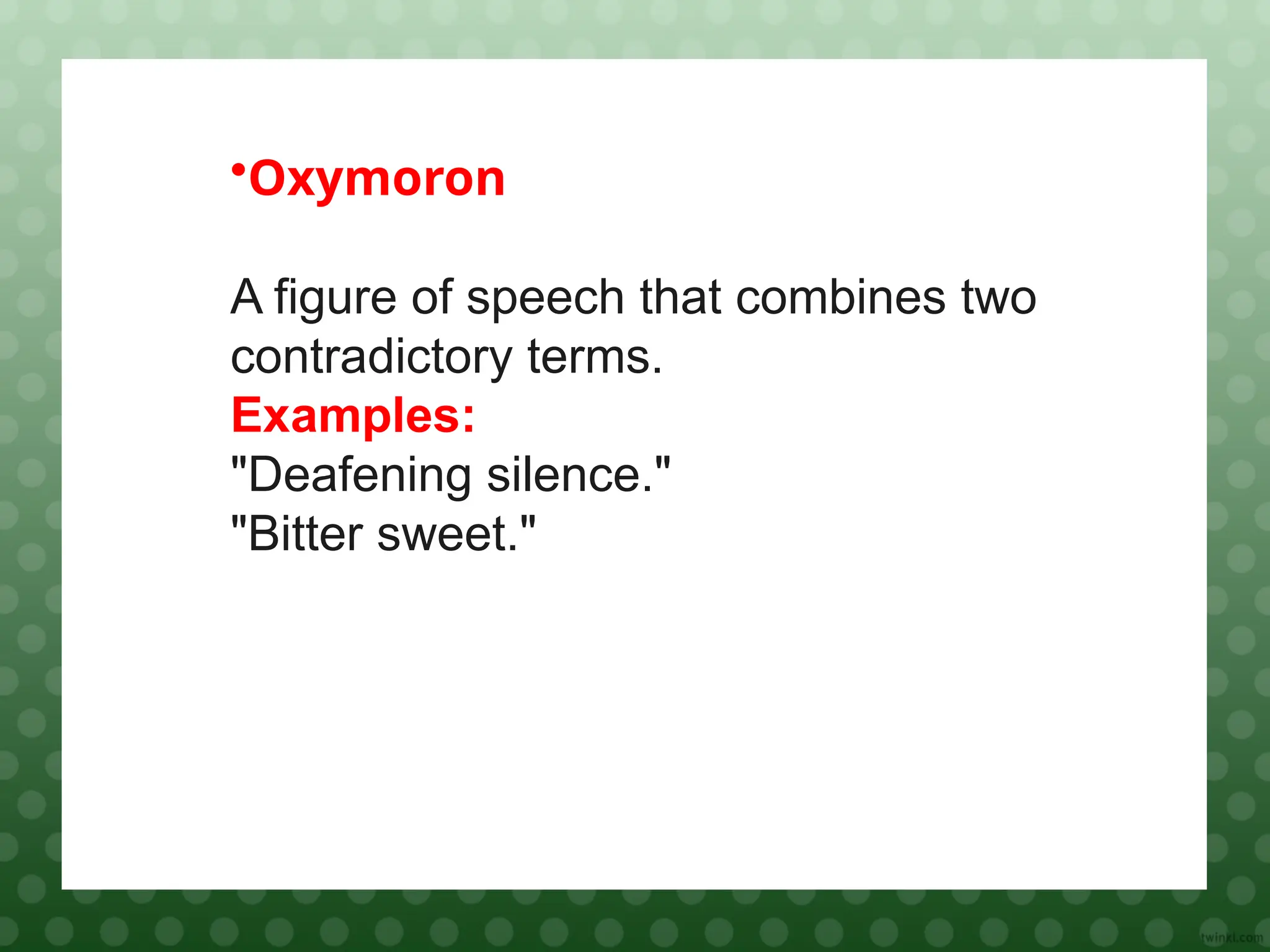
•Oxymoron
A figure of speech that combines two
contradictory terms.
Examples:
"Deafening silence."
"Bitter sweet."
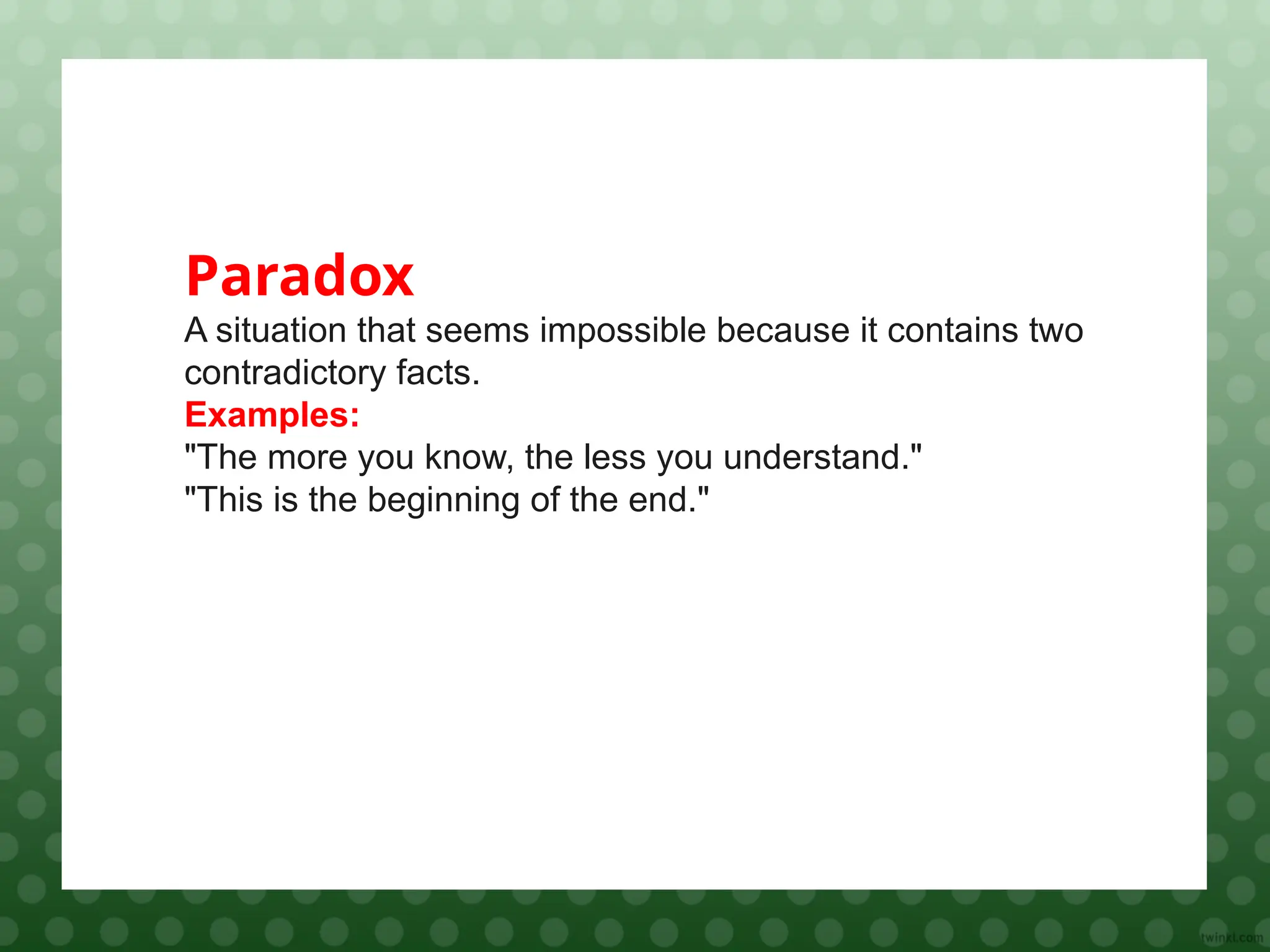
Paradox
A situation that seems impossible because it contains two
contradictory facts.
Examples:
"The more you know, the less you understand."
"This is the beginning of the end."
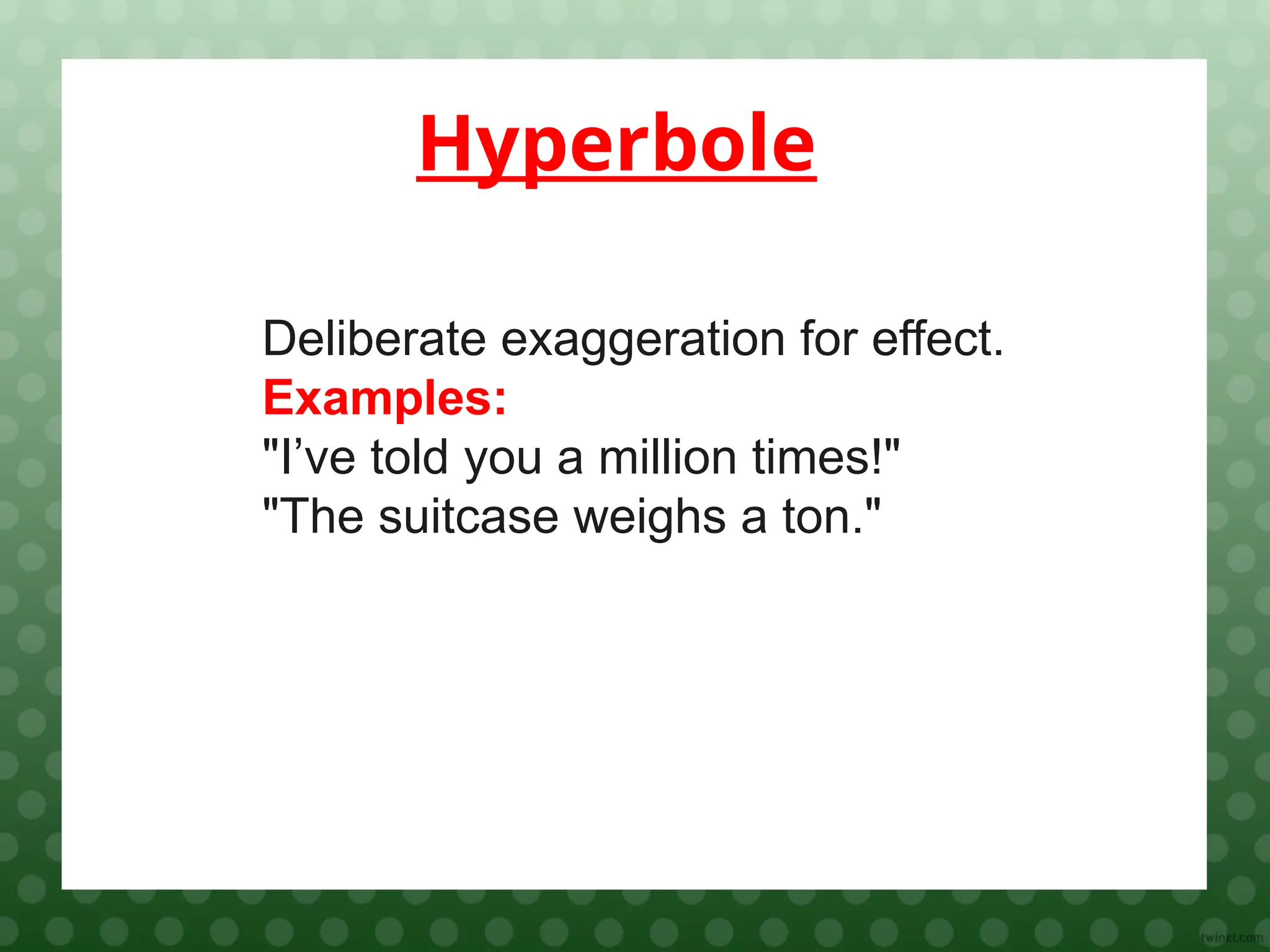
Hyperbole
Deliberate exaggeration for effect.
Examples:
"I’ve told you a million times!"
"The suitcase weighs a ton."
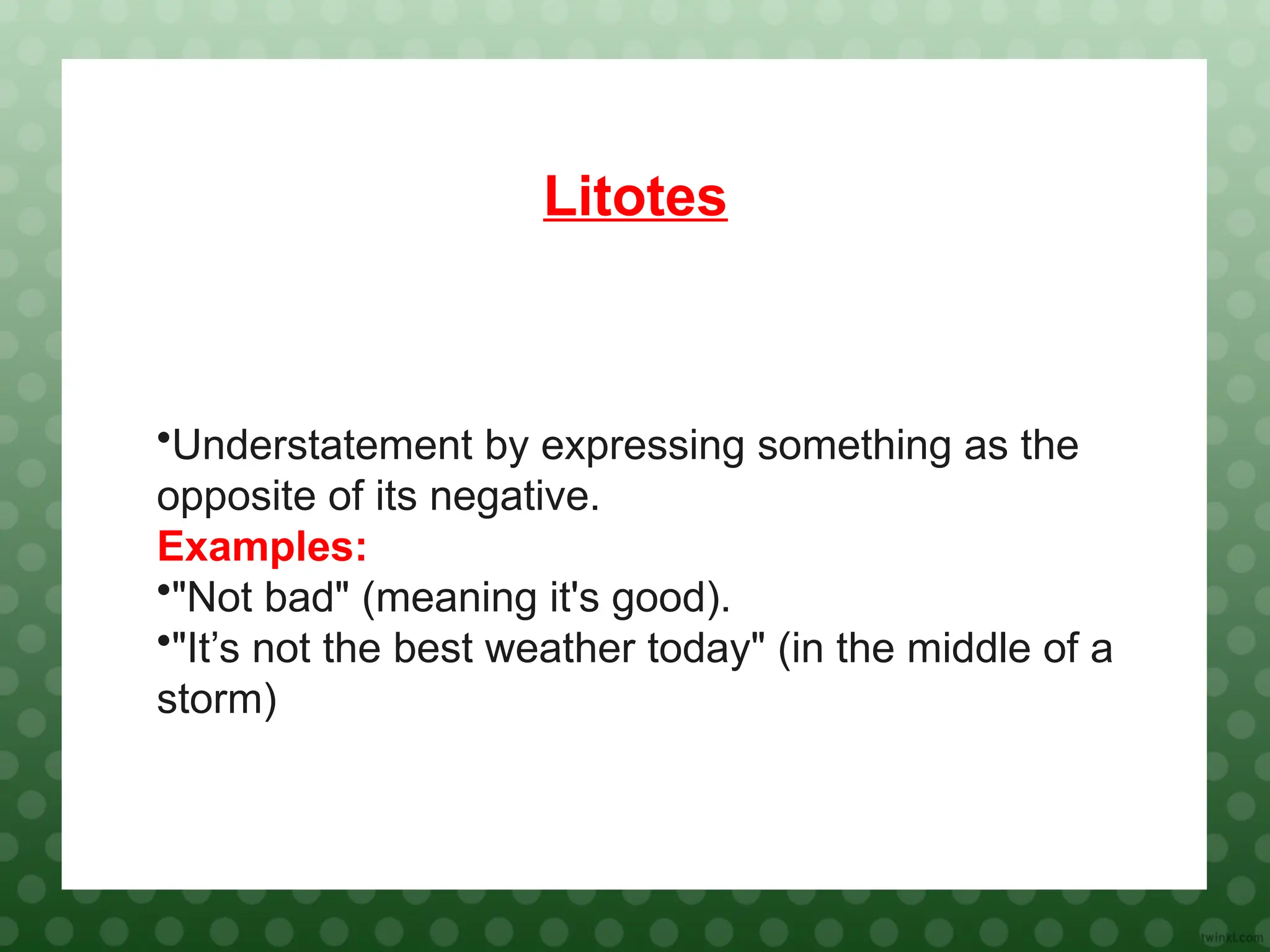
Litotes
•Understatement by expressing something as the
opposite of its negative.
Examples:
•"Not bad" (meaning it's good).
•"It’s not the best weather today" (in the middle of a
storm)
Climax
•A list where each element intensifies the previous one.
Examples:
•"I expect the truth, the whole truth, and nothing but the
truth."
•"We came, we saw, we conquered."
Irony
•A comment that means the opposite of what it seems to
say.
Examples:
•"What a beautiful day!" (when it's raining heavily).
•"Oh great, another homework assignment!" (sarcastic
tone).
Quiz
Can you correctly identify the type of figurative language?
Simile, Metaphor, Personification
or Hyperbole?
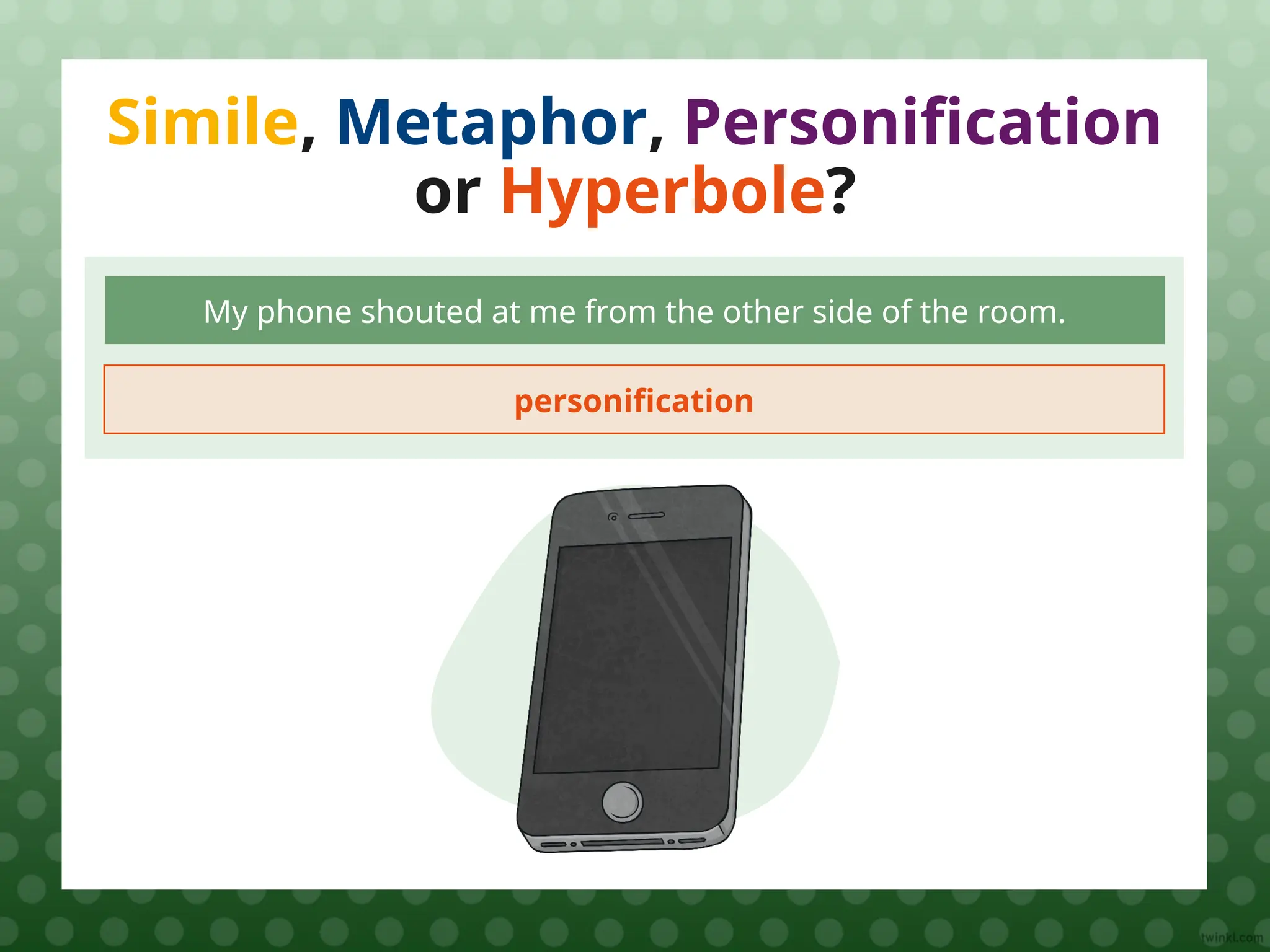
My phone shouted at me from the other side of the room.
personification
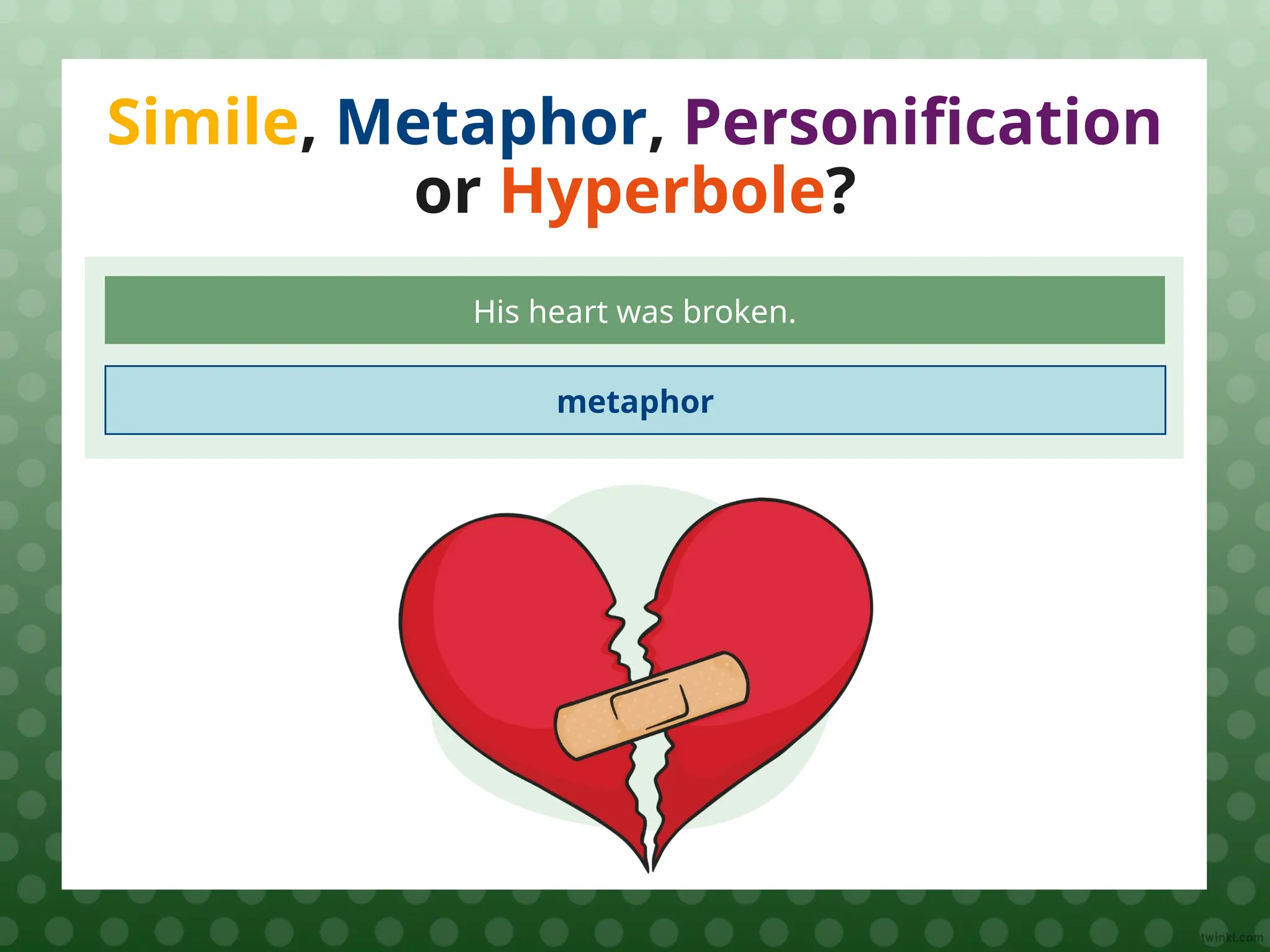
Simile, Metaphor, Personification
or Hyperbole?
His heart was broken.
metaphor
Questions
•"His words cut deeper than a knife."
•"I could sleep for a year!"
•"Her smile was like sunshine on a rainy day."
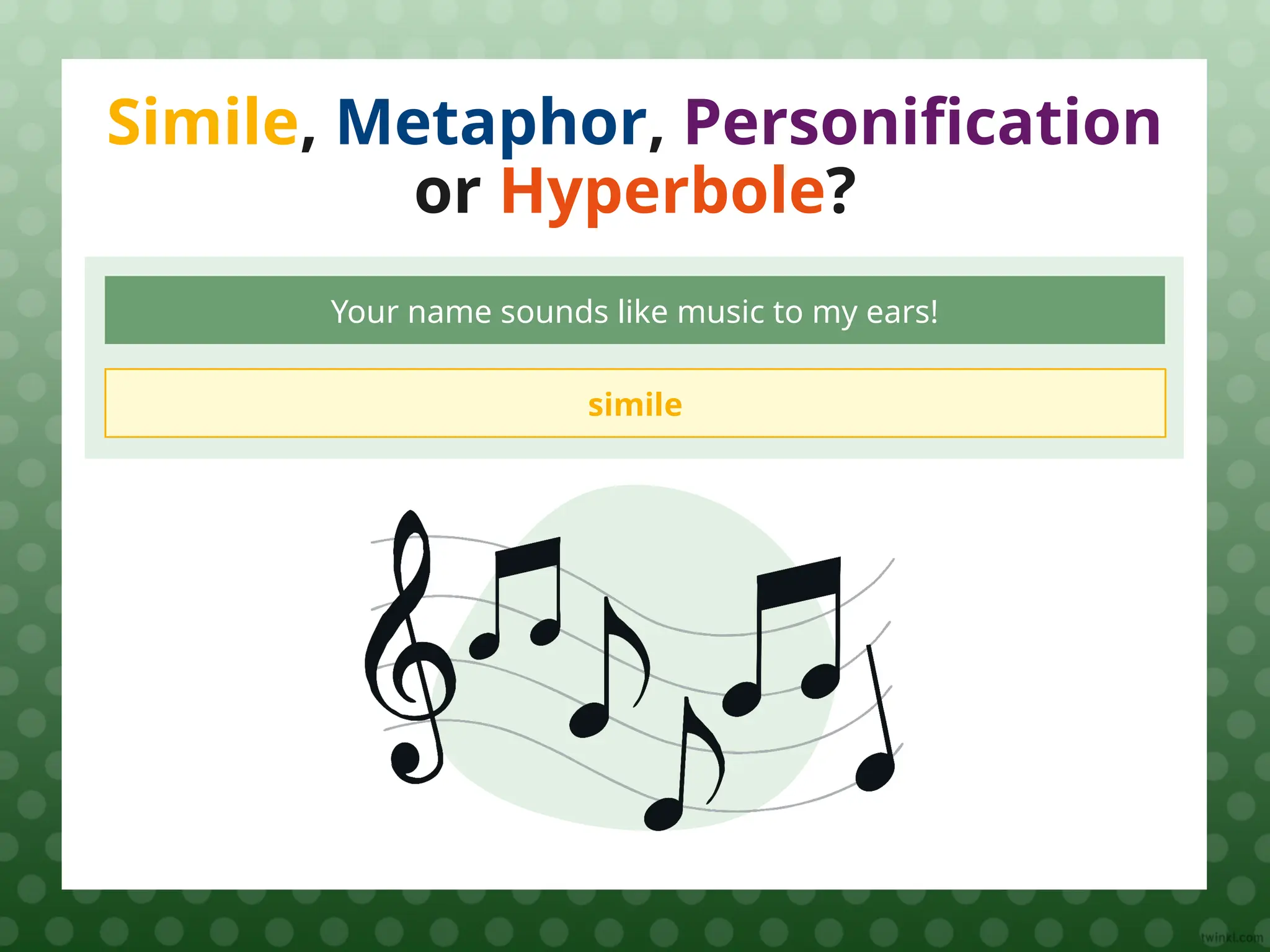
Simile, Metaphor, Personification
or Hyperbole?
Your name sounds like music to my ears!
simile
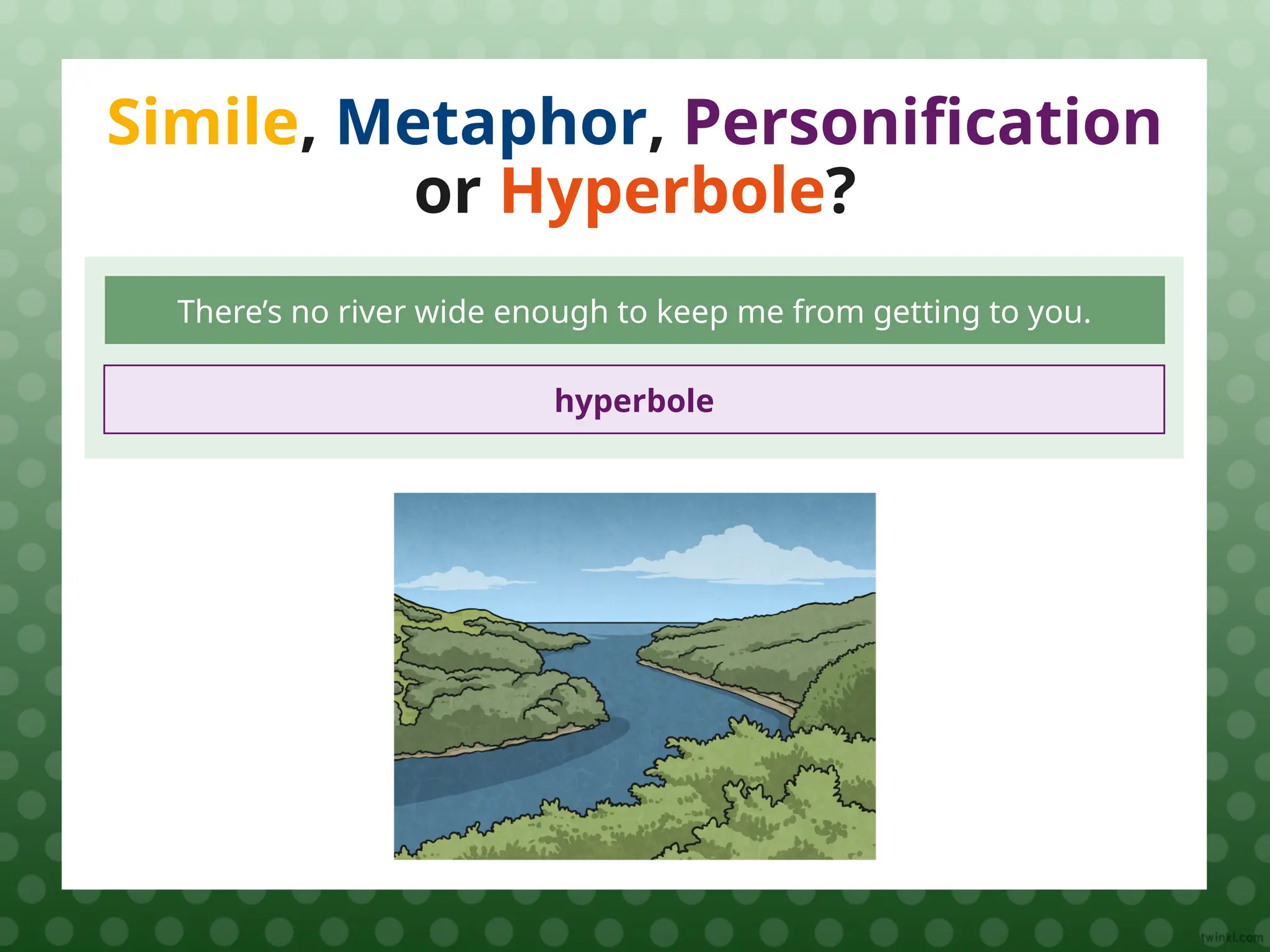
Simile, Metaphor, Personification
or Hyperbole?
There’s no river wide enough to keep me from getting to you.
hyperbole
Why do you think we use
figurative language in writing?
Question:
figures of speech.pptx Metaphor, similie,

figures of speech.pptx Metaphor, similie,

  • 2.
    I’ve told youa million times to clean your room! What Is Figurative Language? Figurative language is a way of using words to compare something to something else – beyond the literal meaning. Figurative language is used for emphasis and impact. She ran as fast as lightning. His team was on top of the world after winning the championship game.
  • 3.
    Which sounds moreinteresting? Why Use Figurative Language? Figurative language makes our writing more interesting. It also helps the reader create a mental image of the text. We are alike. We are two peas in a pod. OR
  • 4.
    simile Types of FigurativeLanguage? Here are a few types we will discuss: metaphor personification hyperbole
  • 5.
    Your eyes sparklelike diamonds. Simile A simile compares two things by using the words ‘like’ or ‘as.’ The classroom looked like a tornado had gone through! I tiptoed as quietly as a mouse. Similes always include the words ‘like’ or ‘as.’
  • 6.
    Laughter is musicfor the soul. Metaphor A metaphor compares one thing to another without using ‘like’ or ‘as.’ You are my sunshine. Those ideas are food for thought. Metaphors say one thing is another.
  • 7.
    The stars dancedin the sky. Personification Personification gives human qualities to animals, non-living objects or ideas. In the jungle, the lion sings tonight. That cake is calling my name. Personification gives something non-human the qualities of a person.
  • 8.
    She knows everythingabout math! Personification Hyperbole is obvious exaggeration to make a point. You are the best teacher in the entire universe. My hands are ice cold! Similes and metaphors can also be examples of hyperbole.
  • 9.
    •Oxymoron A figure ofspeech that combines two contradictory terms. Examples: "Deafening silence." "Bitter sweet."
  • 10.
    Paradox A situation thatseems impossible because it contains two contradictory facts. Examples: "The more you know, the less you understand." "This is the beginning of the end."
  • 11.
    Hyperbole Deliberate exaggeration foreffect. Examples: "I’ve told you a million times!" "The suitcase weighs a ton."
  • 12.
    Litotes •Understatement by expressingsomething as the opposite of its negative. Examples: •"Not bad" (meaning it's good). •"It’s not the best weather today" (in the middle of a storm)
  • 13.
    Climax •A list whereeach element intensifies the previous one. Examples: •"I expect the truth, the whole truth, and nothing but the truth." •"We came, we saw, we conquered."
  • 14.
    Irony •A comment thatmeans the opposite of what it seems to say. Examples: •"What a beautiful day!" (when it's raining heavily). •"Oh great, another homework assignment!" (sarcastic tone).
  • 15.
    Quiz Can you correctlyidentify the type of figurative language?
  • 16.
    Simile, Metaphor, Personification orHyperbole? My phone shouted at me from the other side of the room. personification
  • 17.
    Simile, Metaphor, Personification orHyperbole? His heart was broken. metaphor
  • 18.
    Questions •"His words cutdeeper than a knife." •"I could sleep for a year!" •"Her smile was like sunshine on a rainy day."
  • 19.
    Simile, Metaphor, Personification orHyperbole? Your name sounds like music to my ears! simile
  • 20.
    Simile, Metaphor, Personification orHyperbole? There’s no river wide enough to keep me from getting to you. hyperbole
  • 21.
    Why do youthink we use figurative language in writing? Question: