Enabling Information Literacy in
      Sub-Saharan Africa


                LILAC, 2011
   Babakisi Fidzani & Siobhán Duvigneau
British Library for Development
Studies
 Economic & social development
  collection
 Post-graduate research library
  supporting studies & research
 Funded by DFID
    ◦ Part of MK4D programme
    ◦ IL Programme initially focused on African:
      Researchers
      Librarians
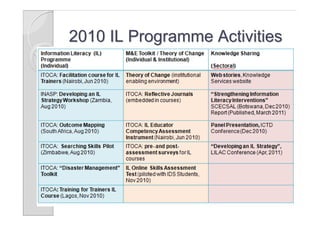
2010 IL Programme Activities
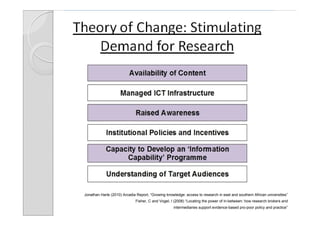
Jonathan Harle (2010) Arcadia Report, “Growing knowledge: access to research in east and southern African universities”
                              Fisher, C and Vogel, I (2008) “Locating the power of in-between: how research brokers and
                                                    intermediaries support evidence-based pro-poor policy and practice”
Institutional vision as an ILS
driver

Vision:
University of Botswana (UB) wants to
 be:
 A leading centre of academic
 excellence in Africa and in the
 world


                                       6
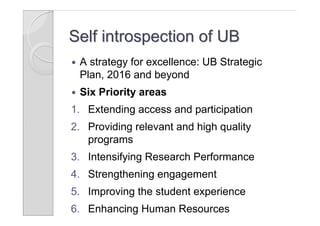
Self introspection of UB
   A strategy for excellence: UB Strategic
    Plan, 2016 and beyond
   Six Priority areas
1. Extending access and participation
2. Providing relevant and high quality
   programs
3. Intensifying Research Performance
4. Strengthening engagement
5. Improving the student experience
6. Enhancing Human Resources
Self introspection of UB
   Had positive impact on Library
   Facilitation of learning process by
    librarians gains recognition
   Opportunities
    ◦ DeLPHE Project
   Initiatives supportive of ILS
Initiatives: external & internal
drivers
  Internal factors
   Employability strategy
      ◦ What attributes?
     Senate recommendations on GEC
     Quality of student learning
      ◦ Policy initiatives
        Learning and teaching policy
        Research Strategy
      ◦ Programme reviews
     Role of library in learning, teaching and
      research
Learning and Teaching Policy
Graduate attributes
  1.  Information and communication technology
      knowledge and skills
  2. Self‐directed, lifelong learning skills
  3. Critical and creative thinking skills
  4. Problem‐solving skills
  5. Communication skills
  6. Entrepreneurship and employability skills
  7. Organizational and teamwork skills
  8. Research skills and information literacy
  9. Social responsibility and leadership skills
  10. Interpersonal skills
  11. Cross‐cultural fluency
  12. Accountability and ethical standards
Expected DeLPHE project outputs

     An evidence-based framework for
      embedding information literacy into
      university programmes
     Pedagogical training programme for
      library professionals and academic
      staff
     Customisation of global perspectives
      from best practices
     CBU and UAD: Strategic Partner
      insights
Advocacy Plan
 Departmental level
 Strategic partners
    ◦ Who are the drivers of learning and
      teaching policy?
   Centre for Academic Development
    ◦ Teaching and Learning Unit
    ◦ ILS Reference Group
 Deputy Vice Chancellor (DVC AA)
 AADMT
Next Steps
 Strengthening collaboration between
  librarians and academics
 Intensifying awareness raising
    ◦ Individual
    ◦ Institutional
 Widen collaboration at regional &
  international levels
 Building capacity of M&E for ILS
  interventions
Thank you for listening

Fidzani & Duvigneau - Enabling Information Literacy in Sub-Saharan Africa

  • 1.
    Enabling Information Literacyin Sub-Saharan Africa LILAC, 2011 Babakisi Fidzani & Siobhán Duvigneau
  • 2.
    British Library forDevelopment Studies  Economic & social development collection  Post-graduate research library supporting studies & research  Funded by DFID ◦ Part of MK4D programme ◦ IL Programme initially focused on African:  Researchers  Librarians
  • 3.
  • 4.
    Jonathan Harle (2010)Arcadia Report, “Growing knowledge: access to research in east and southern African universities” Fisher, C and Vogel, I (2008) “Locating the power of in-between: how research brokers and intermediaries support evidence-based pro-poor policy and practice”
  • 6.
    Institutional vision asan ILS driver Vision: University of Botswana (UB) wants to be: A leading centre of academic excellence in Africa and in the world 6
  • 7.
    Self introspection ofUB  A strategy for excellence: UB Strategic Plan, 2016 and beyond  Six Priority areas 1. Extending access and participation 2. Providing relevant and high quality programs 3. Intensifying Research Performance 4. Strengthening engagement 5. Improving the student experience 6. Enhancing Human Resources
  • 8.
    Self introspection ofUB  Had positive impact on Library  Facilitation of learning process by librarians gains recognition  Opportunities ◦ DeLPHE Project  Initiatives supportive of ILS
  • 9.
    Initiatives: external &internal drivers Internal factors  Employability strategy ◦ What attributes?  Senate recommendations on GEC  Quality of student learning ◦ Policy initiatives  Learning and teaching policy  Research Strategy ◦ Programme reviews  Role of library in learning, teaching and research
  • 10.
    Learning and TeachingPolicy Graduate attributes 1. Information and communication technology knowledge and skills 2. Self‐directed, lifelong learning skills 3. Critical and creative thinking skills 4. Problem‐solving skills 5. Communication skills 6. Entrepreneurship and employability skills 7. Organizational and teamwork skills 8. Research skills and information literacy 9. Social responsibility and leadership skills 10. Interpersonal skills 11. Cross‐cultural fluency 12. Accountability and ethical standards
  • 11.
    Expected DeLPHE projectoutputs  An evidence-based framework for embedding information literacy into university programmes  Pedagogical training programme for library professionals and academic staff  Customisation of global perspectives from best practices  CBU and UAD: Strategic Partner insights
  • 12.
    Advocacy Plan  Departmentallevel  Strategic partners ◦ Who are the drivers of learning and teaching policy?  Centre for Academic Development ◦ Teaching and Learning Unit ◦ ILS Reference Group  Deputy Vice Chancellor (DVC AA)  AADMT
  • 13.
    Next Steps  Strengtheningcollaboration between librarians and academics  Intensifying awareness raising ◦ Individual ◦ Institutional  Widen collaboration at regional & international levels  Building capacity of M&E for ILS interventions
  • 14.
    Thank you forlistening