PHARMACOGNOSY
FIBERS 1
Cellulose:
 Introduction:
 Cellulose esters are generally water insoluble
polymers with good film forming characteristics.
Cellulose esters are widely used in pharmaceutical
controlled release preparations such as osmotic and
enteric coated drug delivery systems.

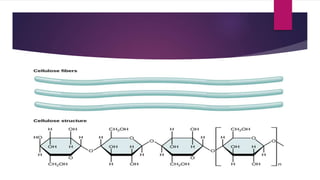
 Structureof cellulose:
 Cellulose is a polysaccharide in which glucose molecules are
linked together via 1-4 glycosidic bonds. It is an unbranched
molecule. Chains of glucose molecules are arranged in a
linear pattern to form cellulose
 Source of cellulose:
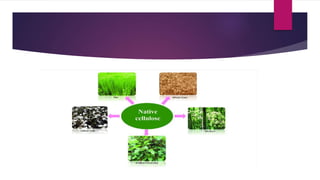
 Cellulose is a fiber found in fruits, vegetables, and
other plant foods as part of a plant's cell walls. It's
found in tree bark and a plant's leaves. When you
eat plant foods, you are consuming cellulose.
Synthesis of cellulose:
 Cellulose is synthesis does not occur in animals. It is limited to only plants or
bacteria. The biosynthesis of cellulose in two organisms follow different steps.
 In Plants:
 In plants, cellulose synthesis takes place on special complexes present at the
cell membrane called rosette terminal complexes. These complexes are the
hexameric transmembrane proteins that are capable of free floatation in the
plasma membrane. They contain at least three cellulose synthase enzymes.
 These transmembrane rosettes perform two functions; polymerization of
glucose residues to form cellulose chain and assembly of cellulose microfibrils.
 Synthesis of Cellulose Chain
 The process of cellulose chain synthesis begins on the cytoplasmic
end of the rosette terminal complexes. The cellulose synthase
enzymes use glucose residues provided by UDP-glucose.
 In the first step, glucose-6-phosphate is converted to glucose-1-
phosphate in the cytoplasm of plant cells by phosphoglucomutase
enzyme.
 This step is common in the synthesis of starch, glycogen, and
cellulose.
 In the next step, UTP and glucose-1-phosphate react to form UDP-glucose and a
pyrophosphate molecule is released. The hydrolysis of pyrophosphate makes
this step irreversible. It is also the rate-limiting step in cellulose synthesis.
 Cellulase synthase requires a primer for the synthesis of cellulose chains. The
steroid molecule sitosterol-beta-glucoside serves the function of primer in the
synthesis of cellulose. The cellulose synthase begins constructing a cellulose
chain on primer using glucose residues provided by UDP-glucose molecules. It
joins the glucose residues via beta 1-4 glycosidic bonds to form a long chain of
cellulose releasing UDP molecules.
 The UDP molecules can then be converted into UTP by certain kinases.
 Assembly of Cellulose Microfibrils:
 Once a cellulose chain has been elongated to a certain length, the
cellulase enzyme present in the cytoplasm cleaves this chain from the
primer.
 The rosette complexes move this chain across the plasma membrane
into the cell wall.
 In the cell wall, different cellulose chains are arranged parallel to each
other and hydrogen bonds are formed among them. This results in the
formation of cellulose microfibrils with high tensile strength.
 Bacteria
 Bacteria use the same family of enzymes for cellulose synthesis as used by plants.
However, the bacterial enzymes are encoded by different genes. Another hypothesis is that
plants acquired the cellulose synthesis enzymes from bacteria after endosymbiosis.
 Animals
 Cellulose is also synthesized by some animals called tunicates. Tunicates are invertebrate
animals found in the sea. They have a hard shell that encloses the delicate body of the
animal. Cellulose is found in the shell of these animals.
 The process of cellulose synthesis is also somehow same as in the plants and bacteria.
The structure of cellulose is essentially the same.
 Uses:
 Cellulose ester derivatives. Cellulose esters are generally
water insoluble polymers with good film forming
characteristics. Cellulose esters are widely used in
pharmaceutical controlled release preparations such
as osmotic and enteric coated drug delivery systems.
 Cellulose can be used in many fields such as papermaking,
clothing, pharmaceuticals etc.
RAYON:
 Introduction:
 rayon, artificial textile material composed of regenerated and purified
cellulose derived from plant sources. Developed in the late 19th
century as a substitute for silk, rayon was the first man-made fibre.
 Rayon is a semi-synthetic fiber, made from natural sources of
regenerated cellulose, such as wood and related agricultural
products. It has the same molecular structure as cellulose. It is also called
viscose.
 Sources:
 Wood pulp is a source of rayon. Rayon is manufactured from
wood pulp that in turn is a cellulose based raw material that
occurs naturally. This wood pulp is transformed into a soluble
compound. The fact that wood pulp is one of the key sources
of rayon makes it an inexpensive fiber.
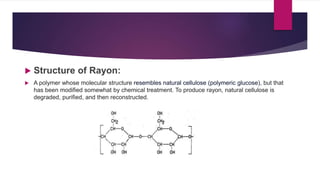
 Structure of Rayon:
 A polymer whose molecular structure resembles natural cellulose (polymeric glucose), but that
has been modified somewhat by chemical treatment. To produce rayon, natural cellulose is
degraded, purified, and then reconstructed.
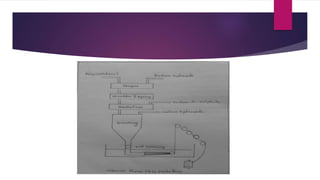
 Preparation of Rayon:
 Rayon is a man-made fibre prepared from a natural raw material called cellulose
by chemical treatment.The cellulose required for making rayon is obtained from
wood pulp.Rayon is obtained by chemical treatment of wood pulp.
 Steps:
The manufacturing of viscose rayon involves following steps, let us
study them in the order they are performed:
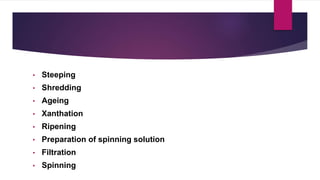
•Shredding
•Ageing
• Steeping
• Shredding
• Ageing
• Xanthation
• Ripening
• Preparation of spinning solution
• Filtration
• Spinning
 Steeping:
 Steeping is the very first step in the manufacturing of
viscose. In this process, the pulp is treated for mercerization
in presence of NaOH at the mercerizing strength. The pulp
sheets are then steeped (immersed) in 18% NaOH. Alkali
cellulose is generated as product during the reaction.
 Shredding:
 During shredding, the alkali sheets are then converted in light fluffy mass with the help of a
machine which consists of a pair of revolving blades rotates at a high speed in the opposite
direction.
 Ageing:
 The crumbs obtained at the end of the shredding procedure are transferred to a steel container where
they are stored under specific temperature for 3 to 72 hours which may vary according to the catalyst
and the alkali. The presence of air in the alkali reduces the chain length which in turn decrease the
viscosity as it is essential to prepare the desirable spinning solution. . As soon as the correct viscosity is
obtained these pieces are then transferred into a drum where it is kept in inert atmosphere and kept at
low temperature.
 Xanthation:
 During the process of xantation the aged alkali cellulose crumbs are placed in vats
and are allowed to react with carbon disulphide under controlled temperature 20-30
degree Celsius which forms cellulose xanthate.
 Ripening:
 In this process, the viscose is allowed to ripen for a stipulated period of time. During
ripening, two major processes takes place firstly, the xanthate groups are redistributed
and then lost. The viscosity of the solution first decreases and then rises to its original
value.
 Preparation of spinning solution:
 The spinning solution contains the following:
 Water-69%
 Zinc sulphate-1%
 Sodium sulphate-18%
 Glucose-2%
 Sulphuric acid-10%
 The sodium sulphate precipitates the dissolved sodium cellulose xanthate. The
sulphuric acid converts xanthate into cellulose, carbon disulphide and sodium
sulphate. The glucose provides softness and pliability to the filaments whereas zinc
sulphate helps in adding strength.
 Filtration:
 The viscose is filtered to remove undissolved materials that might disrupt the spinning
process or cause defect in the rayon filament.
 Wet Spinning:
 In this process, the ripened viscose solution passes through a centrifugal pump due to
pressure exerted on the solution by the compressed air.
 Then viscose solution is forced through a spinneret which
has many fine holes with diameters ranging from 0.05-
0.1mm, as soon as a number of filaments emerge from the
spinneret they are taken together to surface of the spinning
bath and then it is guided to two roller from where they are
wound on to a spindle.
 Uses:
 Cuts or tears easily, most commonly used in the bottling of
tablets and creating a more efficient environment when
packing tablet medication.
 The most common use is to make various articles of clothing
and home-ware, such as blankets, sheets and curtains.
Rayon can also be used for making tire cords and surgical
products.
Catgut:
 Catgut (also known as gut) is a type of cord that is
prepared from the natural fiber found in the walls of
animal intestines. Catgut makers usually use sheep
or goat intestines, but occasionally use the
intestines of cattle, hogs, horses, mules, or donkeys.
Despite the name, catgut is not made from cat
intestines.
Source:
 Catgut is extracted from the intestines of sheep or goats.
 Preparation:
 To prepare catgut, workers clean the small intestines, free them
from any fat, and steep them in water. Then they scrape off the
external membrane with a blunt knife, and steep the intestines
again for some time in potassium hydroxide. Then they smooth
and equalize the intestines by drawing them out.
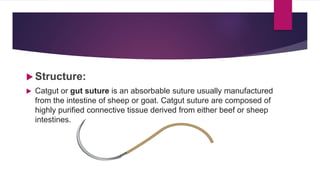
 Structure:
 Catgut or gut suture is an absorbable suture usually manufactured
from the intestine of sheep or goat. Catgut suture are composed of
highly purified connective tissue derived from either beef or sheep
intestines.
Uses:
Catgut, tough cord made from the intestines of
certain animals, particularly sheep, and used
for surgical ligatures and sutures, for the strings of
violins and related instruments, and for the strings of
tennis rackets and archery bows.
Nylon:
 Nylon is the name of a family of synthetic polymers that are commonly
used to make a variety of different types of apparel and consumer
goods. Unlike other organic or semi-synthetic fibers, nylon fibers are entirely
synthetic, which means that they have no basis in organic material.

Sources:
 Nylon is synthesized from coal, water and air. Nylon is very strong and its
fabric is like silk. Polyester- Polyester, one of the most popular man-made
fibres. It is made of repeating unit of a chemical called ester.
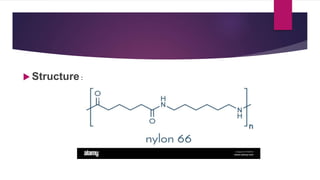
 Structure:
 Preparation:
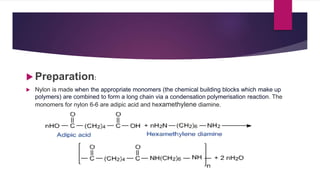
 Nylon is made when the appropriate monomers (the chemical building blocks which make up
polymers) are combined to form a long chain via a condensation polymerisation reaction. The
monomers for nylon 6-6 are adipic acid and hexamethylene diamine.
 Uses:
• Clothing – Shirts, Foundation garments, lingerie, raincoats,
underwear and cycle wear.
• Industrial uses – Conveyer and seat belts, airbags, nets and ropes,
thread, and tents.
• It is used to make a fishnet.
• It is used as plastic in manufacturing machine parts.
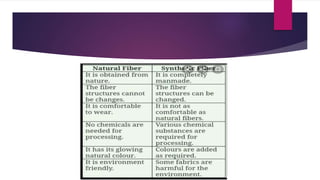
Classification of Fibers:
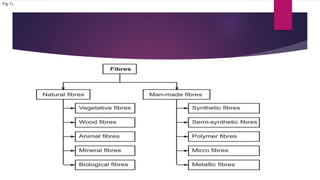
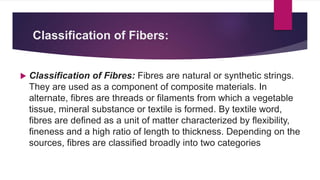
 Classification of Fibres: Fibres are natural or synthetic strings.
They are used as a component of composite materials. In
alternate, fibres are threads or filaments from which a vegetable
tissue, mineral substance or textile is formed. By textile word,
fibres are defined as a unit of matter characterized by flexibility,
fineness and a high ratio of length to thickness. Depending on the
sources, fibres are classified broadly into two categories
Fig.1).
 Natural Fibers:
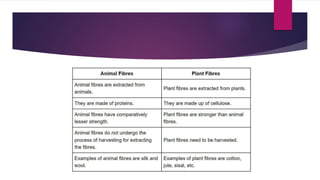
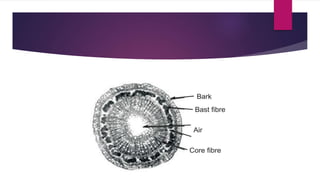
 Vegetable Fibres or Bast Fibres: They are also known as skin fibres. They are collected from
the phloem (the “inner bark” or the skin) or bast surrounding the stem of certain plants i.e.,
mainly dicotyledonous plants. They support the conductive cells of the phoelm and provide
strength to the stem.They are separated from the xylem by the retting method by treating with
microorganisms either on land or in water or by chemicals or by pectinolytic enzymes. They
are generally based on arrangements of cellulose, often with lignin. They have higher tensile
strength. Examples include cotton, hemp, jute, flax, banana, sisal etc. They are employed in
the manufacture of various ropes, yarn, in the paper and textile industries. Dietary fibres are
important for human nutrition as they are used as laxatives
• Bast fibres from the stem: Examples: Flax, Hemp, Jute etc.
• Bast fibres from leaf: Examples: Ananas, Agave, Palm etc.
• Bast fibres from seed: Examples: Cotton, Soya, Coir etc.
• Bast fibres from fruit: Examples: Luffa, Coir etc.
• Bast fibres from grass: Examples: Bamboo, Totora etc.
• Bast fibres from wood: Examples: Hardwood, Softwood etc.
 Wood fibres: They are usually cellulose elements that are extracted
from trees and are used to make materials including paper. There are
different forms of wood fibres including groundwood, thermomechanical
pulp and bleached or unbleached sulfite pulps. Sulfite pulp is obtained by
a pulping process that is used to remove the lignin bonding the original
wood structure.
 Animal fibres: They are obtained from different parts of animals and
consist largely of particular proteins. Examples: Silkworm silk, catgut,
wool; Hair such as cashmere wool, mohair and angora; Fur such as
sheepskin, rabbit, mink etc.
 Mineral fibres: They include the asbestos group and are long
fibres. Six minerals have been classified as “asbestos” including
chrysotile, amosite, crocidolite, tremolite, anthophyllite and
actinolite. Short mineral fibres are wollastonite, palygorskite etc.
 Biological fibres: They are also known as fibrous proteins. They
consist of biologically important proteins, mutations etc.
Examples: Collagen, actin.
n-Made Fibres:
 Synthetic fibres: They are man-made fibres derived from natural fibres, mainly
cellulose, e.g., nylon and terylene. Nylons are polymers of adipic acid and hexamethyl
diamine, whereas terylene is a polymer of ethylene glycol and terephthalic acid.
 Semi-synthetic fibres: Semi-synthetic fibres are made from raw materials with
naturally long-chain polymer structure and are only modified and partially degraded by
chemical processes. Generally, they are regenerated cellulose derivatives. Examples: Rayon,
bamboo fibres etc.
 Polymer fibres: They are based on synthetic chemicals and made from polyamide
nylon, polyester, polyvinyl chloride etc.
 Microfibres: They are ultra-fine fibres often used
infiltration. In textiles, microfibres are referred to as
sub-denier fibres.
 Metallic fibres: These fibres are prepared from
the metals such as copper, gold or silver and
extruded or deposited from more brittle ones such
as nickel,aluminium or iron.
Evaluation of Fibers and Surgical
Dressings:
 Fibres and the surgical dressings made from them are of immense value in
medical and pharmaceutical practices. Dressings are compulsorily needed for
proper management and subsequent healing of wounds caused by injuries,
burns, microbial infections and surgical operations. They are used to provide
protection to the exposed tissues against microbial infections and other
natural hazards. The surgical dressings not only aid the healing process but
also help stop further tissue damage. The success of wound management
largely depends on the type and quality of the dressings used.
 To be able to choose the right kind of the surgical dressings one must be
aware of the types of available dressings, their qualities and usefulness,
 The quality of a surgical dressing depends on the type of the fibre used to
prepare the dressing. Since the pharmacists are responsible for handling and
dispensing most medical aids including the surgical dressings they should
possess a good knowledge of the suitable fibres and the surgical dressings
made from them. Fibres are used for dressing purposes both in their normal
forms and in woven or fabric forms. Fibres that are useful in wound
management and healing include both natural and artificial or synthetic fibres.
Natural fibres may be of plant or animal origin. Plant fibres include epidermal
trichomes, such as cotton, and other fibrous tissues of plants, such as phloem
fibres (e.g. Jute) and pericyclic fibres (e.g. Flax and Hemp). Fibres of animal
origin are derived from some animal products such as wool and silk.
 Artificial fibres, prepared by processing or regenerating some tissue
elements of plants such as wood cellulose (e.g. Rayon, Cellulose
Wadding and Alginate fibres), are also frequently used in wound
management and surgical dressings. Some synthetically prepared
fibres, such as Nylon and Terylene, have also been used for dressing
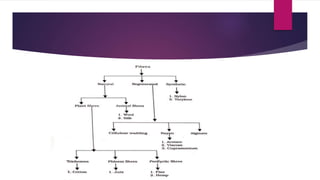
wounds and bums. The various groups of fibres used for surgical
dressings may be conveniently summarized in the foil owing way:
BPC Standards for dressing and
structure:
 This group of surgical dressings includes some standardized compound dressings
described in the British Pharmaceutical Codex (BPC) and other official
publications. These dressings are prepared ready for use and consist of a pad of
medicated cotton wool, gauze or lint stitched to an open-wove bandage at certain
distance from one end. The longer end of the bandage is rolled and placed inside
the pad and the other end is wound round the rolled pad. The complete dressing
is wrapped in impermeable paper and sterilized. However, in case of standard
elastic adhesive dressings, the pad is fixed to a base of elastic adhesive cotton
fabric, and no bandage is required.
BPC Standards for dressing and
structure:
 The Standard Dressings Of B.P.C. Are Numbered 1 To 15 And Variously Named
As Follows:
 Standard Dressing No. 1:
 This dressing is also known as Double Cyanide Dressing and consists of separate
pieces of Double cyanide gauze, Absorbent cotton wool and an open wove
bandage, all wrapped together and sterilized.
 Standard Dressing No. 2:
 This Standard dressing, which is also known as Fomentation Dressing, consists
of separate pieces of Boric acid lint, Absorbent cotton wool and an open wove
bandage. all wrapped together and sterilized.
BPC Standards for dressing and
structure:
 Standard Dressings No. 3, 4, 5 And 6:
 They are collectively known as Elastic Adhesive Wound Dressings and differ from
each other only in size. All of them consist of a pad fixed centrally to a flesh
coloured elastic cotton fabric with an adhesive margin all round. The pad is made
up of a strip of lint enclosed in one ply Muslin bandage, both medicated with about
5 percent of boric acid and tinted pink with a dye.
 Standard Dressing No. 7:
 This is a Plain lint Finger dressing, which consists of a sterile unmedicated open-
ended tubular bandage. This dressing is used as a wound dressing for fingers
and toes.
BPC Standards for dressing and
structure:
 Standard Dressings No. B And 9:
 These are also sterile Plain lint dressings, which consist of an unmedicated pad of
absorbent cotton wool faced with a rectangular piece of lint attached lengthwise to
an open-wove bandage. These dressings differing only in their sizes are used as
wound dressings for hands and feet.
 Standard Dressing No.10:
 It is also known as Medicated lint Finger dressing. It is a medicated (usually with
Euflavine) version of the Standard Dressing No. 7 and is used for the treatment of
mild burns of fingers and toes.
BPC Standards for dressing and
structure:
 Standard Dressings No.11 And 12:
 They are popularly known as Bum Dressings. These dressing are the medicated (with
Euflavine) versions of Plain lint dressings (Standard Dressings No. 8 and 9). They are
used for the treatment of mild burns of hands, feet, and larger areas.
 Standard Dressings No. 13, 14 And 15:
 These unmedicated dressings are commonly referred to as Plain Wound Dressings
and are prepared in three different sizes: small (13) medium (14) and large (15). They
consist of a pad of Absorbent cotton wool, enclosed in Absorbent gauze and attached
to an open wove bandage. They are sterile dressings. These are used as protective
and absorbent dressings for wounds.
BPC Standards for dressing and
structure:
 Standard Dressing No.16:
 This Is also known as Eye pad with bandage, which consists of a 150 mm by 75
mm oval-shaped pad of cotton wool covered on both sides with Muslin. The pad is
long1tudtnally attached to a piece of open-wove bandage and is sterilized. The
dressing is used as protective covering of the eye.
FIBERS .pptx

FIBERS .pptx

  • 1.
  • 2.
    Cellulose:  Introduction:  Celluloseesters are generally water insoluble polymers with good film forming characteristics. Cellulose esters are widely used in pharmaceutical controlled release preparations such as osmotic and enteric coated drug delivery systems. 
  • 3.
     Structureof cellulose: Cellulose is a polysaccharide in which glucose molecules are linked together via 1-4 glycosidic bonds. It is an unbranched molecule. Chains of glucose molecules are arranged in a linear pattern to form cellulose
  • 5.
     Source ofcellulose:  Cellulose is a fiber found in fruits, vegetables, and other plant foods as part of a plant's cell walls. It's found in tree bark and a plant's leaves. When you eat plant foods, you are consuming cellulose.
  • 7.
    Synthesis of cellulose: Cellulose is synthesis does not occur in animals. It is limited to only plants or bacteria. The biosynthesis of cellulose in two organisms follow different steps.  In Plants:  In plants, cellulose synthesis takes place on special complexes present at the cell membrane called rosette terminal complexes. These complexes are the hexameric transmembrane proteins that are capable of free floatation in the plasma membrane. They contain at least three cellulose synthase enzymes.  These transmembrane rosettes perform two functions; polymerization of glucose residues to form cellulose chain and assembly of cellulose microfibrils.
  • 8.
     Synthesis ofCellulose Chain  The process of cellulose chain synthesis begins on the cytoplasmic end of the rosette terminal complexes. The cellulose synthase enzymes use glucose residues provided by UDP-glucose.  In the first step, glucose-6-phosphate is converted to glucose-1- phosphate in the cytoplasm of plant cells by phosphoglucomutase enzyme.  This step is common in the synthesis of starch, glycogen, and cellulose.
  • 9.
     In thenext step, UTP and glucose-1-phosphate react to form UDP-glucose and a pyrophosphate molecule is released. The hydrolysis of pyrophosphate makes this step irreversible. It is also the rate-limiting step in cellulose synthesis.  Cellulase synthase requires a primer for the synthesis of cellulose chains. The steroid molecule sitosterol-beta-glucoside serves the function of primer in the synthesis of cellulose. The cellulose synthase begins constructing a cellulose chain on primer using glucose residues provided by UDP-glucose molecules. It joins the glucose residues via beta 1-4 glycosidic bonds to form a long chain of cellulose releasing UDP molecules.  The UDP molecules can then be converted into UTP by certain kinases.
  • 10.
     Assembly ofCellulose Microfibrils:  Once a cellulose chain has been elongated to a certain length, the cellulase enzyme present in the cytoplasm cleaves this chain from the primer.  The rosette complexes move this chain across the plasma membrane into the cell wall.  In the cell wall, different cellulose chains are arranged parallel to each other and hydrogen bonds are formed among them. This results in the formation of cellulose microfibrils with high tensile strength.
  • 11.
     Bacteria  Bacteriause the same family of enzymes for cellulose synthesis as used by plants. However, the bacterial enzymes are encoded by different genes. Another hypothesis is that plants acquired the cellulose synthesis enzymes from bacteria after endosymbiosis.  Animals  Cellulose is also synthesized by some animals called tunicates. Tunicates are invertebrate animals found in the sea. They have a hard shell that encloses the delicate body of the animal. Cellulose is found in the shell of these animals.  The process of cellulose synthesis is also somehow same as in the plants and bacteria. The structure of cellulose is essentially the same.
  • 12.
     Uses:  Celluloseester derivatives. Cellulose esters are generally water insoluble polymers with good film forming characteristics. Cellulose esters are widely used in pharmaceutical controlled release preparations such as osmotic and enteric coated drug delivery systems.  Cellulose can be used in many fields such as papermaking, clothing, pharmaceuticals etc.
  • 13.
    RAYON:  Introduction:  rayon,artificial textile material composed of regenerated and purified cellulose derived from plant sources. Developed in the late 19th century as a substitute for silk, rayon was the first man-made fibre.  Rayon is a semi-synthetic fiber, made from natural sources of regenerated cellulose, such as wood and related agricultural products. It has the same molecular structure as cellulose. It is also called viscose.
  • 14.
     Sources:  Woodpulp is a source of rayon. Rayon is manufactured from wood pulp that in turn is a cellulose based raw material that occurs naturally. This wood pulp is transformed into a soluble compound. The fact that wood pulp is one of the key sources of rayon makes it an inexpensive fiber.
  • 15.
     Structure ofRayon:  A polymer whose molecular structure resembles natural cellulose (polymeric glucose), but that has been modified somewhat by chemical treatment. To produce rayon, natural cellulose is degraded, purified, and then reconstructed.
  • 16.
     Preparation ofRayon:  Rayon is a man-made fibre prepared from a natural raw material called cellulose by chemical treatment.The cellulose required for making rayon is obtained from wood pulp.Rayon is obtained by chemical treatment of wood pulp.  Steps: The manufacturing of viscose rayon involves following steps, let us study them in the order they are performed: •Shredding •Ageing
  • 17.
    • Steeping • Shredding •Ageing • Xanthation • Ripening • Preparation of spinning solution • Filtration • Spinning
  • 19.
     Steeping:  Steepingis the very first step in the manufacturing of viscose. In this process, the pulp is treated for mercerization in presence of NaOH at the mercerizing strength. The pulp sheets are then steeped (immersed) in 18% NaOH. Alkali cellulose is generated as product during the reaction.
  • 20.
     Shredding:  Duringshredding, the alkali sheets are then converted in light fluffy mass with the help of a machine which consists of a pair of revolving blades rotates at a high speed in the opposite direction.  Ageing:  The crumbs obtained at the end of the shredding procedure are transferred to a steel container where they are stored under specific temperature for 3 to 72 hours which may vary according to the catalyst and the alkali. The presence of air in the alkali reduces the chain length which in turn decrease the viscosity as it is essential to prepare the desirable spinning solution. . As soon as the correct viscosity is obtained these pieces are then transferred into a drum where it is kept in inert atmosphere and kept at low temperature.
  • 21.
     Xanthation:  Duringthe process of xantation the aged alkali cellulose crumbs are placed in vats and are allowed to react with carbon disulphide under controlled temperature 20-30 degree Celsius which forms cellulose xanthate.  Ripening:  In this process, the viscose is allowed to ripen for a stipulated period of time. During ripening, two major processes takes place firstly, the xanthate groups are redistributed and then lost. The viscosity of the solution first decreases and then rises to its original value.
  • 22.
     Preparation ofspinning solution:  The spinning solution contains the following:  Water-69%  Zinc sulphate-1%  Sodium sulphate-18%  Glucose-2%  Sulphuric acid-10%
  • 23.
     The sodiumsulphate precipitates the dissolved sodium cellulose xanthate. The sulphuric acid converts xanthate into cellulose, carbon disulphide and sodium sulphate. The glucose provides softness and pliability to the filaments whereas zinc sulphate helps in adding strength.  Filtration:  The viscose is filtered to remove undissolved materials that might disrupt the spinning process or cause defect in the rayon filament.  Wet Spinning:  In this process, the ripened viscose solution passes through a centrifugal pump due to pressure exerted on the solution by the compressed air.
  • 24.
     Then viscosesolution is forced through a spinneret which has many fine holes with diameters ranging from 0.05- 0.1mm, as soon as a number of filaments emerge from the spinneret they are taken together to surface of the spinning bath and then it is guided to two roller from where they are wound on to a spindle.
  • 25.
     Uses:  Cutsor tears easily, most commonly used in the bottling of tablets and creating a more efficient environment when packing tablet medication.  The most common use is to make various articles of clothing and home-ware, such as blankets, sheets and curtains. Rayon can also be used for making tire cords and surgical products.
  • 26.
    Catgut:  Catgut (alsoknown as gut) is a type of cord that is prepared from the natural fiber found in the walls of animal intestines. Catgut makers usually use sheep or goat intestines, but occasionally use the intestines of cattle, hogs, horses, mules, or donkeys. Despite the name, catgut is not made from cat intestines.
  • 27.
    Source:  Catgut isextracted from the intestines of sheep or goats.  Preparation:  To prepare catgut, workers clean the small intestines, free them from any fat, and steep them in water. Then they scrape off the external membrane with a blunt knife, and steep the intestines again for some time in potassium hydroxide. Then they smooth and equalize the intestines by drawing them out.
  • 28.
     Structure:  Catgutor gut suture is an absorbable suture usually manufactured from the intestine of sheep or goat. Catgut suture are composed of highly purified connective tissue derived from either beef or sheep intestines.
  • 29.
    Uses: Catgut, tough cordmade from the intestines of certain animals, particularly sheep, and used for surgical ligatures and sutures, for the strings of violins and related instruments, and for the strings of tennis rackets and archery bows.
  • 30.
    Nylon:  Nylon isthe name of a family of synthetic polymers that are commonly used to make a variety of different types of apparel and consumer goods. Unlike other organic or semi-synthetic fibers, nylon fibers are entirely synthetic, which means that they have no basis in organic material.  Sources:  Nylon is synthesized from coal, water and air. Nylon is very strong and its fabric is like silk. Polyester- Polyester, one of the most popular man-made fibres. It is made of repeating unit of a chemical called ester.
  • 31.
  • 32.
     Preparation:  Nylonis made when the appropriate monomers (the chemical building blocks which make up polymers) are combined to form a long chain via a condensation polymerisation reaction. The monomers for nylon 6-6 are adipic acid and hexamethylene diamine.
  • 33.
     Uses: • Clothing– Shirts, Foundation garments, lingerie, raincoats, underwear and cycle wear. • Industrial uses – Conveyer and seat belts, airbags, nets and ropes, thread, and tents. • It is used to make a fishnet. • It is used as plastic in manufacturing machine parts.
  • 34.
    Classification of Fibers: Classification of Fibres: Fibres are natural or synthetic strings. They are used as a component of composite materials. In alternate, fibres are threads or filaments from which a vegetable tissue, mineral substance or textile is formed. By textile word, fibres are defined as a unit of matter characterized by flexibility, fineness and a high ratio of length to thickness. Depending on the sources, fibres are classified broadly into two categories
  • 35.
  • 36.
     Natural Fibers: Vegetable Fibres or Bast Fibres: They are also known as skin fibres. They are collected from the phloem (the “inner bark” or the skin) or bast surrounding the stem of certain plants i.e., mainly dicotyledonous plants. They support the conductive cells of the phoelm and provide strength to the stem.They are separated from the xylem by the retting method by treating with microorganisms either on land or in water or by chemicals or by pectinolytic enzymes. They are generally based on arrangements of cellulose, often with lignin. They have higher tensile strength. Examples include cotton, hemp, jute, flax, banana, sisal etc. They are employed in the manufacture of various ropes, yarn, in the paper and textile industries. Dietary fibres are important for human nutrition as they are used as laxatives
  • 38.
    • Bast fibresfrom the stem: Examples: Flax, Hemp, Jute etc. • Bast fibres from leaf: Examples: Ananas, Agave, Palm etc. • Bast fibres from seed: Examples: Cotton, Soya, Coir etc. • Bast fibres from fruit: Examples: Luffa, Coir etc. • Bast fibres from grass: Examples: Bamboo, Totora etc. • Bast fibres from wood: Examples: Hardwood, Softwood etc.
  • 39.
     Wood fibres:They are usually cellulose elements that are extracted from trees and are used to make materials including paper. There are different forms of wood fibres including groundwood, thermomechanical pulp and bleached or unbleached sulfite pulps. Sulfite pulp is obtained by a pulping process that is used to remove the lignin bonding the original wood structure.  Animal fibres: They are obtained from different parts of animals and consist largely of particular proteins. Examples: Silkworm silk, catgut, wool; Hair such as cashmere wool, mohair and angora; Fur such as sheepskin, rabbit, mink etc.
  • 40.
     Mineral fibres:They include the asbestos group and are long fibres. Six minerals have been classified as “asbestos” including chrysotile, amosite, crocidolite, tremolite, anthophyllite and actinolite. Short mineral fibres are wollastonite, palygorskite etc.  Biological fibres: They are also known as fibrous proteins. They consist of biologically important proteins, mutations etc. Examples: Collagen, actin.
  • 41.
    n-Made Fibres:  Syntheticfibres: They are man-made fibres derived from natural fibres, mainly cellulose, e.g., nylon and terylene. Nylons are polymers of adipic acid and hexamethyl diamine, whereas terylene is a polymer of ethylene glycol and terephthalic acid.  Semi-synthetic fibres: Semi-synthetic fibres are made from raw materials with naturally long-chain polymer structure and are only modified and partially degraded by chemical processes. Generally, they are regenerated cellulose derivatives. Examples: Rayon, bamboo fibres etc.  Polymer fibres: They are based on synthetic chemicals and made from polyamide nylon, polyester, polyvinyl chloride etc.
  • 42.
     Microfibres: Theyare ultra-fine fibres often used infiltration. In textiles, microfibres are referred to as sub-denier fibres.  Metallic fibres: These fibres are prepared from the metals such as copper, gold or silver and extruded or deposited from more brittle ones such as nickel,aluminium or iron.
  • 45.
    Evaluation of Fibersand Surgical Dressings:  Fibres and the surgical dressings made from them are of immense value in medical and pharmaceutical practices. Dressings are compulsorily needed for proper management and subsequent healing of wounds caused by injuries, burns, microbial infections and surgical operations. They are used to provide protection to the exposed tissues against microbial infections and other natural hazards. The surgical dressings not only aid the healing process but also help stop further tissue damage. The success of wound management largely depends on the type and quality of the dressings used.  To be able to choose the right kind of the surgical dressings one must be aware of the types of available dressings, their qualities and usefulness,
  • 46.
     The qualityof a surgical dressing depends on the type of the fibre used to prepare the dressing. Since the pharmacists are responsible for handling and dispensing most medical aids including the surgical dressings they should possess a good knowledge of the suitable fibres and the surgical dressings made from them. Fibres are used for dressing purposes both in their normal forms and in woven or fabric forms. Fibres that are useful in wound management and healing include both natural and artificial or synthetic fibres. Natural fibres may be of plant or animal origin. Plant fibres include epidermal trichomes, such as cotton, and other fibrous tissues of plants, such as phloem fibres (e.g. Jute) and pericyclic fibres (e.g. Flax and Hemp). Fibres of animal origin are derived from some animal products such as wool and silk.
  • 47.
     Artificial fibres,prepared by processing or regenerating some tissue elements of plants such as wood cellulose (e.g. Rayon, Cellulose Wadding and Alginate fibres), are also frequently used in wound management and surgical dressings. Some synthetically prepared fibres, such as Nylon and Terylene, have also been used for dressing wounds and bums. The various groups of fibres used for surgical dressings may be conveniently summarized in the foil owing way:
  • 49.
    BPC Standards fordressing and structure:  This group of surgical dressings includes some standardized compound dressings described in the British Pharmaceutical Codex (BPC) and other official publications. These dressings are prepared ready for use and consist of a pad of medicated cotton wool, gauze or lint stitched to an open-wove bandage at certain distance from one end. The longer end of the bandage is rolled and placed inside the pad and the other end is wound round the rolled pad. The complete dressing is wrapped in impermeable paper and sterilized. However, in case of standard elastic adhesive dressings, the pad is fixed to a base of elastic adhesive cotton fabric, and no bandage is required.
  • 50.
    BPC Standards fordressing and structure:  The Standard Dressings Of B.P.C. Are Numbered 1 To 15 And Variously Named As Follows:  Standard Dressing No. 1:  This dressing is also known as Double Cyanide Dressing and consists of separate pieces of Double cyanide gauze, Absorbent cotton wool and an open wove bandage, all wrapped together and sterilized.  Standard Dressing No. 2:  This Standard dressing, which is also known as Fomentation Dressing, consists of separate pieces of Boric acid lint, Absorbent cotton wool and an open wove bandage. all wrapped together and sterilized.
  • 51.
    BPC Standards fordressing and structure:  Standard Dressings No. 3, 4, 5 And 6:  They are collectively known as Elastic Adhesive Wound Dressings and differ from each other only in size. All of them consist of a pad fixed centrally to a flesh coloured elastic cotton fabric with an adhesive margin all round. The pad is made up of a strip of lint enclosed in one ply Muslin bandage, both medicated with about 5 percent of boric acid and tinted pink with a dye.  Standard Dressing No. 7:  This is a Plain lint Finger dressing, which consists of a sterile unmedicated open- ended tubular bandage. This dressing is used as a wound dressing for fingers and toes.
  • 52.
    BPC Standards fordressing and structure:  Standard Dressings No. B And 9:  These are also sterile Plain lint dressings, which consist of an unmedicated pad of absorbent cotton wool faced with a rectangular piece of lint attached lengthwise to an open-wove bandage. These dressings differing only in their sizes are used as wound dressings for hands and feet.  Standard Dressing No.10:  It is also known as Medicated lint Finger dressing. It is a medicated (usually with Euflavine) version of the Standard Dressing No. 7 and is used for the treatment of mild burns of fingers and toes.
  • 53.
    BPC Standards fordressing and structure:  Standard Dressings No.11 And 12:  They are popularly known as Bum Dressings. These dressing are the medicated (with Euflavine) versions of Plain lint dressings (Standard Dressings No. 8 and 9). They are used for the treatment of mild burns of hands, feet, and larger areas.  Standard Dressings No. 13, 14 And 15:  These unmedicated dressings are commonly referred to as Plain Wound Dressings and are prepared in three different sizes: small (13) medium (14) and large (15). They consist of a pad of Absorbent cotton wool, enclosed in Absorbent gauze and attached to an open wove bandage. They are sterile dressings. These are used as protective and absorbent dressings for wounds.
  • 54.
    BPC Standards fordressing and structure:  Standard Dressing No.16:  This Is also known as Eye pad with bandage, which consists of a 150 mm by 75 mm oval-shaped pad of cotton wool covered on both sides with Muslin. The pad is long1tudtnally attached to a piece of open-wove bandage and is sterilized. The dressing is used as protective covering of the eye.