Project of photonics
Mohamed Ramadan
Under supervision: Eng: Bahaa youins
Objective:
This simulation aims to track the main design parameters of fiber optics, specially
step-index fibers, which are core and cladding diameters and wavelength of the
waves. These parameters can be tracked through normalized propagation constant
and normalized frequency. It will also try to differ between the singer mode
fiber(SMF) and multimode fiber (MMF) based on the fiber geometry and how it
can be manipulated.
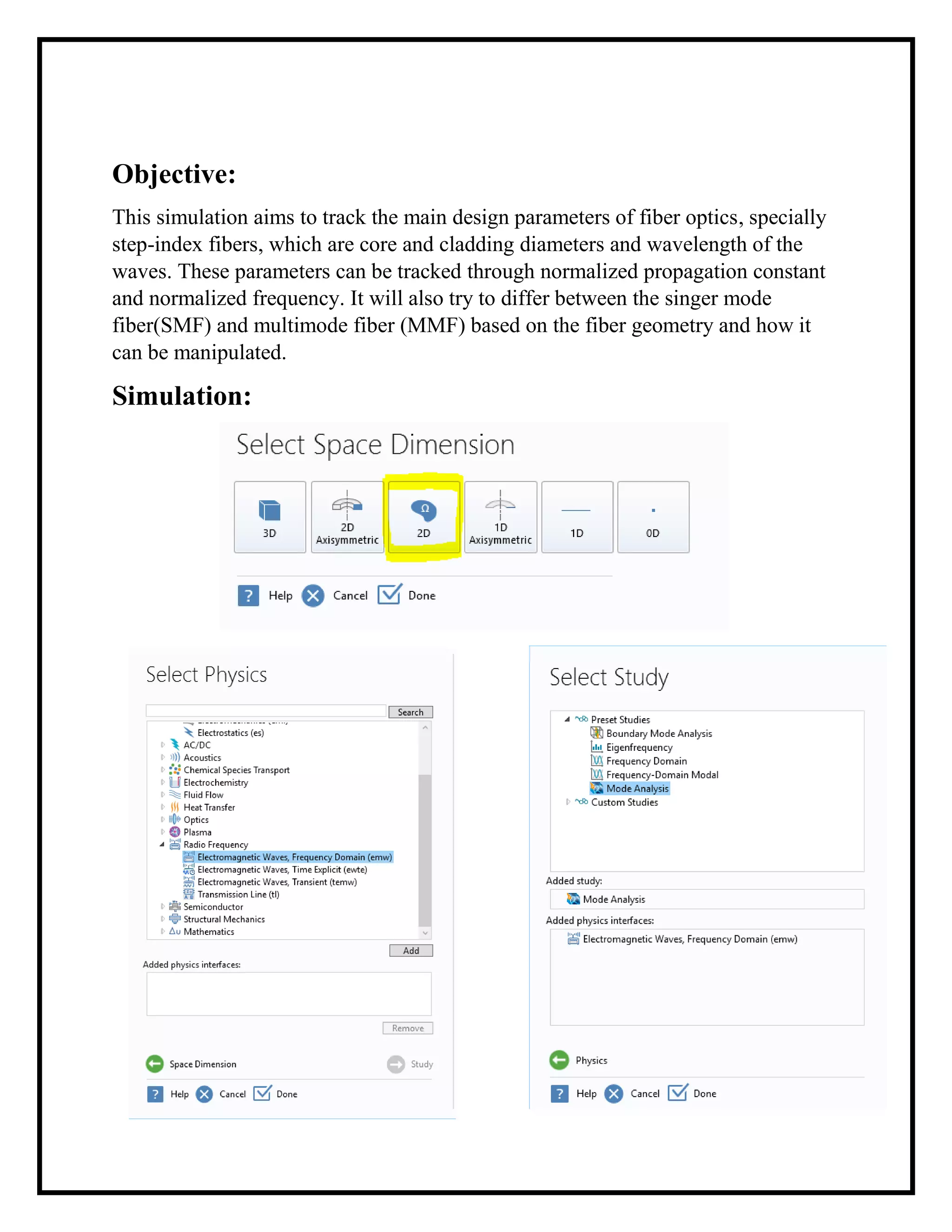
Simulation:
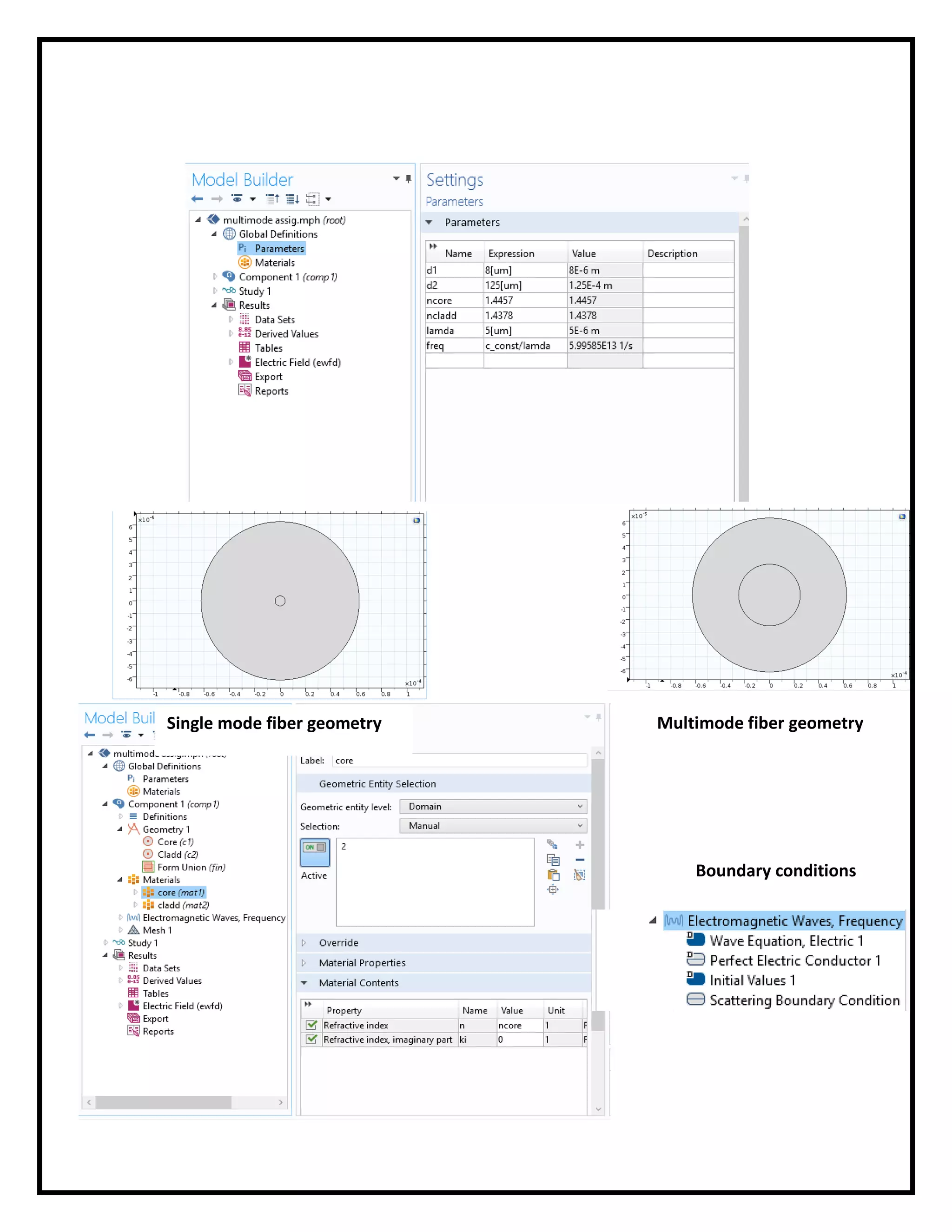
Boundary conditions
Single mode fiber geometry Multimode fiber geometry
 The simulation will be applied through a wavelength range [5:15] *10^-6 m
in both (SMF) and (MMF).
 The core material has refractive index of 1.4457 and the clad material has
refractive index of 1.4378 (Ncore > Nclad ).
 The meshing has been increased in the core region; as modes concerned are
within the core region.
 Scattering boundary condition has been used to prevent the escape on the
waves from the clad.
Mesh Applied
Results:
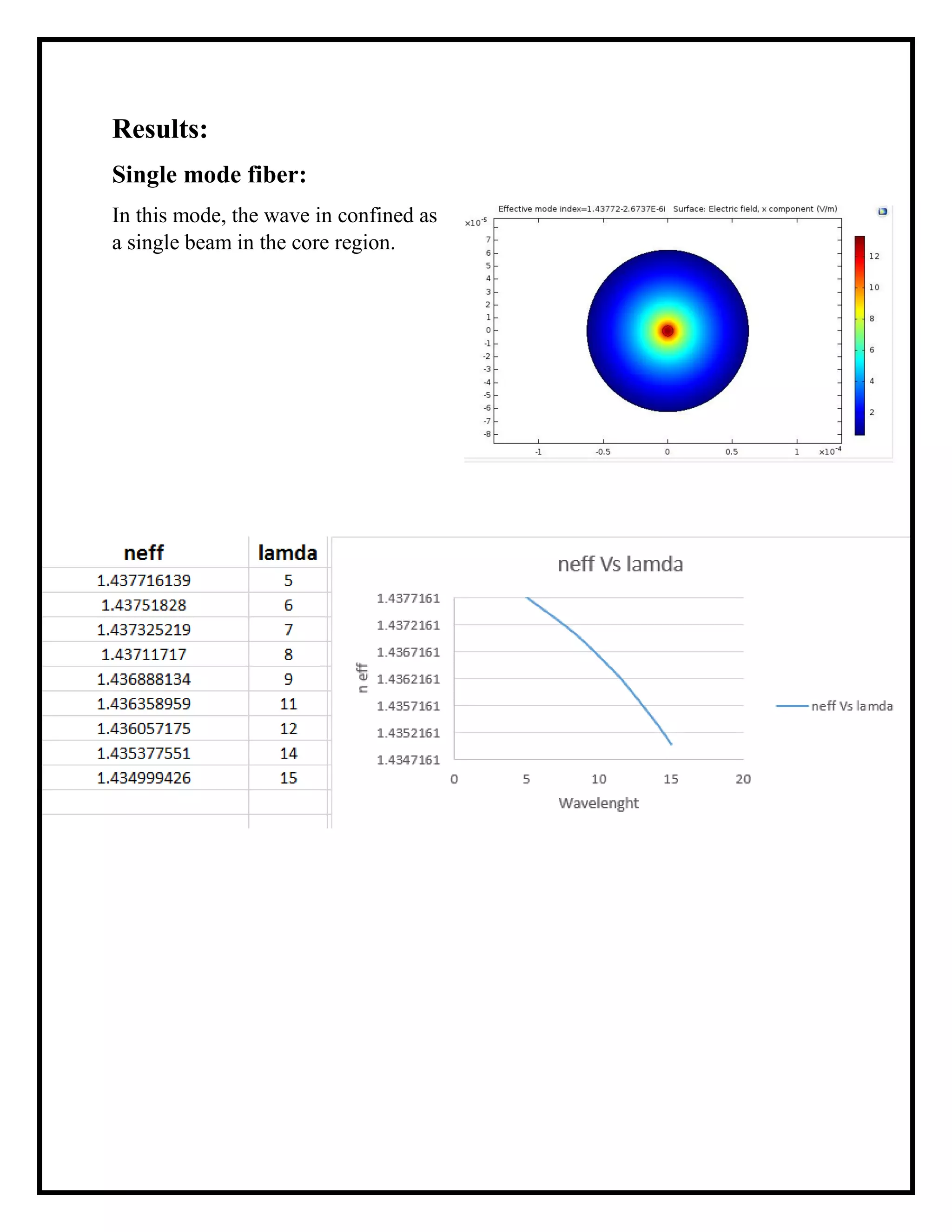
Single mode fiber:
In this mode, the wave in confined as
a single beam in the core region.
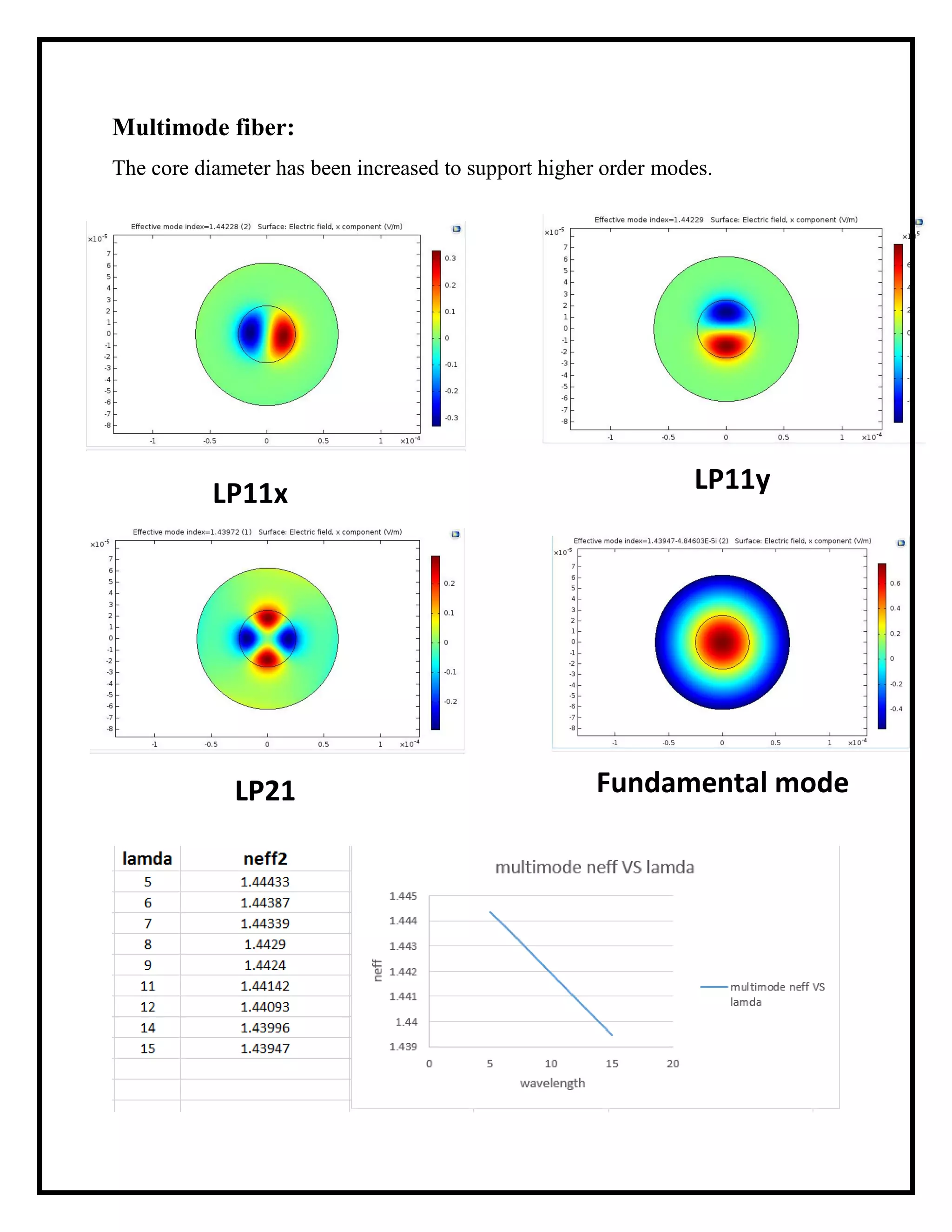
Multimode fiber:
The core diameter has been increased to support higher order modes.
LP11y
LP21 Fundamental mode
LP11x
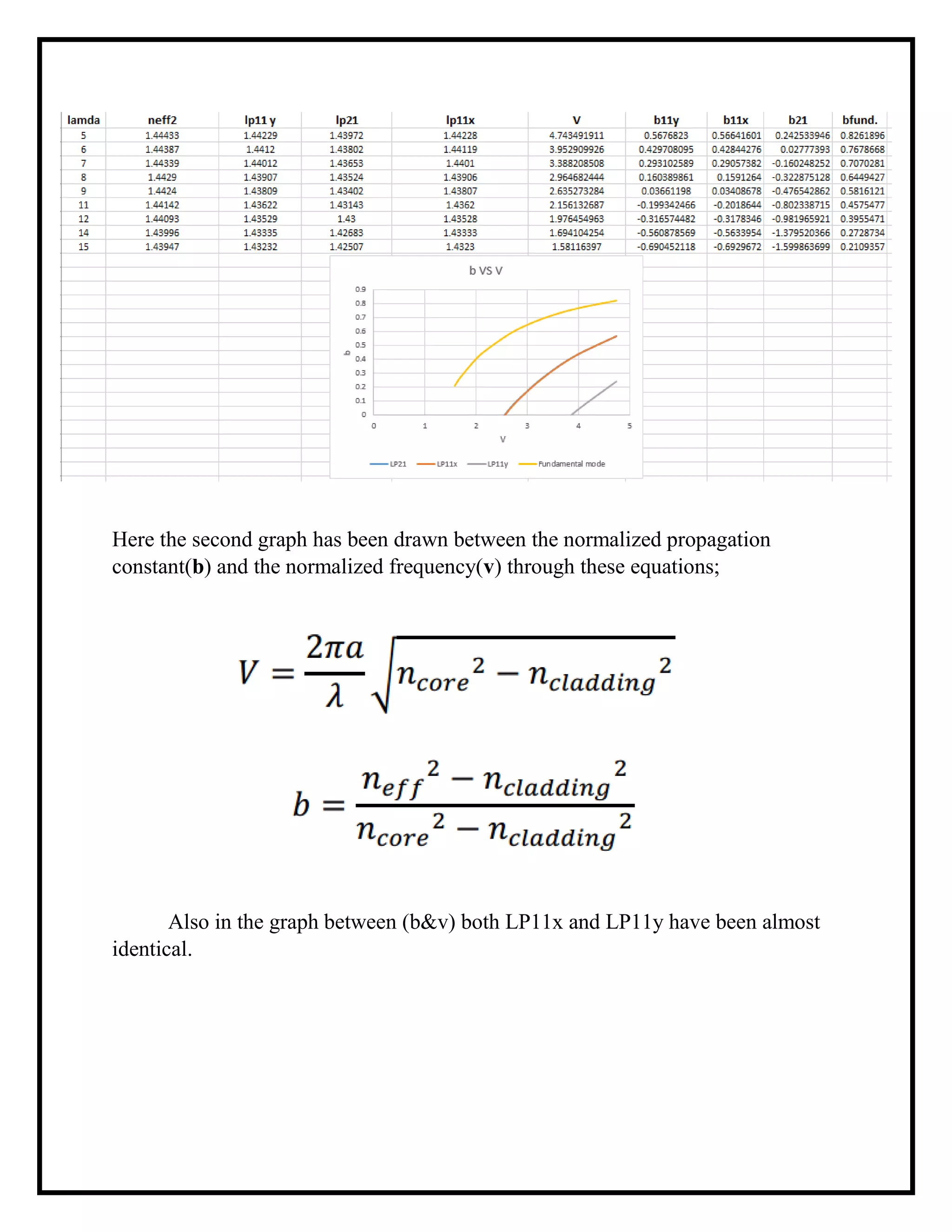
Here the second graph has been drawn between the normalized propagation
constant(b) and the normalized frequency(v) through these equations;
Also in the graph between (b&v) both LP11x and LP11y have been almost
identical.
Conclusion:
 The diameter of the core is a very effective parameter to determine the fiber
to be (SMF) or (MMF).
 There is a cutoff normalized frequency (V) determining if the fiber is (SMF)
or (MMF)

Fiber optics project report

  • 1.
    Project of photonics MohamedRamadan Under supervision: Eng: Bahaa youins
  • 2.
    Objective: This simulation aimsto track the main design parameters of fiber optics, specially step-index fibers, which are core and cladding diameters and wavelength of the waves. These parameters can be tracked through normalized propagation constant and normalized frequency. It will also try to differ between the singer mode fiber(SMF) and multimode fiber (MMF) based on the fiber geometry and how it can be manipulated. Simulation:
  • 3.
    Boundary conditions Single modefiber geometry Multimode fiber geometry
  • 4.
     The simulationwill be applied through a wavelength range [5:15] *10^-6 m in both (SMF) and (MMF).  The core material has refractive index of 1.4457 and the clad material has refractive index of 1.4378 (Ncore > Nclad ).  The meshing has been increased in the core region; as modes concerned are within the core region.  Scattering boundary condition has been used to prevent the escape on the waves from the clad. Mesh Applied
  • 5.
    Results: Single mode fiber: Inthis mode, the wave in confined as a single beam in the core region.
  • 6.
    Multimode fiber: The corediameter has been increased to support higher order modes. LP11y LP21 Fundamental mode LP11x
  • 7.
    Here the secondgraph has been drawn between the normalized propagation constant(b) and the normalized frequency(v) through these equations; Also in the graph between (b&v) both LP11x and LP11y have been almost identical.
  • 8.
    Conclusion:  The diameterof the core is a very effective parameter to determine the fiber to be (SMF) or (MMF).  There is a cutoff normalized frequency (V) determining if the fiber is (SMF) or (MMF)