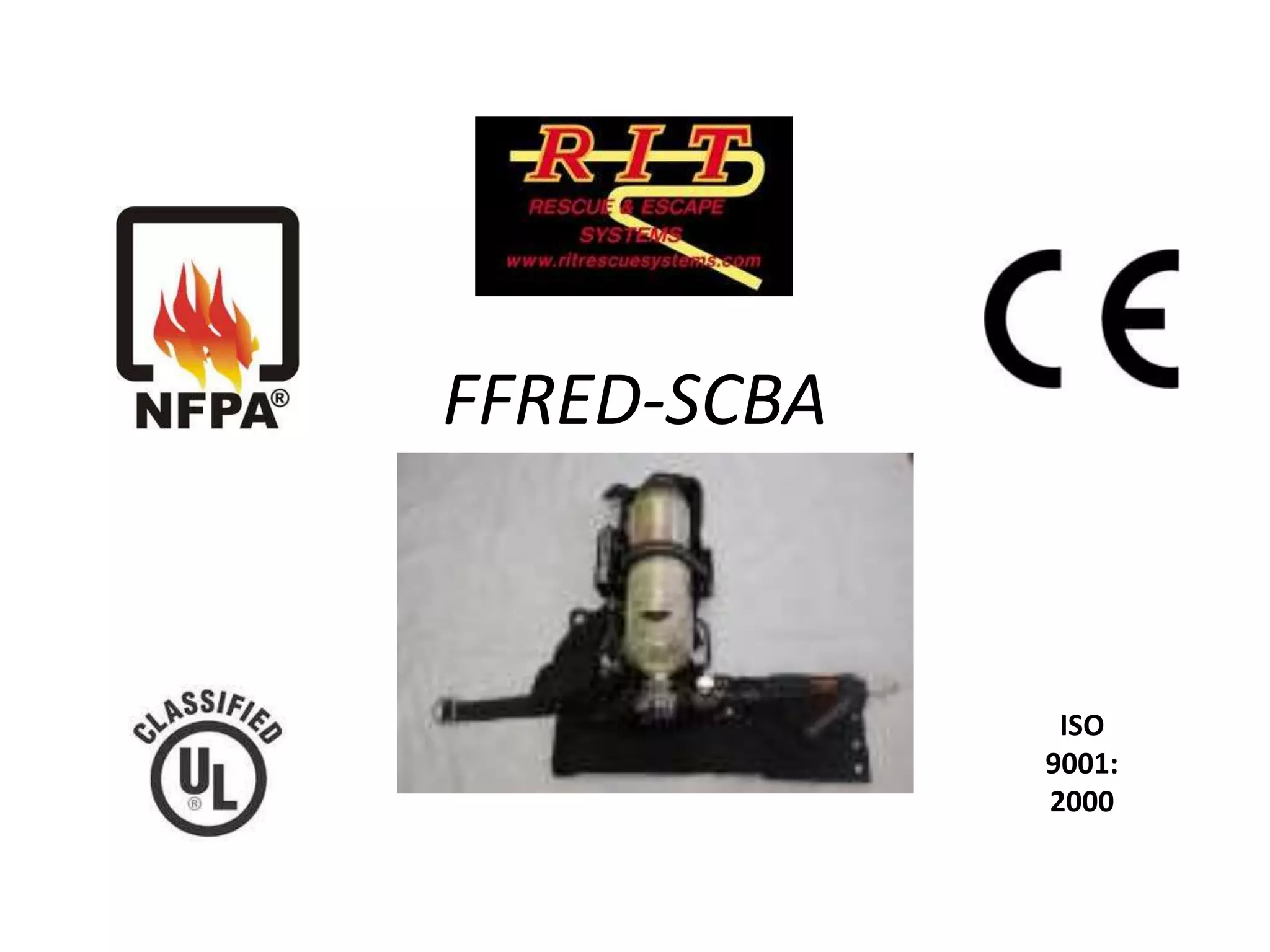
FFRED-SCBA


              ISO
             9001:
             2000
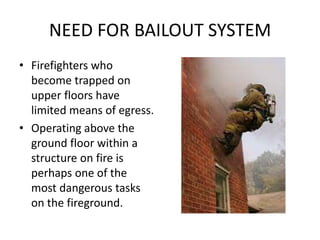
NEED FOR BAILOUT SYSTEM
• Firefighters who
  become trapped on
  upper floors have
  limited means of egress.
• Operating above the
  ground floor within a
  structure on fire is
  perhaps one of the
  most dangerous tasks
  on the fireground.
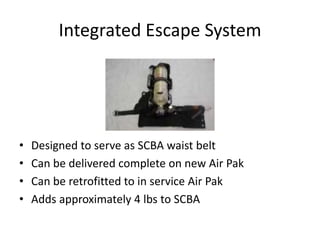
Integrated Escape System


•   Designed to serve as SCBA waist belt
•   Can be delivered complete on new Air Pak
•   Can be retrofitted to in service Air Pak
•   Adds approximately 4 lbs to SCBA
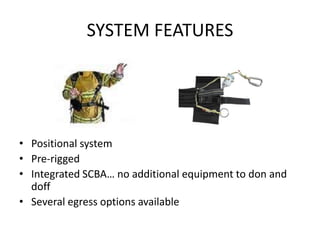
SYSTEM FEATURES


• Positional system
• Pre-rigged
• Integrated SCBA… no additional equipment to don and
  doff
• Several egress options available
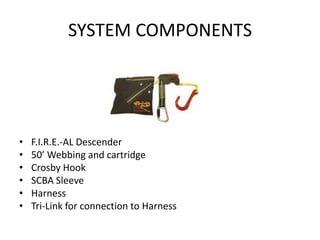
SYSTEM COMPONENTS


•   F.I.R.E.-AL Descender
•   50’ Webbing and cartridge
•   Crosby Hook
•   SCBA Sleeve
•   Harness
•   Tri-Link for connection to Harness
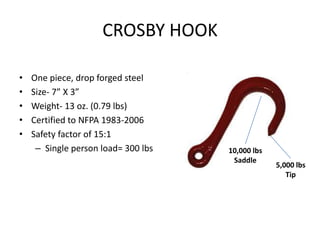
CROSBY HOOK

•   One piece, drop forged steel
•   Size- 7” X 3”
•   Weight- 13 oz. (0.79 lbs)
•   Certified to NFPA 1983-2006
•   Safety factor of 15:1
     – Single person load= 300 lbs   10,000 lbs
                                      Saddle
                                                  5,000 lbs
                                                     Tip
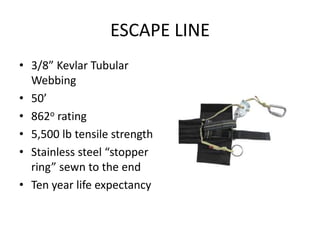
ESCAPE LINE
• 3/8” Kevlar Tubular
  Webbing
• 50’
• 862o rating
• 5,500 lb tensile strength
• Stainless steel “stopper
  ring” sewn to the end
• Ten year life expectancy
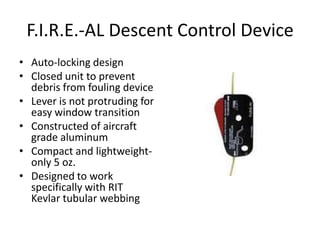
F.I.R.E.-AL Descent Control Device
• Auto-locking design
• Closed unit to prevent
  debris from fouling device
• Lever is not protruding for
  easy window transition
• Constructed of aircraft
  grade aluminum
• Compact and lightweight-
  only 5 oz.
• Designed to work
  specifically with RIT
  Kevlar tubular webbing
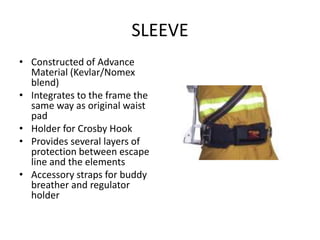
SLEEVE
• Constructed of Advance
  Material (Kevlar/Nomex
  blend)
• Integrates to the frame the
  same way as original waist
  pad
• Holder for Crosby Hook
• Provides several layers of
  protection between escape
  line and the elements
• Accessory straps for buddy
  breather and regulator
  holder
ESCAPE BELT
• Escape Belt Certified to NFPA 1983-2006ed.

• Center of gravity changes when in full gear due to
  increased upper body weight (this system compensates
  for this)

• Ease of donning and doffing… not much different than
  standard waist strap

• Integrated and with you when you need it… not an
  additional piece of equipment.
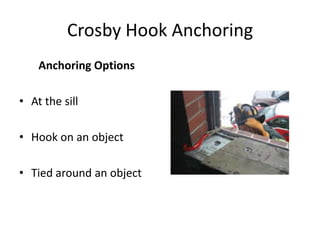
Crosby Hook Anchoring
    Anchoring Options

• At the sill

• Hook on an object

• Tied around an object
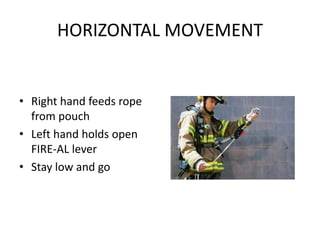
HORIZONTAL MOVEMENT


• Right hand feeds rope
  from pouch
• Left hand holds open
  FIRE-AL lever
• Stay low and go
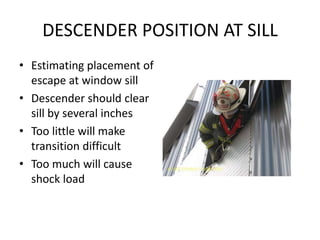
DESCENDER POSITION AT SILL
• Estimating placement of
  escape at window sill
• Descender should clear
  sill by several inches
• Too little will make
  transition difficult
• Too much will cause
  shock load
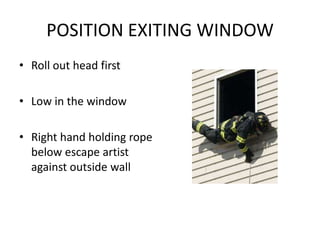
POSITION EXITING WINDOW
• Roll out head first

• Low in the window

• Right hand holding rope
  below escape artist
  against outside wall
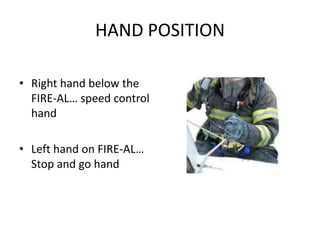
HAND POSITION

• Right hand below the
  FIRE-AL… speed control
  hand

• Left hand on FIRE-AL…
  Stop and go hand
CARE AND INPSPECTION
• Use a soft brush to remove all dust and debris
  from the components.
• If unit is very wet, lay flat to dry.
• Do not lay in direct sunlight, use drying devices or
  UV lamps.
• To clean, use a very mild detergent and cool
  water. Use a soft brush and cloth.
• Do not use bleach, ammonia, or any harsh
  chemicals.
• Do not use washing machine.
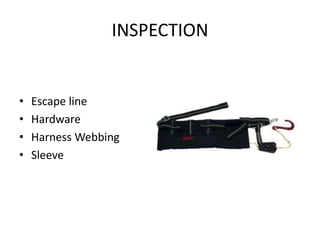
INSPECTION


•   Escape line
•   Hardware
•   Harness Webbing
•   Sleeve
INSPECTION
• Escape Line- Look for any discoloration, cuts,
  abrasions, or unraveling. Inspect the sewn ends
  for broken stitches, cuts, or excessive wear. If any
  part of the escape line does not pass the
  inspection, the entire length of rope or webbing
  must be placed out of service and destroyed.

• Training units with multiple jumps will have a cat
  tail like appearance or small fibers standing out.
  This is normal and will not effect the function or
  use of the system.
INSPECTION
• Hardware- Visually inspect all hardware for
  cracks, scratches, discoloration, or deformity. All
  movable parts should be free and operate easily.
• Clean with a damp cloth and allow to air dry.
• Do not oil or lubricate any part of the system,
  unless stated to do so in the individual
  manufacturer’s instructions included.
• If any hardware does not pass the visual
  inspection, the entire system must be placed out
  of service.
INSPECTION
• Harness Webbing- Visually inspect the
  harness webbing and stitching by running the
  webbing through your hands.
• Look for discoloration, abrasions, cuts,
  unraveling, or excessive wear.
• If the harness webbing does not pass the
  inspection, the entire system must be placed
  out of service.
INSPECTION
• Sleeve- Visually inspect the entire unit for
  discoloration, rips, tears, stitching, and seam.
  Remove from service if any portion does not
  pass inspection.
Please print this page.
• By signing on the line below that you
  completed this whole training. Please submit
  to John Makin when finished.

 ________________________

Ffred scba training

  • 1.
    FFRED-SCBA ISO 9001: 2000
  • 2.
    NEED FOR BAILOUTSYSTEM • Firefighters who become trapped on upper floors have limited means of egress. • Operating above the ground floor within a structure on fire is perhaps one of the most dangerous tasks on the fireground.
  • 3.
    Integrated Escape System • Designed to serve as SCBA waist belt • Can be delivered complete on new Air Pak • Can be retrofitted to in service Air Pak • Adds approximately 4 lbs to SCBA
  • 4.
    SYSTEM FEATURES • Positionalsystem • Pre-rigged • Integrated SCBA… no additional equipment to don and doff • Several egress options available
  • 5.
    SYSTEM COMPONENTS • F.I.R.E.-AL Descender • 50’ Webbing and cartridge • Crosby Hook • SCBA Sleeve • Harness • Tri-Link for connection to Harness
  • 6.
    CROSBY HOOK • One piece, drop forged steel • Size- 7” X 3” • Weight- 13 oz. (0.79 lbs) • Certified to NFPA 1983-2006 • Safety factor of 15:1 – Single person load= 300 lbs 10,000 lbs Saddle 5,000 lbs Tip
  • 7.
    ESCAPE LINE • 3/8”Kevlar Tubular Webbing • 50’ • 862o rating • 5,500 lb tensile strength • Stainless steel “stopper ring” sewn to the end • Ten year life expectancy
  • 8.
    F.I.R.E.-AL Descent ControlDevice • Auto-locking design • Closed unit to prevent debris from fouling device • Lever is not protruding for easy window transition • Constructed of aircraft grade aluminum • Compact and lightweight- only 5 oz. • Designed to work specifically with RIT Kevlar tubular webbing
  • 9.
    SLEEVE • Constructed ofAdvance Material (Kevlar/Nomex blend) • Integrates to the frame the same way as original waist pad • Holder for Crosby Hook • Provides several layers of protection between escape line and the elements • Accessory straps for buddy breather and regulator holder
  • 10.
    ESCAPE BELT • EscapeBelt Certified to NFPA 1983-2006ed. • Center of gravity changes when in full gear due to increased upper body weight (this system compensates for this) • Ease of donning and doffing… not much different than standard waist strap • Integrated and with you when you need it… not an additional piece of equipment.
  • 11.
    Crosby Hook Anchoring Anchoring Options • At the sill • Hook on an object • Tied around an object
  • 12.
    HORIZONTAL MOVEMENT • Righthand feeds rope from pouch • Left hand holds open FIRE-AL lever • Stay low and go
  • 13.
    DESCENDER POSITION ATSILL • Estimating placement of escape at window sill • Descender should clear sill by several inches • Too little will make transition difficult • Too much will cause shock load
  • 14.
    POSITION EXITING WINDOW •Roll out head first • Low in the window • Right hand holding rope below escape artist against outside wall
  • 15.
    HAND POSITION • Righthand below the FIRE-AL… speed control hand • Left hand on FIRE-AL… Stop and go hand
  • 16.
    CARE AND INPSPECTION •Use a soft brush to remove all dust and debris from the components. • If unit is very wet, lay flat to dry. • Do not lay in direct sunlight, use drying devices or UV lamps. • To clean, use a very mild detergent and cool water. Use a soft brush and cloth. • Do not use bleach, ammonia, or any harsh chemicals. • Do not use washing machine.
  • 17.
    INSPECTION • Escape line • Hardware • Harness Webbing • Sleeve
  • 18.
    INSPECTION • Escape Line-Look for any discoloration, cuts, abrasions, or unraveling. Inspect the sewn ends for broken stitches, cuts, or excessive wear. If any part of the escape line does not pass the inspection, the entire length of rope or webbing must be placed out of service and destroyed. • Training units with multiple jumps will have a cat tail like appearance or small fibers standing out. This is normal and will not effect the function or use of the system.
  • 19.
    INSPECTION • Hardware- Visuallyinspect all hardware for cracks, scratches, discoloration, or deformity. All movable parts should be free and operate easily. • Clean with a damp cloth and allow to air dry. • Do not oil or lubricate any part of the system, unless stated to do so in the individual manufacturer’s instructions included. • If any hardware does not pass the visual inspection, the entire system must be placed out of service.
  • 20.
    INSPECTION • Harness Webbing-Visually inspect the harness webbing and stitching by running the webbing through your hands. • Look for discoloration, abrasions, cuts, unraveling, or excessive wear. • If the harness webbing does not pass the inspection, the entire system must be placed out of service.
  • 21.
    INSPECTION • Sleeve- Visuallyinspect the entire unit for discoloration, rips, tears, stitching, and seam. Remove from service if any portion does not pass inspection.
  • 22.
    Please print thispage. • By signing on the line below that you completed this whole training. Please submit to John Makin when finished. ________________________