What’s REALLY Happening with
Technology in Early Childhood Education?
Voices from the Field:
2012 National Early Childhood Technology Today Survey
Lilla Dale McManis, Ph.D. Karen Nemeth, Ed.M. Fran Simon, M.Ed.
CS2277
Copyright 2013 by ECTC. All rights reserved.
Early Childhood Technology
Collaborative (ECTC)
• The Early Childhood Technology Collaborative
(ECTC) is a group of three early childhood
technologists with lots of questions:
• Lilla Dale McManis, Ph.D. from Hatch Early
Learning,
• Karen Nemeth, Ed.M. and
• Fran Simon, M.Ed. from Early Childhood Technology
Network
Rationale for Study
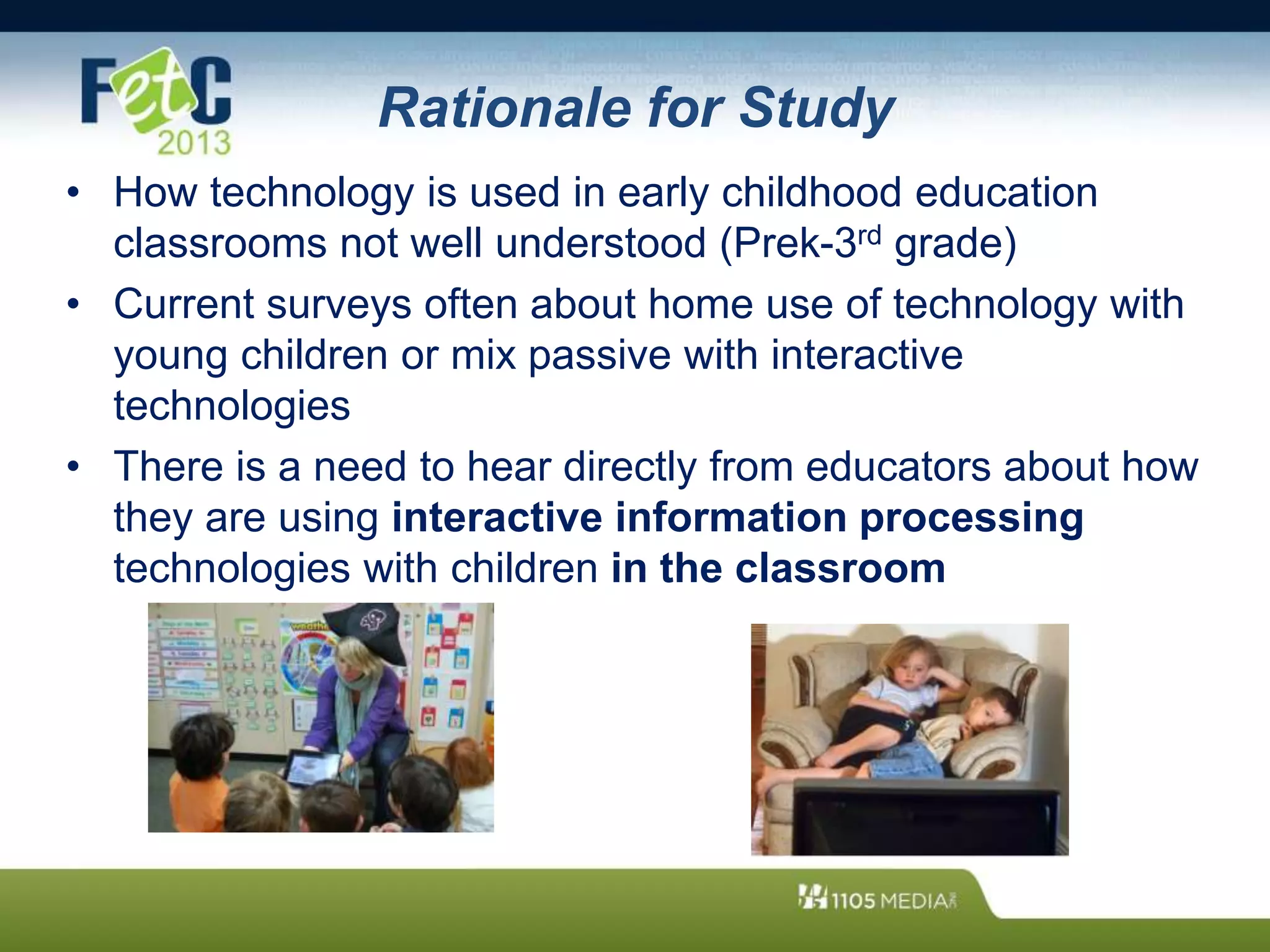
• How technology is used in early childhood education
classrooms not well understood (Prek-3rd grade)
• Current surveys often about home use of technology with
young children or mix passive with interactive
technologies
• There is a need to hear directly from educators about how
they are using interactive information processing
technologies with children in the classroom
Surveys to Date
• Many current surveys focus on home use
– Zero to Eight: Children’s Media Use in America
– Digital Childhood: Electronic Media and Technology Use Among
Infants, Toddlers, and Preschoolers
• Just a handful included or focused on early childhood
– Digitally Inclined
– Deepening Connections
– Tech in the Lives of Teachers
• Those with ECE educators asked questions about passive
& interactive technologies simultaneously
• Additionally, questions very global-rarely moving beyond
“do you have”
Methodology
• Online Survey series
– Survey I: Teachers & Administrators
– Survey II: Teachers
• Spring/summer 2012
• Open to anyone in the world
• Active = “Information Processing” Technologies
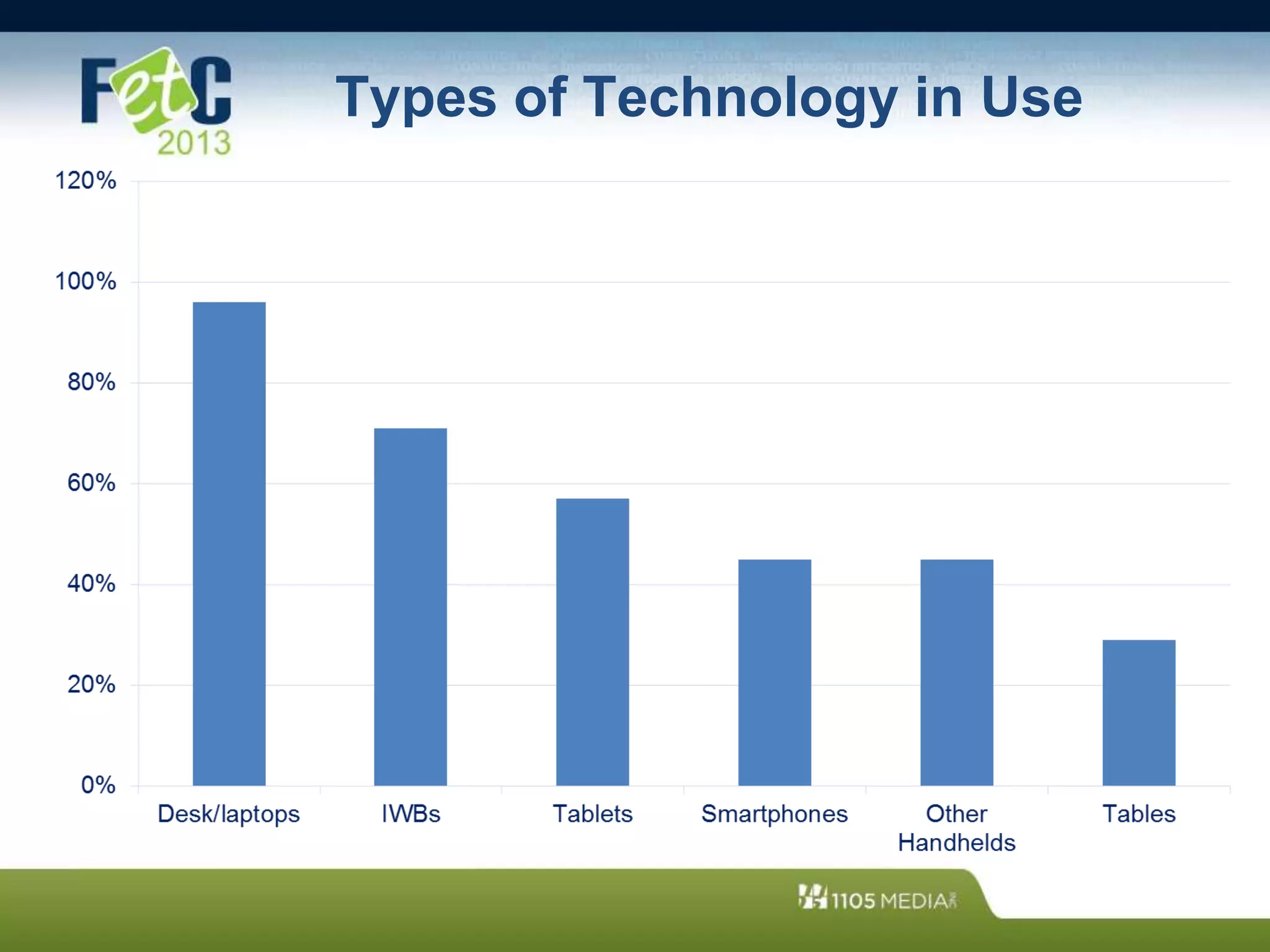
such as Desk/laptops, IWBs, Tablets, Smartphones,
Other Handhelds versus
• Passive = “Simple” Technologies such as Televisions,
CD Players, Digital cameras
Who Responded?
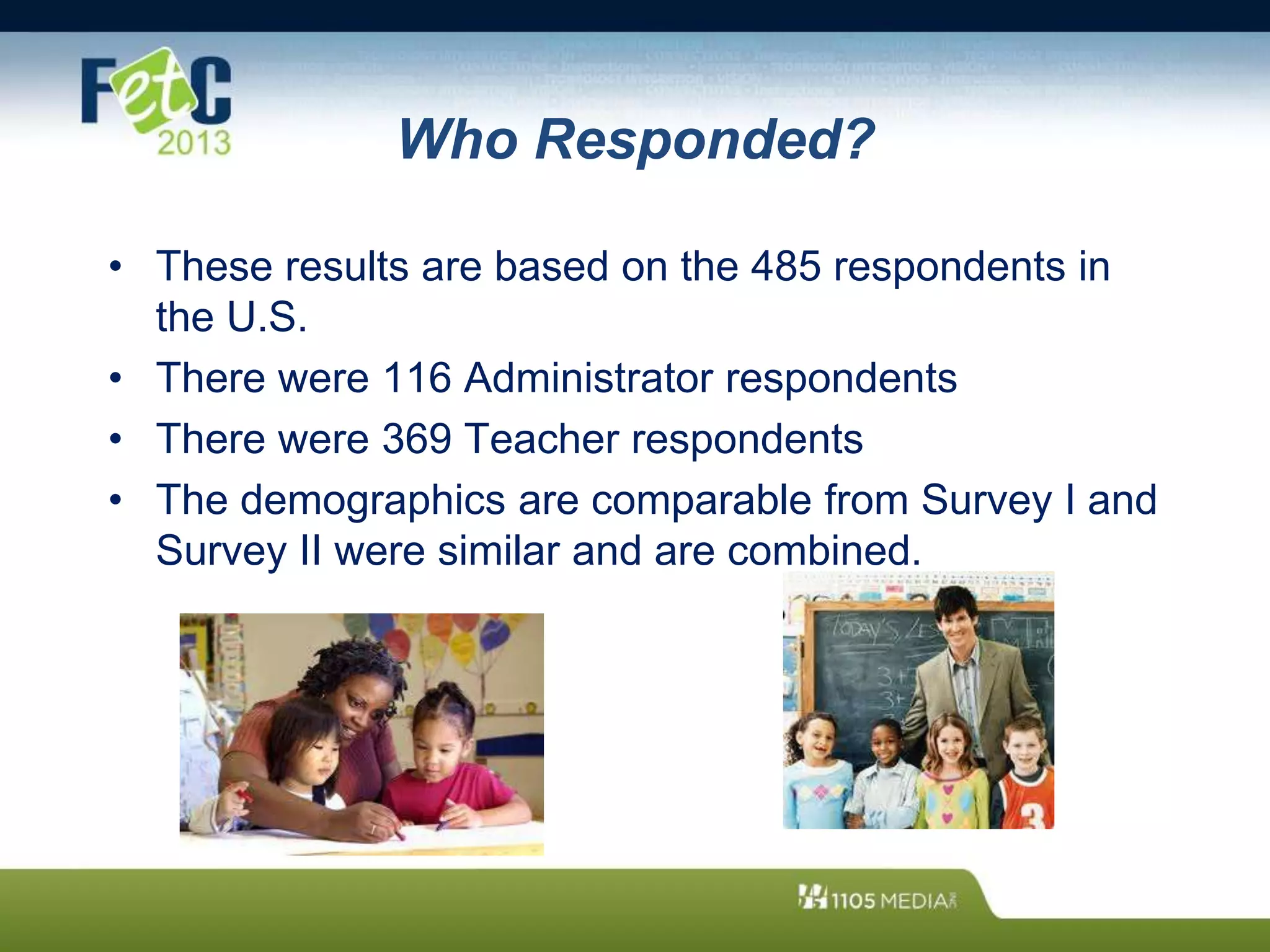
• These results are based on the 485 respondents in
the U.S.
• There were 116 Administrator respondents
• There were 369 Teacher respondents
• The demographics are comparable from Survey I and
Survey II were similar and are combined.
Demographics of Respondents
The main demographics are:
• Serve Pre-K (2-5 year olds) and/or School Age (K-3rd
grade)
• Public School, Head Start, Childcare, Private School
• Urban, Rural, Suburban
• Serve more children of poverty (50% or more), Serve
fewer children of poverty (less than 50%)
• New educator (less than 5 yrs), Experienced educator
(more than 5 years)
• Degreed (4 yr or higher), Non-degreed
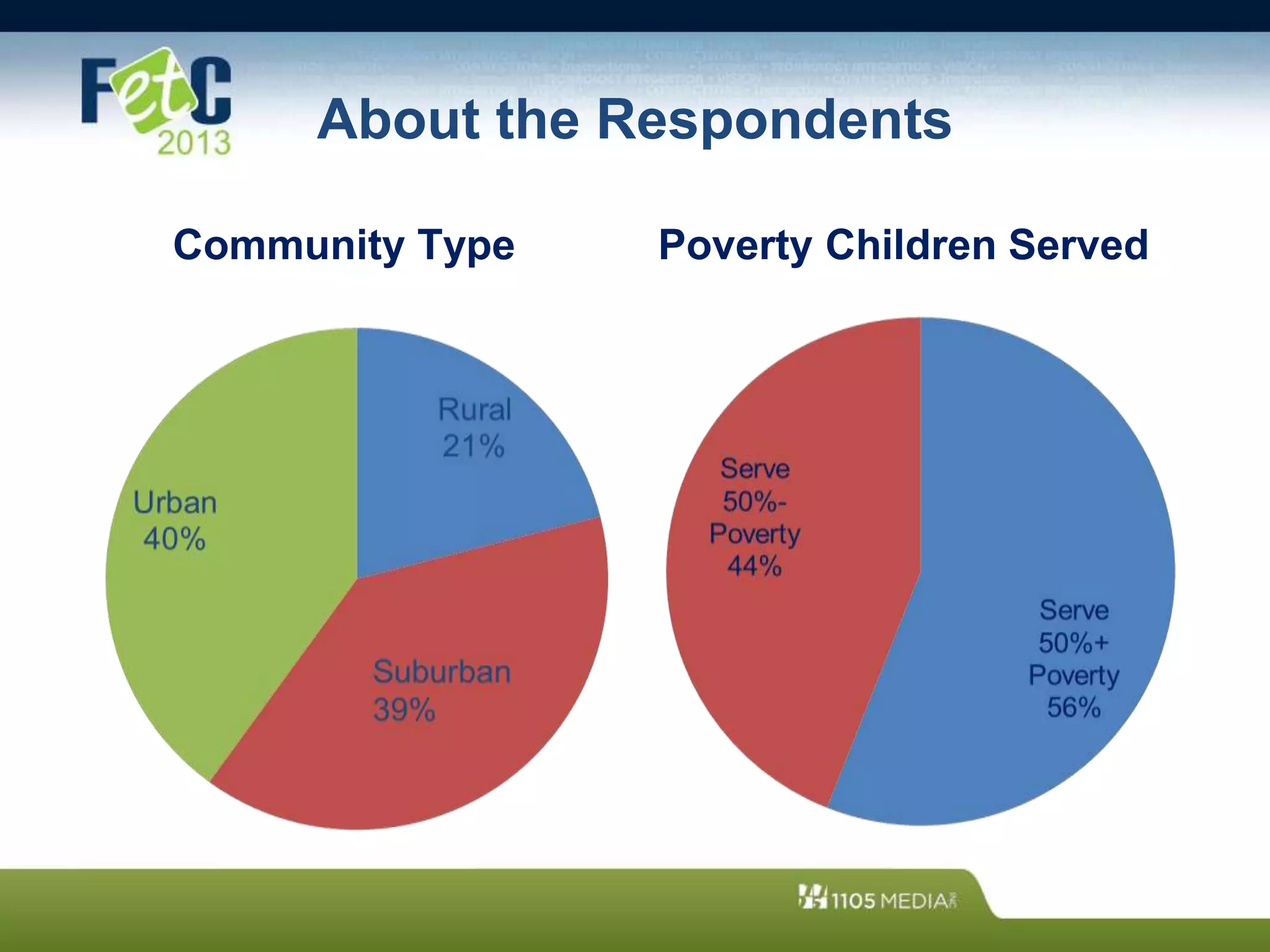
About the Respondents
Community Type Poverty Children Served
About the Respondents
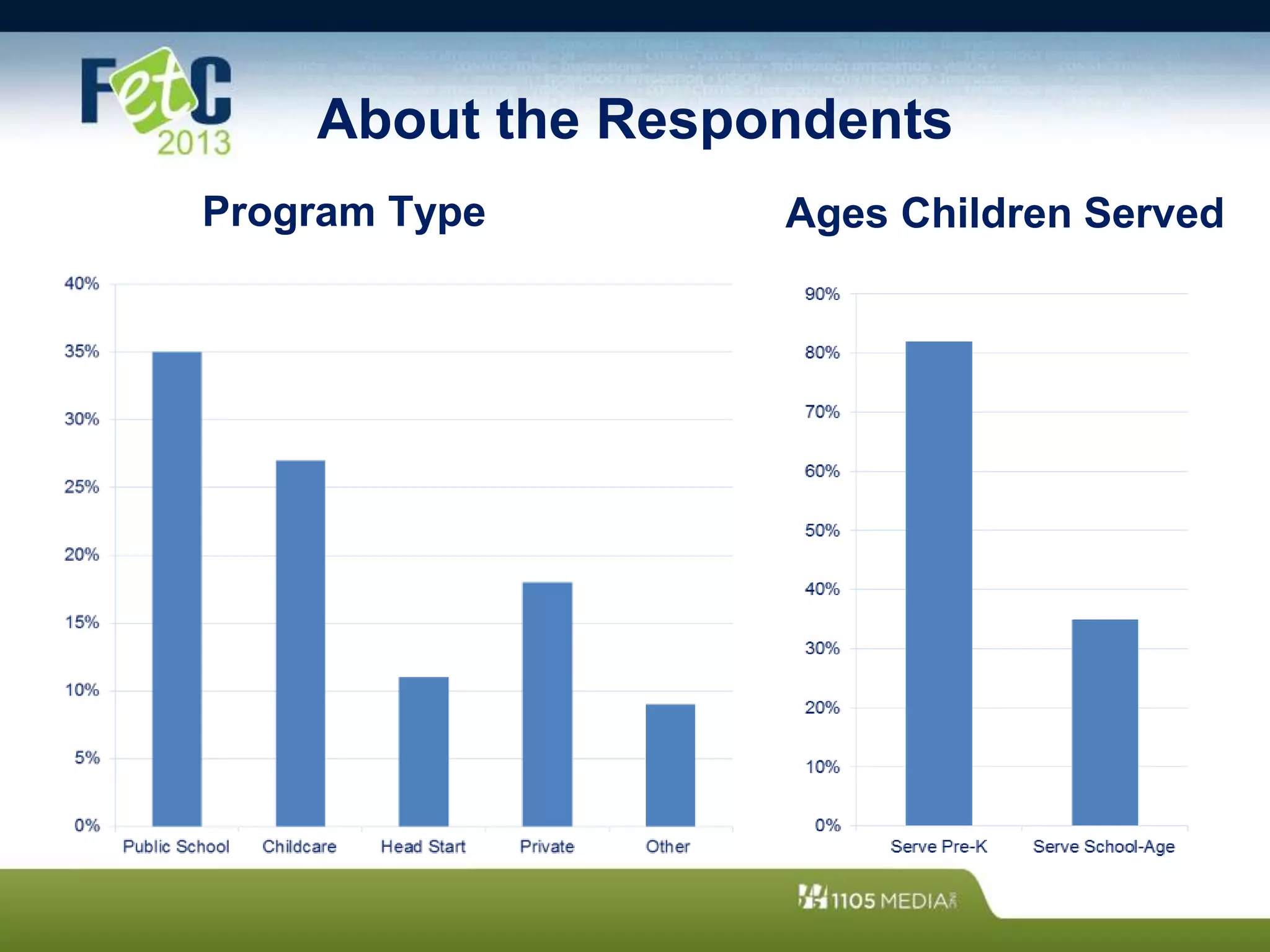
Program Type Ages Children Served
About the Respondents
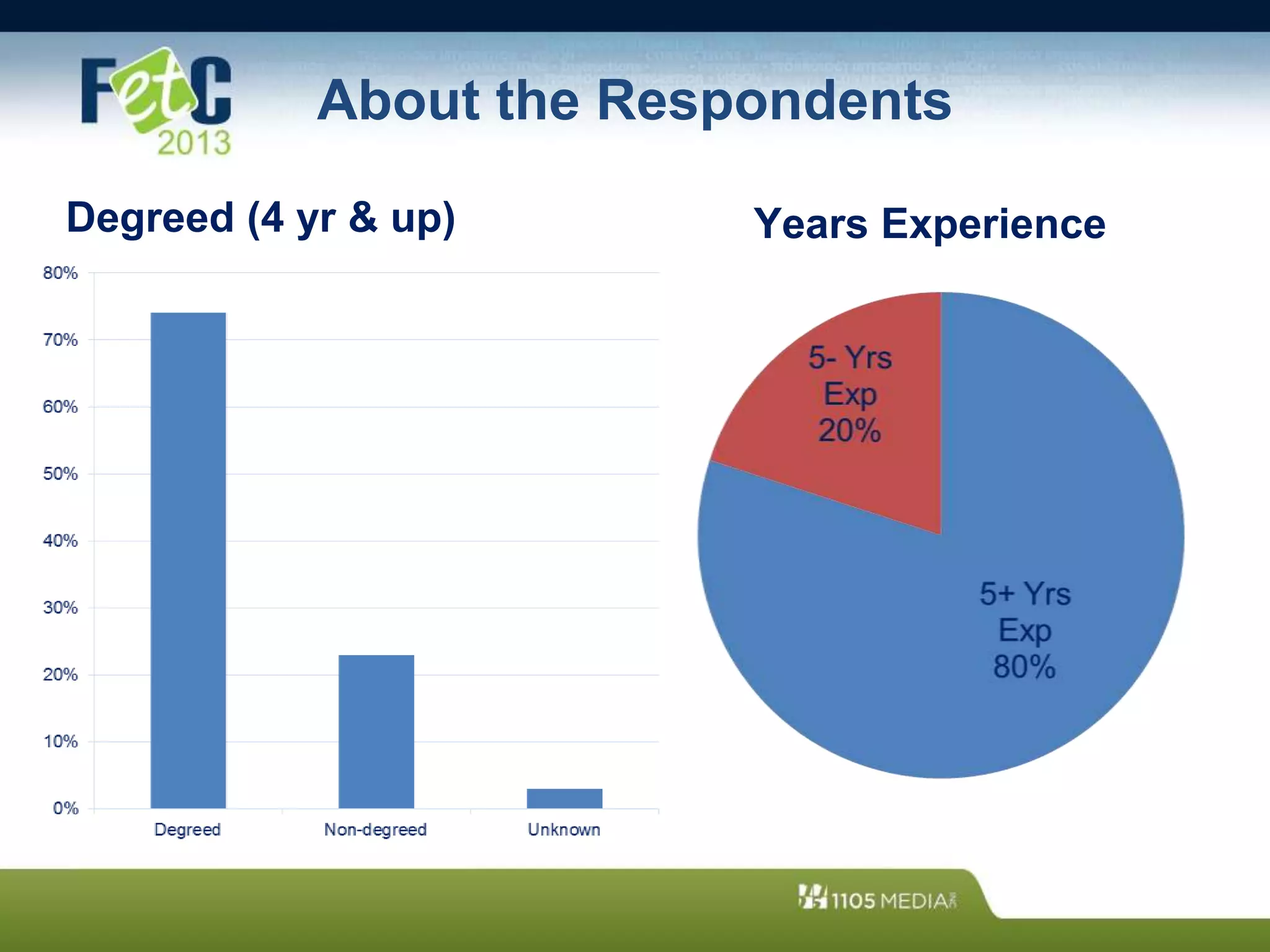
Degreed (4 yr & up) Years Experience
Why ECE Educators Use Technology?
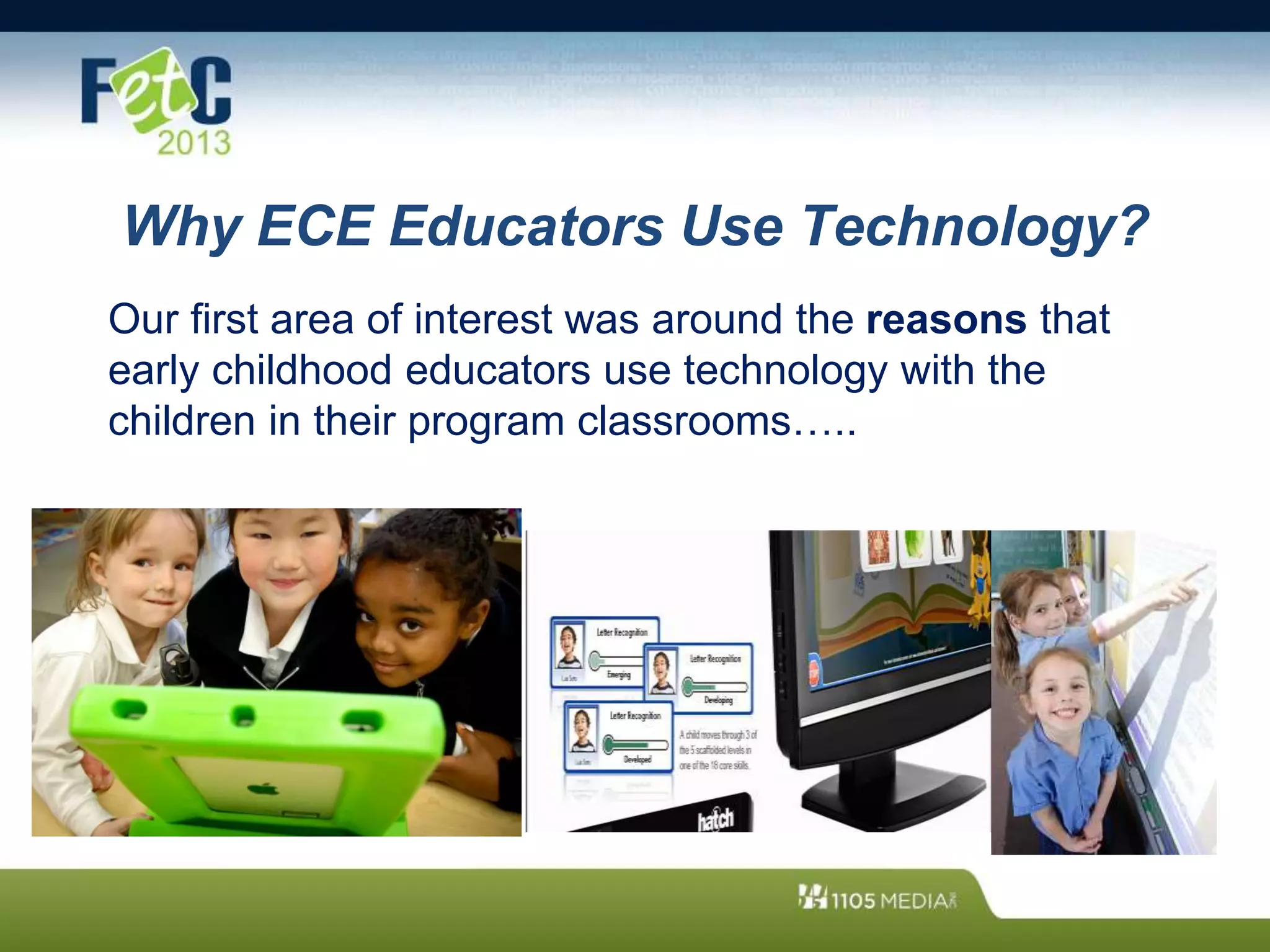
Our first area of interest was around the reasons that
early childhood educators use technology with the
children in their program classrooms…..
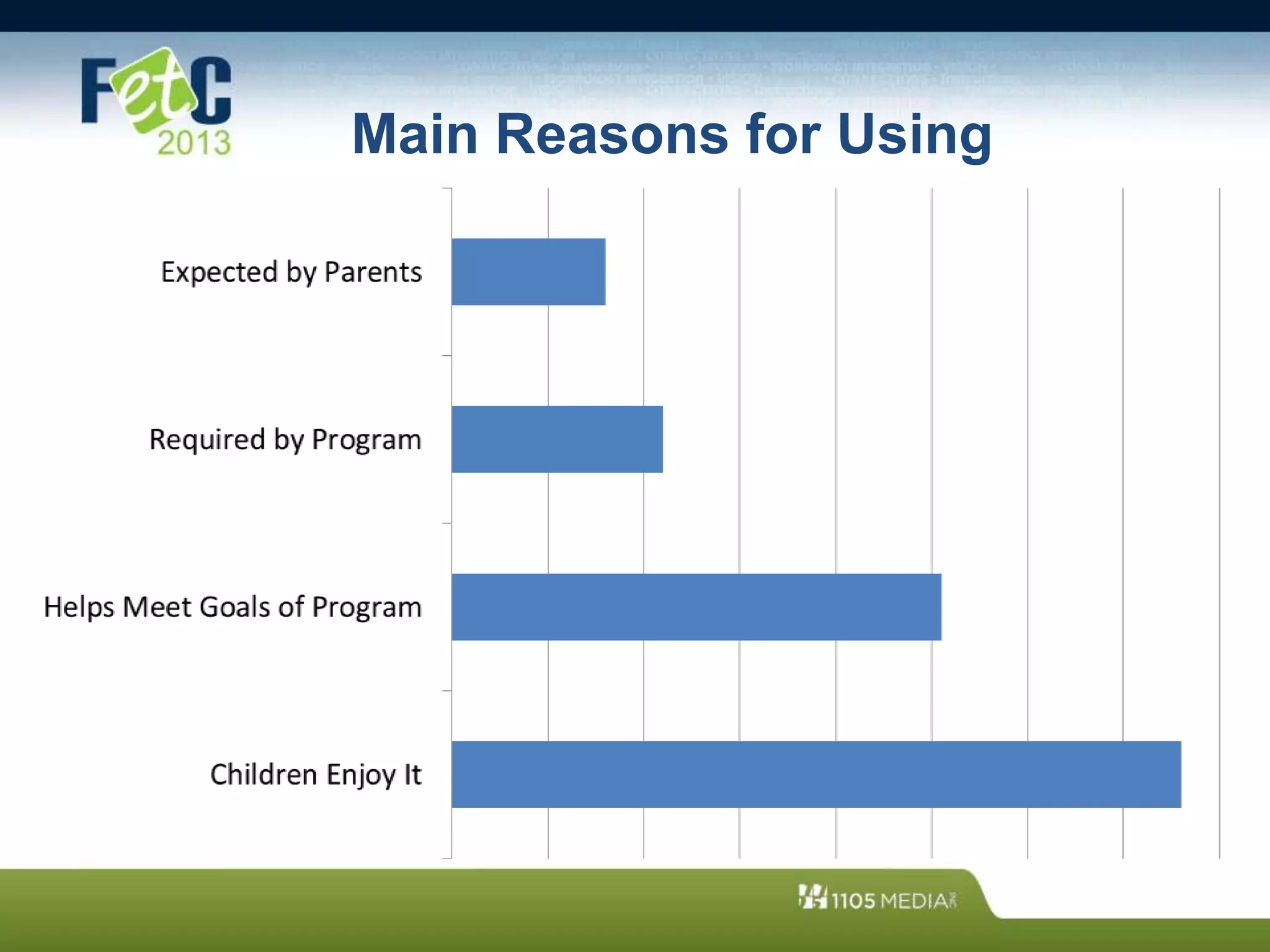
Main Reasons for Using
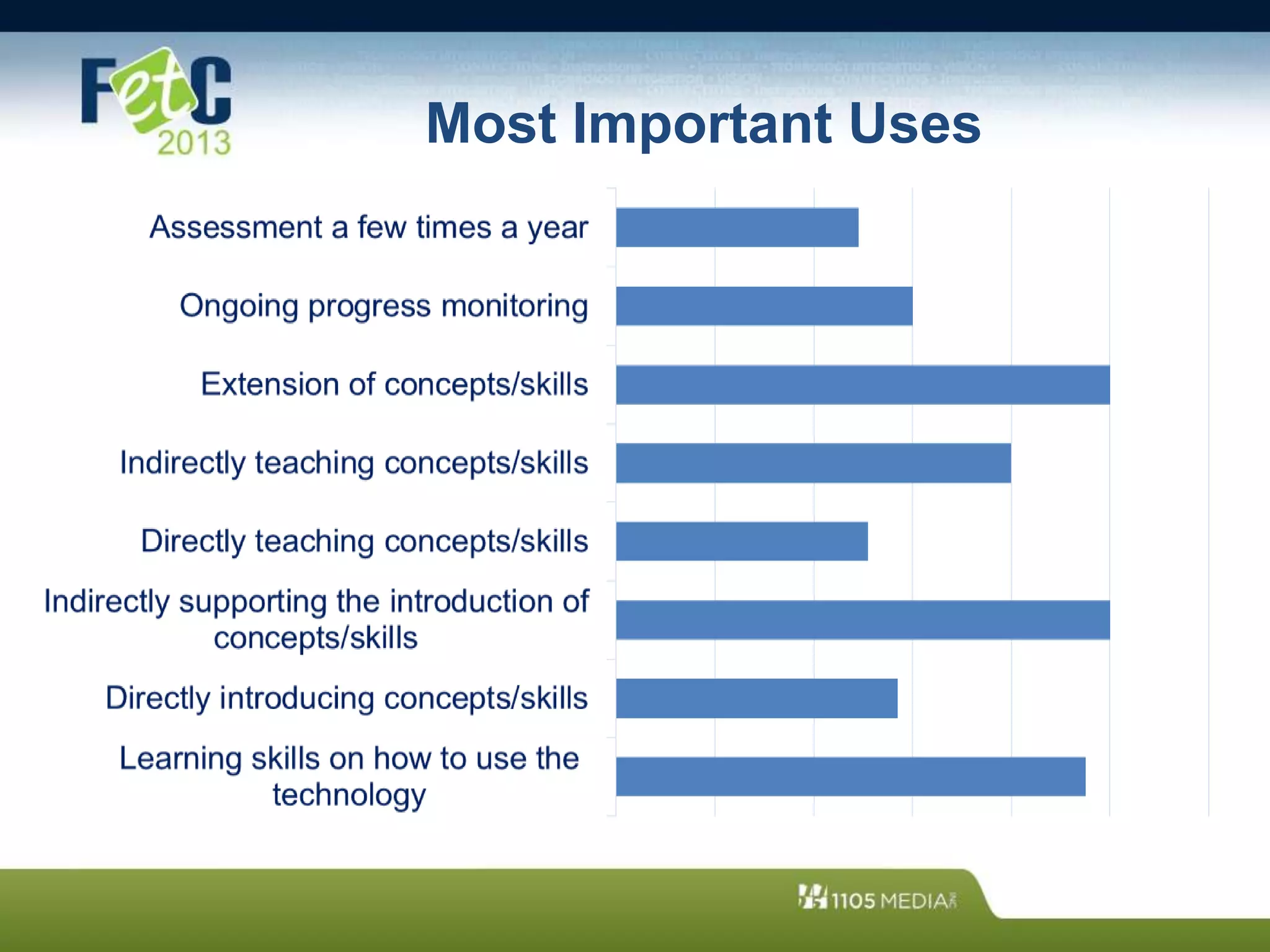
Most Important Uses
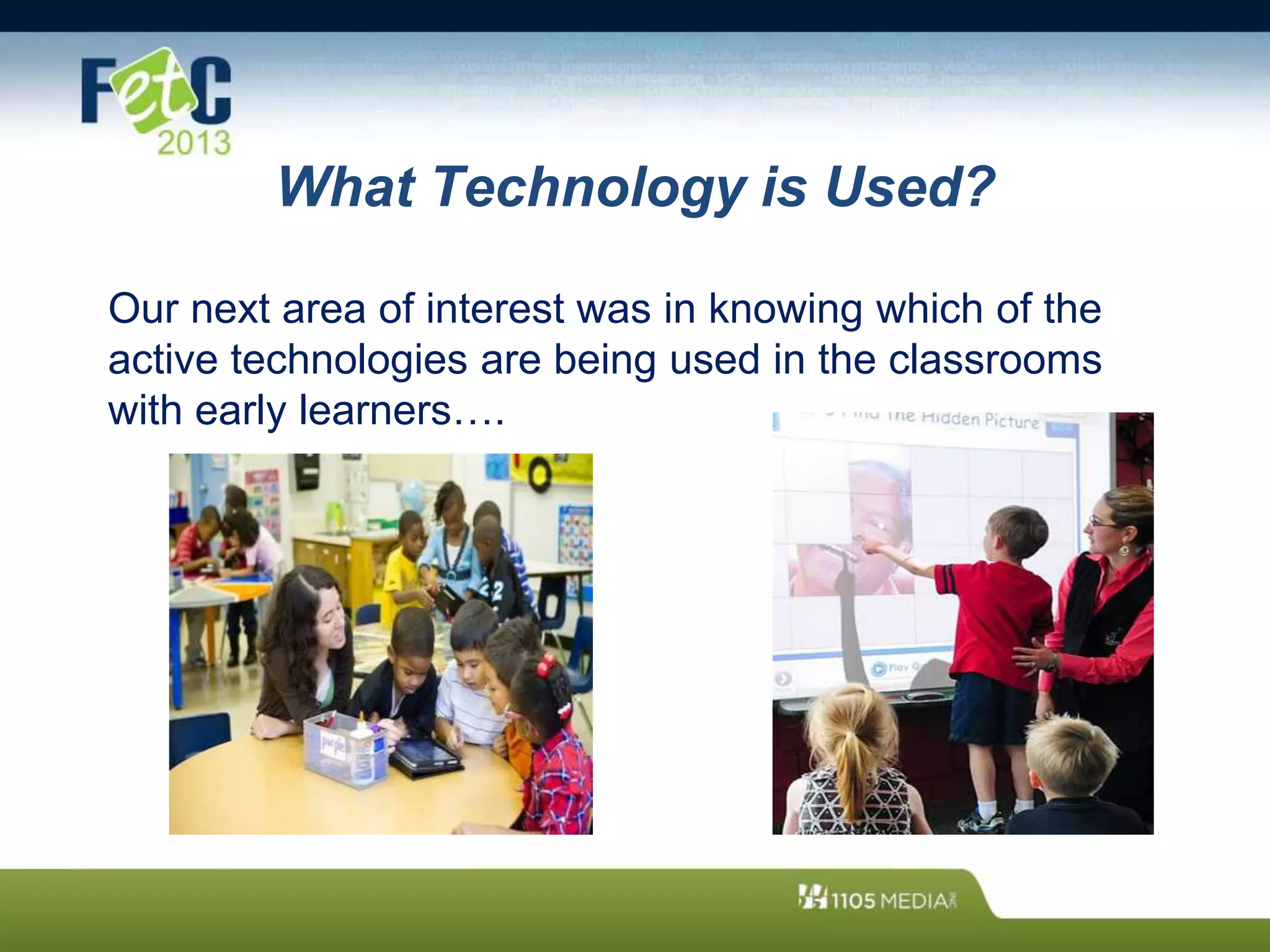
What Technology is Used?
Our next area of interest was in knowing which of the
active technologies are being used in the classrooms
with early learners….
Types of Technology in Use
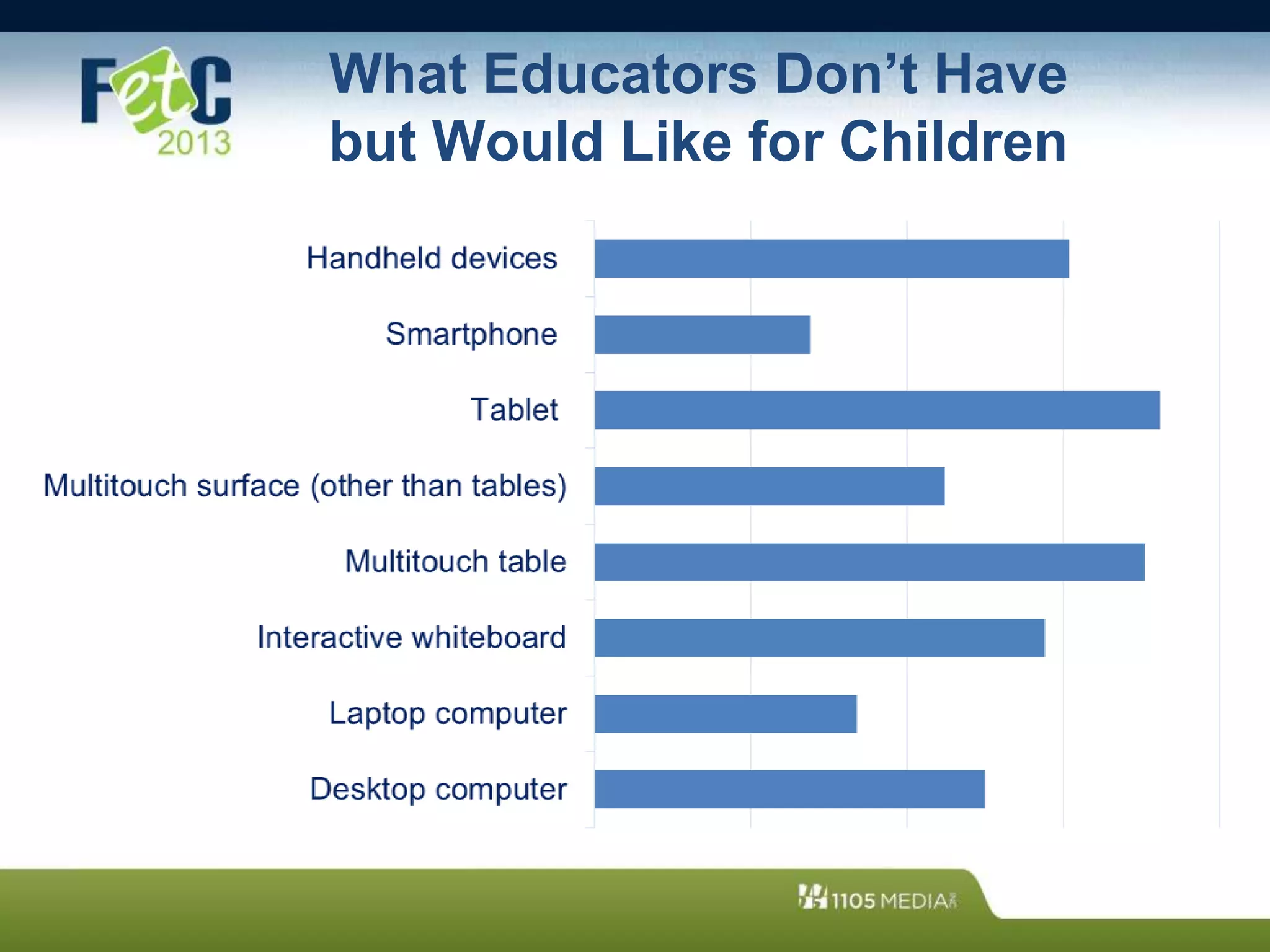
What Educators Don’t Have
but Would Like for Children
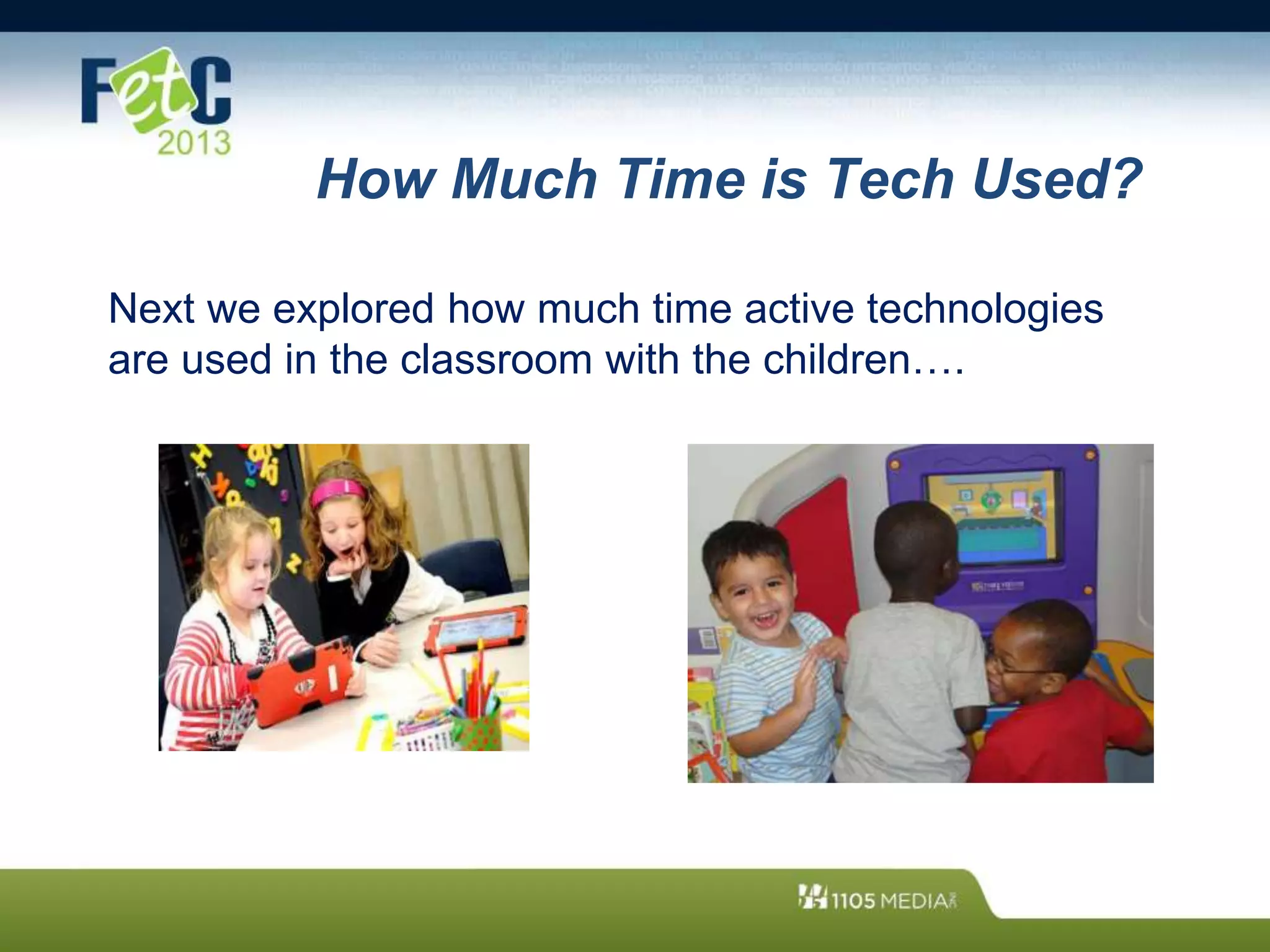
How Much Time is Tech Used?
Next we explored how much time active technologies
are used in the classroom with the children….
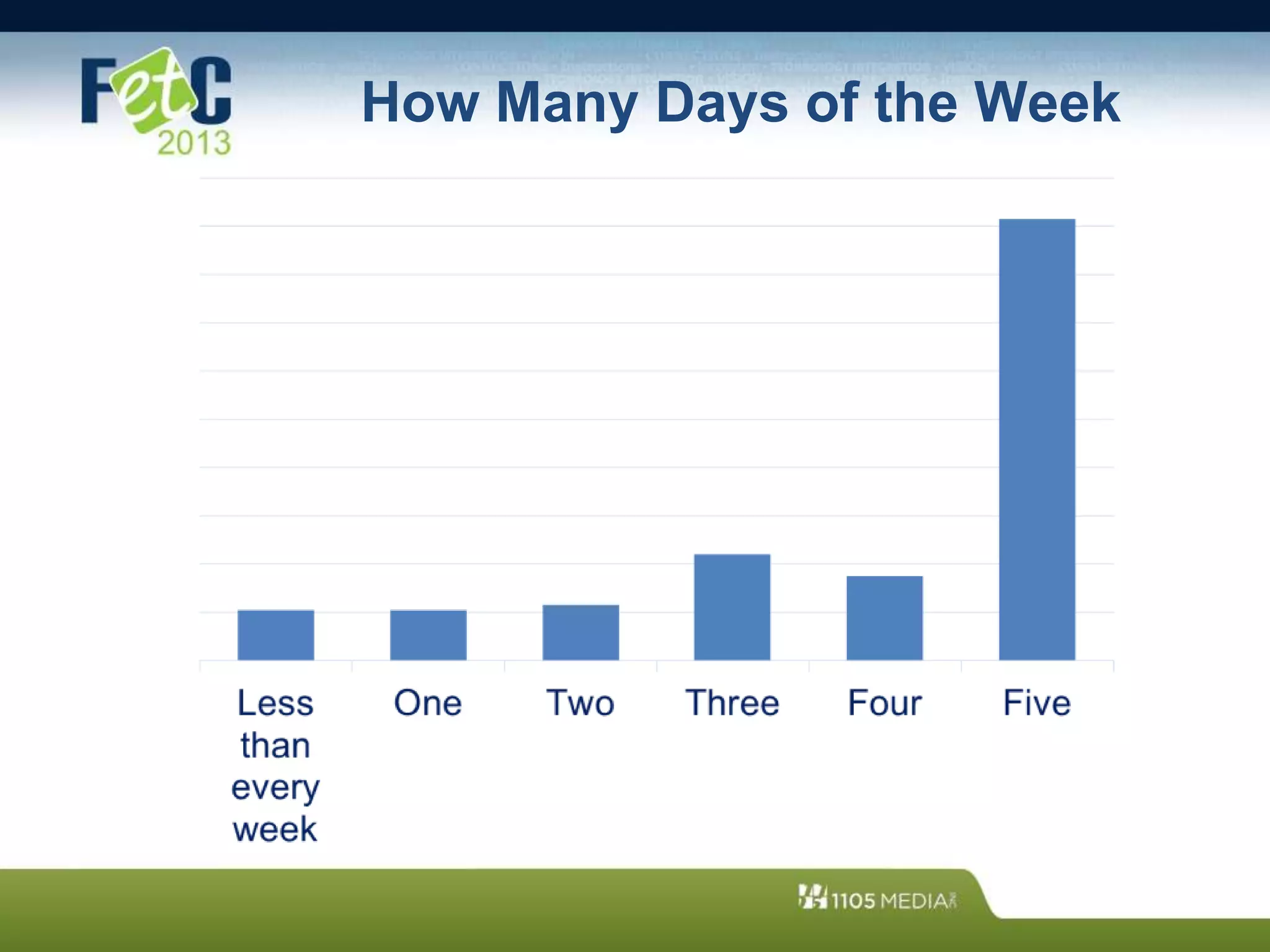
How Many Days of the Week
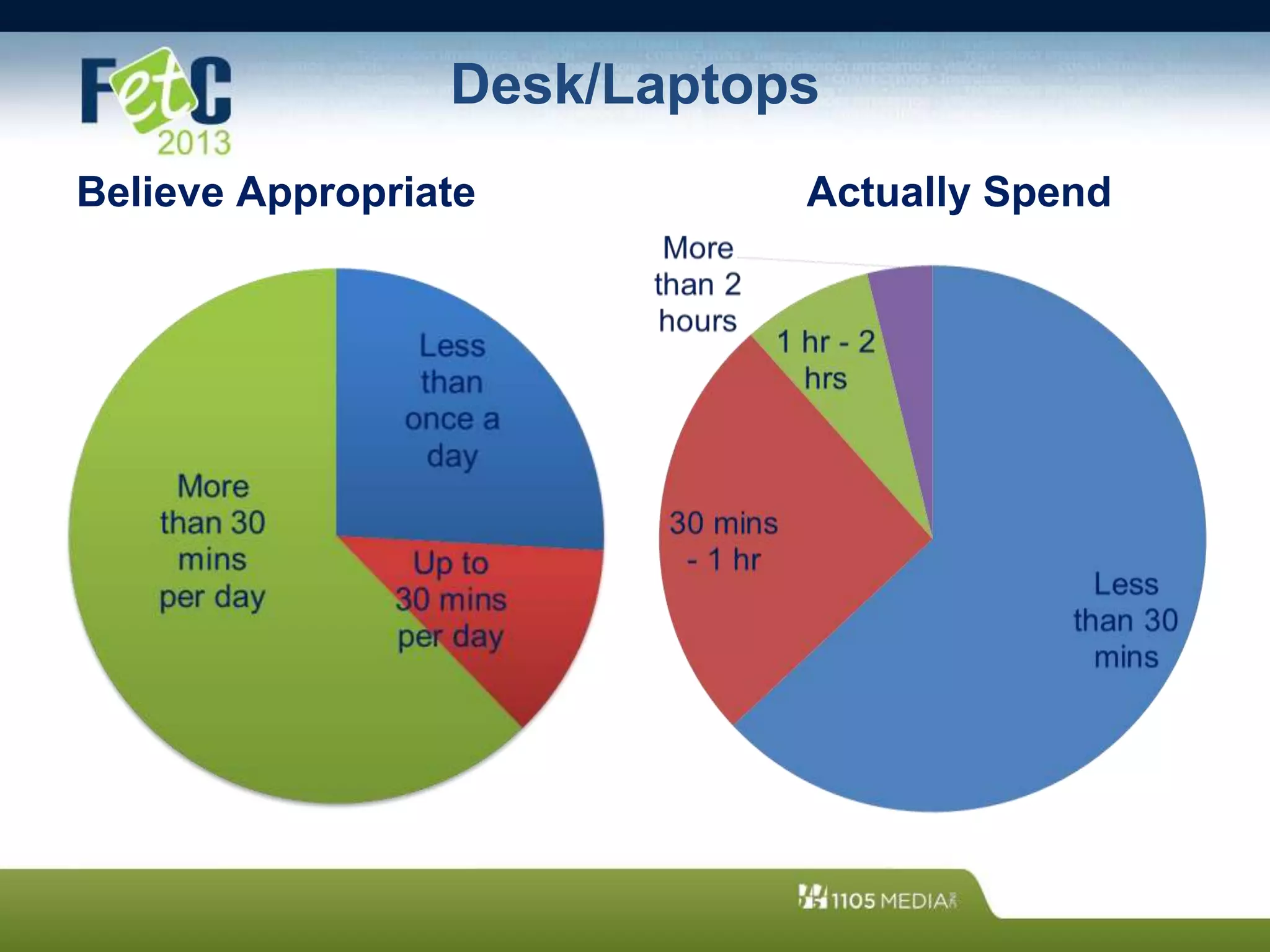
Desk/Laptops
Believe Appropriate Actually Spend
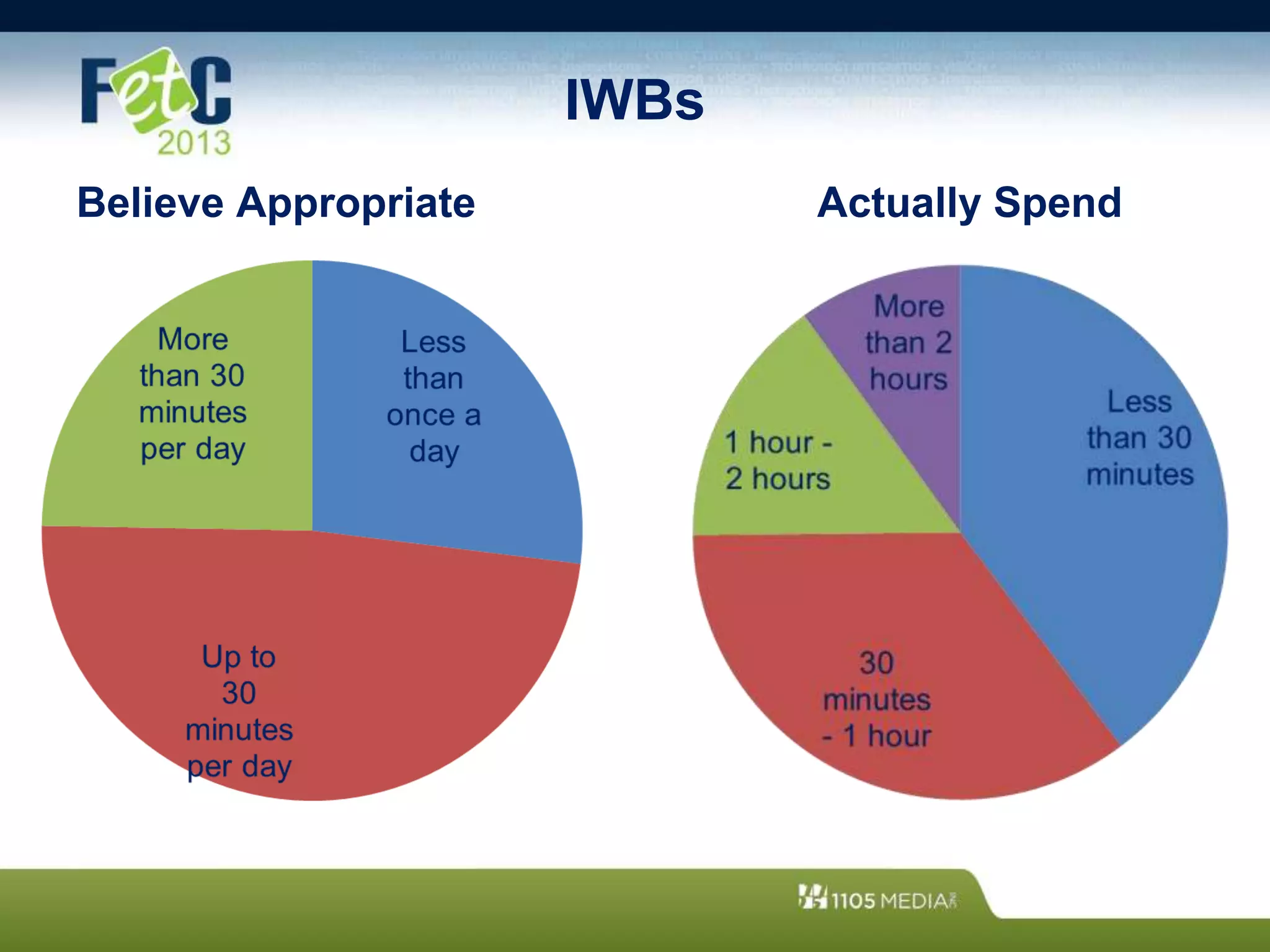
IWBs
Believe Appropriate Actually Spend
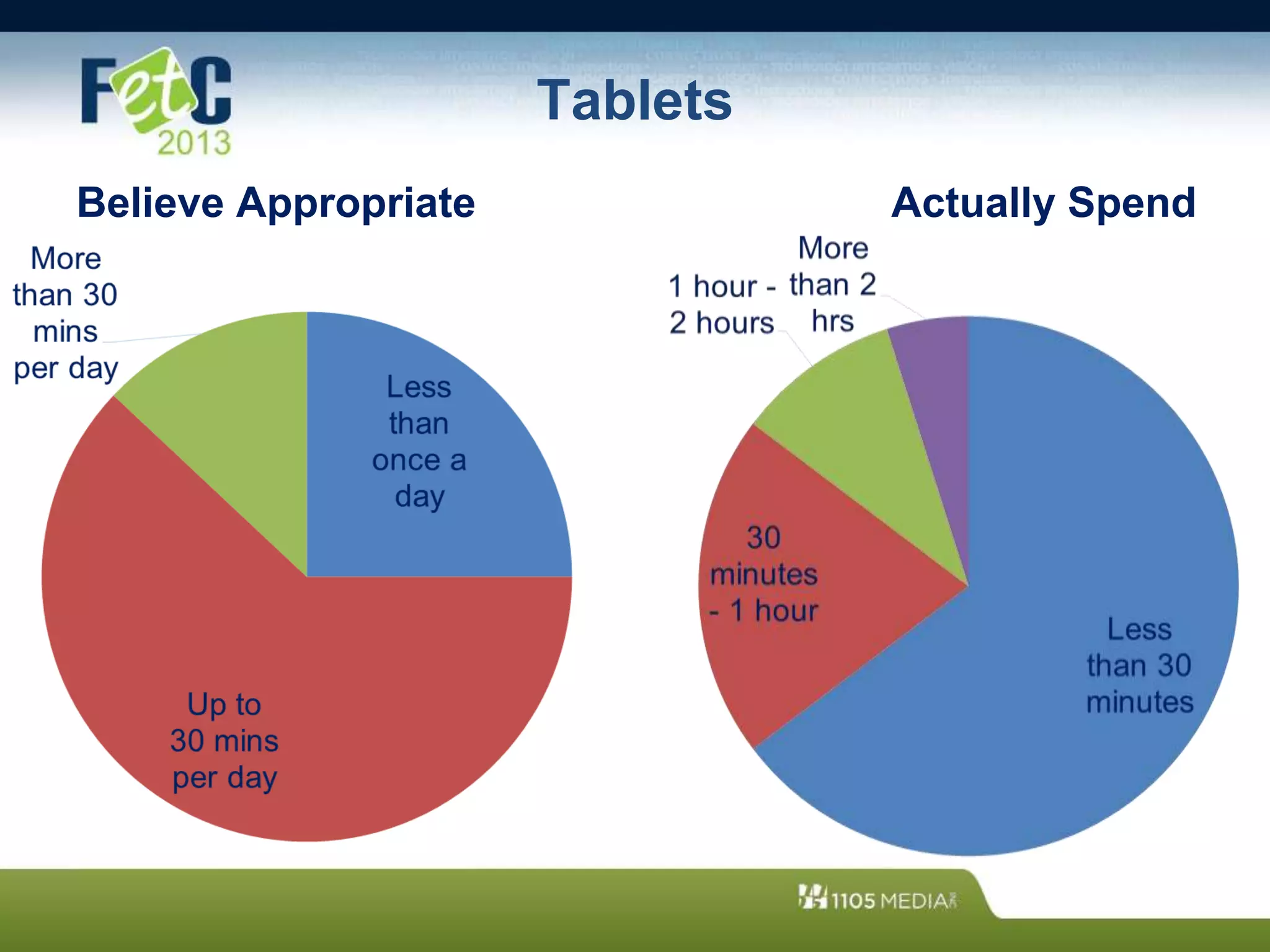
Tablets
Believe Appropriate Actually Spend
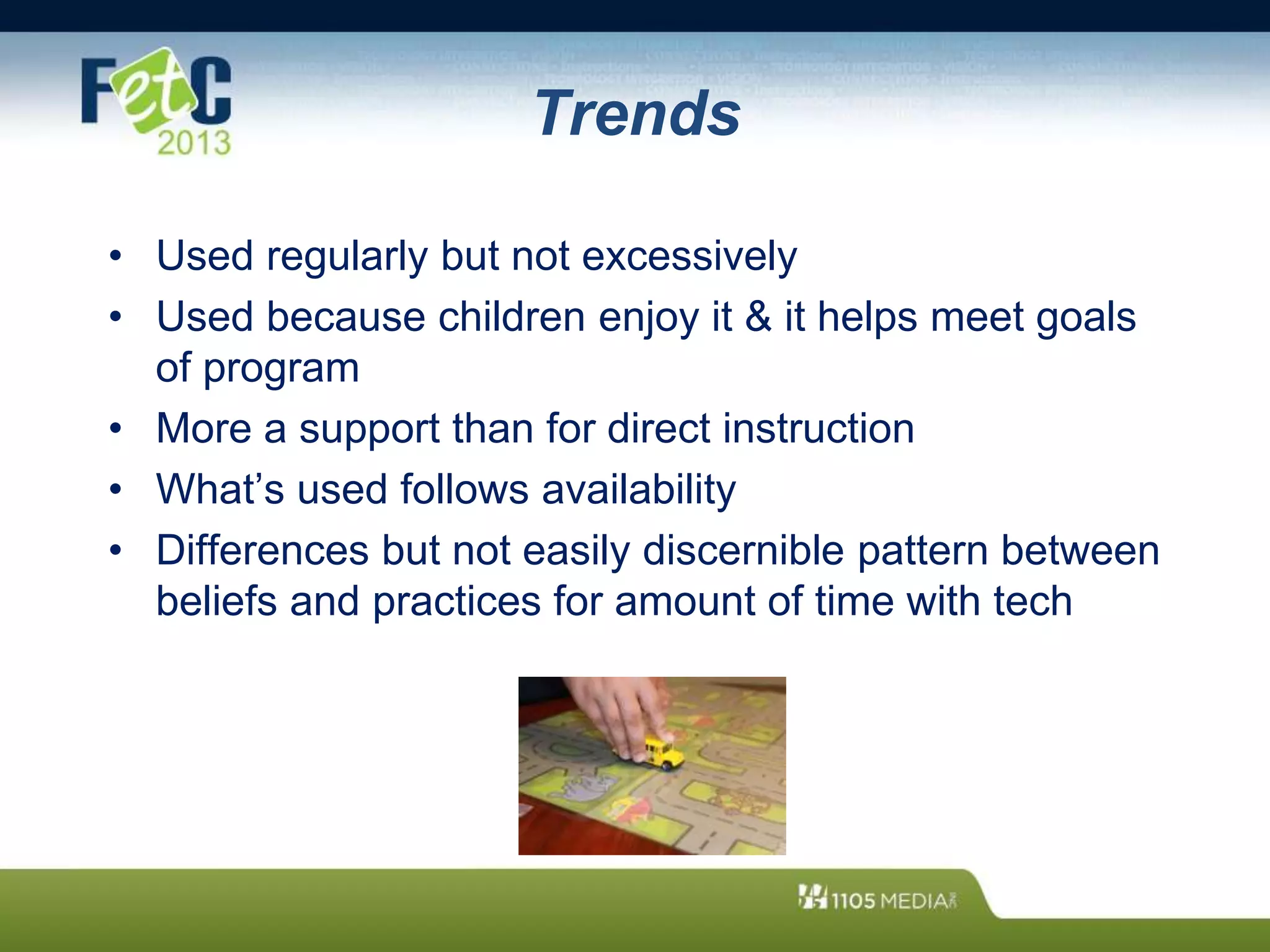
Trends
• Used regularly but not excessively
• Used because children enjoy it & it helps meet goals
of program
• More a support than for direct instruction
• What’s used follows availability
• Differences but not easily discernible pattern between
beliefs and practices for amount of time with tech
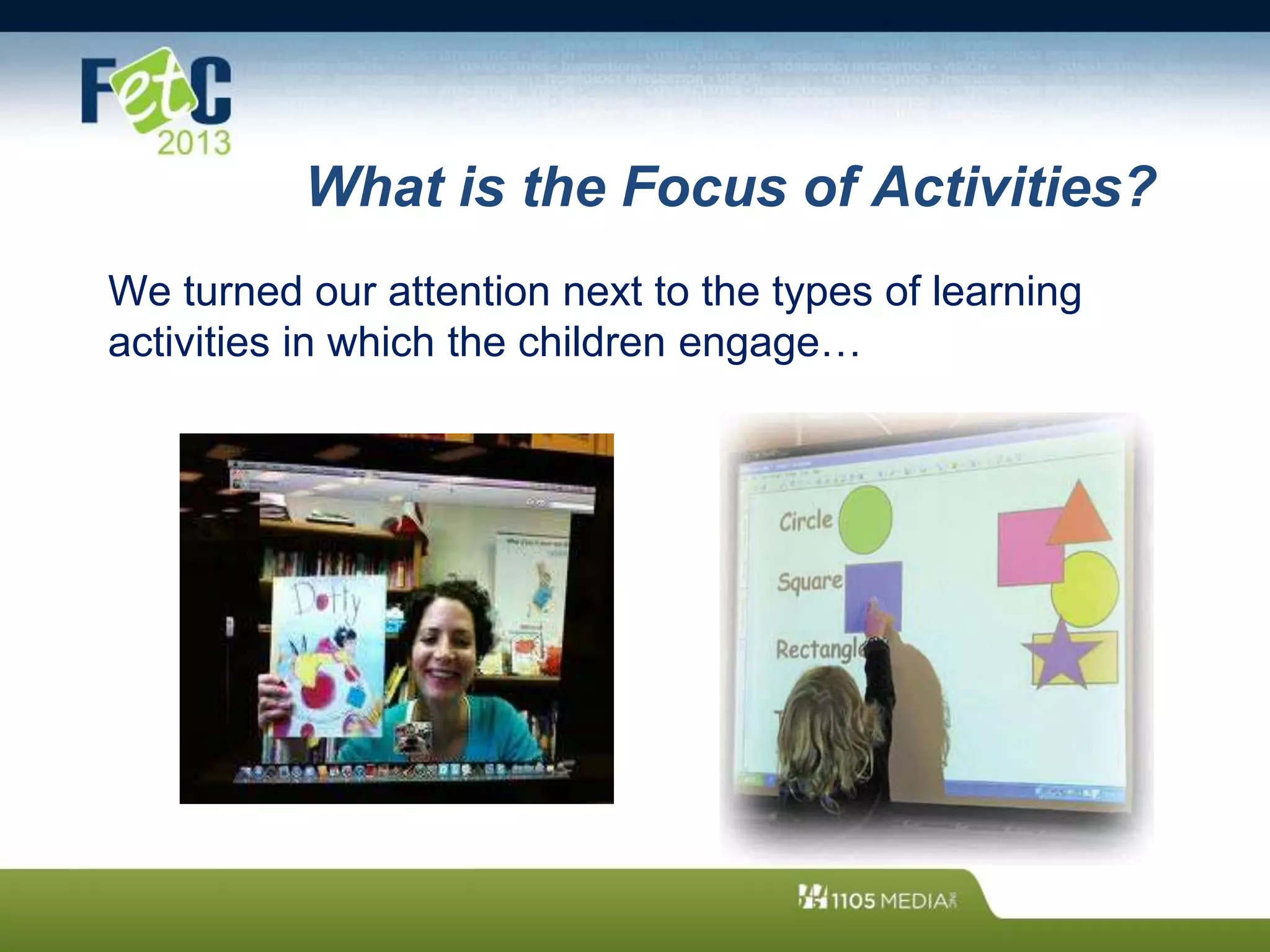
What is the Focus of Activities?
We turned our attention next to the types of learning
activities in which the children engage…
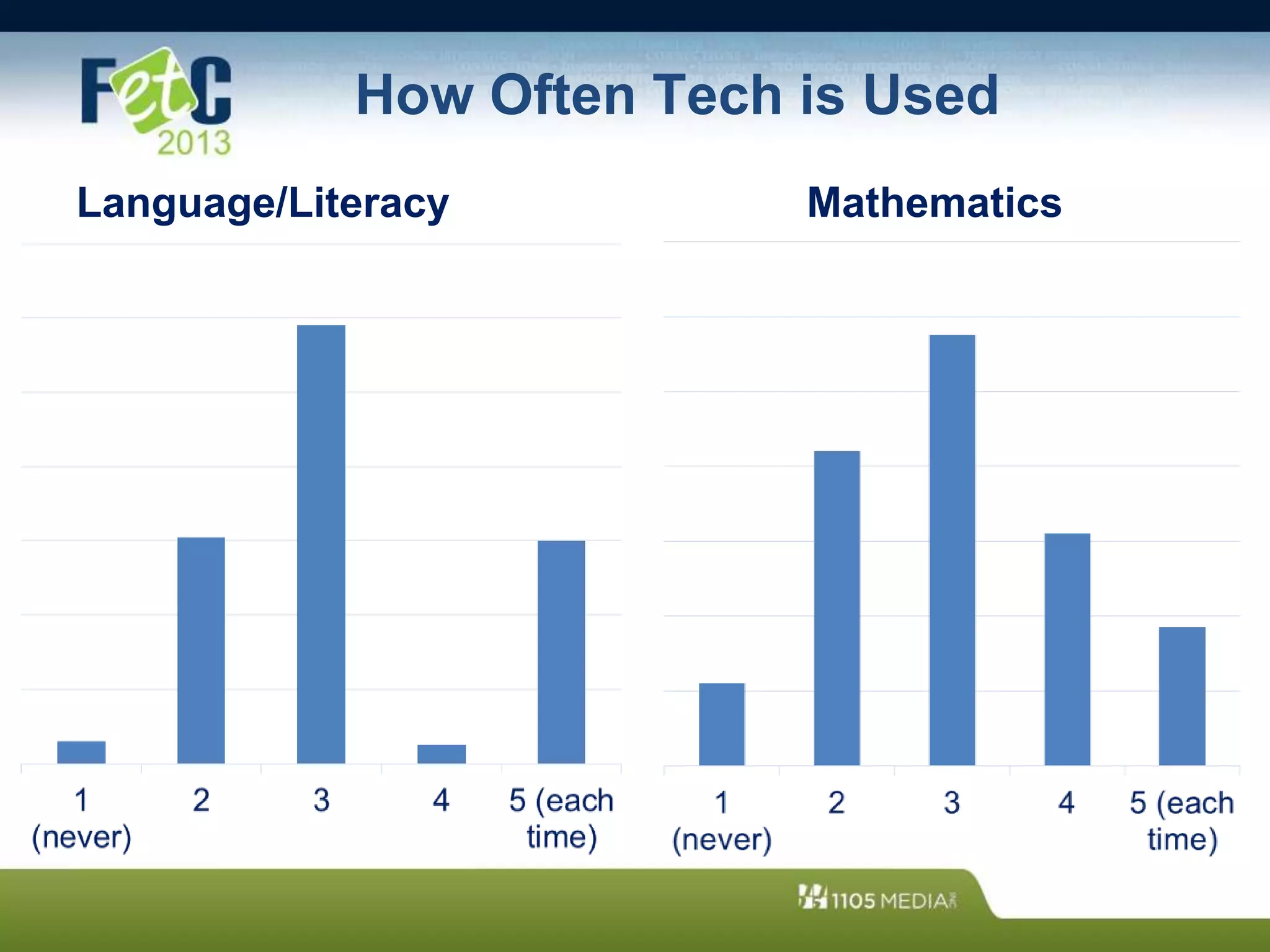
How Often Tech is Used
Language/Literacy Mathematics
How Often Tech is Used
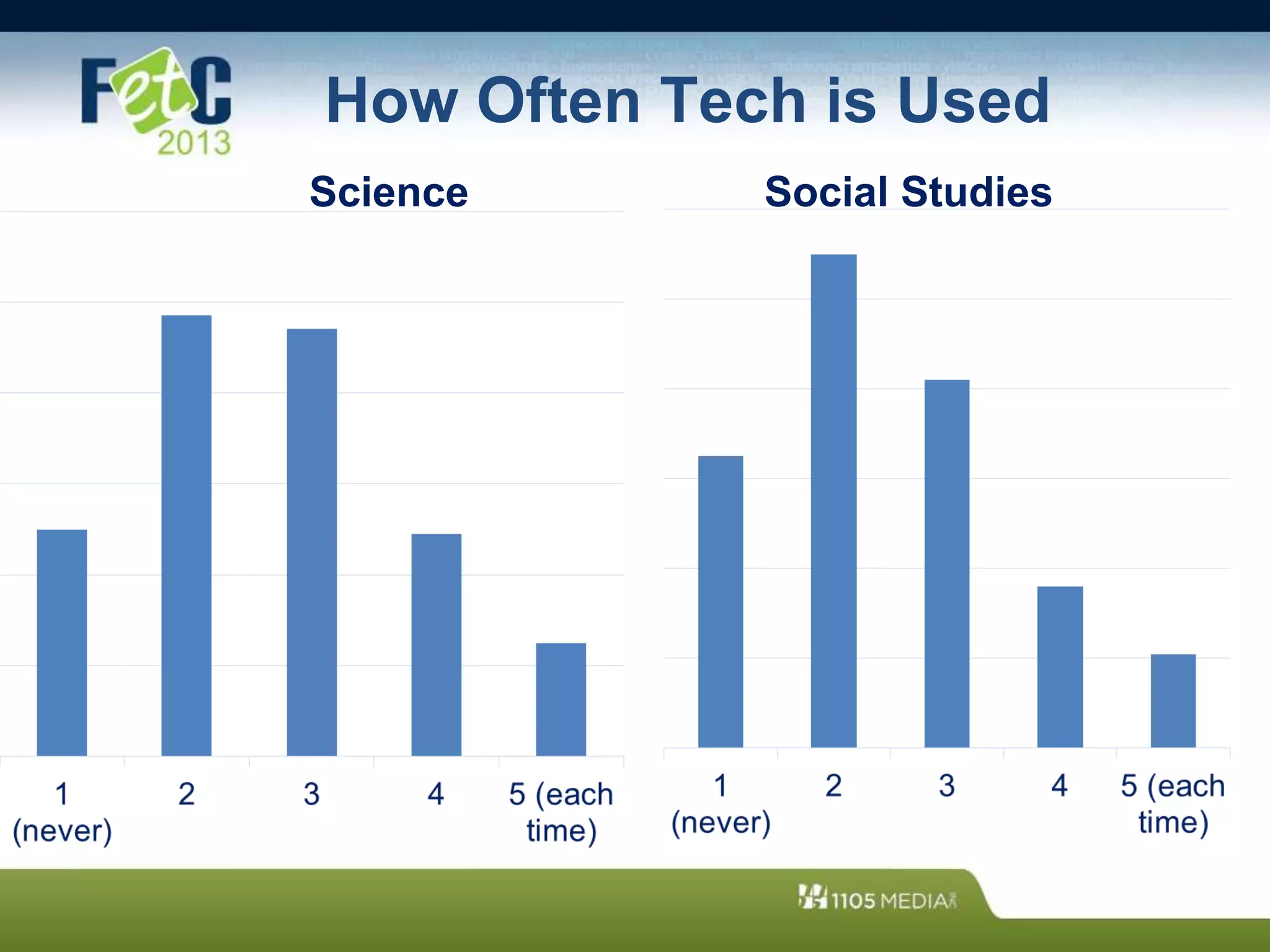
Science Social Studies
How Often Tech is Used
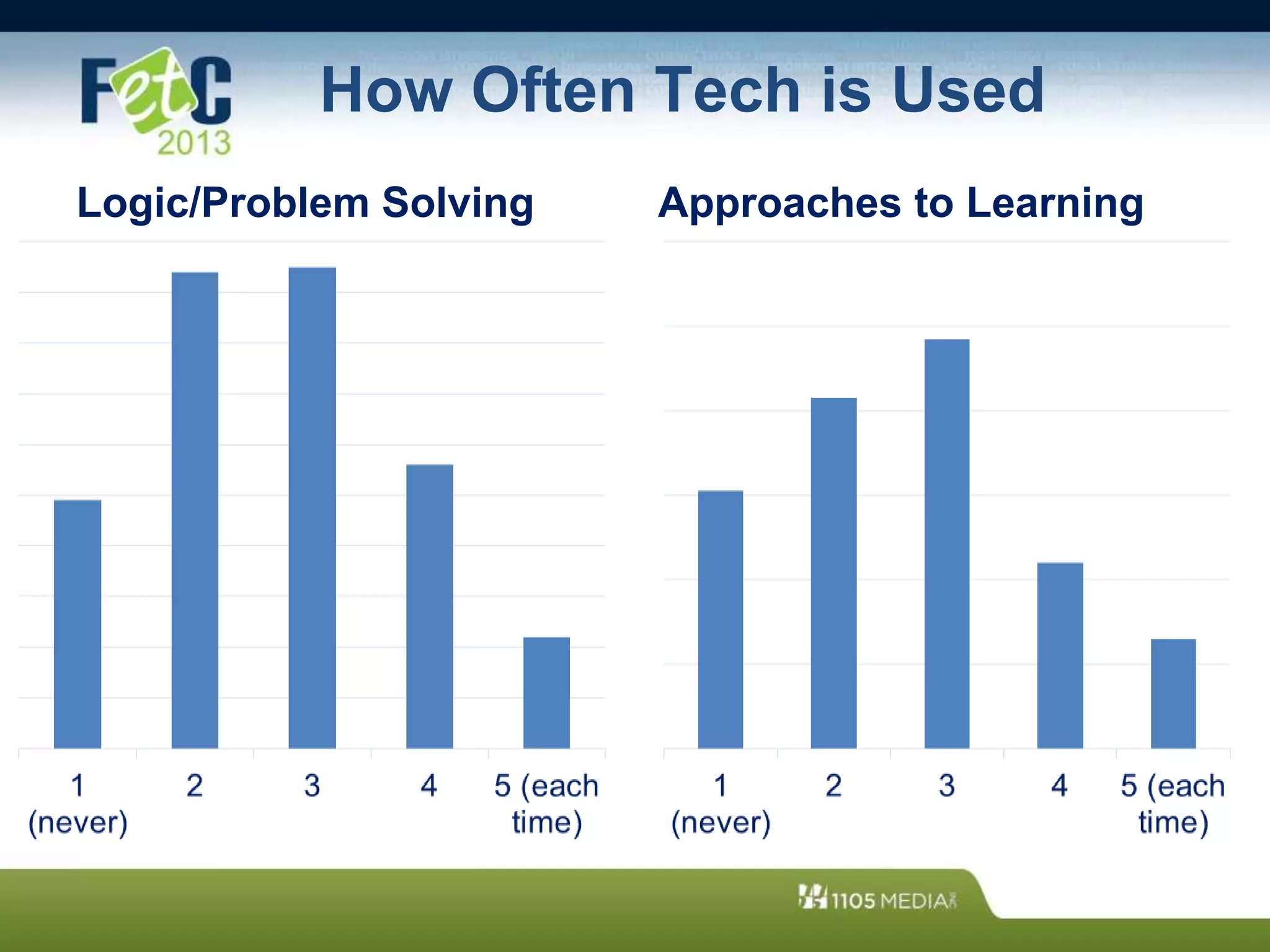
Logic/Problem Solving Approaches to Learning
How Often Tech is Used
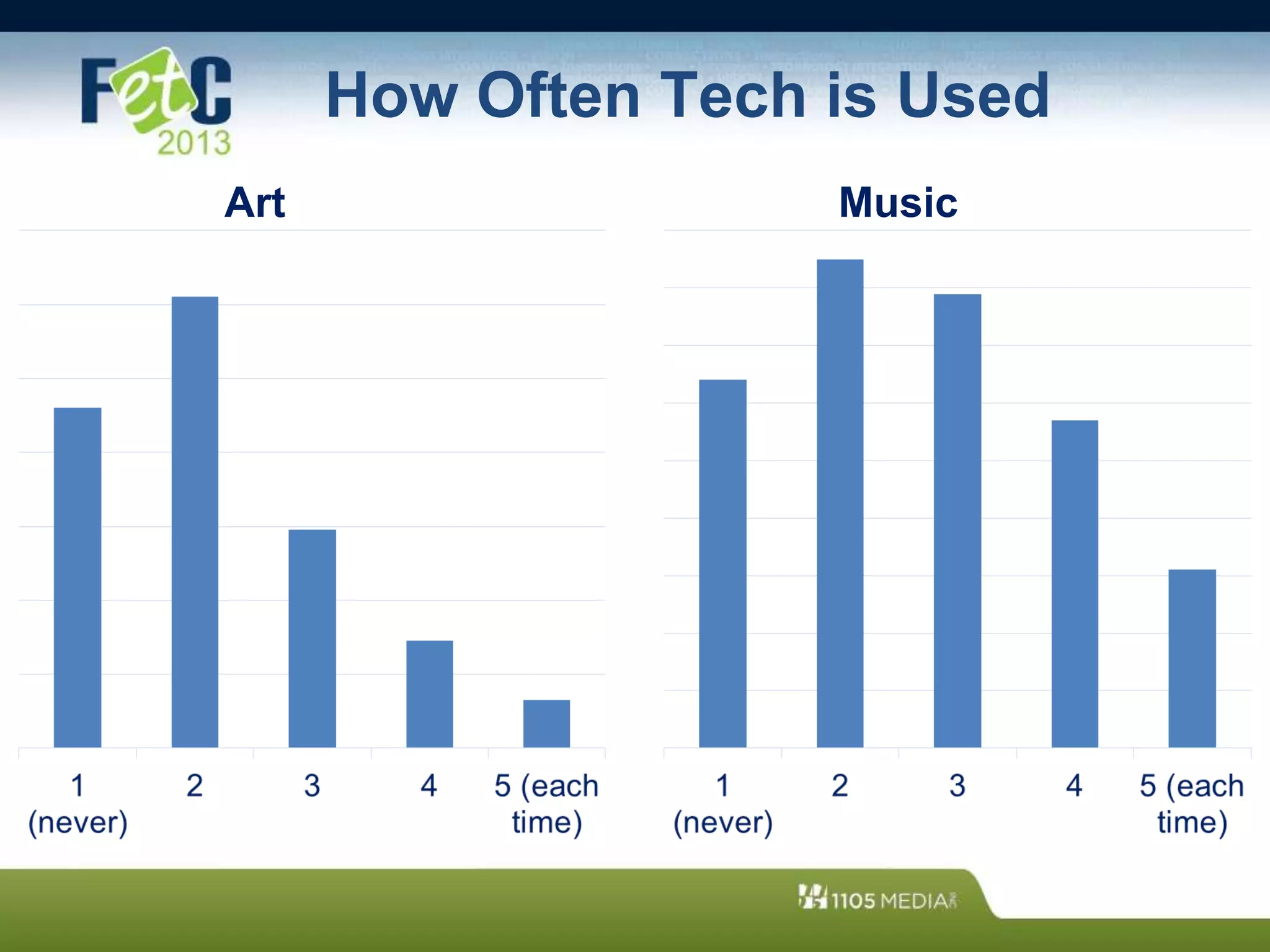
Art Music
How Often Tech is Used
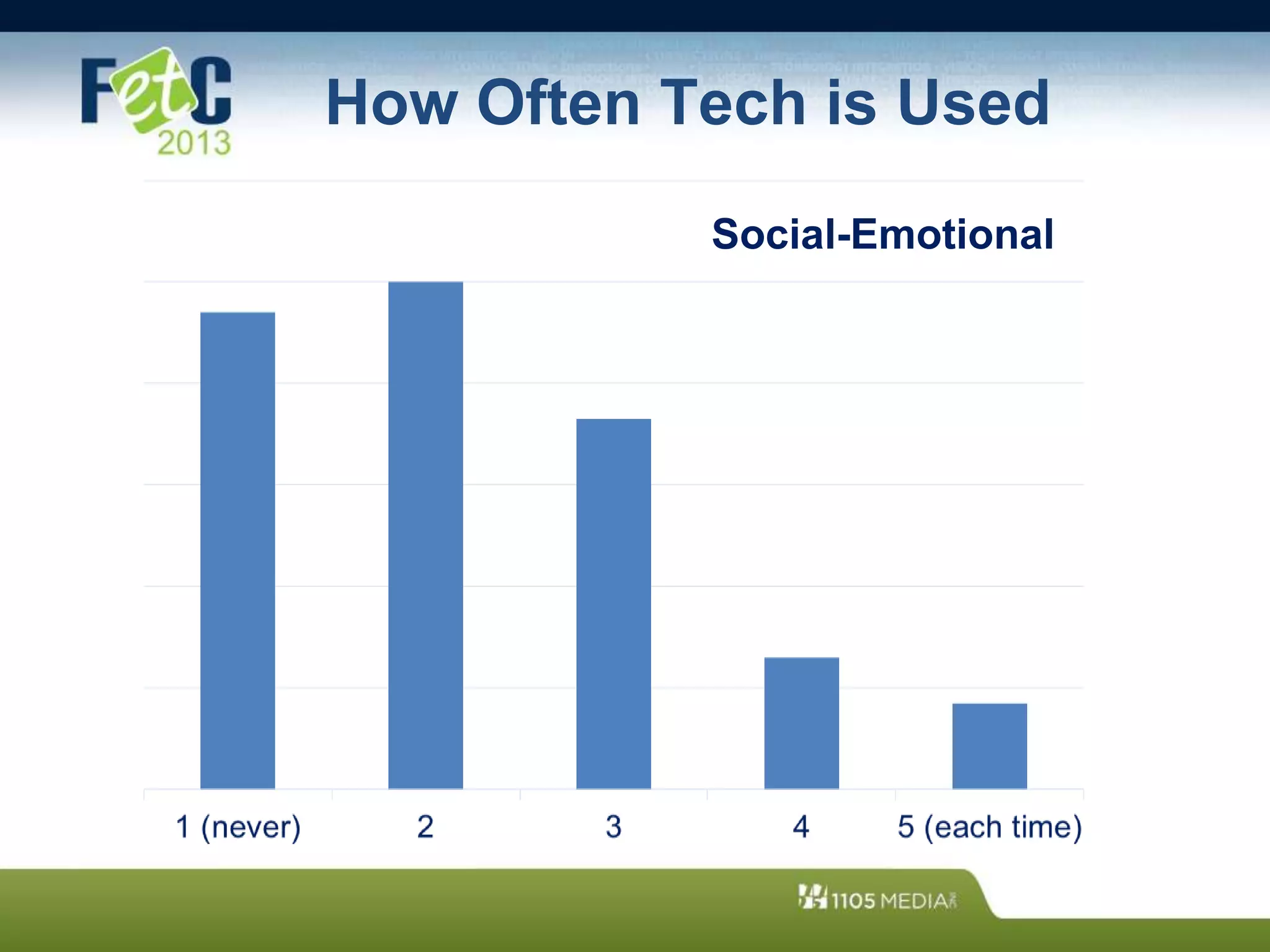
Social-Emotional
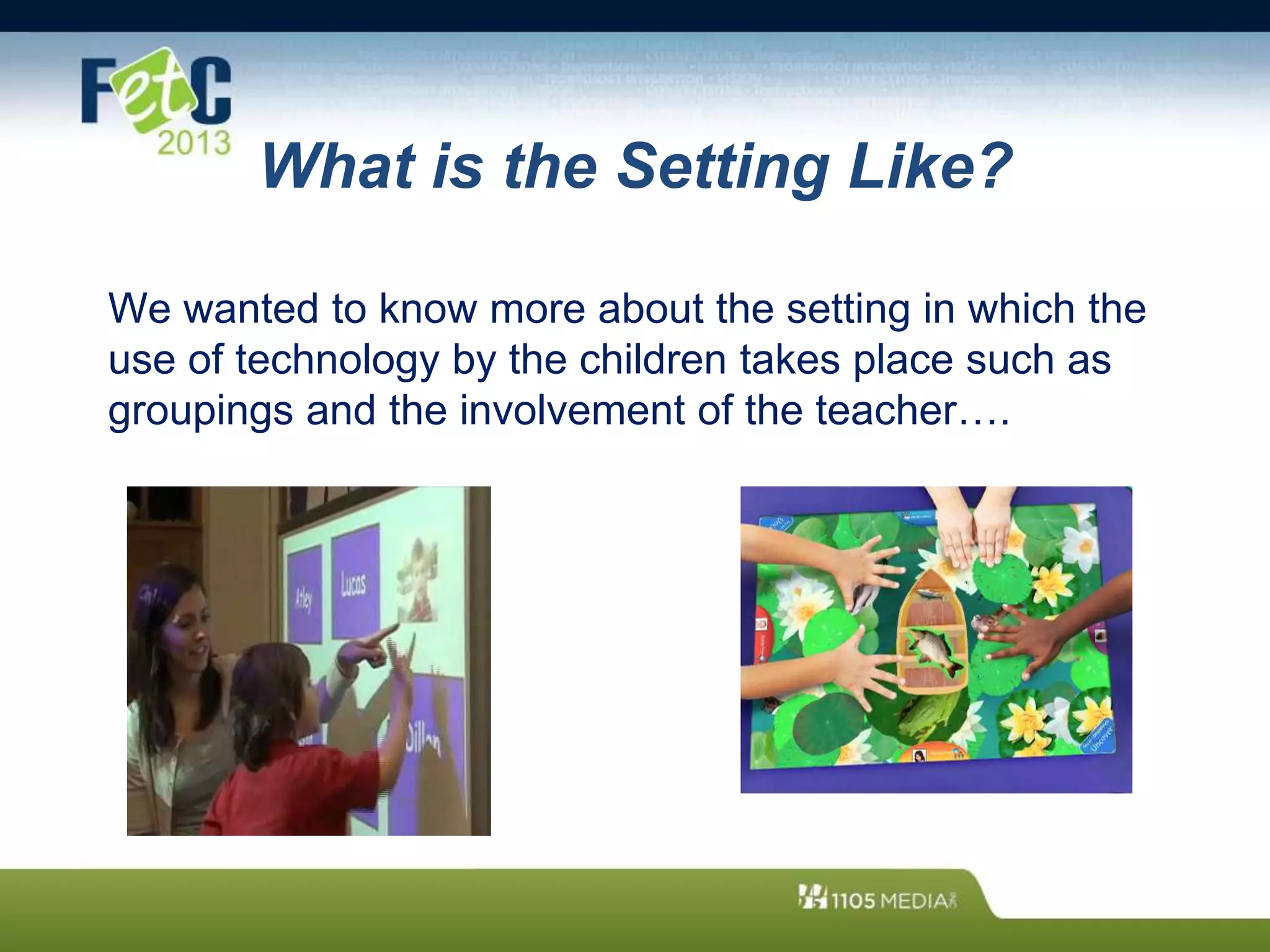
What is the Setting Like?
We wanted to know more about the setting in which the
use of technology by the children takes place such as
groupings and the involvement of the teacher….
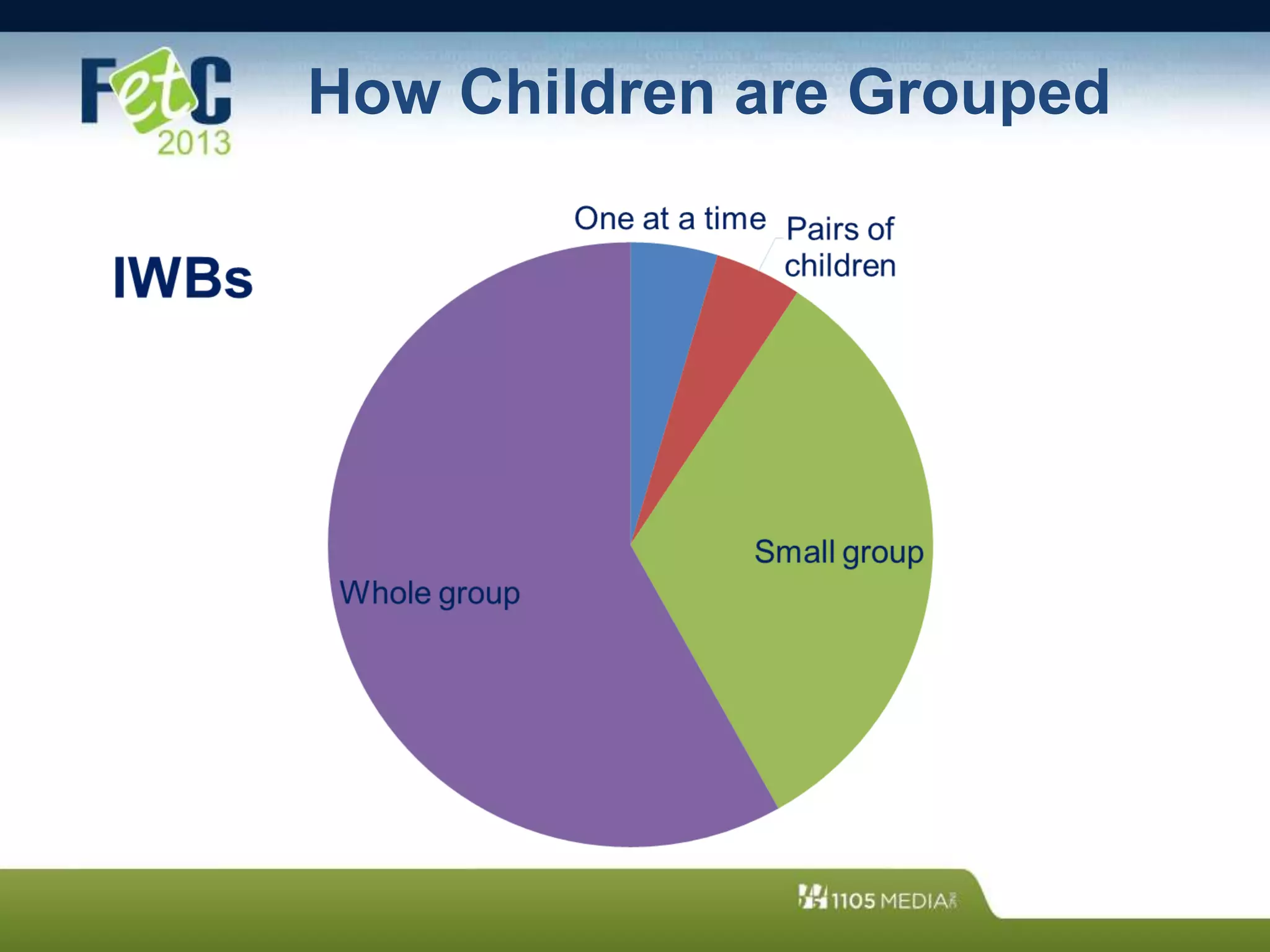
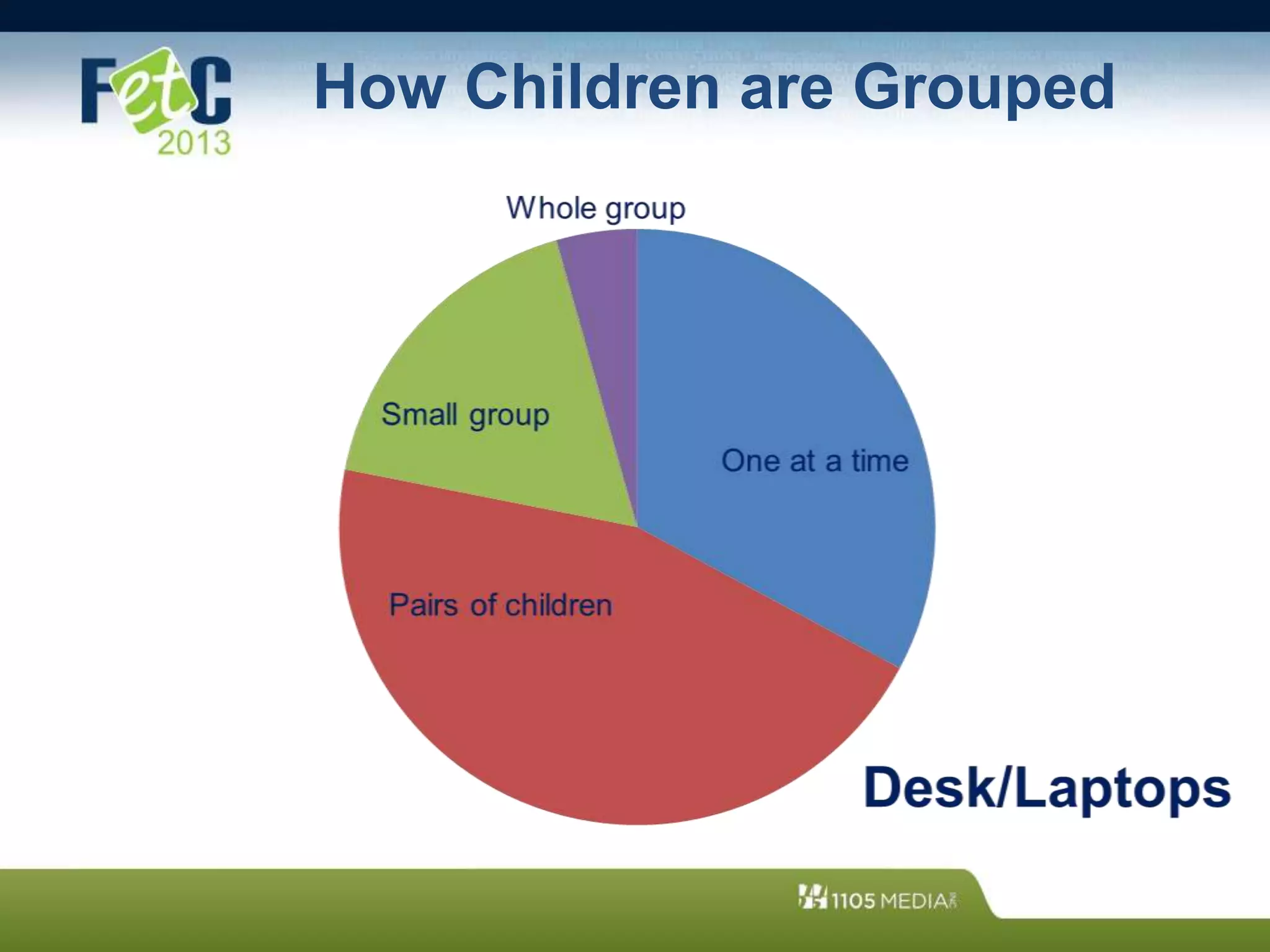
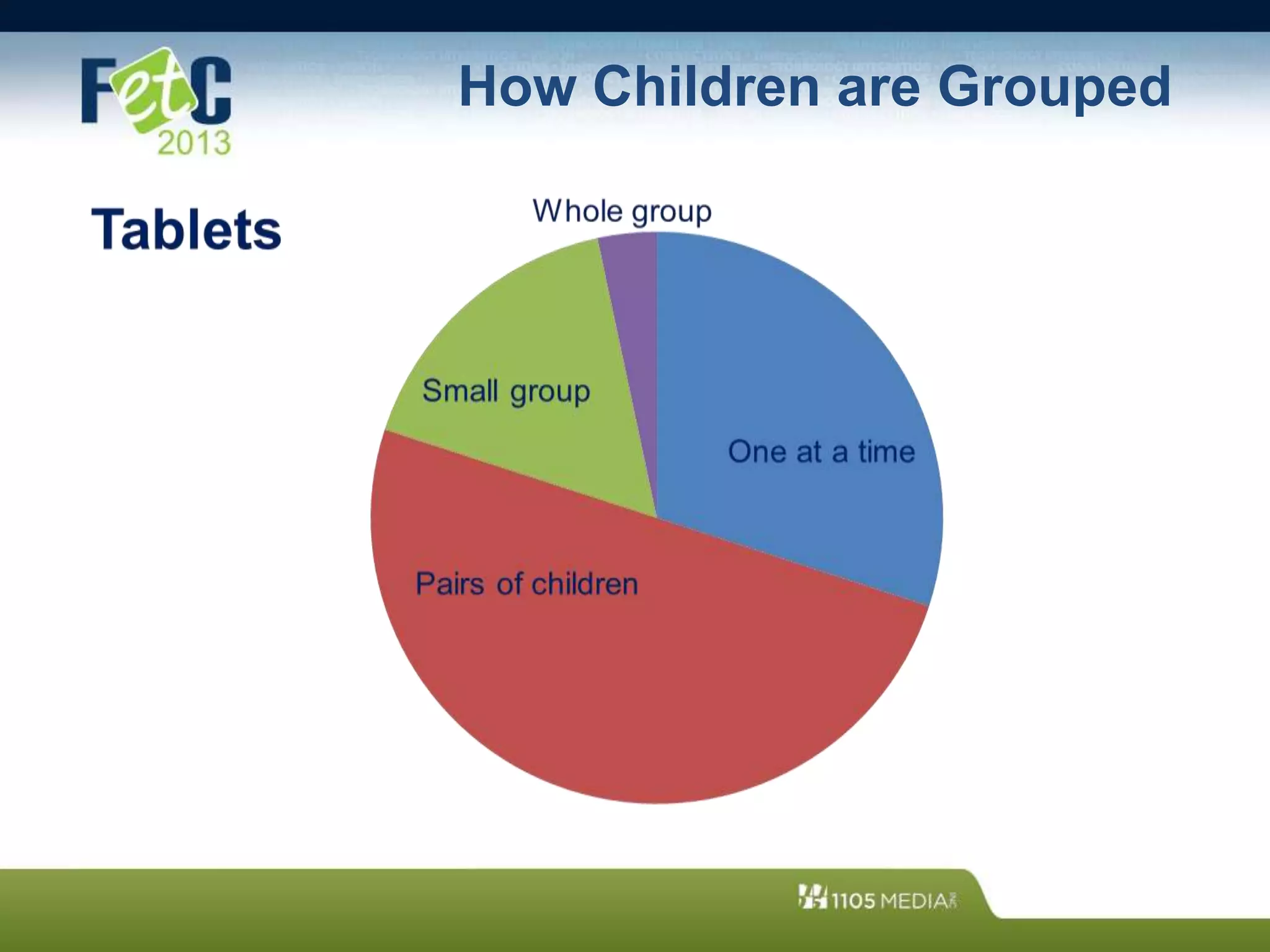
How Children are Grouped
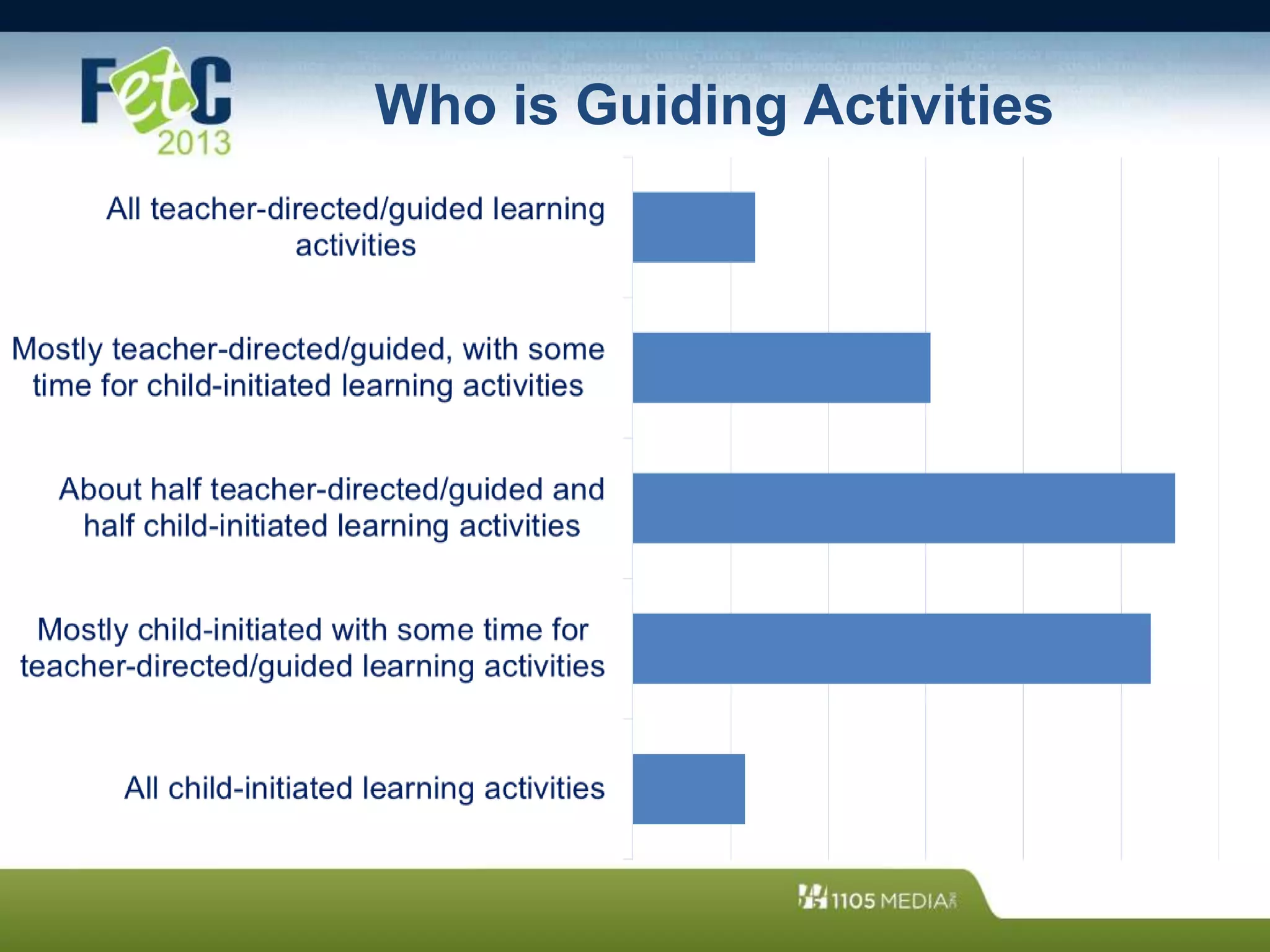
Who is Guiding Activities
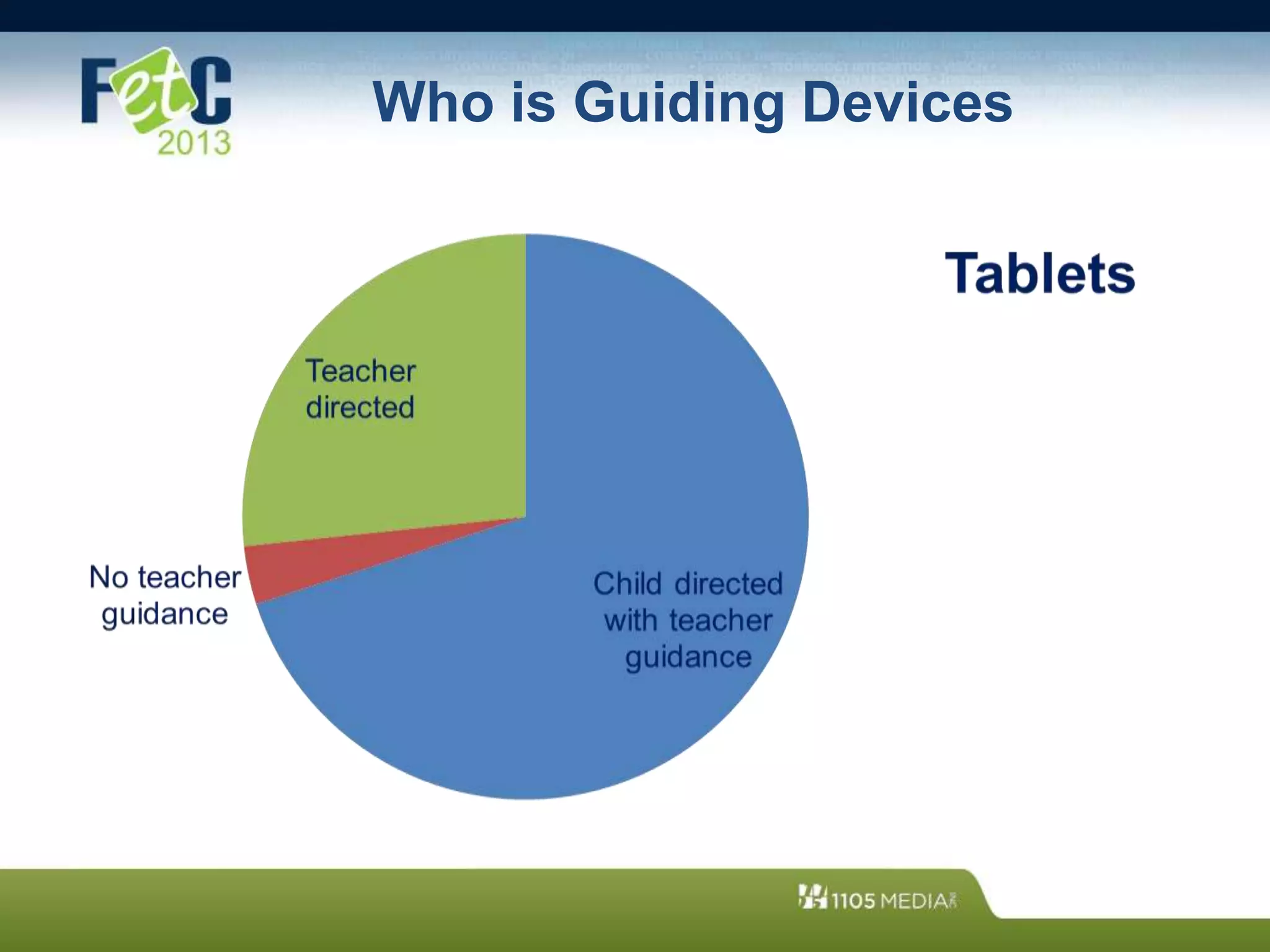
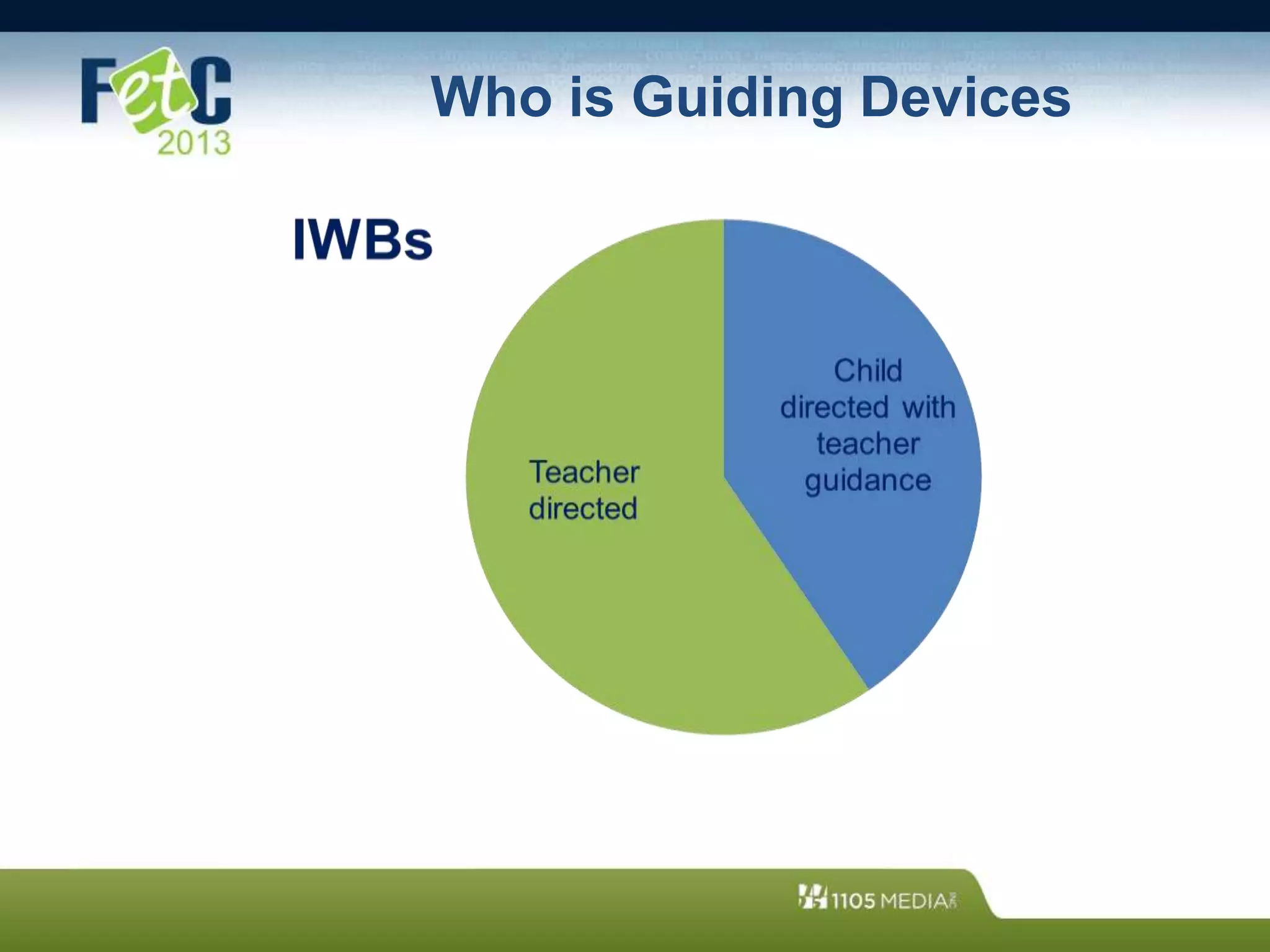
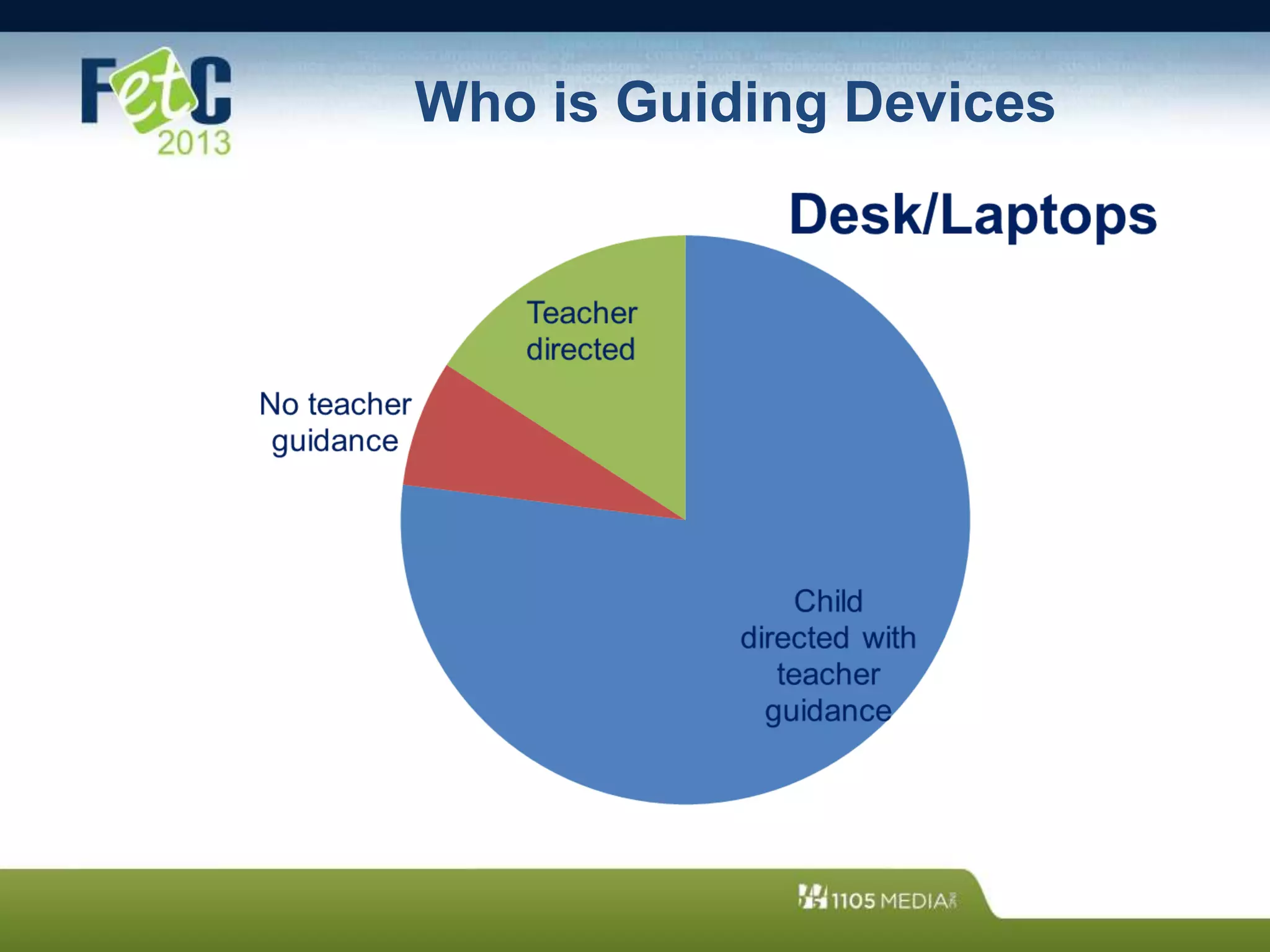
Who is Guiding Devices
Trends
• Used more for traditional content areas
• Rarely used to support social-emotional goals
• Groupings (ranging from individual to whole group) vary
by device type
• Educators “drive” some kinds of tech more than others
• But give children lots of opportunities to “drive” too
• Do ensure balance between teacher-guided and child-
initiated for learning activities themselves
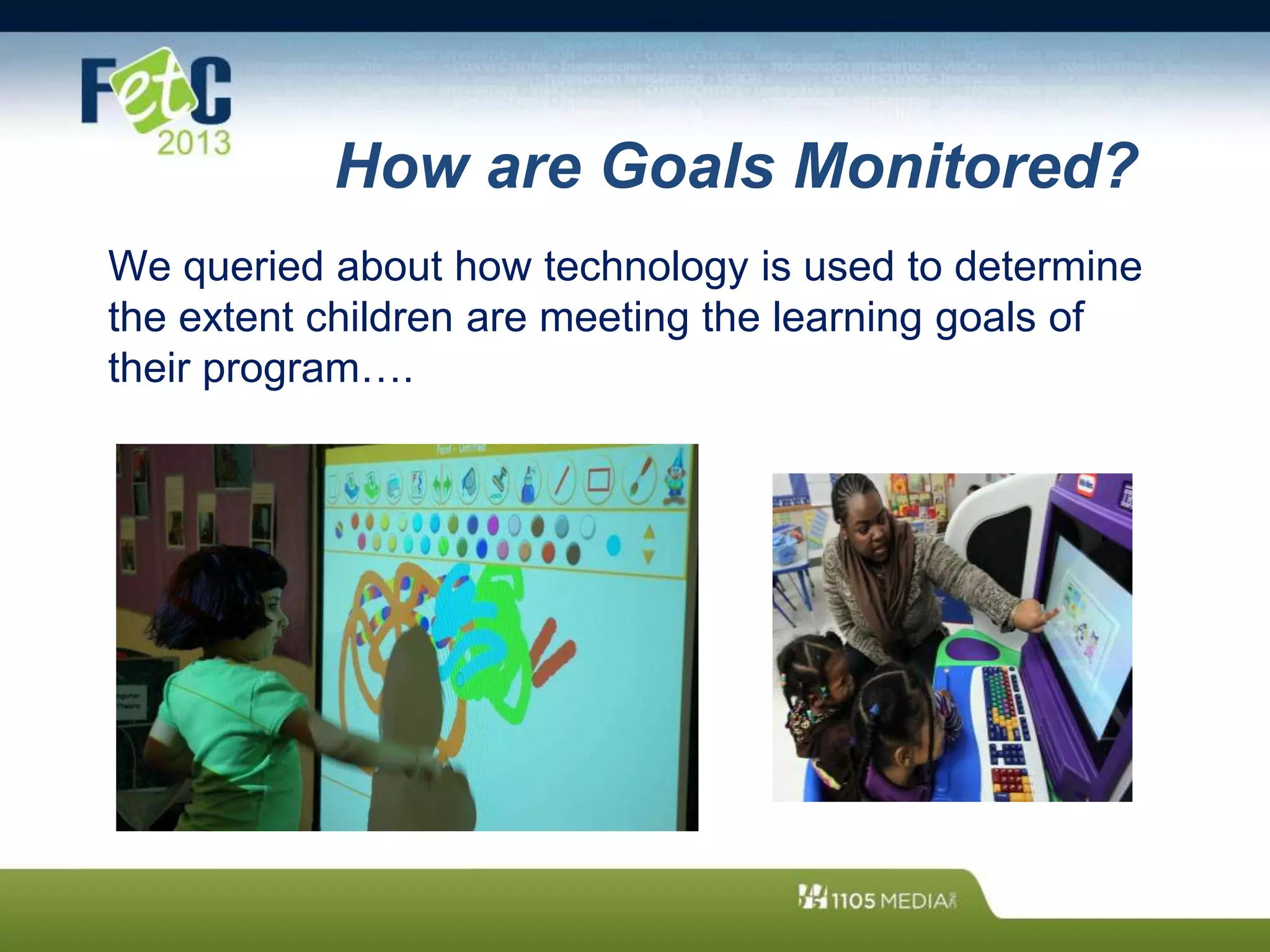
How are Goals Monitored?
We queried about how technology is used to determine
the extent children are meeting the learning goals of
their program….
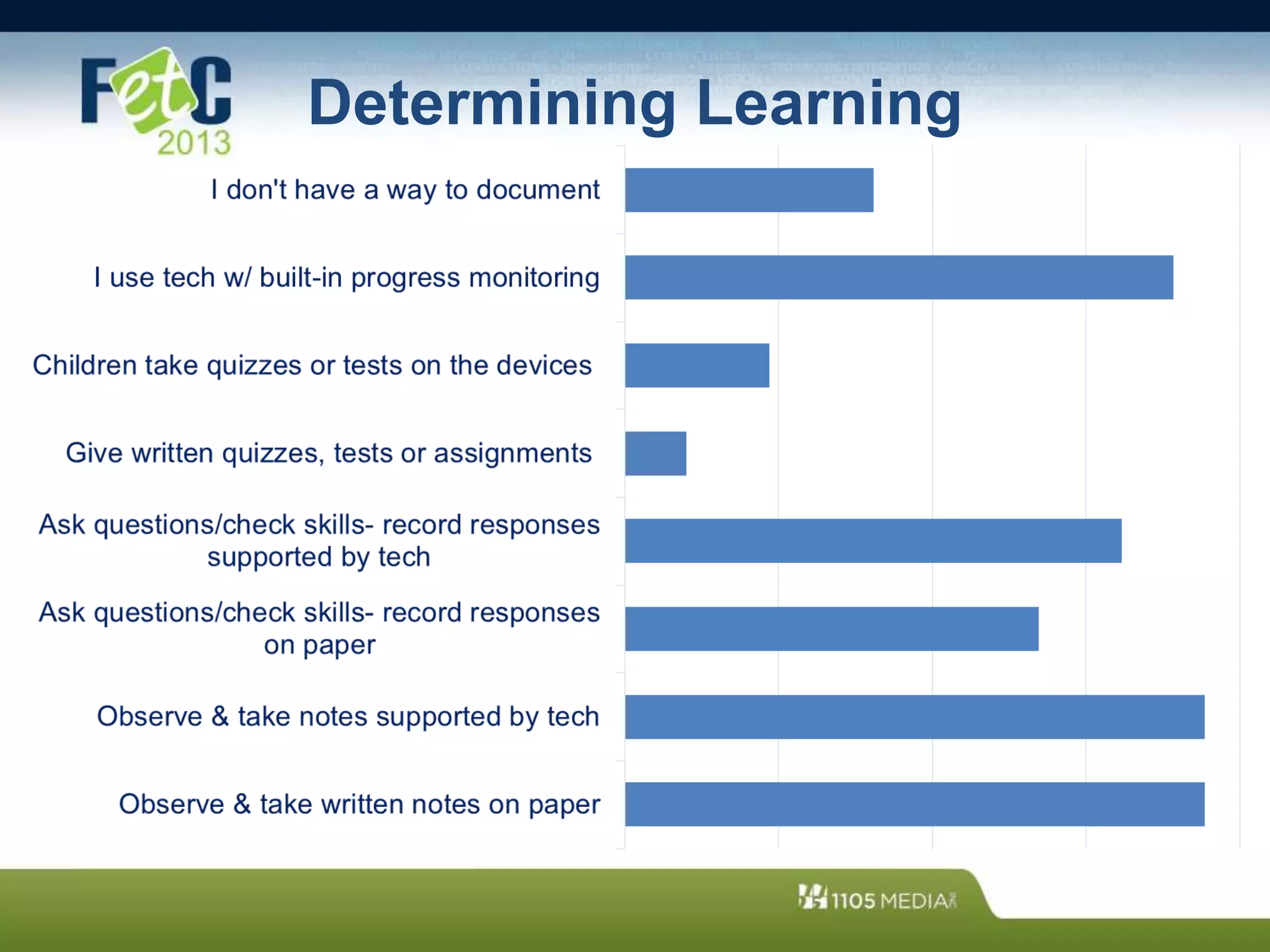
Determining Learning
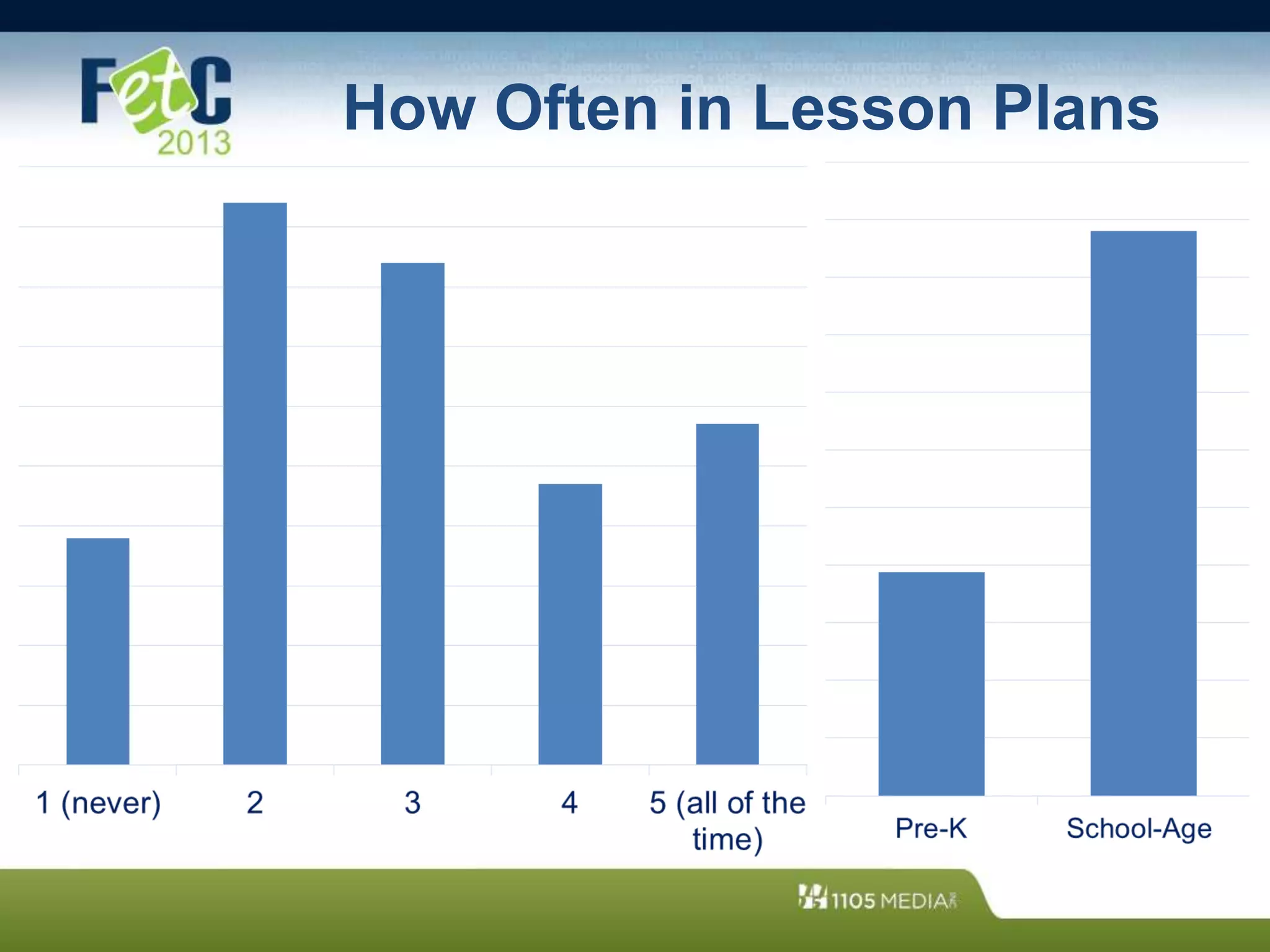
How Often in Lesson Plans
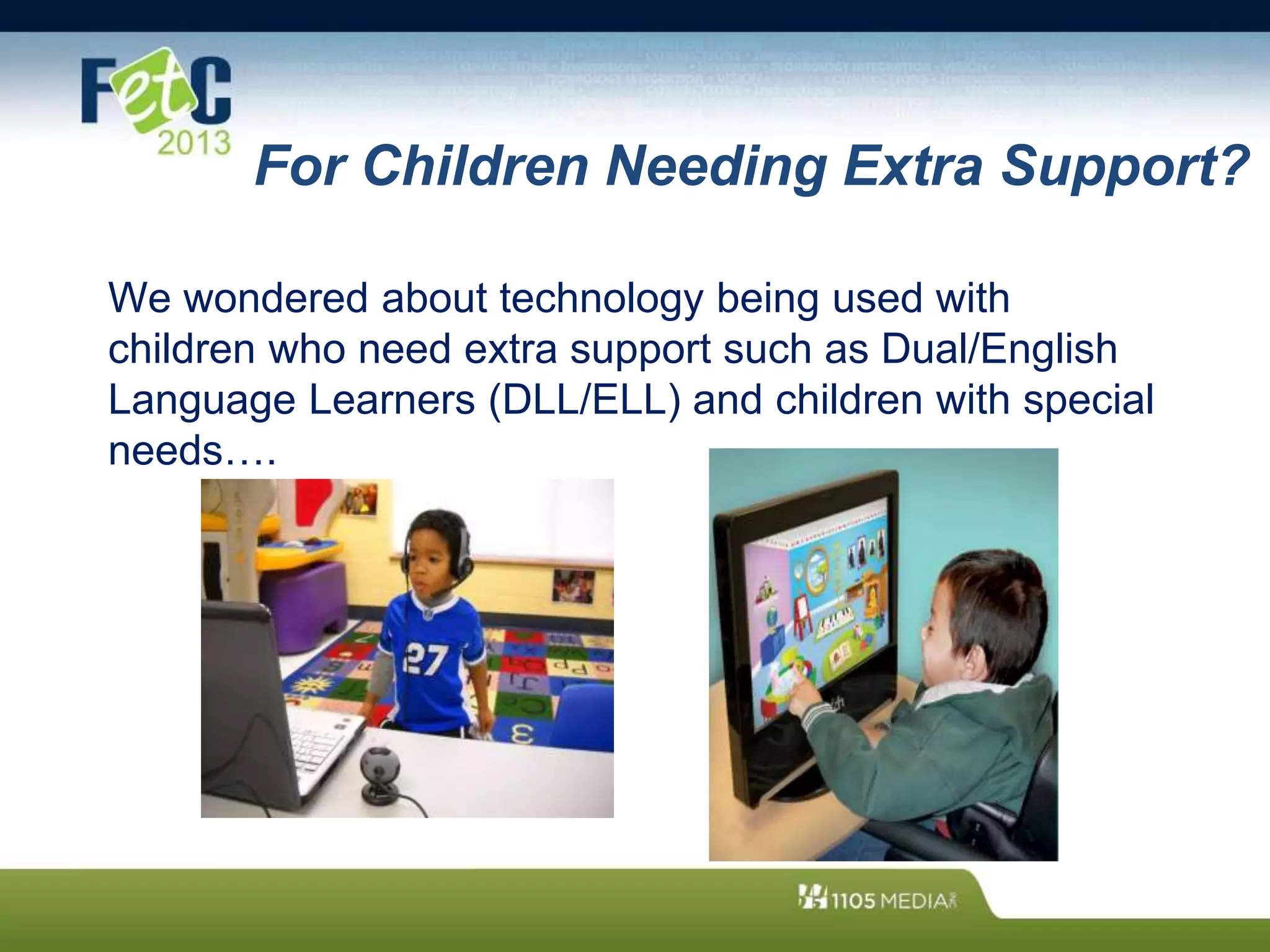
For Children Needing Extra Support?
We wondered about technology being used with
children who need extra support such as Dual/English
Language Learners (DLL/ELL) and children with special
needs….
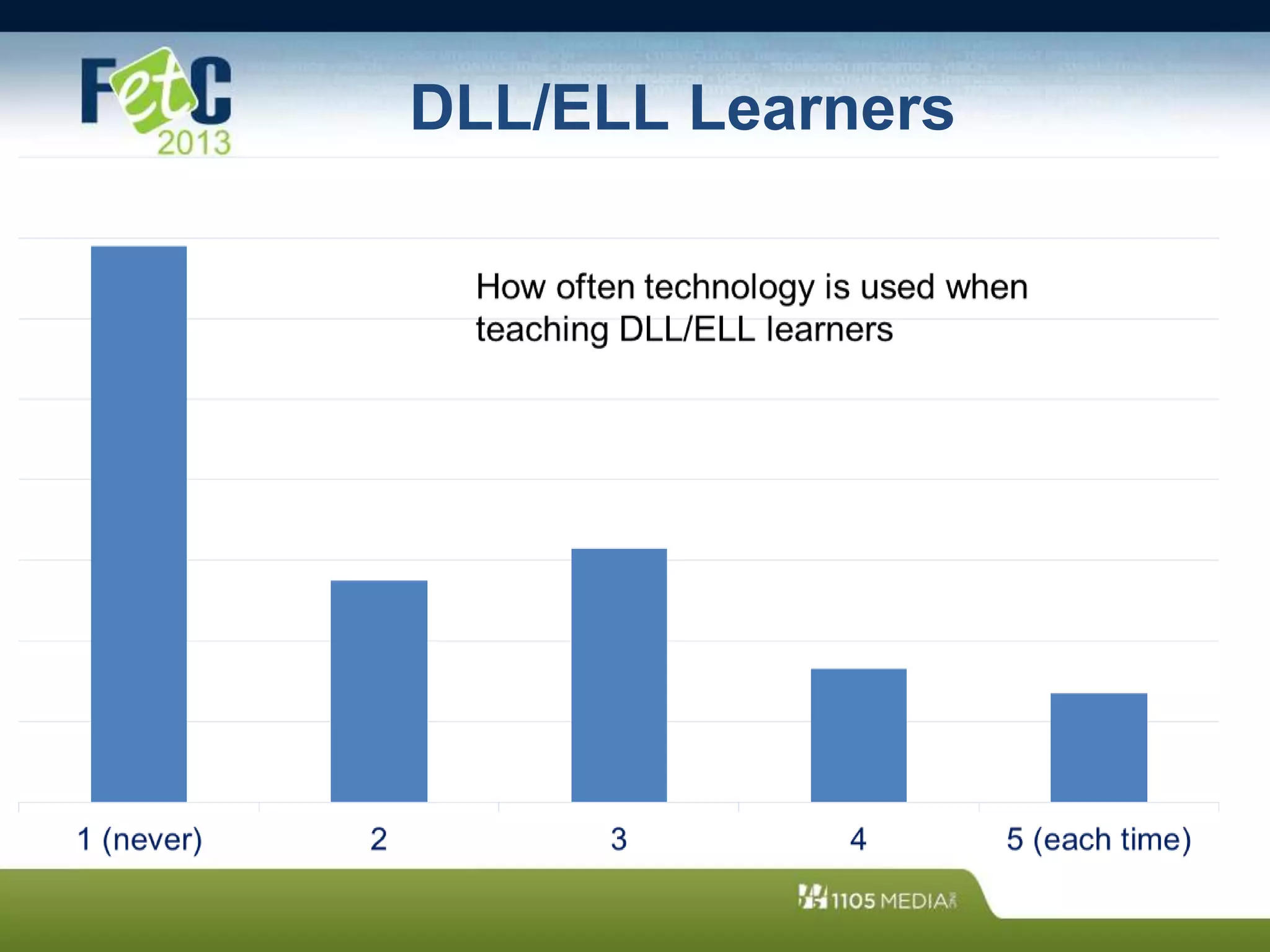
DLL/ELL Learners
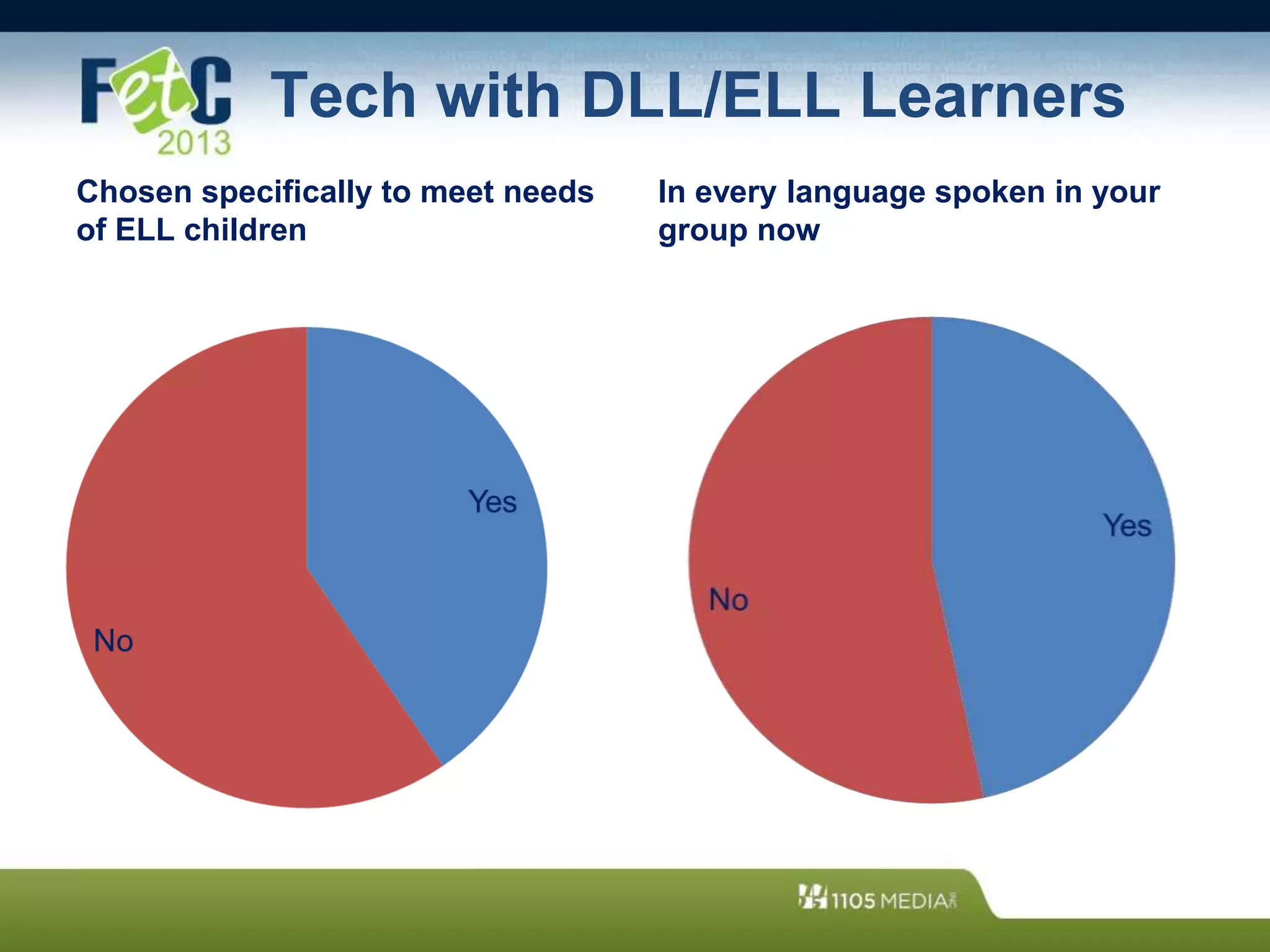
Tech with DLL/ELL Learners
Chosen specifically to meet needs
of ELL children
In every language spoken in your
group now
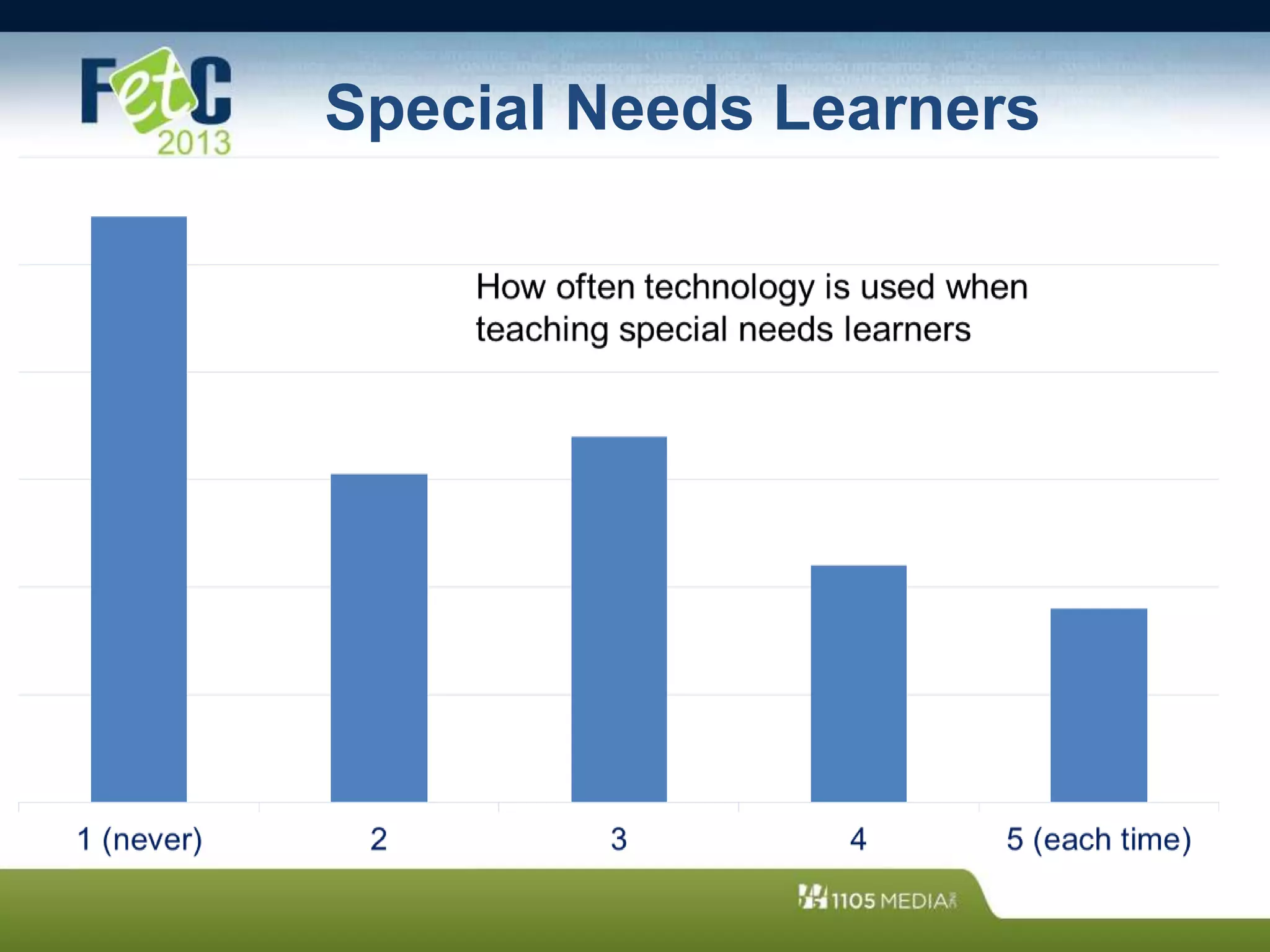
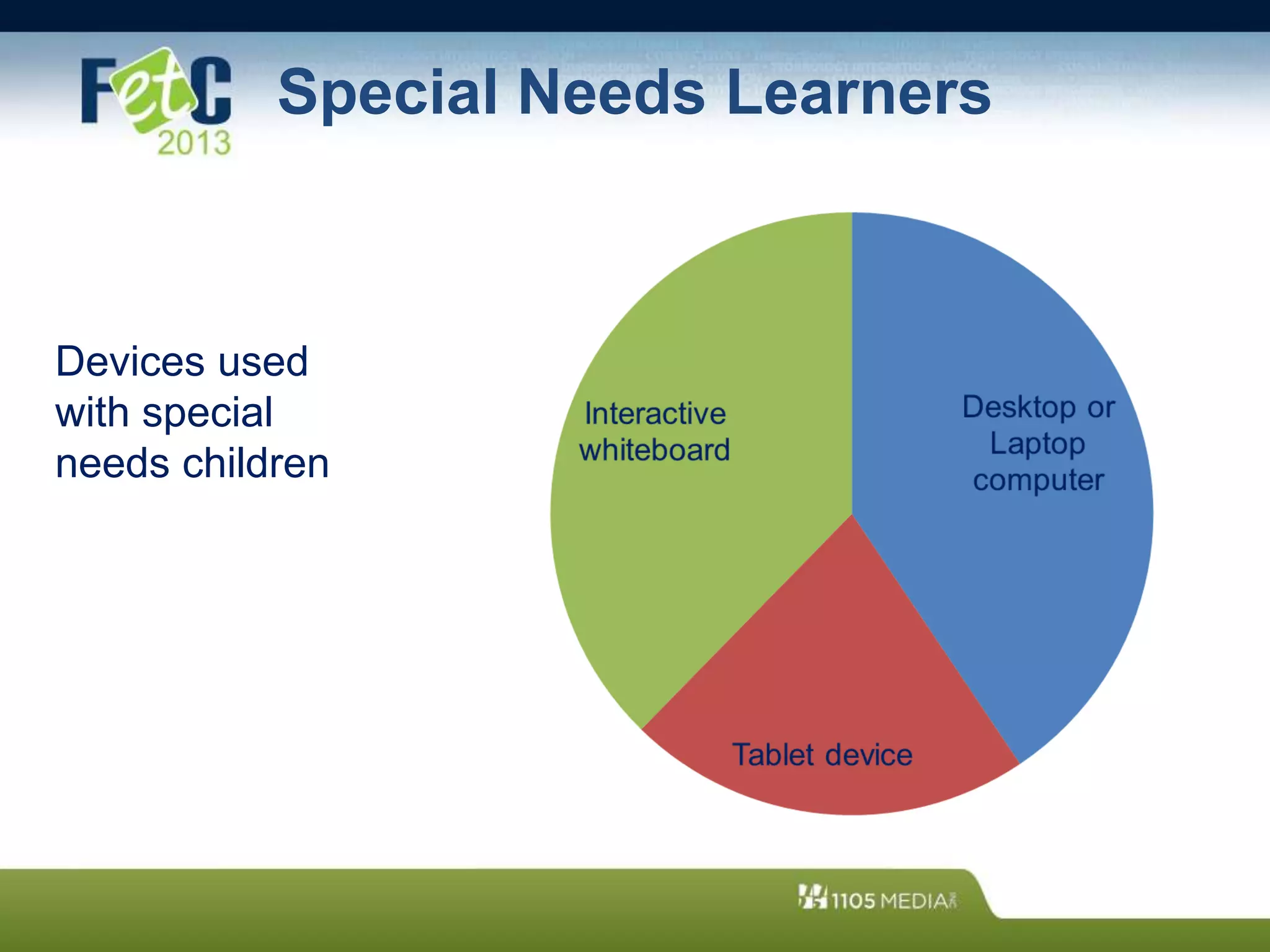
Special Needs Learners
Devices used
with special
needs children
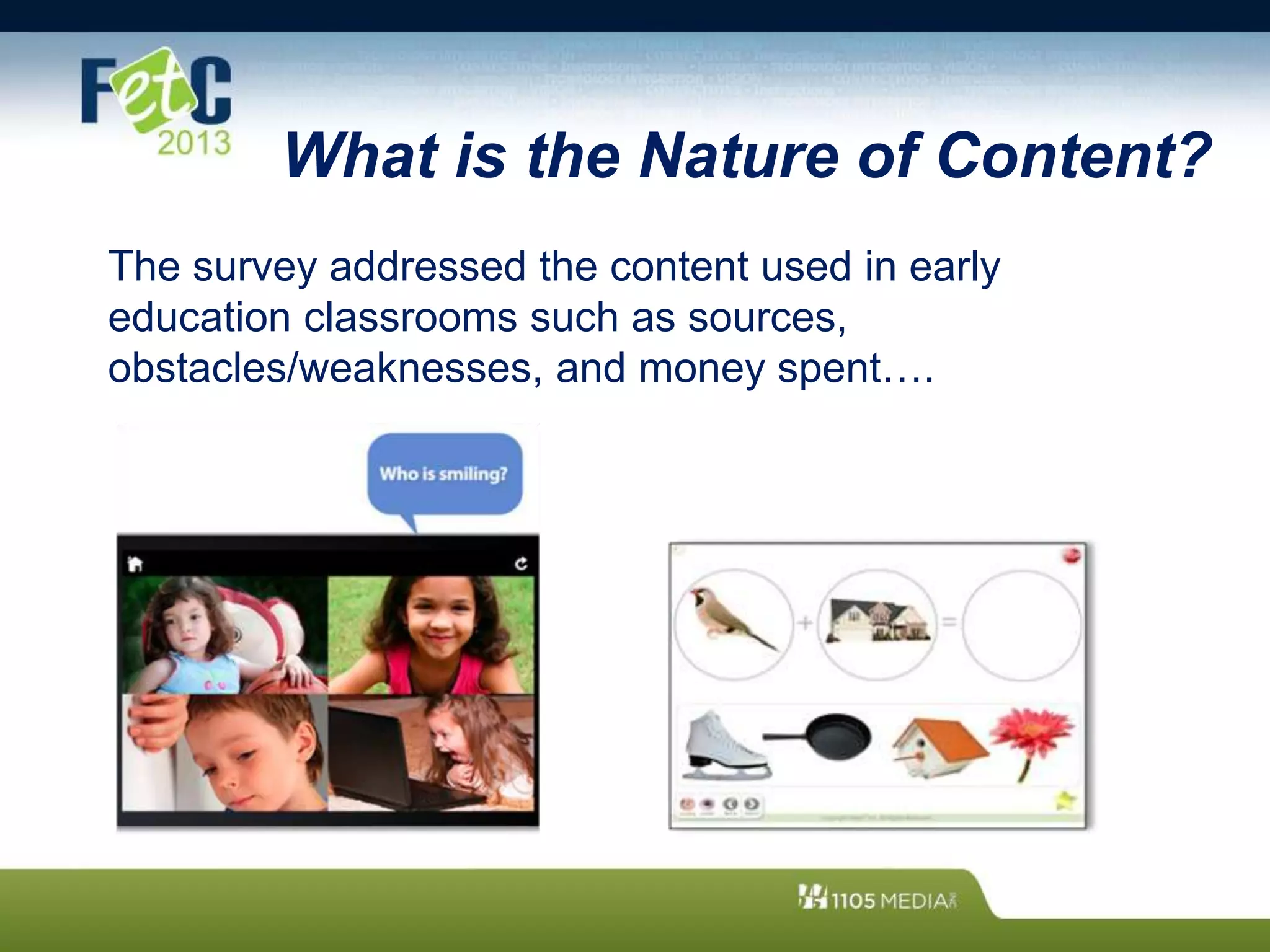
What is the Nature of Content?
The survey addressed the content used in early
education classrooms such as sources,
obstacles/weaknesses, and money spent….
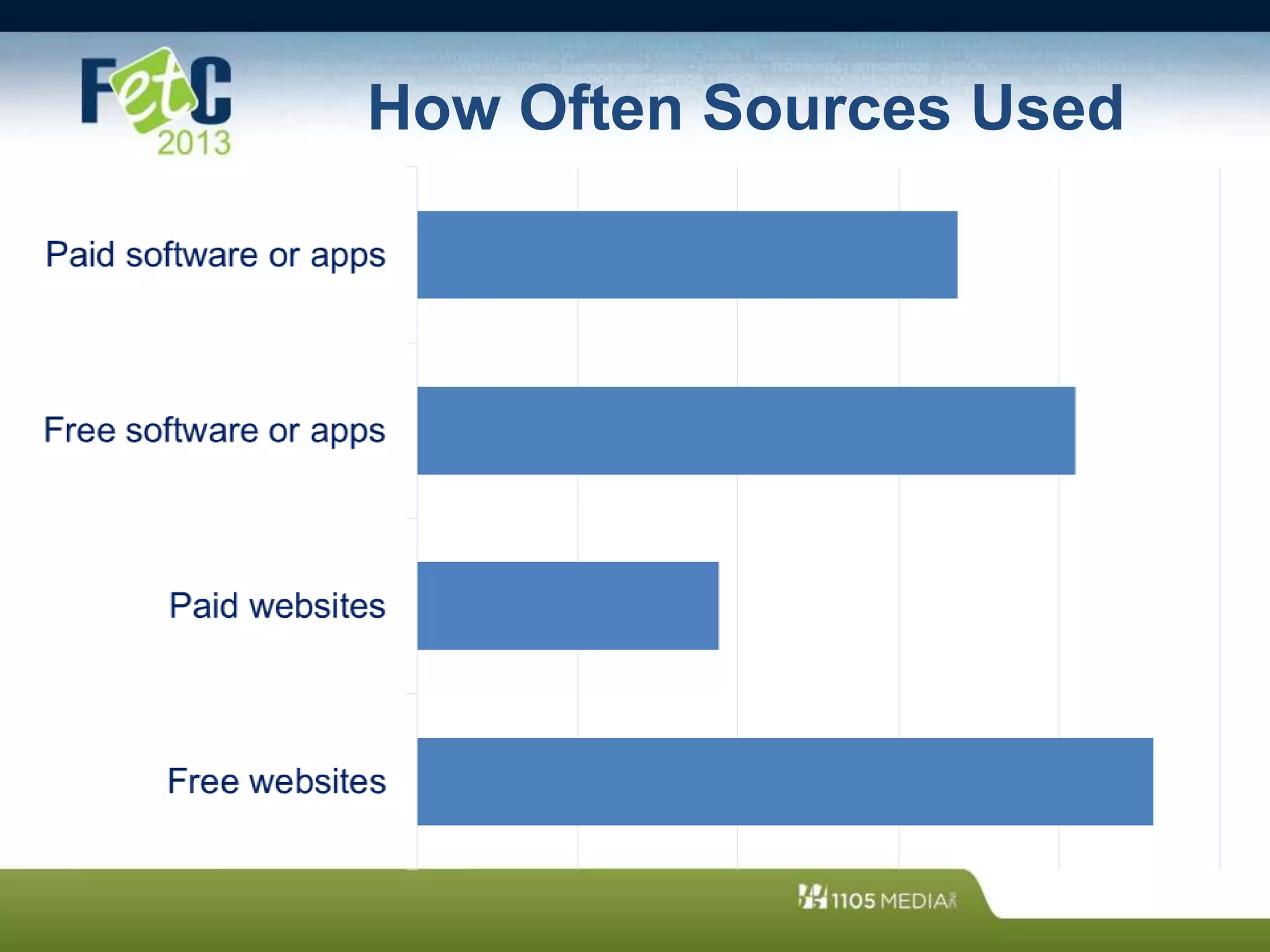
How Often Sources Used
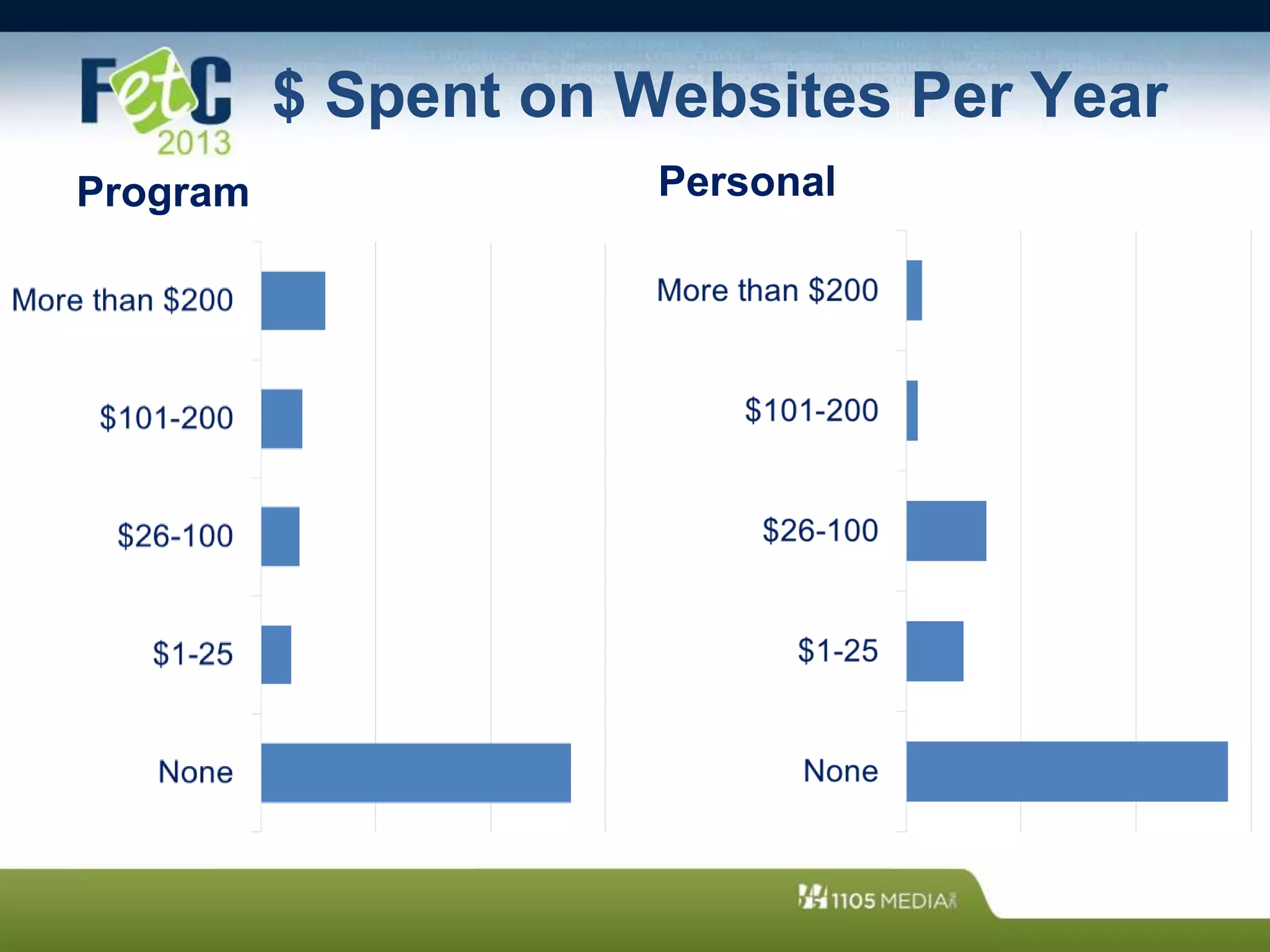
$ Spent on Websites Per Year
Program Personal
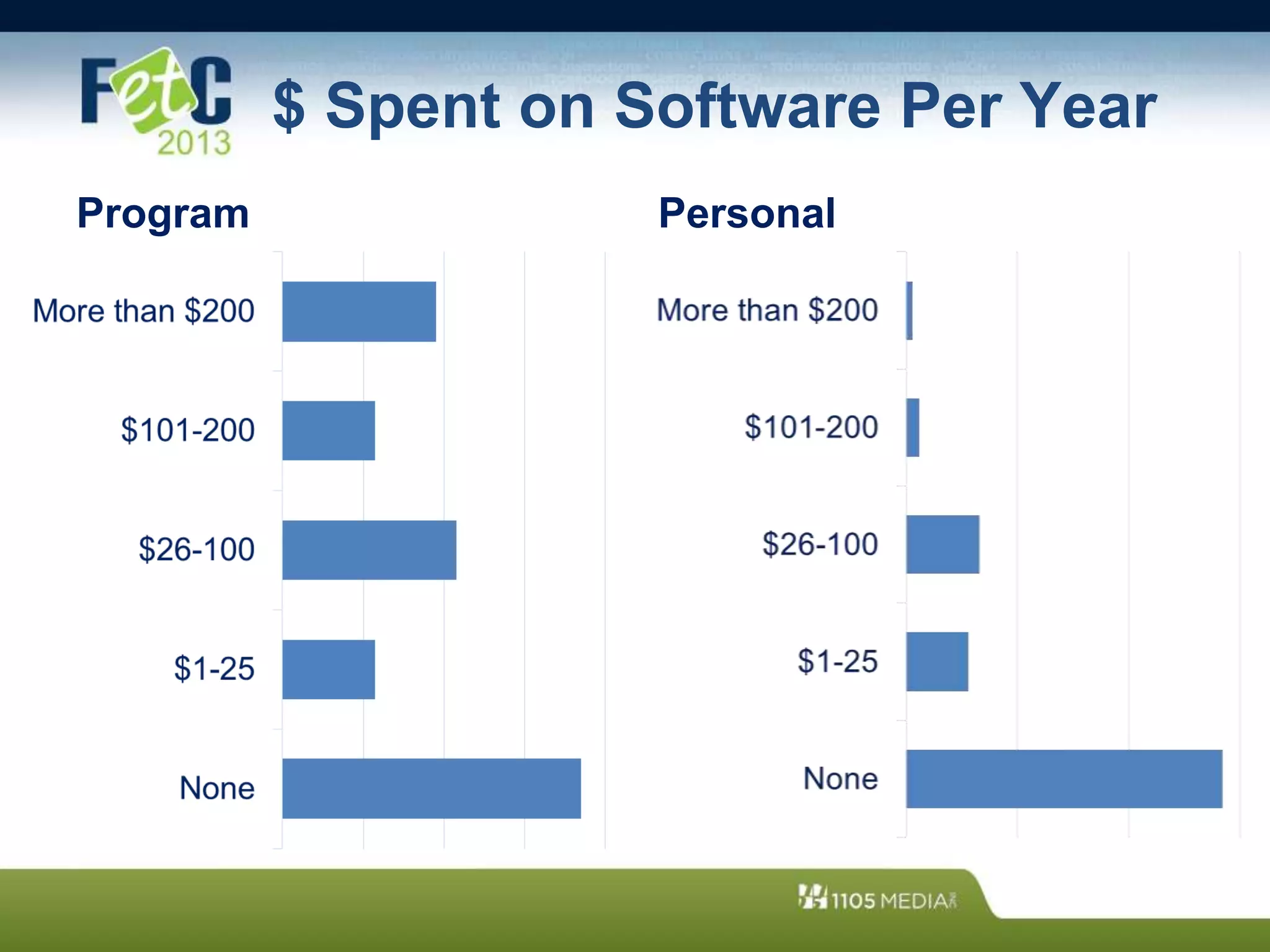
$ Spent on Software Per Year
Program Personal
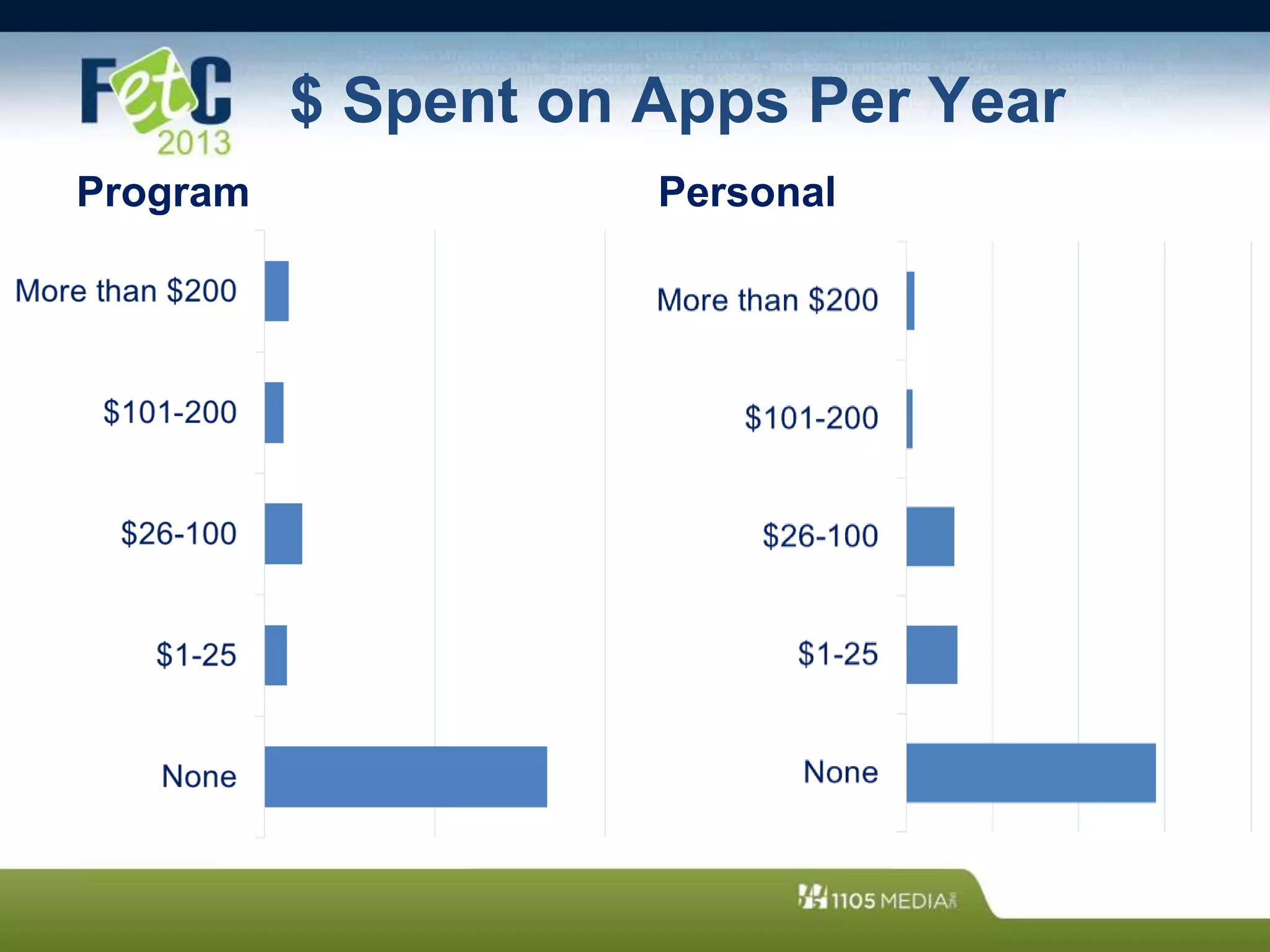
$ Spent on Apps Per Year
Program Personal
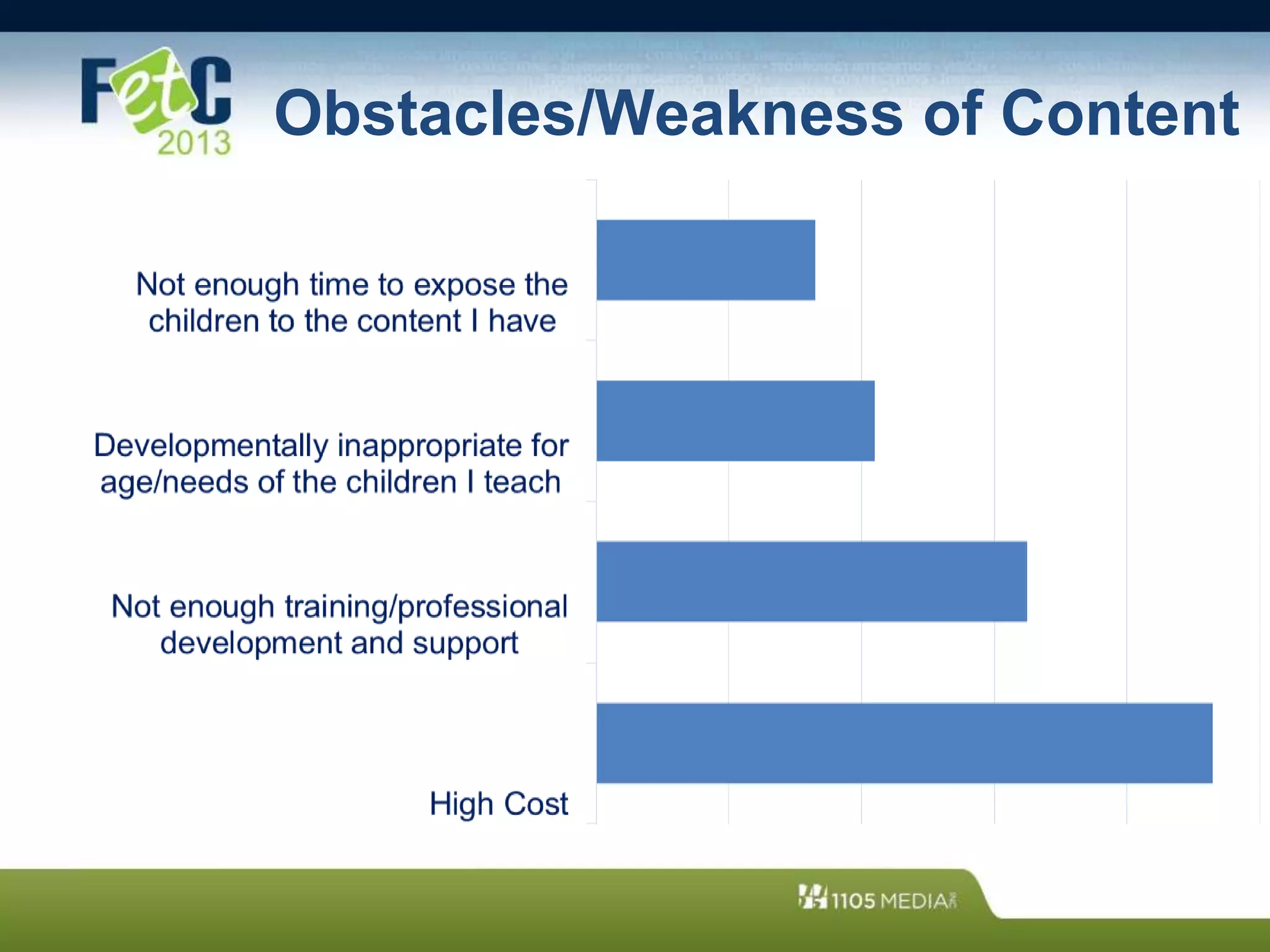
Obstacles/Weakness of Content
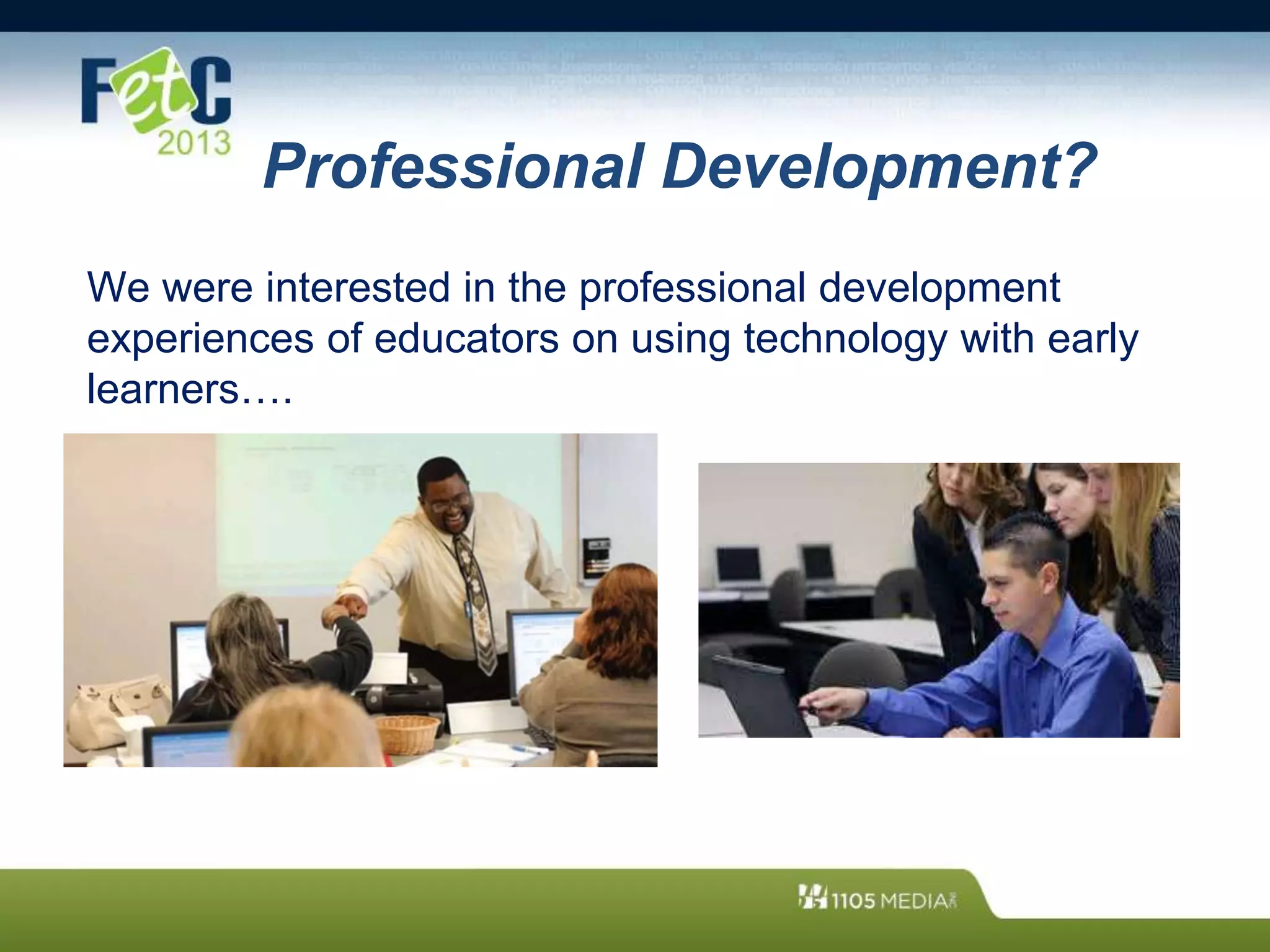
Professional Development?
We were interested in the professional development
experiences of educators on using technology with early
learners….
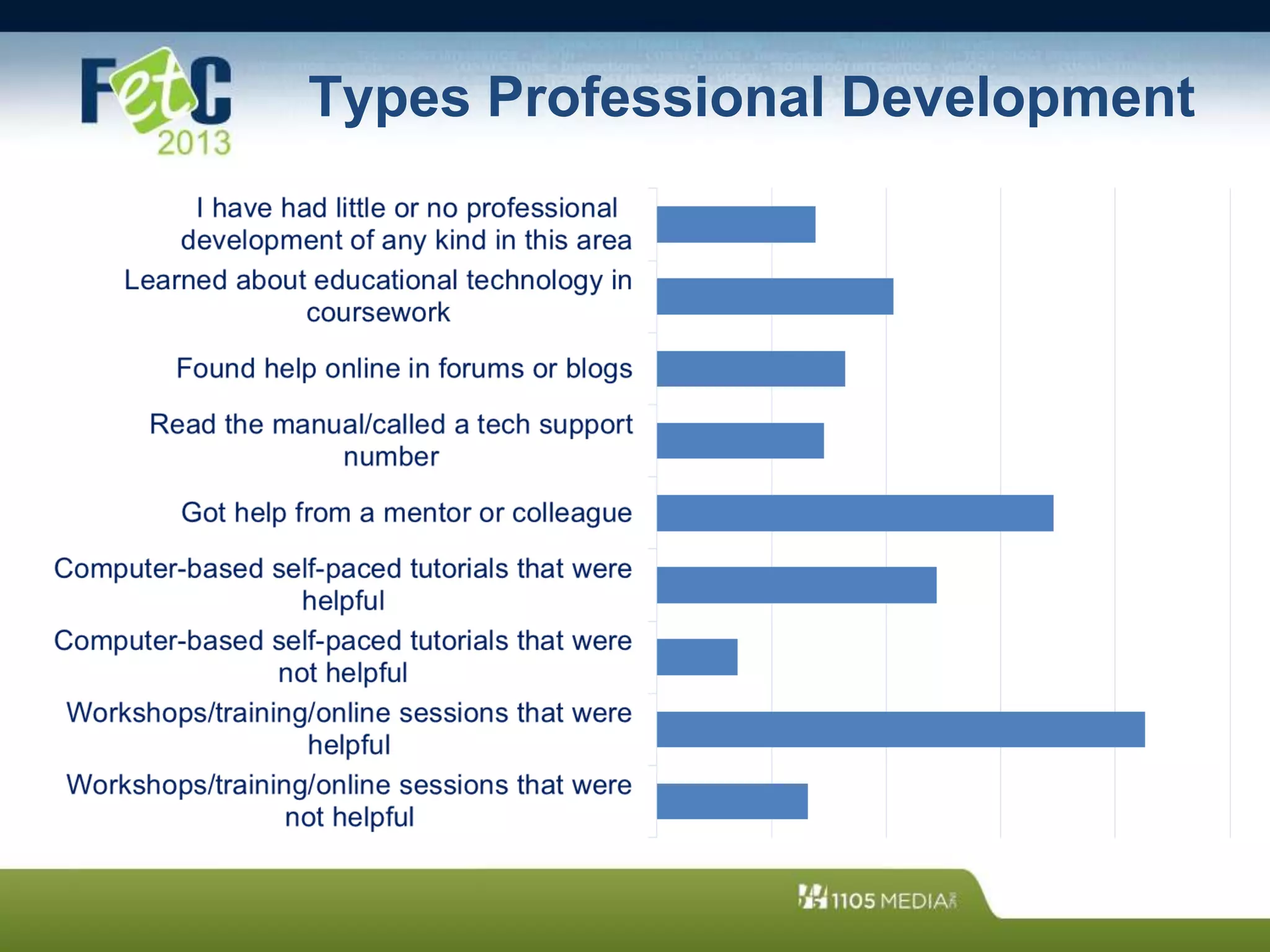
Types Professional Development
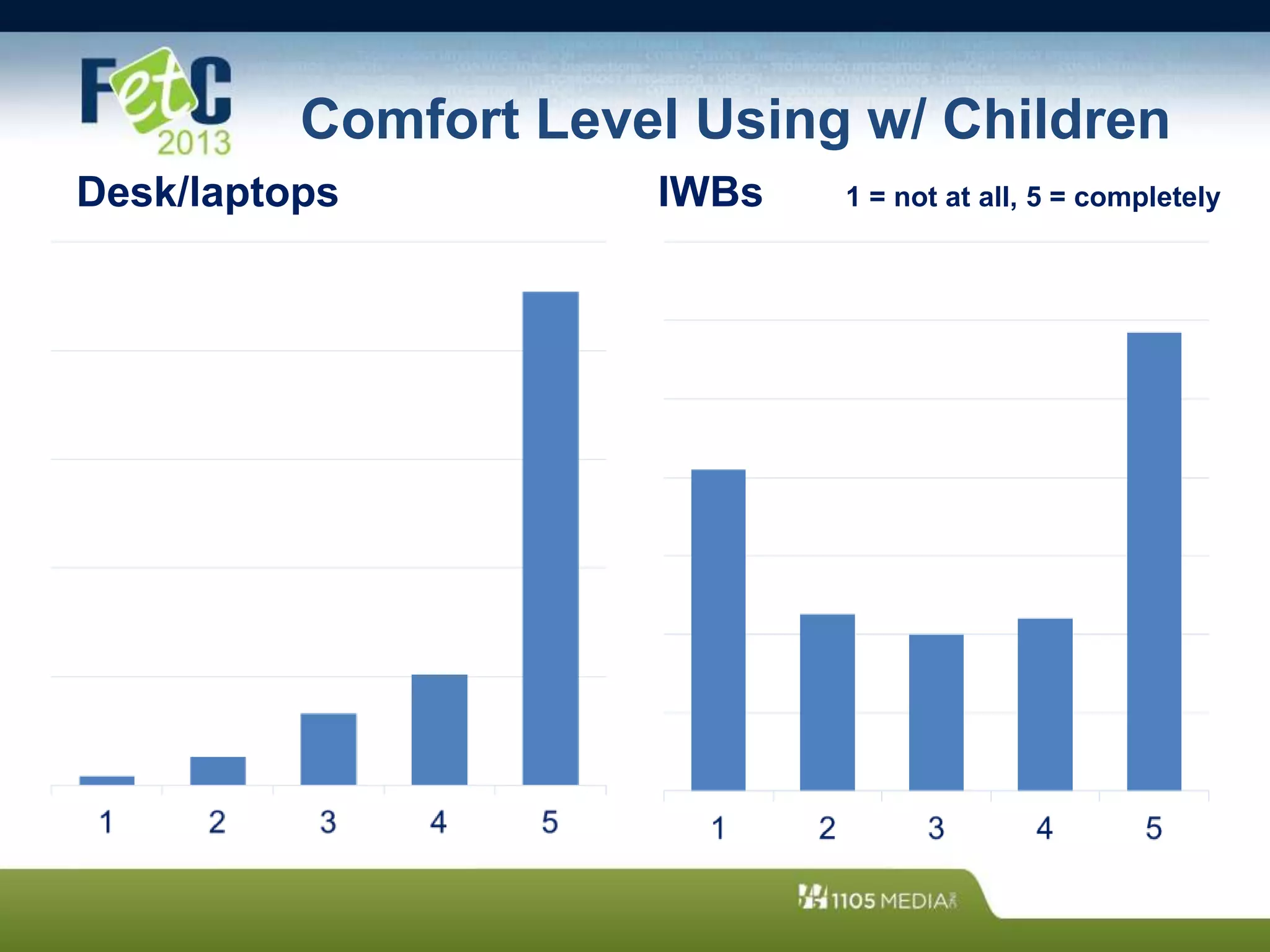
Comfort Level Using w/ Children
Desk/laptops IWBs 1 = not at all, 5 = completely
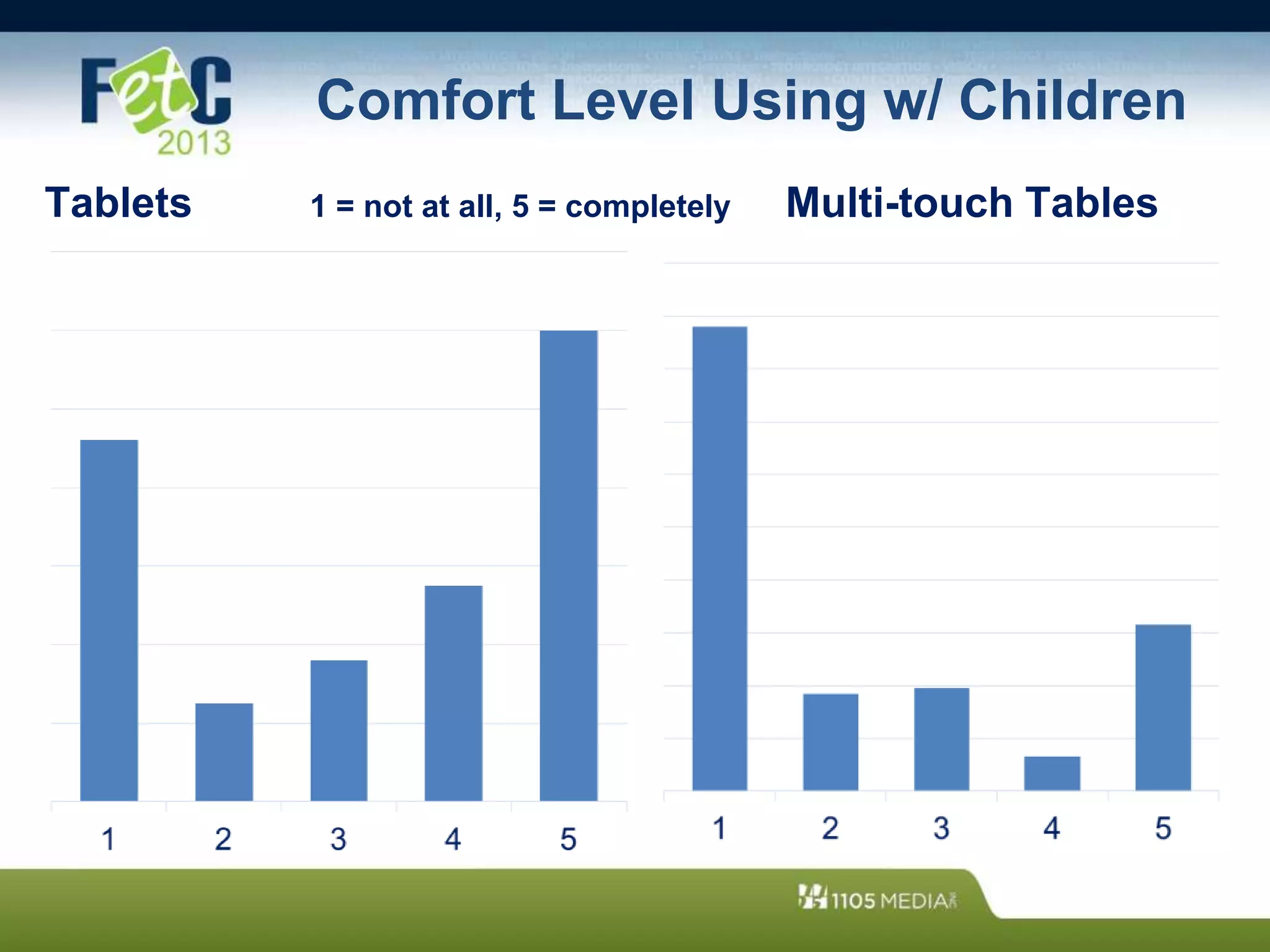
Comfort Level Using w/ Children
Tablets 1 = not at all, 5 = completely Multi-touch Tables
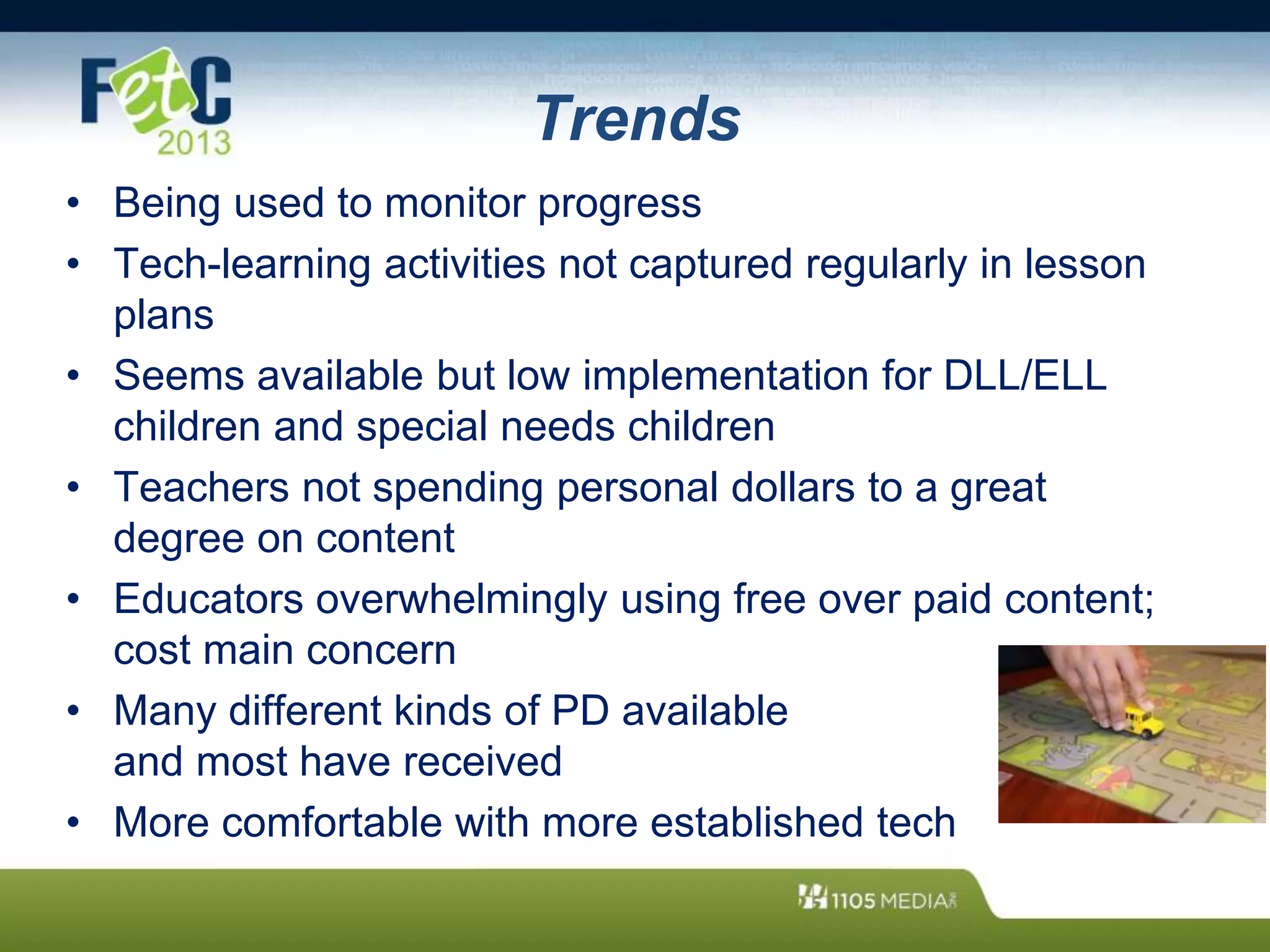
Trends
• Being used to monitor progress
• Tech-learning activities not captured regularly in lesson
plans
• Seems available but low implementation for DLL/ELL
children and special needs children
• Teachers not spending personal dollars to a great
degree on content
• Educators overwhelmingly using free over paid content;
cost main concern
• Many different kinds of PD available
and most have received
• More comfortable with more established tech
What’s the Bottom Line?
We’re going to close with findings that to us sums it all
up….
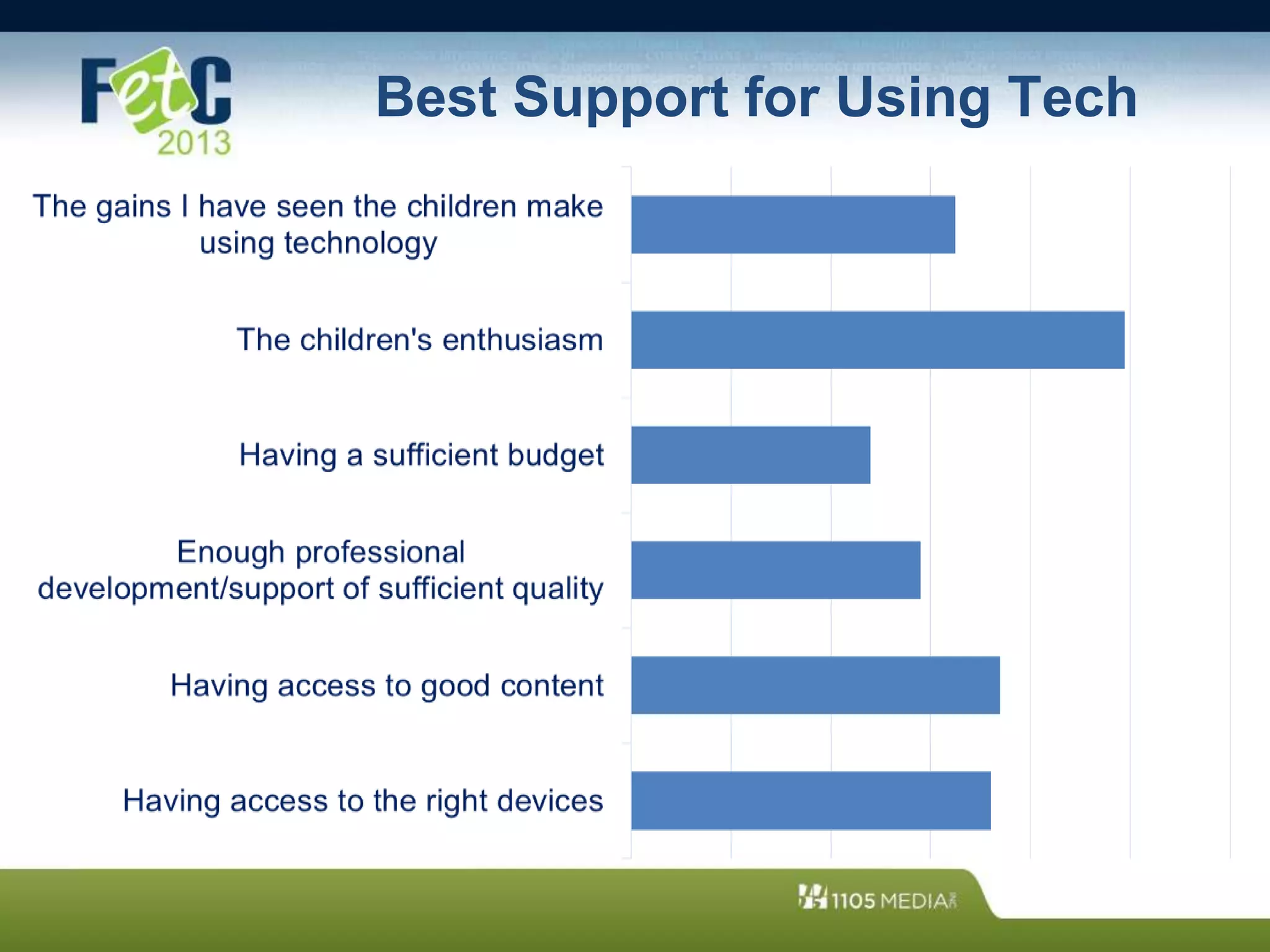
Best Support for Using Tech
Q & A
Suggested readings
• Simon, F. & Nemeth, K. (2012). Digital Decisions: Choosing the Right
Technology Tools for Early Childhood Education. Lewisville, NC:
Gryphon House
http://www.gryphonhouse.com/store/trans/productDetailForm.asp?Book
ID=10023
• McManis, L.D. & Gunnewig, S. (2012). Finding the education in
educational technology with early learners. Young Children, 67(3), 14-
25. http://www.naeyc.org/yc/files/yc/file/201205/McManis_YC0512.pdf
Acknowledgement
• The Early Childhood Technology Collaborative would like to thank Perry
McManis, M.A. Economics, for statistical analyses of the survey data
Evaluation
• Please remember to complete your FETC Evaluation: Session CS2277
Learn More-Stay Connected
• LinkedIn: Early Childhood Technology Network
• Twitter: #ecetechchat Every Other Weds. @
9pm ET
• http://www.ecetech.net/
• Facebook @ Hatch Early Childhood
• ISTE SIG ELT

What is REALLY Happening with Technology in Early Childhood Education: Voices from the Field- Survey Results

  • 1.
    What’s REALLY Happeningwith Technology in Early Childhood Education? Voices from the Field: 2012 National Early Childhood Technology Today Survey Lilla Dale McManis, Ph.D. Karen Nemeth, Ed.M. Fran Simon, M.Ed. CS2277 Copyright 2013 by ECTC. All rights reserved.
  • 2.
    Early Childhood Technology Collaborative(ECTC) • The Early Childhood Technology Collaborative (ECTC) is a group of three early childhood technologists with lots of questions: • Lilla Dale McManis, Ph.D. from Hatch Early Learning, • Karen Nemeth, Ed.M. and • Fran Simon, M.Ed. from Early Childhood Technology Network
  • 3.
    Rationale for Study •How technology is used in early childhood education classrooms not well understood (Prek-3rd grade) • Current surveys often about home use of technology with young children or mix passive with interactive technologies • There is a need to hear directly from educators about how they are using interactive information processing technologies with children in the classroom
  • 4.
    Surveys to Date •Many current surveys focus on home use – Zero to Eight: Children’s Media Use in America – Digital Childhood: Electronic Media and Technology Use Among Infants, Toddlers, and Preschoolers • Just a handful included or focused on early childhood – Digitally Inclined – Deepening Connections – Tech in the Lives of Teachers • Those with ECE educators asked questions about passive & interactive technologies simultaneously • Additionally, questions very global-rarely moving beyond “do you have”
  • 5.
    Methodology • Online Surveyseries – Survey I: Teachers & Administrators – Survey II: Teachers • Spring/summer 2012 • Open to anyone in the world • Active = “Information Processing” Technologies such as Desk/laptops, IWBs, Tablets, Smartphones, Other Handhelds versus • Passive = “Simple” Technologies such as Televisions, CD Players, Digital cameras
  • 6.
    Who Responded? • Theseresults are based on the 485 respondents in the U.S. • There were 116 Administrator respondents • There were 369 Teacher respondents • The demographics are comparable from Survey I and Survey II were similar and are combined.
  • 7.
    Demographics of Respondents Themain demographics are: • Serve Pre-K (2-5 year olds) and/or School Age (K-3rd grade) • Public School, Head Start, Childcare, Private School • Urban, Rural, Suburban • Serve more children of poverty (50% or more), Serve fewer children of poverty (less than 50%) • New educator (less than 5 yrs), Experienced educator (more than 5 years) • Degreed (4 yr or higher), Non-degreed
  • 8.
    About the Respondents CommunityType Poverty Children Served
  • 9.
    About the Respondents ProgramType Ages Children Served
  • 10.
    About the Respondents Degreed(4 yr & up) Years Experience
  • 11.
    Why ECE EducatorsUse Technology? Our first area of interest was around the reasons that early childhood educators use technology with the children in their program classrooms…..
  • 12.
  • 13.
  • 14.
    What Technology isUsed? Our next area of interest was in knowing which of the active technologies are being used in the classrooms with early learners….
  • 15.
  • 16.
    What Educators Don’tHave but Would Like for Children
  • 17.
    How Much Timeis Tech Used? Next we explored how much time active technologies are used in the classroom with the children….
  • 18.
    How Many Daysof the Week
  • 19.
  • 20.
  • 21.
  • 22.
    Trends • Used regularlybut not excessively • Used because children enjoy it & it helps meet goals of program • More a support than for direct instruction • What’s used follows availability • Differences but not easily discernible pattern between beliefs and practices for amount of time with tech
  • 23.
    What is theFocus of Activities? We turned our attention next to the types of learning activities in which the children engage…
  • 24.
    How Often Techis Used Language/Literacy Mathematics
  • 25.
    How Often Techis Used Science Social Studies
  • 26.
    How Often Techis Used Logic/Problem Solving Approaches to Learning
  • 27.
    How Often Techis Used Art Music
  • 28.
    How Often Techis Used Social-Emotional
  • 29.
    What is theSetting Like? We wanted to know more about the setting in which the use of technology by the children takes place such as groupings and the involvement of the teacher….
  • 30.
  • 31.
  • 32.
  • 33.
    Who is GuidingActivities
  • 34.
  • 35.
  • 36.
  • 37.
    Trends • Used morefor traditional content areas • Rarely used to support social-emotional goals • Groupings (ranging from individual to whole group) vary by device type • Educators “drive” some kinds of tech more than others • But give children lots of opportunities to “drive” too • Do ensure balance between teacher-guided and child- initiated for learning activities themselves
  • 38.
    How are GoalsMonitored? We queried about how technology is used to determine the extent children are meeting the learning goals of their program….
  • 39.
  • 40.
    How Often inLesson Plans
  • 41.
    For Children NeedingExtra Support? We wondered about technology being used with children who need extra support such as Dual/English Language Learners (DLL/ELL) and children with special needs….
  • 42.
  • 43.
    Tech with DLL/ELLLearners Chosen specifically to meet needs of ELL children In every language spoken in your group now
  • 44.
  • 45.
    Special Needs Learners Devicesused with special needs children
  • 46.
    What is theNature of Content? The survey addressed the content used in early education classrooms such as sources, obstacles/weaknesses, and money spent….
  • 47.
  • 48.
    $ Spent onWebsites Per Year Program Personal
  • 49.
    $ Spent onSoftware Per Year Program Personal
  • 50.
    $ Spent onApps Per Year Program Personal
  • 51.
  • 52.
    Professional Development? We wereinterested in the professional development experiences of educators on using technology with early learners….
  • 53.
  • 54.
    Comfort Level Usingw/ Children Desk/laptops IWBs 1 = not at all, 5 = completely
  • 55.
    Comfort Level Usingw/ Children Tablets 1 = not at all, 5 = completely Multi-touch Tables
  • 56.
    Trends • Being usedto monitor progress • Tech-learning activities not captured regularly in lesson plans • Seems available but low implementation for DLL/ELL children and special needs children • Teachers not spending personal dollars to a great degree on content • Educators overwhelmingly using free over paid content; cost main concern • Many different kinds of PD available and most have received • More comfortable with more established tech
  • 57.
    What’s the BottomLine? We’re going to close with findings that to us sums it all up….
  • 58.
    Best Support forUsing Tech
  • 59.
    Q & A Suggestedreadings • Simon, F. & Nemeth, K. (2012). Digital Decisions: Choosing the Right Technology Tools for Early Childhood Education. Lewisville, NC: Gryphon House http://www.gryphonhouse.com/store/trans/productDetailForm.asp?Book ID=10023 • McManis, L.D. & Gunnewig, S. (2012). Finding the education in educational technology with early learners. Young Children, 67(3), 14- 25. http://www.naeyc.org/yc/files/yc/file/201205/McManis_YC0512.pdf Acknowledgement • The Early Childhood Technology Collaborative would like to thank Perry McManis, M.A. Economics, for statistical analyses of the survey data Evaluation • Please remember to complete your FETC Evaluation: Session CS2277
  • 60.
    Learn More-Stay Connected •LinkedIn: Early Childhood Technology Network • Twitter: #ecetechchat Every Other Weds. @ 9pm ET • http://www.ecetech.net/ • Facebook @ Hatch Early Childhood • ISTE SIG ELT