FemTechNet
   The First DOCC,* a Feminist MOOC
   Alexandra Juhasz, Professor of Media
          Studies, Pitzer College
   Anne Balsamo, Dean of the School of
   Media Studies, New School for Public
         Engagement (New York).
         NITLE Seminar, October 4, 2012
* DOCC: Distributed Online Collaborative Course
National Institute for
Technology in Liberal Education
Online Seminar


Speakers:
Alexandra Juhasz
Professor of Media Studies
Pitzer College, Los Angeles

And

Anne Balsamo
Dean of the School of Media Studies
New School for Public Engagement, New York


Event Hashtag: #FemTechNet
FemTechNet
A global network of scholars and artists who work
at the intersections of feminism, science and technology
   Key Objectives
   •To develop innovative uses for digital technologies that serve
   important cultural and social needs

   •To involve women and girls in discussions about the history of
   feminist engagement with technology

   •To demonstrate feminist contribution to technological innovation

   •To contribute to the digital archive of the history of technology
Initial Commitments
Key Challenges
   •Cultural ignorance of the general history of technology and science

   •Wide-spread ignorance of the historical relationship between women
   and technological innovation

   •Lack of understanding about the contribution of feminist theory to
   technocultural innovation

   •Authoritative structure of institutionalized MOOCs

   •Persistent difficult in engaging women and girls in STEM fields & projects
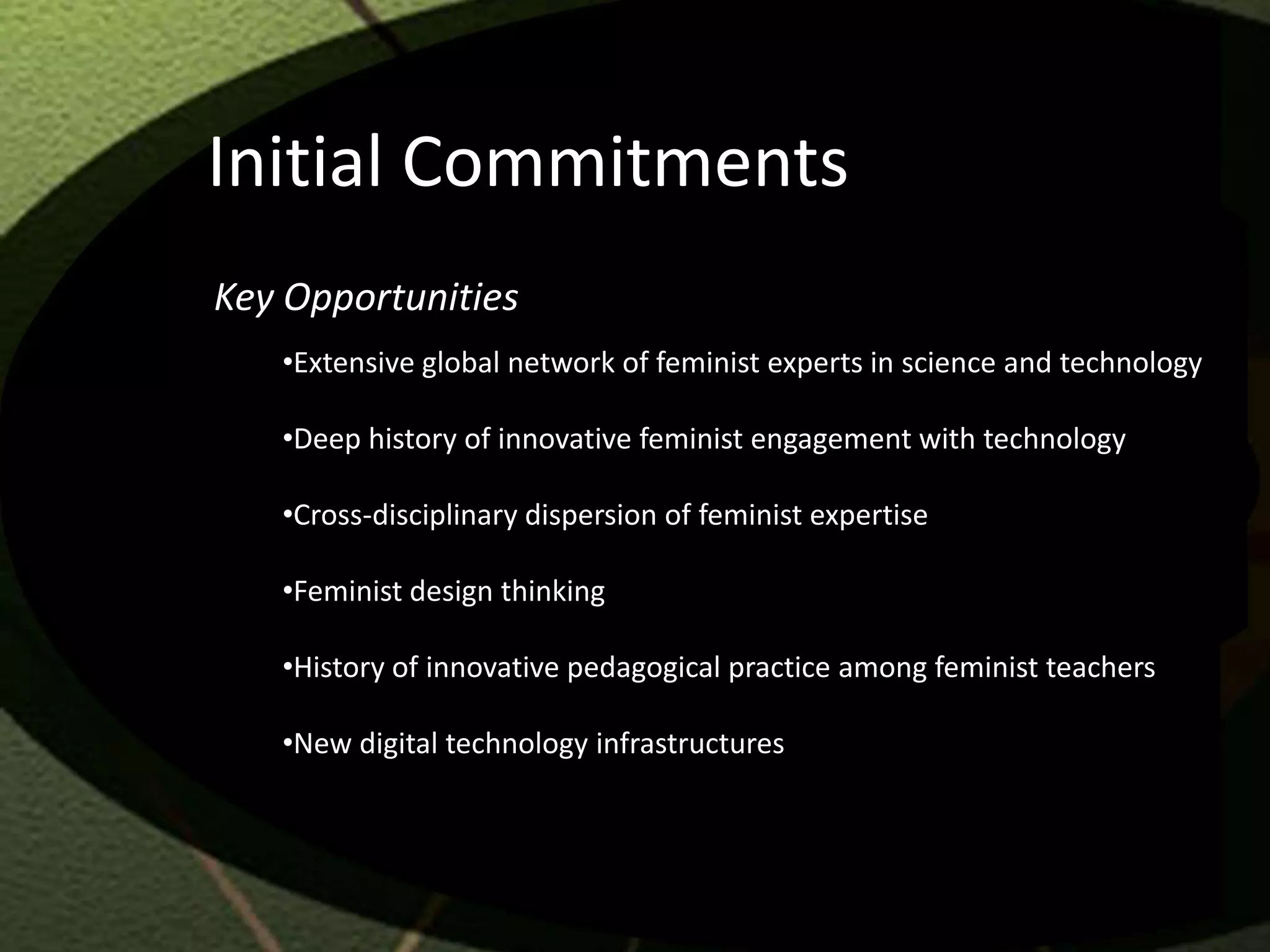
Initial Commitments
Key Opportunities
   •Extensive global network of feminist experts in science and technology

   •Deep history of innovative feminist engagement with technology

   •Cross-disciplinary dispersion of feminist expertise

   •Feminist design thinking

   •History of innovative pedagogical practice among feminist teachers

   •New digital technology infrastructures
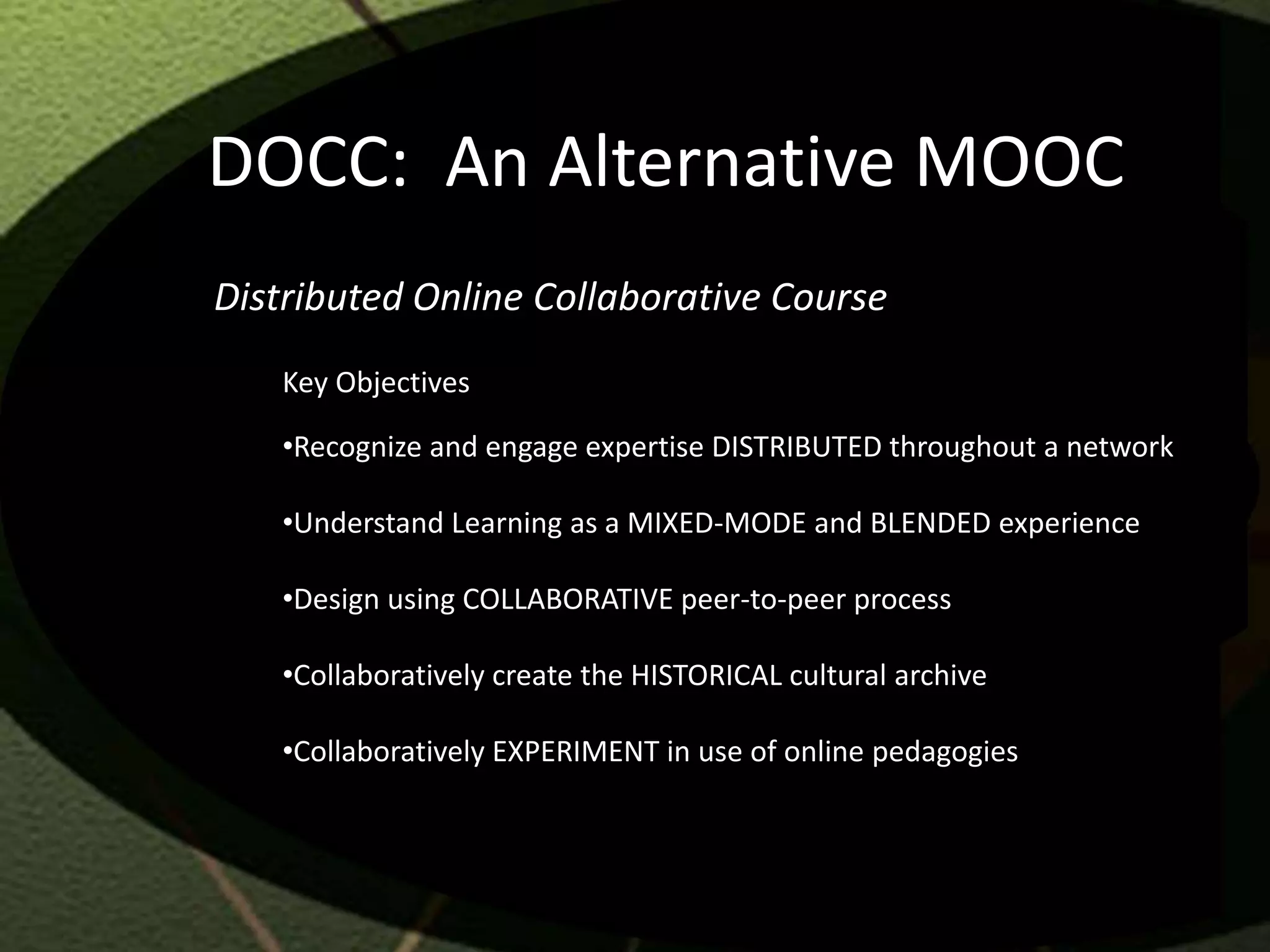
DOCC: An Alternative MOOC
Distributed Online Collaborative Course
   Key Objectives

   •Recognize and engage expertise DISTRIBUTED throughout a network

   •Understand Learning as a MIXED-MODE and BLENDED experience

   •Design using COLLABORATIVE peer-to-peer process

   •Collaboratively create the HISTORICAL cultural archive

   •Collaboratively EXPERIMENT in use of online pedagogies
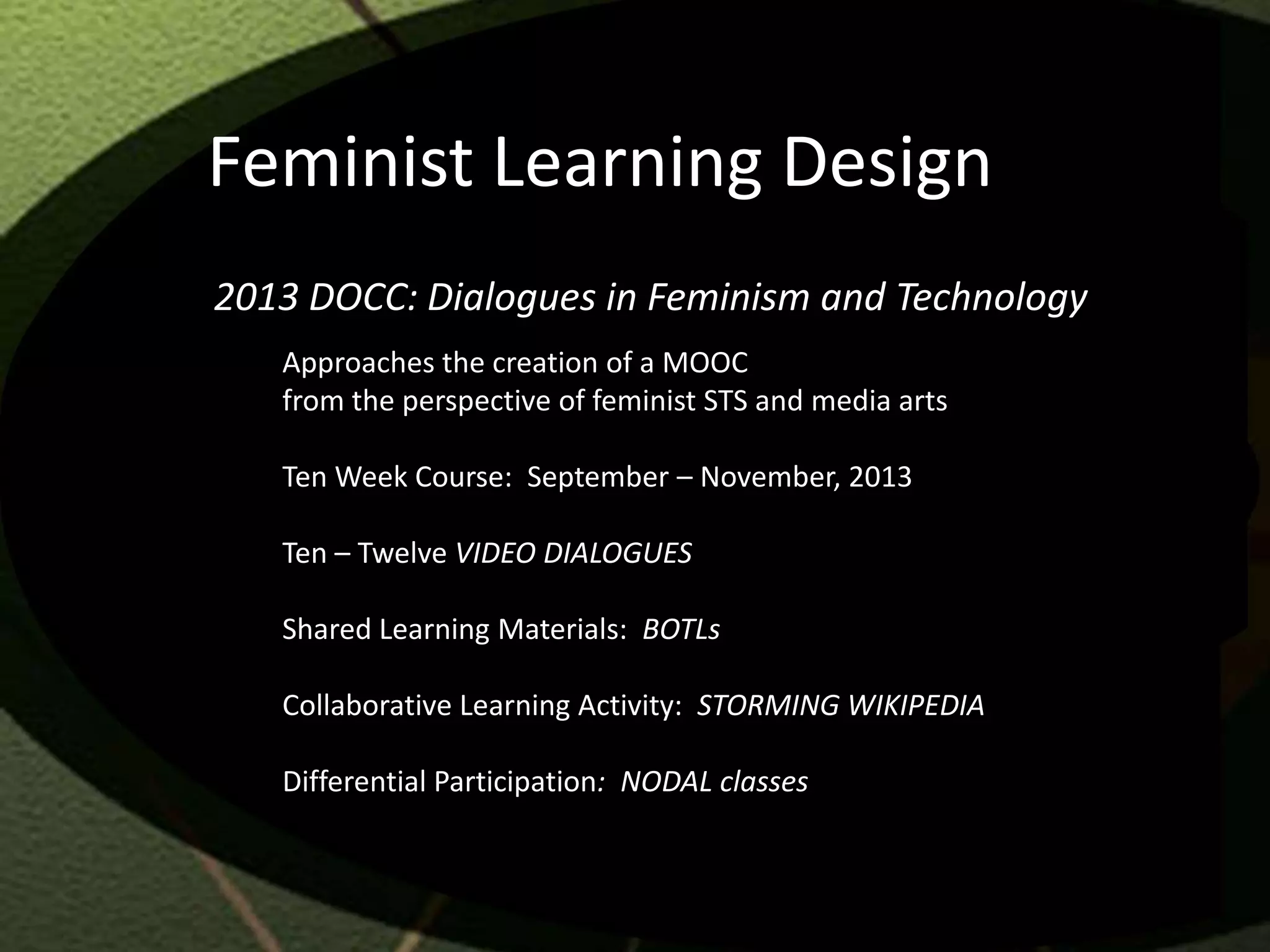
Feminist Learning Design
2013 DOCC: Dialogues in Feminism and Technology
   Approaches the creation of a MOOC
   from the perspective of feminist STS and media arts

   Ten Week Course: September – November, 2013

   Ten – Twelve VIDEO DIALOGUES

   Shared Learning Materials: BOTLs

   Collaborative Learning Activity: STORMING WIKIPEDIA

   Differential Participation: NODAL classes
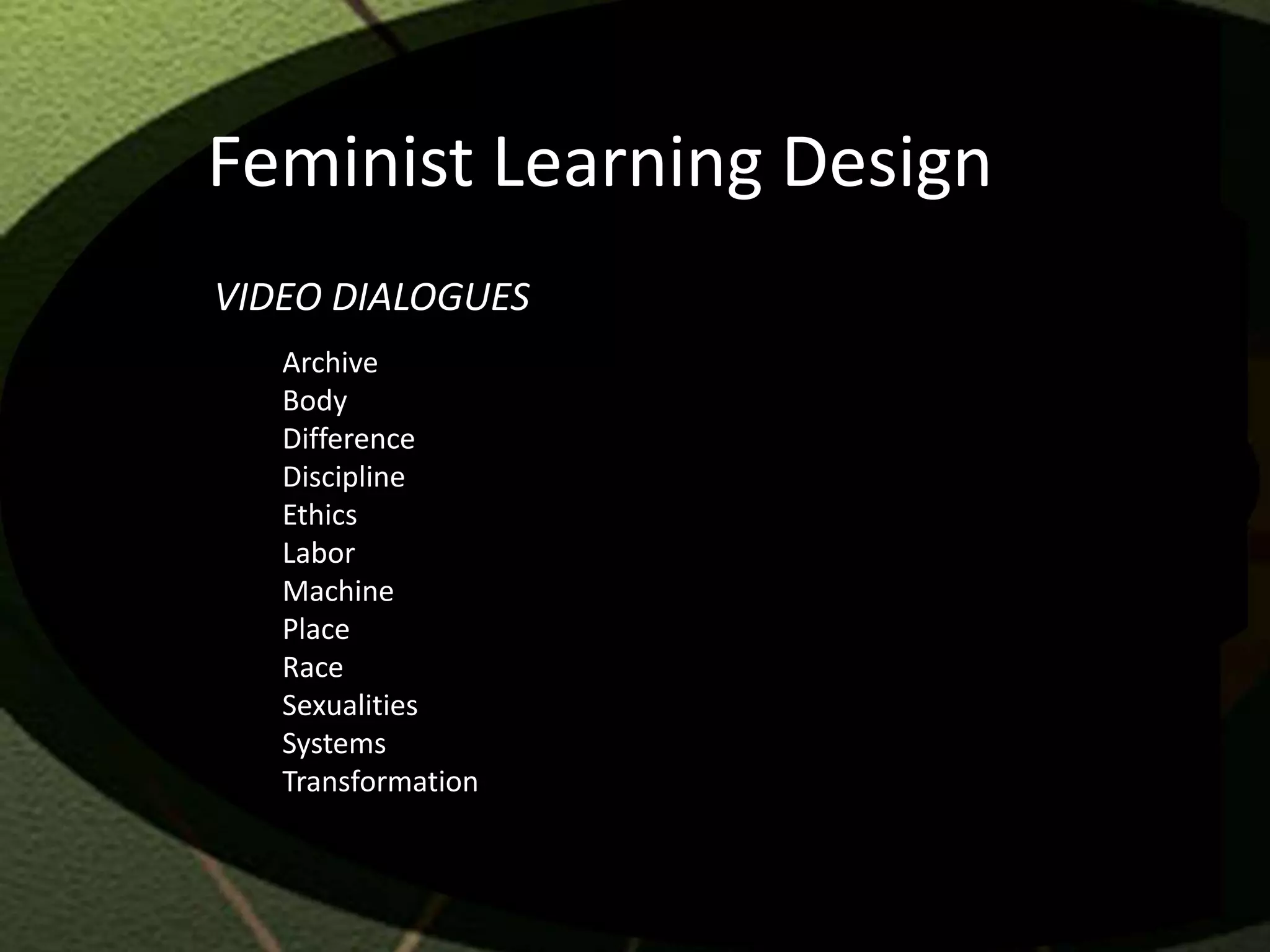
Feminist Learning Design
VIDEO DIALOGUES
   Archive
   Body
   Difference
   Discipline
   Ethics
   Labor
   Machine
   Place
   Race
   Sexualities
   Systems
   Transformation
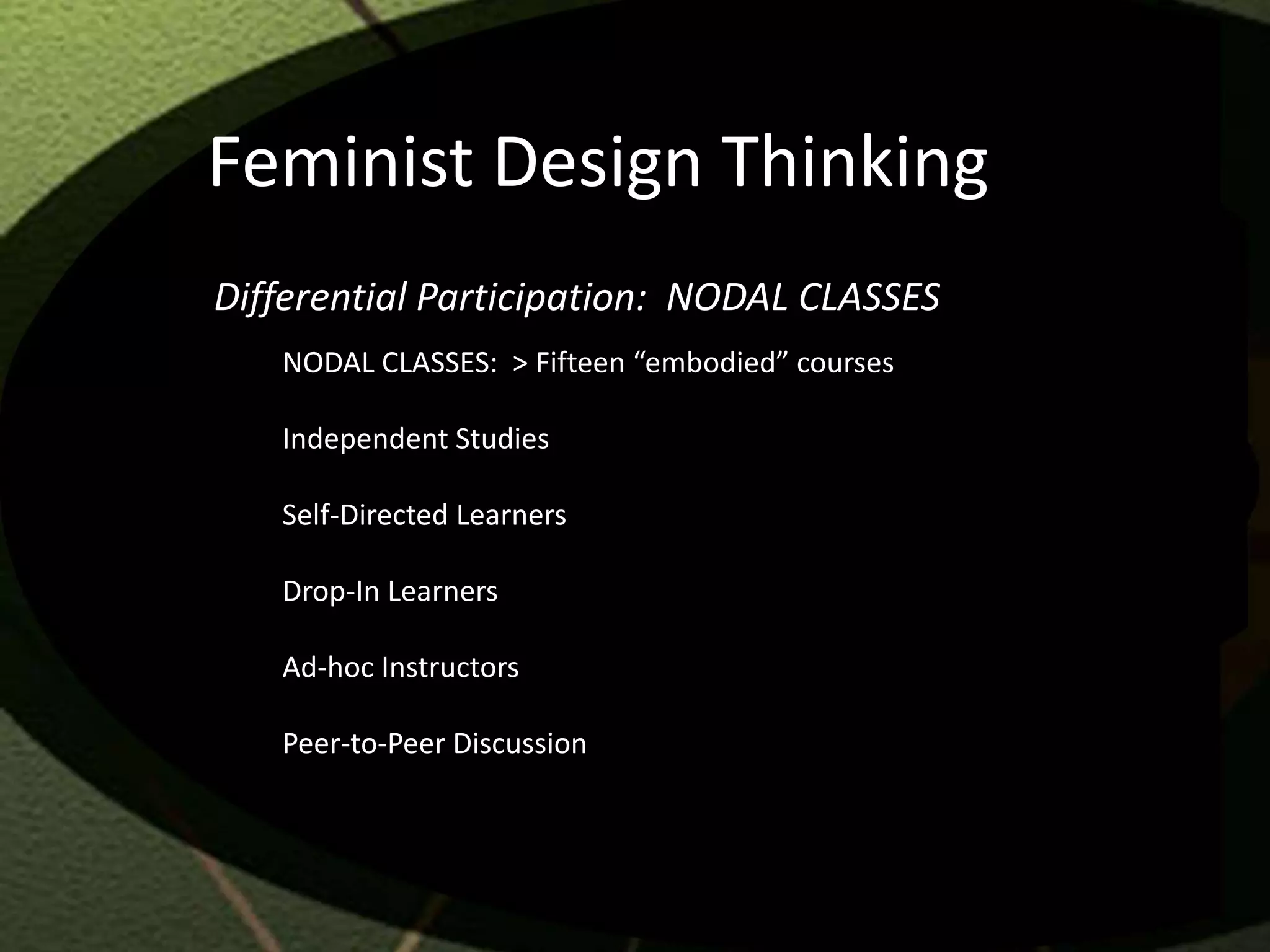
Feminist Design Thinking
Boundary Objects That Learn: BOTLs
   Approaches the creation of LEARNING OBJECTS
   from the perspective of feminist STS

   Learning Objects as BOUNDARY objects:
       “abstract or concrete frameworks that are adaptable to different
   viewpoints yet robust enough to maintain a provisional identity over time
   and across different worlds”

   Learning Objects that LEARN:.
        learning materials that are transformed through use when
   participants annotate materials based on experience and context

   Harding: Standpoint Theory
   Haraway: Refraction Theory and Subjugated Histories
   Star & Greisemer: Boundary Objects and Translation
Feminist Design Thinking
Differential Participation: NODAL CLASSES
   NODAL CLASSES: > Fifteen “embodied” courses

   Independent Studies

   Self-Directed Learners

   Drop-In Learners

   Ad-hoc Instructors

   Peer-to-Peer Discussion
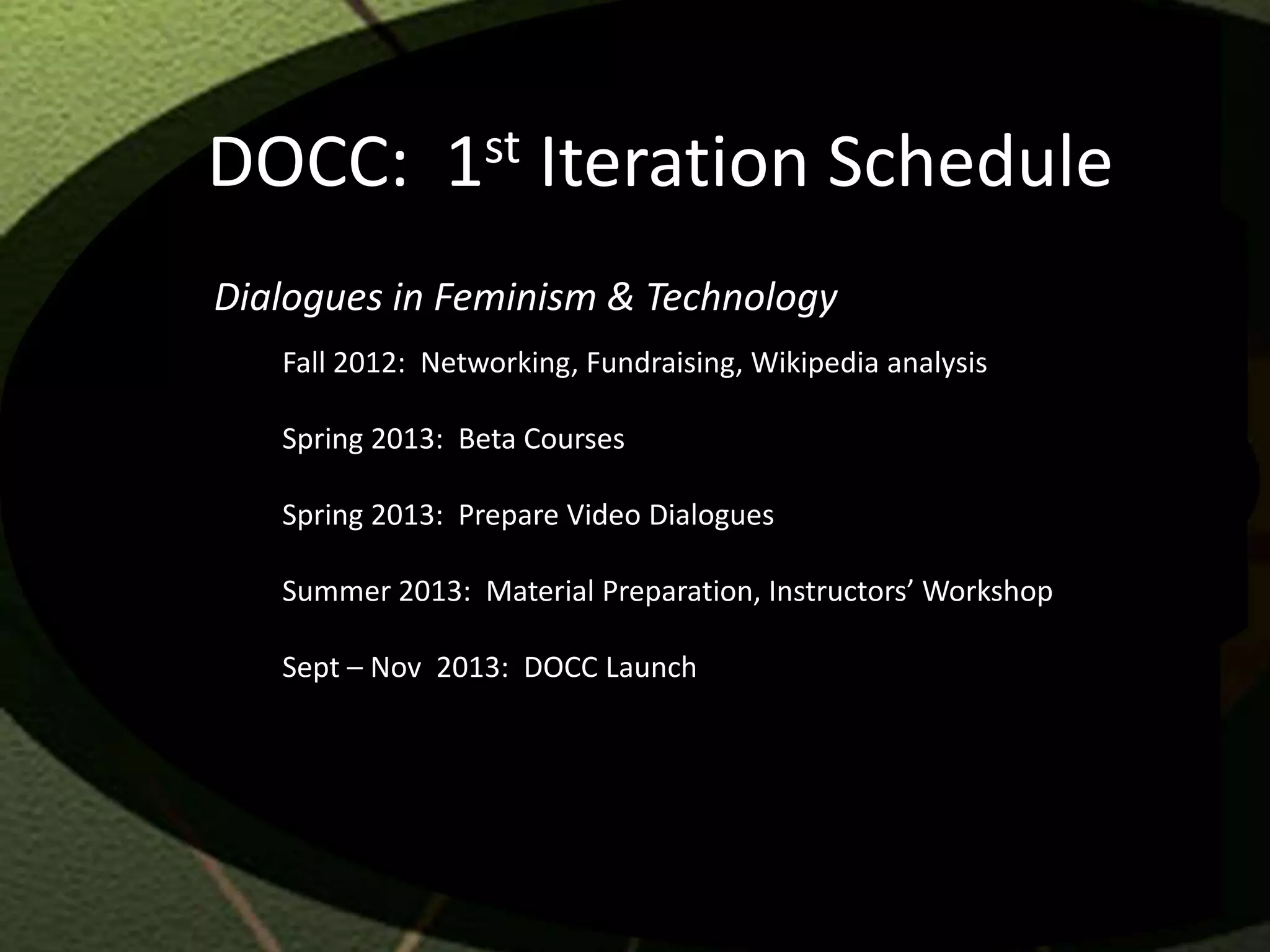
DOCC: 1st Iteration Schedule
Dialogues in Feminism & Technology
   Fall 2012: Networking, Fundraising, Wikipedia analysis

   Spring 2013: Beta Courses

   Spring 2013: Prepare Video Dialogues

   Summer 2013: Material Preparation, Instructors’ Workshop

   Sept – Nov 2013: DOCC Launch
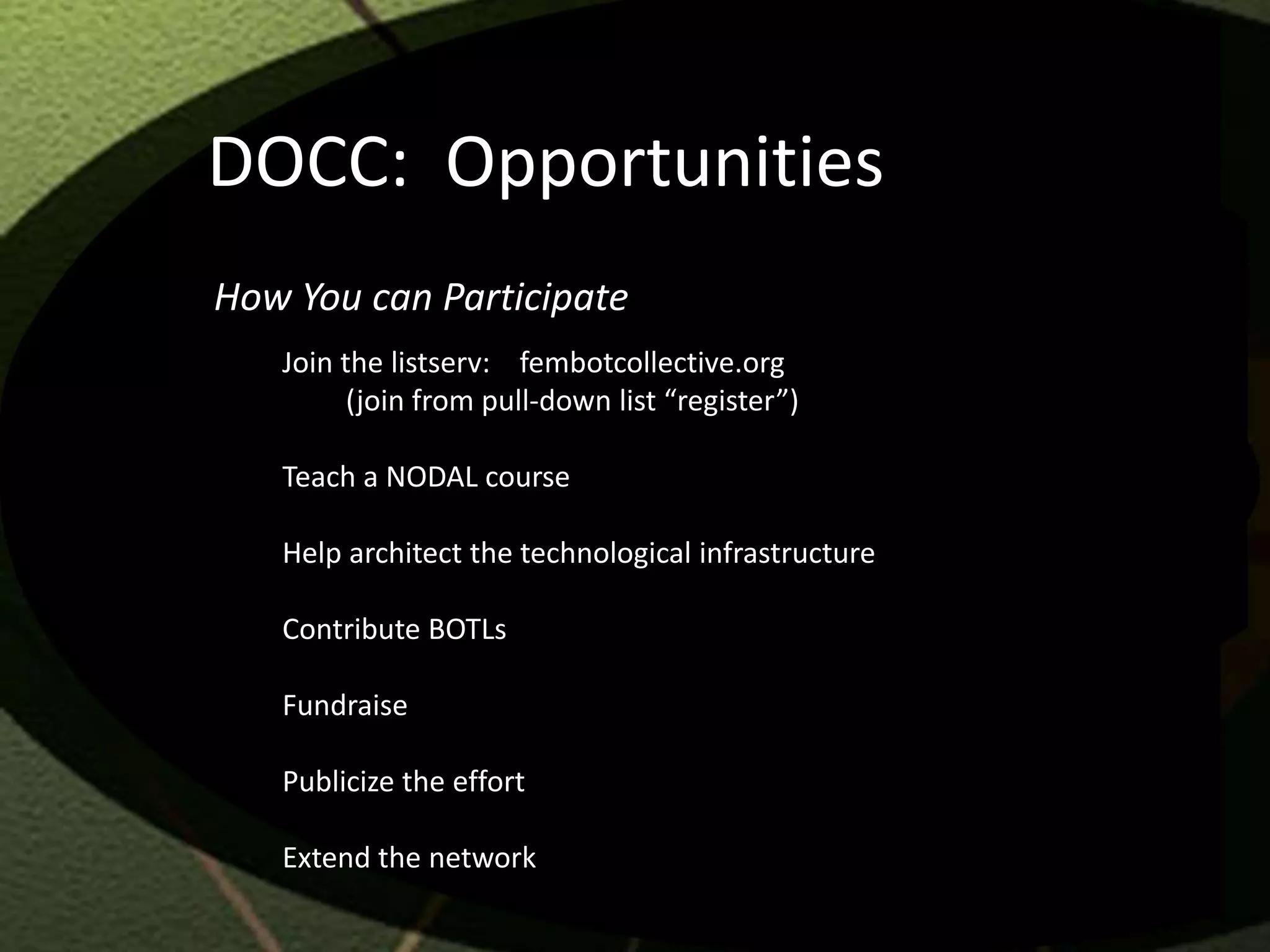
DOCC: Opportunities
How You can Participate
   Join the listserv: fembotcollective.org
         (join from pull-down list “register”)

   Teach a NODAL course

   Help architect the technological infrastructure

   Contribute BOTLs

   Fundraise

   Publicize the effort

   Extend the network
Thank You
Discussion
   Anne Balsamo: BalsamoA@newschool.edu

   Alex Juhasz: Alexandra_Juhasz@pitzer.edu

   Background and MORE information:
       http://fembotcollective.org/

       http://fembotcollective.org/femtechnet/femtechnet-useful-
       documents/femtechnet-faqs/

       http://dmlcentral.net/blog/liz-losh/learning-failure-feminist-
       dialogues-technology-part-i

       http://dmlcentral.net/blog/liz-losh/learning-failure-feminist-
       dialogues-technology-part-ii

FemTechNet: The first DOCC,* a Feminist MOOC

  • 1.
    FemTechNet The First DOCC,* a Feminist MOOC Alexandra Juhasz, Professor of Media Studies, Pitzer College Anne Balsamo, Dean of the School of Media Studies, New School for Public Engagement (New York). NITLE Seminar, October 4, 2012 * DOCC: Distributed Online Collaborative Course
  • 2.
    National Institute for Technologyin Liberal Education Online Seminar Speakers: Alexandra Juhasz Professor of Media Studies Pitzer College, Los Angeles And Anne Balsamo Dean of the School of Media Studies New School for Public Engagement, New York Event Hashtag: #FemTechNet
  • 3.
    FemTechNet A global networkof scholars and artists who work at the intersections of feminism, science and technology Key Objectives •To develop innovative uses for digital technologies that serve important cultural and social needs •To involve women and girls in discussions about the history of feminist engagement with technology •To demonstrate feminist contribution to technological innovation •To contribute to the digital archive of the history of technology
  • 4.
    Initial Commitments Key Challenges •Cultural ignorance of the general history of technology and science •Wide-spread ignorance of the historical relationship between women and technological innovation •Lack of understanding about the contribution of feminist theory to technocultural innovation •Authoritative structure of institutionalized MOOCs •Persistent difficult in engaging women and girls in STEM fields & projects
  • 5.
    Initial Commitments Key Opportunities •Extensive global network of feminist experts in science and technology •Deep history of innovative feminist engagement with technology •Cross-disciplinary dispersion of feminist expertise •Feminist design thinking •History of innovative pedagogical practice among feminist teachers •New digital technology infrastructures
  • 6.
    DOCC: An AlternativeMOOC Distributed Online Collaborative Course Key Objectives •Recognize and engage expertise DISTRIBUTED throughout a network •Understand Learning as a MIXED-MODE and BLENDED experience •Design using COLLABORATIVE peer-to-peer process •Collaboratively create the HISTORICAL cultural archive •Collaboratively EXPERIMENT in use of online pedagogies
  • 7.
    Feminist Learning Design 2013DOCC: Dialogues in Feminism and Technology Approaches the creation of a MOOC from the perspective of feminist STS and media arts Ten Week Course: September – November, 2013 Ten – Twelve VIDEO DIALOGUES Shared Learning Materials: BOTLs Collaborative Learning Activity: STORMING WIKIPEDIA Differential Participation: NODAL classes
  • 8.
    Feminist Learning Design VIDEODIALOGUES Archive Body Difference Discipline Ethics Labor Machine Place Race Sexualities Systems Transformation
  • 9.
    Feminist Design Thinking BoundaryObjects That Learn: BOTLs Approaches the creation of LEARNING OBJECTS from the perspective of feminist STS Learning Objects as BOUNDARY objects: “abstract or concrete frameworks that are adaptable to different viewpoints yet robust enough to maintain a provisional identity over time and across different worlds” Learning Objects that LEARN:. learning materials that are transformed through use when participants annotate materials based on experience and context Harding: Standpoint Theory Haraway: Refraction Theory and Subjugated Histories Star & Greisemer: Boundary Objects and Translation
  • 10.
    Feminist Design Thinking DifferentialParticipation: NODAL CLASSES NODAL CLASSES: > Fifteen “embodied” courses Independent Studies Self-Directed Learners Drop-In Learners Ad-hoc Instructors Peer-to-Peer Discussion
  • 11.
    DOCC: 1st IterationSchedule Dialogues in Feminism & Technology Fall 2012: Networking, Fundraising, Wikipedia analysis Spring 2013: Beta Courses Spring 2013: Prepare Video Dialogues Summer 2013: Material Preparation, Instructors’ Workshop Sept – Nov 2013: DOCC Launch
  • 12.
    DOCC: Opportunities How Youcan Participate Join the listserv: fembotcollective.org (join from pull-down list “register”) Teach a NODAL course Help architect the technological infrastructure Contribute BOTLs Fundraise Publicize the effort Extend the network
  • 13.
    Thank You Discussion Anne Balsamo: BalsamoA@newschool.edu Alex Juhasz: Alexandra_Juhasz@pitzer.edu Background and MORE information: http://fembotcollective.org/ http://fembotcollective.org/femtechnet/femtechnet-useful- documents/femtechnet-faqs/ http://dmlcentral.net/blog/liz-losh/learning-failure-feminist- dialogues-technology-part-i http://dmlcentral.net/blog/liz-losh/learning-failure-feminist- dialogues-technology-part-ii