By 
K.G. Swarnananda Gamage 
English Language Teaching Unit 
(ELTU)
What is Feminism? 
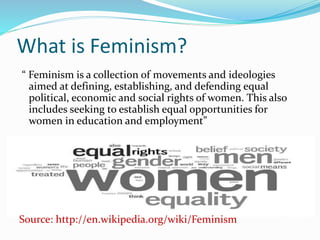
“ Feminism is a collection of movements and ideologies 
aimed at defining, establishing, and defending equal 
political, economic and social rights of women. This also 
includes seeking to establish equal opportunities for 
women in education and employment” 
Source: http://en.wikipedia.org/wiki/Feminism
Other related issues 
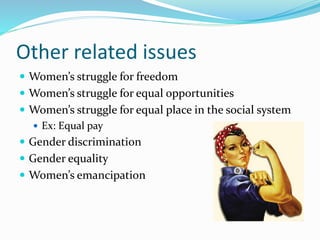
 Women’s struggle for freedom 
 Women’s struggle for equal opportunities 
 Women’s struggle for equal place in the social system 
 Ex: Equal pay 
 Gender discrimination 
 Gender equality 
 Women’s emancipation
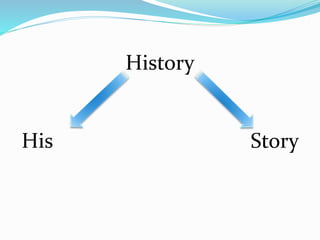
History 
His Story
Established Areas of Feminism 
 Feminist Literature 
 Feminist theory 
 Gender studies
 On the eve of the 101 st international Woman’s Day AMY DAWSON looks 
at its origins and investigates why it continues to be relevant today. 
We live on a planet in which women perform 66 per cent of the world’s 
work and produce 50 per cent of its food but earn 10 per cent of overall 
income and own one per cent of property. 
Women hold only 19 per cent of the world’s parliamentary seats 
and just 16 of the world’s 188 directly -elected leaders are female. Violence 
against women causes more deaths and disabilities among the global 
female population aged 15 to 44 than Cancer,Malaria,Road traffic accidents 
andWar. 
It is estimated that one in five women worldwide will become a victim of 
rape or attemped rape and ane in four will experience domestic violence. 
METRO – March 7 th of 2012, UK
Should we take it seriously in Sri 
Lanka? 
 Mr. Maithripala Sirisena (MP) – “Approximately 65 
percent of all court cases in the country had to do with 
rape, child abuse, and violence against women” 
(The Island – 10/03/2013) 
 “Land like no other” – 5 women are raped in a day 
(Sunday Times)
Stereo – typical roles
Famous Victorian Female Writers
South Asian Situation 
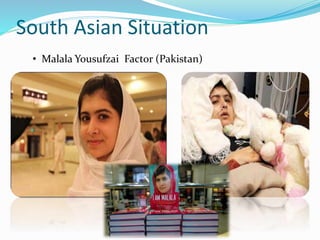
• Malala Yousufzai Factor (Pakistan)
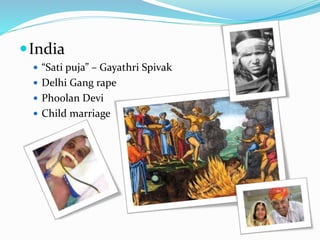
India 
 “Sati puja” – Gayathri Spivak 
 Delhi Gang rape 
 Phoolan Devi 
 Child marriage
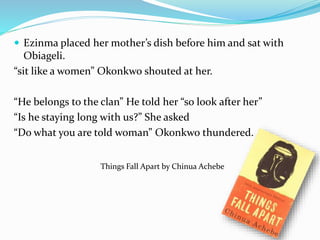
 Ezinma placed her mother’s dish before him and sat with 
Obiageli. 
“sit like a women” Okonkwo shouted at her. 
“He belongs to the clan” He told her “so look after her” 
“Is he staying long with us?” She asked 
“Do what you are told woman” Okonkwo thundered. 
Things Fall Apart by Chinua Achebe
“From the very first, Ibsen was intent on writing a 
drama which would highlight the anomalous position 
of women in the prevailingly male-dominated society, 
‘A woman (he wrote) cannot be herself in the 
contemporary society; it is an exclusively male society 
in which laws are drafted by men, and with counsels 
and judges who judge feminine conduct from the male 
point of view’” 
Source: “Four Major Plays” by Henrik Ibsen
Anomalous position of women 
Wife 
Mother 
Irregular Baby-sitter 
House keeper 
Bread winner 
Anomalous Servant 
Sex-object 
Abnormal
Are women treated as sex objects? 
 “sweet little thing” 
 Nora: No Torvald, go away. Leave me alone – I don’t want – 
Helmer: What’s all this? So my little Nora’s playing with me! 
‘Don’t want’? I’m your husband, aren’t I?
Feminist Poetry
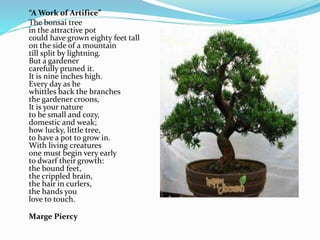
“A Work of Artifice” 
The bonsai tree 
in the attractive pot 
could have grown eighty feet tall 
on the side of a mountain 
till split by lightning. 
But a gardener 
carefully pruned it. 
It is nine inches high. 
Every day as he 
whittles back the branches 
the gardener croons, 
It is your nature 
to be small and cozy, 
domestic and weak; 
how lucky, little tree, 
to have a pot to grow in. 
With living creatures 
one must begin very early 
to dwarf their growth: 
the bound feet, 
the crippled brain, 
the hair in curlers, 
the hands you 
love to touch. 
Marge Piercy
“ Sita Speak” 
Sita, speak your side of the story, 
We know the other too well. 
Your father married you to a prince, 
Told you to be pliable as the bow 
In your husband’s hand. 
Didn’t you note Ram broke the magic bow? 
They say you-the ideal daughter – 
Bowed your head in obedience 
As you were sent away 
With your husband you chose exile 
Suffered privation, abduction 
And then the rejection – 
The chastity test on the scorching flames 
The victim twice victimised. 
Could those flames turn to flowers 
Without Searing the soul? 
They say you were the ideal wife 
You questioned him not 
And let him have his way 
The poets who wrote your story 
Said: a woman is not worthy of hearing 
The Ramayana; like a beast she is fit only For being beaten 
Could such poetry ever bring you glory? 
Yet, they spoke their verses without challenge 
And With such falsehoods got away. 
Sita Speak 
You who could lift the magic bow and play 
With one hand Who could command the earth with a word 
How did they silence you? 
(Bina Agarwal 1985)
“Anger” by Linda Pastan 
You tell me 
that it's all right 
to let it out of its cage, 
though it may claw someone, 
even bite. 
You say that letting it out 
may tame it somehow. 
But loose it may 
turn on me, maul 
my face, draw blood. 
Ah, you think you know so much, 
you whose anger is a pet dog, 
its canines dull with disuse. 
But mine is a rabid thing, 
sharpening its teeth 
on my very bones, 
and I will never let it go.
“Woman” by Nikki Giovanni 
she wanted to be a blade 
of grass amid the fields 
but he wouldn't agree 
to be the dandelion 
she wanted to be a robin singing 
through the leaves 
but he refused to be 
her tree 
she spun herself into a web 
and looking for a place to rest 
turned to him 
but he stood straight 
declining to be her corner 
she tried to be a book 
but he wouldn't read 
she turned herself into a bulb 
but he wouldn't let her glow 
she decided to become 
a woman 
and though he still refused 
to be a man 
she decided it was all 
right
Feminist Plays 
“A Doll’s House” By Henrik Ibsen (1879) 
(Norwegian)
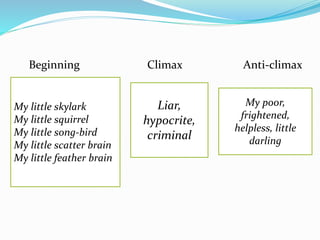
Beginning Climax Anti-climax 
Liar, 
hypocrite, 
criminal 
My poor, 
frightened, 
helpless, little 
darling 
My little skylark 
My little squirrel 
My little song-bird 
My little scatter brain 
My little feather brain
Nora: “I’ve been your doll-wife here, just as at home I was 
Papa’s doll-child” 
---------------------------------------------------------------- 
Nora: “What do you consider is my most sacred duty?” 
Helmer: “Do I have to tell you that? Isn’t it your duty to 
your husband and children?” 
Nora: “I have another duty, just as sacred.” 
Helmer: “You can’t have. What duty do you mean?” 
Nora: “My duty towards myself”
Short story 
“The Divorcee” by Ken Saro Wiwa (Nigerian) 
 “A husband did a girl a favour by marrying her… And when 
he did Lebia the favour of seeking her hand in marriage, 
there was nothing to stop him from achieving his desire” 
 “Because she has not only married a man: she was a family 
property” 
 “He expected that she would bear children. It was for that 
primarily that he had married her. For everyman had 
reason to expect that he would be a father someday. 
Everyman was capable of being a father. If he did not 
become a father, there was something wrong with his wife”
Songs 
 “Ma sandata kamathi “Thatu kapanne ai” 
bava dana oba…” 
•
Appreciation of traditional female role 
 “Sanda kaluwara gala…” “Thaththa Unath”
Films 
 “Thani Thatuven Piya Banna” 
 “Dadayama” 
 “Suddilage Kathava” 
 “Loku Duwa” 
 “Water”
Positives of Feminism 
 Feminist campaigns have changed societies positively. 
 Equal pay for women 
 Rights to enter into contracts and own property 
 Protection of women and girls from domestic violence 
and sexual harassment 
 Workplace rights, maternity leave 
 Decision-making rights 
 Ex: Scandinavian countries: Norway and Sweden
Ill-effects of Feminism 
 Single parents 
 Smoking, drinking 
 Drop of birth rate 
 Decline in marriage institution
Decision up to you! 
Is Feminism a Cure or Curse? 
Thank 
You

Feminism Cure or Curse?

  • 1.
    By K.G. SwarnanandaGamage English Language Teaching Unit (ELTU)
  • 2.
    What is Feminism? “ Feminism is a collection of movements and ideologies aimed at defining, establishing, and defending equal political, economic and social rights of women. This also includes seeking to establish equal opportunities for women in education and employment” Source: http://en.wikipedia.org/wiki/Feminism
  • 3.
    Other related issues  Women’s struggle for freedom  Women’s struggle for equal opportunities  Women’s struggle for equal place in the social system  Ex: Equal pay  Gender discrimination  Gender equality  Women’s emancipation
  • 4.
  • 5.
    Established Areas ofFeminism  Feminist Literature  Feminist theory  Gender studies
  • 6.
     On theeve of the 101 st international Woman’s Day AMY DAWSON looks at its origins and investigates why it continues to be relevant today. We live on a planet in which women perform 66 per cent of the world’s work and produce 50 per cent of its food but earn 10 per cent of overall income and own one per cent of property. Women hold only 19 per cent of the world’s parliamentary seats and just 16 of the world’s 188 directly -elected leaders are female. Violence against women causes more deaths and disabilities among the global female population aged 15 to 44 than Cancer,Malaria,Road traffic accidents andWar. It is estimated that one in five women worldwide will become a victim of rape or attemped rape and ane in four will experience domestic violence. METRO – March 7 th of 2012, UK
  • 7.
    Should we takeit seriously in Sri Lanka?  Mr. Maithripala Sirisena (MP) – “Approximately 65 percent of all court cases in the country had to do with rape, child abuse, and violence against women” (The Island – 10/03/2013)  “Land like no other” – 5 women are raped in a day (Sunday Times)
  • 8.
  • 9.
  • 10.
    South Asian Situation • Malala Yousufzai Factor (Pakistan)
  • 11.
    India  “Satipuja” – Gayathri Spivak  Delhi Gang rape  Phoolan Devi  Child marriage
  • 12.
     Ezinma placedher mother’s dish before him and sat with Obiageli. “sit like a women” Okonkwo shouted at her. “He belongs to the clan” He told her “so look after her” “Is he staying long with us?” She asked “Do what you are told woman” Okonkwo thundered. Things Fall Apart by Chinua Achebe
  • 13.
    “From the veryfirst, Ibsen was intent on writing a drama which would highlight the anomalous position of women in the prevailingly male-dominated society, ‘A woman (he wrote) cannot be herself in the contemporary society; it is an exclusively male society in which laws are drafted by men, and with counsels and judges who judge feminine conduct from the male point of view’” Source: “Four Major Plays” by Henrik Ibsen
  • 14.
    Anomalous position ofwomen Wife Mother Irregular Baby-sitter House keeper Bread winner Anomalous Servant Sex-object Abnormal
  • 15.
    Are women treatedas sex objects?  “sweet little thing”  Nora: No Torvald, go away. Leave me alone – I don’t want – Helmer: What’s all this? So my little Nora’s playing with me! ‘Don’t want’? I’m your husband, aren’t I?
  • 16.
  • 17.
    “A Work ofArtifice” The bonsai tree in the attractive pot could have grown eighty feet tall on the side of a mountain till split by lightning. But a gardener carefully pruned it. It is nine inches high. Every day as he whittles back the branches the gardener croons, It is your nature to be small and cozy, domestic and weak; how lucky, little tree, to have a pot to grow in. With living creatures one must begin very early to dwarf their growth: the bound feet, the crippled brain, the hair in curlers, the hands you love to touch. Marge Piercy
  • 18.
    “ Sita Speak” Sita, speak your side of the story, We know the other too well. Your father married you to a prince, Told you to be pliable as the bow In your husband’s hand. Didn’t you note Ram broke the magic bow? They say you-the ideal daughter – Bowed your head in obedience As you were sent away With your husband you chose exile Suffered privation, abduction And then the rejection – The chastity test on the scorching flames The victim twice victimised. Could those flames turn to flowers Without Searing the soul? They say you were the ideal wife You questioned him not And let him have his way The poets who wrote your story Said: a woman is not worthy of hearing The Ramayana; like a beast she is fit only For being beaten Could such poetry ever bring you glory? Yet, they spoke their verses without challenge And With such falsehoods got away. Sita Speak You who could lift the magic bow and play With one hand Who could command the earth with a word How did they silence you? (Bina Agarwal 1985)
  • 19.
    “Anger” by LindaPastan You tell me that it's all right to let it out of its cage, though it may claw someone, even bite. You say that letting it out may tame it somehow. But loose it may turn on me, maul my face, draw blood. Ah, you think you know so much, you whose anger is a pet dog, its canines dull with disuse. But mine is a rabid thing, sharpening its teeth on my very bones, and I will never let it go.
  • 20.
    “Woman” by NikkiGiovanni she wanted to be a blade of grass amid the fields but he wouldn't agree to be the dandelion she wanted to be a robin singing through the leaves but he refused to be her tree she spun herself into a web and looking for a place to rest turned to him but he stood straight declining to be her corner she tried to be a book but he wouldn't read she turned herself into a bulb but he wouldn't let her glow she decided to become a woman and though he still refused to be a man she decided it was all right
  • 22.
    Feminist Plays “ADoll’s House” By Henrik Ibsen (1879) (Norwegian)
  • 23.
    Beginning Climax Anti-climax Liar, hypocrite, criminal My poor, frightened, helpless, little darling My little skylark My little squirrel My little song-bird My little scatter brain My little feather brain
  • 24.
    Nora: “I’ve beenyour doll-wife here, just as at home I was Papa’s doll-child” ---------------------------------------------------------------- Nora: “What do you consider is my most sacred duty?” Helmer: “Do I have to tell you that? Isn’t it your duty to your husband and children?” Nora: “I have another duty, just as sacred.” Helmer: “You can’t have. What duty do you mean?” Nora: “My duty towards myself”
  • 25.
    Short story “TheDivorcee” by Ken Saro Wiwa (Nigerian)  “A husband did a girl a favour by marrying her… And when he did Lebia the favour of seeking her hand in marriage, there was nothing to stop him from achieving his desire”  “Because she has not only married a man: she was a family property”  “He expected that she would bear children. It was for that primarily that he had married her. For everyman had reason to expect that he would be a father someday. Everyman was capable of being a father. If he did not become a father, there was something wrong with his wife”
  • 26.
    Songs  “Masandata kamathi “Thatu kapanne ai” bava dana oba…” •
  • 27.
    Appreciation of traditionalfemale role  “Sanda kaluwara gala…” “Thaththa Unath”
  • 28.
    Films  “ThaniThatuven Piya Banna”  “Dadayama”  “Suddilage Kathava”  “Loku Duwa”  “Water”
  • 29.
    Positives of Feminism  Feminist campaigns have changed societies positively.  Equal pay for women  Rights to enter into contracts and own property  Protection of women and girls from domestic violence and sexual harassment  Workplace rights, maternity leave  Decision-making rights  Ex: Scandinavian countries: Norway and Sweden
  • 30.
    Ill-effects of Feminism  Single parents  Smoking, drinking  Drop of birth rate  Decline in marriage institution
  • 31.
    Decision up toyou! Is Feminism a Cure or Curse? Thank You