Female Reproductive SystemJessica KontopoulosBIO 120Professor: R Abdullah
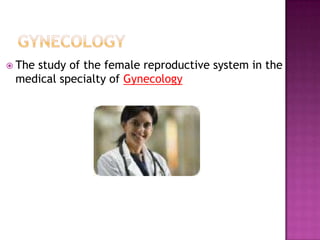
GynecologyThe study of the female reproductive system in the medical specialty of Gynecology
GynecologyGynecology is the study of the female reproductive system such as the uterus, vagina and ovaries.Almost all modern gynecologists are also obstetricians Most Common Conditions that a Gynecologist deals with are:Cancer and pre-cancerous diseases of the reproductive organsIncontinence of urine.Amenorrhea or absence of menstrual periodsDysmenorrhea or painful menstrual periodsInfertilityMenorrhagia or heavy menstrual periodsProlapse of pelvic organsInfections such as fungal, bacterial, viral or protozoal
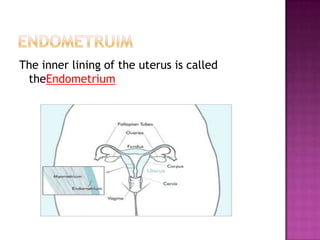
EndometruimThe inner lining of the uterus is called theEndometrium
EndometruimThe inner lining of the uterusIt contains a rich blood supply and reacts to hormonal changes every month that prepare it to receive a fertilized ovum. In a normal pregnancy the fertilized ovum implants in the endometrium which provides nourishment and protection to the fetus.If pregnancy is not established, the endometrium is sloughed off resulting in menstruation
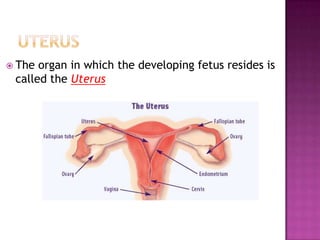
UterusThe organ in which the developing fetus resides is called the Uterus
UterusAn internal organ of the female reproductive systemAlso known as the wombIs hollow and pear-shapedLocated in the lower pelvic cavity between the urinary bladder and rectumProvides protections and nourishment to growing fetusDivided into three regions; fundus, corpus and cervix
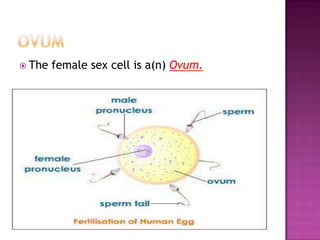
OVUMThe female sex cell is a(n) Ovum.
OvumAn ovum in Latin means “egg”The ovum is the largest cell in the human bodyIt is the haploid female reproductive cell, or gameteOva are made and released by a female's ovaries At birth, a female has all of her eggs, and from puberty releases an egg once a month until none are left. This is called oogenesis.When the ovum is fertilized by sperm, it becomes a  zygote, which develops a new organism The ovum is fertilized inside the female body, and the embryo then develops inside the uterus being nourished by the mothers placenta.
ReferencesFremgen, B. F. (2009). Medical Terminology A living language fourth edition. New Jersey: Pearson Education.http://www.healthnewsflash.com/images/conditions/uterus.gifhttp://www.cmdrc.com/Data/Images/uterus_anatomy.gifhttp://en.wikipedia.org

Female reproductive system

  • 1.
    Female Reproductive SystemJessicaKontopoulosBIO 120Professor: R Abdullah
  • 2.
    GynecologyThe study ofthe female reproductive system in the medical specialty of Gynecology
  • 3.
    GynecologyGynecology is thestudy of the female reproductive system such as the uterus, vagina and ovaries.Almost all modern gynecologists are also obstetricians Most Common Conditions that a Gynecologist deals with are:Cancer and pre-cancerous diseases of the reproductive organsIncontinence of urine.Amenorrhea or absence of menstrual periodsDysmenorrhea or painful menstrual periodsInfertilityMenorrhagia or heavy menstrual periodsProlapse of pelvic organsInfections such as fungal, bacterial, viral or protozoal
  • 4.
    EndometruimThe inner liningof the uterus is called theEndometrium
  • 5.
    EndometruimThe inner liningof the uterusIt contains a rich blood supply and reacts to hormonal changes every month that prepare it to receive a fertilized ovum. In a normal pregnancy the fertilized ovum implants in the endometrium which provides nourishment and protection to the fetus.If pregnancy is not established, the endometrium is sloughed off resulting in menstruation
  • 6.
    UterusThe organ inwhich the developing fetus resides is called the Uterus
  • 7.
    UterusAn internal organof the female reproductive systemAlso known as the wombIs hollow and pear-shapedLocated in the lower pelvic cavity between the urinary bladder and rectumProvides protections and nourishment to growing fetusDivided into three regions; fundus, corpus and cervix
  • 8.
    OVUMThe female sexcell is a(n) Ovum.
  • 9.
    OvumAn ovum inLatin means “egg”The ovum is the largest cell in the human bodyIt is the haploid female reproductive cell, or gameteOva are made and released by a female's ovaries At birth, a female has all of her eggs, and from puberty releases an egg once a month until none are left. This is called oogenesis.When the ovum is fertilized by sperm, it becomes a zygote, which develops a new organism The ovum is fertilized inside the female body, and the embryo then develops inside the uterus being nourished by the mothers placenta.
  • 10.
    ReferencesFremgen, B. F.(2009). Medical Terminology A living language fourth edition. New Jersey: Pearson Education.http://www.healthnewsflash.com/images/conditions/uterus.gifhttp://www.cmdrc.com/Data/Images/uterus_anatomy.gifhttp://en.wikipedia.org