FEDERALISTS AND ANTI-FEDERALISTS
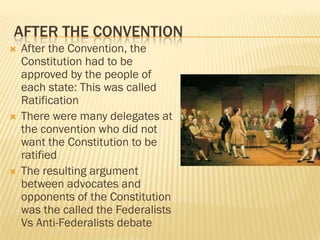
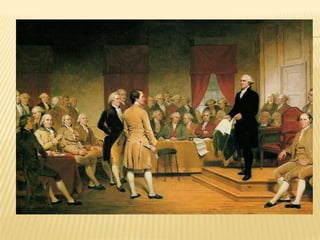
AFTER THE CONVENTION
   After the Convention, the
    Constitution had to be
    approved by the people of
    each state: This was called
    Ratification
   There were many delegates at
    the convention who did not
    want the Constitution to be
    ratified
   The resulting argument
    between advocates and
    opponents of the Constitution
    was the called the Federalists
    Vs Anti-Federalists debate
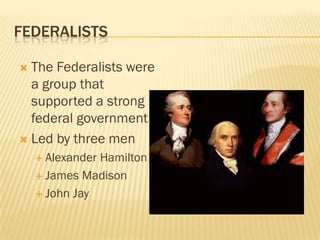
FEDERALISTS

 The Federalists were
  a group that
  supported a strong
  federal government
 Led by three men
     AlexanderHamilton
     James Madison

     John Jay
THE FEDERALISTS
 Included all delegates of
  the Constitutional
  Convention that were in
  favor of the Constitution
  including, Franklin, Wash
  ington, and others.
 Favored a stronger
  national government
 Argued for their
  viewpoint by writing the
  Federalist papers
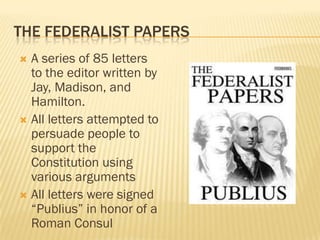
THE FEDERALIST PAPERS
 A series of 85 letters
  to the editor written by
  Jay, Madison, and
  Hamilton.
 All letters attempted to
  persuade people to
  support the
  Constitution using
  various arguments
 All letters were signed
  “Publius” in honor of a
  Roman Consul
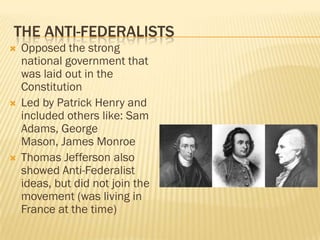
THE ANTI-FEDERALISTS
   Opposed the strong
    national government that
    was laid out in the
    Constitution
   Led by Patrick Henry and
    included others like: Sam
    Adams, George
    Mason, James Monroe
   Thomas Jefferson also
    showed Anti-Federalist
    ideas, but did not join the
    movement (was living in
    France at the time)
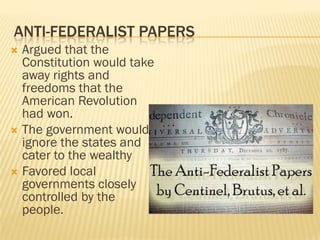
ANTI-FEDERALIST PAPERS
 Argued that the
  Constitution would take
  away rights and
  freedoms that the
  American Revolution
  had won.
 The government would
  ignore the states and
  cater to the wealthy
 Favored local
  governments closely
  controlled by the
  people.
TO START CLASS

   It has been frequently remarked, that it seems
    to have been reserved to the people of this
    country, by their conduct and example, to
    decide the important question, whether
    societies of men are really capable or not, of
    establishing good government from reflection
    and choice, or whether they are forever
    destined to depend, for their political
    constitutions, on accident and force

Federalists and anti-federalists

  • 1.
  • 2.
    AFTER THE CONVENTION  After the Convention, the Constitution had to be approved by the people of each state: This was called Ratification  There were many delegates at the convention who did not want the Constitution to be ratified  The resulting argument between advocates and opponents of the Constitution was the called the Federalists Vs Anti-Federalists debate
  • 4.
    FEDERALISTS  The Federalistswere a group that supported a strong federal government  Led by three men  AlexanderHamilton  James Madison  John Jay
  • 5.
    THE FEDERALISTS  Includedall delegates of the Constitutional Convention that were in favor of the Constitution including, Franklin, Wash ington, and others.  Favored a stronger national government  Argued for their viewpoint by writing the Federalist papers
  • 6.
    THE FEDERALIST PAPERS A series of 85 letters to the editor written by Jay, Madison, and Hamilton.  All letters attempted to persuade people to support the Constitution using various arguments  All letters were signed “Publius” in honor of a Roman Consul
  • 7.
    THE ANTI-FEDERALISTS  Opposed the strong national government that was laid out in the Constitution  Led by Patrick Henry and included others like: Sam Adams, George Mason, James Monroe  Thomas Jefferson also showed Anti-Federalist ideas, but did not join the movement (was living in France at the time)
  • 8.
    ANTI-FEDERALIST PAPERS  Arguedthat the Constitution would take away rights and freedoms that the American Revolution had won.  The government would ignore the states and cater to the wealthy  Favored local governments closely controlled by the people.
  • 9.
    TO START CLASS  It has been frequently remarked, that it seems to have been reserved to the people of this country, by their conduct and example, to decide the important question, whether societies of men are really capable or not, of establishing good government from reflection and choice, or whether they are forever destined to depend, for their political constitutions, on accident and force