POL 140 
Fall 2014
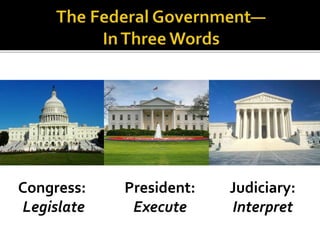
Congress: 
Legislate 
President: 
Execute 
Judiciary: 
Interpret
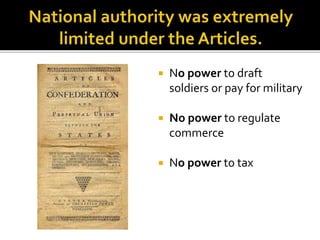
 No power to draft 
soldiers or pay for military 
 No power to regulate 
commerce 
 No power to tax
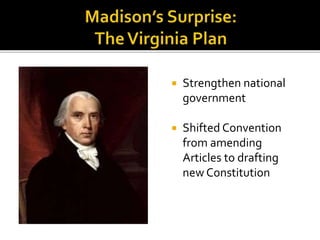
 Strengthen national 
government 
 Shifted Convention 
from amending 
Articles to drafting 
new Constitution
 Same people and territory included at state 
and federal levels of government 
 Constitution protects each level of 
government from encroachment 
 Each is in position to exert degree of leverage 
over the other
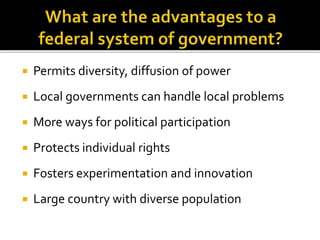
 Permits diversity, diffusion of power 
 Local governments can handle local problems 
 More ways for political participation 
 Protects individual rights 
 Fosters experimentation and innovation 
 Large country with diverse population
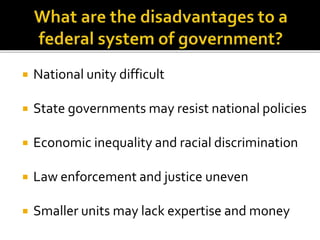
 National unity difficult 
 State governments may resist national policies 
 Economic inequality and racial discrimination 
 Law enforcement and justice uneven 
 Smaller units may lack expertise and money
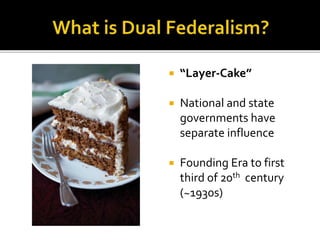
 “Layer-Cake” 
 National and state 
governments have 
separate influence 
 Founding Era to first 
third of 20th century 
(~1930s)
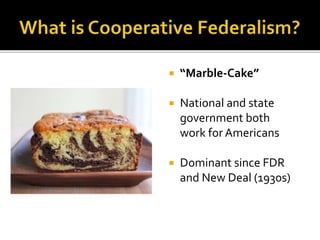
 “Marble-Cake” 
 National and state 
government both 
work for Americans 
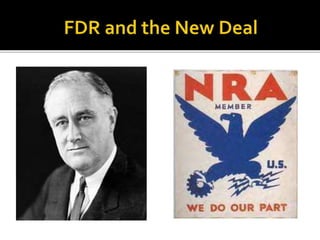
 Dominant since FDR 
and New Deal (1930s)
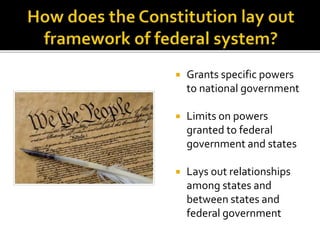
 Grants specific powers 
to national government 
 Limits on powers 
granted to federal 
government and states 
 Lays out relationships 
among states and 
between states and 
federal government
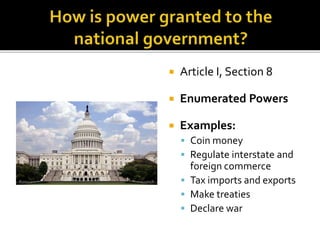
 Article I, Section 8 
 Enumerated Powers 
 Examples: 
 Coin money 
 Regulate interstate and 
foreign commerce 
 Tax imports and exports 
 Make treaties 
 Declare war
 Known as “elastic clause” 
 Congress does NOT get authority to do 
whatever it wants 
 Grants Congress power to pass laws “which 
shall be necessary and proper for carrying 
into execution the Foregoing powers”
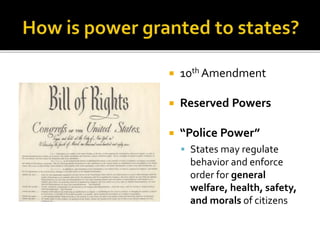
 10th Amendment 
 Reserved Powers 
 “Police Power” 
 States may regulate 
behavior and enforce 
order for general 
welfare, health, safety, 
and morals of citizens
 Guarantee Clause (Article IV, Section 4) 
 “The United States shall guarantee to every 
state in this union a republican form of 
government, and shall protect each of them 
against invasion; and on application of the 
legislature, or of the executive (when the legislature 
cannot be convened) against domestic violence.”
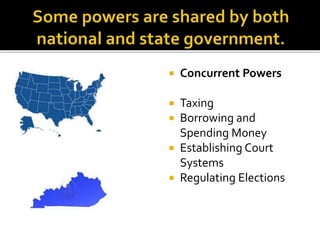
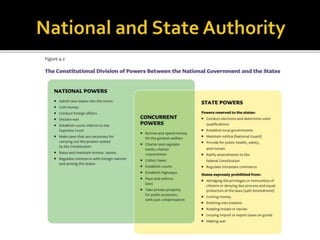
 Concurrent Powers 
 Taxing 
 Borrowing and 
Spending Money 
 Establishing Court 
Systems 
 Regulating Elections
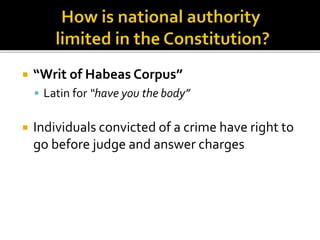
 “Writ of Habeas Corpus” 
 Latin for “have you the body” 
 Individuals convicted of a crime have right to 
go before judge and answer charges
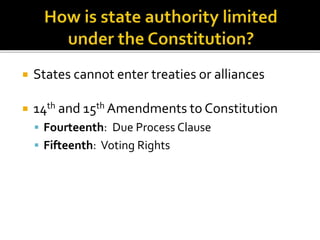
 States cannot enter treaties or alliances 
 14th and 15thAmendments to Constitution 
 Fourteenth: Due Pr0cess Clause 
 Fifteenth: Voting Rights
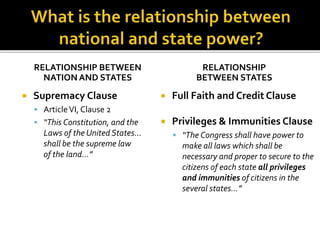
RELATIONSHIP BETWEEN 
NATION AND STATES 
 Supremacy Clause 
 Article VI, Clause 2 
 “This Constitution, and the 
Laws of the United States… 
shall be the supreme law 
of the land…” 
RELATIONSHIP 
BETWEEN STATES 
 Full Faith and Credit Clause 
 Privileges & Immunities Clause 
 “The Congress shall have power to 
make all laws which shall be 
necessary and proper to secure to the 
citizens of each state all privileges 
and immunities of citizens in the 
several states...”
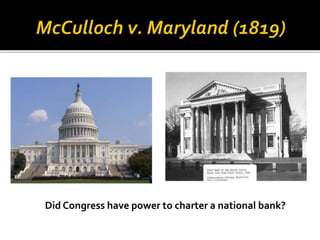
Did Congress have power to charter a national bank?
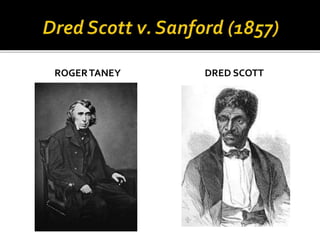
ROGER TANEY DRED SCOTT
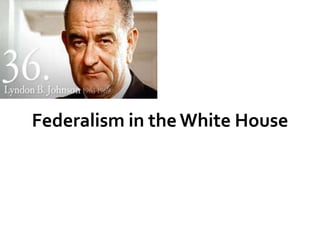
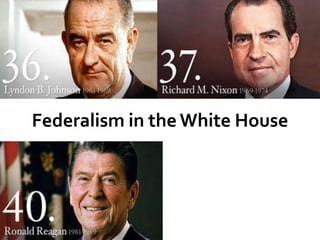
Federalism in the White House
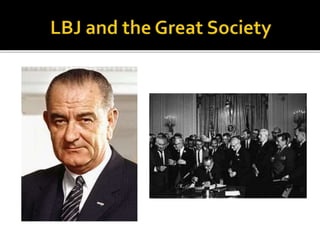
 Johnson: Categorical Grants 
 Federal money marked for certain categories
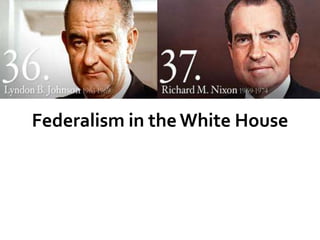
Federalism in the White House
 Johnson: Categorical Grants 
 Money marked for certain categories 
 Nixon: General Revenue Sharing 
 Money spent however states want
Federalism in the White House
 Johnson: Categorical Grants 
 Money marked for certain categories 
 Nixon: General Revenue Sharing 
 Money spent however states want 
 Reagan: Block Grants 
 Local areas decide how to spend money
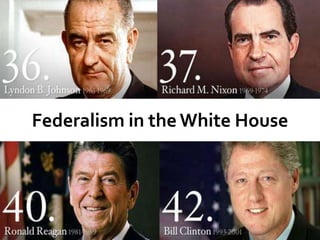
Federalism in the White House
 Johnson: Categorical Grants 
 Money marked for certain categories 
 Nixon: General Revenue Sharing 
 Money spent however states want 
 Reagan: Block Grants 
 Local areas decide how to spend money 
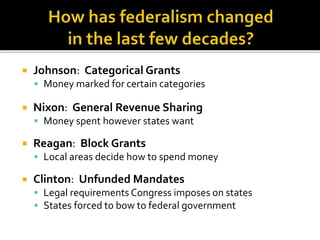
 Clinton: Unfunded Mandates 
 Legal requirements Congress imposes on states 
 States forced to bow to federal government
Federalism and the U.S. Constitution

Federalism and the U.S. Constitution

  • 1.
  • 4.
    Congress: Legislate President: Execute Judiciary: Interpret
  • 10.
     No powerto draft soldiers or pay for military  No power to regulate commerce  No power to tax
  • 12.
     Strengthen national government  Shifted Convention from amending Articles to drafting new Constitution
  • 15.
     Same peopleand territory included at state and federal levels of government  Constitution protects each level of government from encroachment  Each is in position to exert degree of leverage over the other
  • 18.
     Permits diversity,diffusion of power  Local governments can handle local problems  More ways for political participation  Protects individual rights  Fosters experimentation and innovation  Large country with diverse population
  • 19.
     National unitydifficult  State governments may resist national policies  Economic inequality and racial discrimination  Law enforcement and justice uneven  Smaller units may lack expertise and money
  • 21.
     “Layer-Cake” National and state governments have separate influence  Founding Era to first third of 20th century (~1930s)
  • 22.
     “Marble-Cake” National and state government both work for Americans  Dominant since FDR and New Deal (1930s)
  • 24.
     Grants specificpowers to national government  Limits on powers granted to federal government and states  Lays out relationships among states and between states and federal government
  • 26.
     Article I,Section 8  Enumerated Powers  Examples:  Coin money  Regulate interstate and foreign commerce  Tax imports and exports  Make treaties  Declare war
  • 27.
     Known as“elastic clause”  Congress does NOT get authority to do whatever it wants  Grants Congress power to pass laws “which shall be necessary and proper for carrying into execution the Foregoing powers”
  • 28.
     10th Amendment  Reserved Powers  “Police Power”  States may regulate behavior and enforce order for general welfare, health, safety, and morals of citizens
  • 29.
     Guarantee Clause(Article IV, Section 4)  “The United States shall guarantee to every state in this union a republican form of government, and shall protect each of them against invasion; and on application of the legislature, or of the executive (when the legislature cannot be convened) against domestic violence.”
  • 30.
     Concurrent Powers  Taxing  Borrowing and Spending Money  Establishing Court Systems  Regulating Elections
  • 33.
     “Writ ofHabeas Corpus”  Latin for “have you the body”  Individuals convicted of a crime have right to go before judge and answer charges
  • 34.
     States cannotenter treaties or alliances  14th and 15thAmendments to Constitution  Fourteenth: Due Pr0cess Clause  Fifteenth: Voting Rights
  • 36.
    RELATIONSHIP BETWEEN NATIONAND STATES  Supremacy Clause  Article VI, Clause 2  “This Constitution, and the Laws of the United States… shall be the supreme law of the land…” RELATIONSHIP BETWEEN STATES  Full Faith and Credit Clause  Privileges & Immunities Clause  “The Congress shall have power to make all laws which shall be necessary and proper to secure to the citizens of each state all privileges and immunities of citizens in the several states...”
  • 40.
    Did Congress havepower to charter a national bank?
  • 42.
  • 47.
    Federalism in theWhite House
  • 48.
     Johnson: CategoricalGrants  Federal money marked for certain categories
  • 49.
    Federalism in theWhite House
  • 50.
     Johnson: CategoricalGrants  Money marked for certain categories  Nixon: General Revenue Sharing  Money spent however states want
  • 51.
    Federalism in theWhite House
  • 52.
     Johnson: CategoricalGrants  Money marked for certain categories  Nixon: General Revenue Sharing  Money spent however states want  Reagan: Block Grants  Local areas decide how to spend money
  • 53.
    Federalism in theWhite House
  • 54.
     Johnson: CategoricalGrants  Money marked for certain categories  Nixon: General Revenue Sharing  Money spent however states want  Reagan: Block Grants  Local areas decide how to spend money  Clinton: Unfunded Mandates  Legal requirements Congress imposes on states  States forced to bow to federal government