
BY: C Y P R I AN U . N D I V E
FAMILY ENVIRONMENT
CONTENTS
INTRODUCTION
DEFINITION
IMPORTANCE OF FAMILY ENVIRONMENT
• Positive influence
• Negative influence
VARIATION IN FAMILIES
POSITIVE FAMILY FUNCTIONING
FAMILY FUNCTIONS
GOOD COMMUNICATION
CONCLUSION
REFERENCES
INTRODUCTION
• Family environment is the core process of every child
upbringing, with positive and negative influences. When
families experience sudden and unexpected trauma, such as
loved ones sustaining severe burns, all members of the family
are affected in one way or another.
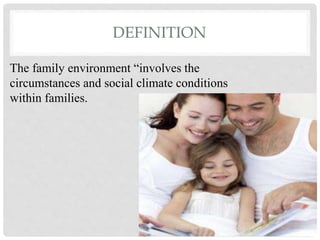
DEFINITION
The family environment “involves the
circumstances and social climate conditions
within families.
IMPORTANCE OF FAMILY ENVIRONMENT
POSITIVE INFLUENCE
Good family environment will
have a sense of love and
mutual help, which based on
the strong bond between
families, and has a large
contribution in build a child's
personality. It can motivate
children to develop themselves
and improve their capabilities
and potential.
CONT’D
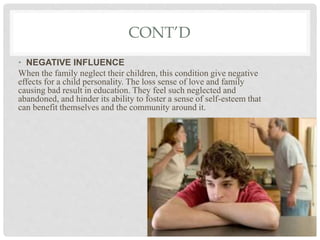
• NEGATIVE INFLUENCE
When the family neglect their children, this condition give negative
effects for a child personality. The loss sense of love and family
causing bad result in education. They feel such neglected and
abandoned, and hinder its ability to foster a sense of self-esteem that
can benefit themselves and the community around it.
VARIATION IN FAMILIES
Today’s families are more likely to conform to a
variety of configurations. A family is a primary group
which requires “people who are intimate and have
frequent face-to face contact with one another, have
norms that is, expectations regarding how members in
the group should behave in common and share
mutually enduring and extensive influences.
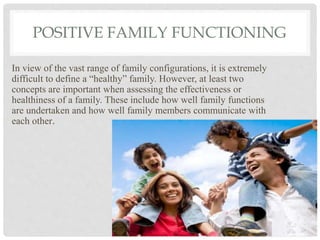
POSITIVE FAMILY FUNCTIONING
In view of the vast range of family configurations, it is extremely
difficult to define a “healthy” family. However, at least two
concepts are important when assessing the effectiveness or
healthiness of a family. These include how well family functions
are undertaken and how well family members communicate with
each other.
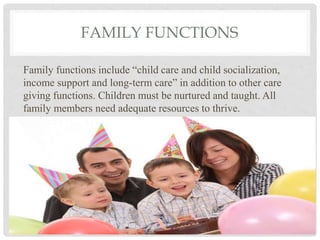
FAMILY FUNCTIONS
Family functions include “child care and child socialization,
income support and long-term care” in addition to other care
giving functions. Children must be nurtured and taught. All
family members need adequate resources to thrive.
GOOD COMMUNICATION
Good communication is the second aspect
which characterizes “healthy” families.
Communication and autonomy are closely
related concepts. Good communication
involves clear expression of personal ideas
and feelings even when they differ from
those of other family members.
CONCLUSION
• Individuals who provides leadership (parents) will together
introduce rules and relationships with a core responsibility to
maintain the individual (children) will together make a productive
family environment.
• Family life affect the cognitive development of a child with the
most profound impact, not withstanding the cons it has usually
been generous proving love, care, child safety and together
wellbeing of individuals.
REFERENCES
 P. Blakeney, S. Portman, R. Rutan Familial values as factors influencing long-term
psychological adjustment of children after severe burn injury
J Burn Care Rehabil, 11 (5) (1990), pp. 472–475
 Chudi, O. C. (2012). Academic performance of secondary school students. The
effect of home environment.
 Christenson, S. L., Rounds, T., & Gorney, D. (1992). Family factors and student
 Achievement: An Avenue to increaseCompass and Forsythe (2002). Academic
performance and problem behaviours. Journal of Early Adolescence..
 Gorney Deborah (1992). Family Environment and Student academic achievement
in school. Journal of American Medical Association.
Thanks For
your
Cooperation

Family environment

  • 1.
    BY: C YP R I AN U . N D I V E FAMILY ENVIRONMENT
  • 2.
    CONTENTS INTRODUCTION DEFINITION IMPORTANCE OF FAMILYENVIRONMENT • Positive influence • Negative influence VARIATION IN FAMILIES POSITIVE FAMILY FUNCTIONING FAMILY FUNCTIONS GOOD COMMUNICATION CONCLUSION REFERENCES
  • 3.
    INTRODUCTION • Family environmentis the core process of every child upbringing, with positive and negative influences. When families experience sudden and unexpected trauma, such as loved ones sustaining severe burns, all members of the family are affected in one way or another.
  • 4.
    DEFINITION The family environment“involves the circumstances and social climate conditions within families.
  • 5.
    IMPORTANCE OF FAMILYENVIRONMENT POSITIVE INFLUENCE Good family environment will have a sense of love and mutual help, which based on the strong bond between families, and has a large contribution in build a child's personality. It can motivate children to develop themselves and improve their capabilities and potential.
  • 6.
    CONT’D • NEGATIVE INFLUENCE Whenthe family neglect their children, this condition give negative effects for a child personality. The loss sense of love and family causing bad result in education. They feel such neglected and abandoned, and hinder its ability to foster a sense of self-esteem that can benefit themselves and the community around it.
  • 7.
    VARIATION IN FAMILIES Today’sfamilies are more likely to conform to a variety of configurations. A family is a primary group which requires “people who are intimate and have frequent face-to face contact with one another, have norms that is, expectations regarding how members in the group should behave in common and share mutually enduring and extensive influences.
  • 8.
    POSITIVE FAMILY FUNCTIONING Inview of the vast range of family configurations, it is extremely difficult to define a “healthy” family. However, at least two concepts are important when assessing the effectiveness or healthiness of a family. These include how well family functions are undertaken and how well family members communicate with each other.
  • 9.
    FAMILY FUNCTIONS Family functionsinclude “child care and child socialization, income support and long-term care” in addition to other care giving functions. Children must be nurtured and taught. All family members need adequate resources to thrive.
  • 10.
    GOOD COMMUNICATION Good communicationis the second aspect which characterizes “healthy” families. Communication and autonomy are closely related concepts. Good communication involves clear expression of personal ideas and feelings even when they differ from those of other family members.
  • 11.
    CONCLUSION • Individuals whoprovides leadership (parents) will together introduce rules and relationships with a core responsibility to maintain the individual (children) will together make a productive family environment. • Family life affect the cognitive development of a child with the most profound impact, not withstanding the cons it has usually been generous proving love, care, child safety and together wellbeing of individuals.
  • 12.
    REFERENCES  P. Blakeney,S. Portman, R. Rutan Familial values as factors influencing long-term psychological adjustment of children after severe burn injury J Burn Care Rehabil, 11 (5) (1990), pp. 472–475  Chudi, O. C. (2012). Academic performance of secondary school students. The effect of home environment.  Christenson, S. L., Rounds, T., & Gorney, D. (1992). Family factors and student  Achievement: An Avenue to increaseCompass and Forsythe (2002). Academic performance and problem behaviours. Journal of Early Adolescence..  Gorney Deborah (1992). Family Environment and Student academic achievement in school. Journal of American Medical Association.
  • 13.