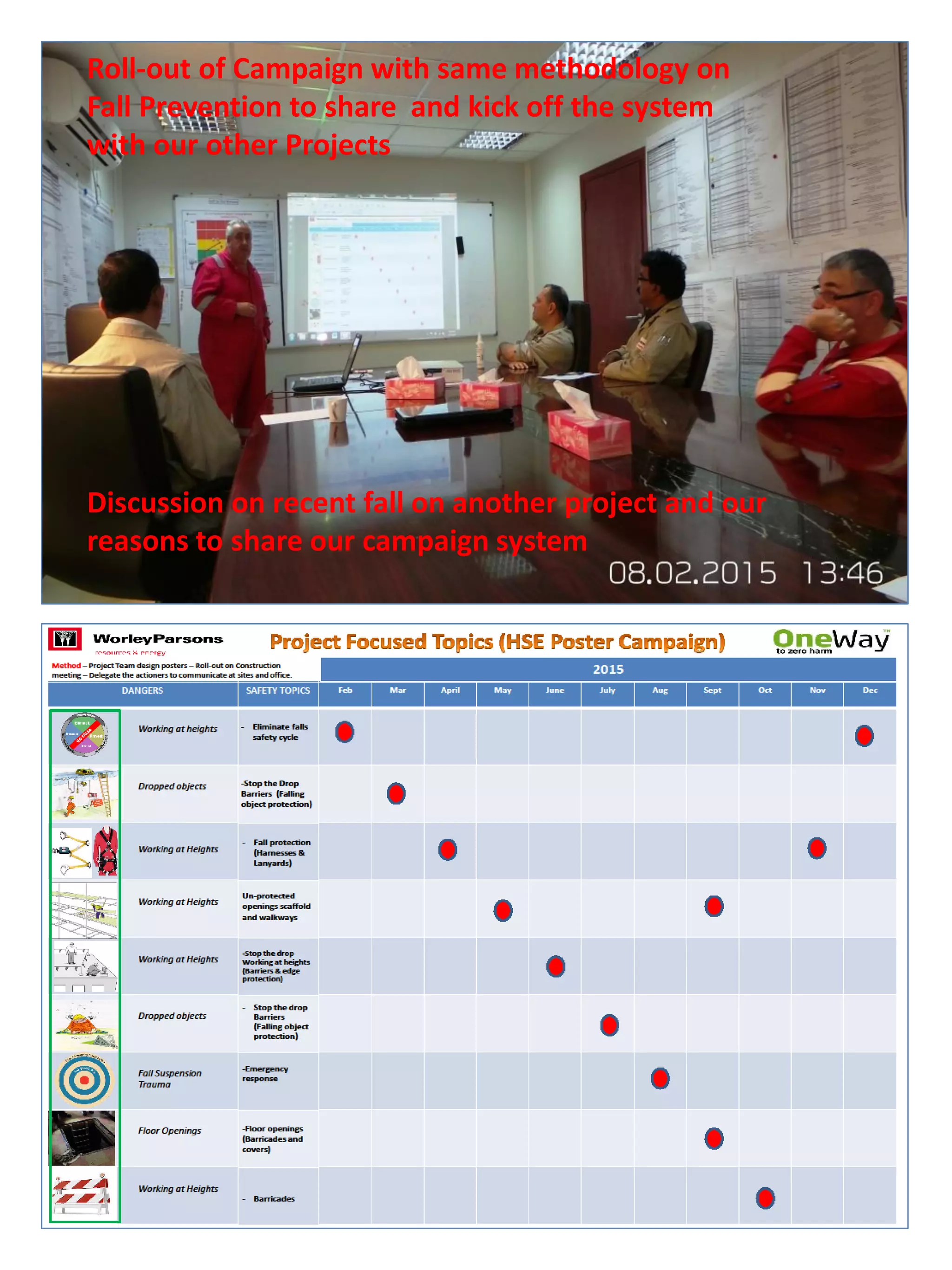
Roll-out of Campaign with same methodology on
Fall Prevention to share and kick off the system
with our other Projects
Discussion on recent fall on another project and our
reasons to share our campaign system
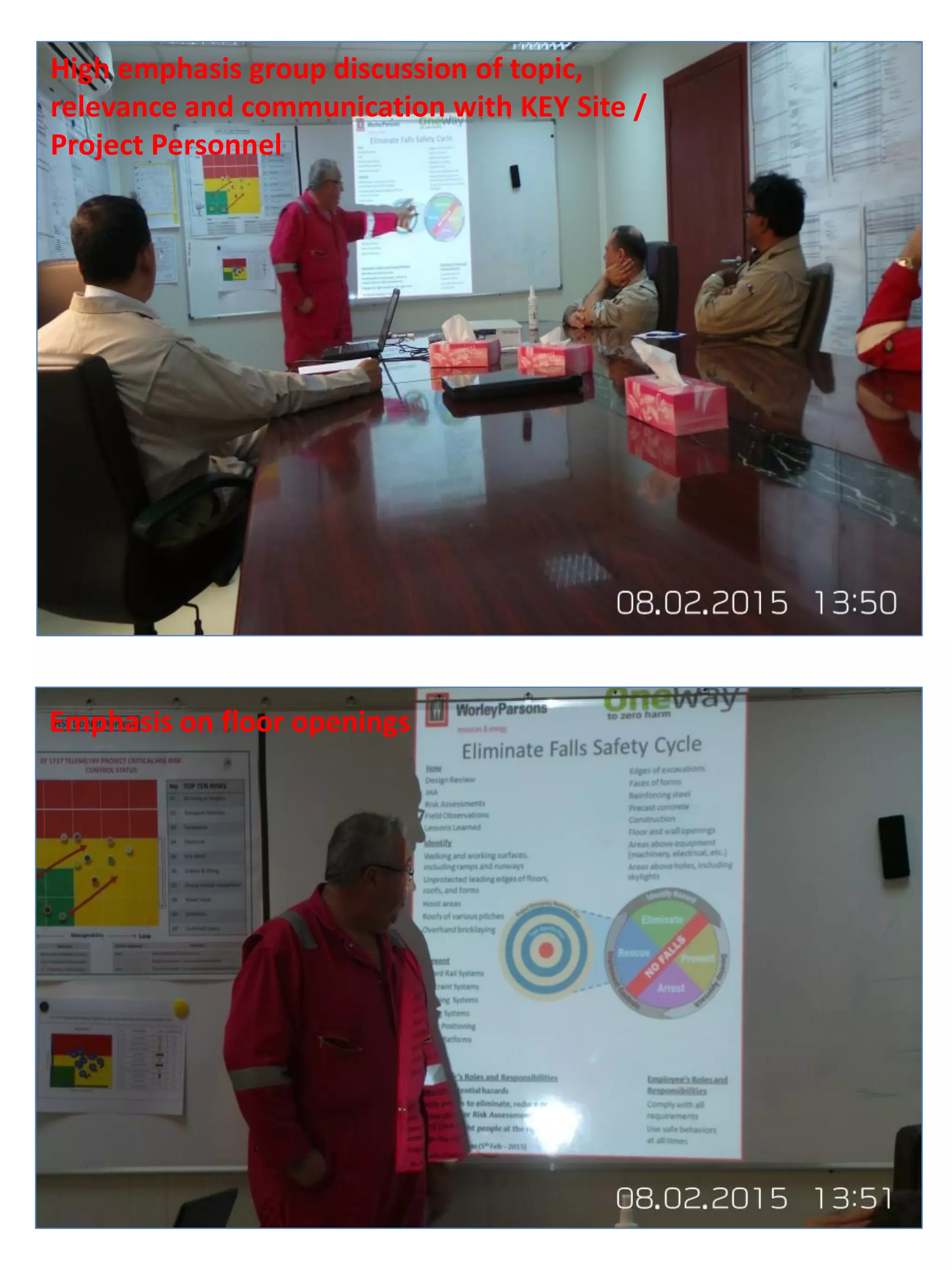
High emphasis group discussion of topic,
relevance and communication with KEY Site /
Project Personnel
Emphasis on floor openings
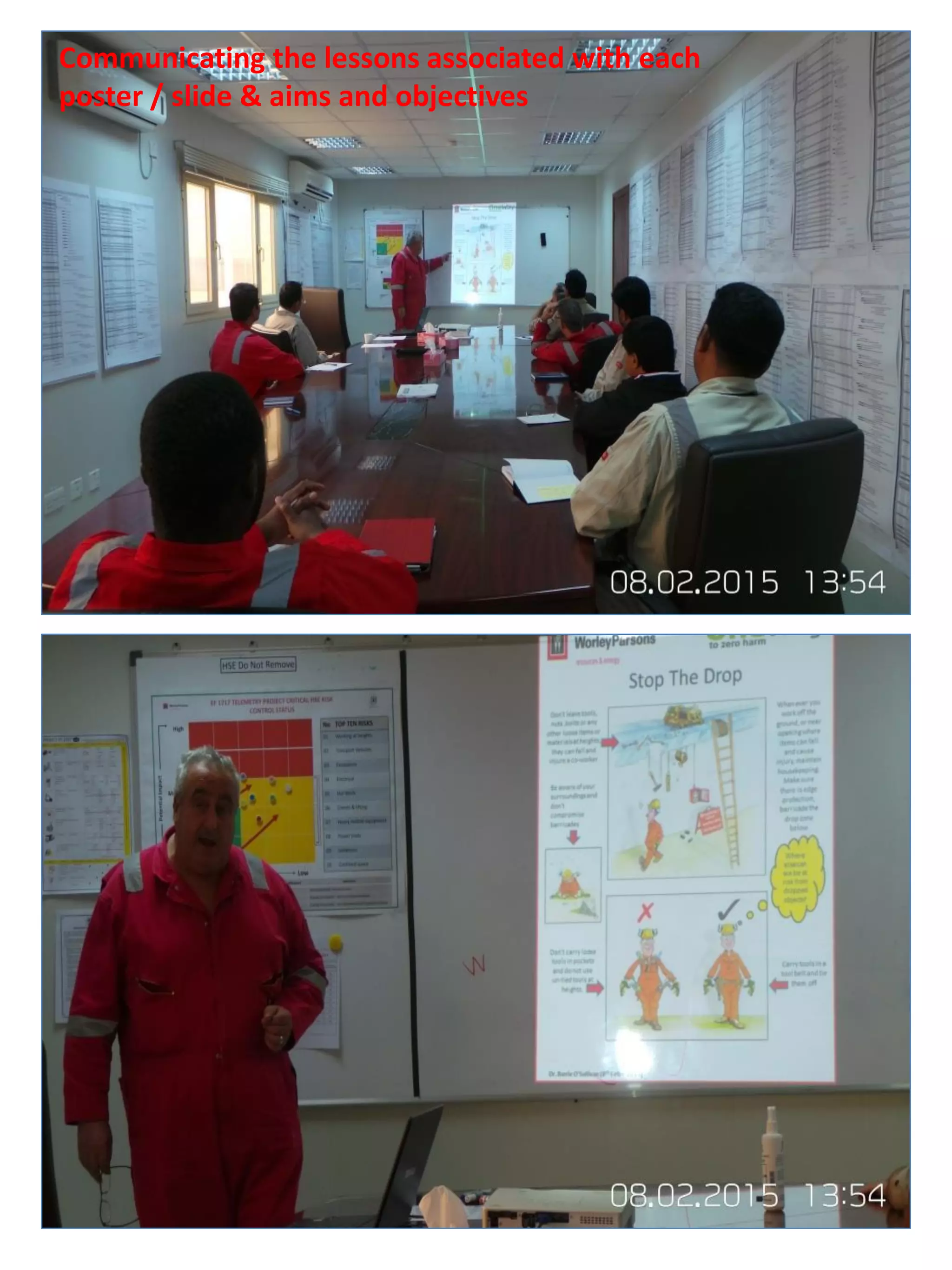
Communicating the lessons associated with each
poster / slide & aims and objectives
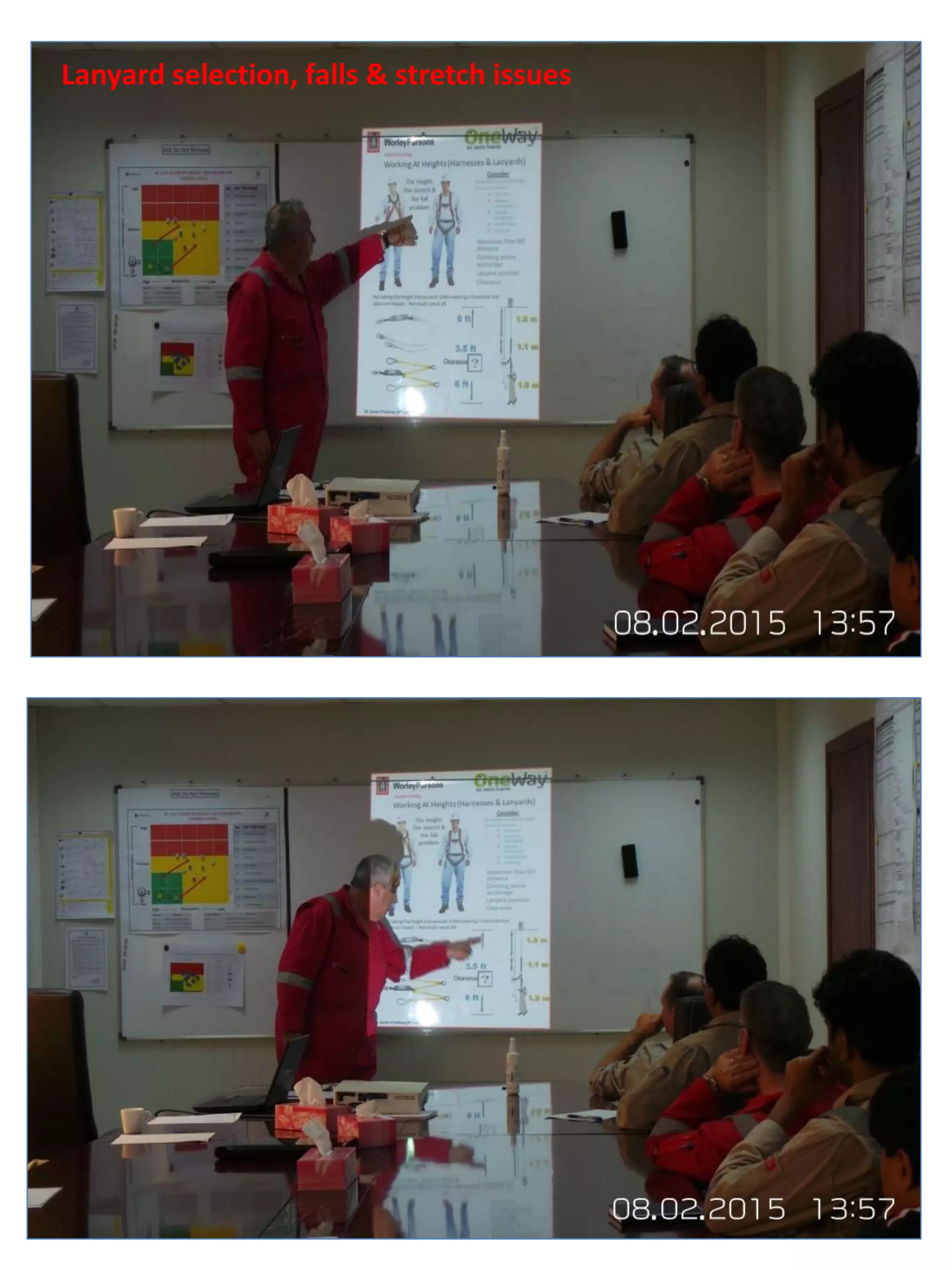
Lanyard selection, falls & stretch issues
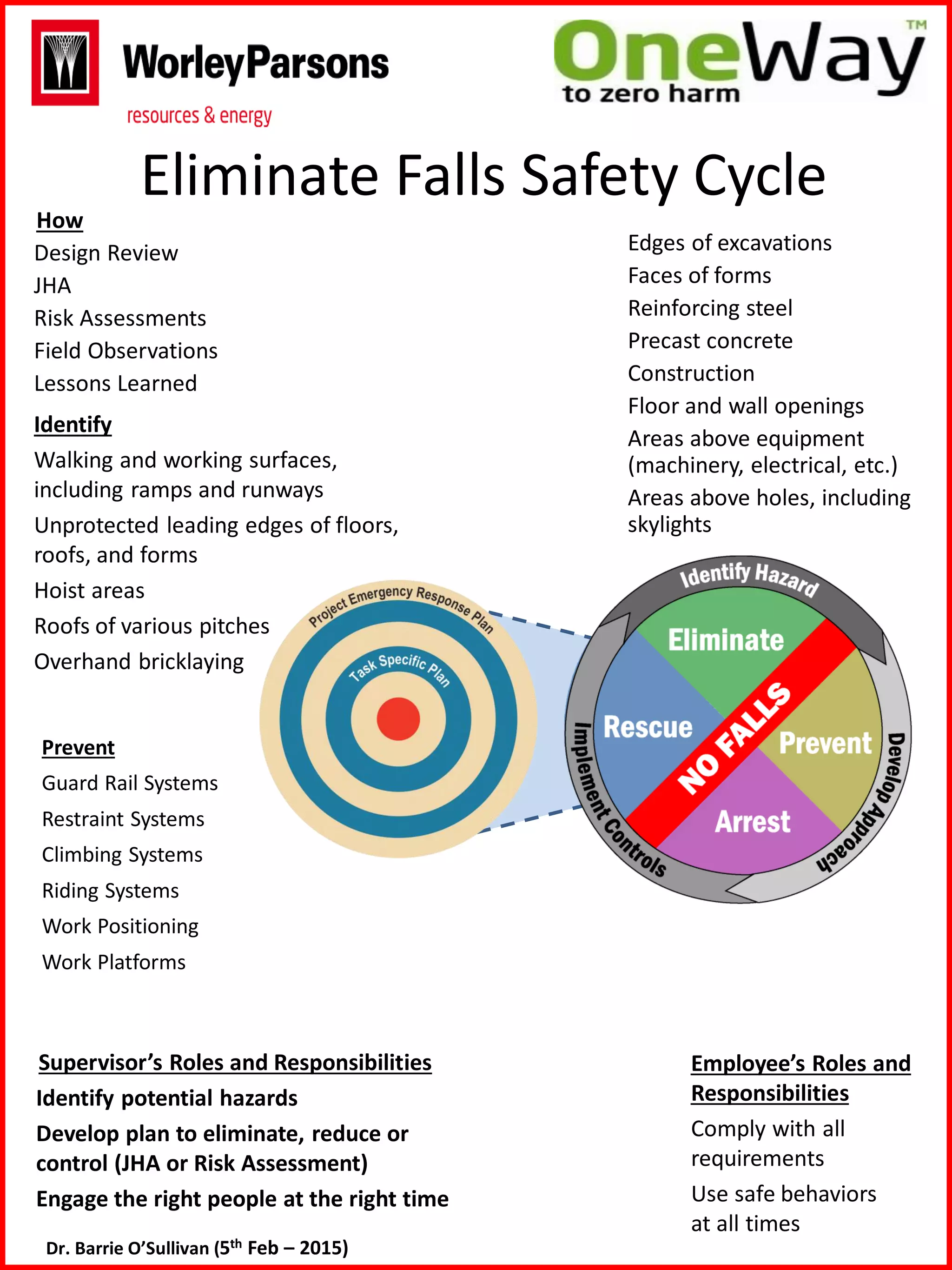
Eliminate Falls Safety Cycle
Identify
Walking and working surfaces,
including ramps and runways
Unprotected leading edges of floors,
roofs, and forms
Hoist areas
Roofs of various pitches
Overhand bricklaying
Edges of excavations
Faces of forms
Reinforcing steel
Precast concrete
Construction
Floor and wall openings
Areas above equipment
(machinery, electrical, etc.)
Areas above holes, including
skylights
How
Design Review
JHA
Risk Assessments
Field Observations
Lessons Learned
Supervisor’s Roles and Responsibilities
Identify potential hazards
Develop plan to eliminate, reduce or
control (JHA or Risk Assessment)
Engage the right people at the right time
Employee’s Roles and
Responsibilities
Comply with all
requirements
Use safe behaviors
at all times
Prevent
Guard Rail Systems
Restraint Systems
Climbing Systems
Riding Systems
Work Positioning
Work Platforms
Dr. Barrie O’Sullivan (5th Feb – 2015)
Stop The Drop
Dr. Barrie O’Sullivan (8th Feb – 2015)
Don’t leave tools,
nuts ,bolts or any
other loose items or
materials at heights,
they can fall and
injure a co-worker
Don’t carry loose
tools in pockets
and do not use
un-tied tools at
heights.
Carry tools in a
tool belt and tie
them off
When ever you
work off the
ground, or near
opening where
items can fall
and cause
injury, maintain
housekeeping.
Make sure
there is edge
protection,
barricade the
drop zone
below
Be aware of your
surroundings and
don’t
compromise
barricades
Where
else can
we be at
risk from
dropped
objects?
Working At Heights (Harnesses & Lanyards)
Dr. Barrie O’Sullivan (8th Feb – 2015)
1.8 m
1.1 m
1.8 m
6 ft
3.5 ft
6 ft
Clearance
Maximum free-fall
distance
Climbing above
anchorage
Lanyard position
Clearance
Adjustable versus fixed length
Work environment
 High heat
 Abrasion
resistance
 Worker
movement
 Stretch factor
 Chemical
Consider
Not taking the height into account is like wearing a Parachute that
opens on impact – Not much use at all.
The Height,
The stretch &
the fall
problem

Fall Prevention Safety posters roll out

  • 1.
    Roll-out of Campaignwith same methodology on Fall Prevention to share and kick off the system with our other Projects Discussion on recent fall on another project and our reasons to share our campaign system
  • 2.
    High emphasis groupdiscussion of topic, relevance and communication with KEY Site / Project Personnel Emphasis on floor openings
  • 3.
    Communicating the lessonsassociated with each poster / slide & aims and objectives
  • 4.
    Lanyard selection, falls& stretch issues
  • 5.
    Eliminate Falls SafetyCycle Identify Walking and working surfaces, including ramps and runways Unprotected leading edges of floors, roofs, and forms Hoist areas Roofs of various pitches Overhand bricklaying Edges of excavations Faces of forms Reinforcing steel Precast concrete Construction Floor and wall openings Areas above equipment (machinery, electrical, etc.) Areas above holes, including skylights How Design Review JHA Risk Assessments Field Observations Lessons Learned Supervisor’s Roles and Responsibilities Identify potential hazards Develop plan to eliminate, reduce or control (JHA or Risk Assessment) Engage the right people at the right time Employee’s Roles and Responsibilities Comply with all requirements Use safe behaviors at all times Prevent Guard Rail Systems Restraint Systems Climbing Systems Riding Systems Work Positioning Work Platforms Dr. Barrie O’Sullivan (5th Feb – 2015)
  • 6.
    Stop The Drop Dr.Barrie O’Sullivan (8th Feb – 2015) Don’t leave tools, nuts ,bolts or any other loose items or materials at heights, they can fall and injure a co-worker Don’t carry loose tools in pockets and do not use un-tied tools at heights. Carry tools in a tool belt and tie them off When ever you work off the ground, or near opening where items can fall and cause injury, maintain housekeeping. Make sure there is edge protection, barricade the drop zone below Be aware of your surroundings and don’t compromise barricades Where else can we be at risk from dropped objects?
  • 7.
    Working At Heights(Harnesses & Lanyards) Dr. Barrie O’Sullivan (8th Feb – 2015) 1.8 m 1.1 m 1.8 m 6 ft 3.5 ft 6 ft Clearance Maximum free-fall distance Climbing above anchorage Lanyard position Clearance Adjustable versus fixed length Work environment  High heat  Abrasion resistance  Worker movement  Stretch factor  Chemical Consider Not taking the height into account is like wearing a Parachute that opens on impact – Not much use at all. The Height, The stretch & the fall problem