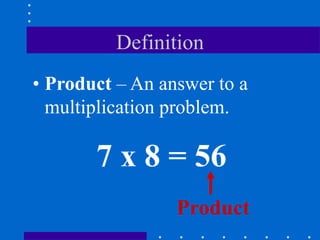
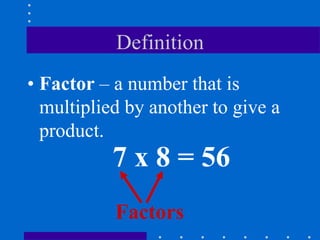
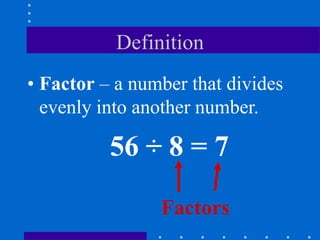
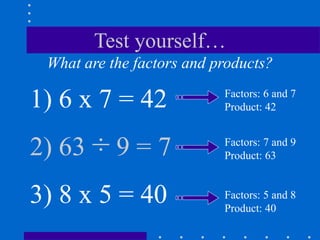
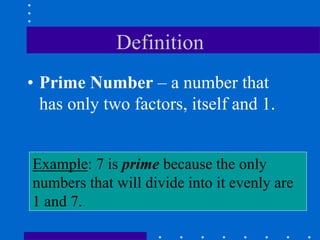
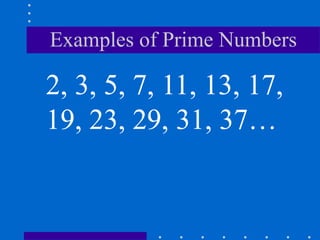
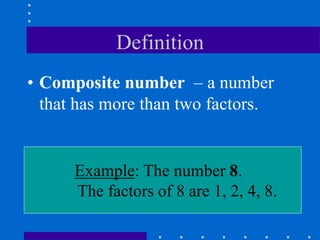
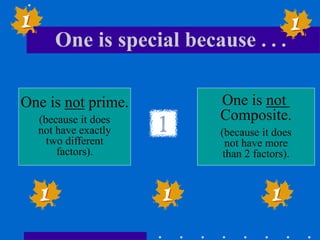
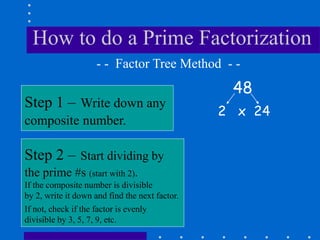
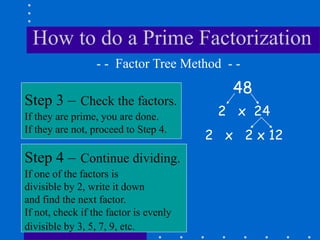
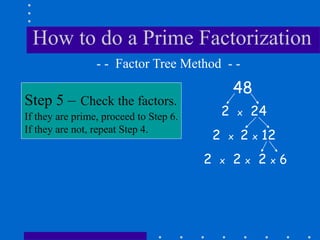
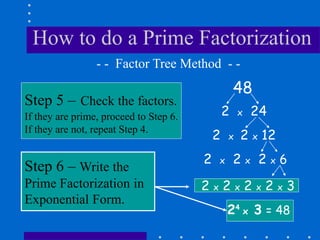
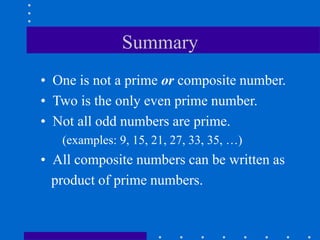
1) The document defines key terms related to prime numbers and factorizations such as factors, products, prime numbers, and composite numbers. Prime numbers have exactly two factors, while composite numbers have more than two factors.
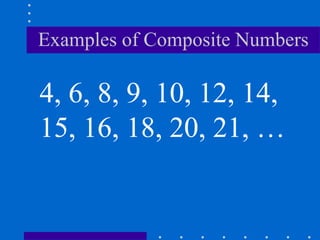
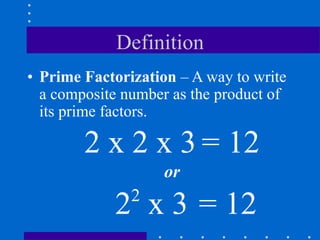
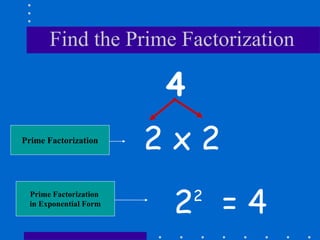
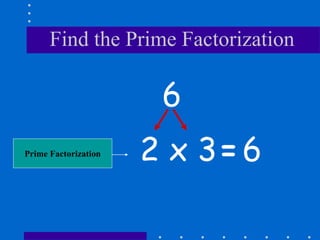
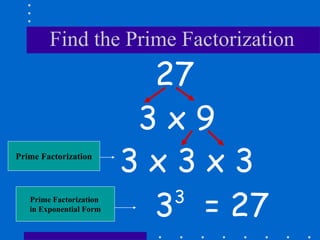
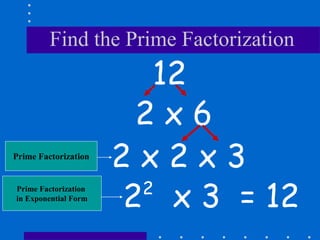
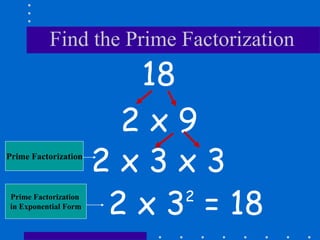
2) It provides examples of prime numbers such as 2, 3, 5, 7 as well as composite numbers such as 4, 6, 8. It also explains that any composite number can be broken down into its prime factors through prime factorization.
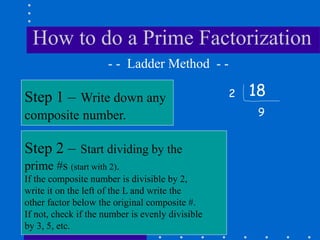
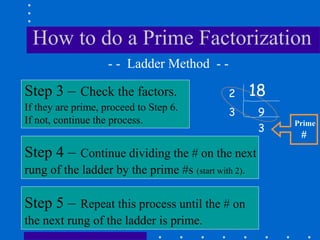
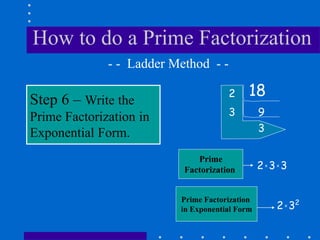
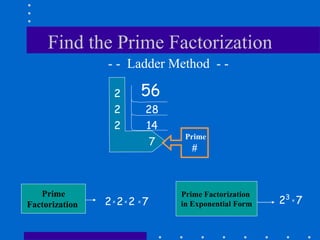
3) Two methods for performing prime factorization are presented: the factor tree method and the ladder method. Both methods involve repeatedly dividing the original number by primes to determine its prime factors.